Krypton | 2026 Sustainable Global Leaders Conference, An Dun and Bai Weimin talk about the collection and verification of health data
On October 22, at the "Embodied Intelligence and Future Industries" Forum of the 2026 Global Sustainable Leaders Summit, Bai Weimin, founder of Andun Health Technology, disclosed a set of data on the R&D of traditional Chinese medicine robots: the project has invested 130 million yuan, undergone about two and a half years of R&D, collected data from more than 300 hospitals, and more than 500 TCM physicians participated in the labeling work. These specific investments provide an observation sample for understanding how artificial intelligence in the healthcare field accumulates high-quality data.
According to Bai Weimin, Andun has currently collected data from more than 200,000 people, and carried out relevant analysis and training in combination with more than 500,000 medical records. Focusing on the vertical large model "Tianhui Traditional Chinese Medicine", Andun hopes to convert the experience and judgment basis in TCM diagnosis and treatment into standardized, visualized and traceable information to support practical applications.
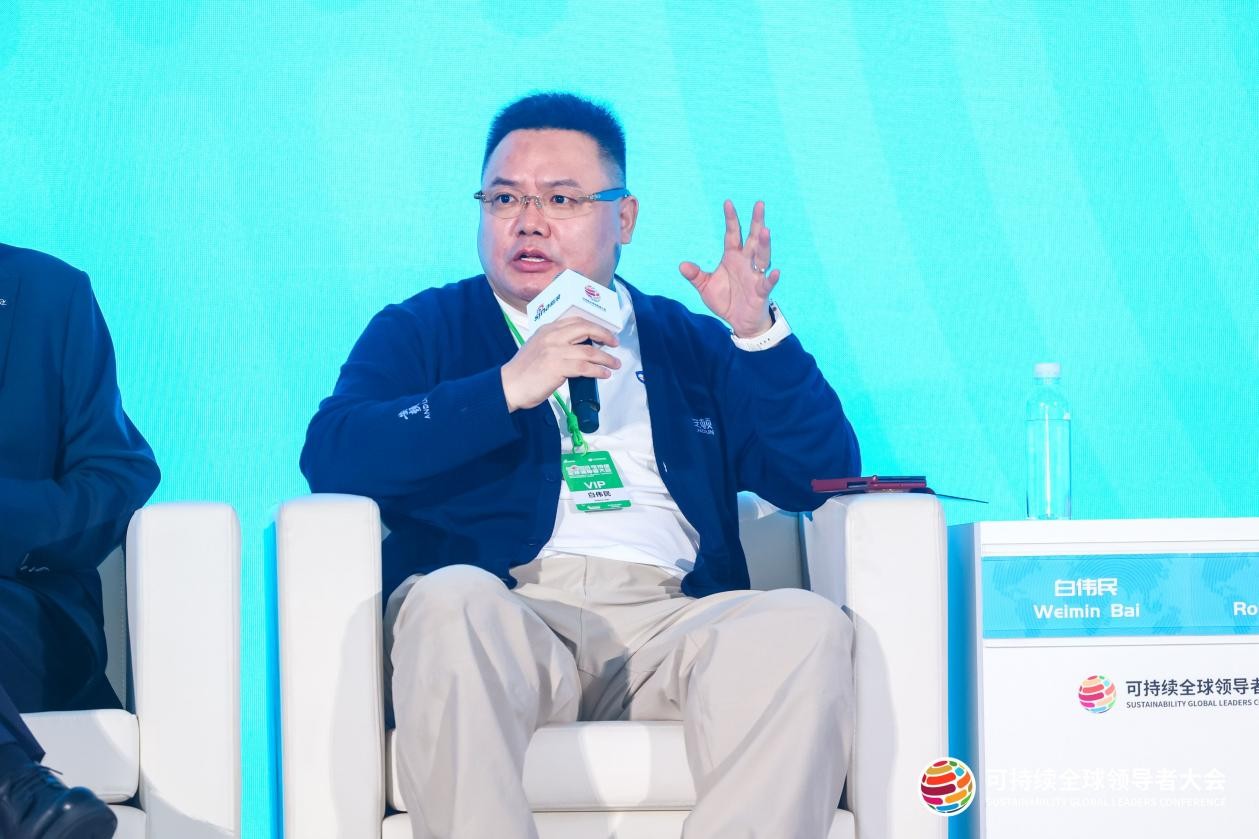
Official image
Health data first comes from specific individuals and specific collection processes. Bai Weimin introduced that the TCM robot obtains relevant information through images, sounds, consultation information and pulse fluctuations. For example, after the device collects the blood flow fluctuations at the wrist, it converts them into visible graphics for subsequent analysis. Information in different forms thus enters the same R&D process, helping the model establish connections with real diagnosis and treatment scenarios.
This process requires a large amount of on-site work. Bai Weimin mentioned that collecting data from one clinical patient requires the cooperation of 3 staff members. Collectors need to complete equipment operation, information recording and other work, and then carry out data cleaning, professional labeling and model training afterwards. The accumulation of data from more than 200,000 people is backed by repeated collection and sorting work.
Professional labeling determines how the collected information is connected with TCM judgments. On the basis of more than 500 TCM physicians participating in the labeling, Bai Weimin further introduced that relevant work requires TCM physicians with associate senior professional titles or above to conduct back-to-back labeling. Professionals make judgments separately, which provides a basis for the R&D team to verify information, find differences and check data quality, and also makes model training have more specific professional references.
Human body collected data and historical medical records play different roles in this process. The former records the physical information of individuals under specific conditions, while the latter provides existing diagnosis and treatment experience. According to the R&D path introduced by Bai Weimin, the collected data enters model analysis after labeling, cleaning and training, and medical records provide references for subsequent analysis combined with information such as age, gender and symptoms. Effectively connecting the two types of information is an important task for R&D in vertical scenarios.
Moving from data to application also requires testing and verification. Bai Weimin stated on site that the Andun TCM robot has passed 58 test verifications from the Taier Laboratory of the China Academy of Information and Communications Technology. After the labeling is completed, the team will also carry out experiments on human-computer interaction and in different scenarios to check whether the model, equipment and actual operation process can cooperate with each other.
R&D investment, sample accumulation, professional labeling and test verification correspond to different links of technology construction. Data scale reflects the foundation of collection work, the participation of professionals adds judgment basis to the data, and testing helps verify the performance of the product under corresponding conditions. The stability in practical application still requires continuous observation combined with the target population, use conditions and specific tasks.
Bai Weimin also emphasized that there is still a clear gap between general artificial intelligence and general physical intelligence. Andun is currently focusing on the vertical scenario of TCM diagnosis, and how to further convert real interactive data, simulation data and data in experimental environments into usable capabilities still requires long-term exploration. Only by clarifying the tasks to be solved can we determine what data needs to be collected, how to label, and what methods to use to test the results.
As the product enters the use stage, feedback will further affect data construction. Incomplete collected information, unsmooth operation, and objections from professionals to the results may point to problems in data quality, interaction design or model analysis respectively. Only by identifying the source of the problem first, then supplementing samples and adjusting the process, can the new round of R&D have a clear direction.
The R&D experience disclosed by Andun at the forum shows the specific workload of health data from collection, labeling to verification. The accumulation of high-quality data relies on the continuous participation of professionals, and also requires that every collection and every round of testing correspond to real tasks. How data is understood and how it is tested determines what kind of support it can provide for health services.