The launch of iPhone Duo has met with a lukewarm market response, but is the "wide fold" still the best answer for foldable screens?
Apple's first foldable iPhone Duo goes on sale today. The stores will not open until 8 a.m., but LeiTech (ID: leitech) found that many people rushed to the Apple Store at Tianhuan Plaza, Guangzhou to queue up for pickup as early as 7:30 a.m. However, compared with the launch of the iPhone 18 Pro series a while ago, the number of people at the scene today has decreased by more than half. Considering the audience and price of foldable phones, the low turnout is understandable.
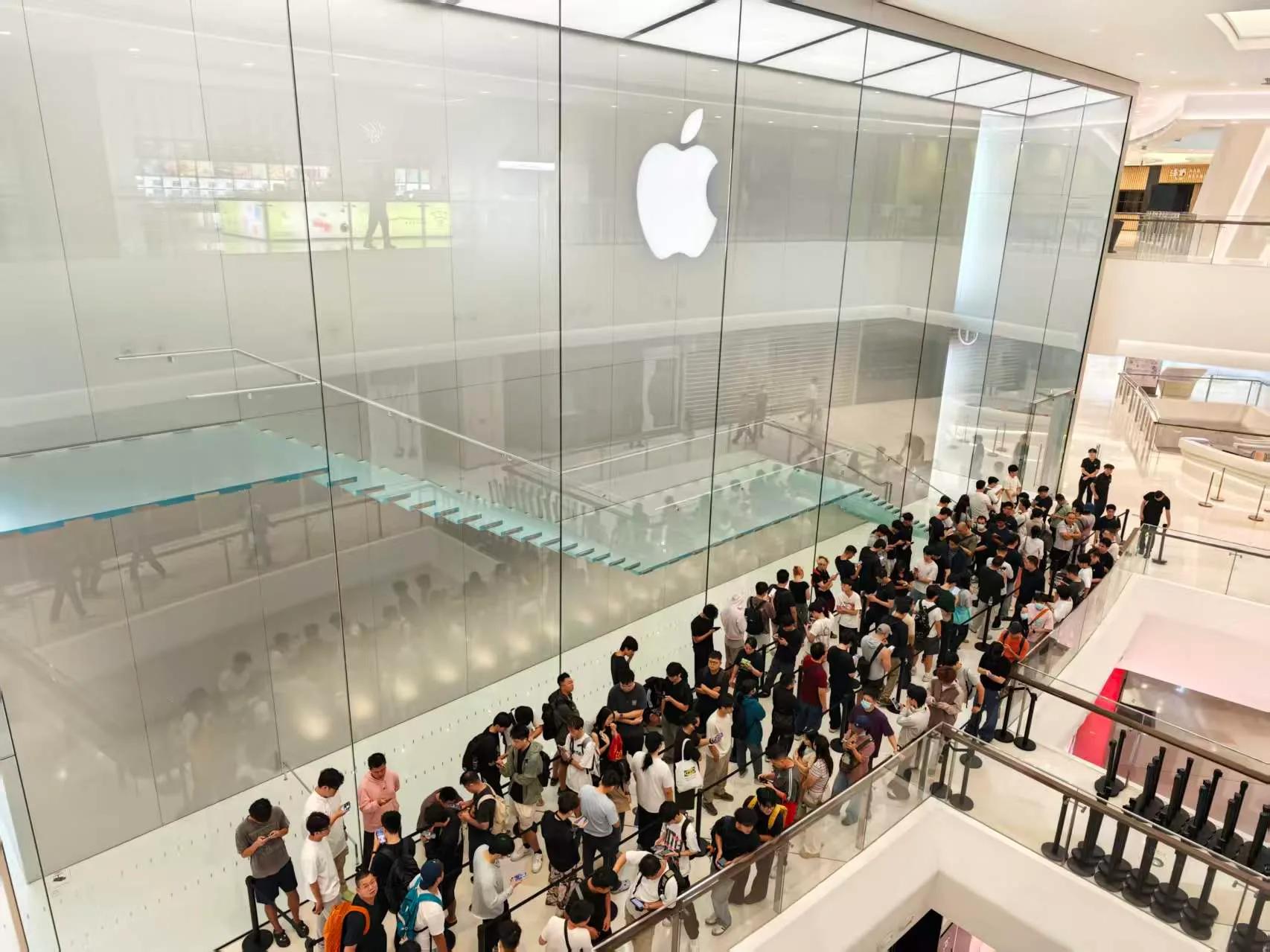
(Source: LeiTech on-site shooting)
From conversations with scalpers, LeiTech learned that the premium for the iPhone DUO is not as high as what is spread online. The 512GB version is currently the most sought-after model, with a general premium of 2000 to 2500 yuan, the 1TB version can have a premium of around 3000 yuan, while the low-end 256GB version is left unwanted, and the overall premium is not as exaggerated as the online rumors of five or six thousand yuan.
Although people have extremely high expectations for Apple's first foldable phone, judging from the information released by numerous review bloggers at present, this product is not perfect, and there are still many unsatisfactory points in both hardware and software. Coupled with its high price, the launch popularity is much lower than that of the mainstream iPhone 18 Pro products. LeiTech (ID: leitech) has got the real iPhone Duo. If you want to know the most authentic and detailed usage experience of the product, you can follow our subsequent reviews.
Today we also want to discuss with everyone, will the wide-fold form factor phones like iPhone Duo become a new trend in the mobile phone industry? Before Apple, Huawei, Xiaomi and Samsung have all launched such products. Does this mean that the "wide" aspect ratio is the optimal solution for foldable screens?
Mutual Restraint and Mutual Promotion Between Content Ecosystem and Mobile Phone Screen Aspect Ratio
In the early era of feature phones, limited by physical keyboards, the screens of mobile phones could not be made very large. In addition, at that time, mobile phones had simple functions and few entertainment applications. Most people only regarded them as communication tools, and did not pay too much attention to the size and dimensions of mobile phone screens.
Until Steve Jobs released the first-generation iPhone, introducing a 3.5-inch touch screen supporting multi-touch technology, with an interface designed based on touch gestures, which redefined the interaction method of mobile phones. In particular, the advent of iPhone 4 introduced the Retina display for the first time, opening the era of high-resolution mobile phone screens.
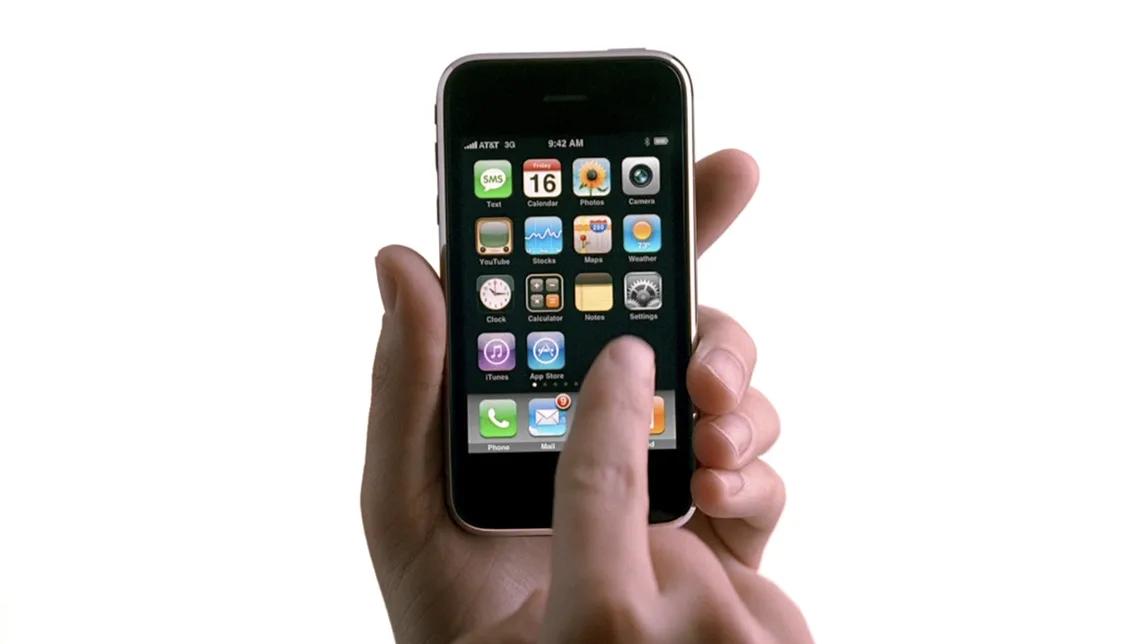
(Source: Apple official website)
However, the iPhone 4 still used a 3:2 screen aspect ratio at that time. Although it had a very good reading experience for displaying documents and web content, with the continuous enrichment of mobile entertainment functions, users' demands for playing games and watching videos on mobile phones were growing day by day. To accommodate a larger screen, mobile phones had to gradually lengthen the body, and finally reached the 16:9 aspect ratio.
The main reason for choosing 16:9 is that this ratio is consistent with the aspect ratio of the vast majority of TVs and computers, and many video contents are also produced according to this ratio, which has stronger content adaptability. It can be said that the content ecosystem at that time determined the direction in which the screen size of mobile phones should change. It is precisely because the aspect ratio of mobile phone screens is close to the mainstream that more and more content can be quickly adapted to the mobile terminal, further enriching the entertainment of mobile phones and promoting the development of mobile phone technology.
For a long time, smartphones have followed the conventional 16:9 aspect ratio. Until Lei Jun brought the "one more thing" at Xiaomi's autumn new product launch conference in 2016, which officially brought smartphones into the full-screen era.
Since then, major manufacturers have continuously compressed the upper and lower spaces of mobile phones to increase the screen-to-body ratio, and gradually lengthened the size of the body. The mobile phone screen has gradually changed from 16:9 to 19.5:9, 20:9, and even 21:9.
With the transformation of this form factor, the interaction mode of mobile phones has also changed greatly, from the classic three navigation keys to the current full-screen gestures. At the same time, the entire content ecosystem has also changed accordingly. Vertical screen videos and short videos have become the mainstream, and both software and hardware have changed due to the change of screen size.
It is indeed a good thing that the mobile phone screen is getting larger and larger. Whether playing games or watching videos, the immersive experience will be improved by a level. Many people like to use large screens to follow dramas and watch videos. But do mobile phones really need to get longer and longer? Is a longer screen really better?
First of all, in terms of control interaction, for a mobile phone of the same body size, if it has a 16:9 screen, the thumb when holding it with one hand can almost click any position on the screen, there is no difficult control area, and with the three navigation keys, the operation and interaction do not bring much burden. However, with the elongated screen and ultra-narrow bezel design, it is almost impossible for the thumb to reach the diagonal area when using the phone with one hand. Even if you adjust your grip posture to barely reach it, the palm will most likely trigger accidental touches. Similar situations have happened to Xiao Lei countless times.
Secondly, the longer the screen size, the greater the pressure on human eyes to browse content. The eyes need to scan from the top to the bottom to view the full screen content completely, otherwise you need to keep swiping up with your fingers.
Xiao Lei used to love reading novels on mobile phones, but he hardly reads them after using full-screen phones, because it is too tiring to scan a too long page. When reading articles and materials daily, he basically keeps swiping up with his fingers. Of course, this feeling varies from person to person. Every time I take the subway, I still see many people reading novels, which shows that most people should be quite adapted to it.
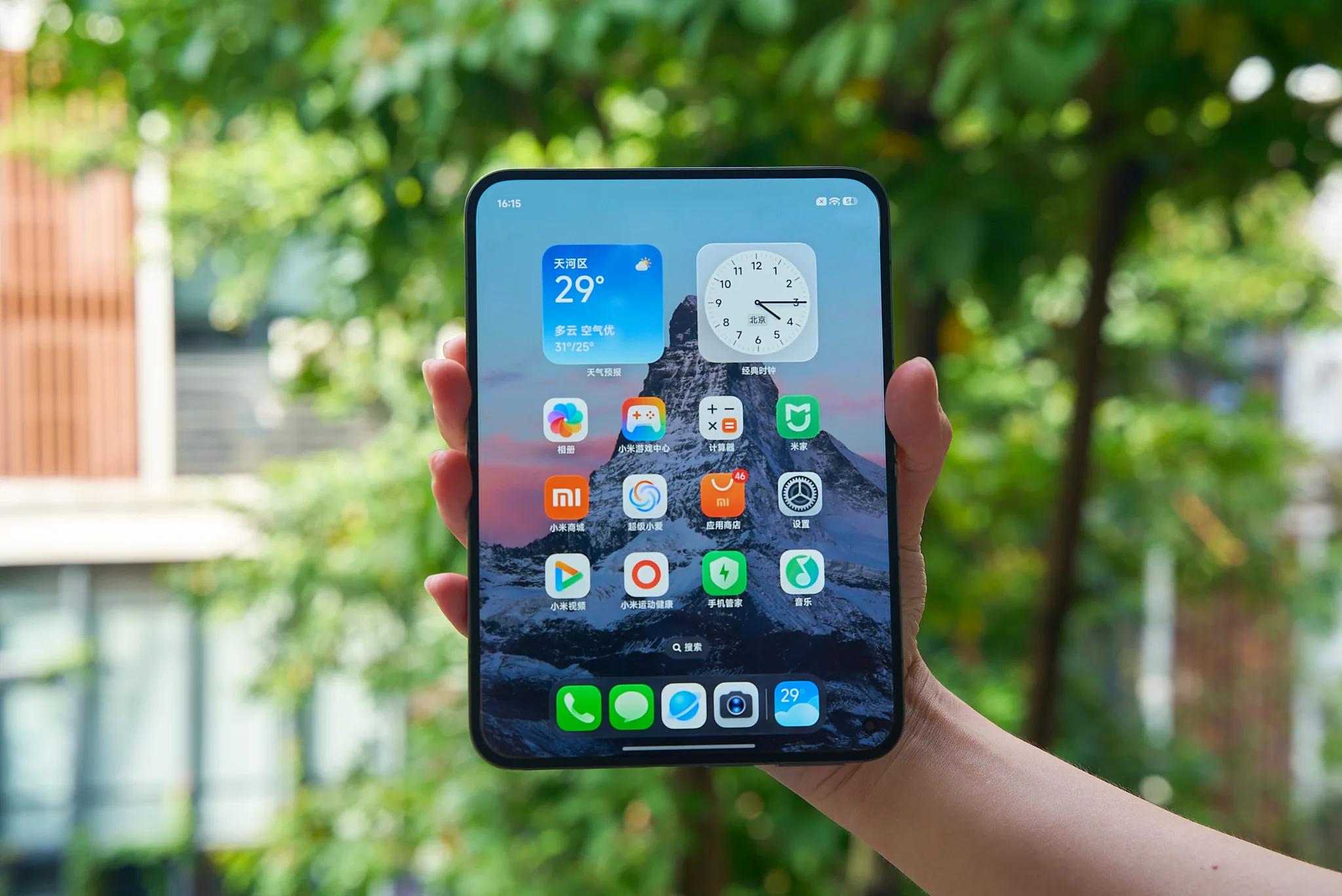
(Source: LeiTech shooting)
Back to the topic of mobile phone form factors, LeiTech believes that the fact that mobile phone screens are getting longer and longer is largely a trend of necessity. The market needs larger and larger screens, even if this aspect ratio is not very friendly for interaction in many scenarios, everyone has to follow suit as all others do.
However, the current conventional full-screen can no longer keep up with the efficiency and experience requirements under today's increasingly rich content ecosystem and usage scenarios. People have too many things to operate and handle on their mobile phones every day. This is also one of the reasons why foldable phones were born: to provide an extra large screen that can also improve efficiency.
However, most foldable phones, in order to take care of the aspect ratio of the outer screen, make the inner screen close to a square, and the experience is actually not very good. In many scenarios, it cannot give play to the advantages of the large screen, and the inner screen even becomes a burden. Xiao Lei can't remember how many times he opened an App on the inner screen only to be covered by a pop-up ad, and finally had to go back to the outer screen to find the close button.
The current content ecosystem is actually in urgent need of a more user-friendly aspect ratio form factor for mobile phones to replace the current 21:9 ratio.
Wide Fold Is Indeed the Best Answer for Foldable Screens at the Moment
Why is the best answer the wide fold? In fact, it all comes down to the amazing ratio of √2:1.
Huawei and Apple have also given some explanations before. Its mathematical principle is that after being folded in half, the √2:1 ratio can still maintain the same proportion, ensuring that the ratio of the inner screen and the outer screen will not change when displaying the same content, and a consistent viewing experience can be maintained whether the phone is closed or unfolded.
Secondly, this ratio is more suitable for the current common content ecosystem, because it is very close to the ratio of books, so it has a very immersive viewing experience when reading text content and comics. When watching movies with 16:9 or 4:3 aspect ratios, the black edges on the screen are the least, and the viewing experience of vertical short videos is also good. Only a few special widescreen movies will have disadvantages, but it covers the vast majority of content.
LeiTech also introduced in the review of Xiaomi 18 Fold before:
When using dual split-screen, both windows are in the stretched √2:1 ratio, which is very handy for reading documents, searching for materials, and editing images by comparing the original pictures; when using triple split-screen, the aspect ratio of each window is close to that of mainstream bar smartphones, which is suitable for multi-platform price comparison and making travel plans
No matter in content browsing experiences such as watching videos and reading documents, or in software split-screen and multi-task processing such as price comparison on JD.com / Taobao / Pinduoduo at the same time, you can get an excellent experience on the √2:1 screen, which at least has the best effect compared with other verified aspect ratios.
Back to the product, does the wide fold with √2:1 aspect ratio screen perform as well as expected?
Xiao Lei has watched many media's iPhone Duo experience videos. On the whole, most applications have been adapted to reach a usable stage, and a small part of the experience is even surprising, but there are still many shortcomings.
One of the well-adapted apps is NBA All-Star Showdown, which can not only fill the entire screen, but also allow the phone to be folded in half, with the upper half displaying the game screen and the lower half as the control area. As for Xiaohongshu, when playing videos on the outer screen, unfolding the inner screen will seamlessly switch without pausing, and the video will directly fill the entire screen. Although there is some cropping, the effect is still very good.
Other mainstream applications such as Taobao and Weibo have only made simple adaptations at present, which cannot bring a refreshing experience. Even though Apple has innovatively placed the top status bar and bottom function menu on the right side of the screen this time, so that the main display area of the software retains the normal aspect ratio to avoid stretching, the dock bar on the right will be hidden on some pages, and the interaction still requires a certain adaptation period. Mainstream applications can only achieve this effect, and the situation of niche applications is even worse. However, Apple has prepared a dedicated SDK for developers, and full adaptation in the future should not be a problem.
As the manufacturer that first proposed the concept of wide fold, Huawei has the advantage of full-platform adaptation of its own HarmonyOS, so there will naturally not be big problems in software adaptation, and what is lacking is only time. What is still more difficult is the Android camp. Foldable phones have been around for many years, but the adaptation situation is still unsatisfactory, let alone the current more niche wide fold.
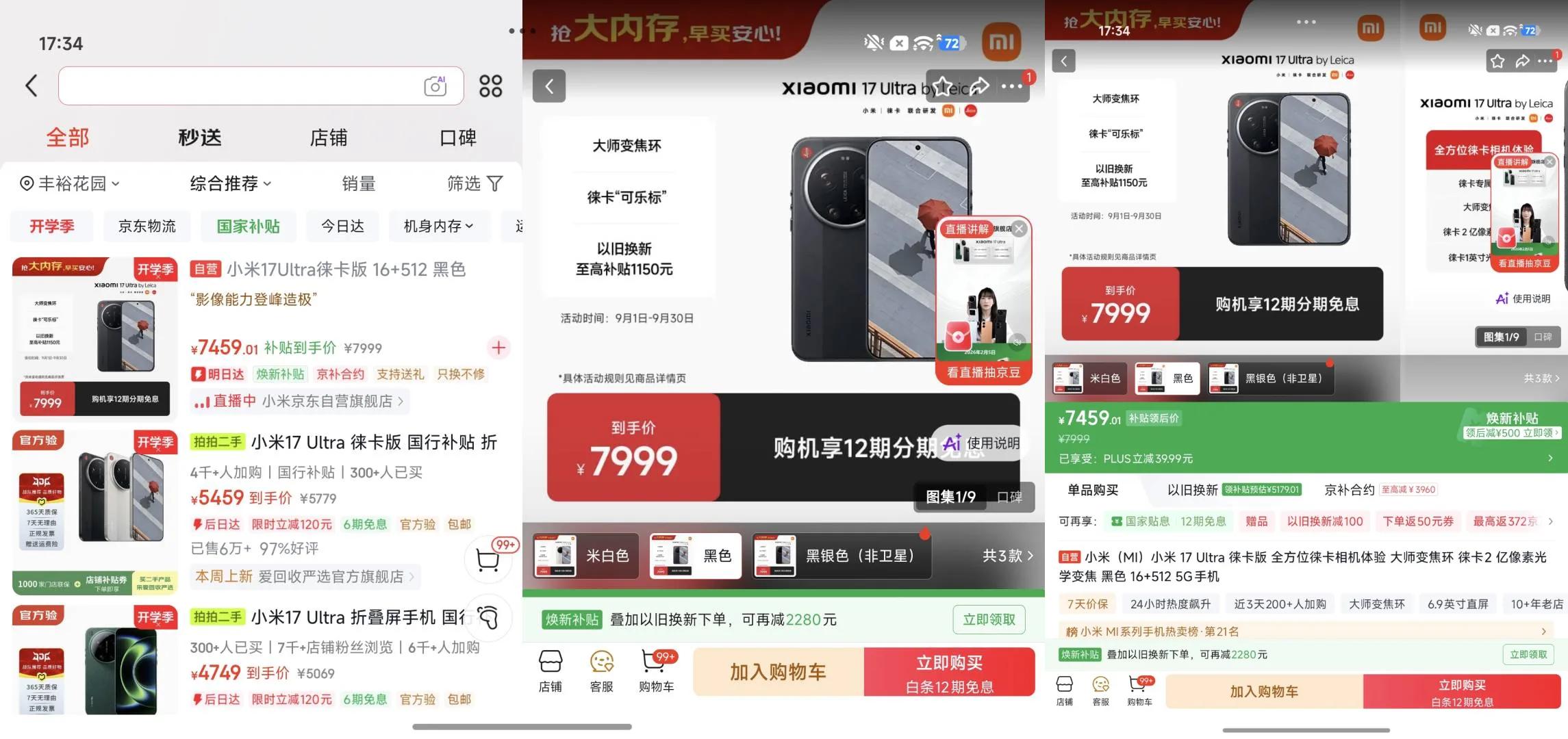
(Source: LeiTech shooting)
Even though Xiaomi 18 Fold has adapted many mainstream applications, the adaptation logic is still the split-screen logic of parallel windows. Since √2:1 is much shorter and wider than the mainstream full-screen, it results in a lot of loss of actual display area, and e-commerce platforms can only display the main product image. A small number of platforms can adjust the split-screen ratio by themselves, but that is just a way to rob Peter to pay Paul.
However, Apple has provided everyone with a very good idea. If the Android camp can also learn to adapt accordingly, the software interaction experience should be further improved.
Summary
Over the years of development of smartphones, the form factor and screen size of mobile phones have been constantly changing. As the output carrier for content, the screen must have an aspect ratio that meets the needs of the current era.
Relatively, the emergence of a new screen aspect ratio will inevitably derive new content forms. The two are mutually reinforcing and mutually restricting, and it depends on which step goes further.
Combined with the current situation of the mobile phone market, sales are continuing to decline, and the functional form factors of mobile phones have not changed for many years. Every year, manufacturers only compete on imaging capabilities and performance. This year, the prices of storage and chips remain high. Even if manufacturers want to continue to compete on hardware, they have to consider whether the cost and selling price can afford it.
Therefore, LeiTech believes that the breakthrough of the mobile phone market really needs to find opportunities from form factors. The wide fold has taken the first step and has achieved initial results. But whether it can really become a new trend in the future and reverse the current market downturn still depends on the reaction speed and determination of all manufacturers. Xiao Lei is very much looking forward to the arrival of this day.
This article is from "LeiTech", authorized to release by 36Kr.