On the eve of the mass rollout of AI + live-action filming, how do producers recalculate this set of cost reduction calculations?
Over the past year, almost all discussions about AI and film & television have stayed within the hype of "AI micro-dramas": lightweight, fast, and with high fault tolerance. But quietly, as AI-generated melodramatic short videos go viral, few people have raised a question: can AI step onto the set of live-action long-form dramas?
The answer will give you a surprise: AI has already broken into long-form dramas.
In September, Tencent Video launched *The Escort*, China's first ancient costume fantasy drama combining live-action shooting and AI production, whose in-platform popularity score exceeded 17,000, with all assets and production processes open-sourced simultaneously. Shortly after, "the first ultra-long live-action AI seasonal drama" *No Love For Mortals, Only For Immortals* was officially announced on iQiyi. Even earlier, Huace's historical drama *The Peaceful Era* used AI to assist in producing highly difficult shots of crows pecking at carrion and ships sailing in storms, which earned it an 8.3 score on Douban. Meanwhile, companies that excel at producing long-form dramas such as Huanyu, Changxin, and Ningmeng have also dabbled in this field long ago.
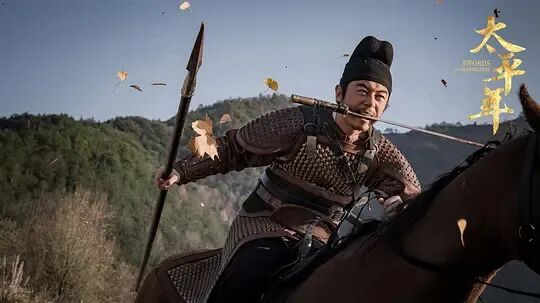
Long-form video platforms' bet on "live-action + AI" has evolved from conceptual PPTs to actual content slates.
"AI + live-action shooting" does not replace the entire film crew with AI — actors still join the crew as usual, some scenes and shots are generated by AI, and the two types of materials are edited and composited in post-production. What has really changed is the producer's account book, script, and production schedule.
However, for most producers, this is still a completely unfamiliar system: what exactly can AI do for the crew? How to calculate the saved costs? Which types of scenes are suitable to use AI, and which should be avoided? With these three questions — market entry, cost accounting, and boundary definition — this article talks to producers who are currently producing related dramas, AI directors, and actors who are working with AI.
Phenomenon: Live actors join the crew as usual, shots are handed over to AI
Director Guo Jingyu from Changxin Media put forward four clear paths for the "multiple symbiosis" of AI and film & television at the World Artificial Intelligence Conference, the fourth of which is traditional live-action shooting plus AI to create high-quality works. *The Travels of the Deity in Mist and Rain*, the most invested and elaborately produced work in the history of Changxin, has specially set up a "Team C" responsible for AI to create extremely stunning scenes in the story.
According to the past industry convention, Team A is responsible for main shooting, and Team B is responsible for conventional reshoots and large scenes. The "Team C" gets involved earliest in the most tedious, most capital-intensive, and hardest-to-coordinate parts. This term was introduced by Zhou Tinghao (a pseudonym), the AI head of a film and television company, on the program *What the Heck*: this mixed production mode where AI directors participate in commercial film and television projects "has been implemented in some large project crews". The main work of Team C includes: "verification of large-scale scenes, Previs previsualization, AI feasibility testing, and fallback solutions for traditional visual effects when AI cannot produce the required results."

This is not a one-sided opinion. The relevant person in charge of Changxin Media said when talking about *The Travels of the Deity in Mist and Rain* that "the crew has set up Team C responsible for AI, which reasonably uses AI tools to provide assistance and production in costume, art design, and special effects during live shooting". Su Xiao, founder of Ningmeng Films, also revealed at an industry event that "many crews have set up Team C (AI team) and have AI directors".
In other words, when AI joins the crew, it usually does not act as an "external supplier", but becomes an integrated part embedded in the shooting division of labor. This team is not just an alternative to special effects as most people imagine, but undertakes more functions: it helps the crew figure out clearly at the preparation stage "which shots must be shot live, and which can be handed over to AI". Gao Feng, a production director, put it more bluntly: use AI to conduct a low-cost pre-shoot or layout, "to judge in advance which shots must be shot live, and which shots can be handed over to AI or completed in post-production".
Take *The Escort* as an example. Tencent Video and Metaphor Distance Technology split the team into three parts: AI team, live-action shooting team, and post-production team. Before shooting started, AI director Shen Siyuan first went to Hengdian, took photos of real actors with light makeup and casual clothes from all angles, then used AI to add character makeup and ancient costumes to make reference assets of three views. After shooting started, the live-action team was responsible for literary scenes, action scenes and actors' performances, the AI team was responsible for generating things that "real actors cannot perform and sets cannot afford to build" such as mythical creatures, shape-shifting and magic effects, and the post-production team composited the two parts. Director Sheng Lingzhi summed it up directly: "Without AI, there would be no *The Escort*". This level of special effects for a grand fantasy drama was "unimaginable in the past".
Huace's *The Peaceful Era* uses AI even more deeply. Chen Yi, founder of the visual effects team Time Art, ran AI through the whole process of pre-production, production and post-production. In the pre-production stage, AI quickly generated the territory map of the Five Dynasties and Ten Kingdoms based on the text script, turning the complex regime changes into easy-to-understand dynamic images. In the production stage, the high-precision digital scenes generated by AI were connected to virtual shooting. In the post-production stage, for the scene of hurricane at sea, traditional CG would take about two months to complete three shots, while the team used the solution of "AI-generated seawater + 3D ship complement + compositing with rain" and finished it in two weeks. During the 481-day production cycle of the whole drama, 2515 4K film-level special effects shots were delivered. Chief director Yang Lei also set a red line — "the drama will never directly use AI video frames as the final finished frames", and uses restrained "human-machine collaboration" to guarantee quality.
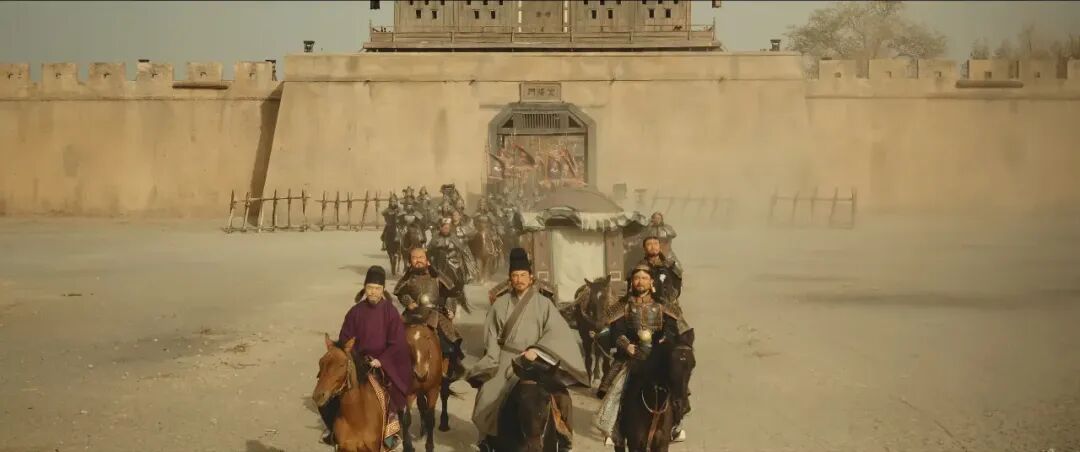
The cases have already illustrated the problem. The most frequently cited example is the crow at the opening of *The Peaceful Era*: AI first generates a static image of a crow with pure green background, then the image is processed with green screen keying to make the crow "move", and finally composited with the live-action scene — the cost is only 1% or even lower than that of the traditional solution. *The Escort* is more thorough: no outdoor scenes were shot throughout the whole process. Director Sheng Lingzhi said, "With the current development of AI technology, not to mention the extremely high cost of building sets, the effect may not be as good as the scenes produced by AI."
Therefore, the entry of "AI + live-action shooting" into long-form dramas does not replace performances, but spends the money previously invested in "scenes and special effects" in a cheaper way. Whether the saved part turns into profit or brings other costs depends on the account book.
Account book: 30% cost reduction per episode does not mean cost saving for the whole drama
Earlier, producer and screenwriter Yu Zheng introduced in an interview with Guduo that in the mixed mode he tried, which is half live-action shooting and half AI, the production budget per episode can be reduced by about one third. Huanyu's mode is "live-action motion capture shooting combined with AI post-processing". AI is only responsible for rendering grand scenes, filling in a large number of extras, and refining special effect details, while the core emotional scenes are still completed by real actors. This set of figures corresponds to the cost caliber of Huanyu's dramas such as *Schemes of a Beauty: Xi Shi*, *Story of Yanxi Palace: Upside Down Dream*, and *Bad Blood*, when the "Team C" attempt had not appeared yet.
However, this sum of money may not actually be saved. Yu Zheng later calculated another account in a media interview: the capital cost per episode is reduced by one third, at the cost of extended production cycle — massive 4K materials need to wait in line for computing power rendering, and post-production becomes "gacha-style" repeated trial and error and rework.
Therefore, the saved shooting cost still needs to deduct the newly added AI production cost. The *The Escort* project has more than 30 members in the AI team, while retaining the art, styling, editing, action and other teams. The cost of repeated generation can be illustrated by a set of data: creators at Baode Xi AI Theater revealed that to make an AI short film of medium quality, a single shot needs to be generated 50 to 80 times on average; if a 20-minute film has 120 shots, the total number of calls may approach 10,000 times. The cost of a single generation of commercial AI video models ranges from a few cents to several dollars. Once exceeding the subsidy quota of the platform, every minute is burning money. More critically, the marginal cost of AI does not decrease significantly with the expansion of scale like traditional film and television — every new shot added requires a new round of calls to the computing power pool. That is why "the price of generating one second of video" can never be regarded as "the price of one second of finished video".

Actor Xiao Du is participating in an "AI + live-action" drama. He said that he felt no difference when joining the crew, most of the scenes were still shot normally, which is a part he could not feel at all in Team A, and his packaged remuneration was not affected. His producer Ali (pseudonym) said that the emergence of Team C has actually reduced part of the wasted budget: including the previous collaborative work of the crew's art team, some scenes that can be realized with AI no longer need to build sets. In addition, some outdoor shooting parts that should have included special effects production can also be completed in the studio, which reduces a large amount of travel expenses for outdoor shooting. But "the proportion of this part in this drama is too small, so not much money can be saved."
For producers, the next thing to calculate is what proportion of their project can be realized by AI, which is highly dependent on the theme type: "The most suitable type for AI may be ancient costume romance or fantasy dramas," producer Ali said, "because for realistic dramas, the cost of costumes, props and sets may not be very high in the first place, so the savings are relatively small."
"Specifically in shooting, having AI does not mean shooting fewer shots. For example, if a scene of traveling on a mountain road is changed to actor shooting in the studio + AI-produced background, if the crew cancels the outdoor trip, the cost of transportation, accommodation and venue can be saved. But if there are other scenes to shoot in the same location, the crew still has to go there, so these costs cannot be saved much," Ali said. "The most important thing is to make decisions on which parts to use AI in advance, and this decision-making process can also be assisted by AI."
The difference between the saved shooting cost and the newly added AI production cost is not significant for now. Since a shot may be generated many times before a usable version is selected, it still needs to be modified and composited after selection. Each rework will increase the cost of computing power and labor, all of which need to be included in the budget. If the effect still fails to meet the requirements, it is also necessary to calculate how much it will cost to switch back to live-action shooting or traditional special effects.
For producers, to judge whether this solution is cost-effective, they need to compare two complete budgets: how much does it cost to complete the same scene with live-action shooting or traditional special effects, and how much does it cost to use AI from pre-production testing to post-delivery. Under the premise of achieving the expected effect, the difference between the two budgets is the money that the project is expected to save.
The creative team of *The Escort* once introduced that the project has more than 30 members in the AI team, while retaining the art, styling, editing, action and other teams. It can be seen that after adopting AI, the crew still needs professional personnel to complete the production. The participation of AI is to achieve better results on the basis of the original personnel. The total cost does not decrease, but the pictures are richer. From art designers to action directors, professionals still work with AI, which can enhance the quality of works, and when AI cannot achieve the required effect, manual work will guarantee the completion of the work.
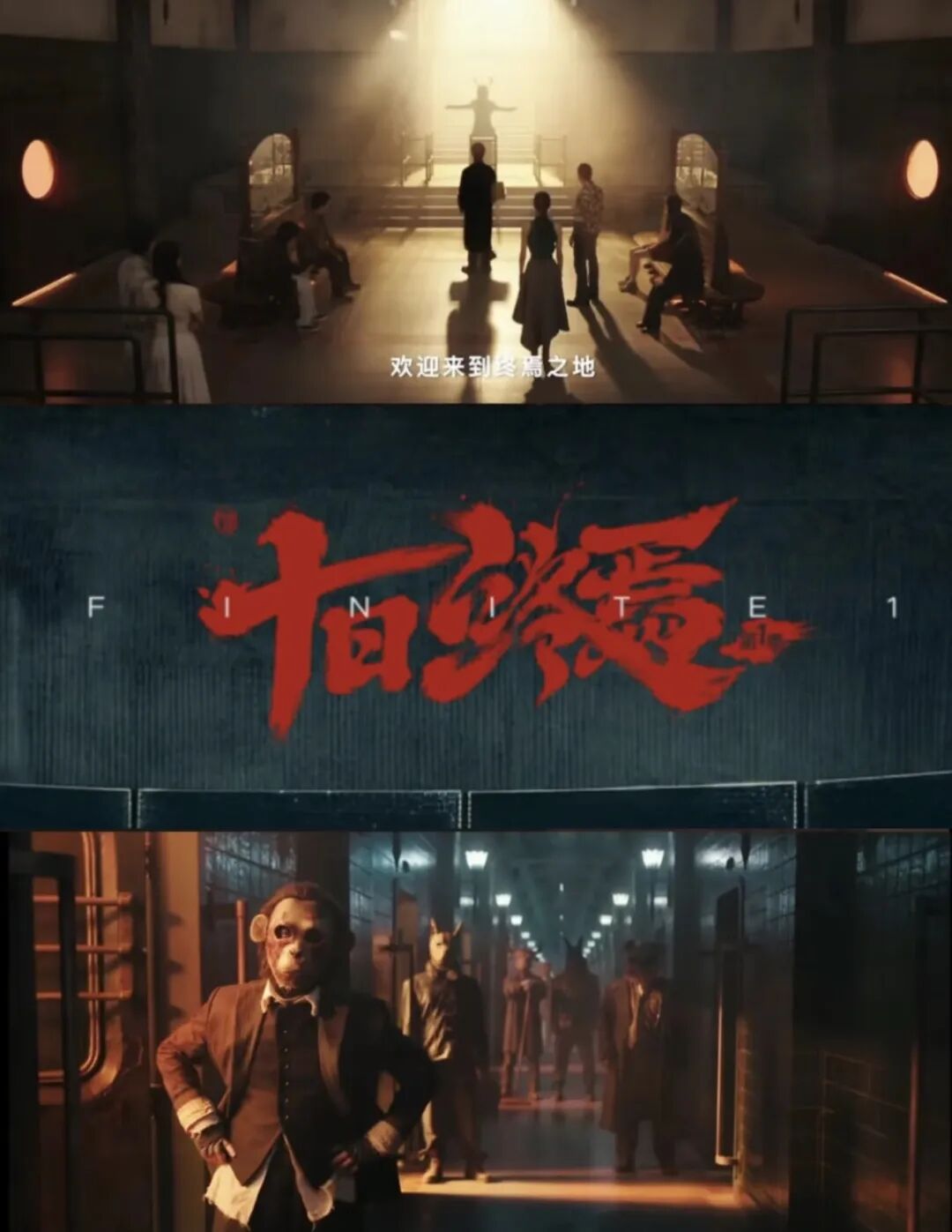
There are also projects that explicitly state "not for cost reduction". *The End of Ten Days*, an S+ level long-form drama co-produced by Ningmeng and Tencent, has a total investment of over 200 million yuan, with about 40% of the budget going to special effects. AI is strictly limited to three behind-the-scenes links: 3D storyboard scene previsualization, dynamic image retouching, and auxiliary quality inspection. Its positioning is "not simply to reduce costs, but to increase efficiency and improve quality". Looking overseas, Netflix disclosed for the first time in its Q2 2026 shareholder letter that about 300 works in that year used generative AI in depth, focusing on post-production visual effects. Co-CEO Ted Sarandos defined the investment: "AI represents an incredible huge opportunity, which can effectively help creators make film and television works more exquisite and stunning, not just to make production cheaper and lower quality." This exactly echoes the practice of *The End of Ten Days*.
— When AI enters long-form dramas, saving money is never the only answer.
Boundary: AI can replace set building and special effects, but cannot replace performance
More important than cost is what content is more suitable for AI?
Chen Yi from Time Art gave an efficiency reference: under the same image quality, the efficiency of AI generation is at least 3 to 4 times higher than that of traditional processes, and may reach 8 to 10 times in the future. The current bottleneck of AI tools lies in color gamut, encoding and resolution, and 8K-level back-end production is still an unsolved problem. Therefore, ancient costume romance and Xianxia dramas with a large number of fantasy scenes have the most space to try mixed production: for a farewell scene in a fairyland, you can shoot the actors' dialogues and emotional reactions live, and then use AI to produce distant palaces and sea of clouds — the performance is preserved, and the crew does not need to build a complete fairyland as the background.
