Gemini 4 Argon Token consumption has surged three times, Google CEO for the first time talked about the inside story of axing 3.5 Pro, and also gave a sneak peek of 5.0.

Launched for 72 hours, it processed nearly 25 trillion Tokens, with consumption 3 times that of the previous generation Gemini 3.0 in the same period.
This is the debut performance of Google's latest flagship model, Gemini 4 Argon. Even Google, with its abundant resources, had to implement computing power rate limiting again in the face of the sudden flood of invocation demands.
In the latest interview on the tech podcast *Sources*, Google CEO Sundar Pichai reviewed the release details of Gemini 4 Argon, and publicly explained for the first time why Gemini 3.5 Pro mysteriously disappeared, as well as the behind-the-scenes reasons for the core management changes at DeepMind.
1. Skipping 3.5 Pro to directly sprint for Argon, internal R&D has entered the RSI stage
In the past few months, the outside world has been wondering where Gemini 3.5 Pro, mentioned at the I/O conference, went. Pichai directly gave the answer in the interview: The team actively discarded it in order to seize the high ground of Agent programming capabilities.
Mid this year, when Google was training the 3.5 series, it found that the model had obvious gaps in Agentic Coding. The team judged that using the Flash version with smaller size and higher efficiency for high-frequency iteration was the fastest way to make up for the shortcomings. So Google intensively promoted continuous iterations from 3.5, 3.6, 3.7 to 3.8 Flash in about 3 months.
When this technical solution was proven feasible and ready to be applied to the Pro version, the pre-training of Gemini 4.0 Argon had already been completed. Considering that releasing 3.5 Pro at this time would lead to an extremely short lifecycle, under the environment of limited computing power, the team decided to inject all the technical accumulation verified by Flash directly into the post-training stage of Argon.
This decision directly contributed to Argon's leap in long-horizon tasks. In external tests, Argon spent more than one day and less than $2,000 in computing power to independently clear the game *Minecraft*. Inside Google, it has been directed at the Chromium codebase with millions of lines of code.
As for the rumored Carbon model, Pichai clarified that it was only the code name for internal cutting-edge model iterations. Currently, the team is advancing model distillation based on Argon to develop a lightweight version with comparable capabilities but lower cost, so as to open it up to more users.
With the new model integrated into the internal development environment, Pichai believes that 2027 will be the golden age of productivity. He revealed that Google has internally entered the Recursive Self-Improvement (RSI) stage, where researchers and models collaborate deeply: the model is directly involved in proposing training recipe suggestions and automatically evaluating the next checkpoint. Pichai himself uses an internal Agent every day to summarize 24-hour R&D progress of pre-training, mid-training, post-training and data groups, saving about 1 hour of information synchronization time every day, and uses the Agent connected to telemetry data to monitor the computing power utilization efficiency of all departments in real time.
2. First talk about DeepMind's senior management reshuffle, the game behind negative free cash flow
In response to the recent high-profile personnel turmoil at Google DeepMind: legendary engineer Jeff Dean left to start his own business, Demis Hassabis stepped down to become Chief Scientist and Chairman, and Koray Kavukcuoglu took over to run DeepMind, Pichai gave the official explanation for the first time.
In addition to Jeff Dean, who has served for 27 years, wanting to embark on new explorations and found Discovery Loop, the core reason for the internal adjustment is: Cutting-edge model R&D has evolved into a large-scale engineering project that consumes all energy.
Pichai pointed out that from data preparation, computing power scheduling, algorithm evolution to coordinating the collaboration between human teams and model Agents, the iteration speed of cutting-edge models is getting faster and faster, requiring a full-time person to devote all their energy to coordinating daily operations. Koray has served at DeepMind for more than ten years, and moved to the Bay Area as early as 18 months ago to promote cross-departmental integration, so it is natural for him to take over the model R&D pipeline. Demis, on the other hand, can step back and focus on implementation directions represented by Isomorphic Labs, including AI pharmaceuticals, life sciences, and robotics.
The acceleration of the model competition is also directly reflected in the financial statements. This summer, Google recorded its first negative free cash flow since its IPO, and continued to raise its 2027 capital expenditure guidance.
When explaining why he dared to invest so aggressively, Pichai calculated a time account: the lead time for self-developed chips and data centers is extremely long. The computing power level evaluated by the market with perfect information today is actually a decision made two years ago. At this time last year, the industry had not even seen the explosion of Agent programming. Now, Google is already planning land and power reserves for 2028 to 2029.
He emphasized that today's AI infrastructure is not the idle dark fiber bubble back then, and all computing power is being truly consumed. In addition to demand signals from the C-end and B-end, as well as the backlog of long-term contracts in the cloud business, underlying R&D breakthroughs have also given him sufficient certainty. Pichai directly spoiled in the interview: Based on current internal benchmarks and evolution curves, the next-generation Gemini 5.0 will be much stronger than the current 4.0 Argon.
3. Underlying shared micro virtual machines, space TPU and quantum computing timelines emerge
In terms of product architecture, Google is erasing the boundary between enterprise-side and consumer-side Agents.
Pichai revealed that whether it is the Gemini Agent for the B-end or C-end, the underlying layer runs the same model, the same set of operating frameworks and the same runtime. The only difference is whether enterprise context or personal context is injected. Google's design of automatically allocating independent micro virtual machines for each task on the enterprise side to achieve 7×24 hours of secure operation is being simultaneously rolled out to the consumer side. On the interactive interface, Gemini's existing "Chat" and "Task" will be merged into a single input box.
In response to the outside world's concern about when Google Search and Gemini will merge, Pichai said there is no need to forcibly merge the two products. The 24/7 online Agent layer in the cloud will share the user's personal context, naturally take over cross-device tasks, and allow users to seamlessly switch between Search, the Gemini app, and Gmail. At the bottom of Web interaction, he believes that Browser Use, which operates the interface like a human, will coexist with native protocols such as MCP and UCP for a long time.

The following is the full interview transcript:
1. Argon launch response and access strategies under limited computing power
Host: It has been about a week since the wide release of Gemini 4 Argon. I'd love to hear your thoughts on the new model's early market response.
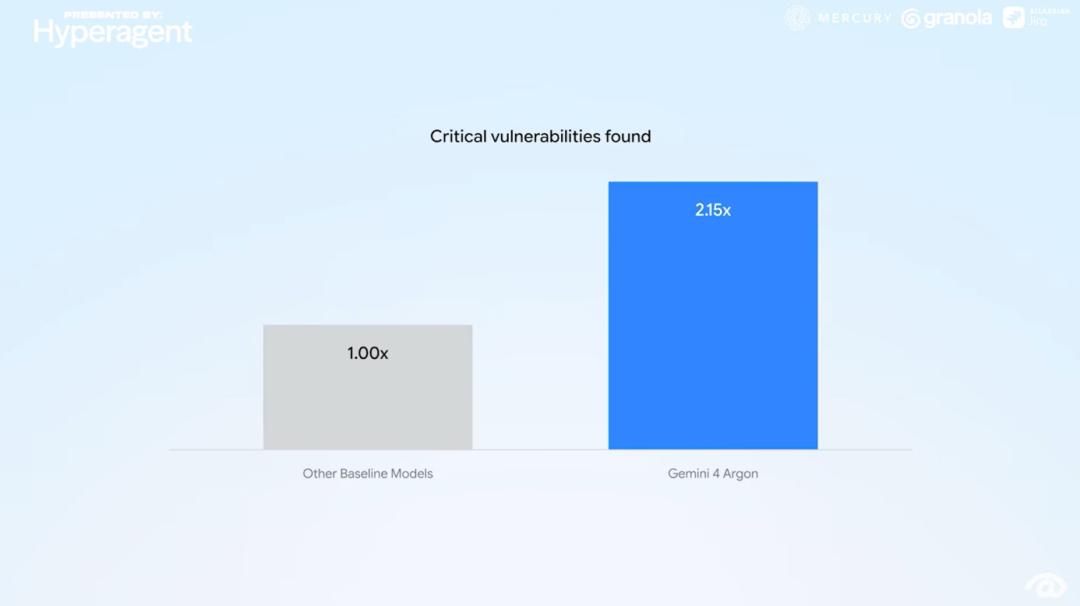
Pichai: We are very excited about it. We have been using it internally for some time before this, and it is absolutely a world-class cutting-edge model. Today's cutting-edge models are very comprehensive in both the breadth and depth of intelligence. If you make a heatmap of intelligence levels across dimensions such as agent tasks, knowledge work, and programming, I think it is very powerful in many dimensions and extremely competitive. In the first 72 hours after Argon's release, we processed about 25 trillion Tokens, about 3 times that of the 3.0 version. We are indeed facing some computing power constraints in the early stage of the release. The feedback from customers is fantastic, especially in terms of code and agent capabilities. Of course, I am well aware that there is still room for improvement. In the field of cutting-edge models, you keep releasing products, collecting feedback, and then moving on to the next step. This is the most dynamically changing period I have ever seen.
Host: What other areas do you think you still hope to keep improving?
Pichai: We want to continue to refine our programming capabilities. This is a very good model, and our engineers love using it internally, but we know very well that there is always room to do better. After the release, we have been continuously promoting internal optimizations at the behavioral level based on user feedback.
Host: You just mentioned the computing power constraints. It's interesting that a company like Google also encounters computing power bottlenecks when facing such new models. Argon is a large model, and its operating cost is obviously very high. Can you talk about how you decided to restrict access to it? Currently, it is only open to APIs and AI Pro and Ultra subscription users, which obviously does not cover the broadest user base. This is indeed a challenge for a model of this scale. How do you think about this restriction and release strategy?
Pichai: We have accumulated rich distillation experience during the 3.0 model period, and we can extract models with almost equally strong capabilities but much higher efficiency. We are currently developing these versions, which will help us make it as widely available to as many people as possible. At the same time, security is paramount for this cutting-edge model. We have invested a lot of energy in external testing, for example, through the US government's AI Safety Institute program, and providing early access to cybersecurity researchers, while also conducting extensive internal testing before pushing it to the outside. As you said, this is a large model, but considering its scale, our inference speed is quite fast. From now on, I will continuously expand access permissions. We first launched it for all Ultra and Pro users in the Gemini app, then launched the Pro version in the Anti-Gravity app, and we are developing 4.0 series distillation versions that can serve more users.
Host: Is this the rumored Carbon model?
Pichai: At any given moment, we will have internal versions of cutting-edge models, some of which are just code names, which does not contradict our launch of more efficient versions of Argon.
2. Security testing, competitive landscape and long-term cutting-edge positioning
Host: So the more efficient version is coming soon. I'm curious about how you view the security testing process. It's interesting to compare the practices of private cutting-edge labs like Anthropic with Google, Meta or large cloud service providers in terms of security and privacy. It sounds like your security testing for this model is very rigorous, and it seems to take longer than previous models. Is that correct?
Pichai: Absolutely. Given its strong agent capabilities and extremely excellent programming level, especially when deploying it to enterprise customers on a large scale, you need to ensure that everything is foolproof. For example, in addition to model alignment work, it is more important to build computing power and systems to monitor the running model in real time. This real-time monitoring is crucial for deployed models, allowing you to detect any unexpected behavior as early as possible and intervene in time. To this end, we took the time to build corresponding systems, sandbox environments and real-time monitoring mechanisms, and provide customers with the necessary protection measures to ensure that they know exactly where the model is running, what permissions it has, and what telemetry data is required.
Host: How much attention do you pay to this rally between new models? I mean, I know you definitely pay attention to all kinds of dynamics to see who is leading and who is lagging behind. Everyone was amazed last year when they saw Gemini 3 that Google was back at the cutting edge. Now looking at the benchmarks, Argon is indeed at the top. But it feels like everyone's attention is always shifting to see who is in the leading position. How much do you care about this? How much do you encourage your team to pay attention to these? I'd love to hear your thoughts now.
Pichai: That's a very good question. This is a period of extremely rapid change, and there are a lot of external voices. I certainly pay attention to the dynamics on X. It's very important to get external voices, because it lets you know what's working well and what needs to be improved. While I observe all this external feedback, more importantly, we have built a very rigorous internal evaluation system to evaluate the model. We can clearly see the performance curve of the model, so as to obtain high-quality signals internally. My requirement for the team is that we are firmly committed to staying at the forefront of AI technology in the extremely long term. We are not new to this field, but have been focusing on it for a long time, hoping to still be at the forefront of intelligence ten years from now. This means we need to do all the necessary work, including security guarantees, which is crucial for developing cutting-edge intelligence. One of the most important things for us this year is to speed up the product release rhythm. The industry is changing extremely fast, and cutting-edge models are also evolving rapidly. Therefore, a major adjustment we made this year is to make deeper breakthroughs in agent programming, and use this to optimize our release cycle. From 3.5, 3.6, 3.7 to 3.8 Flash, we completed this series of iterations in about 3 months, so in the 4.0 version, we also expect to maintain and improve this release rhythm.
3. Agent capability leap and 2027 productivity/RSI outlook
Host: There are some aspects of Argon that interest me a lot. For example, I saw that it independently cleared *Minecraft* in about more than a day, with computing power consumption reportedly less than $2000, which is very impressive. I'm curious what this level of agent capability means. Games are one thing, but you can extend this to many potential things, such as advanced decision-making and long-cycle tasks. What did you think when you saw the *Minecraft* case? How does this affect your long-term planning?
Pichai: Internally, we have witnessed the step-change productivity improvement brought by Argon. Since its internal deployment, it has been applied to many large codebases. For example, in Chromium, if you want to create an experience, such as dragging a tab and putting it into an AI experience while keeping it running in real time without reloading, the team used to need to open up all the underlying architectures of Chromium. But now, you can directly let Argon handle it, and it can complete the entire process durably and patiently. We see examples of this everywhere. What excites me is that I think 2027 will be our golden age of productivity, thanks to the new generation of models and their deep integration with our internal environment. You can also apply these models deeply to the R&D of the models themselves, which is what the industry calls Recursive Self-Improvement (RSI). These are all practical areas where we can see continuous progress, which is very exciting. The capabilities demonstrated in *Minecraft* show that with sufficient computing power and resources, we will advance faster in many areas than ever before.
Host: Any verifiable domain is actually possible, right?
Pichai: That's true, and in other domains, humans can always be involved in the feedback loop to continuously drive progress. It feels like there are infinite possibilities. This is a moment where as long as you can think of it, you can invest and make progress, which we have recently seen in the field of mathematics. Things that you thought would