35.3% of health monitoring devices are paid for by children: this generation of young people has started to "reverse-manage" their parents.
When we were young, our parents always kept a close watch over our living habits, every word and every move we made. Today, before they fully grow old, the young generation of this era has already started "reverse management" of their parents.
What do parents eat every day, did they forget to take their medicine, and what should they do if any changes happen to their health? Reminders can be delivered over the phone, but parents still have to live their own lives. Especially when they live far away, a few words of "I'm doing fine" make it almost impossible for their children to figure out whether they actually need any help.
With the launch of more and more tech products and AI tools, even thousands of miles apart, children can now participate in their parents' lives in a more concrete and tangible way.
PART 01
It's the children's turn to take care of their parents
The starting point of children's reverse management of their parents is rarely a warm and sweet scene.
A netizen working in the UK found that her mother was almost fooled by unscrupulous merchants, who tried to make her pay thousands of yuan for an "overpriced AI training course". So she took matters into her own hands, wrote a 70-page "Doubao AI User Manual", listing every detail clearly from how to ask questions, how to use voice input, to how to identify nonsensical AI outputs. After sharing it on Xiaohongshu, the manual got nearly 400 downloads.
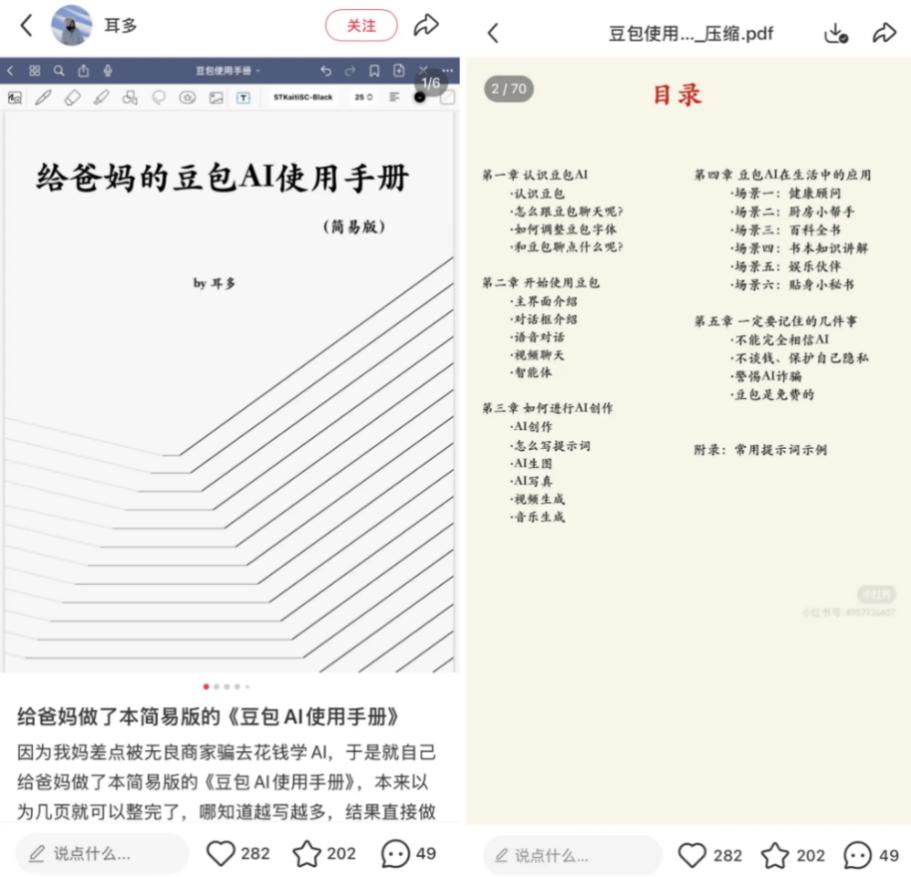
Image source: Xiaohongshu @ Erduo
Some people have racked their brains to save "internet-addicted elderly". They demand platforms to forcibly limit the viewing time of accounts registered for the elderly, block high-risk content such as health-related novelty rumors and false popular science; some children who are extremely emotional even apply for permanent closure of their parents' accounts, shut down playback permissions, and cut off internet access, hoping to stop the elderly from getting addicted to the internet in the most extreme way possible. Those whose internet cables were pulled out by their parents when they were young, have learned to pull out their parents' network cables after growing up.
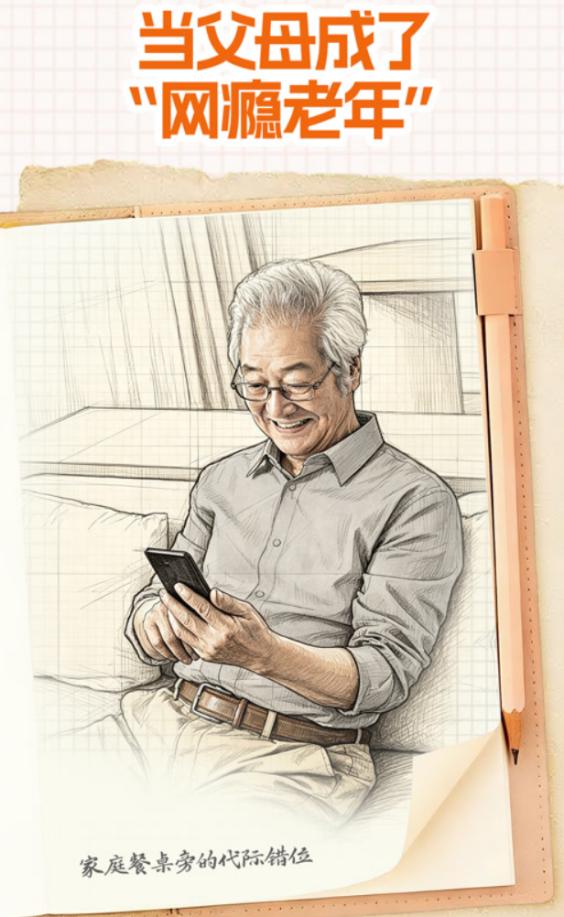
Image source: Beijing Daily
No matter teaching or managing, there is one thing behind all these actions: the world that parents are exposed to is unfolding in a way that their children cannot fully understand.
Short videos, livestreams, short dramas, behind every entrance there is a huge amount of content waiting for them; and children start to care about what they watch, what they believe, and whether they have paid money for any livestream room. The original task of "teaching parents to use mobile phones" has quietly upgraded to "helping parents manage information".
Changes in physical conditions and daily lives make this kind of participation even more frequent. Taking medication, monitoring health indicators, understanding medical test reports, all these are specific daily affairs for parents. Children may not be able to handle every single thing for them, but they have already started helping configure devices, sort out information, and remind them of easily missed arrangements.
Breaking down the information barrier between the two generations is exactly the starting point for children to manage their parents' behaviors.
In September 2026, Youth Research Institute, together with China Life and Zhihu Research Institute, launched a survey that collected feedback from 878 respondents. Among them, 35.3% of young people have bought health monitoring devices for their parents, and 17% have installed home safety devices. The sample size is not very large, but the trend is clear enough: a number of families have already taken action.
In this Two-Way Elderly Care Report for One-Child Families, there is another more striking figure: 34% of the only children hope to bring their parents to live with them, but in reality, more than 40% of the parents choose to stay in their original hometown far away from their children.
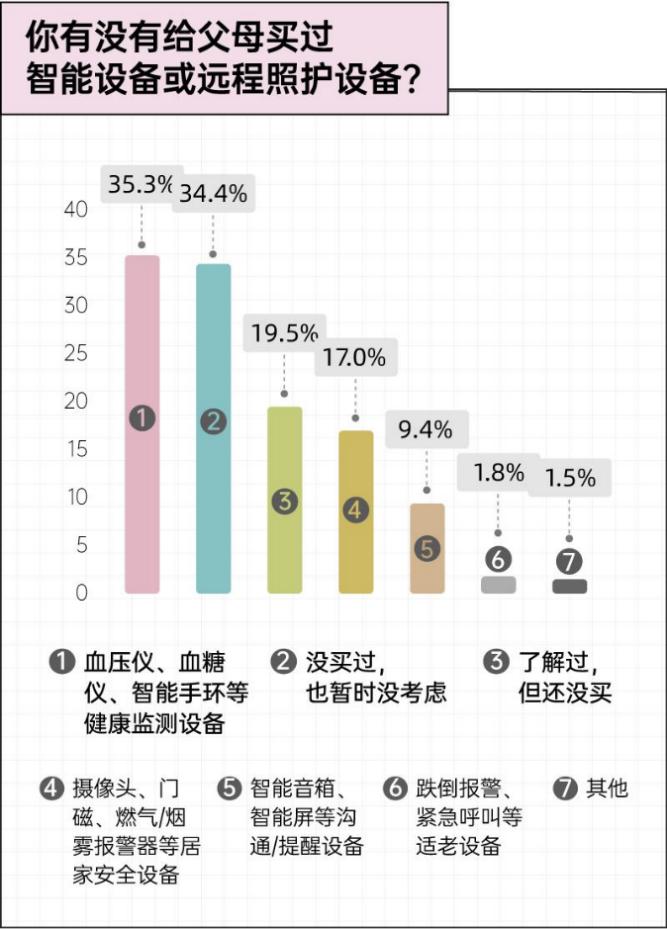
Image source: Youth Research Institute
When the distance cannot be shortened, what children can do is to break their care into small tasks that can be completed remotely, so that technology and products can become the bridge connecting the hearts of family members.
The popularization of AI has just provided them with very handy tools. According to data from QuestMobile, as of August 2026, the user scale of AI-native mobile apps has reached 537 million. The post-80s, post-90s and post-00s generations are the core main force of AI users, while the number of post-70s and post-60s users is also increasing significantly, accounting for 17.2% and 10.8% respectively. People aged 50 and above are becoming a non-negligible force in AI application users.
This means that when children want to teach their parents to use AI, their parents are not a blank sheet of paper on the other end. They may already be using AI, even more frequently than their children have imagined.
As a result, "reverse management" becomes possible, and its meaning gradually goes beyond the fun of role reversal: children take charge of specific affairs first, then gradually participate in their parents' daily life, and achieve long-term and continuous remote presence by configuring devices during a home visit.
Essentially, managing parents is to rebuild a "visible" life between two different places far apart.
PART 02
Children's upward management of their parents
"Upward management" in the workplace refers to predicting the needs of your boss, quietly filling in positions, and leveraging existing forces to get things done; the tricks of "upward management" for parents are surprisingly similar.
The first line of management is daily routines.
At 6 o'clock every morning, Aunt Liu's smart bracelet vibrates, reminding her that her blood pressure is normal; at the same moment, her son's mobile phone lights up with a notification, "Mother has started a new day".
At the very beginning, Aunt Liu always forgot to charge her bracelet, but now she almost never leaves it on her wrist. "I used to sit in front of the TV for a whole afternoon, but now when the bracelet vibrates, I will get up and walk around. When I do outdoor activities, I can also use the functions of the bracelet to count steps, measure heart rate, check pace, etc., which makes it convenient for my son to know my physical condition." Aunt Liu said.
For example, the family space function in the Huawei Health app supports invitation and authorization. Parents can choose which sports and health data to share, and their children can check the corresponding records and receive reminders of health anomalies.
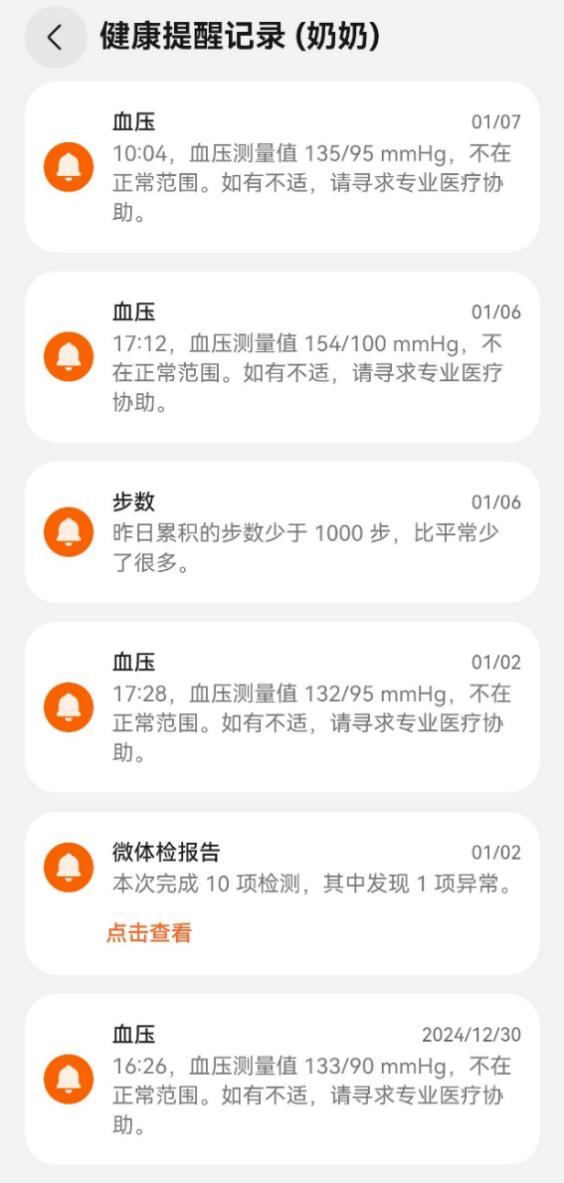
Image source: Huawei
The second line of management is medication.
The mobile application "Parents' Pill Box" allows children to help input medication information and reminder schedules. After parents approve the family binding, both sides can view the check-in records synchronously. If no check-in is made, the associated child will receive a notification, and then make a phone call to confirm. Children are responsible for sorting out the arrangements, and parents are responsible for execution. The check-in records make the question of "did you take the medicine" get an answer that no longer needs to be asked repeatedly for the first time.
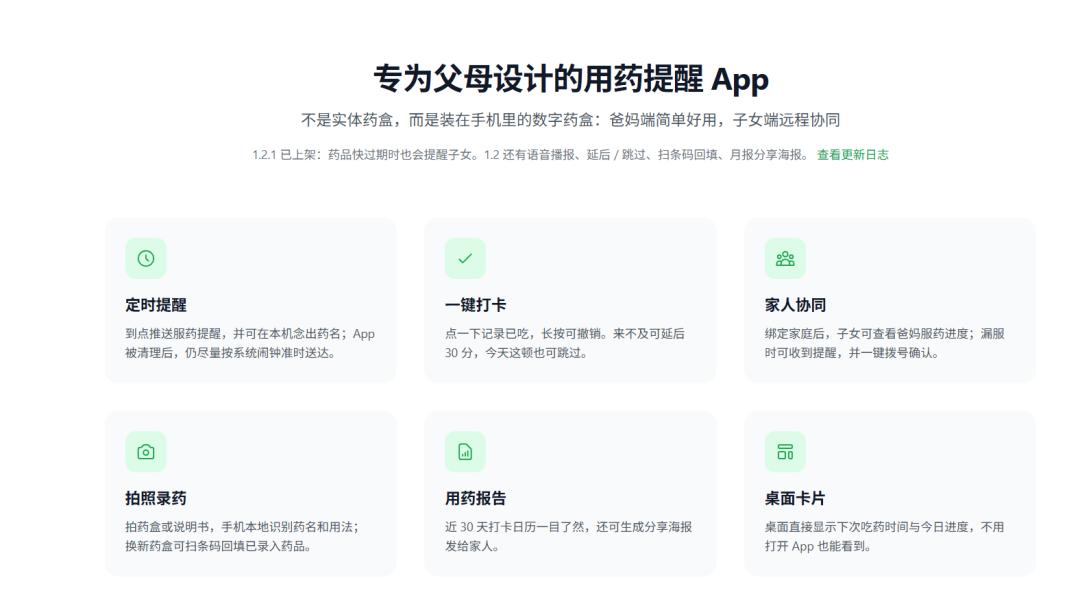
Image source: official website of Parents' Pill Box
The third line of management is diet.
The change started from a small tomato. Chen Chen's father has suffered from diabetes for many years, and he always worries about whether he can eat this or that. Chen Chen simply taught him to use DeepSeek, asking questions like "Can a diabetic patient eat small tomatoes, and how many can he eat a day", "What heart rate during brisk walking can effectively lower blood sugar", "Is there any hope to cure diabetes completely", later on, Chen Chen's mother would also use Xiaohongshu for further verification, and her father also used cross-reference information sources such as Ant A-Fu.
The tools that the daughter brought home gradually became her father's own information channels. The subject of management has quietly changed here.
The fourth line of management is medical treatment.
When parents feel unwell, the first reaction of children is no longer "should we go to the hospital", but to ask AI first: what the possible problem is, which department to register for at the hospital, and what examinations may be needed. During the medical visit, lab sheets and examination reports can be photographed and uploaded to the health management platform, where AI can further assist in interpretation. Beijing Daily reported in August 2026 that "asking AI first when you feel unwell" has become a standard action for many children.
From daily routines to medication, from diet information to medical treatment, these four lines weave a complete network. But this network is not one-way, and the managed side also has their own opinions to express.
This kind of management is not acceptable to every pair of parents and children. An article published on the official website of Shanghai Charity Foundation discussing the gains and losses of smart elderly care practice mentioned that the elderly are often unwilling to wear smart bracelets for a long time; some elderly people feel that cameras are "like being monitored" and develop resistance. Beijing Daily has also observed similar phenomena: some elderly people only use the smart bracelets they received to check the time, and they still have to ask their children for help when they need to take a taxi or register for a hospital visit.
There are also opposite results. There is a hidden "remote guard" function in the settings of Huawei mobile phones: turn on "Elderly Mode" on parents' mobile phones, and children can scan the code to bind with the "Family Assistant" app on their own mobile phones, so as to remotely guard their parents' mobile phone usage. The "Family Assistant" function was originally designed by Huawei's official tutorials for the scenario of parents binding their children's accounts to control their children's mobile phone usage. Now, it is being used by young people to manage their parents.
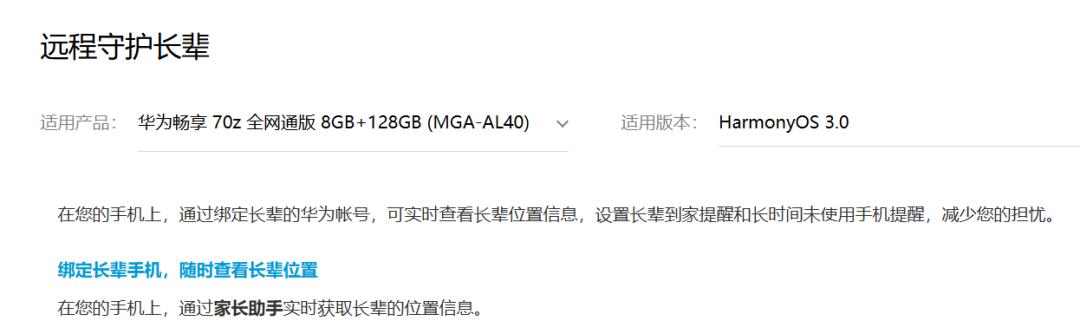
Image source: Huawei
The tools have not changed, only the users are from different generations.
PART 03
New demands open up old businesses
Once reverse management becomes a common action, the market will be the first to sense this trend.
The first emerging opportunity is hidden in the action of "asking AI". In the vigorous wave of AI popularization, many parents have already formed the habit of asking AI for help.
In August 2026, Sinocare added a new function to its dynamic blood glucose meter i6: users can take a photo of their dinner plate, the app will identify the food, estimate the carbohydrate and calorie content, and push a post-meal blood glucose rise analysis report of this meal two hours after eating. According to the company's introduction, products equipped with the "Xiao Nuo Intelligent Agent" have started to connect the continuously monitored blood glucose changes with each meal.
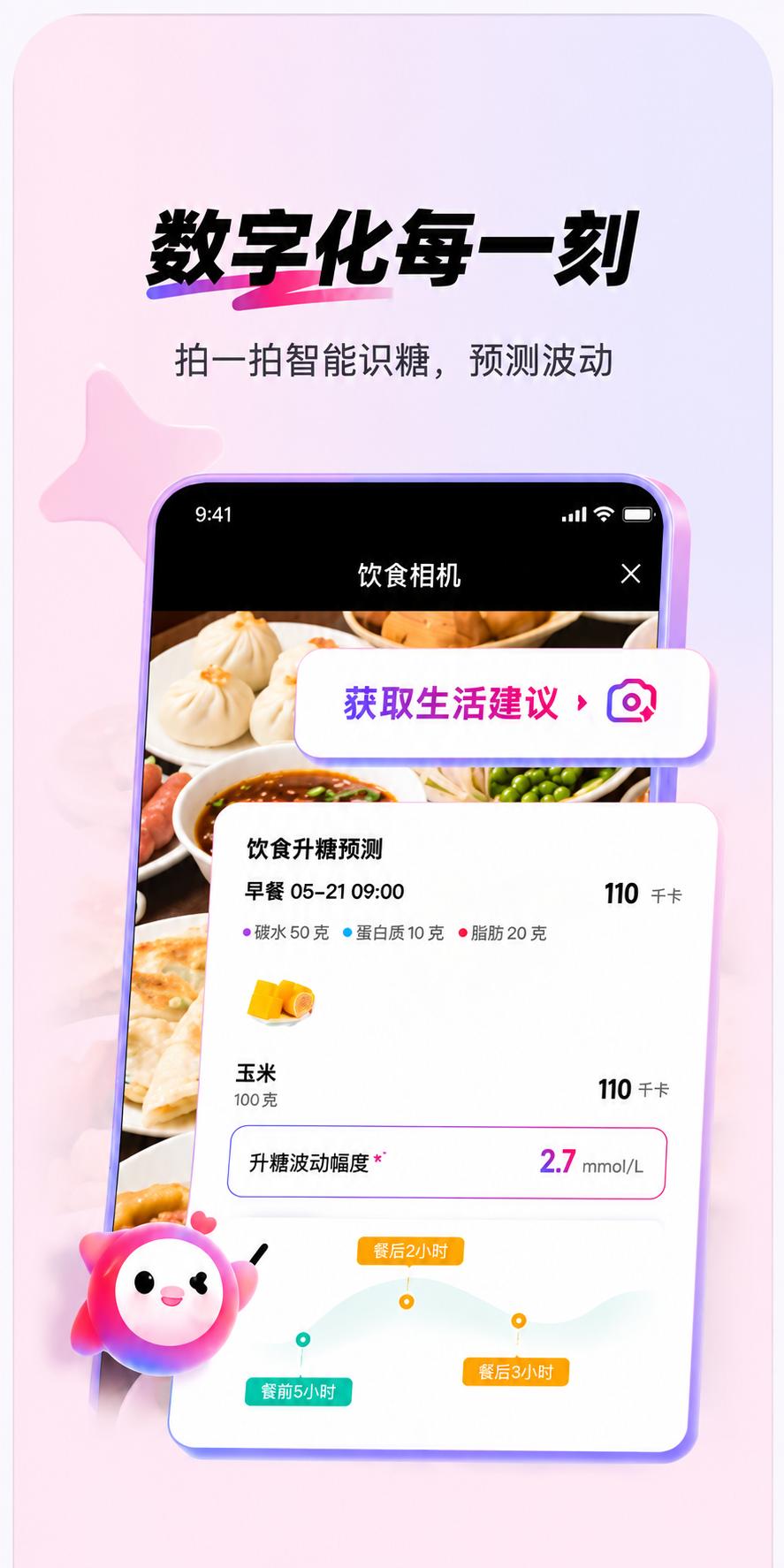
Image source: Sinocare
This is exactly what the diabetic father wants. How many small tomatoes he can eat, whether brisk walking can lower blood sugar, family discussions have gone deep into specific diet details. For silver-haired smart technology enterprises, this kind of demand points out a clear product direction: help the elderly understand their own records, so that children can have more specific information to refer to when participating in related discussions.
The sales feedback came very quickly. Sinocare announced on August 18, 2026 that the GMV of its newly launched i6 in the first week of sale exceeded 20 million yuan, and more than 280,000 users have experienced the Xiao Nuo Intelligent Agent.
This business also has the foundation for continuous repurchase. A single sensor of the i6 can only be used for 15 days, and continuous monitoring requires replacing consumables, so enterprises have the opportunity to reach the same family repeatedly in subsequent purchases. In addition, Sinocare's 2026 semi-annual report disclosed that its products cover 400,000 pharmacies, more than 10,000 community hospitals and township hospitals, and it provides chronic disease management services involving specialist physicians and nutritionists through its affiliated institutions. For pharmacies and grassroots medical institutions, children can assist with purchasing for equipment usage guidance, record interpretation and follow-up consultation, and the problems encountered by parents in daily use still need to be dealt with properly.
Since it is management, it is naturally inseparable from the care of the elderly. But young people don't just want a camera, they hope there can be someone who can help them deal with the crises in daily life on their behalf.
Ezviz currently has a 799-yuan fall detection radar, and a 2599-yuan elderly home fall care service package. The package combines cameras, radar detection with cloud alarm, telephone notification, and activity record statistics. The price difference cannot be directly regarded as service fee, but we can see that families now have two choices: single device and combined care solution.
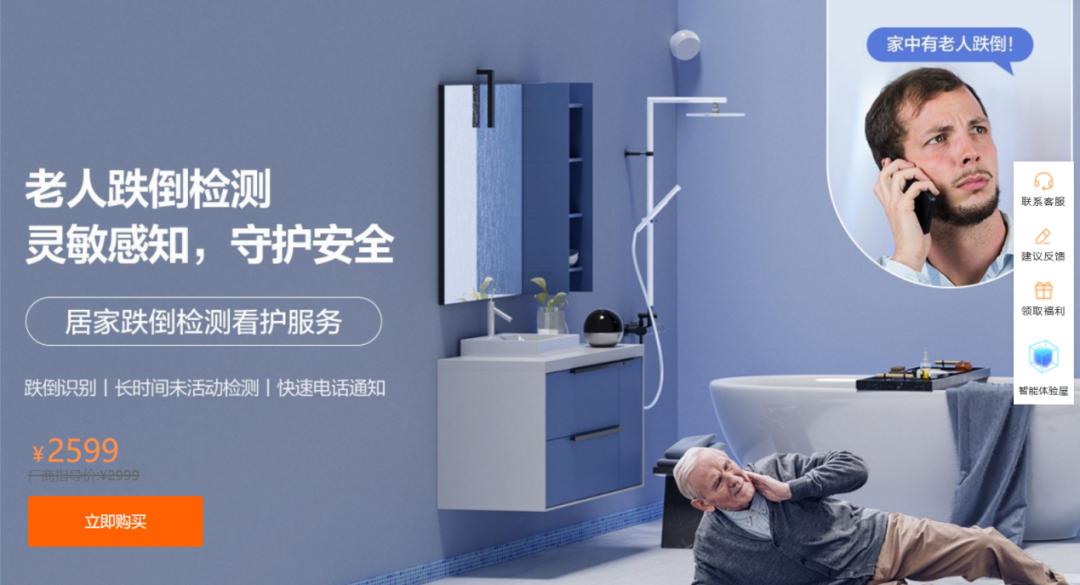
Image