The post-2000s generation are starting their own businesses to build robots, and the youngest of them is only 22 years old.
In the entrepreneurial boom of embodied intelligence, what stands out most is not just robot demonstrations and capital endorsement, but also the new batch of post-2000 entrepreneurs entering this track, who are extremely young yet hold financing at the tens of millions or even hundreds of millions of yuan level.
Among them, some are still pursuing master's or doctoral degrees, while others left school early ahead of schedule; some started from robotics competitions, open-source projects and laboratories, while others entered the robotics industry from seemingly marginal niches such as design, business and home cleaning. What they all share in common is that they did not confine embodied intelligence to papers and competitions, but are exploring ways to enable machines to truly understand, enter and adapt to the physical world.
This article reviews the ten post-2000 entrepreneurs in the embodied intelligence field in chronological order: Huang Yi, Chen Boyuan, Jia Xiaoyou, Xue Kehan, Chen Tianxing, Qin Shentao, Hu Yucheng, Zhu Yuhan, Min Yuheng and Yang Fengyu.
Some of them develop bipedal ontologies, some work on world models, some specialize in collecting human neural and muscle signals, and some take dexterous hands and home cleaning as their entry points. The different technical routes they take do not mean that one is closer to the "correct" answer, which precisely indicates that the embodied intelligence track is not yet closed. No one can present a perfect and clear path, and data, models, hardware, product forms and application scenarios are all still in the stage of joint exploration.
01 Huang Yi: RoboParty
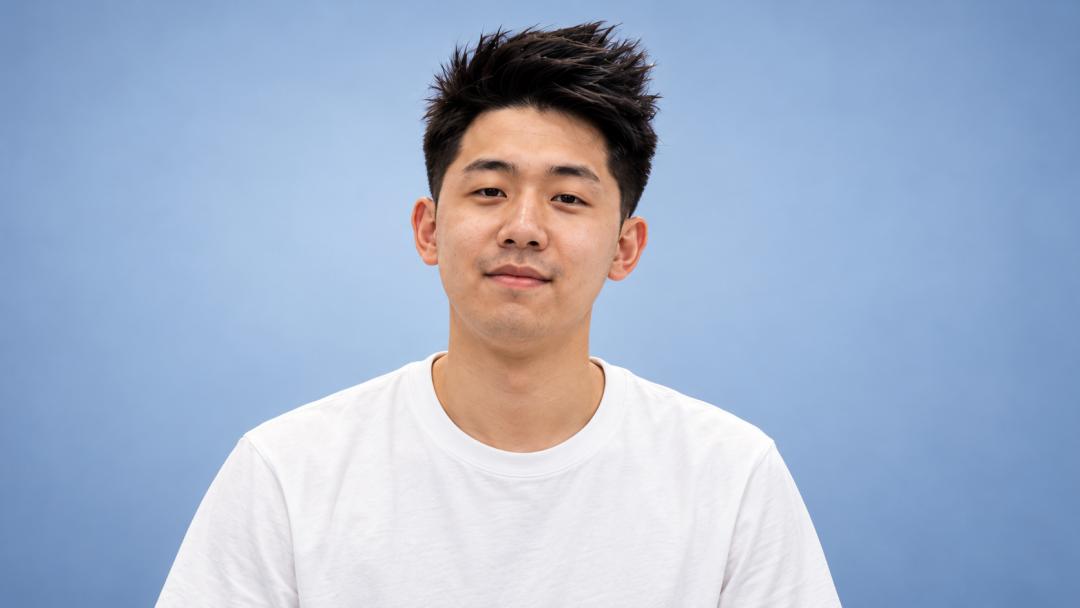
Huang Yi, born in Wenzhou, Zhejiang in 2004, entered the major of intelligent robotics at the School of Future Technology of Harbin Institute of Technology. In 2023, he won the first prize in the National College Students Science and Technology Competition with his land-air amphibious drone project. At the end of 2023, Huang Yi, who was still studying at Harbin Institute of Technology, and his roommate independently developed a 120cm biped robot named AlexBot in their dormitory. The whole development was completed in only dozens of days, and they published the R&D process and drawings on the developer community to realize full-stack open source.
In February 2025, with the sponsorship of Fourier Intelligence, he completed the iterative version AlexBot Mini, which attracted the attention and support of many industry experts including Marc Raibert, founder of Boston Dynamics. In 2025, Huang Yi decided to graduate from Harbin Institute of Technology with a bachelor's degree ahead of schedule, and moved south from Harbin to Shanghai with 13 classmates to found RoboParty.
In Huang Yi's view, the direct reason for founding RoboParty is that there are still problems of redundant development and insufficient developer tools in the humanoid robot industry.
The company does not pursue products with the most complete functions or the largest size, but chooses high cost performance, full-stack capability and open source sharing to develop biped humanoid robots for the scientific research, education and developer market. Its products are about 120cm in height, which is more convenient to enter laboratories, schools and developer groups, and easier to form a reproducible and transformable technology community.
This route, on the one hand, lowers the threshold for users to participate in embodied research, and on the other hand, allows the company to avoid direct competition with large complete machine manufacturers such as Unitree from the very beginning. Up to now, the company's order volume has reached 200 to 300 units, and it has disclosed that the funds are mainly invested in R&D, production and manufacturing, venues and computing power.
Huang Yi likes to call himself a "robot enthusiast" instead of deliberately emphasizing his identity as CEO, which makes the company culture closer to the engineer and developer community, and also makes open source easier to grow out of product strategy rather than marketing slogans. In the early stage of the company's establishment, Huang Yi once rejected the investment proposed by a listed company and hundreds of overseas orders, and gave priority to building the community ecosystem.
In January this year, RoboParty open-sourced the company's first prototype, and the number of GitHub Stars exceeded 1.4K within 60 days after its launch. In July this year, the company successively completed the Angel++ round and Pre-A round of financing, with the amount close to 5 billion yuan. The latest round was exclusively invested by CATL. The company has been established for more than one year, completed 6 rounds of financing in 8 months, and its valuation has risen 20 times. He believes that new-generation entrepreneurs need to find their own ecological niche under the condition of limited resources, and mentioned that the current capital pricing for the humanoid robot industry is more based on "market dream ratio".
02 Chen Boyuan: Inverse Matrix
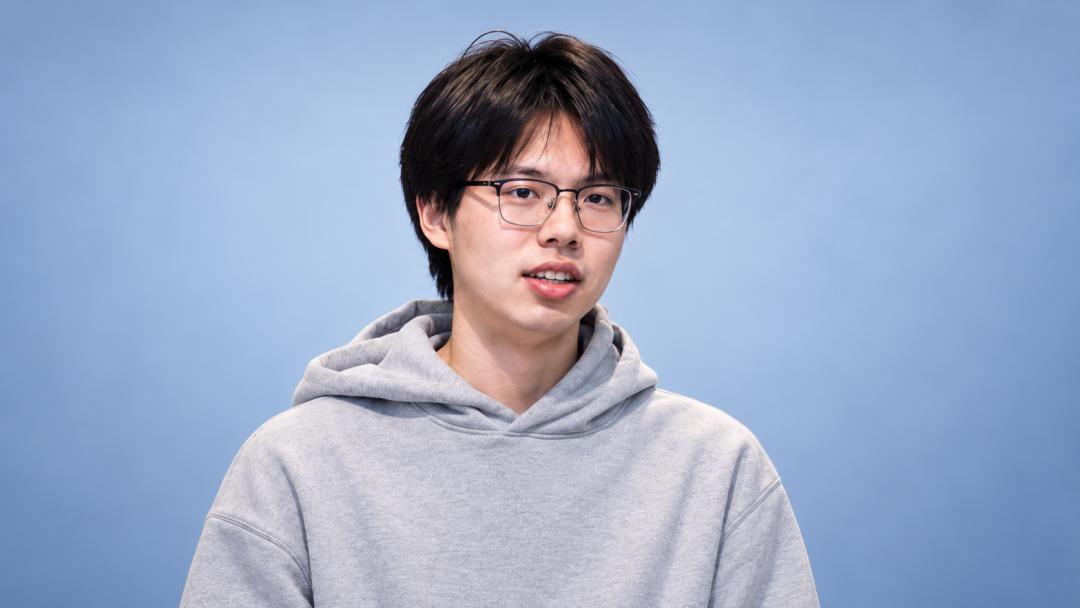
Chen Boyuan, born in 2004, was first exposed to artificial intelligence through an online lecture of Peking University during his high school years. That exposure made him realize that intelligent technology may not only process existing information, but also gradually change the way humans interact with the world. Later, he was admitted to Peking University, and published nine papers as the first author during his four years of undergraduate study, with more than 2300 academic citations.
During his freshman year, Chen Boyuan joined the research group of Professor Yang Yaodong at Peking University, focusing on reinforcement learning, scalable supervision and world model research. In 2023, Chen Boyuan published a paper as the first author at NeurIPS, the top conference of machine learning. In 2025, he won the Best Paper Award of ACL, the top international AI conference, as a co-first author. In the same year, Chen Boyuan was invited to give an invited report at the "Shuangqing Forum" of the National Natural Science Foundation of China, and shared the team's cutting-edge exploration in the field of artificial intelligence at the seminar of the UN Secretary-General's Scientific Advisory Board.
This experience did not make him stay in the direction of a single language model, but instead pushed him to think about a more difficult problem: whether the model can understand physical rules such as objects, space, forces and causal relationships. For him, the physical world is not an environment that can be completely restored by words and numbers, and the model must learn to predict what changes actions will bring.
Chen Boyuan co-founded Inverse Matrix because he did not want to only make special-purpose robots for a certain industry, but to return to a more essential level to find a general model that can learn knowledge from various industries, because his own technical background determines that Inverse Matrix is not a traditional robot complete machine company.
Inverse Matrix released the general world foundation model "Physis-v0.1", whose goal is not to simply identify the environment, but to make the model understand the physical world and learn how humans observe, make decisions and act. The company hopes that the model will first "see the world" in large quantities, and then learn to interact with the environment; technically, the model can generate and predict how the physical world changes by itself. Once this route is established, there will be an opportunity to provide general physical intelligence capabilities for different robots and different tasks.
When this post-2000s turned 22, the valuation of Inverse Matrix, which he co-founded, had exceeded 5 billion yuan. In April this year, Inverse Matrix announced that it had completed a seed round of financing of over 100 million US dollars, and in June, it completed a seed++ round of financing of over 100 million US dollars.
03 Jia Xiaoyou: Lingxin Qiaoshou

Jia Xiaoyou, born in Hangzhou in 2003, is a young person with multiple identities: entrepreneur, designer, beauty pageant champion and postgraduate student.
She graduated from Beijing Forestry University with a bachelor's degree in environmental design. Unlike most entrepreneurs in the embodied intelligence field, she did not start from algorithms, mechanics or electronic engineering, but entered the robotics industry with an art and design background. The environmental design training she accumulated in school made her pay long-term attention to the relationship between form, material, use experience and people, which also made her naturally focus on how products are understood by users in the team.
In 2023, she co-founded Lingxin Qiaoshou with Zhou Yong and others, serving as design director, mainly responsible for the appearance and structural design of the Linker Hand series dexterous hands. She brought the delicate feelings from her art learning experience such as piano, dance and ballet into R&D, and tried to integrate traditional cultural elements with technology products, so that robot products are no longer only regarded as industrial equipment.
The original intention of Jia Xiaoyou to found Lingxin Qiaoshou is not satisfied with only making mechanical fingers complete grasping actions, but hopes that the products can enter scenarios that require more fine operation and experience, such as intangible cultural heritage, traditional Chinese medicine physiotherapy, health care and beauty makeup. The Linker Hand series covers three main technical routes: connecting rod, tendon rope and direct drive, which also shows that the company does not limit product design to a single form, but looks for common points in different needs such as scientific research exploration, humanoid robot complete machine supporting and industrial automation. In 2025, the high-degree-of-freedom dexterous hand she designed won the German Red Dot Design Award, and the cumulative delivery of products exceeded 10,000 units.
In February this year, Lingxin Qiaoshou completed nearly 1.5 billion yuan in Series B financing, and completed Series B+ financing again at the end of April. The investors include institutions such as Zhongguancun Science City Fund, BOC Asset and Fosun Chuangfu, while old shareholders such as Bojia Capital and Lihe Finance continued to increase their investment.
04 Xue Kehan: xLean
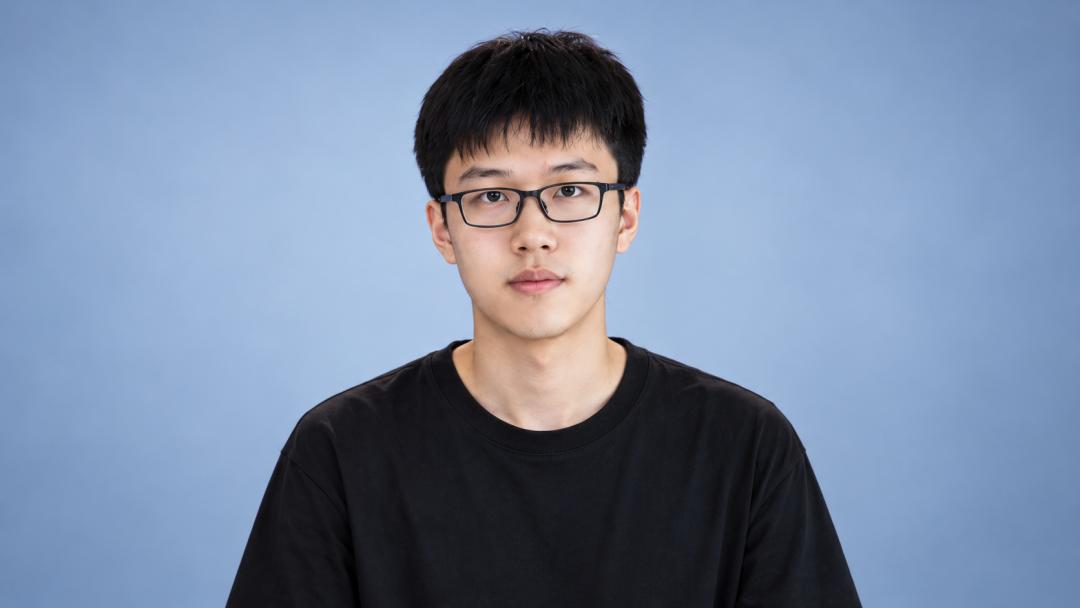
He entered Northwestern Polytechnical University at the age of 15, and was included in the two lists of "Hurun" and "Forbes China" at the age of only 25. He is Xue Kehan, who has been deeply engaged in the robot track, and spent 10 years building a household cleaning robot enterprise with a valuation of 1.8 billion yuan.
Xue Kehan entered Northwestern Polytechnical University to study in 2017, when he was only 15 years old. In his freshman year, he joined the school's robot team and later served as the team leader. He was exposed to a variety of robots such as indoor multi-rotor drones and underwater unmanned vehicles, and led the team to participate in the RoboMaster AI Challenge, achieving the sixth place in the world among 70 to 80 universities. This experience made him not only understand algorithms, but also be familiar with structure, electronics, welding and overall scheme review.
In 2020, he got a full-funded direct PhD offer from the Institute of Robotics, the Chinese University of Hong Kong, but the epidemic prompted him to devote himself to entrepreneurship first, making hospital disinfection and sterilization robots. That company achieved tens of millions of yuan in revenue in two years, with nearly 1000 units delivered, but he took the initiative to quit, because he found that there was no closed loop between user feedback and product improvement, and the technology was difficult to truly get close to end users.
This experience directly shaped the direction of xLean. Xue Kehan did not set his entrepreneurial goal to immediately build a general-purpose humanoid robot, but to find a household task that is high-frequency, rigid-demand, has existing market foundation and can continuously generate data. After buying a flagship sweeping and mopping robot, he realized that most of the existing products just follow the plan, do not know where is still dirty, what strategy to use, and do not know how to complete the cleaning. Therefore, he proposed to make cleaning change from "open loop" to "closed loop", and launched the world's first dual-form floor washing robot TR1: when placed on the ground, it can independently complete daily cleaning, and after pulling out the hand-held rod, it can become a hand-held floor washer. Every time users deal with sudden stains, they are using data to tell the robot where is dirty and how to clean effectively, so that the robot can complete training at home.
Since its establishment, xLean has completed four rounds of financing with a cumulative amount of more than 10 million US dollars. The investors include Guofang Innovation, Huaye Tiancheng, Wuyuan Capital, Linge Venture Capital, Lanhai Zhongli Capital, Wanshi Capital, Gaozhang Capital and MiraclePlus. 500 units of TR1 trial production are ready, the overseas retail price is set at 1699 US dollars, and the Kickstarter crowdfunding price is close to 1000 US dollars; the product received 2.1 million US dollars of support in overseas crowdfunding, and more than 100 distributors from more than 40 countries and regions released about 150,000 units of intended orders.
05 Chen Tianxing: Xspark AI

Chen Tianxing is the co-founder and CTO of Xspark AI, a direct PhD student of MMLab at the University of Hong Kong, supervised by vision expert Professor Luo Ping. As early as during his undergraduate and doctoral studies, he continued to participate in embodied intelligence infrastructure research, and is the first author of embodied evaluation systems such as RoboTwin and RoboDojo. At the same time, Chen Tianxing also founded the embodied open source community Lumina, which has accumulated nearly 20,000 stars on GitHub, and was selected into the top 10 annual embodied open source projects of Alibaba Cloud EAI-100. He once participated in model training and evaluation in teams such as Seed of ByteDance. This practical experience from academic to industrial model training gave him a more complete understanding of data, evaluation and model reliability than a single research direction.
Chen Tianxing's participation in founding Xspark AI stems from his judgment on "Trusted Physical AI": when robots act in the physical world, they cannot only rely on one demonstration or single task performance, but also have the capabilities of safety cognition, reliable decision-making, real-time response and continuous verification.
Therefore, the company proposed the collaborative architecture of "Slow Brain VLM - Fast Brain WAM - Spinal Cord VTA". The slow brain is responsible for high-level semantic understanding and planning, the fast brain is responsible for physical execution, and the spinal cord undertakes millisecond-level real-time response, and forms risk coverage through multi-spectral tactile and multi-modal data. This system can be deployed independently, or integrated modularly with the original robot model to provide safe decision-making and reliable execution capabilities for different robot ontologies.
Xspark AI does not limit itself to a certain robot form, but provides a physical intelligent hub for complex scenarios such as industry, home and service. It is worth noting that the more complete the layered architecture is, the higher the complexity of system integration will be. The company needs to use real deployment to prove that the collaboration of all layers is not a previous theoretical model. If safety constraints, tactile feedback and sustainable evaluation can form a closed loop in actual tasks, Xspark AI will have the opportunity to grow from a technology provider to a base-layer company of embodied intelligence.
The company recently completed the first round of angel financing of nearly 100 million yuan