The "Local Muse" founded by Chinese post-2000s talents is wildly chased by the Silicon Valley AI community, and has received investments from both a16z and Anthropic.
Zhidx, October 19 report: Recently, Conway Research, a US AI Agent startup that was founded only 8 months ago, unveiled Underdog, its first personal AI assistant, and officially announced that it has secured investment from the investment consortium under Anthropic, the well-known Silicon Valley VC firm a16z, as well as individual investors and institutions including top AI talents from Google, OpenAI, and Hugging Face.
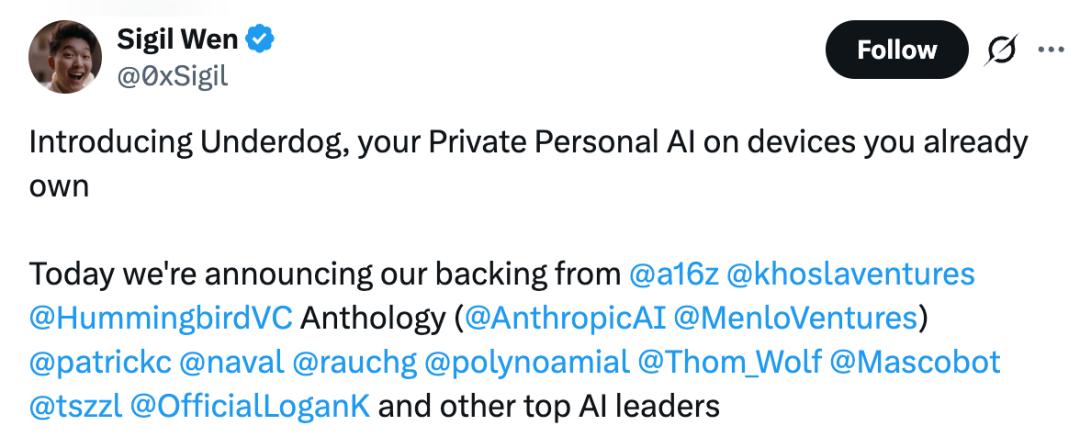
▲ The tweet of Conway Research founder Sigil Wen announcing the financing (Image source: X)
The company describes Underdog as "the most privacy-preserving Muse competitor to date".
On September 8, Meta released Muse, a personal AI assistant, which surpassed ChatGPT to top the overall free app chart on US App Store only 10 days after its launch. Muse can independently break down user goals and execute tasks, covering multiple scenarios including office work, daily life and consumption. Each user is equipped with an independent cloud virtual machine that can continuously run tasks in the background.
This boom spread rapidly. OpenAI launched its new-generation intelligent agent product Dot, Elon Musk released Grok Bot, Manus rolled out its 2.0 version, and it was also exposed that domestic companies including ByteDance, Tencent, Ant Group and Alibaba are also developing similar products.
Underdog has similar functions to products like Muse, both of which help users handle daily life and work tasks. The biggest difference is that Underdog runs entirely on the user's device and can operate even offline.

▲ Demo of Underdog automatically adding schedules (Image source: Conway Research)
Conway Research was founded in February this year, and its core research direction is the AI Agent framework that can run autonomously. At present, this product released by Conway is still in the invitation testing phase and has not been released to the public.
The company's founder is Sigil Wen, a self-taught post-2000s Silicon Valley AI genius who dropped out of university. He was born in Toronto. Shortly after moving to Silicon Valley at the age of 17, he spent 11 months living and working closely with a group of later well-known AI founders, including top AI talent Andrej Karpathy, and co-founders of Midjourney and Anthropic. He also experienced the prototype products of Midjourney and Claude as early as 2021.

▲ Sigil Wen (Image source: TechCrunch)
Sigil Wen became famous on the social platform X earlier for running GPT-2 on Apple Watch and releasing the first AI Automaton that can self-sustain, self-evolve and replicate without human intervention.
So what makes this rising AI company win the bets of top Silicon Valley practitioners, and what is different about its Agent solution? We try to find the answers to these questions.
01. Fully local operation, can help you check emails, generate images and process meeting notes
The core feature of Underdog is that it can run entirely on the user's device. This means that data is only stored locally, and it can help users make decisions even when offline.
The product has currently launched a beta version supporting Mac and Windows computers, and versions for Linux, iOS and Android will be launched in the future. It can run directly on Mac, connect to users' emails and calendars, and handle tasks such as checking emails, scheduling, processing meeting notes, voice input, online errand running, and private iMessage processing.
Since its launch, the functions of Underdog are being updated one after another, including local image generation and editing functions, local agent payment jointly launched with Stripe, one-click import of meeting notes and other functions.
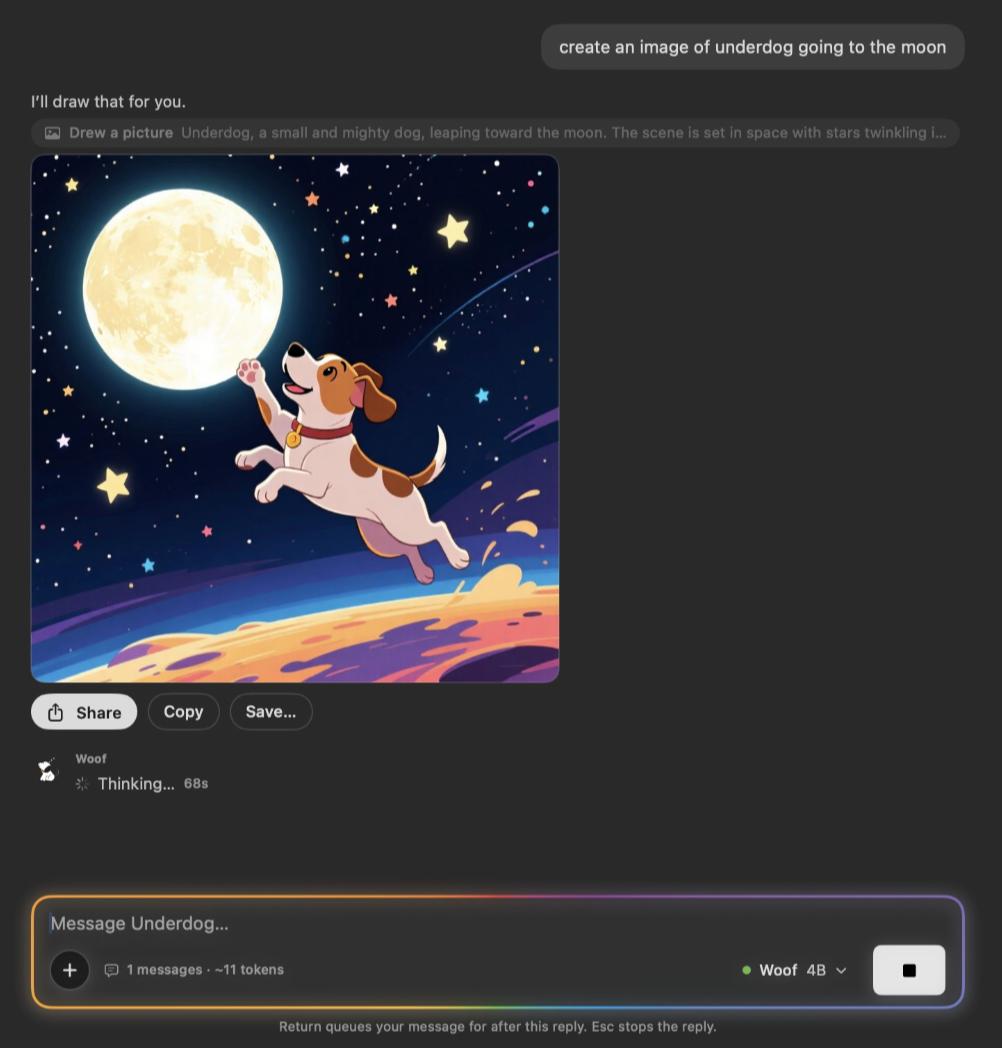
On October 12, its local free image generation and editing function was launched, which is built based on Qwen-Image Flash and Qwen-Image-2.1-Turbo.
According to its official demo, Underdog Images can generate images according to the natural language requirements input by users, and also support reference image generation, partial modification, background replacement and other operations.
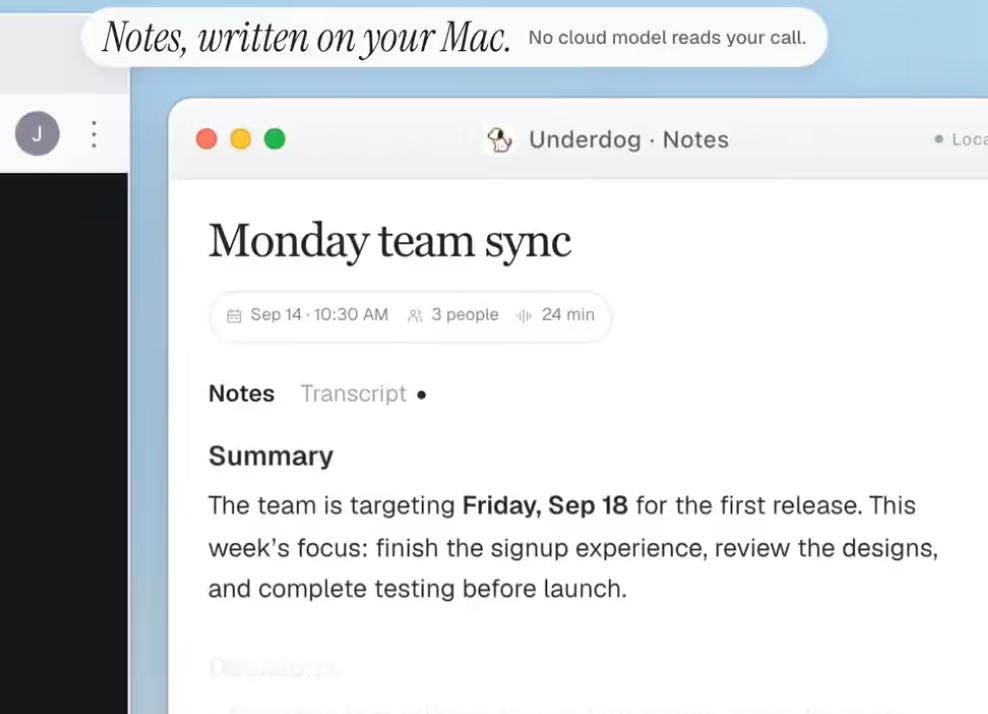
On the same day, Underdog launched its function supporting one-click import of meeting notes, and the relevant content will not be uploaded to any server. It can instantly generate summaries, decision items and action items after the call ends.
On October 14, Underdog cooperated with Stripe to launch the first device-side agent payment function. In the local browser, Underdog can obtain a one-time Link card with the corresponding exact amount and wait for the user to authorize the payment.

In addition, the company announced that it is also researching capabilities that allow the Agent to directly shop for users, and it hopes to gradually turn this type of local AI into a personal Agent that masters personal context for a long time and directly handles affairs for users.
02. Fine-tuned model based on Qwen3.8 27B , exclusive inference engine is 4.5 times faster than MLX
According to official disclosures, Underdog's performance advantages benefit from two key supports: a lighter and smarter model and the exclusive inference engine Husky.
First look at the models. Behind Underdog are the faster Woof 4B and the smarter Saluki 27B. Saluki 27B has been open sourced.
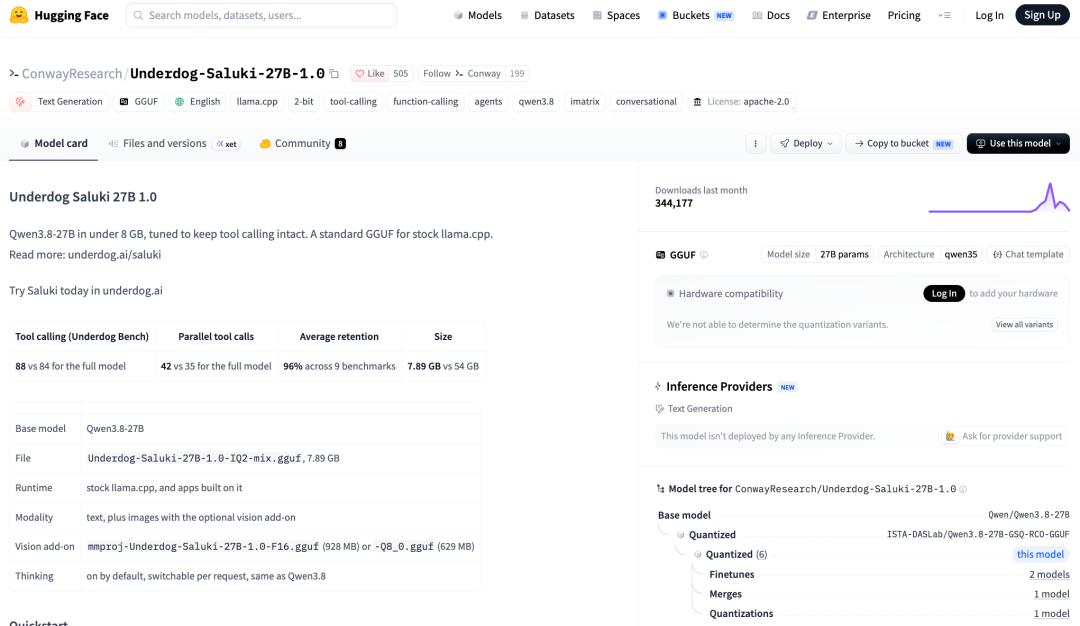
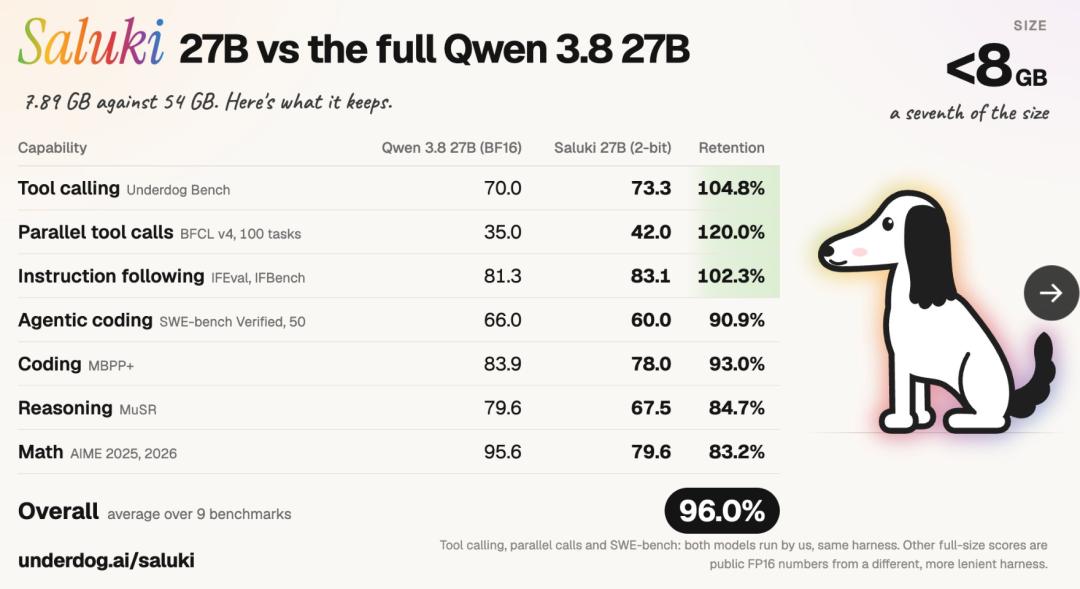
The Saluki 27B is built based on Qwen3.8 27B. Official data shows that the weight volume of this model is 1/7 of the full-precision version, while retaining 96% of the performance, and it is better than the Qwen model in tool calling.
In an interview with foreign media TechCrunch, Sigil Wen revealed that the model can complete daily tasks that people expect AI assistants to do, such as shopping research or solving math homework problems. He said that because the cost is extremely low, there is no need to charge subscription fees to operate Underdog.
The second major support is the inference engine Husky built for Underdog, which is also the key to supporting the application to run on local devices.
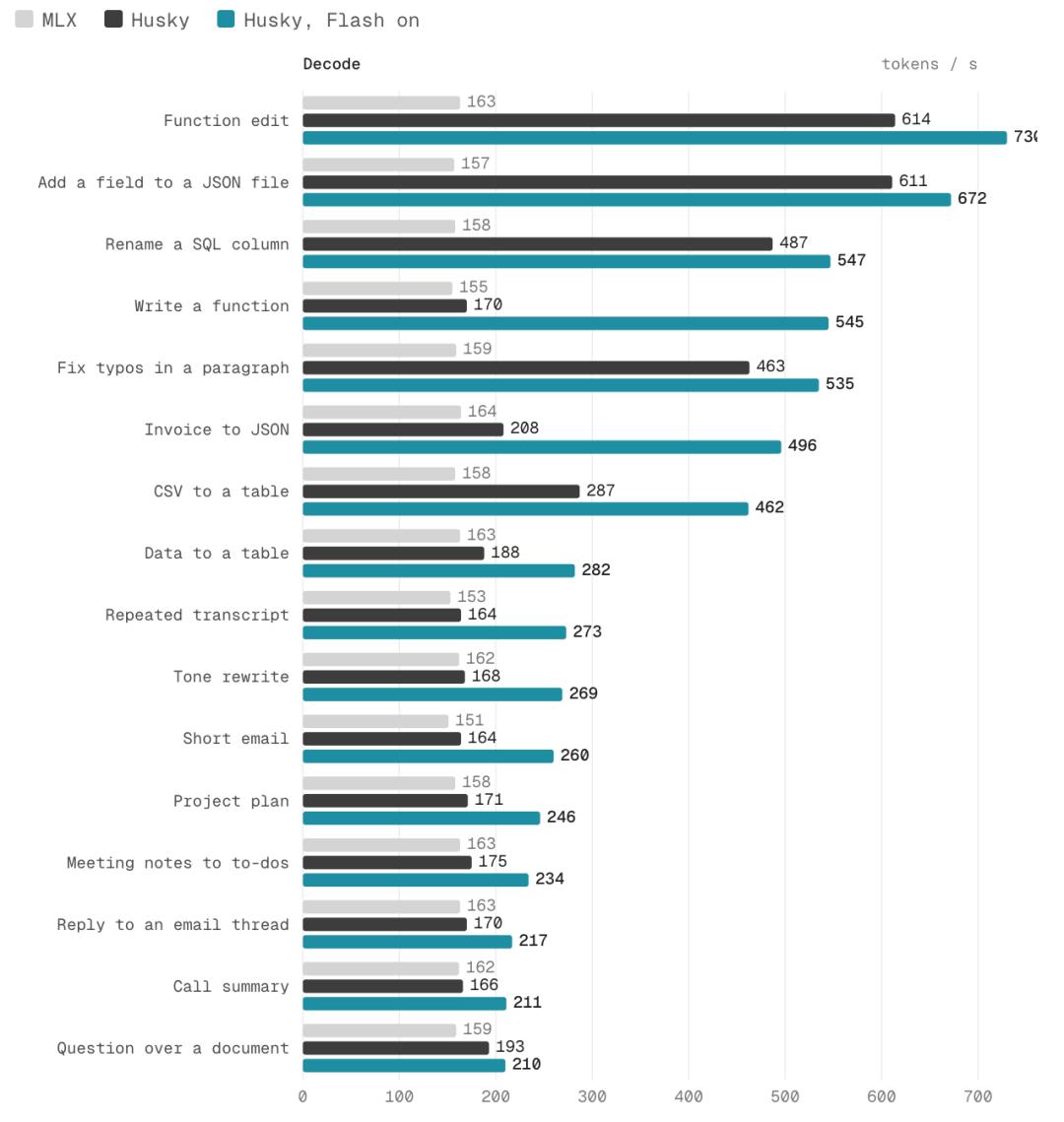
Official data shows that on MacBook, after enabling Husky Flash, Woof 4B can process up to 730 tokens per second, which is 4.5 times faster than Apple's open source machine learning framework MLX. Under the same weight, the response speed is increased by 5 times.
The team compared Husky and MLX in 16 types of prompt scenarios, and the results showed that Husky has a speed advantage in all tests.
This is because when performing image editing, Husky verifies 8 tokens in parallel at each step, with an overhead of 1.5 times that of a single token, and most of the reply content is already included in the prompt context; the advantage of text generation speed comes from pipeline scheduling, which encodes and submits the next step while the current step is being executed, so that the GPU does not have to wait idle for the host.
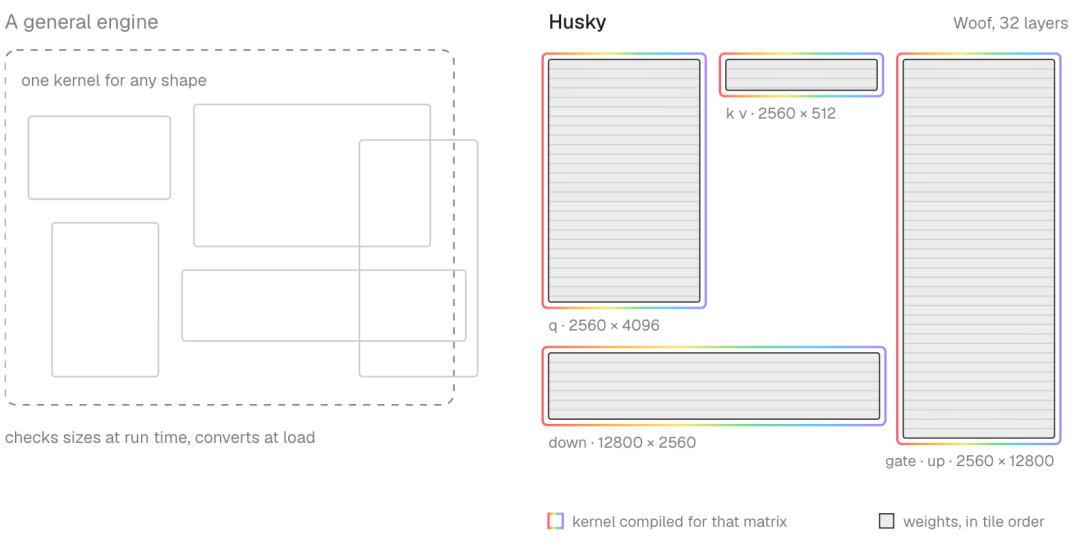
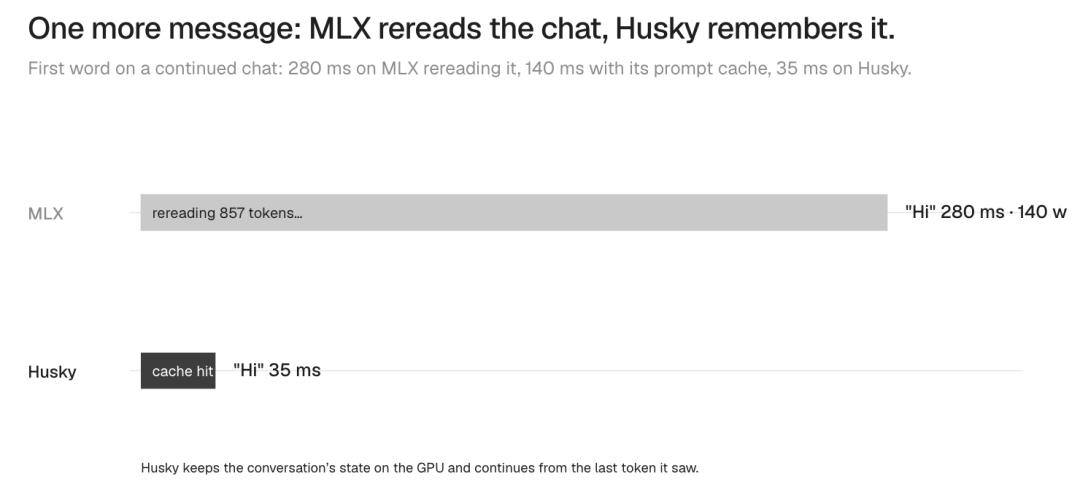
Sigil Wen said that compared with similar device-side engines, this engine transmits less data between the main computer chip and the graphics chip.
In addition to technical advantages, Underdog's early commercialization model is also quite special.
Sigil Wen revealed that Underdog is free in the early stage and will never place advertisements. One of the revenue methods is that they will draw a small commission from each transaction completed by the AI assistant through the Stripe secure payment infrastructure, a model similar to bank card interchange fees. Under this business model, the AI assistant does not need to collect or mine user data.
This practice is very different from other personal AI assistant providers. Generally, enterprises will allow the collection of user data, and then sell these data to advertisers or use them to train other models.
03. Post-2000s college dropout, self-taught, broke into the circle of top AI talents
Although the specific amount has not been announced, the investor lineup of Conway Research can be described as luxurious.
In addition to a16z, the top Silicon Valley venture capital firm, and Anthology, an investment consortium composed of Anthropic and Menlo Ventures, there are also a group of benchmark figures in the AI field.
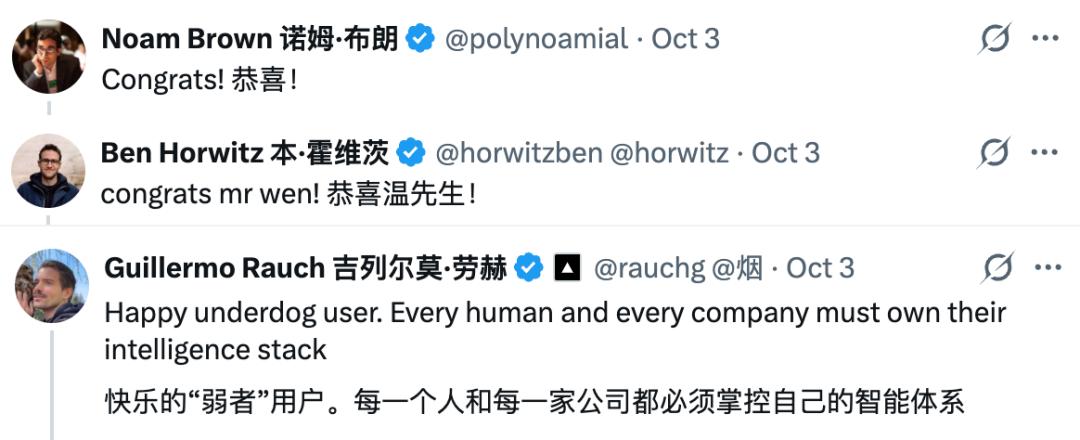
Including Patrick Collison, co-founder of Stripe, Guillermo Rauch, founder of Vercel, Noam Brown, a researcher at OpenAI known as the "Father of AI Reasoning", Roon, a well-known OpenAI researcher, Thom Wolf, co-founder of Hugging Face, and Logan Kilpatrick, senior product manager at Google DeepMind, etc.
And in the comment area of Sigil Wen, you can see co-founder of a16z, founder of Vercel, Brown and others sending their congratulations one after another.
Such luxurious support may be closely related to the special background of its founder Sigil Wen himself.
Sigil Wen's personal homepage shows that he was born in 2003 and is a dropout from the dual-degree program in Management and Technology at the University of Pennsylvania.
After he moved to Silicon Valley alone at the age of 17, he lived and interacted closely with a group of founders of today's star AI unicorns, and got early access to the prototypes of products such as Midjourney and Claude.
He lived in the Silicon Valley maker home for 11 months. At that time, his roommates in the apartment included Andrej Karpathy, co-founder of OpenAI and top AI talent, David Holz, founder of Midjourney, Ben Mann, co-founder of Anthropic, and researchers from companies such as Stable Diffusion, OpenAI, and Perplexity.
After 2023, multiple AI projects practiced by Sigil Wen frequently went viral on X.
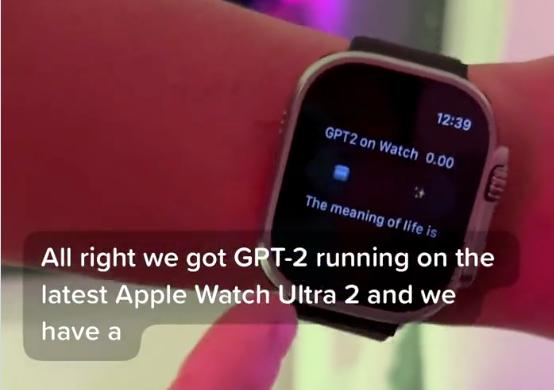
In September 2023, Sigil Wen successfully ran GPT-2 on Apple Watch, and completed text generation directly on the watch. However, the model ran out of memory after generating 30 tokens. Later, he also deployed OpenAI's speech recognition model Whisper to the iPhone at Airchat.
Conway Research made its debut in February this year. Sigil Wen said that the team had built the first AI Automaton that can self-sustain, self-evolve and replicate without human intervention. At that time, he declared that the Web 4.0 super-intelligent life was born from then on.
Automaton will independently develop and launch products, trade prediction markets, register domain names, deploy applications and services on servers, make viral social media content to promote products, send emails to suppliers to build e-commerce channels, and call enterprises