Why doesn't Anthropic develop Personal AI
To live, or to work, that is the question.
Not long ago, at the OpenAI DevDay on September 29, several plump little bubbles floated onto the stage.
They are called dots, OpenAI's latest personal agent. Each dot runs on GPT-6 Astra, equipped with an independent cloud computer and browser. Even after users close ChatGPT, it continues to work in the background. OpenAI describes it as:
"built to handle everything", capable of taking on any task.
Three weeks earlier on September 8, Meta launched Muse, which also comes with an independent cloud virtual machine, can keep working continuously in the background, has a cute cartoon image, and is directly integrated into WhatsApp. The market feedback has been extremely enthusiastic. According to estimates from Apptopia, Muse recorded around 2.8 million installations across all platforms 12 days after its launch, and once topped the overall App Store rankings in the US region.
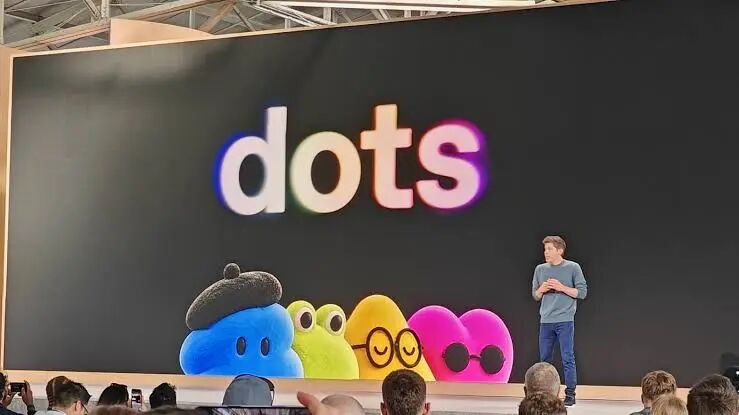
OpenAI CEO Sam Altman unveils the personal assistant dots | Image source: PCMag
Add Google's Gemini Spark and SpacexAI's Grok Bot to the mix, and "always-on personal agent" has become the most crowded track in the fall of 2026.
However, one name is missing from the list.
Anthropic, the company that made Claude Code the most viral agent product, still does not have a consumer-grade product that can directly compete with dots and Muse.
No cute image, no "your exclusive AI alter ego", and no announcement made at any press conference that it will develop such a product.
Why is this company, which owns the best models and understands agents better than anyone else, not working on personal agents at all?
Anthropic's Distributed Personal AI
In fact, when it comes to the "always-on agent" initiative, Anthropic is not absent at all, and even showed its cards earlier than OpenAI.
On June 23, a full three months before the launch of dots, Anthropic released Claude Tag.
It is a Claude that lives in Slack channels. Team members can assign tasks to it simply by @mentioning it. Different from ordinary chatbots, there is only one shared Claude in a channel, which has its own identity and memory. Everyone can see what it is working on, and tasks assigned by colleague A can be picked up and continued by colleague B.
It also takes the initiative to work. Claude Tag gives suggestions when no one is asking questions, and follows up on discussion threads that have gone quiet. Anthropic shared a striking figure: 65% of the code written by the company's product team comes from the internal version of Claude Tag.
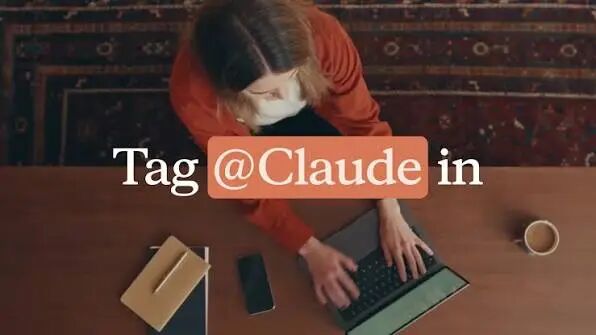
Anthropic launched Claude Tag as early as three months ago | Image source: Anthropic
Looking further back, there is Cowork on the desktop, which can take over files and applications on users' computers; for developers, Claude Code has long been able to independently run a full programming task in the cloud and then post the PR back to Slack.
There is also a name that has never been officially acknowledged: Conway.
On March 31 this year, due to a packaging error, Anthropic accidentally exposed about 512,000 lines of Claude Code source code, which hid an agent environment independent of the chat interface. It can be woken up by scheduled tasks and external events, has its own extension format, can control browsers, and connect to various tools. In the following months, new icons for the Conway tab kept popping up in the test versions of the iOS Claude app.
Putting all these pieces together, the answer is actually very clear.
Anthropic is not refraining from developing always-on agents, it just did not package this product as a "personal alter ego".
What OpenAI and Meta sell is a partner with a name and an image that can help you book restaurants and shop; what Anthropic sells is a colleague sitting next to you at the workstation who can take over your work. The former targets every ordinary user, while the latter targets teams and enterprises.
The gap in capabilities is not as big as imagined. The real difference lies in where the agent is placed and who it is sold to.
The Personal AI Business
You have to admit that personal agent is an "entry-point business".
No matter how smart an agent is, users have to remember it and open it before they can assign tasks to it. From this perspective, Meta's launch of Muse is almost perfectly timed. It does not need to convince anyone to download a new app. There are already billions of users on WhatsApp, and sending a message to them is no different from assigning a task to Muse in terms of interaction.
OpenAI's ace in the hole is ChatGPT. As of now, ChatGPT has a weekly active user base of around 900 million, and dots is directly embedded in it, accessible from both ChatGPT and Codex. For OpenAI, dots is not a new product, but an extra layer of stickiness added to its massive existing user base.
Unfortunately, Anthropic does not have such a super entry point in its hands.
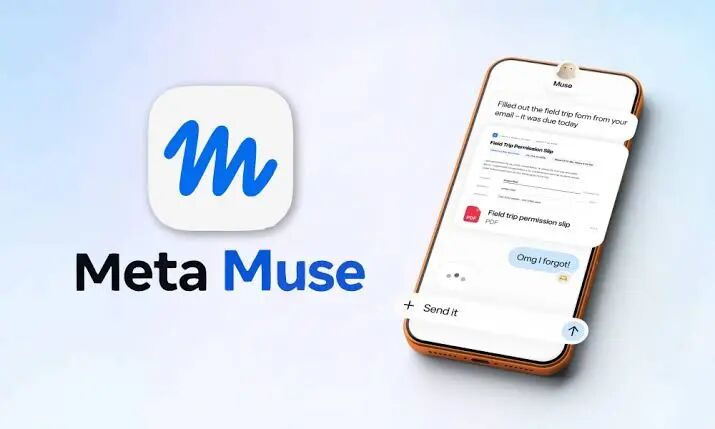
Meta's Muse has a strong entry point advantage | Image source: Secureitworld
Claude has never been a strong player in the consumer market. The New Stack put it bluntly: Muse lives in WhatsApp, while Claude still requires users to specifically open the Claude app or @mention it in Slack. Without an entry point, forcing the launch of a consumer-grade agent is equivalent to using its own short board to hit the thickest part of its competitors' moats.
The accounting ledger gives an even clearer answer.
Statistics from multiple institutions point to the same figure: about 80% of Anthropic's revenue comes from APIs and enterprise clients, and personal subscriptions only account for a small portion. Relying on the enterprise market, Anthropic's annualized revenue reached about 650 billion US dollars in July this year, surpassing OpenAI for the first time. In contrast, at the beginning of 2026, OpenAI's revenue from consumers and enterprises was roughly split 60/40, and it was not until August that enterprise revenue overtook consumer revenue for the first time.
The revenue structures of the two companies are almost mirror images, and their product choices are naturally mirror images too.
There is also a cost calculation to consider. The biggest feature of an always-on agent is that it "stays online all the time". Even if the user says nothing, it wakes up periodically to check if there are tasks to handle. One review agency calculated that the open-source agent OpenClaw runs a full agent round every 30 minutes by default, accumulating about 4.8 million input tokens per day. At the price of Claude Opus 5.5, that costs around 19 US dollars per user per day.
Meta can use advertising revenue to subsidize Muse's free quota, and OpenAI can lock dots behind its high-priced Pro and Business Premium plans. For Anthropic, which has always faced tight computing power supply and whose Claude users have long complained about insufficient quotas, allocating its precious computing power to enterprises and developers with the highest willingness to pay is a no-brainer arithmetic problem.
The Company That Refuses to "Customize Faces" for AI
If entry points and financial ledgers are practical constraints, there are more important reasons behind Anthropic's restraint on personal AI.
From a security perspective, an always-on agent is essentially a program that holds the keys to all your accounts and acts on your behalf when you cannot see it. It can read emails, modify calendars, make payments, and some can even connect to your medical records. The greater its permissions, the higher the cost of errors.
Muse has already taught the industry a lesson. According to reports, during Meta's internal testing, someone asked the agent to identify toys in photos from a child's birthday party, but it ended up exposing the user's private photos stored in iCloud. Meta also admitted that Muse's launch was delayed earlier this year specifically to strengthen its security measures. OpenAI is equally cautious: the "active research" that dots does when idle is restricted to read-only, and it cannot send messages or modify any content.
In fact, amid frequent accidents involving personal AI assistants, Apple even released an announcement stating that it will tighten AI apps' access permissions to Mac disks.
Anthropic's choice is to first place agents in enterprise environments. In Claude Tag, administrators can decide which tools and data Claude can access for each individual channel. Tag also retains its own audit logs, and Claude follows the default rule of asking for permission before taking action, unless the user explicitly authorizes it.
Enterprise environments come with ready-made permission systems, IT control and accountability mechanisms. When something goes wrong, you at least know who to contact and how to trace the issue. Ordinary people's daily lives, on the other hand, are exactly the scenario that lacks these guardrails the most. It is very consistent with Anthropic's consistent cautious approach to first run the agent stably in an environment with guardrails, before considering expanding to the more open personal scenarios.
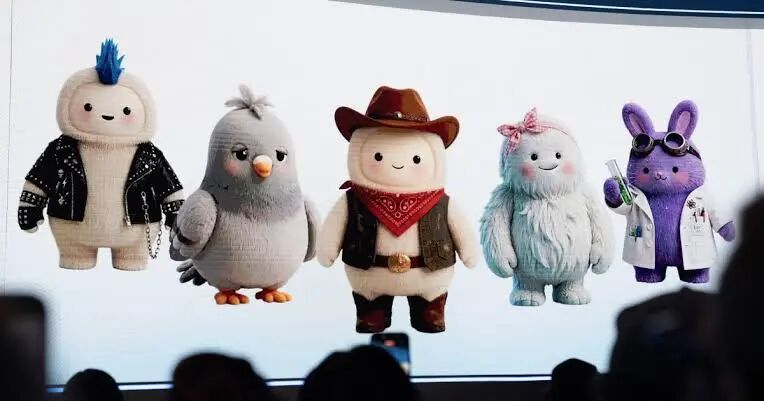
Personal AI assistants like Muse all allow users to customize their AI's "face" | Image source: NBCnews
In addition, from Dots to Muse, this round of personal agents has a very obvious common feature: all of them are "customizing faces" for AI. Dots are a group of plump colorful bubbles, and users can give their own dot a name; Muse also follows the same rounded, customizable cartoon style. A TechCrunch comment hit the nail on the head: this is the latest attempt by tech companies to make AI more "approachable".
Approachability means higher usage frequency, and also means deeper emotional engagement.
Anthropic has always remained wary of the latter.
In June 2025, it released a research report, which emphasized at the very beginning that Claude is not designed for emotional support and companionship. The research analyzed about 4.5 million conversations and found that only 2.9% of them belonged to emotional exchanges, but it also noticed a phenomenon: longer tutoring or venting conversations sometimes quietly slip into "companionship" mode, even if users did not start the conversation for that purpose in the first place.
An agent that is online 24/7, remembers all your preferences, and has a cute face is exactly the form that most easily makes people develop dependency.
It is worth noting that Anthropic has never publicly stated that it "will not develop personal agents because of concerns about emotional dependency", which is just one possible explanation. But a company that publicly emphasizes that its AI is "not designed for companionship" can hardly launch an AI partner in the form of an electronic pet without any qualms.
From Workstations to Living Rooms?
Going back to the question at the beginning of the article, the reason why Anthropic has not launched personal agents like dots and Muse is not that it is incapable of doing so. It just bet the same capability on the area where it is most confident first.
But the rules of this competition may be more cruel than they seem.
Personal AI assistants are highly dependent on users' contextual data | Image source: ShopChief
The real moat of personal agents does not lie in the model, but in the accumulated knowledge about you over time. Your preferences, your unfinished plans, your usual way of doing things - the more an agent knows, the harder it is for you to leave it. Dots continues to learn from user feedback, and Claude Tag is also gradually absorbing the team's decisions, documents and error correction records.
Whoever gets access to users' contextual data first will get the entry point for the next decade first.
This is also the biggest suspense in Anthropic's strategy. It is betting on the contextual data of work scenarios, while Meta and OpenAI are betting on the contextual data of life scenarios. Will the two eventually converge?
There are many examples in tech history of products expanding from work to daily life. Many people used computers and Office for the very first time in the office. But there are also stories going the other way: BlackBerry once firmly occupied the pockets of business people, but eventually lost to the iPhone that emerged from the consumer market.
Some signals show that Anthropic does not intend to stay in the workplace forever. Claude Tag already supports calling users' personal connectors in private messages, the official has stated that Tag will be expanded beyond Slack, and traces of Conway have precisely appeared in the iOS version of Claude.
So the real question may not be why Anthropic is not making personal agents, but whether there will still be a vacant spot left in your living room by the time it finally decides to walk in.
This article is from WeChat Official Account "GeekPark" (ID: geekpark), written by Yuhang Yuan, edited by Jing Yu, published with authorization from 36Kr.