Is AI disrupting the pharmaceutical industry?
With massive capital influx, tech giants' entry, and policy support, AI-powered drug discovery has recently exploded in popularity.
Anew Labs, an AI pharmaceutical company spun off from ByteDance, has completed a $290 million first-round financing with a valuation of $1.5 billion.
Shortly after, Anthropic was revealed to have quietly built a wet lab in the San Francisco Bay Area, using Claude to drive robots to conduct real biological experiments.
On October 9, the AI pharmaceutical and CRO concepts rebounded in the afternoon trading, with Berry Genomics hitting the 10% daily price limit straight away, notching 3 daily 10% up limits in 6 trading days; Tenovo Biotech rose by more than 10%, while Gansu Jinshi Pharmaceutical, Tellgen Life, Nuocheng Jianhua, SinoCell and other related stocks surged rapidly.
After recently reaching a cooperation with Eli Lilly's TuneLab, GenScript Biotech's share price hit a new all-time high, with JPMorgan Chase explicitly bullish on its AIDD-driven strong growth in life sciences.
What signal is this?
Is AI really about to disrupt the pharmaceutical industry?
Accelerate R&D and Reduce Costs
To figure this out, we first need to understand how pharmaceutical R&D works.
The development of a new drug can be roughly divided into five major stages: drug discovery, preclinical research, clinical trials, marketing approval, and post-marketing surveillance.
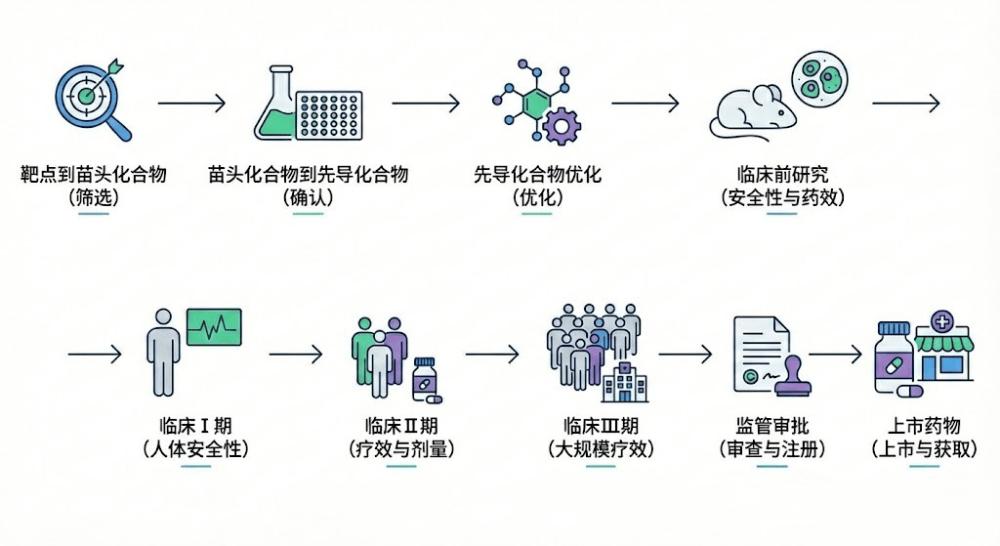
New Drug Development Process
The entire process takes an average of 10 years, costs at least 1 billion US dollars, and the clinical success rate is less than 10%, leading to extremely high trial and error costs.
This is the cruel "double 10 law" in the traditional pharmaceutical industry.
The advent of AI has overturned the logic of drug discovery.
Drug discovery is the source of innovation, whose goal is to find an effective "key" for a specific disease.
First, it is necessary to identify the specific biomolecule (target) that the drug acts on in the human body and verify its relationship with the disease.
The huge time and cost consumption of traditional pharmaceutical R&D starts right here.
In the past, screening was done manually: researchers repeatedly synthesized and tested in laboratories, and tried their luck to screen out the 1 in 100 million effective molecule from hundreds of millions of molecular combinations, like looking for a needle in a haystack.
Essentially, it was one-way trial and error.
Now AI has rewritten this step by directly "generating" molecules.
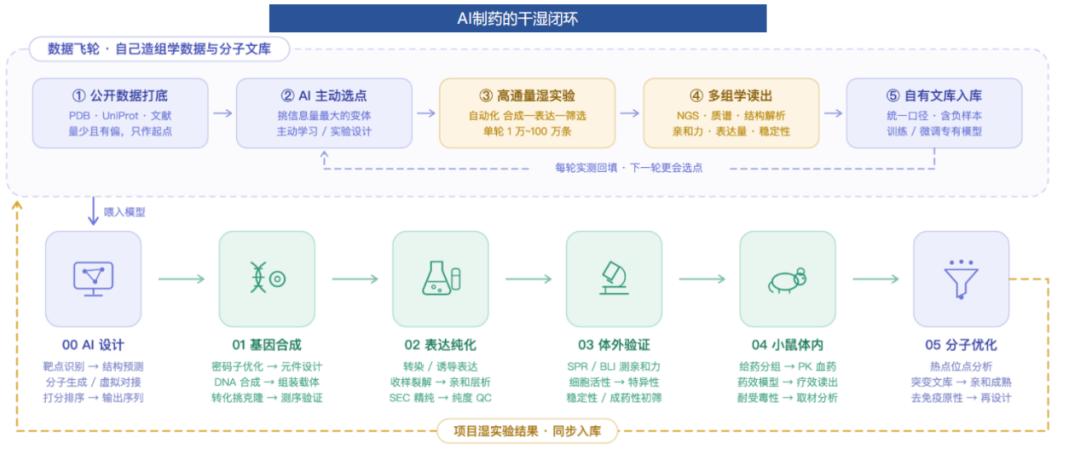
AI Pharmaceutical R&D Process
Based on massive medical data, AI directly generates potential molecular structures or protein sequences on computers.
This part is completed entirely on computers, without touching real reagents or cells, so it is called dry lab work, responsible for conceptual design.
The molecular screening work that used to take months or even years in the traditional model can be accurately completed by AI in seconds to hours.
Of course, calculation can narrow the search space, but it cannot replace real experimental data.
To turn a molecule from a design drawing into a physical entity, it must be sent to a real laboratory for synthesis and expression, to test whether it can bind to the target, has pharmacological effects, and is safe.
This laboratory is called a wet lab, so wet experiments are responsible for verification.
A design drawing may only take a few seconds to complete, but to produce the physical molecule and run all tests may take weeks or months.
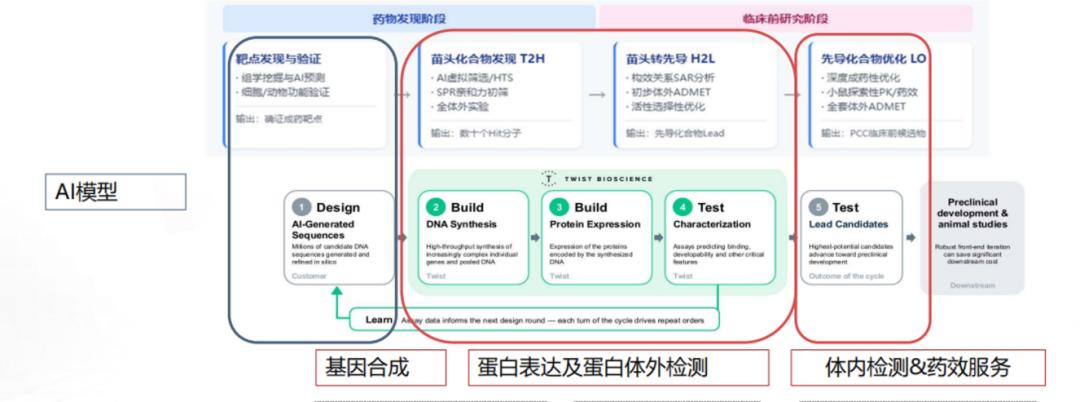
Dry-Wet Closed Loop of AI Pharmaceutical R&D
The most critical step of the closed loop is the backflow of experimental data.
Regardless of whether the experiment succeeds or fails, all real data is fed back to the AI model. After each cycle, the model accumulates more real data, and its prediction accuracy becomes increasingly higher.
The R&D model has changed from one-way luck-based trial and error to a continuously iterative circular system.
From the perspective of results, the new model's disruption to time and cost is tangible.
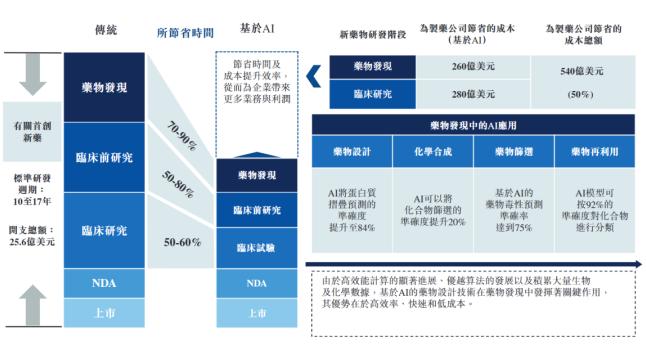
Time Cost Comparison
The research report of Southwest Securities points out that AI has reconstructed the entire chain of new drug R&D: the duration of the drug discovery stage can be reduced by 70%-90%, the preclinical and clinical stages can each save more than half of the time, and the total R&D cost can be reduced by about 50%, equivalent to about 54 billion US dollars.
For example, Guangzhou Pharmaceutical Holdings has cooperated with StoneWise to carry out small-molecule new drug R&D. The early discovery work that originally took 1-2 years has been shortened to 3-6 months with the help of AI technology, directly reducing R&D costs by 70%.
Insilico Medicine is the fastest-growing sample in this field.
Relying on its Pharma.AI platform, it only took 12-18 months from target discovery to the selection of preclinical candidate drugs, while the traditional model takes an average of 4.5 years.
Its fully AI-developed drug Rentosertib completed the development from target identification to candidate drug in only 18 months, cutting the time consumption by more than 60%.
However, accelerating R&D and reducing costs is only the victory of the first half of the game.
Behind the eye-catching data, the real competition has only just begun.
Three Types of Players
Enterprises in the AI pharmaceutical industry chain are mainly divided into three categories.
The first category is upstream AI technology companies, responsible for target mining and molecular design.
Relying on large AI models, they complete the design and generation of target discovery, candidate molecules and protein sequences, and output high-quality candidate drug solutions.
They are not responsible for subsequent large-scale experiments and drug production. Their outputs are either licensed to pharmaceutical companies, or handed over to third-party institutions for wet experiment verification.
Insilico Medicine is a representative of this type of enterprise.
Its self-developed Pharma.AI platform covers the entire process from target discovery to clinical prediction, and has reached software licensing cooperation with 13 of the world's top 20 pharmaceutical companies, including Servier, Eli Lilly, SK Biopharmaceuticals, and Takeda Pharmaceutical.
Since 2026, the total amount of publicly disclosed external cooperation of the company has approached 10 billion US dollars, while its operating revenue in the previous fiscal year was only 56.24 million US dollars.
Insilico Medicine focuses on AI-powered drug discovery, using artificial intelligence to assist in finding new drug R&D directions, designing drug molecules, and judging which drugs are worth advancing to clinical trials.
Its core pipeline Rentosertib has its target discovered by AI. The results of phase IIa clinical trials show that the lung vital capacity of patients in the 60mg administration group increased by an average of 98.4 ml, while that of the control group decreased by 20.3 ml, making it the first proof-of-concept achievement of AI-powered drug discovery in the industry. It has now entered phase III clinical trials.
Anew Labs, spun off from ByteDance, also belongs to this type of AI technology company, positioning itself as an end-to-end new drug discovery enterprise with self-developed small molecule candidate pipelines.
The second category is mid-stream CRO/CDMO service providers, whose core competitiveness lies in wet experiment standardization and production capacity.
They undertake a large number of candidate molecules output by upstream AI companies, and complete work such as gene synthesis, protein expression, in vitro and in vivo pharmacodynamic testing.
They do not bet on the success or failure of new drug pipelines, only caring about how many molecules need to be verified.
The more candidate molecules designed by upstream AI, the more orders they will receive.
For example, Novo Nordisk announced a partnership with Anthropic: all protein candidate sequences generated by the Claude Science large model are handed over to external service providers for wet experiment verification; Eli Lilly's TuneLab platform has cooperated with multiple service providers including GenScript and Twist to build a complete service system covering protein verification, data testing, and antibody characterization.
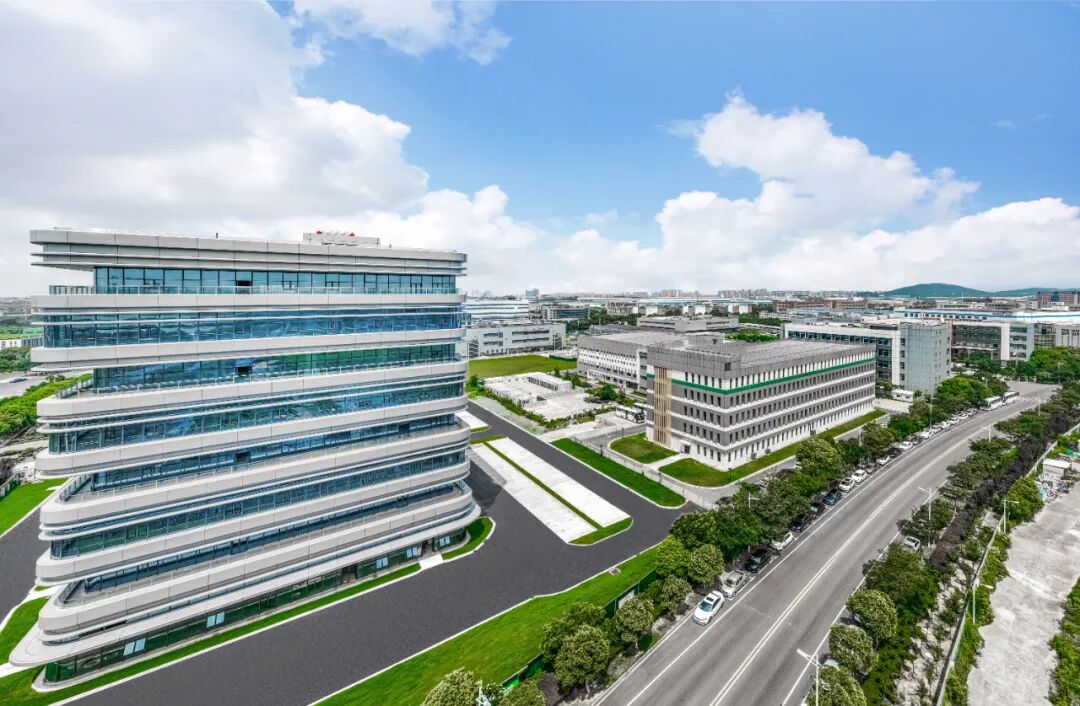
GenScript is the world's largest supplier of gene synthesis services
In this gold rush boom, they are the "shovel sellers" who provide tools and are the first to make profits.
Twist's AI pharmaceutical orders have doubled for three consecutive years, reaching about 25 million US dollars in 2025, about 50 million US dollars in 2026, and are expected to hit 100 million US dollars in 2027.
Swiss startup Adaptyv Bio has seen its revenue increase by about 10 times in the past 18 months.
After GenScript cooperated with Eli Lilly's TuneLab, its AI-driven protein orders are expected to maintain triple-digit growth.
The third category is downstream traditional pharmaceutical companies, responsible for industrialization and clinical implementation.
On the one hand, they can purchase services from the upstream and midstream, and on the other hand, they will build their own AI systems to reduce costs and increase efficiency.
Fosun Pharma is a typical representative. In the first half of 2026, it completed the V2.0 upgrade of its PharmAID intelligent pharmaceutical system, forming an AI system covering four major sectors: decision management, early R&D intelligence, clinical research, and data integration.
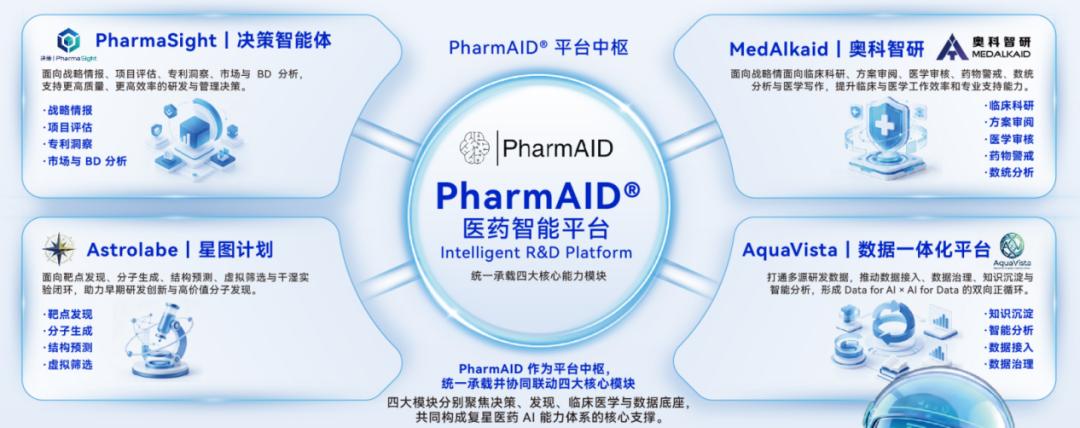
Fosun Pharma's PharmAID Platform
As of June 30, 2026, 2 new molecules generated and structurally optimized with AI assistance have entered the PCC stage.
It reached a strategic cooperation with Insilico Medicine as early as 2022, and in 2025, it promoted its subsidiary Henlius to join hands with DP Technology to explore the AI R&D path for antibody drugs and ADC drugs.
Hengrui Medicine is also accelerating its AI transformation. Its R&D investment in the first half of the year reached 4.605 billion yuan, accounting for 29.8% of its operating revenue, and it has integrated AI into the entire R&D process including target discovery, macromolecule and polypeptide design, small molecule generation and optimization.
However, AI can only improve efficiency in the front end of R&D. Whether a drug can finally be launched still requires completing full clinical trials and complying with strict drug regulatory regulations, which is exactly the core capability that traditional pharmaceutical companies have accumulated over a long period of time.
They are the final executors that bring drugs to patients.
It can be seen that almost no enterprise can independently cover all links of the chain.
Upstream and downstream cooperation is the mainstream, but business overlap will inevitably lead to potential competition.
Who Can Realize the Full Closed Loop
So the question arises, what stage has AI-powered drug discovery actually reached now?
The main current difficulty is how to connect the intelligent agent system with the experimental system to truly realize the dry-wet closed loop.
At present, the industry has not yet formed a mature, scalable and implementable solution that can adapt to diversified R&D scenarios.
There are three key stages in new drug clinical trials: Phase I focuses on safety, Phase II focuses on efficacy, and Phase III compares the new drug with existing therapies to see which performs better.
Data shows that the success rate of Phase I trials has increased from the traditional empirical level of 40%-65% to 80%-90%.
However, in Phase II, the success rate is about 40%, while that of traditional methods is about 37%, with basically no statistical difference.
The root cause of the problem does not lie in molecular design.
AI is good at judging whether a molecule is safe and can be absorbed, but whether a drug is effective depends on whether the target hypothesis is valid.
Most Phase II failures are caused by unproven biological mechanisms, which AI cannot answer for now.
Therefore, AI is shifting the bottleneck, not eliminating it.
So when can this be proven?
Everyone is focusing on the same date: 2029.
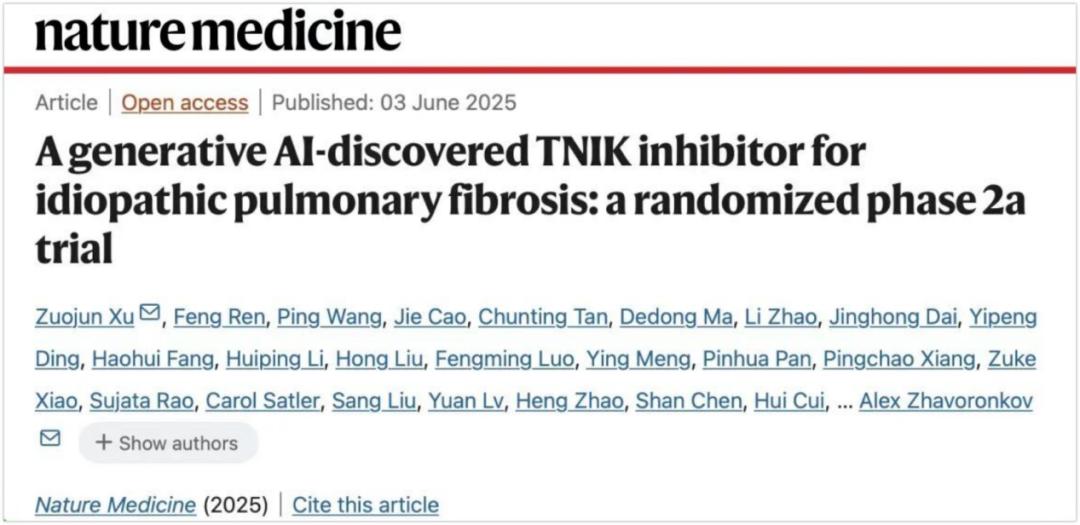
Randomized Double-Blind Trial for Idiopathic Pulmonary Fibrosis Patients in Phase II Study
Insilico Medicine's core pipeline Rentosertib launched its Phase III clinical trial in China in July 2026, planning to enroll 320 subjects, and is expected to release top-line data in 2029.
Ren Feng, Co-CEO of Insilico Medicine, made a judgment: If the Phase III trial succeeds, "this will be the DeepSeek moment for the AI pharmaceutical industry."
This not only represents a breakthrough in the pipeline of one enterprise, but also provides conclusive evidence for the entire industry, proving that the path of AI intervention in new drug R&D is feasible.
Policymakers are also stepping up efforts.
The "15th Five-Year Plan for the Development of the Pharmaceutical Industry" has listed AI-powered drug discovery as a key task for the first time, clarifying that by 2030, the global share of first-in-class new drugs will be no less than 25%, and the annual average growth rate of the innovative drug industry will be no less than 20%.
This is the first time that China has set a quantitative target for the global