Tianjin has put together all the core assets of China's home-grown AI infrastructure.
In Tianjin High-Tech Zone, two entities are separated only by a wall, namely KylinSoft and Phytium Information.
People outside the industry may be unfamiliar with these two names, but in the domestic AI concept, KylinSoft, which focuses on operating systems, and Phytium Information, which focuses on CPUs, are both leaders in their respective fields.
These two sectors used to be the hardest to align — software needs to run on hardware to test compatibility, while hardware has to wait for software to complete adaptation, which involves rewriting hundreds of thousands of lines of code and rounds of certifications. In other places, for companies of this type, the time cost of communicating to solve a single problem alone is often calculated in months.
But in Tianjin, they have become literally "well-matched neighbors". Project engineers from both sides can even "align granularity" in the time it takes to buy a cup of coffee downstairs.
During this visit, the Zhentan editorial team found that there are many more cases of such and even more complex industrial layout and collaboration in Tianjin. If we narrow the scope to the concept of "domestic AI", there are six highly representative entities — in addition to KylinSoft and Phytium, there are Hygon Information, Sugon, General Data, and the National Supercomputing Center in Tianjin, which together form a complete structure, a structure of domestic AI infrastructure.
A.
This structure is easier to understand if we compare it to a human body: Hygon Information is the heart, focusing on the manufacturing of CPUs and DCUs to output computing power. Sugon is the skeleton, responsible for assembling chips into complete machines, providing one-stop services for servers, clusters, heat dissipation and other links. KylinSoft is the nerve center, implementing software and hardware through the operating system. Phytium Information is the second leg, taking the ARM route from the underlying architecture, which serves as a mutual backup with Hygon's X86 route. General Data is the brain, responsible for memory, determining data storage and migration. The National Supercomputing Center in Tianjin is the muscle, responsible for computing power scheduling and final result output.
Six completely different technology stacks are combined to form a complete industrial chain from chips, complete machines, operating systems, databases to computing power, all of which are independent and controllable. There are very few places in the world that can find all these elements in the same city.
Tianjin has not only gathered all these elements, but also made the whole system run smoothly:
The Kylin operating system is being installed in batches on hosts such as Phytium and Hygon, and the operating system and chips work together to solve information security problems in core fields such as government and party agencies, transportation and industry. Hygon's CPUs and DCUs are integrated into servers and clusters by Sugon, and then supplied to the National Supercomputing Center in Tianjin. In this series of links, General Data provides a complete solution for the storage and migration of large-volume data generated.
Viewed separately, each company is doing its own thing in its respective field. Combined together, this is an industrial chain anchored by orders, collaboration, policies and physical distance at the same time.
The density of this chain is exactly what domestic AI lacks most — in the past, the real difficulty of domestic substitution was that no one used, dared not use, or could not easily use the products after they were developed. Now as long as there is demand, the design can be started immediately, manufacturing can be carried out right after the design is completed, real installation and testing can be done right after manufacturing, feedback can be obtained immediately after testing, and iteration can be done immediately after feedback. The faster this spiral runs, the higher the efficiency, and the faster domestic AI can close the gap with the international advanced level.
B.
Of course, whether a product exists is one thing, and whether it is easy to use is another.
First, let's list the latest scale and performance data of each company:
KylinSoft's operating system has maintained the first place in China's Linux market share for 15 consecutive years, and ranks first among local manufacturers in both the desktop and server markets. At present, the total number of software and hardware adaptations is nearly 10 million, and the number of applications in the software store exceeds 56,000. Especially in core industries such as government and party agencies, finance, energy and communications, transportation and medical care, it has served more than 210,000 users. Among them, the Galaxy Kylin industrial operating system has been applied on a large scale in infrastructure such as rail transit and chemical industry.
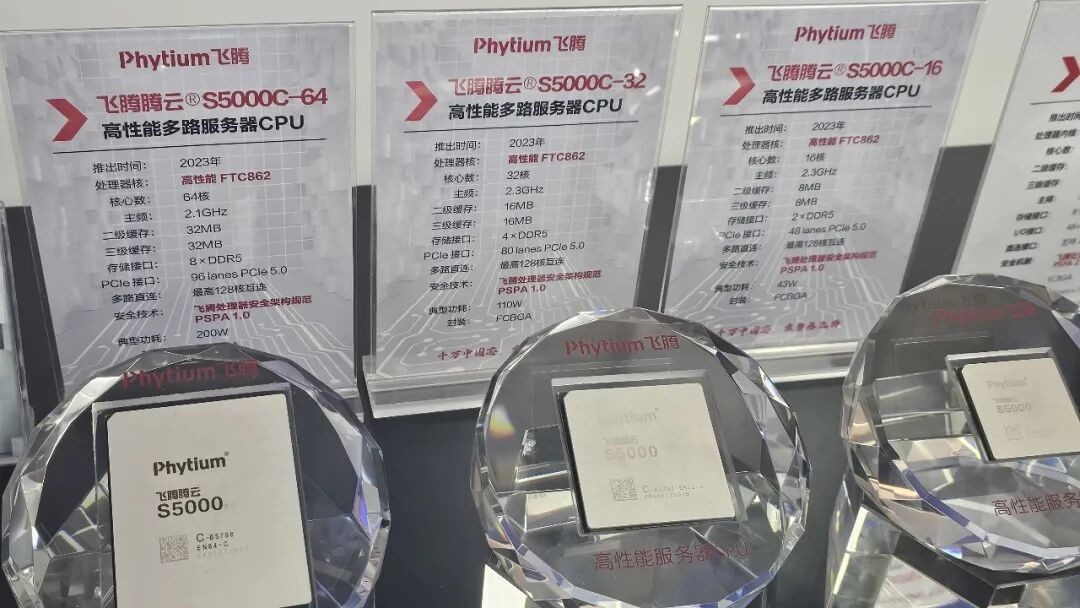
The cumulative sales of various CPUs of Phytium Information have exceeded 15 million pieces, with more than 8,800 ecological partners and more than 160,000 adapted software. In the field of high-performance CPUs, Phytium Tengyun S5000C, which was established in 2021 and released in 2023, has become the first high-end server CPU with a fully domestic industrial chain. By 2025, the iterated Phytium Tengyun S5000C-E has become one of the domestic CPUs with the highest national security evaluation level and the largest number of physical cores in the same period. It is compatible with mainstream large models, builds a domestic heterogeneous computing power system of CPU + AI accelerator card collaboration, and provides safe and reliable computing power support for industrial AI applications.
Hygon Information's server CPUs currently account for about 15.2% of the total domestic share, ranking first in the domestic camp. It is currently the domestic CPU enterprise with the highest market value in China, and also the one with the highest compatibility with the international mainstream ecology. Its DCU follows the "CUDA-like" route, the DTK toolchain has a compatibility of more than 95% with CUDA code, and has adapted more than 400 mainstream large models. Sugon has ranked first in the domestic high-performance computer market for 11 consecutive years. The latest Sugon 8000 is the largest fully domestic intelligent computing cluster in China, equipped with 100,000 domestic AI acceleration chips, and is a new generation of computing power infrastructure benchmark created by Sugon for the era of scientific intelligence and physical AI.
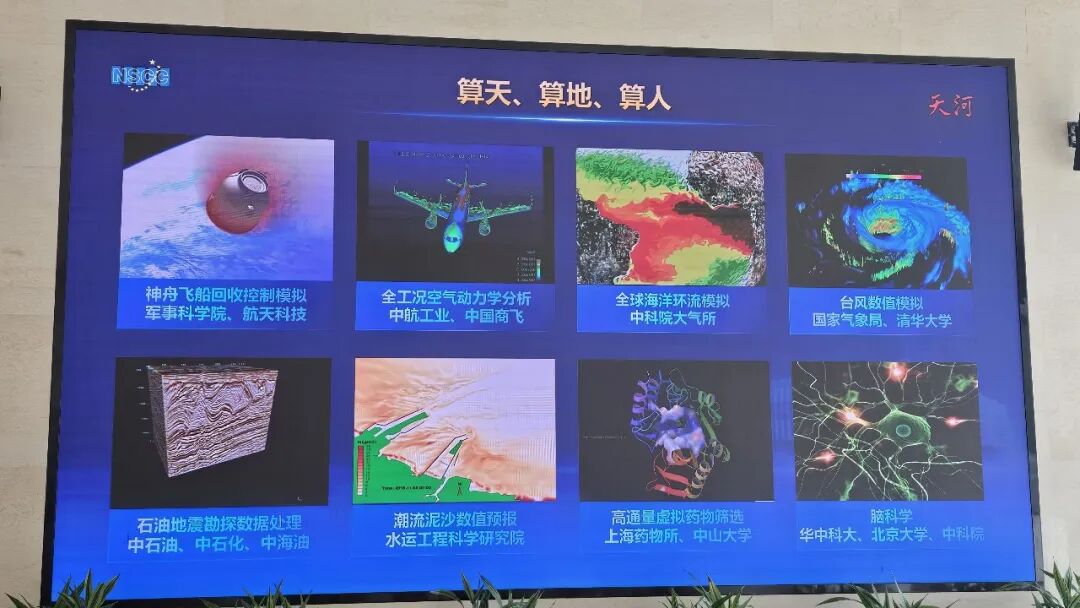
The National Supercomputing Center in Tianjin is one of the backbones of China's supercomputing and intelligent computing. The Tianhe series has long occupied the leading position in the world since its birth, and has cumulatively supported more than 4,000 major national science and technology projects. The new generation of Tianhe supercomputer was successfully developed and deployed in June 2021, with fully independent core chips, architecture, interconnection and operating system, and has been undertaking extremely large-scale computing in domestic geological hydrology, medical transportation and other fields.
General Data currently has more than 100,000 deployment nodes, managing a total data volume of more than 500PB, that is, more than 500,000 TB, and has been operating stably in the systems of more than 1,000 customers in more than 70 industries such as finance, telecommunications, electric power, energy, transportation and government affairs for many years. At present, it has completed certification or adaptation with Phytium, Hygon and KylinSoft, and has also developed an all-in-one machine solution with Sugon.
All these data point to the same result: domestic AI infrastructure has actually passed the threshold of "whether it can be built", and has begun to sprint towards the world's top level on the basis of full independence and controllability.
Of course, some things can only wait. The manufacturing process is restricted by objective conditions and cannot be decided by a single enterprise. The thickness of the ecology also needs to be accumulated over time, and there is no way to rush it. This is the unavoidable growing pain that this round of domestic AI has to accept, and there is no room for opportunism.
C.
Let's look at these six companies again from the perspective of the whole city.
What Tianjin has done is to combine the technologies scattered in different entities into a motor that can rotate on its own. If any link in the middle goes wrong, other links will feel it immediately. If any link has improvement or breakthrough, it can also be immediately integrated into the entire ecosystem. This capability of "full-link close-range verification" is hard to find a second place across the country.
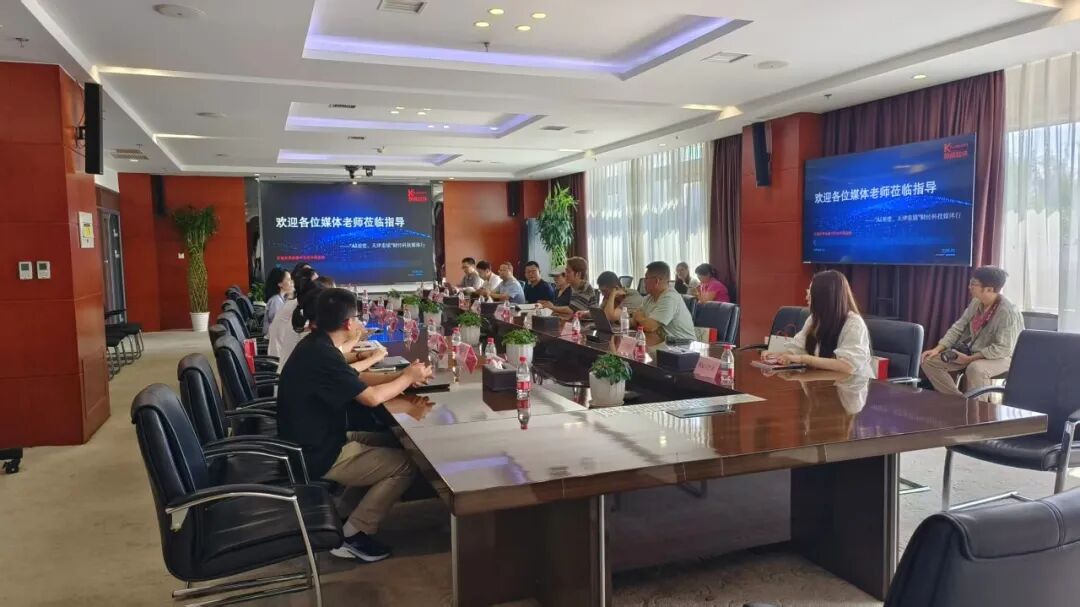
In terms of internal collaboration, the Zhentan editorial team learned from the interview with the relevant person in charge of Tianjin High-Tech Zone that when the industry and information technology departments and information innovation departments connect with relevant enterprises, they first ask "what do enterprises need" — upstream or downstream, ecology or market? Then they search according to the needs, and act as matchmakers to connect resources from Tianjin's huge enterprise cluster. Or relying on regular symposiums and communication meetings, they invite the heads of various enterprises to contact freely on site, to maximize the maintenance of the completeness and vitality of the "full link".
As of July this year, nearly 300 enterprises have gathered on this industrial chain in Binhai New Area, covering four sub-chains: information innovation, integrated circuits, artificial intelligence, and embodied intelligence. The Beijing-Tianjin-Hebei new-generation information technology application innovation cluster, with Binhai New Area as the core carrying area, has been selected as a national advanced manufacturing cluster. Going further up, there is the "China Information Innovation Valley", with the overall industrial scale exceeding 80 billion yuan and gathering nearly 1,000 information innovation ecological enterprises.
Tianjin's advantage does not lie in whether a certain technology ranks first in the world. Its advantage is that the city can provide five elements at the same time: chips, systems, data storage, complete machines, and computing power centers, and make them interlock with each other. It is like getting a flush on the AI card table, which is hard to be left behind.
This is the specific meaning of the phrase "carrying the weight of great importance".
Therefore, from the traditional perspective, people observe whether the revenue of a certain company rises or falls this year, what ranking a certain product gets on the list, and how far a certain technical route is from the world's top level. But in Tianjin, these are no longer the core issues. What really needs attention is how fast this system can run when the policy window, capital patience, technology reserve and scientific research capability just resonate in the same city.
This article is from the WeChat Official Account "Zhentan Business", author: Yue Qing, published with authorization from 36Kr.