The ripple effect of the memory price surge is spreading: Ultra models have been cancelled one after another, and flagship products are getting increasingly difficult to sell.
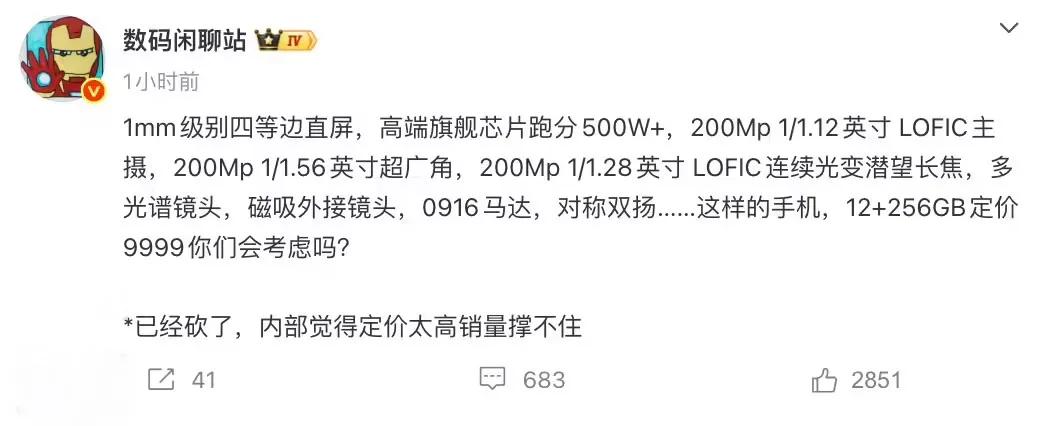
Some time ago, digital tech blogger @Digital Chat Station released the configuration information of a top-tier (Ultra version) flagship phone. This device features a 1mm four-sided narrow bezel, a benchmark score of over 5 million, symmetrical dual speakers, three 200-megapixel large base sensors, and support for continuous optical zoom. Packed with top-tier specs, it is widely suspected to be the Xiaomi 18 Ultra.
However, the blogger then noted that this phone has been canceled. The reason is that due to cost constraints, the 12GB+256GB version would be priced at 9999 yuan, and the internal team considered the price too high to support expected sales volume.
(Image source: Weibo screenshot)
In fact, LeiTech (ID: leitech) found that as early as mid-August this year, X platform blogger @Kartikey Singh broke the news that Xiaomi had canceled the 18 Ultra, and the next-generation Ultra flagship phones of OPPO and vivo will only be sold in the Chinese market, and will no longer be released for the global market.
Ultra models being canceled one after another, all due to the memory price surge
Since the advent of the smartphone era, the suffixes of mobile phone models have undergone several changes, and eventually the "Ultra" designation for top-tier models has continued to this day, known as the "super-large cup" configuration.
According to usual practice, mobile phone manufacturers release standard, Pro, Pro Max and other versions of new flagships in autumn or winter each year, and launch the Ultra version in the spring of the following year. After that, netizens will discuss which phone is the new generation of flagship king. However, the 2027 flagship king competition may be over before it even starts.
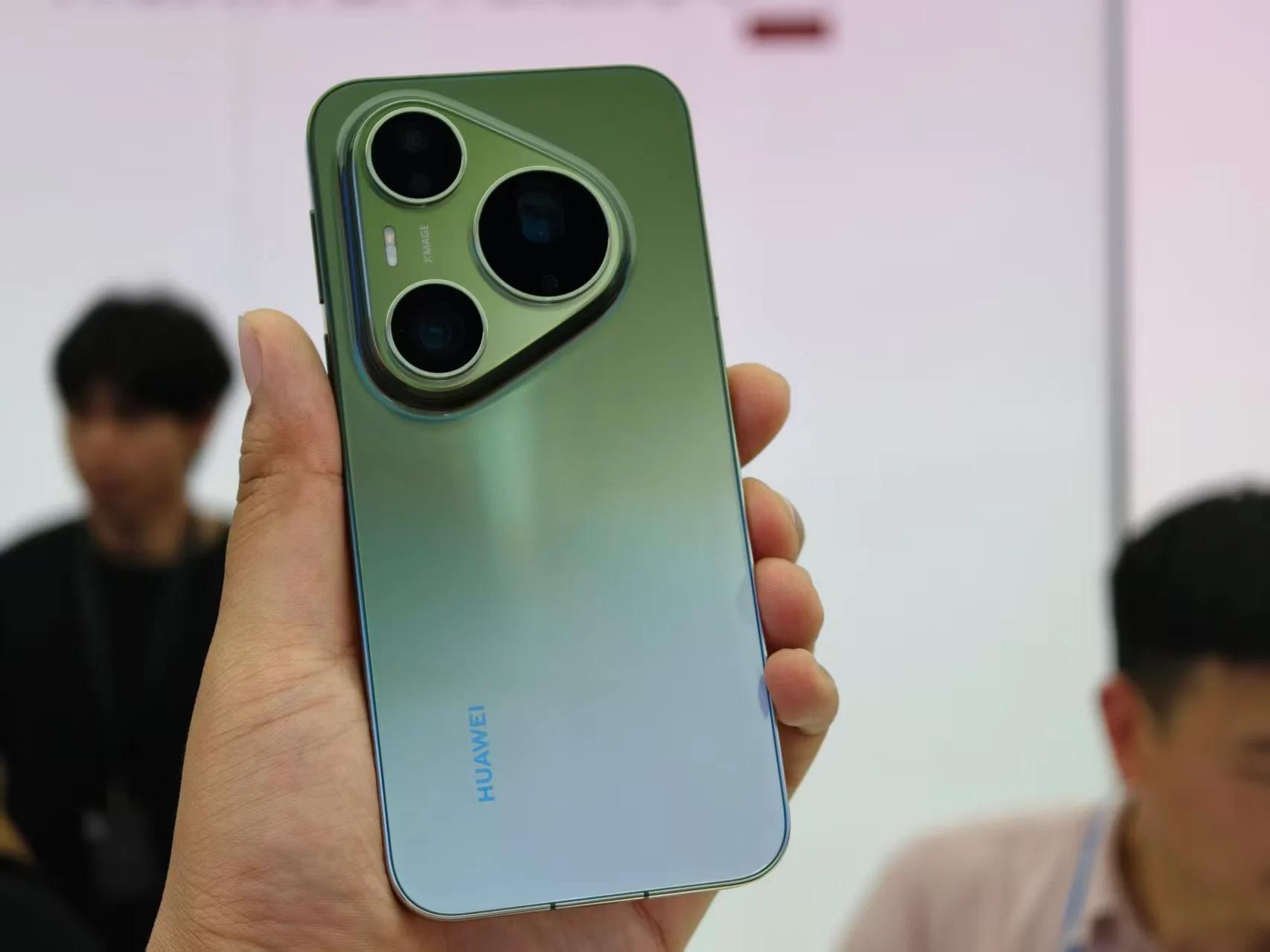
Xiaomi is not the first manufacturer to cancel the Ultra version model. The Huawei Pura 90 series released in April this year took the lead in canceling the Ultra version. At that time, many netizens questioned whether, after losing the 1-inch large base and dual telephoto lenses with a single base, the Pura 90 series could take on the important role of "imaging pioneer".
(Image source: LeiTech shooting)
By August this year, @Digital Chat Station further revealed that a mobile phone focusing on the offline market and photography will cancel its top-tier configuration, which is suspected to be the Huawei nova 17 series.
Regarding the Ultra version models of OPPO and vivo, while configuration information is constantly being exposed, news of their cancellation is also everywhere. It is still unknown whether these models will be released and launched on the market. What is certain is that mobile phone manufacturers are all shrinking their product lines.
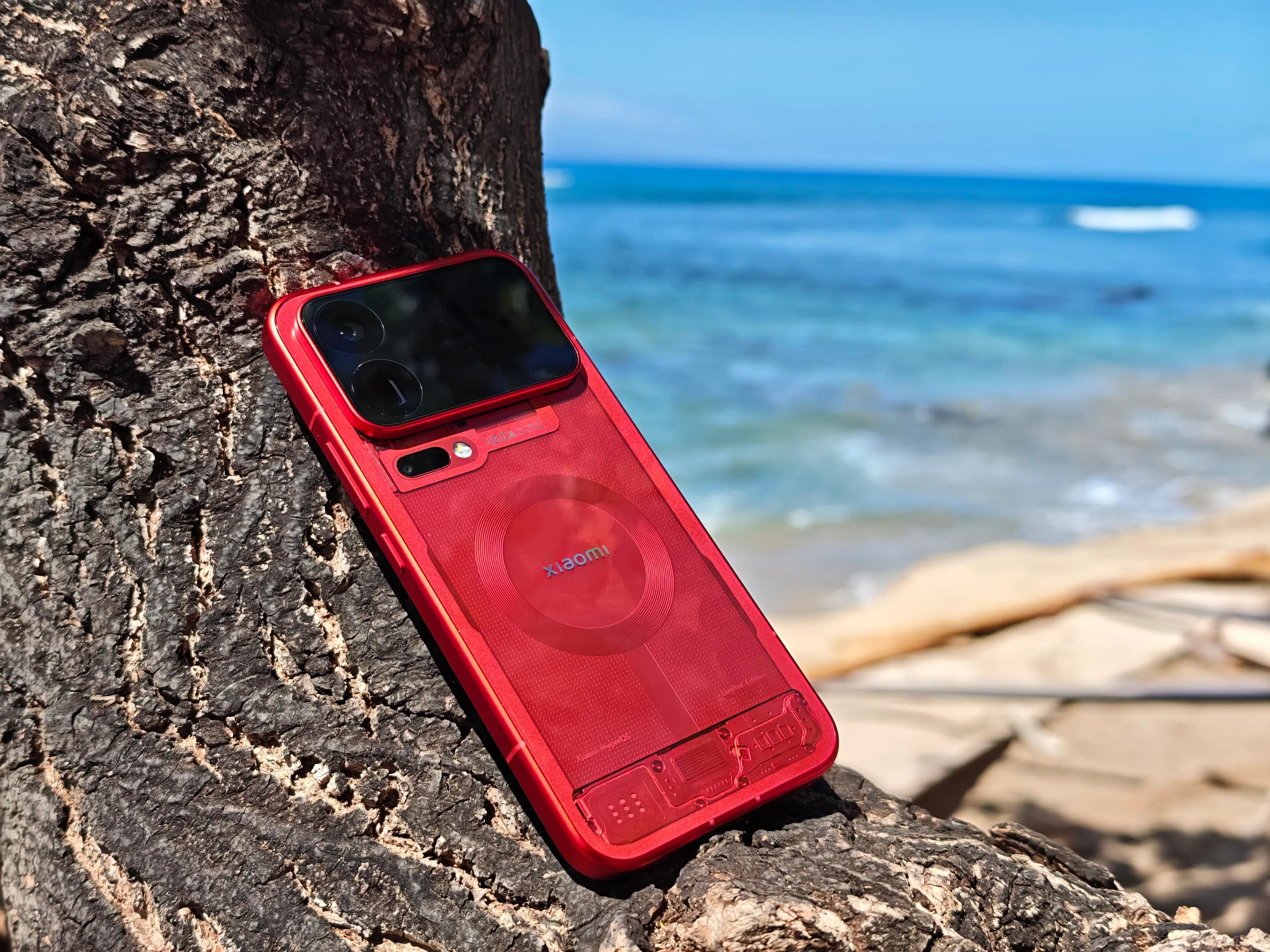
The main reason for this situation is that flagship phones are really not selling well. Flagship phone sales order data released by digital tech blogger @RD Observation shows that as of the 40th week of 2026 (September 28 to October 4), the sales volume of the vivo X500 series is about 143,800 units, the sales volume of the OPPO Find X10 series is about 175,700 units, the sales volume of the Xiaomi 18 series is about 284,600 units, and the sales volume of the Honor Magic 9 series is about 209,400 units.
Compared with the Xiaomi 17 series that exceeded one million units in sales within 5 days of its launch, the sales volume of the Xiaomi 18 series is extremely poor. The first-sale sales of new OPPO and vivo flagships have also declined to a certain extent compared with the previous generation products.
(Image source: LeiTech shooting)
The rise in mobile phone prices and poor sales are blamed on AI manufacturers. Due to the extremely high demand for storage chips for AI large model training and inference, storage manufacturers have frantically raised prices. The price of the 12GB+256GB storage combination has soared from 500 yuan to 2200 yuan, leading to a sharp rise in mobile phone hardware costs.
As a result, the prices of new products from mainstream global mobile phone manufacturers have generally increased to varying degrees, and even some models released earlier this year and last year have also increased in price by hundreds to thousands of yuan.
Looking back a few years ago, mobile phone manufacturers were competing for memory capacity, and brands such as OnePlus, REDMI, Realme, RedMagic, Nubia, iQOO, and Honor successively launched models equipped with 24GB of memory. Now 12GB has become the mainstream configuration in the market, and there are very few new phones equipped with 24GB of memory in the short term.
In the general environment of rising mobile phone prices caused by memory price hikes, only brands with a solid position in the high-end market such as Apple and Huawei, whose original product prices are higher than Android flagships and are less affected by the price surge, can maintain sales volume and even achieve counter-trend growth.
What consumers are most worried about is whether the price of flagship phones will drop in the future, and whether Xiaomi's Ultra version models will return.
Xiaomi takes the lead, is the Ultra era of mobile phones coming to a complete end?
In May this year, @Digital Chat Station broke the news that among domestic manufacturers, only OPPO and vivo still retain the traditional top-tier Ultra flagship (excluding Honor RS models). At that time, some netizens raised the question of why Xiaomi, which has higher flagship phone sales, canceled the top-tier configuration, while OPPO and vivo retained it. The reason may be related to Xiaomi's huge investment in its automotive business that has not yet turned a profit, making it more necessary to cut costs than OPPO and vivo.
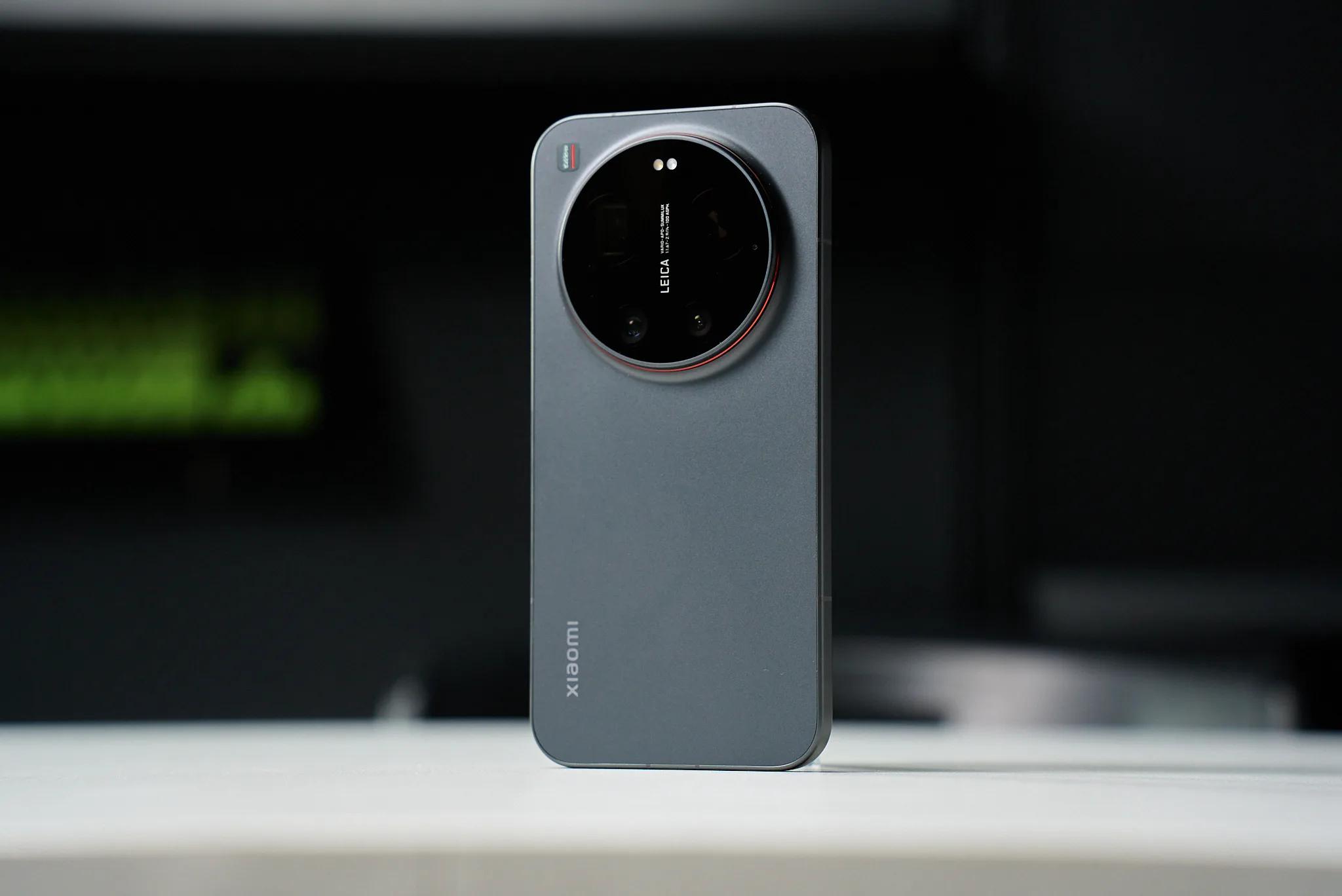
As for whether the Xiaomi Ultra version will return in the future, and whether OPPO and vivo will cancel the Ultra version, the key actually lies in the price of storage chips.
(Image source: LeiTech shooting)
Data from industry research institution TrendForce shows that storage chips will still be in short supply in the fourth quarter of 2026. It is expected that Conventional DRAM will increase by 10%~15% quarter-on-quarter, the average selling price of mobile DRAM will increase by 0%~5% quarter-on-quarter, and NAND Flash will increase by 15%~20% quarter-on-quarter.
Compared with the first half of this year, the price increase of storage chips has slowed down, but prices are still rising. LeiTech (ID: Leitech) predicts that the price of storage chips will remain at a high level in the next two to three years. Based on this, the starting price of Ultra version models will reach about 10,000 yuan, making it difficult for manufacturers to recover R&D and production costs.
If the industry remains in a high-cost state for a long time, the Xiaomi Ultra model is unlikely to return in the short term, and OPPO and vivo may also cancel their Ultra models.
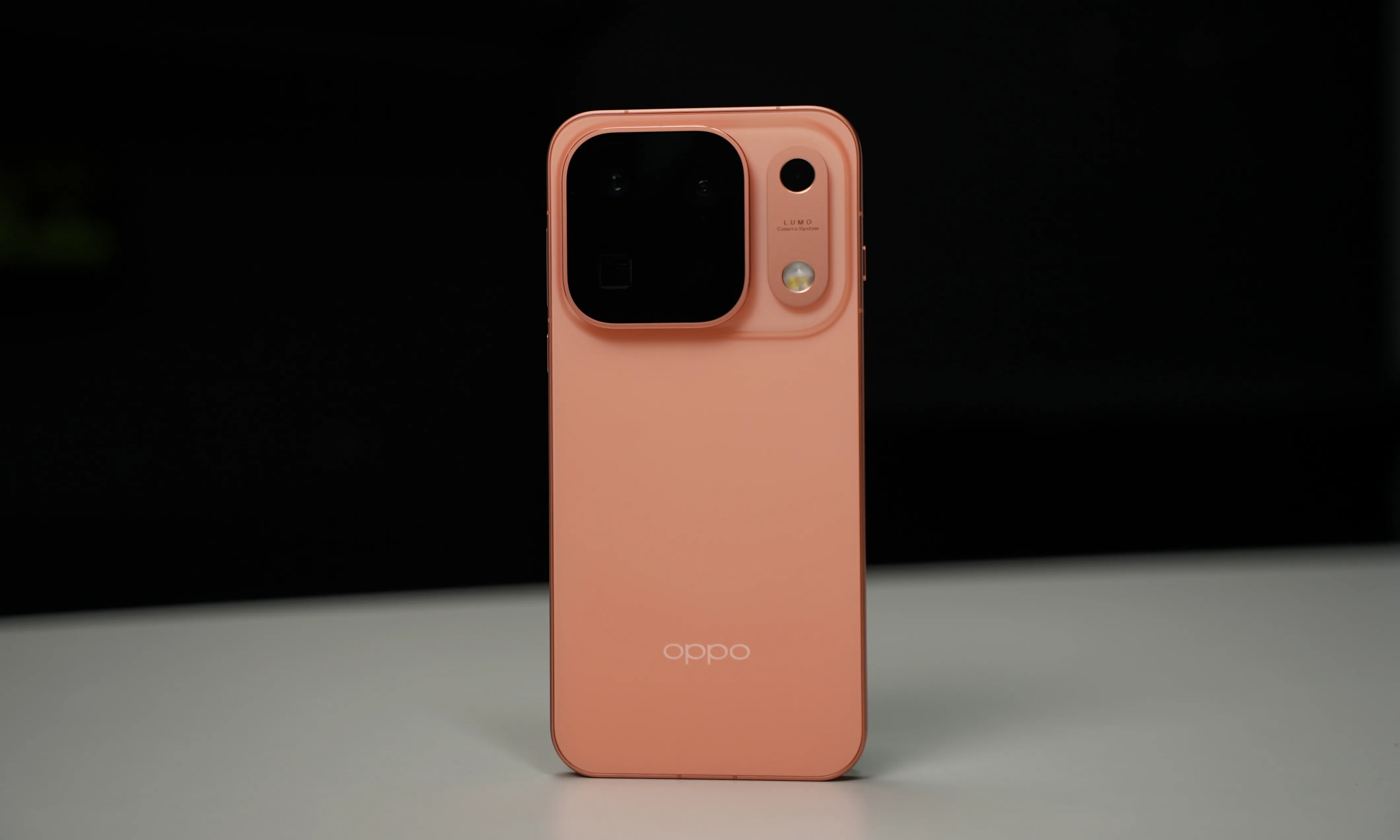
In response to the situation where consumers are not receptive to the price increase of flagship phones, the newly released models this year have generally been "upgraded in configuration". For example, OPPO Find X10 Pro Max is equipped with 3 200-megapixel cameras and the second-generation Danxia restoration lens, as well as the LUMO light and shadow engine; vivo X500 Pro Max inherits the 200-megapixel periscope telephoto lens from X300 Ultra, with a 2K 144Hz screen; Xiaomi 18 Pro Max is equipped with a Leica main camera + dual 200-megapixel cameras, as well as three speakers and a privacy protection screen.
(Image source: LeiTech shooting)
In terms of configuration, the new generation Pro Max models of mainstream Android manufacturers are already very close to Ultra models, and the gaps usually lie in three aspects: screen resolution, main camera CMOS size, and optical zoom magnification. That is to say, even without the Ultra version, the experience of these Pro Max models will not be much inferior to that of the Ultra version.
Of course, for mobile phone manufacturers, the Ultra version model is not just an expensive phone. It is also the collection and benchmark of the manufacturer's technical strength. Even if the R&D and production costs cannot be recovered, Xiaomi will sooner or later bring back the Ultra flagship.
LeiTech has an idea that perhaps mobile phone manufacturers will move Ultra models closer to concept phones, without mass production, and mainly use them as a centralized display of technology. In this way, manufacturers can greatly reduce investment during the mobile phone production phase.
Ultra models are hard to make, and the path to high-end mobile phone market is full of challenges
The cancellation of the Xiaomi 18 Ultra is ostensibly due to the surge in storage chip prices that makes it difficult to recover costs. The deeper reason is that OPPO, vivo, and Xiaomi have not been able to anchor the high-end market through ecosystem and brand value like Huawei and Apple.
According to the data released by @RD Observation, as of the 40th week of 2026, the sales volume of the iPhone 18 Pro series has reached 2.8909 million units, the sales volume of the Huawei Pura X View has reached 494,000 units, and the sales volume of the Mate 90 series is 270,200 units.
It should be noted that the Mate 90 series was released on October 1, with a sales time about one week less than Android flagships, but its sales volume has surpassed OPPO and vivo. As Huawei's first foldable phone with a large flat panel, the Pura X View has directly opened up a new form, leading countless manufacturers to follow Huawei's steps to develop large flat foldable phones.
In the past, Android manufacturers also tried to establish a high-end image through self-developed chips and under-screen camera forms, but building brand value cannot be achieved overnight, and perseverance is key. If the Xiaomi MIX series had not been discontinued, and Nubia and RedMagic had been emulated to make under-screen cameras a unique highlight, I believe many Mi fans would still be willing to support it today.
For consumers, we do not need to regret the disappearance of Ultra models. After the configuration of the Pro Max version is improved, the experience is getting closer to the Ultra version, and the price is more sincere. Even if all major mobile phone manufacturers retain the traditional top-tier models, LeiTech does not recommend that ordinary consumers with limited budgets pay extra to buy the Ultra version, as the Pro Max version is sufficient to meet our usage needs in most scenarios.