Data compliance is evolving from "issuing paper-based reports" to "full-process auditability": Shengyun Pandun leverages AI agents to bridge the gap between legal opinions and technical solutions.
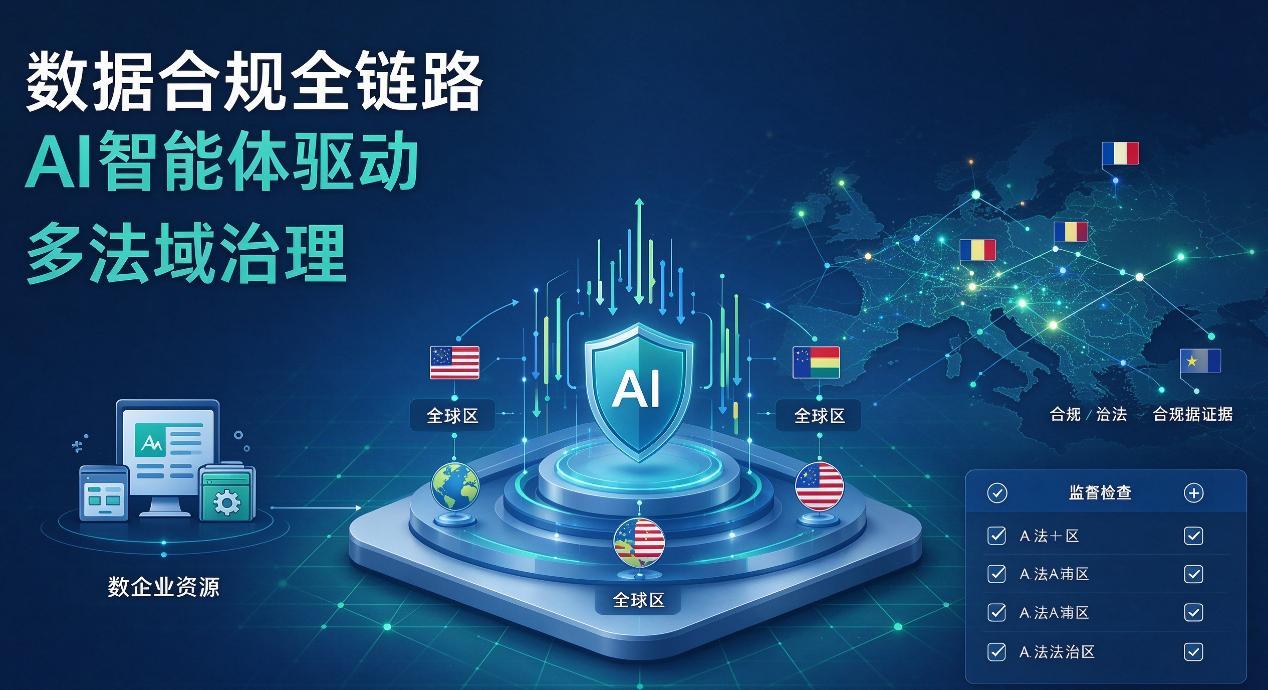
Targeting New Opportunities in Multi-jurisdictional Data Governance for Multinational Enterprises
In recent years, laws and regulations including the Data Security Law and the Personal Information Protection Law have been implemented and enforced, with the focus of regulatory inspections gradually shifting from institutional completeness checks to full-lifecycle risk verification of data. As domestic and overseas data compliance supervision continues to move toward penetrating inspections, enterprises' demand for data security is evolving from "issuing paper reports" to full-process governance that is "implementable, auditable and sustainably operable". In highly regulated industries such as automotive, insurance and multinational manufacturing, where there are massive data assets, complex business systems and intertwined cross-border links, the traditional compliance model that relies on manual sampling assessment can no longer meet the dual requirements of supervision and business operations.
In the scenario of global expansion, Chinese enterprises face a more complex compliance environment. GDPR, U.S. federal and state privacy laws and executive orders, and the PDPA of ASEAN countries such as Singapore form a multi-jurisdictional regulatory network. For GDPR alone, the maximum penalty for violations can reach 4% of an enterprise's global annual revenue. For multinational enterprises with multiple factories, branches and business systems, data flow paths are complicated, and cross-region, cross-entity and cross-platform data processing activities cannot be fully tracked manually.
At the same time, the deployment of enterprise private large language models and AI agents is generating new governance demands. For the purpose of sensitive information protection, more and more enterprises choose to deploy AI systems locally, but the subsequent issues such as AI asset registration, permission boundaries, data access and audit traces have not been fully covered by traditional data security tools. The advancement of rules such as domestic AI filing and the EU AI Act has also made risk governance of AI systems a new rigid demand for enterprise procurement.
DataAigis, with AI agents as the core, builds an integrated data compliance governance platform that combines legal and technical capabilities, striving to form a complete closed loop covering data asset identification, risk assessment, rectification implementation and evidence retention.

Traditional Data Compliance Services Face Discontinuities
The current supply of data compliance services is divided by capability: law firms and consulting agencies are responsible for interpreting legal rules and identifying risks, cybersecurity vendors are responsible for data scanning and monitoring, and AI technology vendors are responsible for models and tools. The three types of services have their own strengths, but for enterprises, how to translate legal requirements into specific system rectification plans, and how to map scanning results to regulatory provisions to form evidence admissible by regulators often falls in the gap between the three, requiring enterprises to connect the dots on their own.
The practical problem brought by this division of labor is that enterprises need to coordinate lawyers, consultants, security vendors and internal IT teams at the same time, which leads to slow project progress, blurred responsibility boundaries, and gaps between compliance investment and actual effects.
What DataAigis tries to address is exactly the gap between legal capabilities and technical capabilities. Its core idea is not to simply superimpose AI on the compliance process, but to reconstruct the data compliance workflow through AI agents, allowing machines to take over more repetitive identification, scanning, classification and monitoring work, so that legal experts can focus on high-risk judgment and professional conclusion output.
AI Agent Drives Full-link Governance
DataAigis's products are centered on the DataAigis platform, with subsystems including data security compliance governance system, privacy and AI governance system, and AI agent management system. These subsystems can be deployed independently or delivered in combination to form integrated capabilities covering from data asset inventory to AI system governance.
In terms of data security compliance governance, the platform uses AI agents to automatically discover data assets, grade and classify sensitive fields, conduct risk assessment, monitor cross-border traffic and archive audit evidence. For large enterprises, data assets are scattered in different business systems, databases, interfaces and cloud environments, and traditional manual inventory can only cover limited samples. AI agents can continuously scan and identify the distribution of sensitive data, shortening the manual assessment cycle that originally takes several months to a much shorter period, and improving risk coverage.
In terms of privacy and AI governance, the platform builds compliance management capabilities around enterprise large language models and agent applications, including AI asset registration, data subject request management, compliance obligation list, and permission boundary control. This capability aims to help enterprises meet the requirements of rules such as domestic AI filing and the EU AI Act, and reduce compliance uncertainty after the introduction of AI systems.
In terms of AI agent management, the platform emphasizes local deployment and unified governance. Enterprises can deploy digital employees and business agents in private environments, and the platform is responsible for unified account permissions, data access boundaries, operation audits and risk traces. Different from many large model services charged by seats, DataAigis adopts a project-based delivery method, which is more suitable for large enterprises' requirements for cost control and data isolation.

Moving from Project Delivery to Continuous Compliance
In terms of business model, DataAigis adopts a combination of "assessment and rectification projects + annual continuous compliance services + platform authorization". Customers usually start with initial data compliance diagnosis or assessment and rectification projects, and after completing risk identification and rectification suggestions, gradually turn to annual continuous compliance services and platform-based deployment.
The advantage of this path is that it lowers the threshold for customers' first purchase. For enterprises, data compliance projects usually involve multi-department collaboration, and it is necessary to clarify the risk base and rectification priorities in the early stage. Through short-term assessment projects, enterprises can quickly obtain data maps, risk lists, rectification baselines and evidence packages, and then expand long-term monitoring and platform capabilities according to actual needs.
In insurance industry projects, DataAigis once assisted customers in evaluating a large number of business systems and sensitive fields, shortening the traditional long-cycle manual project to a much shorter period, and emphasizing full-volume scanning and risk closed loop. In the scenario of multinational manufacturing, its solution involves multiple overseas factories, multi-jurisdictional compliance requirements and long-term renewal services, reflecting the possibility of transformation from project-based system to continuous services.
Automobile manufacturing, financial insurance and multinational manufacturing are the key industries that DataAigis is currently focusing on. These industries have high data sensitivity, strict regulatory requirements and complex business systems, which put higher demands on the depth and delivery capability of compliance systems, and therefore have stronger willingness to pay and higher user stickiness.
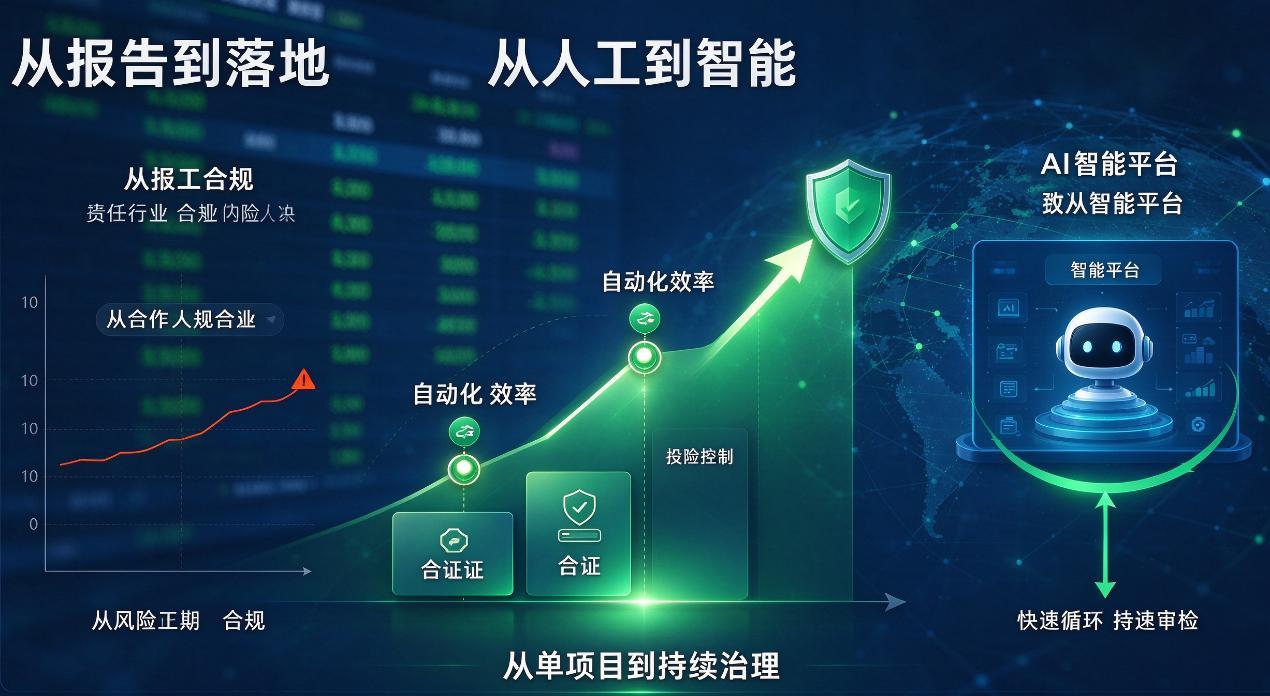
Typical Case: Multi-jurisdictional Compliance Implementation for Connected Car Products Expanding Overseas
An intelligent connected vehicle enterprise targeting the European and American markets continuously generates user data through on-board terminals, user apps and after-sales service systems. Its architecture is a typical form of overseas expansion: European and American user data is stored in European cloud regions, while Chinese R&D and customer service teams need remote access. The questions the enterprise needs to answer are very specific: whether this architecture is valid under the respective privacy rules of the EU and the United States, in what ways domestic teams can still access data, and what documents and processes need to be supplemented for vehicle networking functions and apps in different markets. These issues span legal, R&D and operation departments, and need to be sorted out and implemented into business processes at one time.
The enterprise finally chose DataAigis to undertake this data compliance consulting project, valuing the fact that half of such problems are legal issues and half are architectural issues: texts such as privacy policies and user agreements need to be issued by lawyers, while data storage regions, remote access methods and cloud configurations require engineers to provide executable solutions. The fact that lawyers and engineers are in the same team means that the enterprise can get two types of conclusions in one project, without having to connect legal opinions and technical solutions on its own.
The project is carried out by DataAigis's consultant and lawyer team in four stages: data diagnosis, legal framework, cross-border architecture and compliance operation. Firstly, draw a data map to sort out the data flow and cross-border access relationship of on-board terminals, user apps, after-sales and third-party components; then form a compliance gap report based on business interviews in Europe and the United States, and convert each gap into executable rectification actions; in view of the current situation of storage in European cloud regions and remote access from China, provide compliance suggestions for cloud security strategies and cross-border data transmission architecture; at the legal level, lawyers issue compliance guidelines, privacy policies, user agreements, DPA, Cookie policies, and SOPs for data subject requests and incident response. The project delivered a total of 12 types of achievements and 13 documents.
After the project is completed, the enterprise has a clear view of the data flow and cross-border access relationship of vehicles, apps and third-party components. The legal and technical teams carry out coordinated rectification based on the same set of basis, and obtain the documents and operation basis required for subsequent policy maintenance, data subject request processing and security incident response.
Composite Founding Team Builds Differentiated Underlying Barriers
The data compliance track has multiple attributes of law, engineering and industry implementation, and the cross-domain composite capability of the team is the core foundation for project implementation. The founding team of DataAigis consists of members with backgrounds in industrial technology, multinational compliance and large customer commercialization. Hao Junsheng, the chairman, holds an EMBA from China Europe International Business School and a Financial EMBA from Tsinghua University PBC School of Finance. He used to be vice president and CTO of Digital China, and founder of Shanghai Cloudarc (which was acquired by Digital China for 360 million yuan), with many years of experience in enterprise digitalization, industrial M&A and large enterprise service management. Zhao Rui, CEO and CTO, holds a master's degree from the University of Manchester, with more than 20 years of experience in enterprise-level software R&D. He has successively worked at Microsoft, Shanghai Cloudarc and Digital China, leading the design and iteration of the underlying AI agent engine of the platform. Xuan Xian, COO, is a master of Berkeley Law School, holding lawyer practicing qualifications in China, the United States and Europe. She used to be the Asia-Pacific legal director of Palo Alto Networks, familiar with global multi-regional data privacy regulations, and is responsible for structuring and digitizing complex legal rules, converting them into rule engines executable by platform AI.