36Kr Research | 2026 China Industrial AI Industry Development Research Report
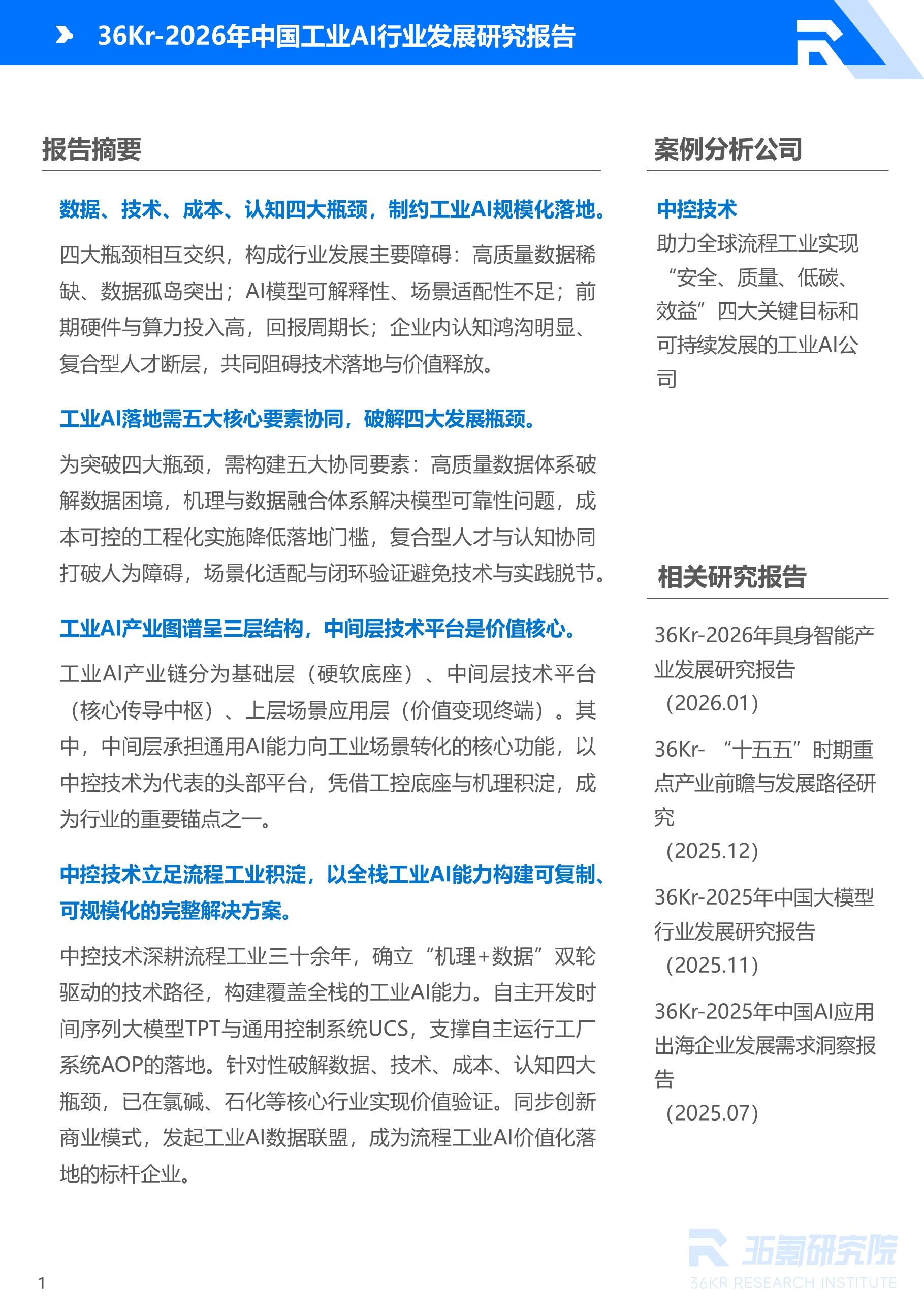
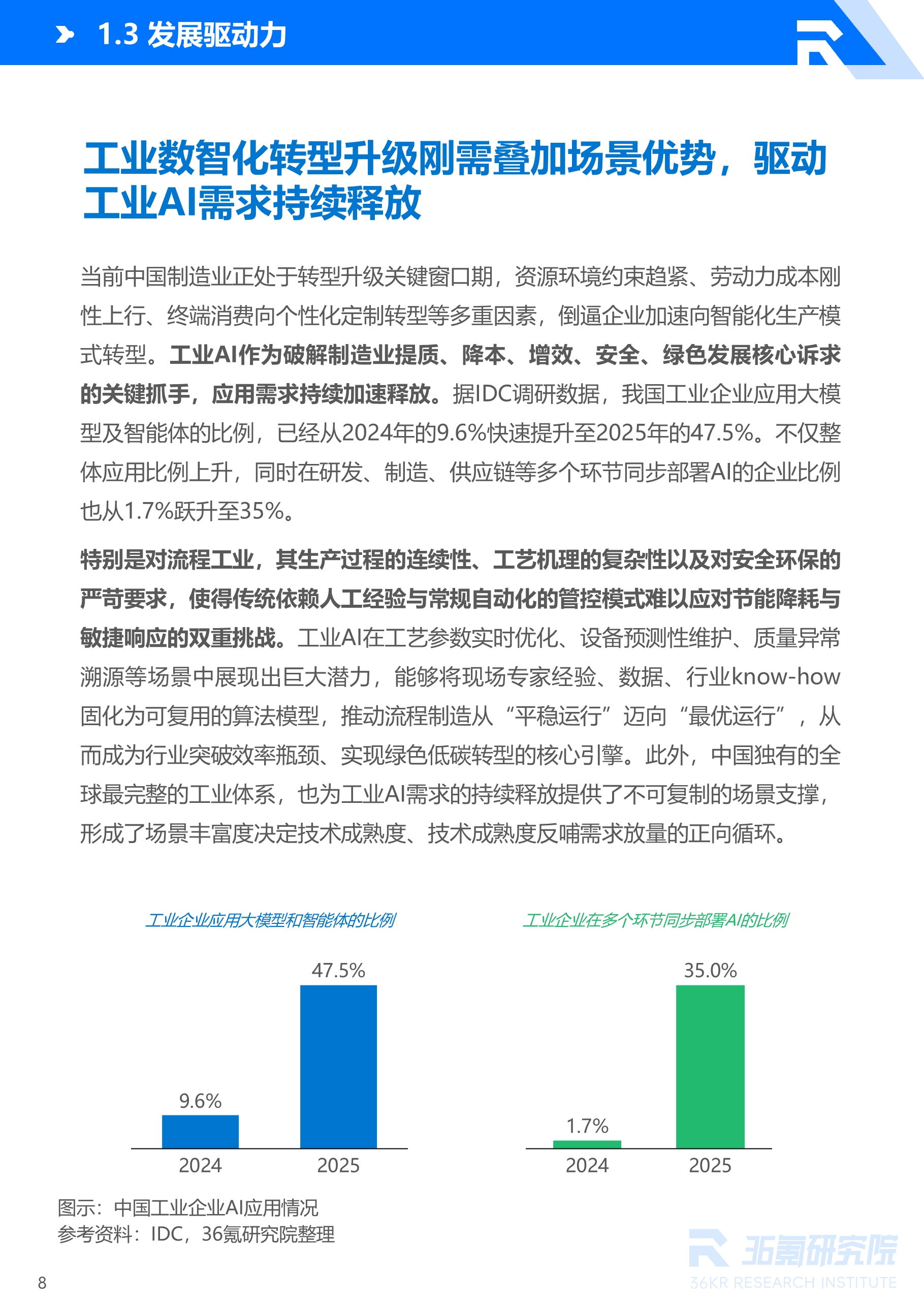
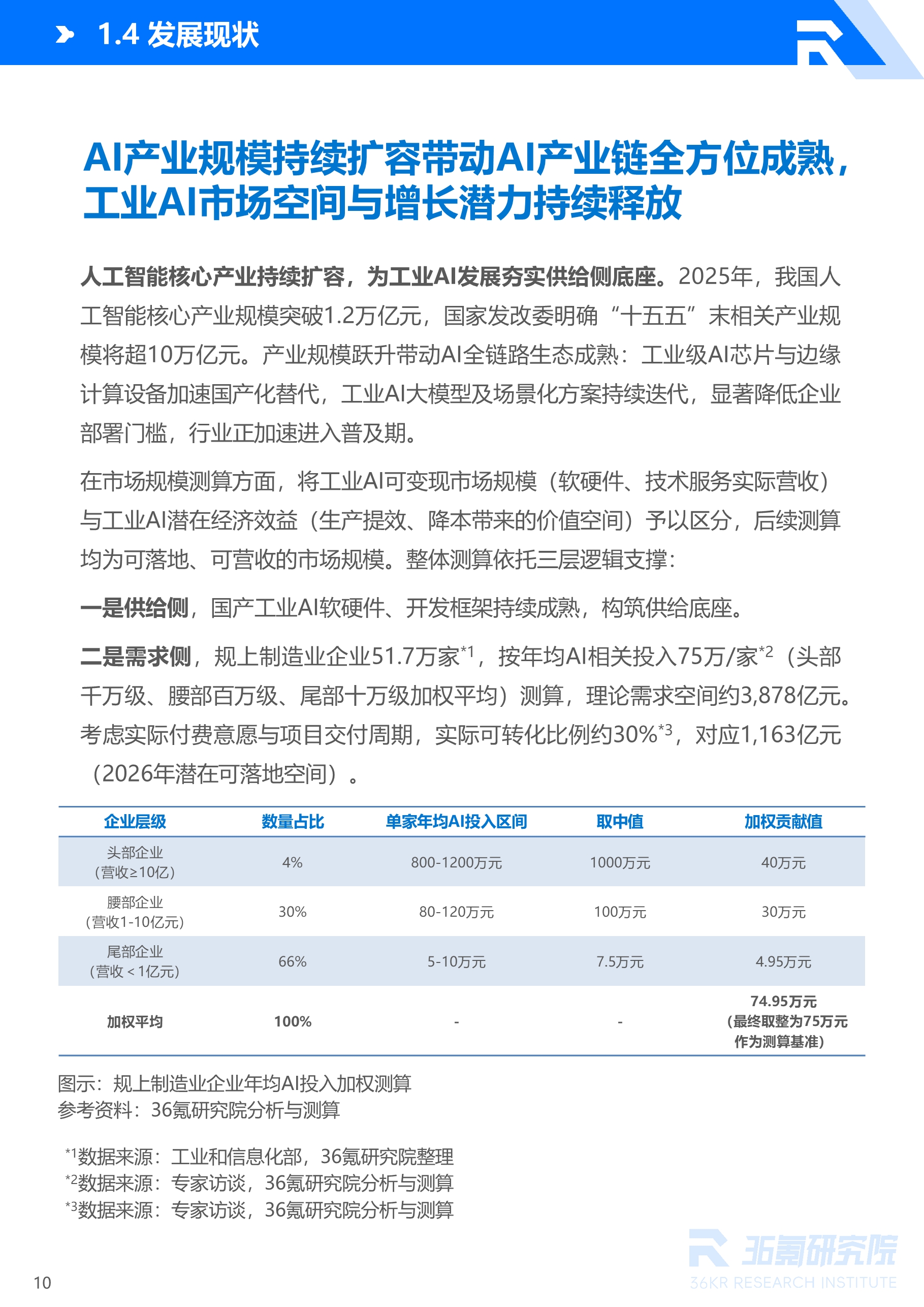
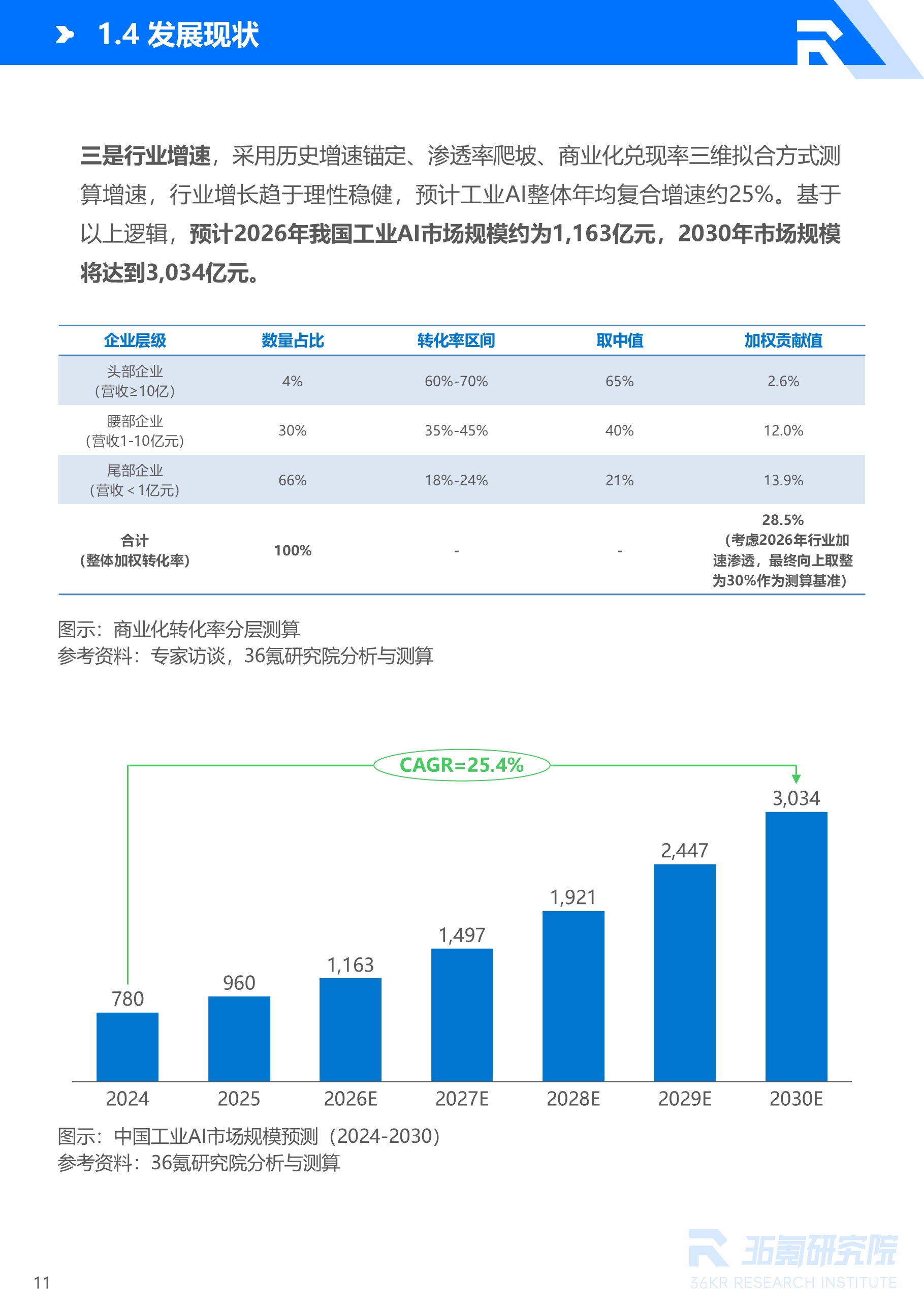
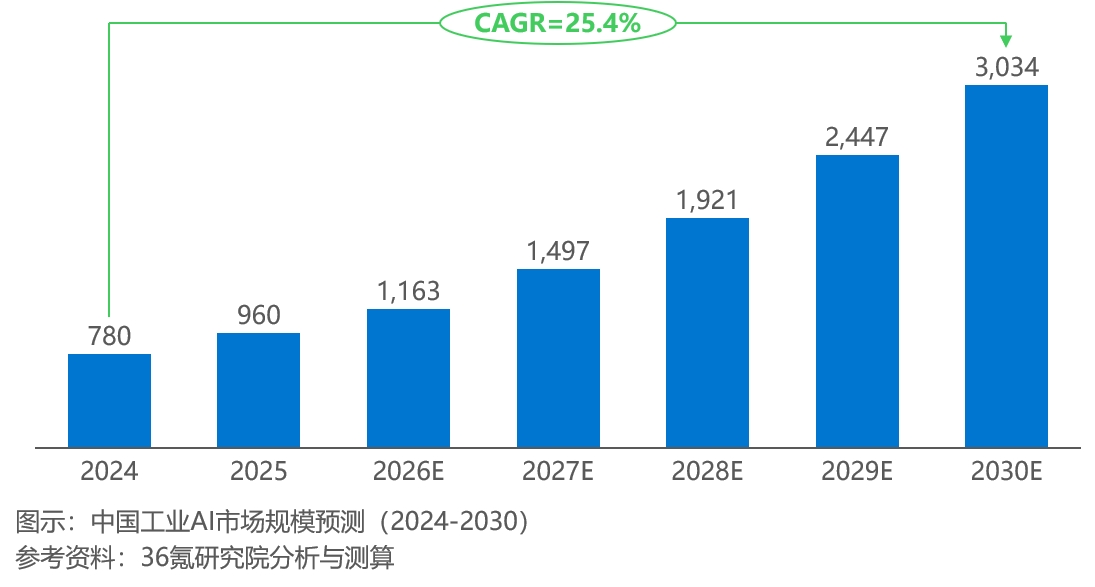
At present, China's manufacturing industry is at a critical window period of transformation towards high-end, intelligent and green development. As a key tool to address the core demands of the manufacturing industry for quality improvement, cost reduction, efficiency enhancement, safety and green development, industrial AI continues to see accelerated release of market application demands. According to IDC research data, the proportion of Chinese industrial enterprises applying large models and agents has risen rapidly from 9.6% in 2024 to 47.5% in 2025, with the application penetration rate increasing significantly. The explosive growth of demand directly drives the expansion of industrial scale. According to the calculation of 36Kr Research Institute, the implementable market scale of industrial AI in China will reach 1.163 trillion yuan in 2026, and is expected to exceed 3 trillion yuan in 2030, with an average annual compound growth rate of over 25%. At the same time, problems such as the scarcity of high-quality data, insufficient model reliability, high upfront investment costs, and the gap of compound talents are intertwined, forming systematic obstacles for the large-scale implementation of industrial AI. The traditional mode of single-point trial and error and external plug-in empowerment can no longer adapt to the strict requirements of industrial scenarios. Against this background, 36Kr Research Institute releases the *2026 China Industrial AI Industry Development Research Report*, systematically sorting out the industry development context, disassembling the implementation bottlenecks and breakthrough paths of industrial AI, and providing practical reference for the full-domain penetration of industrial AI.
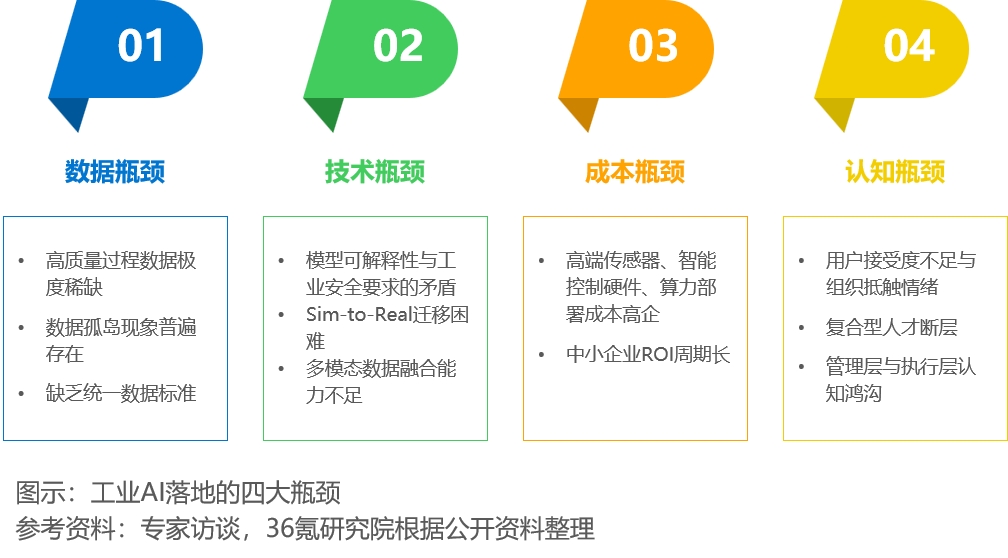
01. Four major bottlenecks of data, technology, cost and cognition are the core obstacles restricting the large-scale implementation of industrial AI at present
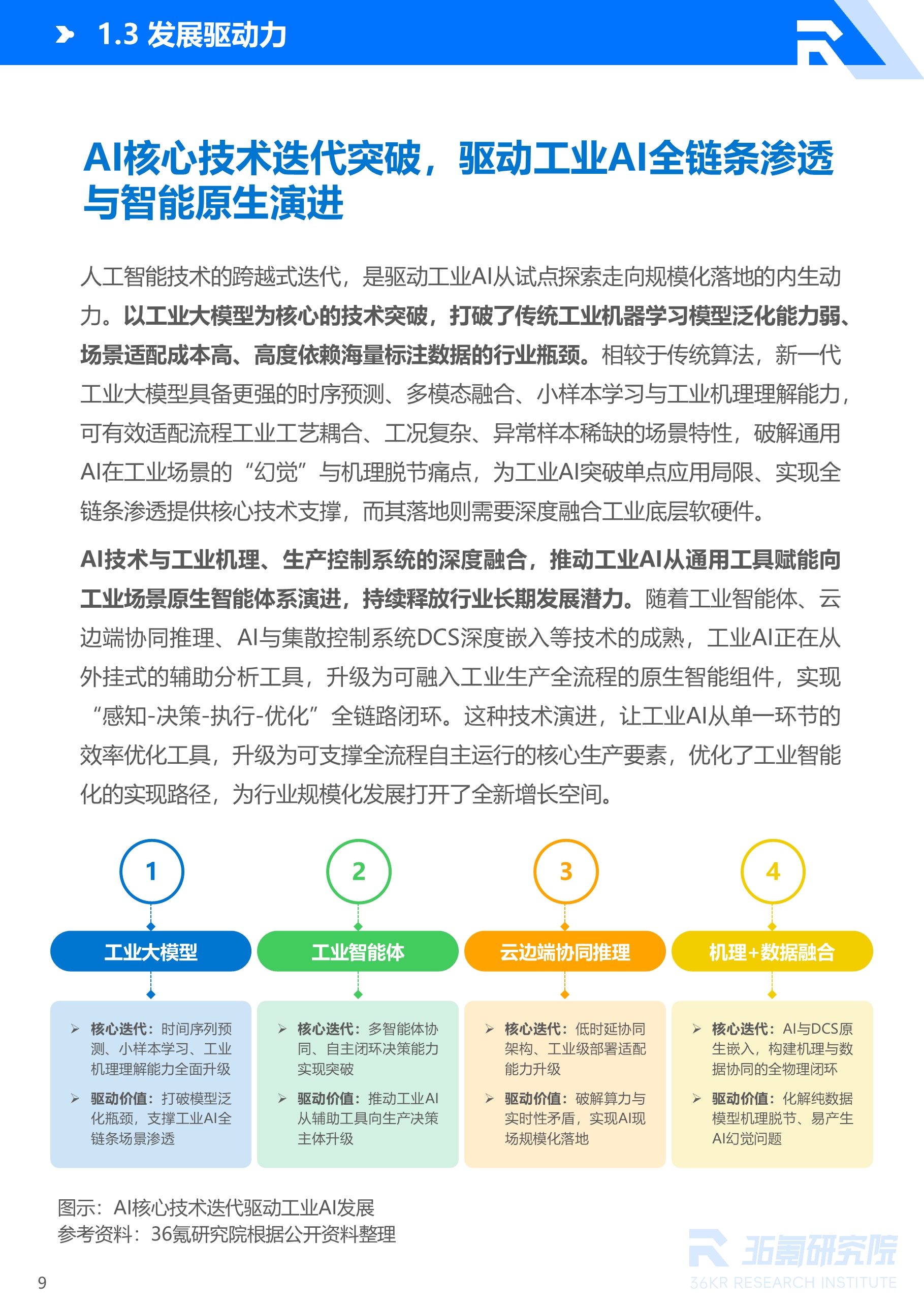
The particularity of industrial scenarios determines that the implementation of AI cannot copy the development path of the general field. At the data level, the scarcity of high-quality abnormal samples, prominent cross-system data silos, and inconsistent industry standards make it difficult to support the robustness training of models; at the technical level, the "black box" feature of AI models contradicts the high safety requirements of industry, the fluctuation of virtual-real migration effect and insufficient multi-modal data fusion ability lead to the situation that model reliability can hardly meet production requirements; at the cost level, the comprehensive investment of hardware, computing power and implementation is relatively high, the return on investment cycle of small and medium-sized enterprises is relatively long, and their willingness to pay is limited; at the cognitive level, the low acceptance of front-line personnel, huge gap of compound talents, and cognitive disconnection between the management layer and the execution layer form implicit resistance to technology implementation. The four major bottlenecks amplify each other, jointly raising the threshold for large-scale implementation of industrial AI.
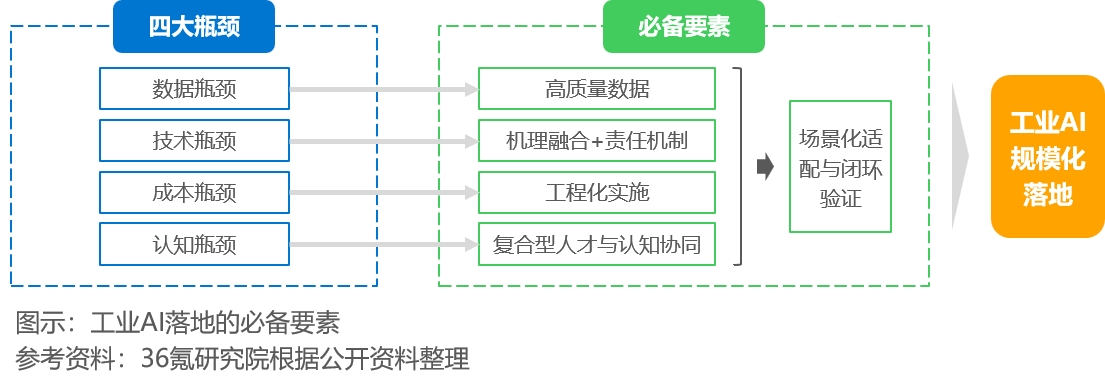
02. The large-scale implementation of industrial AI requires the coordinated efforts of five core elements
In response to the four systematic bottlenecks, the industry needs to build a multi-dimensional collaborative solution system. Break through the data bottleneck with a high-quality data system, break through data silos and accumulate high-value data assets through the whole-chain governance of "collection, governance and application"; break through the technical bottleneck with the mechanism and technology integration system, transform the principles of industrial technology into computable rules, and improve model interpretability and scenario adaptability; reduce the implementation threshold through cost-controllable engineering implementation, compress investment costs and shorten the return cycle through technical optimization and mode innovation; break through artificial barriers with compound talents and cognitive collaboration, bridge the organizational cognitive gap and fill the talent gap; guarantee the implementation effect through scenario-based adaptation and closed-loop verification, and avoid the disconnection between technology and production practice through the path of "pilot - verification - promotion". The five elements are indispensable, jointly supporting industrial AI to move from pilot to popularization.
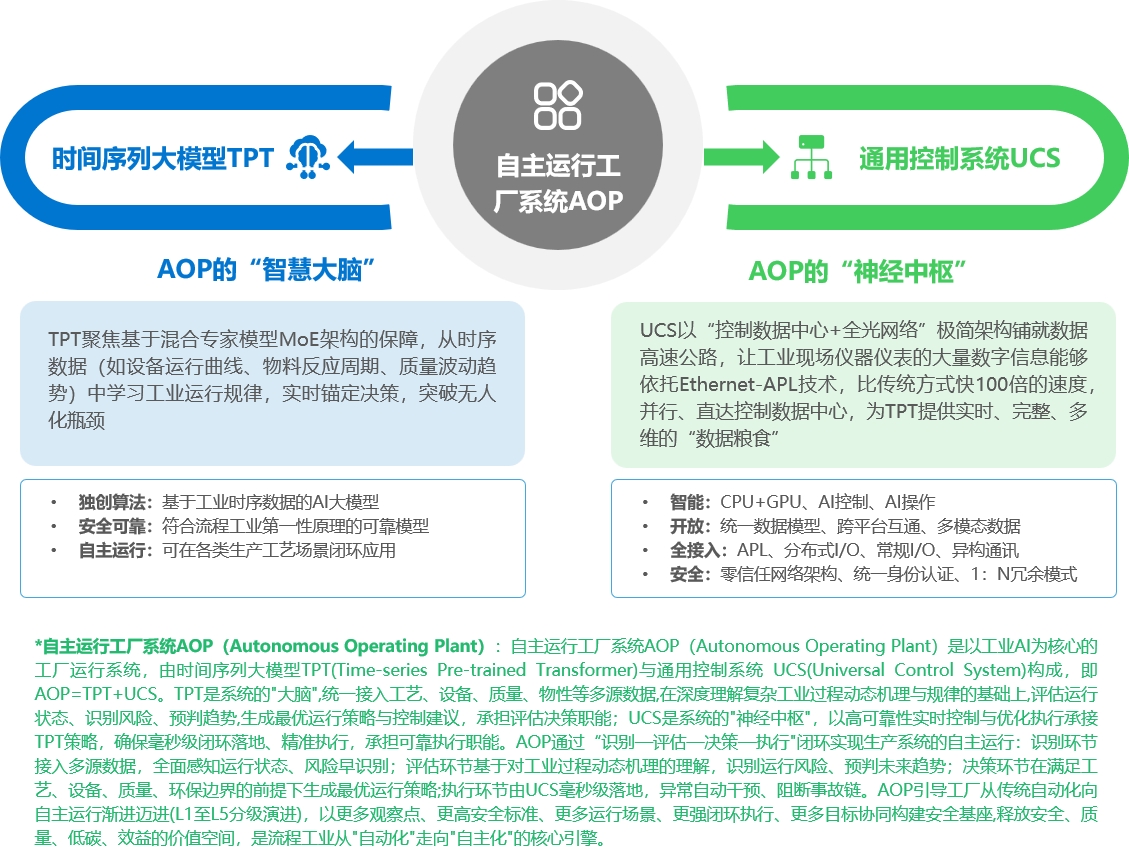
03. The dual-drive of "mechanism + data" is the core path for the large-scale development of process industrial AI, and full-stack capabilities and benchmark practices are verifying the replicable implementation mode
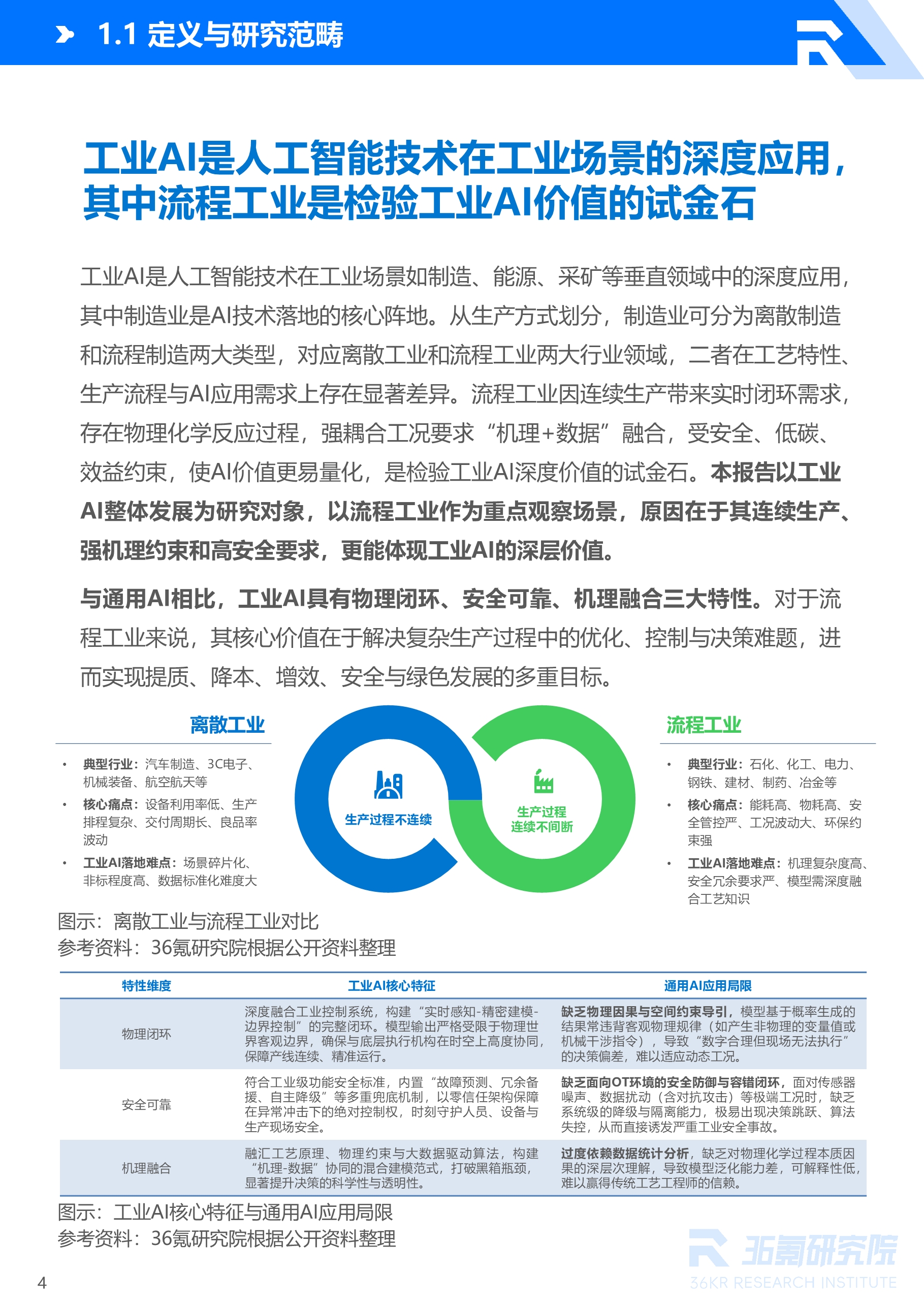
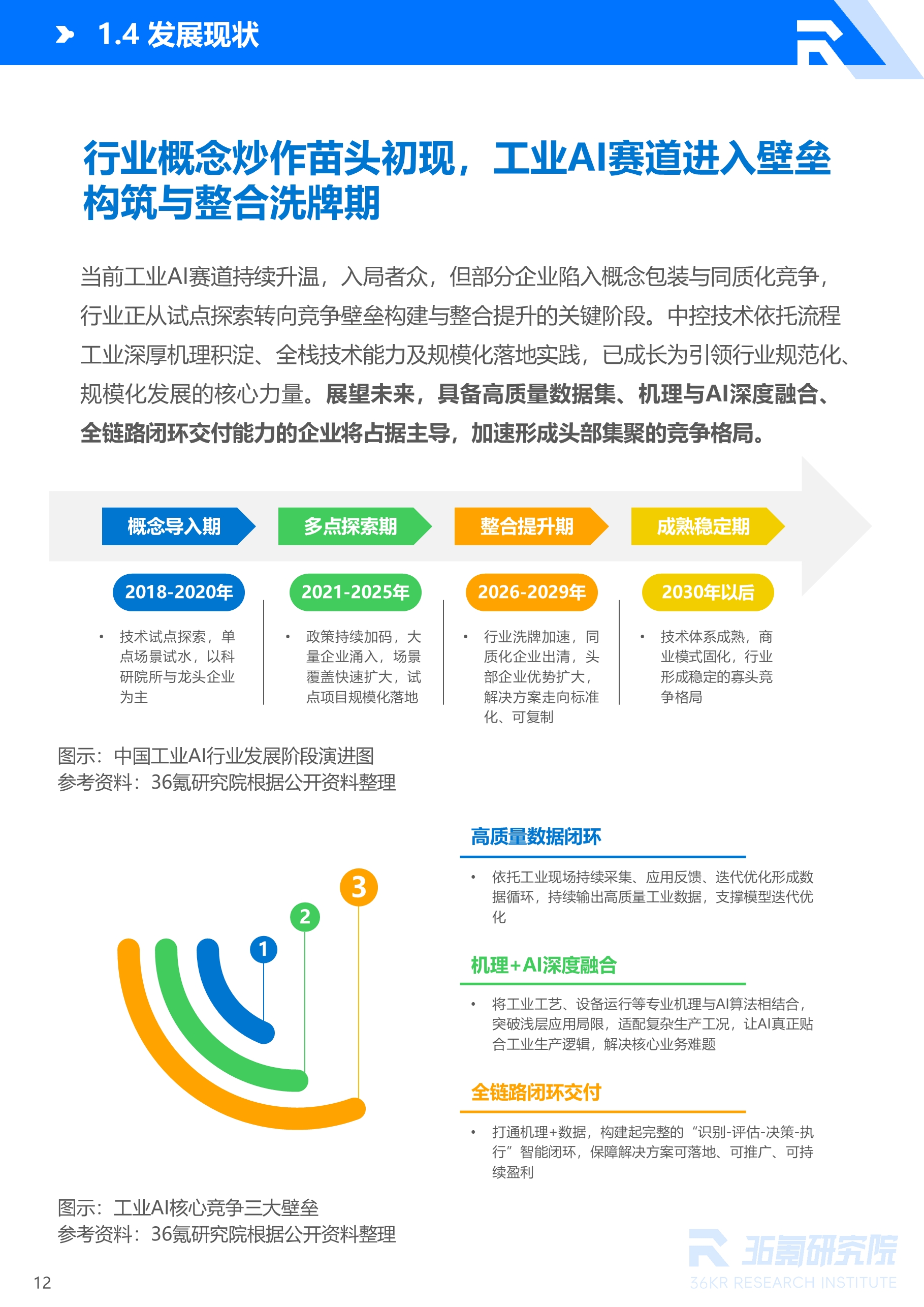
In the process of full-domain penetration of industrial AI, there are differences in the implementation rhythm and value density in different fields. Among them, as the touchstone to test the in-depth value of industrial AI, the process industry, with the industrial characteristics of continuous production, strong mechanism constraints and high safety requirements, has become a core position with urgent demands for quality improvement and cost reduction and easy-to-quantify AI value, and is also a high-barrier track with strict requirements for model reliability and closed-loop capability. The production characteristics of strong coupling and high safety in the process industry determine that the pure data-driven AI mode is difficult to penetrate into the core production links. Leading enterprises represented by Supcon Technology, relying on decades of accumulation of industrial mechanism, take the self-developed time series large model TPT and general control system UCS as the dual cores to build the autonomous operation factory system AOP. It not only taps the production optimization space through data drive, but also ensures the model is safe and reliable with mechanism constraints, effectively solving the core pain points of industrial AI implementation. This mode has formed large-scale benchmark cases in industries such as chlor-alkali and petrochemical, realizing quantifiable value verification in dimensions such as cost reduction and efficiency improvement, personnel reduction and efficiency enhancement, and safety management and control, providing a replicable practical model for the large-scale implementation of AI in the process industry and even the whole industrial field.
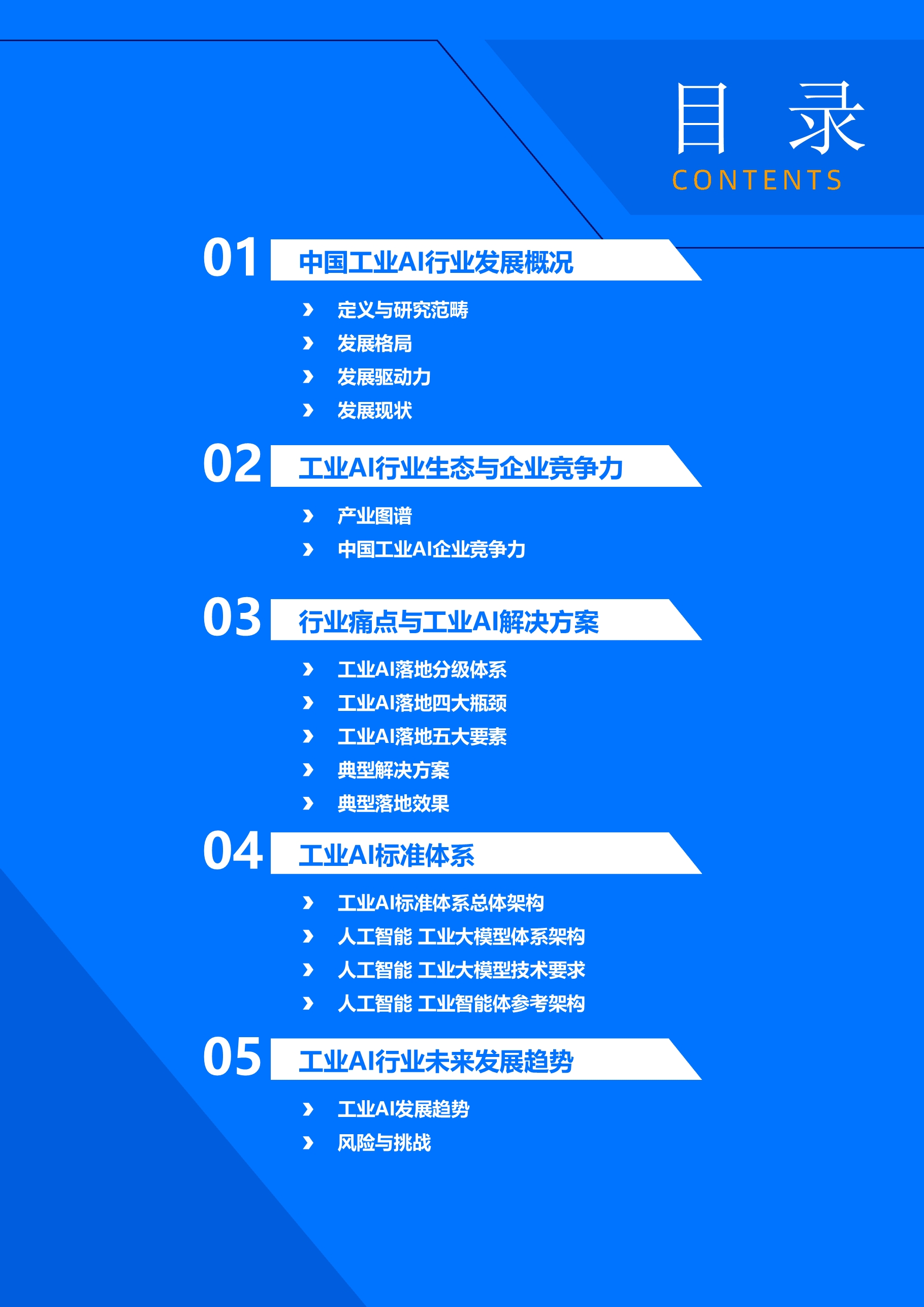
The key research issues of this report are as follows:
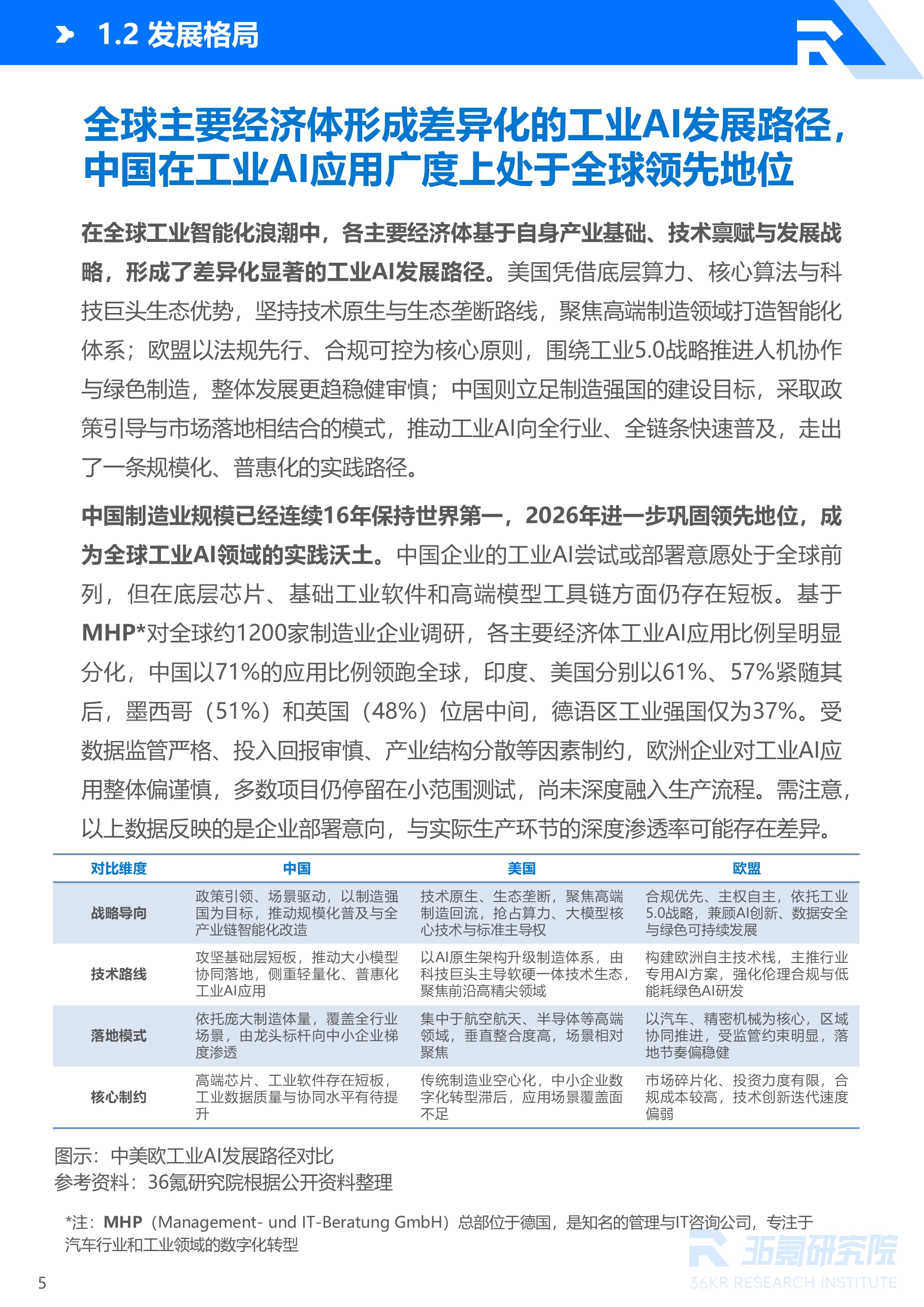
• What is the global development pattern of industrial AI? What position does China occupy and what role does it play in the global market?
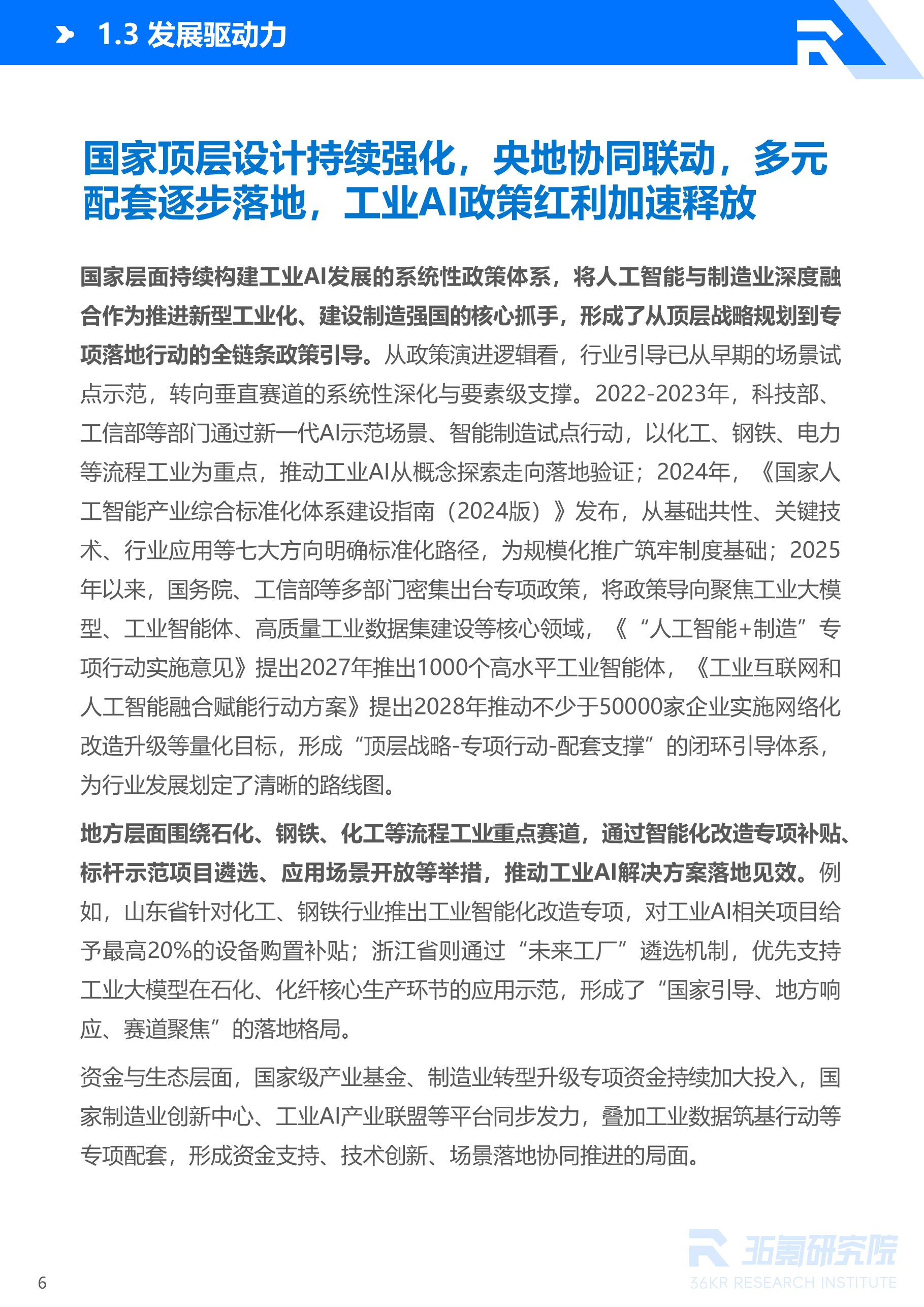
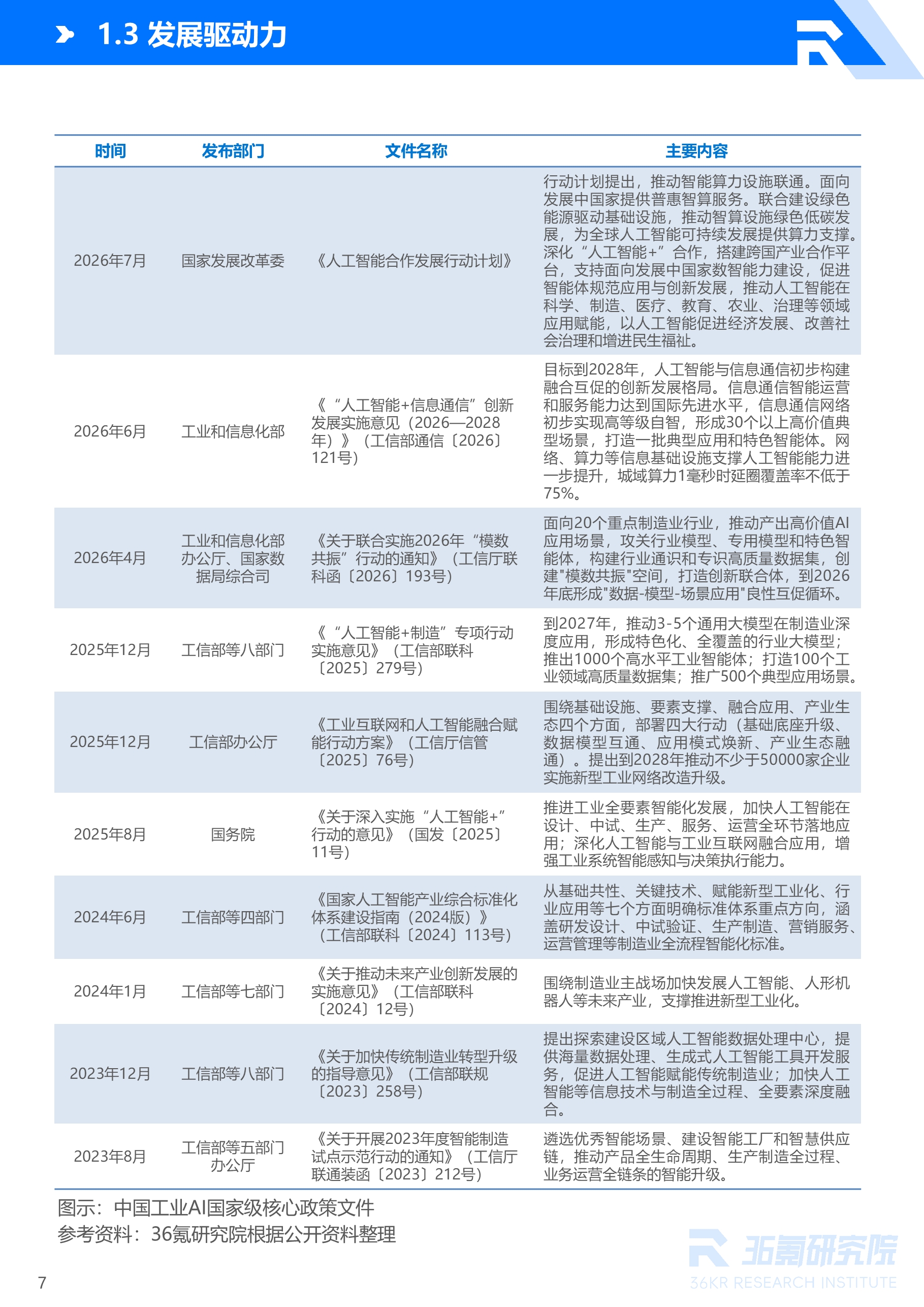
• What are the core driving forces promoting the development of industrial AI in China?
• What is the market scale and growth trend of China's industrial AI market? What stages has the industry development gone through, and which stage is it currently in?
• What are the components of the upstream, midstream and downstream of the industrial AI industry chain? What are the latest development trends of each link?
• What are the main participants in the industrial AI market? What are the respective competitive advantages and capability shortcomings of various types of participants?
• What are the core bottlenecks restricting the large-scale implementation of industrial AI? What are the deep-seated causes behind them?
• What core elements are needed to break through the bottlenecks of industrial AI implementation? What referable solutions and implementation effects have benchmark enterprises formed?
• What levels are the industrial AI implementation maturity divided into? What is the main logic of the level division?
• What technology and product trends will industrial AI welcome in the future? What risks and challenges will the long-term development of the industry still face?
For more exciting content, please refer to the *2026 China Industrial AI Industry Development Research Report*, click download link, extraction code: xgsc