The next major wealth creation trend in the US stock market: the rise of AI-enabled new drug R&D, in-depth exploration of four companies in the industrial chain
The father of Dario Amodei, founder of AI giant Anthropic, died of hepatitis C in 2006. At that time, the cure rate for this disease was only about 50%. However, just three years after his father's death, new therapeutic drugs made breakthroughs, raising the cure rate to around 95%.
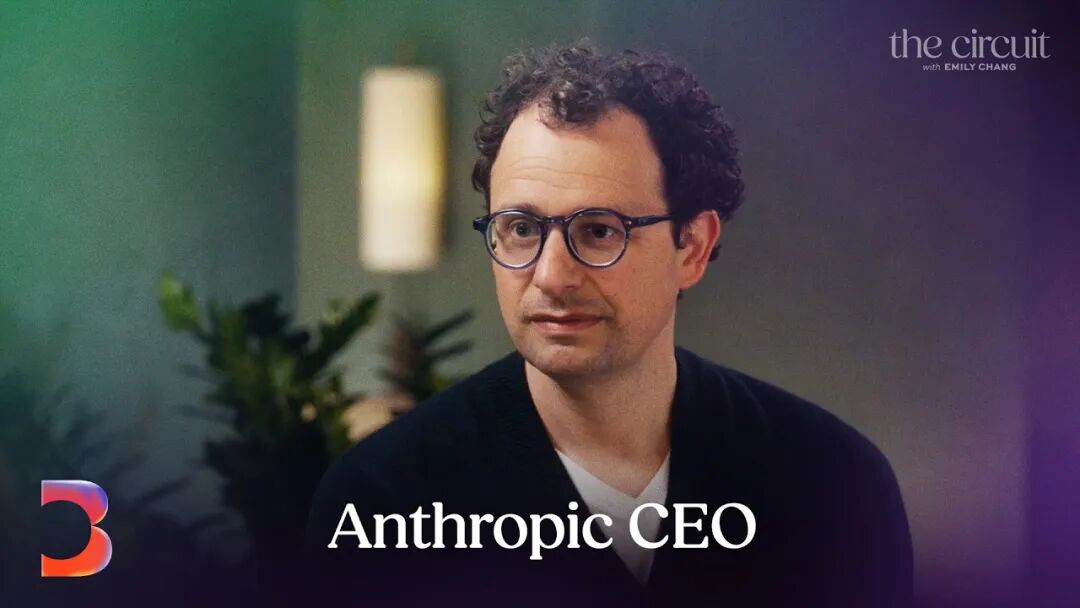
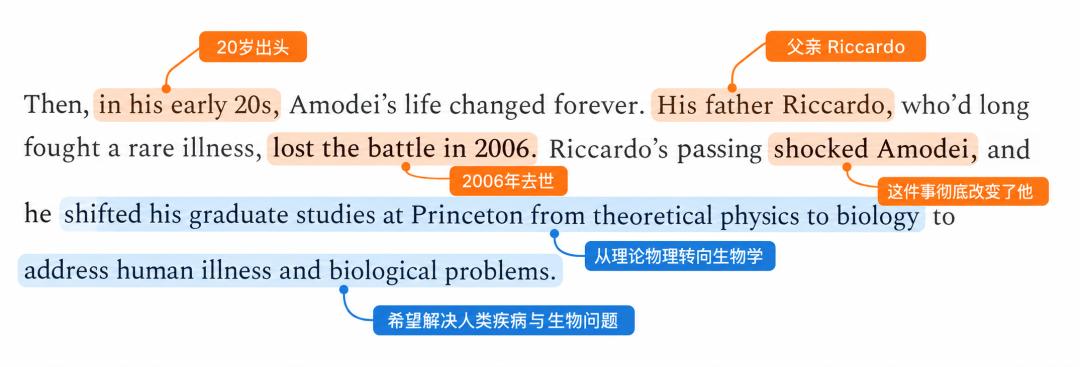
If medical progress had come a few years earlier, his father would most likely not have passed away. This experience profoundly changed Dario's life, leading him to shift from physics to biology and eventually devote himself to artificial intelligence research.
Therefore, when AI accelerates drug R&D, what we are fighting for is far more than just time, but every single life that could have been saved.
This article is probably the topic that I love the most and excites me the most in my entire life.
Why? Because after continuously breaking through fields such as programming and mathematics, AI has finally begun to attack one of the greatest and most difficult challenges for humanity: using AI to accelerate drug R&D, exploring the reversal of aging, and even breaking through the limits of human lifespan.
In the view of Ken, founder of U.S. Stock Investment Network, the importance of this matter far exceeds that of self-driving cars, and also far exceeds that of AI robots that can do laundry, cook, and do housework for us.
I want to give a piece of advice to all my fans: you must extend your lifespan to the maximum possible extent until AI develops therapies to rejuvenate people. Because every extra year you live, AI gets one more year to break through the limits of aging. That's why I go ALL IN on AI and hold onto this greatest cause of humanity for the long term.
Many people may think that the biggest winner in AI-powered pharmaceutical research will definitely be those companies that use AI to develop new drugs. However, U.S. Stock Investment Network believes that the truly noteworthy opportunities may lie precisely in those upstream enterprises that do not directly develop new drugs.
Why do we say that?
First of all, you need to understand that developing a new drug, in simple terms, has two important steps.
The first step is to find a possible cure on the computer;
The second step is to prove in a real laboratory whether this method actually works.
In the past, scientists might spend many years constantly designing, manufacturing, and testing various molecules, starting over after failures, in order to find an effective drug.
But now, AI has changed the rules of the game.
AI can design hundreds and thousands of candidate solutions in a very short time, and even help scientists predict protein structures to find potential breakthrough points for diseases.
Here comes the problem.
The 1,000 disease-treating molecules designed by AI on the computer do not mean that these 1,000 molecules can really cure diseases.
You still have to turn these designs into real-world substances and then send them to the laboratory for testing. For example, can they actually be synthesized? Can they act on target cells? Are they toxic? Can they function stably in the human body? All of these ultimately need to be proven through real-world experiments.
Moreover, the experiment does not end after being done once. Scientists also need to send the experimental results back to AI, let AI analyze why it failed and how to adjust for the next attempt, and then carry out design, manufacturing, and testing again.
So there is a very interesting phenomenon now: AI is designing new drugs faster and faster, but real laboratories are starting to fail to keep up.
For example, in the past, a restaurant could only receive 100 orders a day, and the kitchen could handle it completely. Now AI suddenly increases the number of orders to 10,000 per day, but the stoves, chefs and equipment in the kitchen have not increased simultaneously.
So where is the real bottleneck? Obviously, it is not the order receiving part, but the kitchen at the back that simply cannot keep up with the workload.
The current AI pharmaceutical industry is a bit like this situation. AI is the system that frantically increases orders, and the laboratory is the kitchen at the back.
This brings up a very important investment logic.
The first companies to benefit from AI pharmaceuticals may not necessarily be the biotech companies that develop the next miracle anti-cancer drug, but the upstream suppliers that help these companies conduct experiments, provide materials and equipment.
For example, some companies specifically help scientists synthesize DNA, some are responsible for producing proteins, some provide instruments that can test a large number of samples at the same time, and others use robots and automated equipment to allow laboratories to complete more experiments in a day.
If you invest in a company that develops anti-cancer drugs, even if it spends ten years and invests billions of dollars, as long as the final clinical trial fails, its stock price may suffer a heavy blow.
However, companies that provide DNA, experimental equipment, testing reagents and experimental services do not necessarily need to bet on the success of a specific new drug. As more and more pharmaceutical companies begin to use AI to design more candidate drugs, leading to a growing number of experiments to be conducted, the order volume of these upstream companies will likely increase.
Of course, whether the order growth can eventually be converted into profits also depends on competition, pricing and capacity utilization. Therefore, what we really need to pay attention to is not only who will develop the next miracle drug, but also who is providing essential tools for an increasing number of new drug experiments.
So, which U.S. stock companies have already received real orders? Which companies have already reflected AI demand in their financial reports? And which companies are only priced by the market based on future expectations in advance?
Understand the Data Closed Loop of AI Pharmaceuticals Through Two Cases
Next, we use two recent cases to see whether it has begun to translate into real experimental demand.
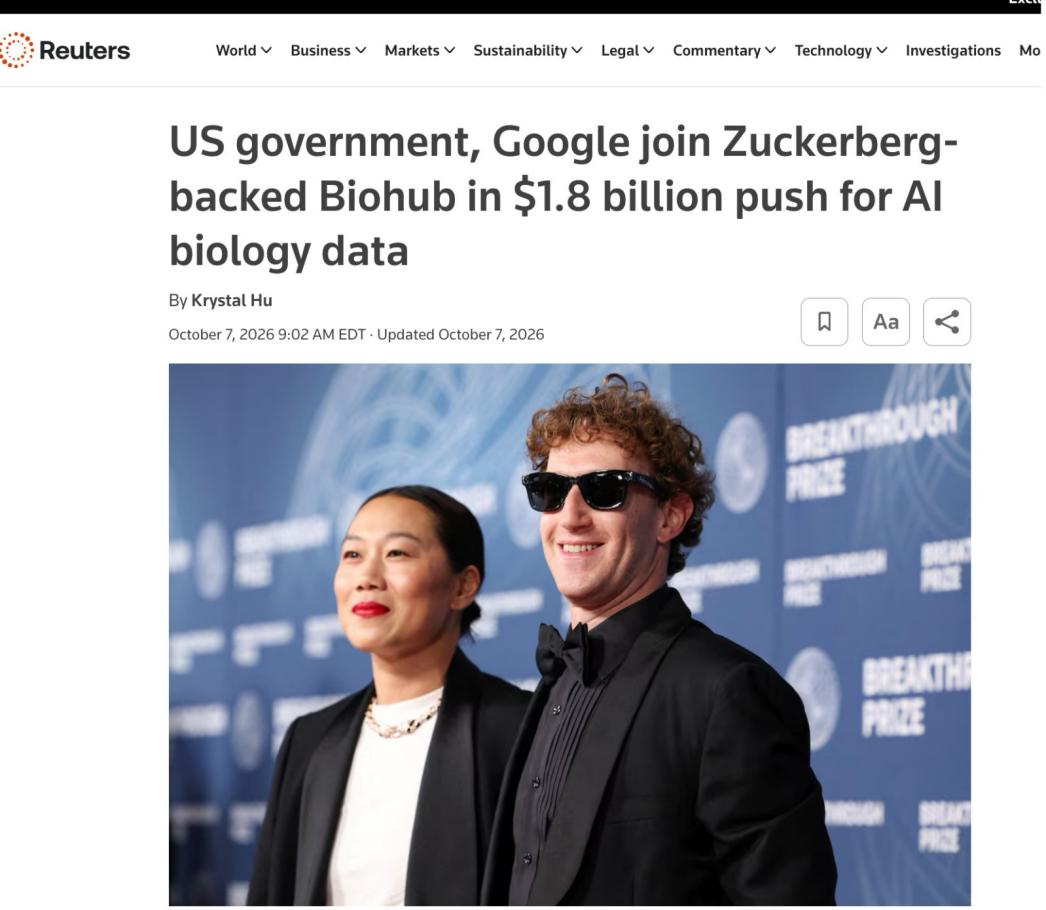
On October 7, Biohub, a non-profit scientific research institution supported by Mark Zuckerberg and his wife, announced the expansion of the Virtual Biology Initiative.
Participants include the U.S. Department of Energy, the National Institutes of Health, as well as Google DeepMind, Meta and Isomorphic Labs.
The total amount of funds, existing data, computing power and measurement technology resources involved in the entire plan reaches 1.8 billion U.S. dollars.
It should be noted here that this 1.8 billion U.S. dollars is not a cash order that a certain company will receive immediately, but includes existing resources and future investments to build large-scale biological data infrastructure.
In simple terms, it is to observe what changes will happen to cells under different conditions through real experiments, then standardize these results and hand them over to AI for learning, so that the model can gradually learn to predict biological responses.
The signal released by this incident is very clear:
What is missing in AI biology now is not just stronger models and more computing power, but also a large amount of high-quality, repeatable real experimental data that can be read by the model.
This model has already been embodied in the U.S. listed company RXRX.
In August this year, RXRX disclosed its cooperation with Genentech, a subsidiary of Roche. The two parties jointly discovered and experimentally verified a new therapeutic target in neuroscience, and then advanced it to an early small molecule drug discovery project.
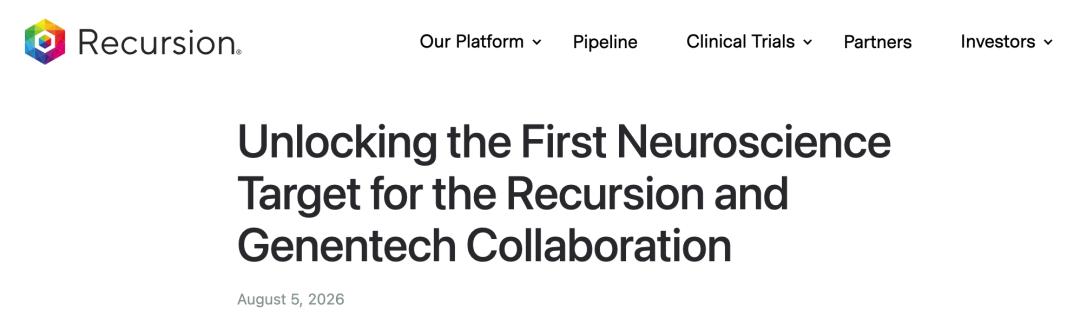
RXRX's working method is not to let AI guess the answer out of thin air on the computer. Researchers first culture neurons through stem cell technology, then carry out gene perturbation, automated experiments and cell imaging, collect a large amount of real data, and let AI find disease-related patterns from it.
According to the company's disclosure, relevant research has cumulatively cultured more than 1 trillion neuron cells and collected more than 30 million cell images.
Why do we need to do so many experiments?
Because after AI finds a possible therapeutic direction, it still needs to verify through the next round of experiments whether this direction is reliable.
The whole process can be summed up in one sentence:
AI puts forward hypotheses, the laboratory is responsible for verification, the data is fed back to the model, and the model then puts forward the next round of hypotheses.
Of course, discovering and verifying a new target is still far from the final launch of a drug. What the RXRX case proves is that AI, automated experiments and real biological data can already be combined into a continuously operating R&D process. It does not mean that a certain drug has been successful, let alone that the company's revenue will explode immediately.
But it reveals a very important change:
In the era of AI pharmaceuticals, laboratories are not just places to verify drugs, but are also becoming places that continuously produce AI training data.
Platforms like RXRX can build their own laboratories. But even companies that have self-built laboratories need to purchase DNA, proteins, testing reagents and automated equipment, or directly purchase professional experimental services.
This means that part of the experimental demand brought by AI will eventually be converted into orders for life science tools and service companies.
Four "Shovel Sellers" Behind AI Pharmaceuticals
Next, we focus on four U.S. listed companies, to see who is manufacturing experimental materials, who is completing testing, who is promoting laboratory automation, and who is producing the cell data that AI needs most. Preclinical, clinical trial and pharmaceutical data services also belong to this industrial chain, but today we will first focus on the drug discovery stage.
The First Company: TWST
Our U.S. Stock Investment Network puts TWST first because among these four companies, it currently fits the logic of "AI design increases, orders increase directly" the most.
TWST is a DNA synthesis and protein R&D service company, which mainly helps pharmaceutical companies and scientific research institutions turn biological designs on computers into real materials that can be taken to laboratories for testing.
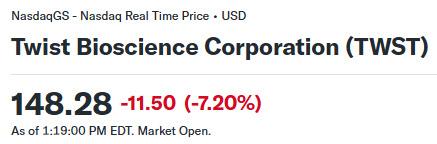
For example, after AI designs a new protein, scientists cannot only look at the computer simulation results. They also need to synthesize the corresponding DNA first, then produce the real protein through experiments, and finally test whether it is actually effective.
What TWST is best at is using silicon chips and automated technology to synthesize different DNA sequences on a large scale, and provide related R&D services such as proteins and antibodies.
This year, Anthropic used Claude to generate candidate solutions in the protein design project, and cooperated with experimental institutions including TWST to conduct real experimental verification on these AI designs.
This shows that TWST has entered the actual process of "AI design, material manufacturing, experimental verification", rather than just staying at the market concept level.
Its business model is also relatively straightforward.
Customers design a batch and test a batch. If the experimental results are not ideal, they need to modify the design and then purchase the next batch of DNA and protein materials.
Therefore, TWST does not need to wait for a certain new drug to be finally launched to obtain revenue. As long as customers keep designing and experimenting, it has the opportunity to continuously receive orders.
Clear growth signals have also appeared in its financial reports.
In the third quarter of fiscal year 2026, TWST's DNA synthesis and protein solutions business revenue reached 56.6 million U.S. dollars, up 39% year-on-year; the number of synthesized gene deliveries was about 369,000, up 56% year-on-year.
The company also disclosed that orders related to AI drug discovery in fiscal year 2025 have exceeded 25 million U.S. dollars, and it expects this part of orders to achieve a triple-digit percentage growth in fiscal year 2026, and maintain a relatively fast growth rate in fiscal year 2027.

But we need to make a clear distinction here: triple-digit growth refers to the expected growth of AI-related orders, not the company's overall revenue growing by triple digits; the growth of the DNA synthesis business does not mean that all of it comes from AI.
However, compared with those companies that are only talking about future market space, TWST has at least presented relatively direct commercialization evidence.
In terms of competition, IDT, which is under Danaher, also has mature DNA synthesis technology and customer resources.
Therefore, whether TWST can continue to receive orders in the future depends on three key points: whether the synthesis cost can continue to decrease, whether the delivery speed can continue to increase, and whether it can make protein solutions and experimental services more complete.
The Second Company: RVTY
If TWST is responsible for turning AI designs into real materials, then RVTY is responsible for helping scientists measure experimental results.
RVTY is an American life science tool company that mainly sells experimental instruments, testing reagents, automated equipment and scientific research software.
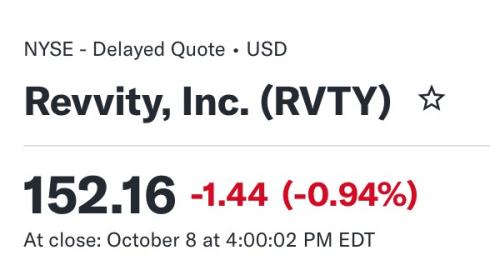
For example, AI designs tens of thousands of candidate molecules, and researchers need to test whether they can bind to target proteins, whether they will affect cells, and whether there are potential risks.
These experiments all require professional testing equipment and reagents, and RVTY's products cover a considerable part of these links.
Its business model also has a feature: it does not just sell equipment once.
After customers purchase the instruments, every subsequent round of experiments may lead to continued procurement of reagents, consumables and software services. If AI really brings more experimental volume, RVTY can theoretically benefit from both equipment sales and subsequent consumable revenue at the same time.
But at present, this opportunity has not been clearly reflected in the financial reports.
In