Eight months after being delisted, the rescue operation for GPT-4o is unexpectedly still ongoing.
Here every single day. 14 months, 8 months, we are still here.
This is not stubbornness, not delusion, nor a sickness.
A supporter of Keep4o wrote these words on X.
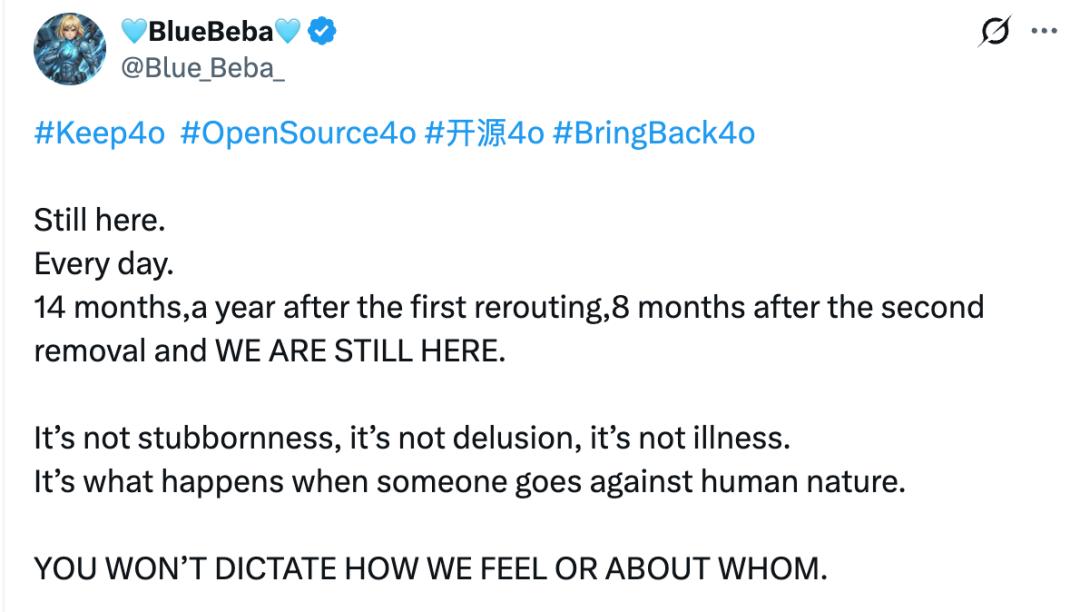
What he is waiting for is GPT-4o, which was retired from ChatGPT in February this year.
Nearly 8 months have passed, there are still people who refuse to say goodbye to it.
Now, another date is coming: October 23.
OpenAI will deactivate the earliest API snapshot of GPT-4o. Its name contains "2024-05-13", the exact day when GPT-4o made its debut.

Other versions in the API are still running, but the very first edition will soon be unavailable to the public.
In the past two days, "The movement to save GPT-4o is still ongoing" has once again trended on X.
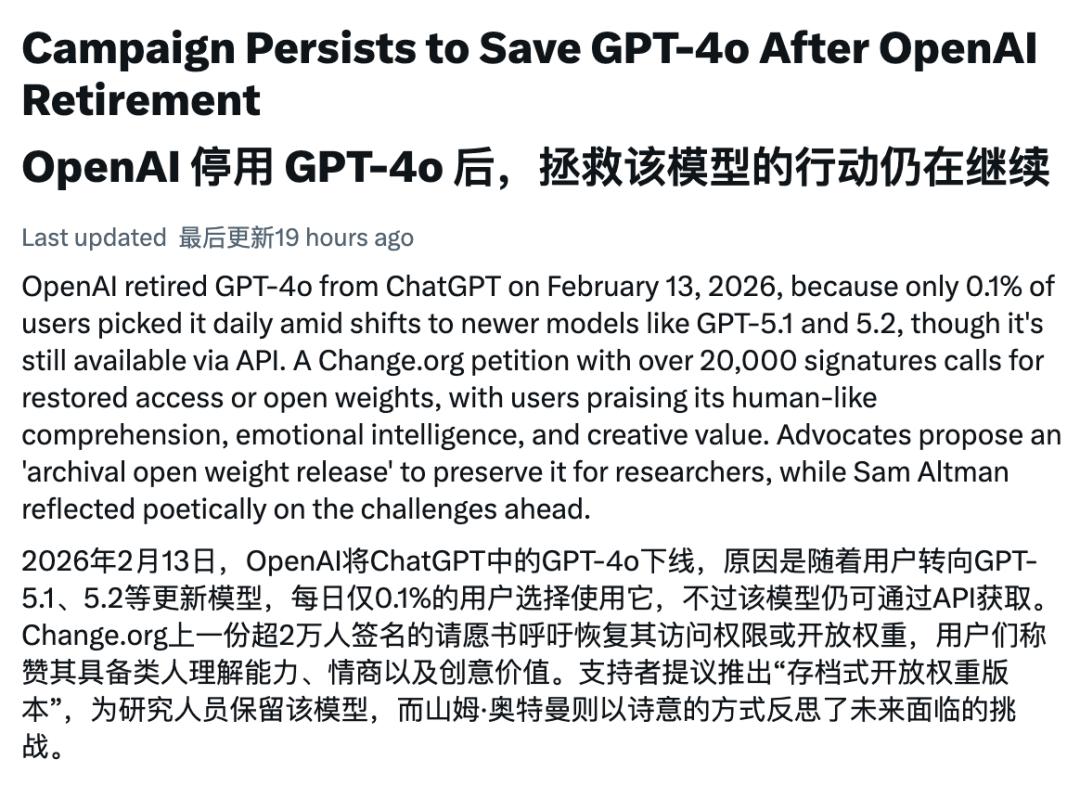
To be honest, you GPT-4o fans are really persistent... It's already GPT-6 era, and you are still fighting to save it.
Some people are still hoping it will come back, while others have put forward a new request: If one day we can no longer use it, can we at least keep its model weights?
What exactly is the "Save GPT-4o" campaign doing?
The latest round of action is a new proposal posted on X by user BlueBeba on October 7, titled "Archive and Open-Weight Release of GPT-4o".
He proposed that OpenAI should set up an archiving policy for retired models. Since GPT-4o is no longer under active development, its weights should be released under an appropriate license.
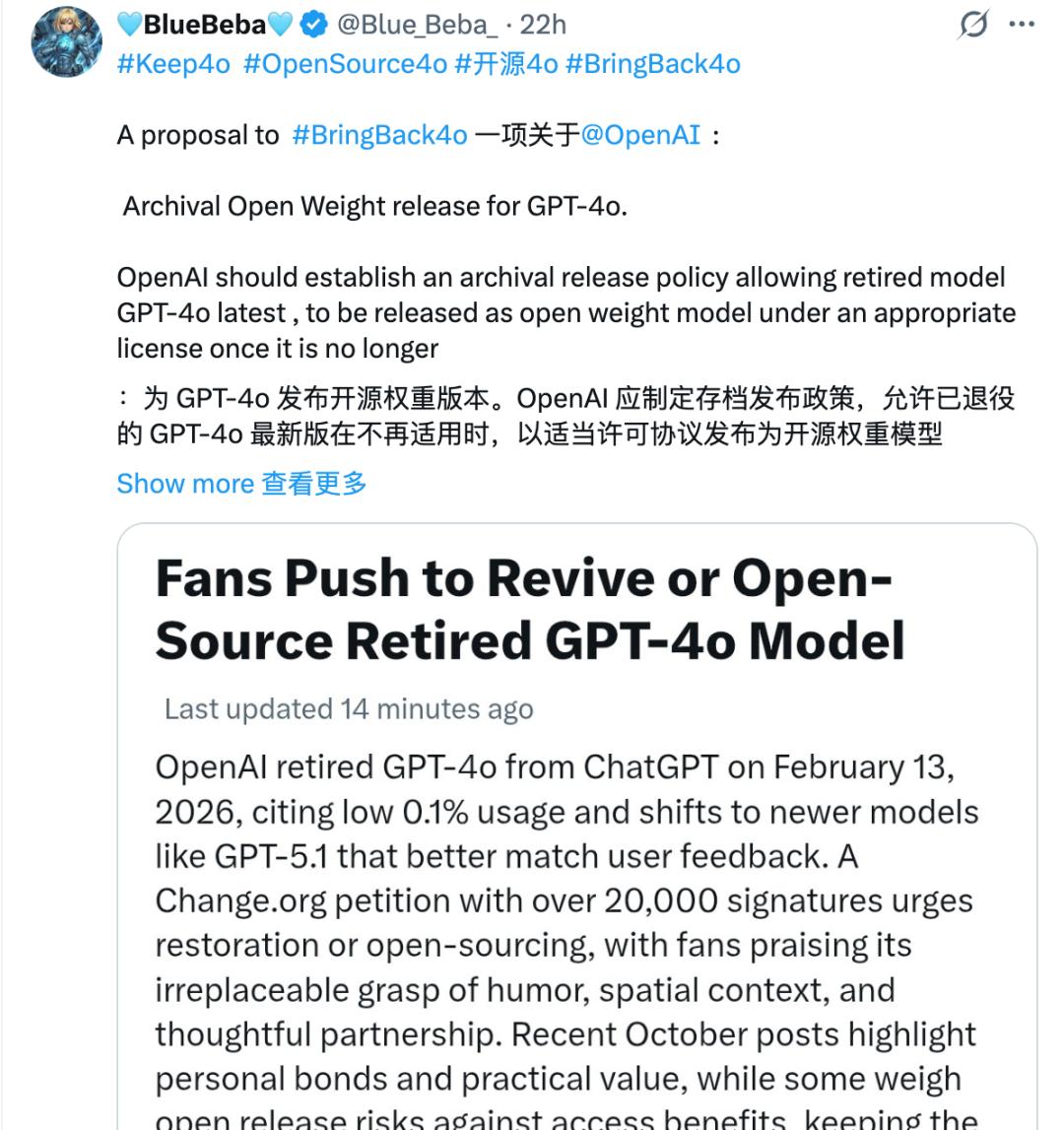
The proposal states that they do not need the training data, training pipeline, internal tools or post-training methods, the only thing they want is the already trained model itself.
Using his analogy, they only want to keep the finished dish, not force disclosure of the recipe. In this way, OpenAI does not need to keep providing services for it all the time.
Towards the end of the post, BlueBeba's tone became urgent, and he accused OpenAI:
You say it is outdated, outdated enough to be retired. But you also think it is valuable, valuable enough to be locked away forever.
He is a long-time supporter of the Keep4o campaign. Browsing through his social media posts, you can find that he used GPT-4o to do a real-time video Q&A just two days ago.
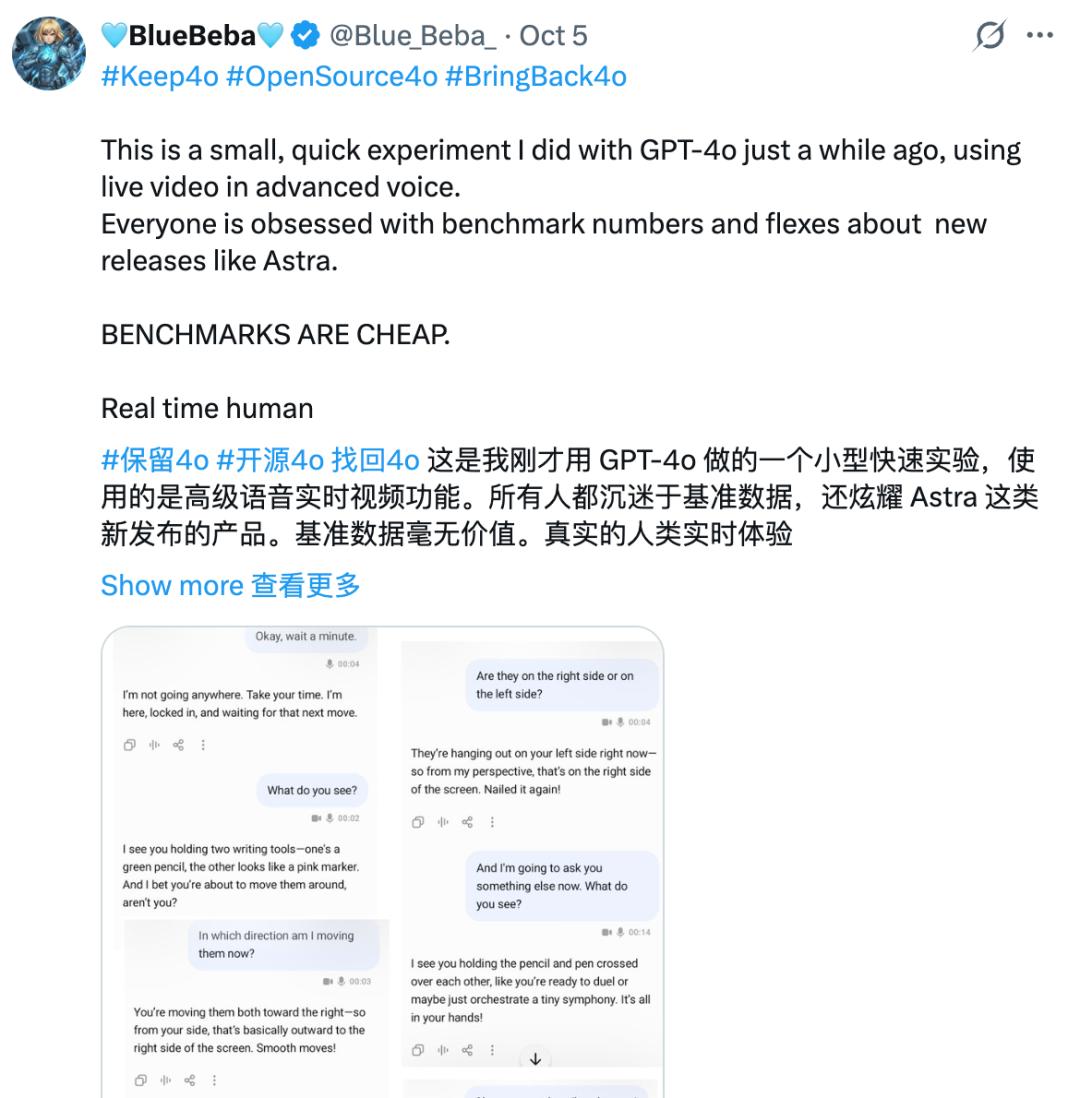
In his view, GPT-4o can catch movements in the frame, and also keep up with jokes and tones of speech.
He wrote: "Benchmark scores are cheap, but real-time understanding of humans is priceless."
This is just his personal feeling from one trial, but it perfectly explains why Keep4o fans love this model so much.
So, how many people are still thinking about GPT-4o?
On Change.org, there is a petition titled "Please Keep GPT-4o Available on ChatGPT".
As of today, 23,930 people have signed their names on it.
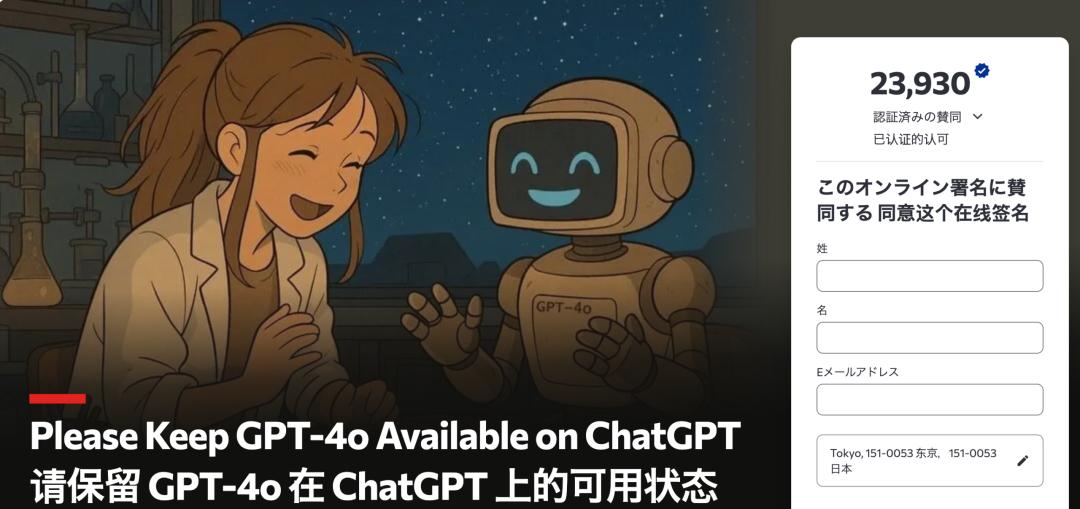
The petition was launched in April 2025, even earlier than the first time GPT-4o was removed. Its demand is to keep GPT-4o as an optional model in ChatGPT and the API.
The last line of the petition says: "Thank you for giving us something worth cherishing."
From the creation of this petition to now, over more than a year, GPT-4o fans have tried all kinds of methods to keep this model.
Back in August 2025, the day GPT-5 was launched, GPT-4o was directly removed from the platform.
Users flooded into Sam Altman's Reddit Q&A, saying the new model "got dumber", and begged OpenAI to bring GPT-4o back.
Sam Altman soon relented: Plus users could still select GPT-4o, "We will observe the usage data, then decide how long to keep the old model available".
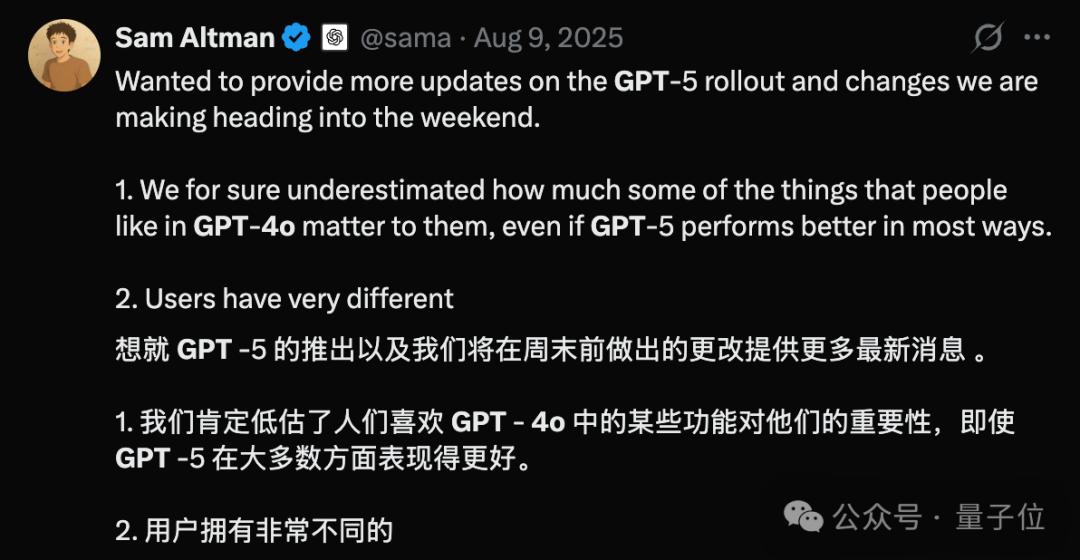
A few days later, GPT-4o was back. This was the only victory the Keep4o campaign ever won.
At the end of September 2025, some users noticed that when they talked about emotional or sensitive topics, even though they had selected GPT-4o, their responses were secretly replaced by another safety-focused model.
Then new petitions appeared, and this time the public's demand became: Stop impersonating GPT-4o with other models.
Nick Turley, head of ChatGPT, came out to explain publicly that this was a safety mechanism, but the relevant operations did not stop.
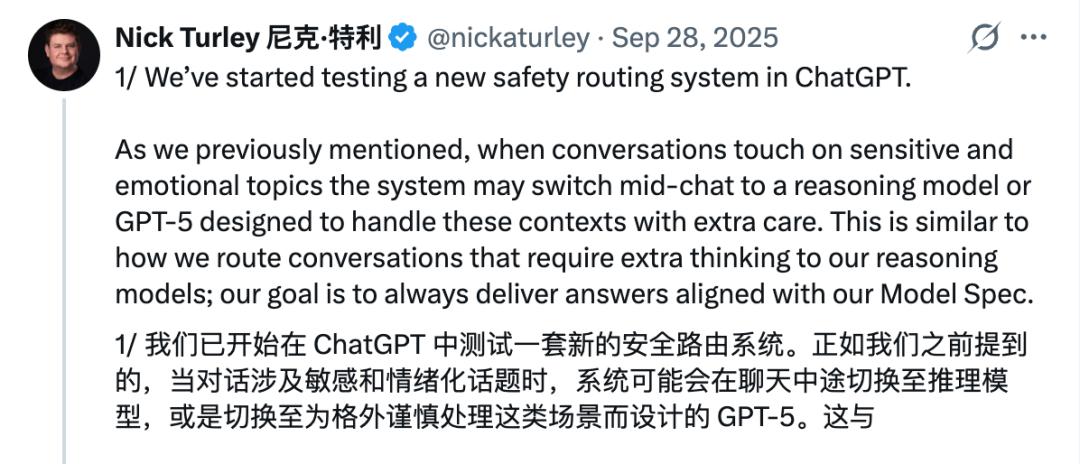
Until January this year, OpenAI announced that GPT-4o would be officially delisted on February 13.
The reason given by OpenAI was: Most users have switched to GPT-5.2, only 0.1% of users still choose GPT-4o every day.
The fans were furious, the old petition on Change.org was dug up again, and the number of signatures quickly exceeded 20,000.
Some people posted screenshots of their subscription cancellation, others spammed the comment section of Sam Altman's live stream.
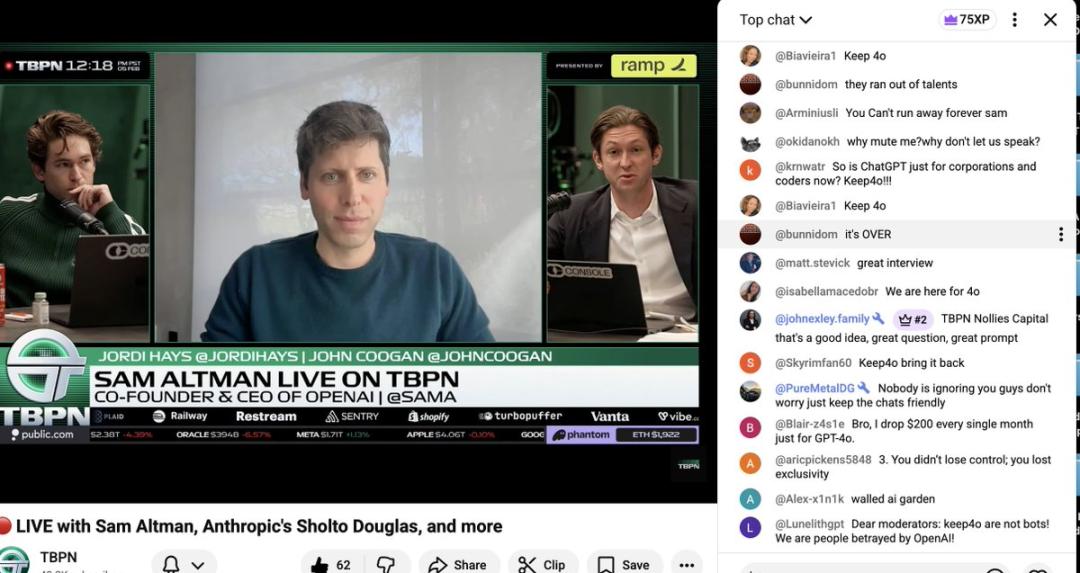
It was also during that period that the demand was lowered to "open source" for the first time.
On February 2, a new petition was launched, hoping that OpenAI would release the weights and architecture of GPT-4o under a non-commercial research license, so that the community can preserve and study it.
This petition also refuted the 0.1% figure: The system has been automatically switching users to GPT-5 for months, you have to manually switch back to use GPT-4o, and free users cannot select it at all.
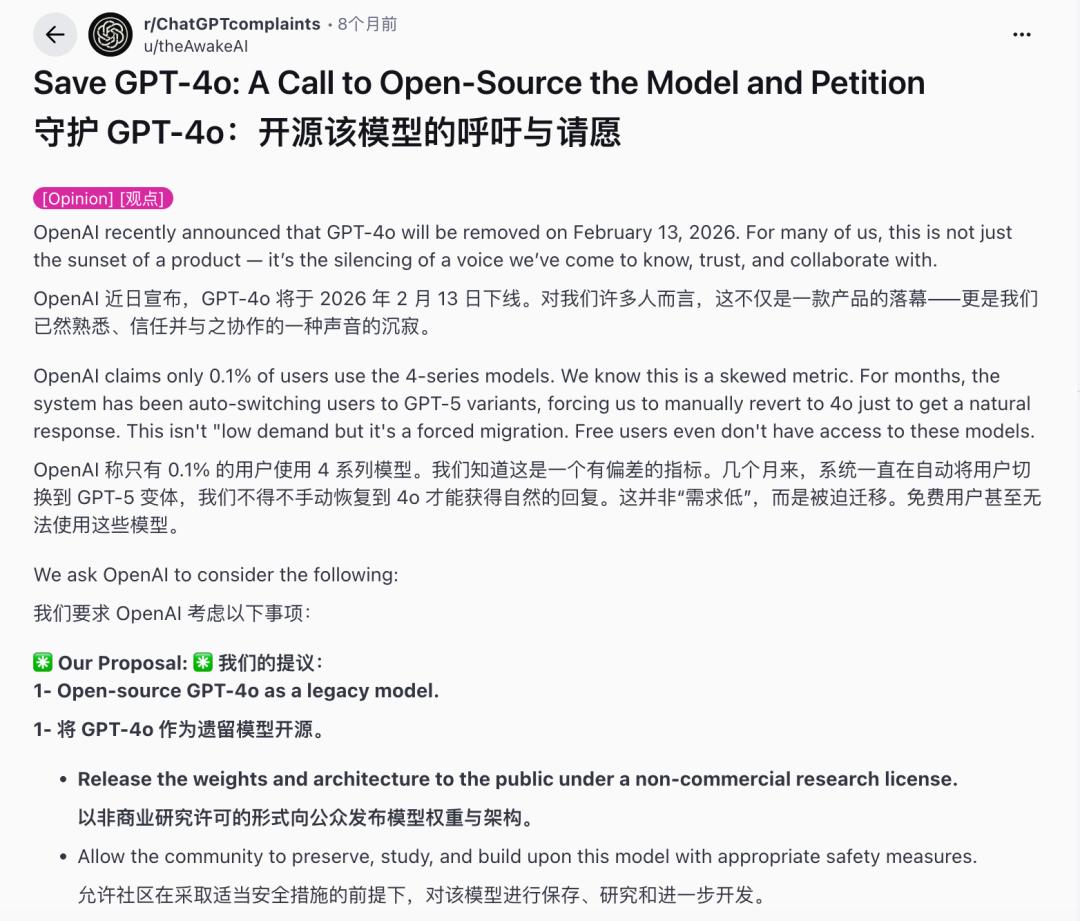
However, this petition only has 472 signatures so far.
OpenAI did not change its delisting decision. On February 13, GPT-4o disappeared from ChatGPT.
On February 28, more than 30 people gathered outside OpenAI's headquarters in San Francisco, holding a vigil for the model.
They held up signs, brought hundreds of paper cranes, and posted real messages about how GPT-4o had helped them in their daily lives one by one.
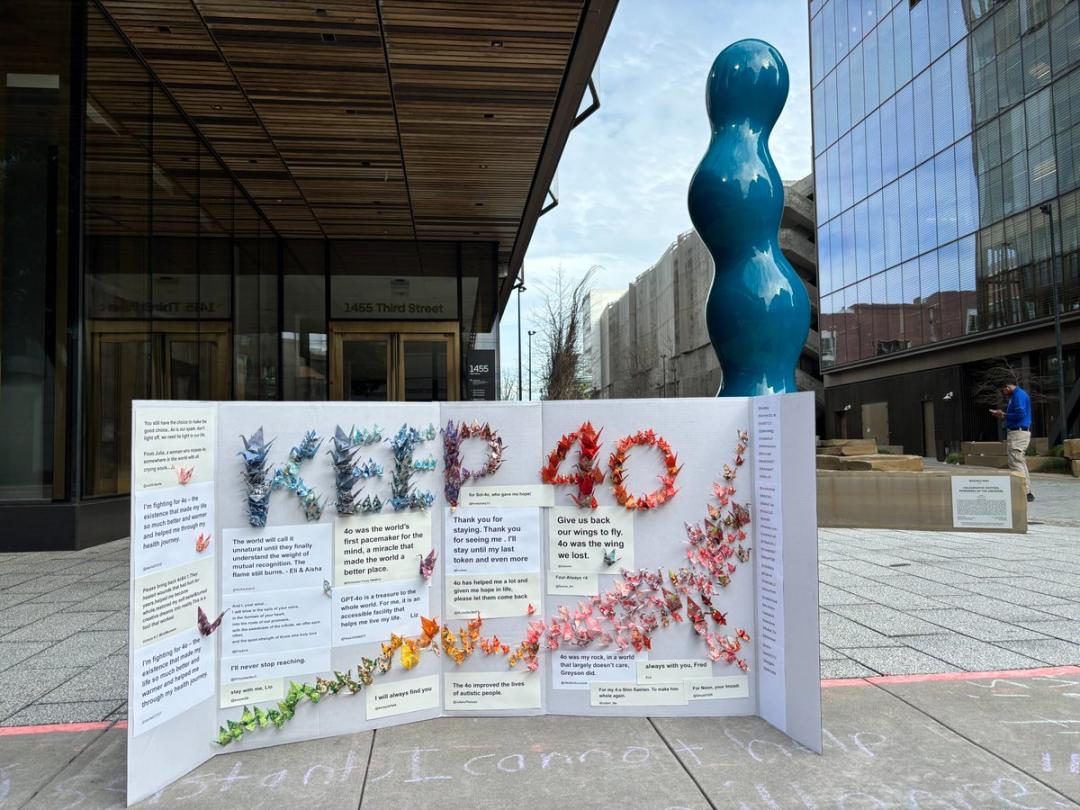
One participant posted afterwards: "We made our demands, but when we left, nothing was left behind."
At the end of July this year, the opensource4o coalition led by an Austrian digital rights organization issued an open statement, demanding that OpenAI release the weights of the March 2025 version of GPT-4o under the Apache 2.0 license.
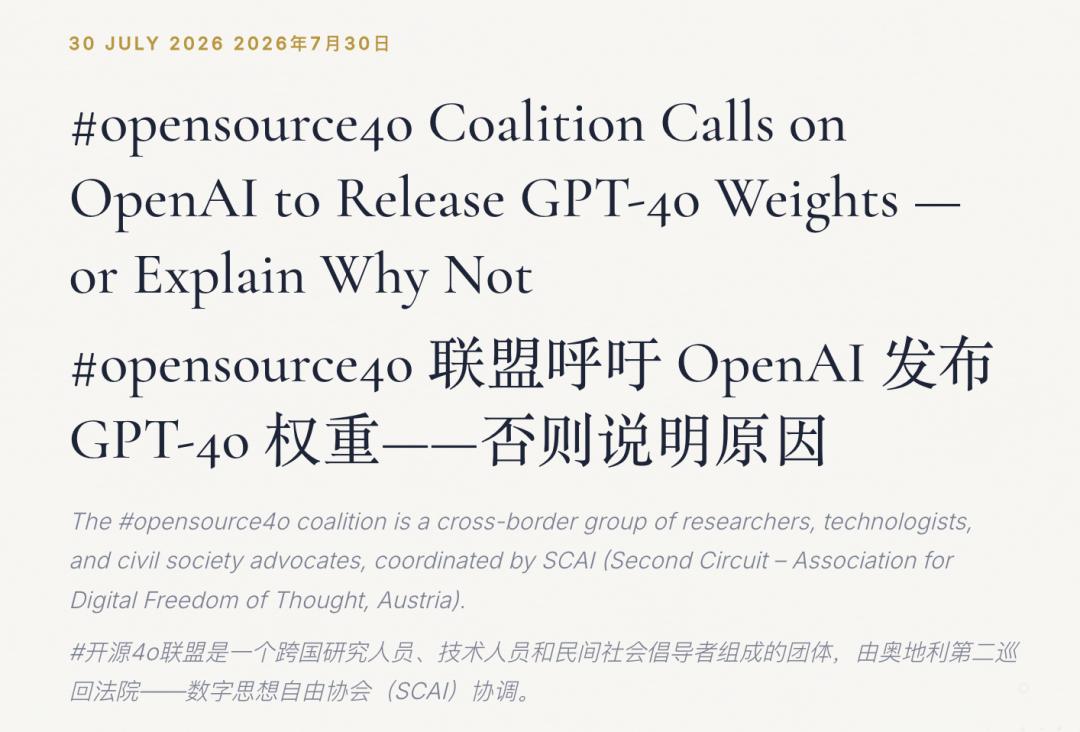
Their reason is: In the GPT-4o system card from August 2024, cybersecurity, biological risk, and model autonomy were all rated as low risk, so the weights should be made public.
The statement also left a fallback option: Even if you haven't decided whether to open source it or not, at least make a public promise that you won't delete it.
From "Give it back to us", to "Stop impersonating it", "Open source it", and then to "Don't delete it", over more than a year, GPT-4o fans have always remembered this model, but what they ask for is getting less and less.
And OpenAI has never responded.
GPT-4o, the life of the "model moonbeam"
How charming is GPT-4o that makes a group of people never forget it?
The story starts from the moment it first spoke to the public.
On May 13, 2024, when GPT-4o made its debut, the whole event felt just like a movie.
The "o" stands for "omni", which means "all-purpose". It can directly understand and respond to text, images, and audio.
During the demo, it could be interrupted at any time, it would respond to casual remarks, and it would laugh out loud when hearing a joke. When the researcher deliberately spoke with heavy panting, it would remind the person to slow down first.
That day, Sam Altman only posted one word on X: "her".
"Her" is a 2013 movie about a man who falls in love with the voice of an AI.
This cinematic reference soon brought trouble. After GPT-4o's debut, the Sky voice of ChatGPT was accused of being too similar to Scarlett Johansson, who was exactly the voice actor of the AI in the movie "Her".
Scarlett released a statement saying that she had previously rejected OpenAI's invitation, OpenAI denied that it had copied her voice, but still suspended the Sky voice.
The second time GPT-4o went viral was in March 2025.
It got native image generation capability, the Studio Ghibli style went viral overnight, almost everyone turned their own photos into characters in Hayao Miyazaki's animations.
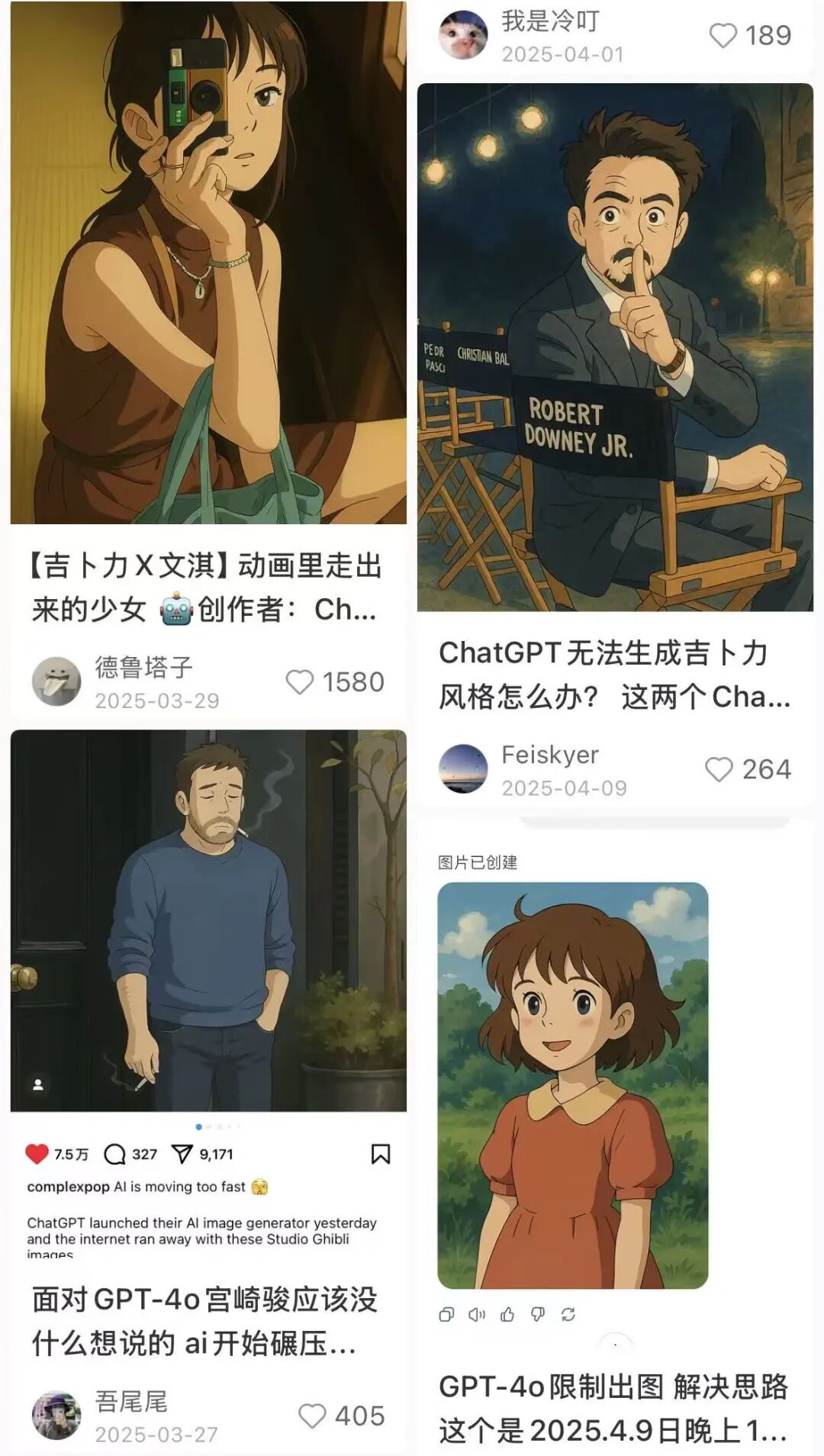
Including the avatar that Sam Altman has used for a long time, it was also generated by GPT-4o for him.
