A children's robotics company has rolled out a physics AI model platform and is poised to close a financing round exceeding 30 million U.S. dollars.
It aims to expand into the broader robotics market.
On October 8, Indian AI startup Inner Sky Labs announced the launch of a foundational model for Physical AI, covering capabilities including vision, audio, tactile sensing, motion planning and safety control. Meanwhile, according to a report by Inc42, the company is about to complete a financing round of 3 billion Indian rupees (about 30.9 million US dollars).
It is understood that this financing round is participated by existing investors YourNest Venture Capital, Keshav R. Murugesh and undisclosed global investors. If the transaction is completed, the company's total accumulated financing amount will reach approximately 100 million US dollars.
Inner Sky Labs previously mainly targeted the consumer market through the Miko brand, selling AI companion robots for children. The two belong to the same legal entity: Miko is the consumer-facing product brand, while Inner Sky Labs is the new overall business brand launched by the company, which attempts to expand its underlying AI technology to scenarios such as industrial robots, enterprises and governments.
Miko is an AI educational companion robot for children, which currently mainly has models including Miko 3 and Miko Mini. Positioned as a learning and entertainment partner for children, it provides functions such as voice interaction, educational content and video calls.
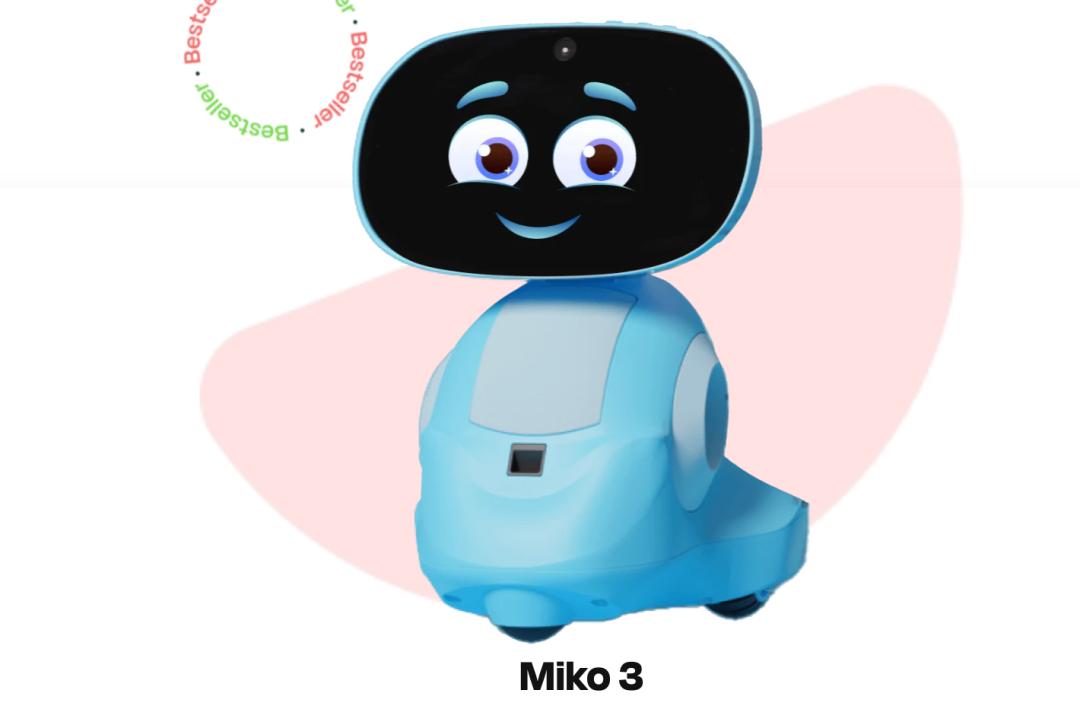
According to official information from Miko, its products have entered more than 140 countries, with major markets including the United States, Europe and the Middle East. As of now, the total cumulative sales of its products have exceeded 500,000 units.
Now, this team has launched a Physical AI model again. This means that the company is trying to shift from developing children's companion robots to providing underlying intelligent capabilities for robots, so as to expand into the broader robotics market.
01 From Children's Companion Robots to Physical AI Platform
Founded in 2015, Inner Sky Labs was established by Sneh Vaswani, Prashant Iyengar and Chintan Raikar, alumni of the Indian Institute of Technology Bombay. In the early stage, the company chose to enter the market by starting with children's companion robots. The launched Miko can interact with children through voice, and provide learning and entertainment content such as games, knowledge Q&A and programming courses.
For a consumer-grade robotics company, Miko is not only a sales terminal, but also provides real application scenarios for its AI technology. The robot needs to understand children's voice commands, conduct continuous conversations, and control the answer content and behavior boundaries in child-oriented interactions. These demands have laid an application foundation for the company to accumulate interaction technologies and safety mechanisms.
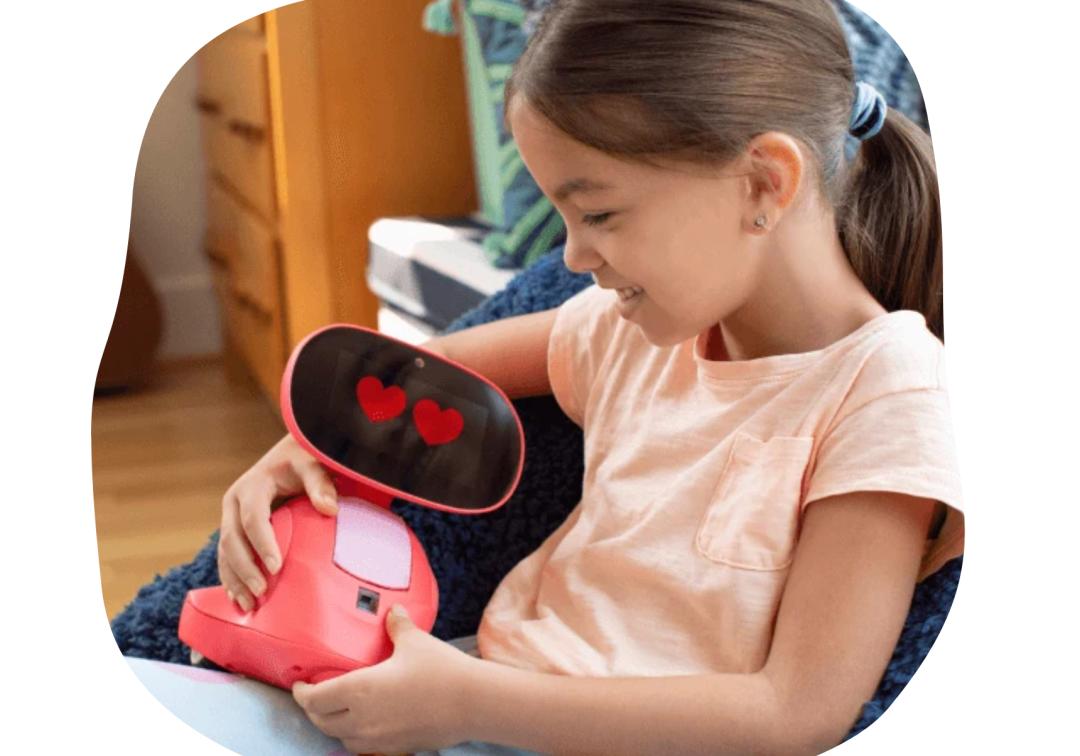
It is understood that on Miko, children can wake up the robot by saying "Hey Miko" to ask questions or give instructions. It supports "Let's talk" conversational learning, which can carry out age-appropriate open conversations around topics such as space, history and animals, and some of its functions are supported by AI technologies including GPT.
The Miko robot is built with a continuously updated application library covering activities such as educational games, quizzes, stories, dances and programming logic. Its content partners include children's brands such as Disney, Viacom and Da Vinci Kids.
Chinese company Agora is also one of Miko's technology suppliers. According to the cooperation case disclosed by Agora, it provides Miko with real-time audio and video and signaling technologies to support video calls between children and parents, as well as remote interaction with the robot via the parent-side App. Agora also disclosed that its conversational AI technology is used to improve Miko's voice interaction experience.
It can be seen that previously, Miko had multiple technology suppliers behind it. It remains unknown whether the newly established brand Inner Sky Labs will reduce the number of external technology suppliers.
Sneh Vaswani, co-founder and CEO of the company, told Inc42 that the team considered developing AI models as early as the early days of its entrepreneurship. When introducing the business to investors in 2017, the company had put forward the idea of taking Miko as the application carrier first, and then expanding the technology to the enterprise and government markets. However, at that time, the market demand for independent AI models was limited, so the company gave priority to developing the consumer-grade robot business.
Nowadays, as the robotics industry's demand for AI capabilities increases, the company begins to open up its previously accumulated technologies to the public.
Vaswani believes that for robot manufacturers with limited production volume, the cost of developing foundational models on their own is becoming increasingly high. Instead of letting every manufacturer make repeated investments, it is better for a professional team to provide underlying models, so that different manufacturers can integrate and use them on their own hardware.
This is also the business logic behind Inner Sky Labs launching the new brand: it will no longer only generate revenue by selling Miko, but hopes to become a technology supplier that can also be used by other robot manufacturers.
02 A Model System Covering Perception, Action and Safety
According to the introduction, the model platform launched by Inner Sky Labs this time is built around three links: perception, action and safety.
The perception layer includes Drishti (vision), Shruti (audio) and Sparsh (tactile sensing), which help machines understand visual scenes, sounds and physical contacts respectively. The action layer includes Kriya, Prana and Karma, which are used to support motion planning and predict the possible consequences of actions. Another independent safety layer, Kavach, will check whether the action complies with preset rules before it is executed.
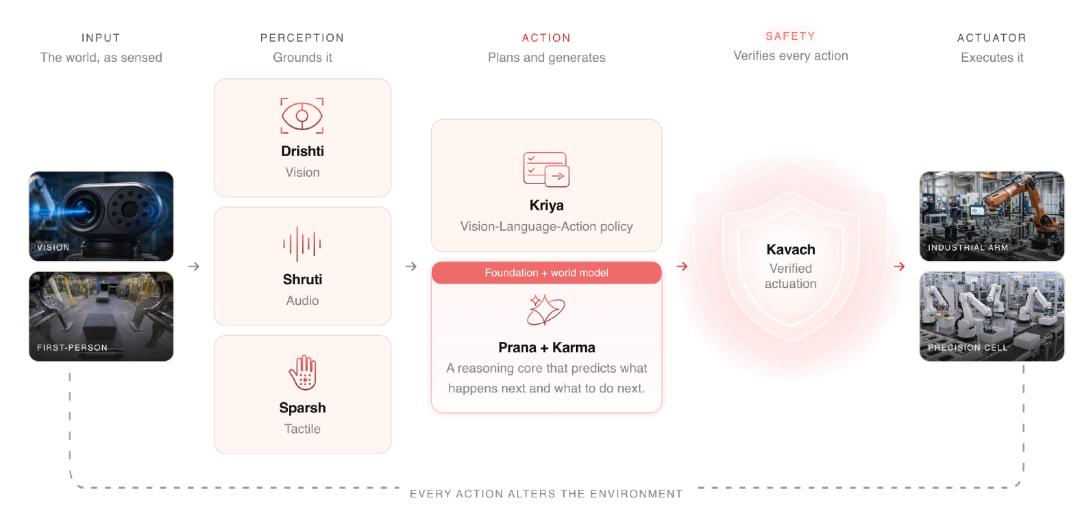
The company stated that Kavach integrates more than 20 safety protection mechanisms, including checks on the presence of personnel, movement speed and allowed operation areas. For example, when a robotic arm is ready to grasp a component, the system not only needs to determine how to grasp it, but also check whether someone around has entered the operation area, and stop the action if it violates safety rules.
Inner Sky Labs said that these models are independently developed by the company, and trained with real physical world data from factory environments, Miko's manufacturing system and other scenarios. The platform adopts a hardware-agnostic design, and is planned to serve different devices such as industrial robotic arms, humanoid robots, mobile robots, quadruped robots, vehicles and camera systems. Customers can use relevant capabilities through cloud API, on-premise deployment or device-side operation.
However, the safety mechanisms and model capabilities announced by the company are still mainly from its own disclosure at present, and there is a lack of detailed independent benchmark test results. Whether the model can run stably in different hardware, unfamiliar environments and complex tasks remains to be further verified.
03 From Selling Hardware to Selling Models: The Boundary of Business Models Has Changed
Inner Sky Labs' transformation reflects the strategy of this robotics company: With the rising R&D cost of AI models, the competition of robotics companies no longer only revolves around hardware design, production and channels, and underlying technical capabilities may also become independent products.
For Inner Sky Labs, continuing to only sell Miko means that the business scale is limited by the segmented market of children's companion robots. Providing models to other manufacturers gives it the opportunity to cover more hardware categories and enterprise customers, and expand its business space through methods such as model authorization, API calls or customized deployment. However, which specific charging models the company adopts have not been fully disclosed yet.
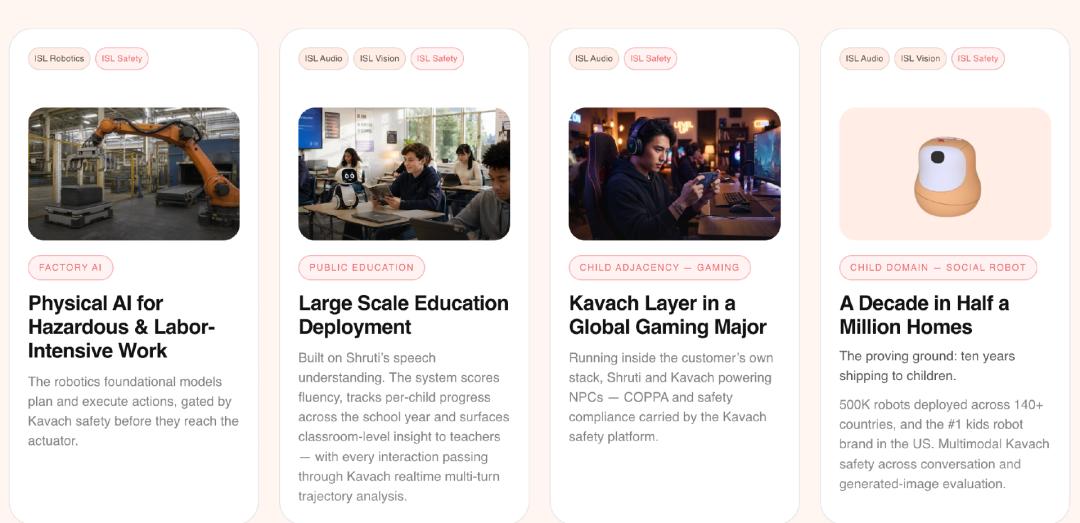
This path also has practical challenges. The tasks of children's companion robots and industrial robotic arms are very different: the former pays more attention to natural interaction, content safety and user experience, while the latter needs to deal with issues such as precise control, complex environment and production safety. The technologies previously accumulated in consumer-grade products do not mean that they can be directly migrated to all robot scenarios.
In addition, providing models to external customers means that the company needs to prove that its technology is not only applicable to its own products, but also can adapt to the hardware and workflows of other manufacturers. The requirements of enterprise and government customers for reliability, data control and deployment environment may also further increase the difficulty of product implementation.
If the financing is successfully completed, it will provide financial support for this path. Inner Sky Labs plans to use the new funds for real-world data collection, computing power infrastructure construction and model training, so as to expand the capabilities and commercialization scale of its Physical AI platform.
In general, whether Inner Sky Labs can eventually develop into an infrastructure business with lasting competitiveness depends on the actual deployment results, technical performance, and whether the company can win the trust of manufacturers and various types of companies.
This article is from the WeChat Official Account "Duozhiwang" (ID: duozhiwang), written by Wang Shang, and republished by 36Kr with authorization.