The Reality and Illusion of Physical AI
In the Kurozaki district of Kitakyushu, Japan, Yaskawa Electric, a giant in the industrial robot sector, opened a new plant in its sprawling headquarters campus in July, which is arguably Japan's first truly "physical AI (Artificial Intelligence)" plant. With that in mind, the author went to pay a visit.
The plant mechanism that makes AI smarter
The number of workers at this plant is roughly half that of a traditional factory. Instead of adopting the conveyor belt method suitable for mass production, it has set up multiple spaces called "Cells", each about the size of four and a half tatami mats (Note: 7.29 square meters), where AI-equipped production robots complete the assembly of high-performance motors, robots and other products one by one.
Each cell is overseen by one worker. The worker is responsible for monitoring the operation progress, but even if the robot makes an error, it can detect the problem on its own and rework. Therefore, it is said that unmanned production may be realized in the future.
This is exactly physical AI. The key lies in that the production robots are connected to the factory's information system to collect data generated during the production process. It is a "data factory" that continuously generates learning materials to make AI smarter.
The so-called physical AI refers to the technology that the most advanced intelligence like generative AI, presented in the form of robots, automobiles, factories, etc., uses cameras and sensors to make independent judgments and take actions. It is said that in the future, this technology will not only be applied to cellular factories for low-variety, small-batch production, but also penetrate into multi-variety, mass-production factories such as automobile plants.
Eventually, humanoid robots will enter all frontlines of production and gradually replace humans. What makes people foresee such an era and draw the attention of enterprises is probably the US AI boom starting from generative AI.
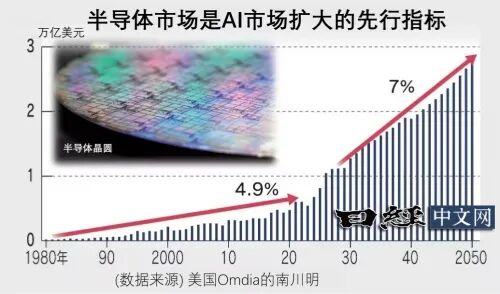
Elon Musk's satellite communications company SpaceX, which completed its initial public offering in June, predicted in its prospectus that "the AI-related market will reach 28.5 trillion US dollars". Converted into yen, that is about 4500 trillion yen, nearly 40 times Japan's national budget. Of course, physical AI is also included in this figure.
According to US media reports, the prospectus of Anthropic, which is expected to go public after November (compiled before AI was pointed out to have the risk of getting out of control), also predicts that the market size will reach "about 30 trillion US dollars". If calculated on the premise that "this scale will be reached by 2030", the annual compound growth rate will reach 27% in the future, and even if calculated on the premise that "this scale will be reached by 2035", the annual compound growth rate will reach 12%. This is an extremely rare situation.
The AI revolution in the manufacturing industry faces many difficulties
This is probably a rough estimate that includes data centers, satellite launches, and defense investments of governments of various countries. Even so, many Japanese manufacturing-based enterprises have begun to pay attention to the trends of domestic and foreign competitors, and have shown a tendency to be restless. They believe that if they do not decide to invest as soon as possible, the consequences will be unimaginable.
Further exacerbating this anxiety is the humanoid robot "Games" held in Beijing in August. In 3 events including the 100-meter race, AI-equipped robots surpassed the world records of humans. It is only natural for Japanese enterprises to worry that China will take advantage of this momentum to dominate the physical AI field.
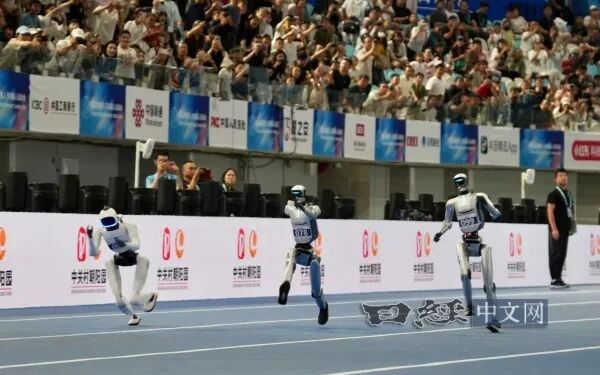
The 100-meter race of the "World Humanoid Robot Games" held in China (August, Beijing)
But will the AI revolution in the manufacturing industry really come so easily? And will the outcome be decided immediately? Is the industry caught in a game where reality and fiction are intertwined? In fact, Hiroshi Ogasawara, Chairman and President of Yaskawa Electric, which seems to have taken a lead in the field of physical AI, is also skeptical of the so-called "30 trillion US dollars" and "short-term popularization" claims.
According to him, there are two reasons. The first is the technology related to robot fingers called "manipulators". Human fingers are composed of 27 bones, 37 muscles, etc. To achieve the same movement effect, the required sensors and driving components are restricted by cost, and are still in the R&D stage globally.
The second problem is more tricky: the sorting of learning data. For most manufacturing enterprises, the systems, terms and recording methods used by different departments and different factories are varied. Even if you want to give the data collected inside and outside the enterprise to AI for learning, it is by no means easy.
For example, for the word "clock" alone, different departments will use various expressions such as "tokei", "Tokei", "watch", "watch", "clock". If you want to unify these names one by one, including the systems of cooperating customers, the workload is so huge that it is daunting.
This work is called "data deduplication and unified identification". It is said that Yaskawa Electric has spent 8 years promoting this work. This is not to welcome the AI era, but "to not lose to Chinese enterprises in manufacturing costs" (Ogasawara).
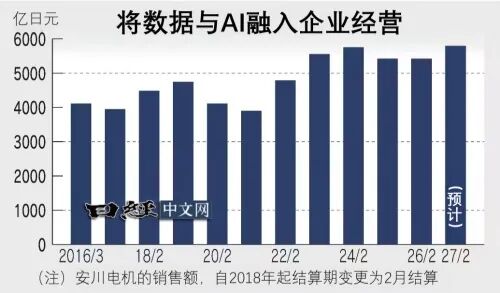
The key to determining fixed costs and variable costs is the time it takes for products to be delivered to customers, the so-called lead time. Yaskawa believes that to shorten the lead time and improve production efficiency, it is necessary to unify the data formats of all links from design, R&D, production to logistics.
What on earth is the purpose of developing physical AI?
If someone asks whether the era when humanoid robots are everywhere in factories will come? The answer is probably: "It will not happen overnight". But this does not mean that enterprises do not need to lay out physical AI, but that there are a lot of pre-work to be completed.
The case of Waymo, an American autonomous driving taxi company, is also worth referring to. This company is the fastest-growing business expansion enterprise in the world. Since 2009, its cumulative test driving mileage has been equivalent to more than 10,000 laps around the earth, and it has collected valid data in a unified manner.
What is tested is down-to-earth operation. Even if Noetra, a company that is determined to build domestic AI with the support of the Sanae Takaichi government, develops excellent software, it will be meaningless if the enterprise itself does not realize the importance of data. In the final analysis, if you cannot clearly understand "what on earth is the purpose of developing physical AI", it will eventually be nothing more than empty talk.
This article is from the WeChat official account "Nikkei Chinese Net" (ID: rijingzhongwenwang), written by Atsushi Nakayama, authorized by 36Kr for release.