Apple has officially confirmed the date for its upcoming launch event, at which at least 6 new products will be unveiled, and the HomePad can even be wall-mounted.
Today, Greg Joswiak, Apple's senior executive in charge of global marketing, posted a 17-second short video on social media platforms.
In the video, a needle slowly stitches the classic six-color rainbow Apple logo on coarse cloth with colored thread, and finally the phrase "Welcome home." and the date October 13 emerge.
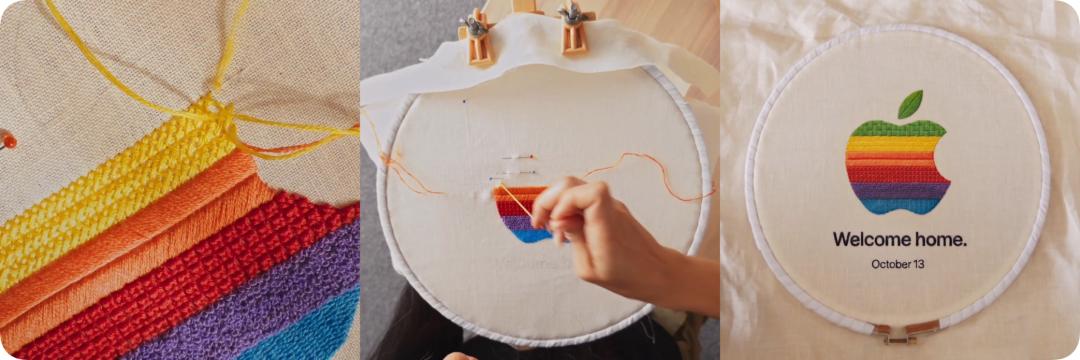
Photo | Apple
Subsequently, the media received an invitation that supplemented more details: the event is scheduled to be held in New York, with the format marked as "Apple Experience", which is mainly open to invited media for offline hands-on experience of real devices. Converted according to the time on the invitation, it corresponds to 9 p.m. Beijing Time on October 13.
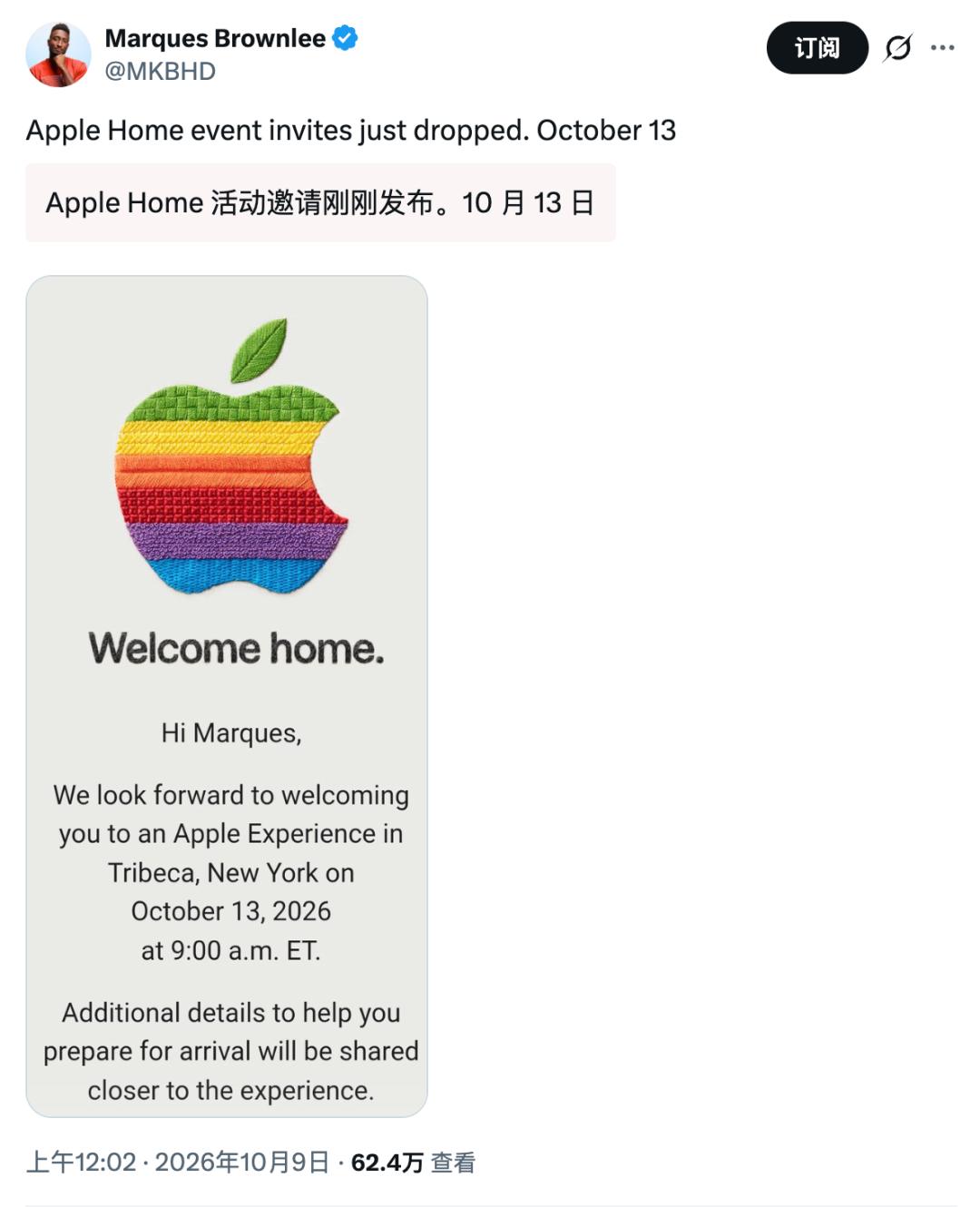
Combined with various previous leaks, the protagonist of this event is about to be revealed — Apple's home product line, which has been neglected for several years, is expected to usher in a concentrated update this time.
An "iPad" with a built-in stand becomes the public control center for the whole family
The most high-profile hardware protagonist this time is the new screen-equipped device with code name J490, which is commonly referred to as HomeHub or HomePad by the outside world.
Bloomberg revealed that it is inspired by the classic 2002 iMac G4, equipped with a square touch screen of about 6 inches, connected to a round speaker base through an angle-adjustable metal arm. The device has no built-in battery and needs to be continuously powered by a USB-C cable. Apple has also prepared a wall-mounted version simultaneously.
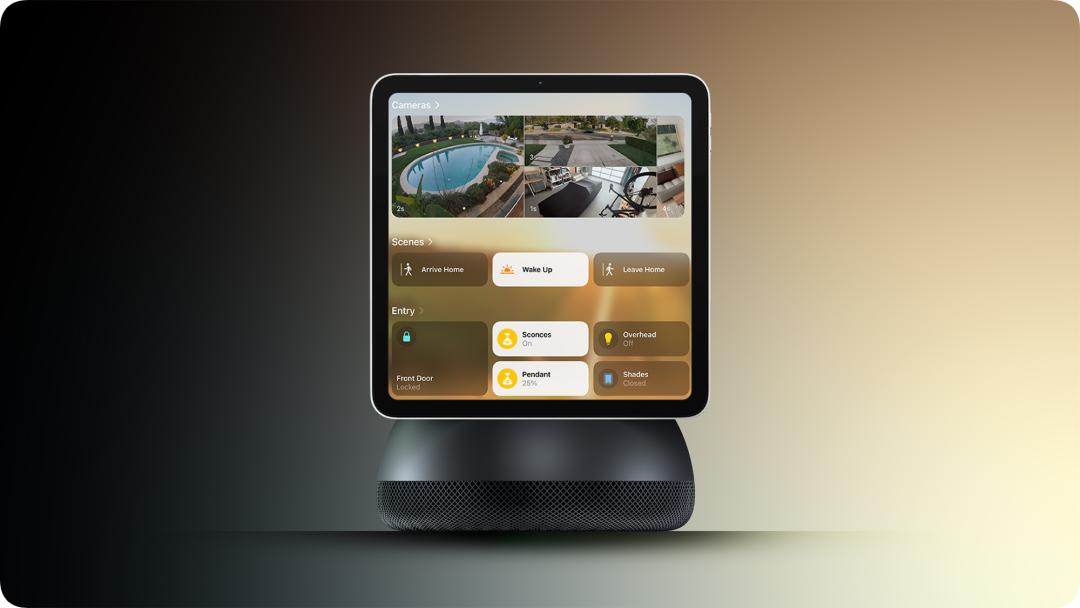
Photo | MacRumors, HomeHub concept diagram
The core interaction of this device lies in identifying family members. The new machine is expected to be equipped with a new system with the internal code name Charismatic, whose official name may be homeOS, and it can identify which family member is walking over through the front camera and microphone.
When you approach the screen, Siri will "recognize" you, and the interface will automatically display your personal schedule and reminders; when a family member walks over, the screen will switch to their content; if a guest comes, private information will be automatically hidden to protect the privacy of you and your family.
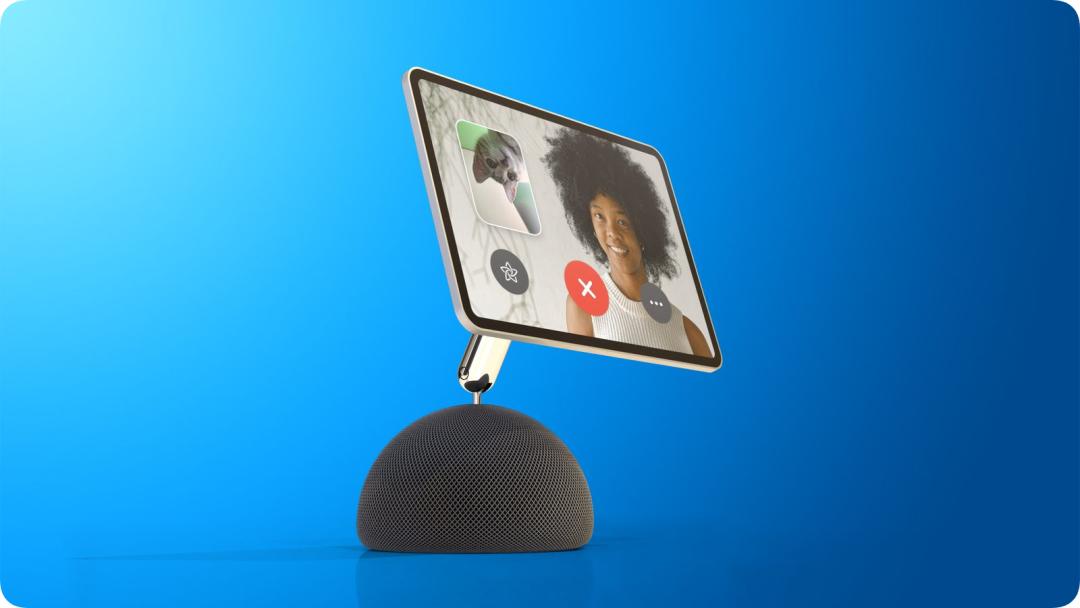
Photo | MacRumors
However, this recognition is different from Face ID on iPhone. Bloomberg says its face recognition reliability is not as good as Face ID. If users are not assured, they can also request to re-verify their identity through iPhone to avoid calling up private information only by voice or face.
According to other leaks collected by MacRumors, this device may not be equipped with an independent App Store. Judging from the current description, it is more like a public control center permanently placed on the kitchen counter or bedside table, which is distinguished from the usage scenarios of iPad.
According to Bloomberg, the delay of the new version of Siri once dragged down the launch of home hardware. The existing HomePod can already recognize the voices of different people. What is more worth looking forward to for the new device is the combination of identity recognition, personal data and shared screen:
Recognize who is in front of the screen, then find the information belonging to this person, and complete the corresponding operation.
In addition to this new device, two other old products have also been rumored to be updated.
The HomePod mini is also expected to get a hardware update this time. MacRumors dug out from Apple's official system code that the new device marked as "HomePod mini 2" has appeared, including five color options: green, pink, blue, white and black. Other leaks predict that it will be equipped with Wi-Fi 7, N1 chip and second-generation UWB.
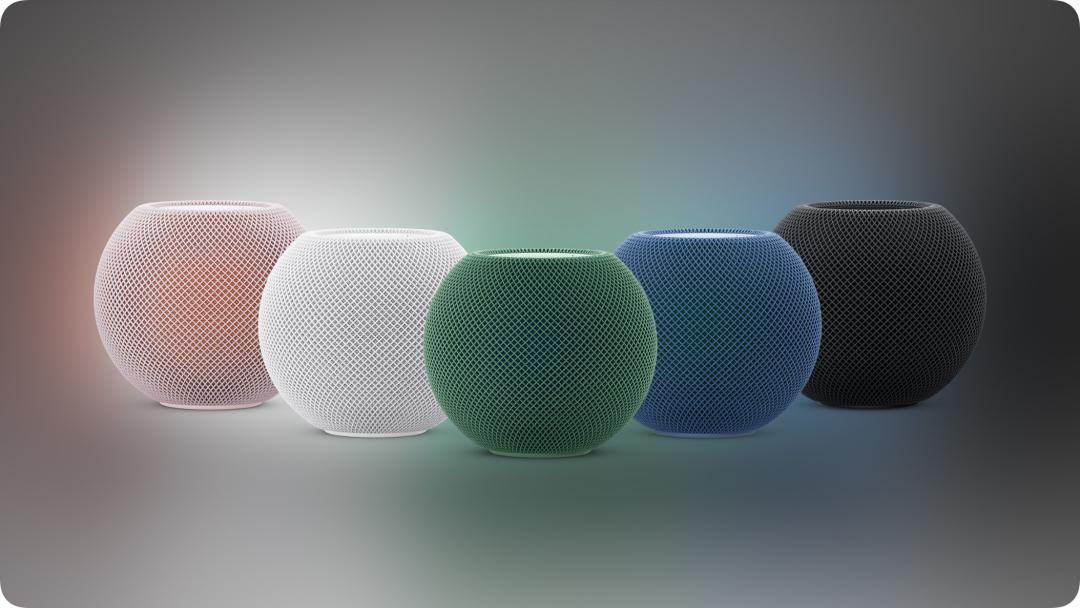
Photo | MacRumors, new color schematic made based on code clues
We all know that two HomePods can form stereo sound. This time, Apple may prepare to let more HomePods work together to deliver the sound of home theater.
Leakers found a four-speaker surround configuration in the system code. The speakers are placed in front of the TV and behind the sofa, and it also involves functions such as automatic room calibration and speaker position identification.
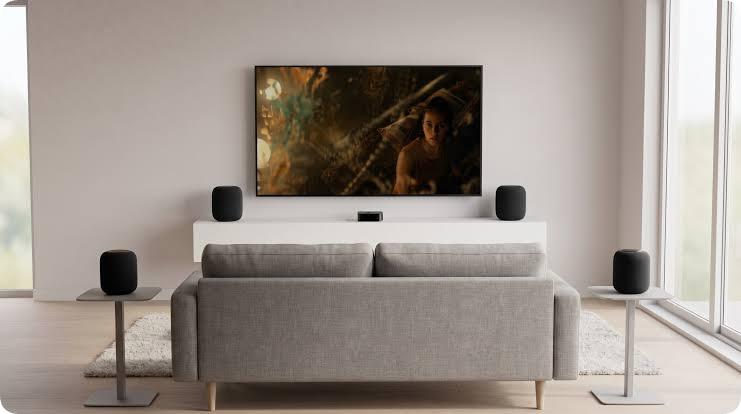
There is also a "Party Mode" in the code, which can adjust the playback mode of the speakers to make the music spread evenly across the room. Watching movies and playing music may have their own suitable combination methods.
As for the Apple TV 4K in the living room, the internal upgrade may be more obvious. The model clues MacRumors found from Apple's code point to A19 or A19 Pro; according to the configuration speculation of these two chips, the RAM may also increase from 4GB of the current model to 8GB or 12GB.
In addition, there are rumors of the N1 wireless chip, Wi-Fi 7 and the new version of Siri Remote. The phrase "Apple TV 4K (3rd generation or later)" has also appeared in Apple's official technical support documents.
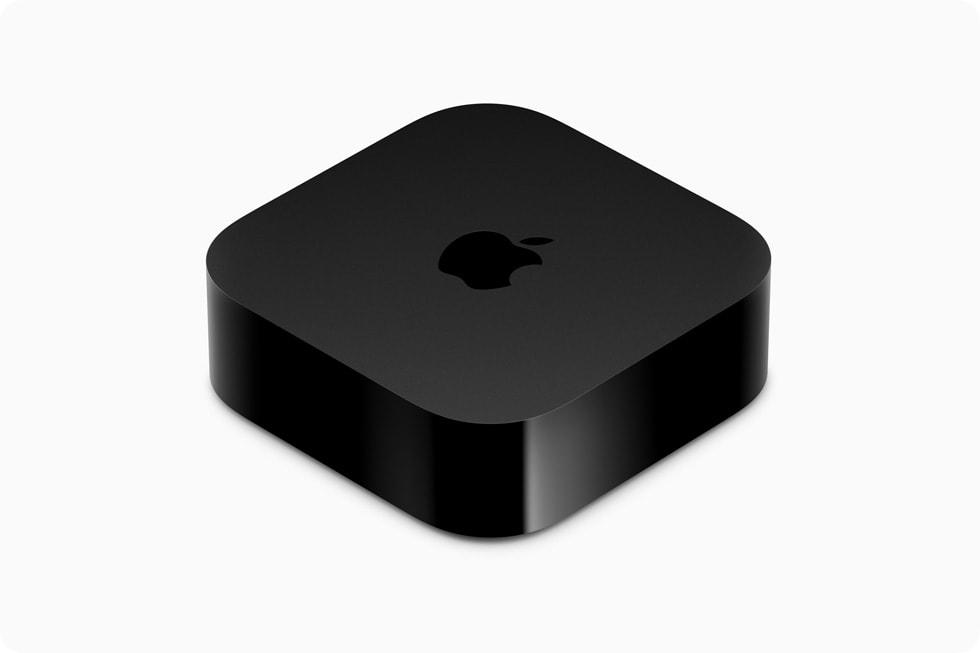
Photo | Apple, 2022 Apple TV 4K
There may also be an extra layer of cooperation between the speaker and the TV box. The latest system code shows that the HomePod added to the home theater combination can forward Siri requests to eligible Apple TV. In the future, when you speak to the speaker, it may not only be the speaker itself that responds to you.
Apple has not stopped on the content side. In July this year, Ternus walked onto the red carpet for the premiere of the fourth season of "Ted Lasso" with Cook, stating that it will continue to promote the film and television business.
"Matchbox: The Movie" starring John Cena is scheduled to be launched on October 9, and "The Goon" starring Chris Pratt is also scheduled for November 20. The set-top box is ready for update, and the content list is also being launched as planned.
Teaming up with LG, Apple is going to take over your home
Everything Apple wants to do seems familiar.
Connect the portable iPhone, Apple Watch with the screen on the desk, the speakers in the corner and the door lock on the entrance door, so that the devices can extend from around the individual to the entire physical living space — this idea is not new to us, it is exactly the "vehicle-home-person" ecosystem that Xiaomi has been talking about over the years.

Photo | Xiaomi
Although Apple's car project was aborted halfway through its development, the two sides still have a common goal: to open up a brand new device field beyond portable mobile terminals and desktop PCs.
Looking back at Apple's past product lines, from the early Mac and iPod to the later iPhone, iPad, Apple Watch, and then to services and music, the core is all centered around the "individual" — whether it is carried around or placed on the desk, one device is usually bound to only one person's Apple account.
However, the home is a physical space shared by multiple people. Apple did not start to manage home affairs just now: it launched HomeKit in 2014, and added the "Home" app to iOS in 2016, so that lights, air conditioners and door locks can already be controlled from iPhone.
The later added support for Matter and Thread protocols also allows devices of more brands to access the ecosystem. But these entrances are scattered on different devices, and there has always been a lack of a public screen that stays at home permanently and faces all family members.
The HomePad can be placed on the kitchen counter or in the living room. When family members walk over, they can check their own schedules, play a song, or see who is at the door, without having to take out their phones and open different apps every time.
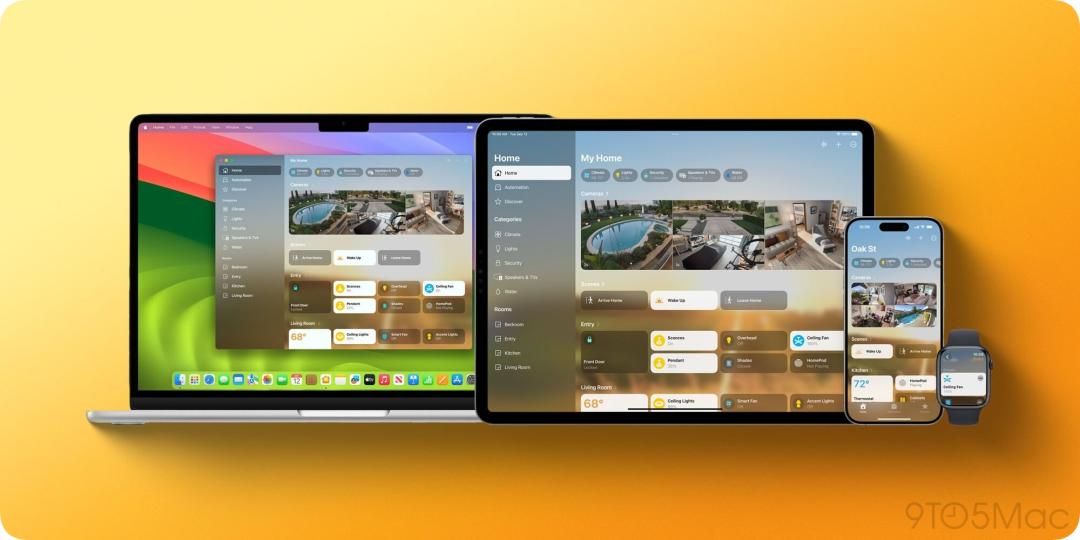
Photo | 9to5Mac
The Apple-LG cooperation plan exposed a few days ago also reflects this change. Bloomberg revealed that the two sides are jointly developing home hardware such as smart door locks, video doorbells, smart thermostats and environmental sensors.
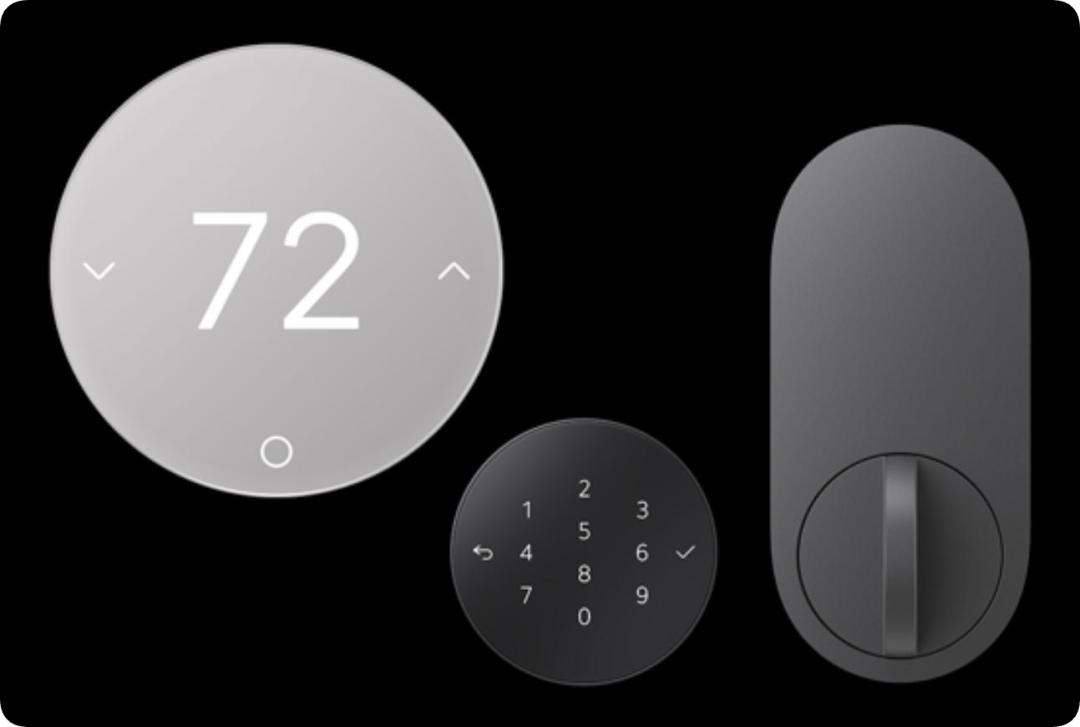
Photo | @itspdfu / The Verge, suspected rendering of LG accessories
This batch of accessories adopts the "second-party" mode: Apple participates in design and engineering development, and LG is responsible for manufacturing, branded sales and after-sales support.
Judging from the currently leaked renderings and regulatory documents, this smart door lock printed with the LG logo supports Matter, Thread and UWB. When you walk to the door with your iPhone in your pocket, you don't need to take out your phone to tap to unlock, and the door lock will automatically unlock once it senses the distance.
It is not difficult to understand why Apple chose LG. From TVs, refrigerators to air conditioners, LG already has a complete home appliance business, and it also acquired the developer of the smart home platform Homey in recent years. Apple and LG have also had cooperation for a long time. The UltraFine display familiar to Mac users in the past is one of the products jointly developed by the two sides.
LG also has an old partner in the smart home field — Aqara. This company, which cooperated with Xiaomi to launch smart home devices in the early years, also reached a cooperation with LG in 2019 to link sensors with home appliances such as air conditioners and dehumidifiers.
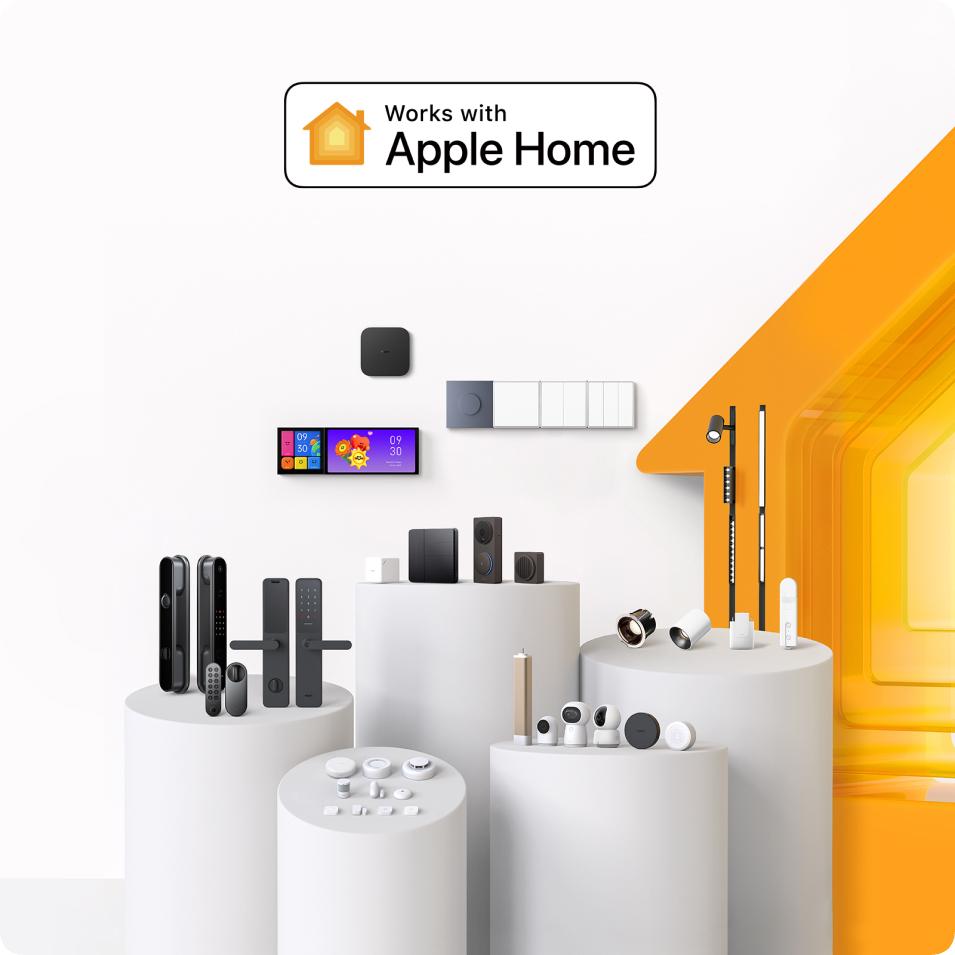
Photo | Aqara
Aqara has long been part of Apple's home ecosystem, and some of its door locks support Apple Home Keys, so both iPhone and Apple Watch can be used to open the door.
Since LG has cooperated with Aqara before and is now jointly developing home hardware with Apple, we might as well make a bold guess: Will Aqara's technology also be applied in these new products jointly developed by Apple and LG?
Apple may have more helpers besides LG. Schneider Electric's name also appeared in Bloomberg's latest report.
However, Bloomberg says the development progress of these LG-cooperated accessories lags behind Apple's own devices, and it may take several months before consumers can actually buy them.
Holding two events in a row within one month, Apple also begins to "speed up its product releases"
In the past, in Apple's release rhythm, smart home products could only serve as supporting segments in iPhone or Mac conferences. Now Apple is holding a separate event themed "Welcome home." for it, which shows that home computing has been qualified to become an independent event theme.
Up to now in the entire smart hardware industry, both personal portable devices and traditional PCs have entered a mature and stable period in terms of shipment volume and form evolution. Finding a permanent computing scenario beyond personal portable devices has become a common choice for leading manufacturers.

Photo | Apple
Bloomberg reporter Mark Gurman broke the news that in addition to this home event on October 13, Apple has planned another hardware release event for Mac and iPad