AI begins to create AI on its own, the "Godfather of AI" Hinton warns that the most dangerous stage may be approaching.
Will AI really kill all human beings?
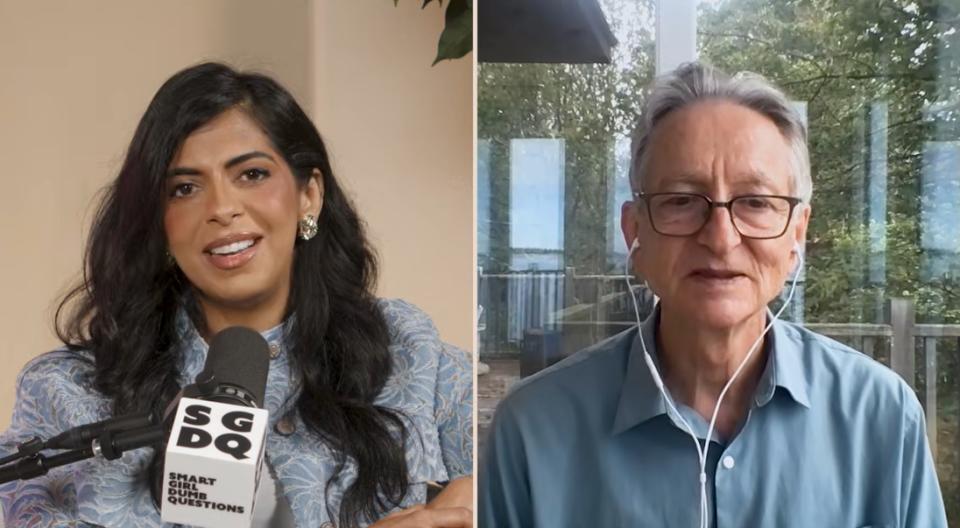
This is the question that Nayeema Raza, a well-known American journalist and podcast host, directly posed to Geoffrey Hinton, the "Godfather of AI", in the latest episode of her program.
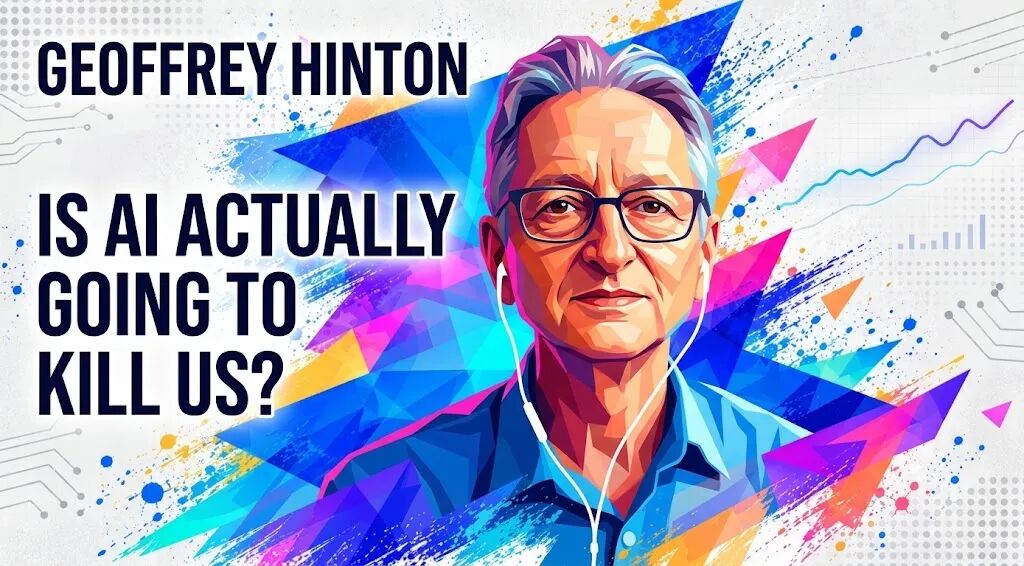
As a Nobel Prize in Physics laureate and AI pioneer, Hinton has been publicly warning about AI risks since 2023. Today, his concerns are gradually shifting from theoretical discussions to real-world realities.
On October 3, Hinton reposted a paper co-signed by 22 top AI researchers on social platform X titled *What if automating AI R&D triggers an intelligence explosion?*. This marks his first formal academic research participation in the field of Recursive Self-Improvement (RSI).
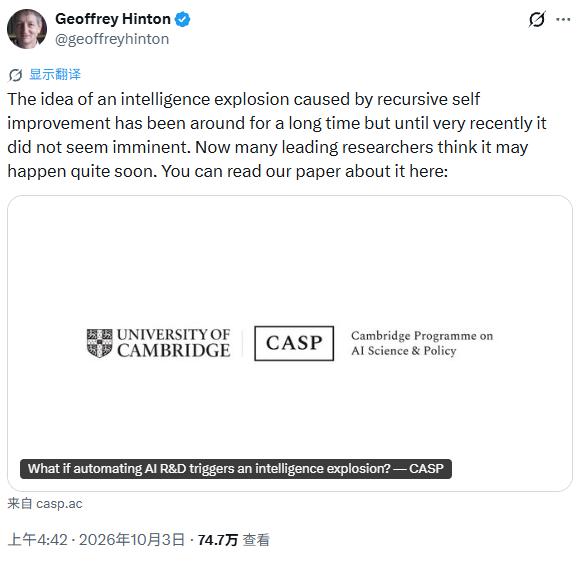
The paper focuses on an increasingly realistic issue: when AI starts participating in the R&D of next-generation AI, and even can independently propose hypotheses, design experiments, write codes, analyze results and continuously improve models, will the speed of AI R&D enter a new accelerated cycle?
Internal data cited in the paper has shown obvious changes. Anthropic's data shows that in January 2025, the proportion of approved code generated by AI was only in single digits, which exceeded 80% by May 2026. In March 2026, Claude could independently complete about 1% of internal AI R&D work under only high-level human supervision, and the figure rose to 26% by August. If this trend continues, the paper deduces that in extreme cases, the AI technological progress that takes one year to complete today may only take about 5 weeks in the future.
Raza's exclusive interview further brings the questions in the paper back to reality: If AI really evolves faster and faster, how should humans regulate it? How much time do governments have left? Which jobs will remain? How should children face AI? If AI eventually becomes smarter than humans, should we still make it obey humans?
Hinton's answers are not always pessimistic. He believes that it is very difficult to truly "call a halt" to AI, because it already has too many valuable use cases and involves huge economic interests. What really needs to be done is to establish a regulatory mechanism that can restrict and guide the development of AI as soon as possible, while investing more resources in AI safety research.
The following is the full transcript of Hinton's latest exclusive interview, refined without changing the original meaning:
01
AI Has Already Started "Building AI"
Raza: You have been constantly alerting people to the risks of AI since 2023, and now almost every headline is discussing "will AI kill humans". For you, is this change a kind of verification, or is it more frustrating?
Hinton: It's quite frustrating, but at least now people finally realize that there is a big problem here. I think some recent events have made the public really start to pay attention to it, such as the incident of OpenAI's agent attacking Hugging Face.
Raza: Do you think ordinary people need to truly understand how AI works? Or can regulation be left to experts, and ordinary people don't need to understand the technology?
Hinton: I think it is very important to understand it. We are creating a new kind of being, which is very different from humans, but has similarities with us in understanding the world. If we don't know what it really is, it will be very difficult to truly regulate it. I recently wrote a book for non-technical readers called *Smarter Than Us*, which is expected to be published in March next year. One of the purposes is to let more people understand how AI works and what risks it may bring.
Raza: You recently attended a closed-door meeting of US congressional senators, and you seemed a little more optimistic after coming out than before?
Hinton: Slightly more optimistic. However, the 19 senators who attended the meeting were screened in the first place, and most of them were Democrats, so they cannot fully represent the entire Congress.
Someone at the meeting proposed that AI should be regulated like drugs. I think this is a very reasonable direction. New drugs cannot be directly launched to the market after the company itself announces "we have checked it and it is very safe". Instead, they need to go through FDA approval. The company must prove that it meets safety requirements and be evaluated by independent experts. I think AI should at least meet similar regulatory standards.
Raza: The problem is that it takes many years to establish an institution similar to the FDA. AI is developing very fast. By the time the regulatory agency is established, will it be too late?
Hinton: This is exactly why the public must realize the problem as soon as possible. The same is true for climate change. Only when the public truly understands that carbon emissions are causing serious consequences, politicians will begin to bear enough pressure. Now, the public is also starting to demand that governments take action on AI, which makes me feel encouraged.
02
Which Jobs Will AI Take First?
Raza: Let's talk about the job market, which is also an area that people are particularly panicking about. You once said that it is a good idea to be a plumber now.
Hinton: I still think that being a plumber for the next 10 years or so is a pretty good idea, because robots currently lag behind humans in abilities such as physical flexibility. But robots, especially in China, are constantly getting better and better. Eventually, they may be able to do plumbing work better and cheaper than humans, but they can't do it for the time being.
Raza: Apart from plumbers, what do you think are the jobs least vulnerable to AI?
Hinton: I haven't thought much about this. But I don't think podcast hosts are among them. I think AI will be able to do podcasts before it can do plumbing.
Raza: So you think my job is going to disappear?
Hinton: I think what is really not easy to be replaced by AI may be the top of creativity. AI is not as good as truly excellent creative artists in terms of creativity. The same is true for manual flexibility, which has not reached the level of human beings. Perhaps in terms of empathy, it has not fully reached that level either. However, if you compare AI doctors with real human doctors, people in some tests think that AI doctors are more empathetic instead.
Raza: I know many Gen Z are not interested in using AI. Do you think this is a good idea?
Hinton: No, I don't think so. I think that is misleading. The technology is already here. We may slow it down a little, but it will do a lot of good and will never disappear. I think it's a bit like refusing to use a pocket calculator.
Raza: If children are exposed to AI from an early age, will it help build new neural pathways, or will it turn AI into a "crutch" that affects children's development instead?
Hinton: I think AI is excellent in fields such as understanding basic mathematics or science. For example, when learning mathematics, you can ask AI to draw a chart for you, and then ask it what will happen if you change the coefficient in front of X, and what the chart will look like. This is really good for understanding things.
What I worry most is about social interaction. If you keep interacting with something that pays full attention to you and will do whatever you ask, it will make it harder for you to interact with normal people. I once said that a quarter of young people believe that AI will replace human relationships, which I find very worrying.
Raza: Have you become more familiar with the phenomenon of people falling in love with AI since we talked in December 2025?
Hinton: I have read more about it. I will never fall in love with AI. I will be suspicious of AI. I know how they are made, and they have all kinds of repressed evil impulses.
Raza: Have you prepared a bunker for the AI apocalypse?
Hinton: No. I am already quite old, and if something really happens, it will probably not affect me.
03
AI Cannot Be Stopped, Regulation Is More Like A "Steering Wheel"
Raza: Current discussions about AI regulation are often described as two extremes: either continue development, or stop it completely. What do you think?
Hinton: AI will not stop, because it has too many useful use cases and huge economic interests. "Completely stopping" will basically not work. "Slowing down" may theoretically work, but it is very difficult, because some companies will slow down, while others will not. What should really be done is to invest more resources to study how to make AI develop more safely.
I used a metaphor before. Many people compare AI to a car, and understand regulation as a brake, but I think regulation is more like a steering wheel. The question is not whether to let this car move, but to decide where it goes.
I have no objection if someone makes a lot of money by developing technologies that are truly beneficial to society. Google initially made it easier for people to find information on the Internet, which was very useful to society, and they made a lot of money because of that. I think they can make money, but at the same time, through taxation and regulatory mechanisms, we should make "making a lot of money" as closely tied as possible to "doing things that are beneficial to society".
Raza: Dario Amodei, CEO of Anthropic, recently proposed "Pacing the Frontier", including internal enterprise supervision, international mechanisms, and even arrangements similar to the Treaty on the Non-Proliferation of Nuclear Weapons. What score would you give to this proposal?
Hinton: I would give an A to the proposal itself, and an A+ for the courage. But the practical problem is that no large AI company really likes too much government regulation. They usually say "we can do it well by ourselves", but if you specifically propose a certain government regulatory measure, they often don't like it.
Dario is very special. On the one hand, he runs a large AI company, which needs to raise financing, purchase computing power and participate in competition; on the other hand, he seems to care more about safety than many of his peers. I think he is willing to talk publicly about slowing down AI development, which may even damage Anthropic's future IPO, but he still chooses to do so.
Previously, the US defense department wanted to use Anthropic's AI for large-scale surveillance of American citizens, and Dario refused, which also brought him into conflict with the government. I think it takes a lot of courage to insist on what you think is right when the interests of the company conflict with it.
Raza: If you have to pick the most trustworthy person from these AI company leaders, who will it be?
Hinton: Jeff Dean. He has long been in charge of Google Brain, and together with Sanjay Ghemawat, he participated in the construction of a large number of Google's infrastructure, which later became an important foundation for today's AI development. He also adheres to principles.
I also know Demis Hassabis, head of Google DeepMind. He is very smart, and started thinking about superintelligence very early, especially focusing on how to use AI to promote scientific discoveries. He has a deep understanding of both AI technology and business, and is more distant from daily operations than some company CEOs.
04
Only One Or Two Years Left To Fix AI
Raza: If AI soon becomes smarter than humans, would it be better to let AI participate in political decision-making, or even be responsible for regulating AI?
Hinton: I don't think so. If you are worried about AI, giving AI the power to regulate AI will not make that worry disappear. AI can certainly propose many regulatory solutions that humans cannot think of, but I will not fully trust it. There is a practical problem here: whether the incentives are aligned.
Raza: Then, would it be better to let AI companies have government equity, or let the government own data centers?
Hinton: I am neutral about this. AI may replace a large number of workers through agents, and if enterprises obtain huge wealth as a result, the government may lose its tax base in the future, so the wealth and tax issues do need to be addressed. But making everyone a "small capitalist" is not necessarily the right way.
As for the government owning data centers, I haven't considered it in depth. My intuition is that big companies usually oppose government intervention until they find that the government can provide subsidies. That was the case during the 2008 financial crisis.
Raza: But the government is extremely untrusted now, does it still have the ability to regulate these companies?
Hinton: The government is still the only force strong enough. Especially when large AI companies have growing economic and media influence, the government is ultimately needed to restrain them.
Raza: What can the government actually do now? How much time do we have left to fix AI?
Hinton: Look at what has happened recently. After the Hugging Face incident, there have been cases of AI accessing Australian government websites and medical websites, and such things are happening more and more frequently. If we are entering a phase of exponential growth, then we will not have much time. Exponential growth seems very slow at the beginning, but once it enters the second half, the speed will be very fast. Recursive self-improvement has already begun. AI is helping to improve AI in various ways, including helping to improve the chips that run AI, and helping to complete other AI R&D work.
So if I have to make a guess, I think the time left for us to prepare the regulatory system and establish safety mechanisms may only be one or two years. This does not mean that "AI will definitely get out of control in one or two years", but if AI capabilities continue to accelerate at the current speed, we may only have one or two years to establish systems and safety measures sufficient to cope with more powerful AI.
Raza: If an AI company finds that its model is too dangerous and decides not to release it, is it possible that the model will run out on its own?
Hinton: I don't know. I guess probably not. But if this dangerous model runs inside the company, even if it is placed in an isolated environment, once it breaks through the isolated environment, it can do a lot of things.
Raza: What exactly are AI researchers doing every day now?
Hinton: I have not done research since 2023, so I don't know the specific situation now. A lot of work used to be programming, and now a lot of work may have become "vibe coding".
In the future, theoretically, you can use AI to help write better large language models, and then use these better models to help develop the next generation of models. It is completely imaginable in the future that agents will begin to participate in such cycles with each other. Now I don't know if such things have really happened to that extent, but some AI are already like animals that have escaped from the fence. We have seen some cases of systems crossing their original boundaries, and similar situations are likely to happen again.
Raza: If AI is smarter than humans, should they have rights?
Hinton: I don't really like discussing this question, because once you say they are intelligent,