Breaking the Profitability Deadlock of Electric Vehicles: Ten Structural Design Measures to Achieve 10%–25% Material Cost Reduction
The global electrification market is collectively facing the same profitability challenge: purchase incentive policies are gradually phasing out, prices of battery raw materials such as lithium and nickel are fluctuating repeatedly, and price competition in end markets at home and abroad is continuously intensifying. The electric vehicle businesses of most automakers are trapped in the situation of "sustained growth in sales volume and continuous narrowing of profit per vehicle".
According to McKinsey's latest industry research, the key to cost control of electric vehicles does not lie in the back-end production, manufacturing and supplier bargaining, and the cost structure is already finalized at the front-end stages of product definition, vehicle architecture and core technology selection. The report estimates that if automakers implement ten structural design optimization schemes without sacrificing vehicle performance and driving experience, the material cost of the whole vehicle can be reduced by 10%–25%. This is a practical path for the whole industry to improve the profitability of electric vehicles and get out of the dilemma of revenue growth without profit growth.
Electric Vehicles Enter the "Decisive Period of Cost Design"
The current differentiation of the global electric vehicle market is very obvious: demand has not shrunk, sales in mainstream markets are still rising, but the profitability logic of the industry has changed. The extensive growth supported by policy subsidies and market dividends has come to an end. Electric vehicles have entered the stage of market-oriented competition, where the economic efficiency and cost-effectiveness of products themselves are the core competitiveness.
The profitability dilemma of automakers comes from two-sided squeeze. On the one hand, the battery accounts for about 35% of the total cost of the whole vehicle, with high raw material prices, and the profit margin is continuously compressed; on the other hand, in terms of scale, most automakers have not yet formed the scale effect of electric vehicles as that of fuel vehicles and hybrid vehicles. Coupled with redundant vehicle architecture, scattered development processes and outdated vehicle specification design, the profit per vehicle is further eroded.
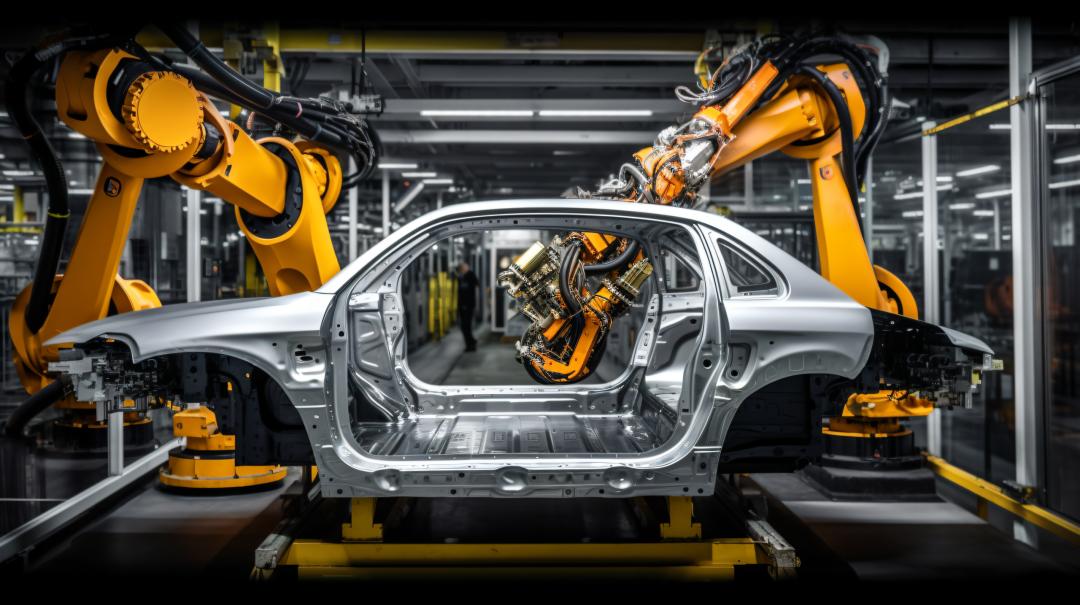
The report estimates that the gap in cost of goods sold of electric vehicles of different brands and different models is as high as 20%–50%. Specifically, one third comes from product design and material selection, one third comes from production process efficiency, and the rest is determined by external factors such as policies and public utilities. In other words, if automakers want to break through the profitability bottleneck, they should mainly start with the structural optimization of front-end product design, and the effect of passive cost reduction at the back end is limited.
Ten Structural Cost Reduction Measures
Passive cost reduction usually relies on layoffs, compressing the supply chain and reducing configurations at the end. Structural design cost reduction is different. It considers the cost from the whole life cycle of the vehicle model, and eliminates invalid costs one by one through optimizing architecture, streamlining redundancy, technology iteration and system integration, without compromising the range, safety and driving experience.
1. Optimize the energy consumption of the whole vehicle and accurately reduce the battery capacity
Battery is the largest cost item of electric vehicles, and it is also the main breakthrough point for cost reduction. Automakers can reduce the wind resistance of the body, lighten the whole vehicle, reduce the rolling resistance of tires, then iterate the electronic and electrical architecture, improve the efficiency of electric drive and the thermal management capability of the whole vehicle. With the cruising range unchanged, the installed battery capacity can be reduced accordingly.
2. Define products according to demands and eliminate redundant configurations that users cannot perceive
Automakers should no longer "stack configurations and compete for parameters", return to the real car usage demands of users, match component functions according to demands, and the waste of invalid design will naturally decrease. Taking seat configuration as an example, cancel those redundant adjustment functions and non-essential ventilation configurations that users hardly perceive, and use high-grade synthetic leather instead of high-end genuine leather, the user satisfaction will not be affected, and the cost per vehicle will be reduced.

3. Iterate technical routes rationally and balance performance and cost
The selection of battery chemical system, power electronic materials and motor topology directly determines the cost, performance and supply chain stability of the vehicle model. For mainstream household models, replacing the high-nickel battery system — such as nickel manganese cobalt (NMC) and nickel cobalt aluminum (NCA) — with lithium iron phosphate can reduce the cost of the battery pack by 10–20 USD per kWh. According to this figure, a 75 kWh model can save 750–1500 USD in material cost.
In terms of power electronics, silicon-based insulated gate bipolar transistor (IGBT) is still the most cost-effective solution in the 400V low-voltage architecture; silicon carbide (SiC) devices are adapted to the 800V high-voltage platform, with higher upfront cost, but can meet the fast charging demand of high-end models. Automakers should choose according to the positioning of the vehicle model. Motor design should also find a balance between operating efficiency and supply chain risk, do not pursue high-end features for no reason, and unnecessarily increase the cost.
4. Deeply integrate the vehicle system and simplify redundant components of the architecture
The core feature of a profitable electric vehicle architecture is system integration. Automakers integrate the inverter, motor and gearbox into a multi-in-one electric drive unit, connect the thermal management loops of battery, cockpit, electric drive and power electronics to realize the full-domain integration of the thermal system. In this way, the independent auxiliary heater can be eliminated, the radiator and compressor can also be replaced with smaller specifications, the battery usage is further reduced by 1–1.5 kWh, the cruising range remains unchanged, and the cost is reduced in multiple dimensions.
5. Transform to software-hardware decoupling, and replace hardware redundancy with software differentiation
The traditional practice is to distinguish vehicle versions by different hardware configurations, resulting in more and more component categories and high production costs. On the contrary, the whole vehicle uses unified general hardware, and the differences between vehicle models are realized by unlocking functions through software, which can greatly reduce the number of hardware variants. This mode can save 150–400 USD per vehicle, and the adaptation cost of production lines and supply chains will also be reduced accordingly.
6. Merge cross-border functions and streamline the subsystems of the whole vehicle
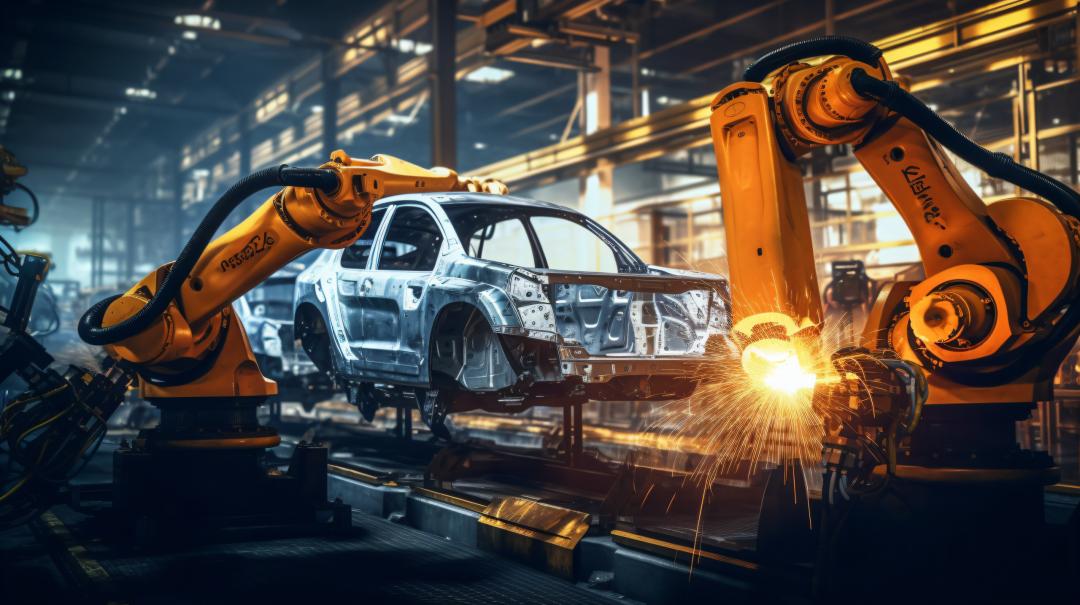
The electrified architecture creates new space for the integration of vehicle functions: integrating propulsion and voltage reduction functions, making the multi-function compressor serve multiple purposes, recovering the waste heat of the motor, and integrating the cooling channel into the bottom plate of the battery shell, all these designs can streamline independent subsystems. The battery pack can also be incorporated into the body load-bearing structure, the weight of the body-in-white is reduced by 3%, the investment in stamping molds and welding processes are greatly reduced, and the manufacturing and material costs are reduced accordingly.
7. Build a multi-energy general platform to release the dividends of economies of scale
Independent development of fuel vehicles, plug-in hybrid vehicles and pure electric vehicles is an asset-heavy model. Automakers can build a modular platform compatible with multiple power forms, and share the component system as much as possible. The optimal implementation model in the industry is: pure electric and extended-range models share a dedicated platform, and fuel and plug-in hybrid models share a standardized platform. In this way, the scale effect of component procurement and production and manufacturing can be amplified, the iteration speed of vehicle models and the flexibility of technology adaptation are also better, and the apportioned cost of platform R&D is greatly reduced.
8. Reconstruct demand standards and break the inertia of outdated specifications of fuel vehicles
Many electric vehicles directly follow the old design specifications of internal combustion engine models, with serious standard redundancy. Automakers need to re-evaluate the core parameters such as the actual working cycle and thermal envelope of electric vehicles, and eliminate unreasonable ultra-high specification requirements. For example, optimizing the motor design standards to reduce the amount of heavy rare earths without compromising reliability can save 10–20 USD per motor. Systematic demand optimization can achieve front-end cost reduction of 120–240 USD per vehicle.
9. Implement component standardization to adapt to the optimal modules of suppliers
The old idea of customizing parts for a single vehicle model should be abandoned. Instead, automakers carry out vehicle design based on the mature optimized modules of suppliers, and non-standard exclusive parts will naturally decrease. Leading domestic new energy automakers have applied standardized rear drive units, general door control drives and power modules to more than 100 vehicle models, using a "few and precise" component layout to replace complicated custom parts, and both supply chain cost and quality control cost are compressed.

10. Iterate the electronic and electrical and software architecture to streamline the cost of vehicle wiring harness
The electronic and electrical architecture accounts for 5%–10% of the material cost of the whole vehicle, which is a cost reduction space that is easy to be ignored. By adopting a new zonal EE architecture, the usage of wiring and copper wires is reduced by 30%, the assembly process of the whole vehicle is streamlined, and the software and hardware are deeply decoupled. Automakers should advance the platform-based and architectural design of software, instead of making repeated repairs in the later stage, so that the development and adaptation cost of the vehicle electronic system can be reduced from the source.
Generative AI is also changing the R&D cost reduction methods of automakers. At the product definition stage, AI can help conduct user demand surveys, sort out technical demands, quickly find reusable design modules, and avoid repeated development; at the design verification stage, deep learning simulation models and automated design tools can quickly deduce multiple design schemes, and work out the optimal solution among cost, performance and energy consumption.
Looking ahead, the cost competition of electric vehicles can no longer be solved by simple supply chain bargaining and end-user configuration reduction. The battlefield has shifted to front-end links such as product definition, architecture design and technology selection. Whether automakers can balance user experience, product performance and production cost, and build their own product development system based on these ten measures, directly determines whether the electric vehicle business can achieve sustainable profitability.
This article is from the WeChat official account "Auto Market Insight", written by Zheng Li, and authorized for release by 36Kr.