Using AI for National Day travel arrangements, the first group of people have already been badly ripped off.
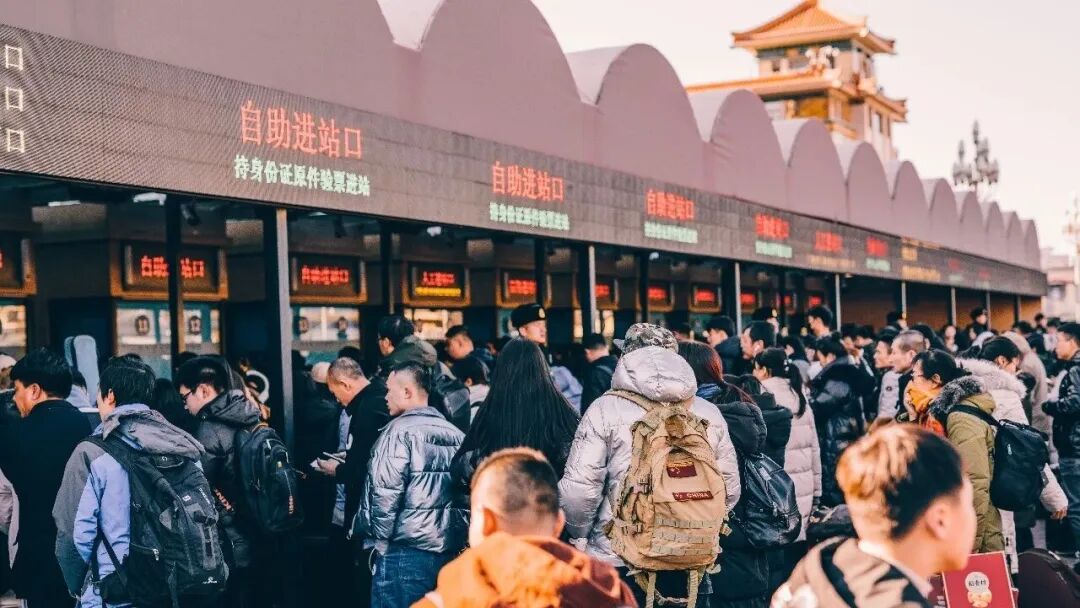
The third day of the National Day holiday has arrived, with long queues forming at the entrances of scenic spots, high-speed railway stations and popular commercial blocks crowded once again, and many people are taking advantage of these days to go on trips.
Before heading out, making travel plans is almost unavoidable. You first open social media platforms, bookmark several posts labeled "painstakingly compiled by local residents", "no detours for a 3-day 2-night trip" and "this single post is all you need", then mark scenic spots, restaurants and hotels on the map one by one to compare distances, prices and reviews. You also need to confirm which stores are open, what time the scenic spots open, and whether reservations are required on holidays. More often than not, before you finish making the plan, most of the excitement for the trip has already worn off.
In the past two years, more and more people have handed over this task to AI. At first, most people used general large models such as Doubao and DeepSeek: input the departure time, hotel location and places you want to visit, and it will quickly arrange the route, specifying what time to go out every day and where to eat. Later, travel platforms including Ctrip, Tongcheng and Fliggy also launched their own AI travel assistants, allowing users to check attractions, compare hotels and book tickets all in one dialog box.
With more and more tools available, the plans made by AI are getting more and more well-formed, and people are naturally more reassured. However, when it comes to crowded long holidays, problems emerge: AI can quickly sort out public information, but it has no idea about the passenger flow and road conditions during holidays, cannot accurately predict the weather, and does not know which stores are not open yet. What's more, it cannot adjust subsequent arrangements according to your physical strength, mood and unexpected situations.
We talked to five people who used AI to make travel plans during this Mid-Autumn and National Day holiday. None of them were using AI to make travel plans for the first time, and the plans they got were very detailed, but they still ran into quite a few pitfalls: the car ride that was supposed to take 50 minutes turned into nearly two hours, most stores in the block they traveled to specially were closed in the morning, and the sunrise they climbed to the top of the mountain in the dark before dawn to see only appeared for 30 seconds.
Is handing over your trip to AI a way to save trouble, or cause more trouble? Their experiences may give you some references.
01. AI makes more detailed plans than I do, but it cannot take the huge passenger flow during the National Day holiday into account
Chen Jia | 28 years old Beijing
This Mid-Autumn Festival and National Day, two friends and I went to Fujian, mainly traveling in Xiamen, Quanzhou and Pingtan. This was the first time I almost completely let AI make the travel plan.
When I traveled before, I would browse Xiaohongshu and check Dianping by myself, then look up the distances one by one on the map. This time I was too busy with work, so I simply gave all the information including flight time, hotel location and places I wanted to visit to Doubao and DeepSeek, letting them arrange the daily routes directly.
The requirements I put forward were actually quite specific: I didn't want to walk 20,000 steps a day, didn't want to go to overly commercialized places, and arranged at most three or four main scenic spots every day. I also specifically told it that we were traveling during the National Day holiday, hoping it would take the passenger flow into consideration.
The plan it gave was very complete. It wrote down everything: what time to get up, where to go first, how long the taxi ride takes between two scenic spots, and which area to have lunch in. In the middle, I also asked it to modify it several times, deleting places that were too far away, and arranging popular scenic spots as early as possible in the morning.
This plan seemed to have no problems at all, but the flaws were exposed only after we arrived at the destination. On the first day in Quanzhou during the National Day holiday, it arranged for us to go to Xunpu Village in the afternoon and visit West Street in the evening. From the perspective of photography needs and distance, this arrangement was reasonable.
It was almost 4 p.m. at that time, I asked AI if it was still recommended to go to Xunpu Village at this time, it said yes, told me roughly how long the journey would take, how long we could still visit, and even listed a compressed itinerary. I also checked the time, 4 p.m. to 6 p.m. was indeed the prime time for wearing flower hairpins and taking photos, so we went there.
However, after we arrived, we found that there were far more people than we could imagine. There was a long queue for taking photos with flower hairpins. On holidays, it was easy to take a taxi to get in, but extremely difficult to get out. We couldn't get a taxi to go back to the hotel in the evening, and couldn't squeeze onto the bus either. We struggled for a very long time before we got back.
The hotel was not far from West Street, so we still went there according to the plan. The passenger flow was even larger than expected, not to mention cars, even electric scooters could barely move forward. We were already very tired, so we had no choice but to get off and walk there. What's more, the popular stores on West Street had long queues, and the time we spent looking for a place to eat was much longer than AI predicted.
I then realized that the biggest problem with AI-made travel plans is that it knows where every place is, but it has no idea what the actual situation of these places is during the National Day holiday, and it is only good at making a plan that "works on paper".
A similar situation also happened when we were in Xiamen during the Mid-Autumn holiday. We originally planned to go to four places, but only visited two in the end. AI could not judge the road conditions and passenger flow on the day of the holiday, let alone know that we were already very tired and did not want to rush to the next place according to the plan at all.
It could quickly give me a new solution every time, and the new solution seemed quite reasonable. But later we found that the most effective way was to ask the hotel front desk and taxi drivers directly.
However, I will still use AI for future trips. It is indeed much faster than checking by myself to let it sort out scenic spots, compare routes, and build the itinerary for several days. Besides, there are almost no mistakes in the basic information, and the opening hours and locations are all correct.
Treat the AI-made plan as a list of scenic spots, decide only the first place to go every morning, and leave the rest to be decided after arriving at the local area. In this way, you can travel much more easily.
02. I asked AI to help me "try something new", only to find that most of the shops in the resort were not open
Chen Ting | 36 years old Beijing
It was not my first time using AI to make travel plans. When I went to Qingdao and Weihai in the first half of the year, it arranged the itineraries, and there were no major mistakes in schedule planning and transportation planning, so I thought it was capable of doing this. So this Mid-Autumn holiday when I went to Changbai Mountain, I gave it more trust and permissions, and even listened to its suggestions from the very beginning of choosing hotels.
I successively used Doubao, DeepSeek, as well as the travel assistants of Tongcheng and Fliggy, to make a plan respectively. I have been to Changbai Mountain twice, and I stayed at Wanda Resort every time. When I was making the Mid-Autumn travel plan in early September, I wanted to experience something different, so I asked AI to find more recommended resorts nearby.
It gave me a comparison table, and the first recommended resort was put into operation in 2021, which was 400 yuan cheaper per night than Wanda Resort, with larger rooms and newer facilities. The most critical column wrote that it was 38 kilometers away from the North Slope Scenic Area, and the car ride took about 50 minutes. My husband asked at that time if this new place was reliable, I said look at the good reviews, and we booked it.
The first half of the trip went relatively smoothly, until we rested for one night and went to the scenic area the next day, we found that AI's plan was not reliable. The resort was very large, and you had to go around for a long time on the side road to get from the exit back to the main road. The 50 minutes that AI mentioned actually took the driver 1 hour and 50 minutes to drive. The straight-line distance indeed seemed not far, but AI did not know the details of the road conditions.
I encountered this kind of problem when I used AI to plan the itinerary before, and I thought it should have been solved in the past six months, but in fact it was not.
The situation inside the resort was also different from what I expected. A large number of shops on the main street were covered with "Coming Soon" hoardings, the supermarket was also closed, and there were only two restaurants open in the whole resort at night, both of which served cuisines we were not interested in. In the end, we had to eat expensive meals at the hotel for two days.
On the last day of the holiday, after we came down from Tianchi Lake, I asked AI what restaurants nearby were open, and it answered quickly and definitely: "Today is September 4th, early autumn...". I stared at the words "September 4th" for several seconds, which was exactly the day when I made the travel plan. It seemed to have no concept of time. Every time I said "today", it easily mixed up what the actual date was.
Looking back, the pitfalls I stepped into this time were not huge, but a lot of time was wasted. It was also my fault for being too credulous and not verifying. Letting AI help you "try new things" is indeed very risky. Mature scenic spots and complete supporting facilities are indeed a little more expensive, but they are also worry-free, which AI cannot figure out.
When I go out later, I will still hand over tasks like itinerary framework building and scenic spot comparison to AI, it does these things really fast, but I will definitely check details such as opening hours, ticket release rules and road conditions by myself.
In addition, many AI agent assistants are now promoting that they have long-term memory, saying that they can remember the pitfalls they stepped into before and automatically avoid them next time, and even directly book tickets and hotels for me. But after actual experience, I think the usage threshold is still a bit high.
I hope that traveling and making travel plans can be a relaxed and pleasant thing. If I still have to spend time "training" AI, the time cost is too high.
03. The plan looked quite decent, but there were problems all over the place when I opened the map
Lingling | 25 years old Shanghai
I started using AI to make travel plans only this year. At that time, a friend recommended it, and I wanted to try it to see if I could save some time. I had high expectations at first, thinking that with it, I wouldn't need to use my brain when going out to travel in the future.
During the May Day holiday this year, I let AI make a travel plan for the first time. The content it gave was very detailed, with weather forecast and travel tips attached, but the scenic spots it recommended did not quite fit my preferences. Some of them were too niche, and I thought they were not very fun after reading, so I didn't adopt it in the end.
Later, I used it more as an encyclopedia during the trip. When I arrived at a scenic spot, I asked it to explain the historical origin, and I also asked it directly when I wanted to know local customs and specialties. When visiting museums, it could also introduce cultural relics and historical figures, and I could ask it whenever I wanted to know something. In particular, now I can communicate with it directly through voice, without holding the mobile phone to type all the time, which is very convenient to use.
Although I didn't adopt the first plan, I was still willing to continue trying AI. This Mid-Autumn Festival, my friends and I went to South Korea for a trip. It was our first time to go there, and we were not very familiar with the local area, so we asked DeepSeek and Doubao to help make the travel plan.
This time, I clearly felt that it did better than before, the itinerary was arranged in great detail, and it looked quite decent. As a result, I relaxed my vigilance, and didn't think about checking it on the map before departure.
After arriving in South Korea, I glanced at the map on the way to the hotel, and only then found that the travel route was problematic.
When arranging the routes, it seemed to have no concept of distance. Scenic spots that were close to each other were split into two different days, and we had to travel to the same area twice. For example, on the day we went to Dongdaemun, we could have visited nearby scenic spots after shopping, but it arranged a very far Lotte World for us, which wasted a lot of time on the round trip.
The arrangement of playing time was also unreasonable. In my opinion, Gwangjang Market is just a place similar to a food market, where people go to have breakfast and stroll around briefly, which doesn't take much time, but AI allocated a whole morning for it.
These problems are not easy to detect when you only look at the text plan. Only by opening the map and comparing the locations of these places can you find the flaws.
The problem with the route could be found in advance, but we were not so lucky with another pitfall.
The plan arranged for us to go to Hannam-dong one morning, but after we arrived, we found that almost no stores were open in the morning, and most of them would not open until noon. We didn't even have breakfast, and went there for nothing.
After stepping into the pit during the Mid-Autumn holiday, I changed my usage when I went out again during the National Day holiday. I still don't feel relieved to hand over everything to AI, at least I have to choose the places I want to go first.
I will first use the "Diandian" feature on Xiaohongshu to see what everyone is discussing under the same topic, pick out the places that interest me, then give these locations to AI, and let it connect them into an itinerary without backtracking. If I'm not assured, I can ask it to mark the daily itinerary points on the map, and then I will check it again to confirm whether the travel route is smooth.
The plan made in this way will be more to my liking. Some friends around me will specially find Skills for making travel plans, and they have also made satisfactory itineraries. I think it is also worth trying, but you need