Manus2.0 is launched, and the AI application product manager is ultimately oriented to the routing architecture, rather than the "monolithic AI application".
Recently, Manus 2.0 has been launched. I believe the biggest takeaway for product managers working on AI applications is that focusing on the router product architecture is the most worthwhile entrepreneurial path for AI application startups.
However, it is a pity that all the entrepreneurs I have seen in China are building single-channel standalone AI applications, which means they take a certain AI model as the base to build their own AI products.
This product architecture has a flaw: what if one AI model underperforms and is worse than others? And there is a question that investors will inevitably raise:
Will the ceiling of AI applications be surpassed by model vendors? What is your core competitiveness?
Therefore, a product architecture determines the product's superstructure, business model, and technical barriers. MANUS's product architecture builds its product by integrating the base model capabilities of different companies, and this product architecture is unbeatable.
Similar to the barrel effect, every model vendor has its own strengths and weaknesses. But here, all of you are puzzle pieces for me: I can assemble them into the final product experience I deliver to users, so I don't have to worry about any single weakness of a certain model.
For example, the recently viral 5.5 OPS: the latest version of Claude can replace many AE video editors and assist in video editing work. CHATGPT Astra, on the other hand, excels in 3D construction and coding capabilities at the current stage. Being able to integrate all these capabilities into a complete product is the real ceiling for AI applications.
One is stronger in AE editing, the other performs well in Astra operating Blender. If the two are combined, at least it will become an invincible AI application product.
Simple shell-wrapping that builds an AI application by just putting a superficial wrapper on existing models will no longer have competitiveness.
The following are two different forms of AI product architecture
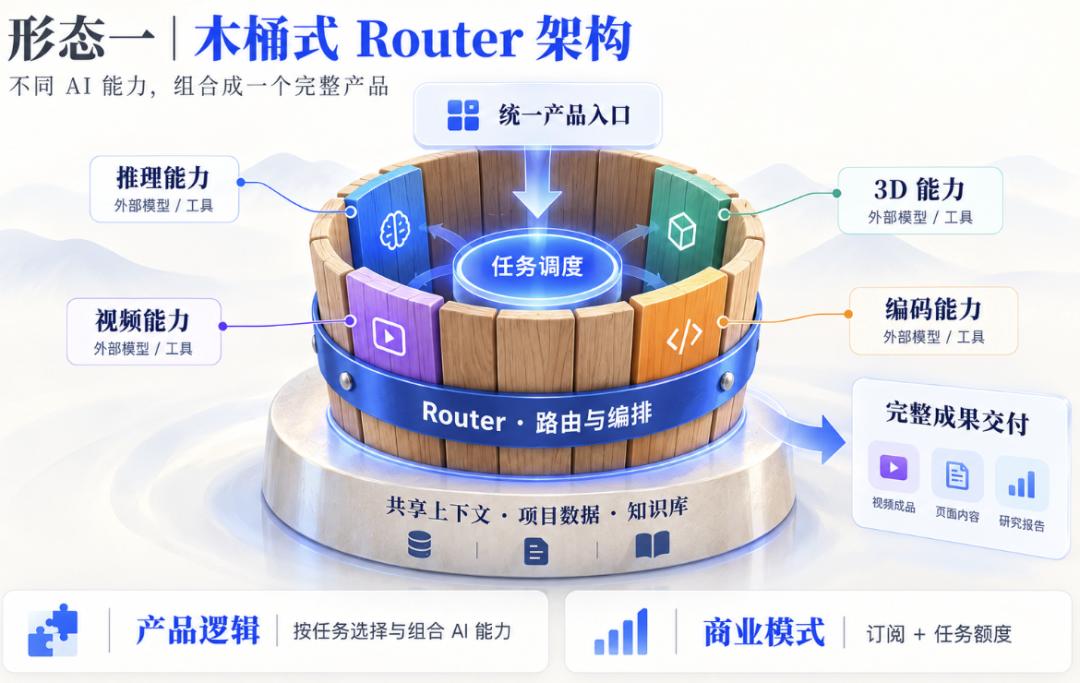
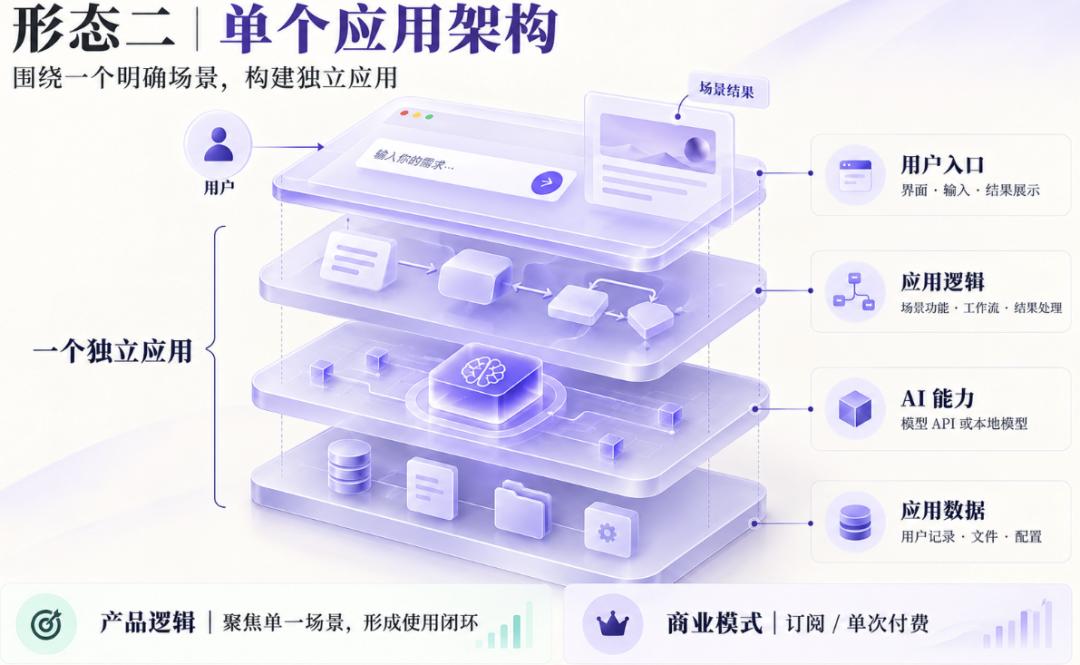
The standalone application architecture directly connects software engineering with general-purpose model deployment, which lacks the intermediate distribution and integration capabilities.
The router architecture requires product managers to fully understand the strengths, weaknesses and capability gaps of various AI models. Of course, from the perspective of development, there are already obvious differences between different AI models: for example, GROK focuses more on the physical world to prepare for robots and Tesla, CHATGPT focuses more on text and coding, and Claude focuses more on coding, editing and creation.
Mastering Benchmark is the basic skill that product managers of AI wrapper applications must master if they want to get financing
Different benchmarks represent different industry leading edges, such as in creation, song production or mathematics, and these different benchmarks have their own evaluation indicators.
Product managers of AI wrapper applications who adopt the router architecture can, for their own user scenarios, first clarify the weaknesses and strengths of each model in the evaluation.
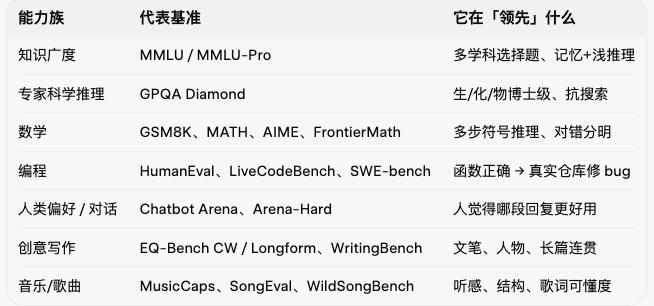
Therefore, if your product is designed for general scenarios, you need to select various benchmarks, so that product managers can not only complete AI product design, but also truly settle down to study academic researches and industry evaluation methods. In other words, AI product managers must combine scientific research capabilities, even Python skills, to complete product work.
Most AI product managers cannot build products based on the router architecture, and are unwilling to learn English and scientific research knowledge
Why do many AI product managers still stay at the workbuddy level instead of building the router architecture I just mentioned? The main reason is that this path requires in-depth understanding of the capabilities, respective evaluations, and even the differences in internal bases and data sets of each model. This requires the team to have at least one scientist on board, and 99% of current AI products do not have this capability.
In other words, product managers with a software engineering background cannot deeply integrate into a scientific research team, because their entire way of thinking is not focused on user demand research, but on reading scientific research papers.
Therefore, for AI application products, even the simplest wrapper products require AI product managers to read academic literature.
That's all for today's sharing.
This article is from the WeChat Official Account "Kevin's Bits of Changing the World" (ID: Kevingbsjddd), the author is Kevin's Notes, and is published with authorization from 36Kr.