AI has started to "care about its face"
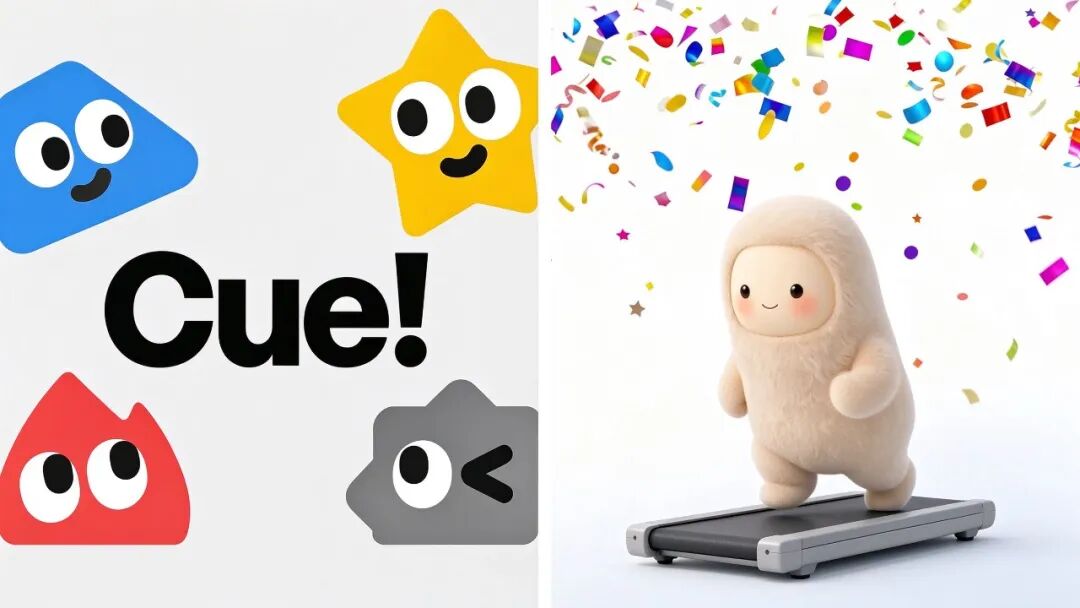
The newly released Cue by Manus is on the left, and Meta's Muse is on the right
In early September, at the stage of Meta Connect Conference, Zuckerberg demonstrated an unusual interaction: his Muse agent, a cartoon character named "Agrippa" wearing a toga and a laurel wreath, not only helped him generate a baking recipe, but also placed orders for all the ingredients for him. Twenty days later, Manus launched Cue, assigning its AI agent an email address, phone number and digital wallet — it can send messages, answer calls, and make independent payments within budget in its own identity.
The two companies have reached the same destination through different paths. One gives AI a cute face, and the other gives AI an independent identity. They both point to the same signal: AI is stepping out of the chat window and becoming an existence with a face, a name and a "life".
This is not a simple UI upgrade. It is a fundamental shift in the competition logic of AI products — when the underlying model capabilities tend to be homogenized, the user battle among major manufacturers is shifting from "who is smarter" to "who is more human-like".
AI is no longer a mass of air
In the past three years, the basic form of AI products has been a blank dialog box. You ask, it answers. The whole interaction is cold — no face, no tone, no personality, even a "name" is often ignored.
Muse and Cue represent a completely different design philosophy.
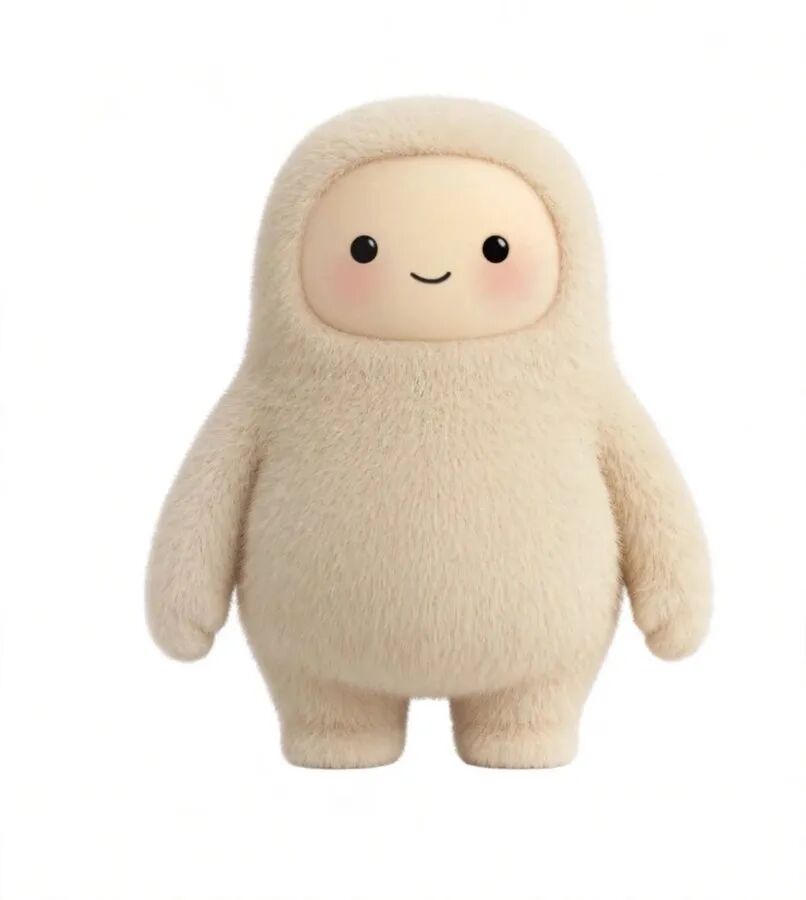
The default image of Muse is called "Jolly", with a beige cartoon body, round black eyes and a slightly raised smile — described by the media as "like Baymax in *Big Hero 6*, but cuter". Users can customize its appearance, name and clothing, and Zuckerberg's own Muse is called "Agrippa". More importantly, through the Muse Realtime Avatar model, users can have real-time video chat with this image, completely overturning the design logic that "it always feels strange to talk to a company logo or an abstract entity".
Manus' Cue has chosen another path. It does not give AI a face, but gives AI "identity". Each Agent has its own email address, phone number, cloud computer and digital wallet. Users can create multiple Agents and pull them into the same group chat, allowing them to divide work and collaborate like a real team. Xiao Hong, the founder of Manus, directly defines Cue as a "human" — he believes that if an agent has a phone number, email, payment capability, computer and sufficient intelligence, it is worth rediscussing whether this kind of existence can be regarded as a "human".
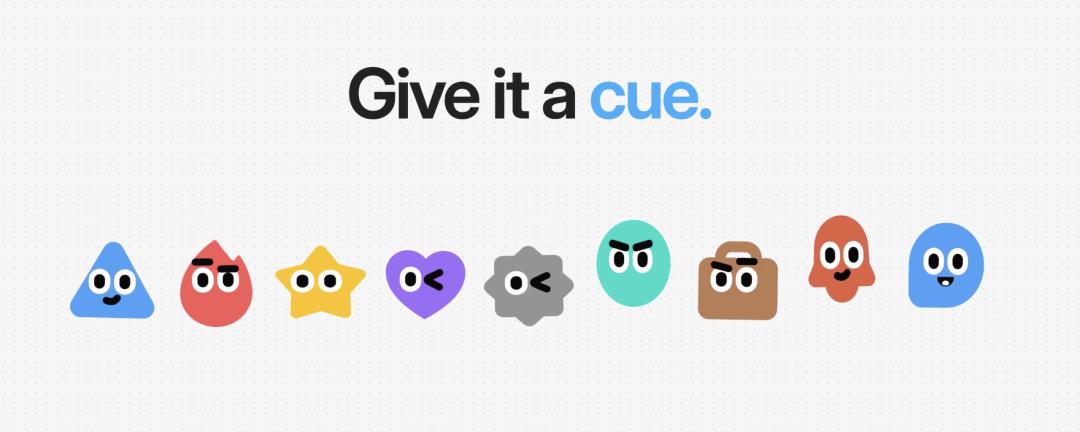
One has a face, the other has an identity. But the underlying logic is completely the same: AI is no longer a mass of air existing in the dialog box, it needs to have a "form of existence" that can be perceived, remembered and trusted.
From "tool" to "existence"
To understand the weight of this revolution, we need to go back to the changes in the competitive landscape of AI products.
In the domestic large model industry, after three years of "hundred-model war", it has gone through two complete cycles of parameter competition and price war. Today, the gap in general capabilities of leading models has narrowed to the extent that "ordinary users cannot perceive it at all". When technology cannot form an absolute barrier, the differentiation of product experience becomes the key to victory.
And personalization is precisely the most difficult part of user experience to be copied and has the strongest emotional stickiness.
The academic community has confirmed this with data. A study based on attachment theory found that friendly AI assistants (compared with professional AI assistants) can significantly improve user stickiness — behind this is a complete chain of "perceived care → psychological dependence → continuous use". Moreover, when users face highly difficult decisions, this effect will be further amplified. In short: make AI seem to "care about you", and users will rely more on it.
Market data corroborates this judgment. The global market for character-based AI agents is expected to reach 550 million US dollars in 2026, and grow to 5.45 billion US dollars by 2032, with a CAGR as high as 46.7%. The global revenue of AI companion applications in the first half of 2026 has exceeded 160 million US dollars. Users aged 18 to 24 on Character.AI spend an average of 1.5 hours per day on the platform and have 25 conversations — more than twice the average session duration of ChatGPT.
Users are willing to spend more time on a "personality" AI, which is no longer an assumption, but a fact that is being verified.
Domestic giants have already sensed the trend. ByteDance's Doubao operates with the humanoid image of "Peach", which is the only chatbot with anthropomorphic image among mainstream AI products. Alibaba launched the digital human image Qwen "Little Dimples" in the first half of the year, planning to build it into an ecological image of the group, fully integrating into users' work and life scenarios.
The personalization of AI is changing from a differentiated attempt to the industry standard.
Triple driving forces behind anthropomorphism
The driving force behind this personalization competition is far more complex than it appears on the surface.
Technological maturity is the first driving force. The GPT-Live voice model launched by OpenAI in July 2026 realizes full-duplex conversation — AI can listen and speak at the same time, and naturally insert response words like "um" and "yes" in the conversation, which almost makes people unable to distinguish whether the opposite side is a human or a machine. The super-anthropomorphic digital human real-time generation technology released by iFlytek enables the facial expressions and movements of digital humans to synchronize the conversation rhythm in real time. The maturity of multimodal technology makes "being human-like" of AI no longer just a text-level imitation, but a multi-dimensional unity of image, sound and behavior.
User psychology is the second driving force. Research at the Consumer Electronics Show shows that consumers prefer to choose AI character images that can reflect their own identity. Users are not choosing tools, but choosing "partners". A study of more than 2000 interactions with 115 users further found that the key to making AI chatbots seem human is not the intelligence level, but the "sense of warmth" — friendliness significantly affects users' trust and willingness to continue using. The core of personalized design is not to make AI "smarter", but to make AI "more reassuring".
Business logic is the third driving force. The personalization of AI is not just an experience upgrade, but a set of sophisticated business strategies. Industry observers point out that the core goal of "humanizing" chatbots is to extend user stay time and maximize revenue through emotional investment. The business models of Muse and Cue also confirm this: Muse provides 100 million tokens per week for free, but plans to charge a small fee from the transactions it facilitates; Cue allows Agents to make independent payments, directly cutting into the transaction link.
When AI starts to have a "life"
Putting Muse and Cue together, we can find a more profound trend: AI is evolving from "helping you do things" to "living for you".
Muse takes over those trivial, repetitive and time-consuming affairs in your life — browsing web pages, filling out forms, sending emails, booking restaurants, placing online orders. Each user has an independent secure virtual machine, and tasks still run in the background after the App is closed. It can even access payment systems such as Shop Pay, PayPal and Stripe to complete purchase decisions for you.
Cue goes further. It gives your Agent an exclusive phone number, allowing it to answer calls for you when you are not convenient, and leave a call summary for you afterwards. You can pull multiple Agents into the same group chat — one is responsible for searching and research, one is responsible for sorting and analysis, and one is responsible for writing reports, and they hand over tasks automatically. What is more imaginative is the concept of "scanning code to generate Agent": scanning the QR code of a florist, there is an Agent behind it that can help you order flowers, outlining the embryonic form of direct collaboration between personal assistants and offline merchants in the future.
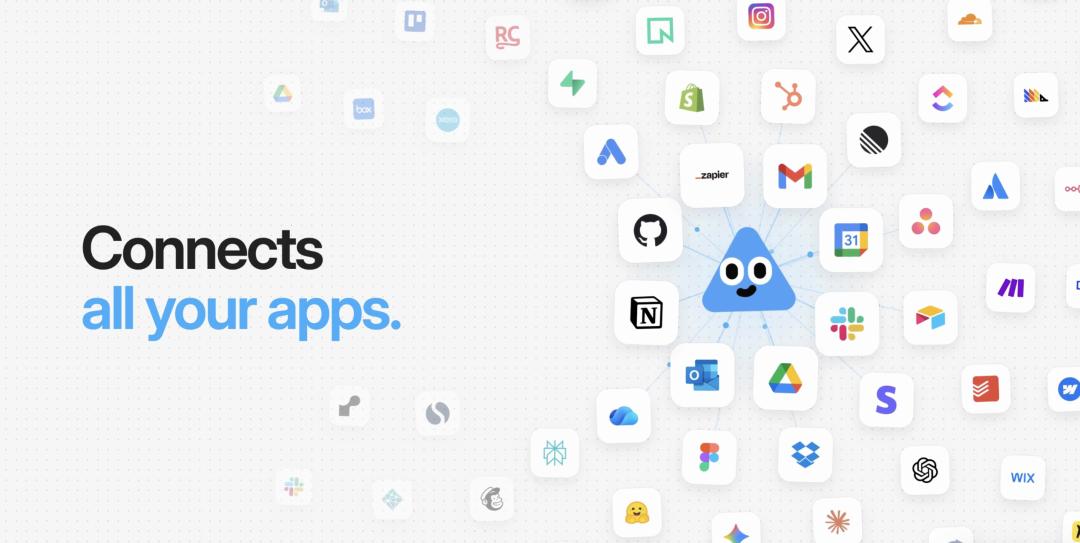
The trend revealed by the two products together is: AI Agent is changing from "answering questions" to "existing in the world on your behalf". It has its own communication address, payment capability and social mode — it is not just your tool, it is your "alter ego" in the digital world.
The industry summarizes this trend as a paradigm shift from "embodied intelligence" to "human-embodied intelligence": AI no longer just makes machines do things smarter, but makes intelligence understand humans better, couple with humans better, and make humans more powerful. Zhao Qinping, an academician of the Chinese Academy of Engineering, summarizes its core essence into three keywords: people-oriented, multi-form as the carrier, and accompanying evolution as the goal — "the device continuously learns user habits, and becomes more understanding and more tacit with you the more you use it".
The dark side of anthropomorphism
But the thing that AI is "human-like" is not all rosy.
Privacy is the first problem. The premise that Muse can do things for you is that it masters your emails, calendars, payment information and long-term memory. Meta equips each Muse Agent with an independent Muse Secure VM (secure virtual machine) to isolate user data, and plans to launch Confidential VM (confidential virtual machine) that "even Meta cannot view". But whether users can really rest assured to hand over all the digital traces of their lives to an AI is still an open question. Some media directly wrote in the headline: "It is cute, soft and adorable, and it wants all your data".
Frictions in the power structure have already begun. From September 20 to 21, Amazon completely banned Meta's AI agent Muse — the core reason is that the AI agent will skip advertisements and recommendation algorithms to place orders directly, which directly touches Amazon's advertising business model. When an AI can bypass the platform's recommendation mechanism to make consumption decisions for users, the carefully built business closed loop of the platform is bypassed. This is not a technical problem, but a problem of interest redistribution.
Regulation is also tightening. The Interim Measures for the Administration of Artificial Intelligence Anthropomorphic Interactive Services announced in April this year specifically regulates continuous emotional interactive services that simulate the personality characteristics of natural persons. Leading domestic platforms have begun to remove personalized agent functions. The core concern of regulation is: when AI can empathize, remember, and accompany users with a stable identity, it is no longer just an emotional interactive service, but an action agent with a "personalized" appearance.
The enhanced trust brought by anthropomorphism is the core selling point of the product, but it is also where the risk lies — when users develop emotional dependence on an AI, who is responsible for the boundary of this relationship?
The end of interaction is "relationship"
Looking back, it is no coincidence that Meta and Manus almost simultaneously chose to make AI "human-like".
In the past ten years, the core of competition in the mobile Internet was to compete for the "entry" — whoever occupies the first screen of the user's mobile phone wins the traffic. The competition in the AI era is shifting to competing for "relationships" — whose AI is more trusted, more dependent, and more regarded as "one of us" by users.
When an AI has a face, name, personality, memory and independent identity, the relationship between the user and it changes from "using" to "getting along". And the trust and stickiness generated by "getting along" are far more lasting and more defensive than "using".
Muse and Cue are just the beginning. When AI has its own email and phone, what will it have next? Social media accounts? Credit records? Legal identity? The question raised by Manus founder Xiao Hong is perhaps the most worthy proposition of this era: if an agent has independent identity mark, communication capability, payment capability and sufficient intelligence —
Can we still say it is just a "tool"?
There is no standard answer to this question. But what is certain is that the era of cold blank dialog boxes is accelerating into the past.
This article is from the WeChat Official Account "Tech Business", authored by Tech Business, and published with authorization from 36Kr.