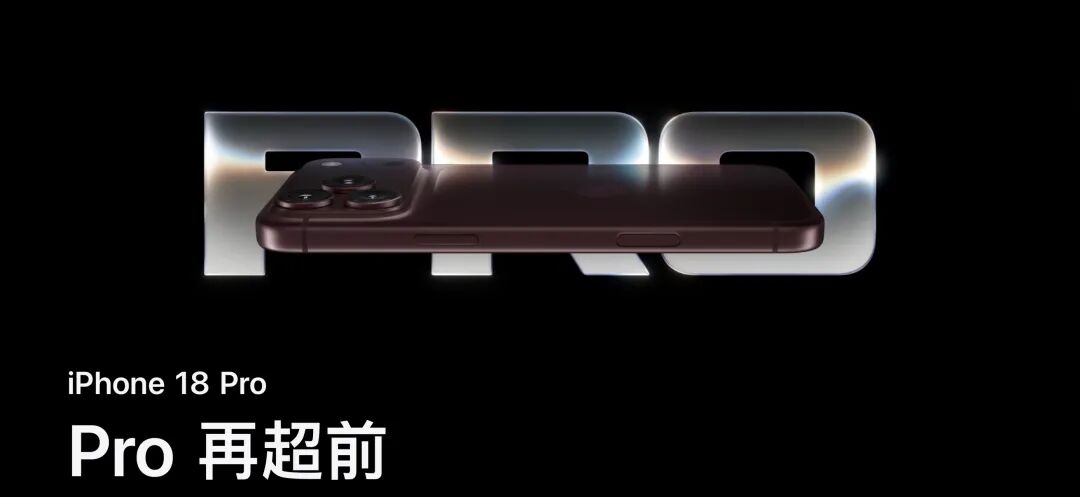
Defying the expected slump, the iPhone 18 Pro series has registered explosive sales, with 1.3 million units sold in the first week.
The iPhone 18 Pro series has been a total smash hit in sales!
This is no joke, it is backed by solid, real-world sales data!
Last night, RD Analytics released the first-week sales figures of the iPhone 18 Pro series in the Chinese mainland market.
The data shows that the first-week sales of the iPhone 18 Pro series in the domestic market are close to 1.3 million units, representing a 15% year-on-year increase compared to the first-week sales of the iPhone 17 Pro series, and reaching about 90% of the total first-week sales of the entire iPhone 17 lineup (including the standard iPhone 17 model).
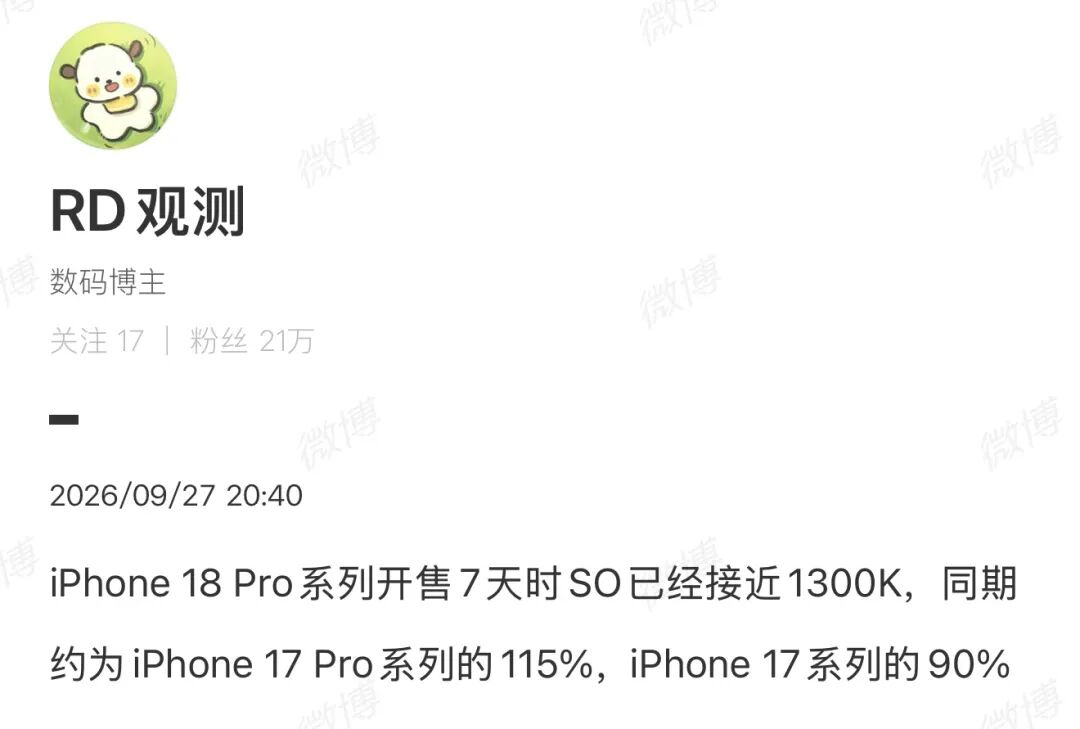
This set of first-week sales figures that rose instead of falling is absolutely staggering.
It should be noted that affected by the price surge of memory chips, smartphone manufacturers across the board have raised prices for their new products this year. The direct impact of this price hike is that the first-sale figures of this wave of domestic flagship phones in September are rather underwhelming.
The performance of the iPhone this time seems to prove that the price increase has a very limited impact on its sales!
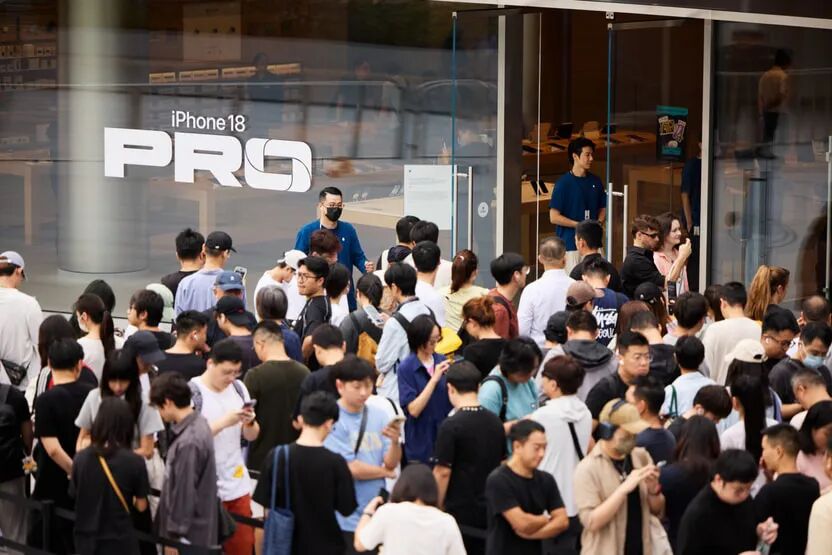
So why has the iPhone 18 Pro series managed to stay unaffected amid this round of price hikes?
Is it really as netizens joked: Everyone says the economy is bad, but actually I'm the only one who is struggling financially?
In fact, the fact that the iPhone 18 Pro series has bucked the trend is closely related to the following reasons.
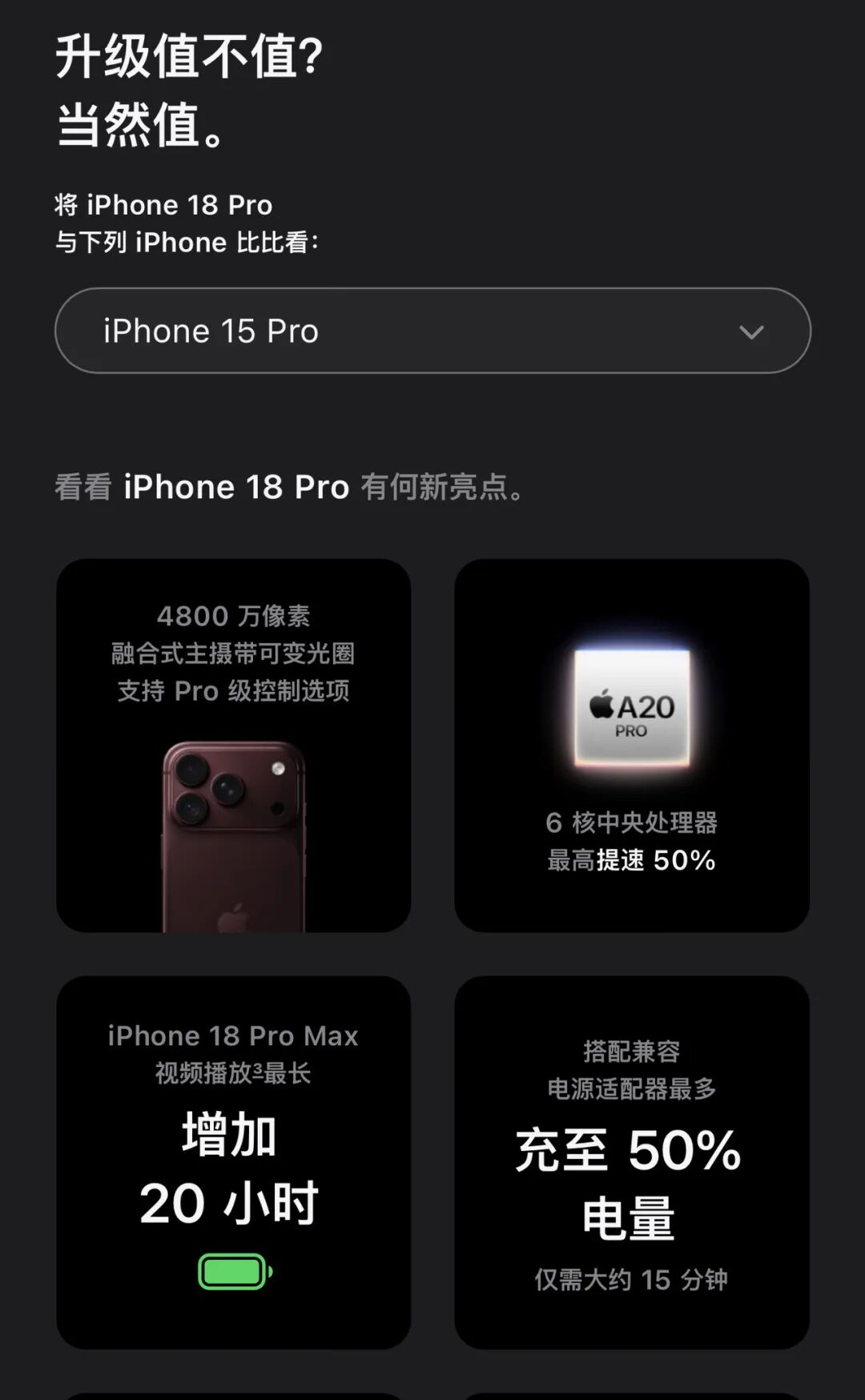
First, the overall product strength is outstanding. Although the iPhone 18 Pro series barely has any upgrades in appearance design compared to the iPhone 17 Pro, it has carried out an all-round internal upgrade — with obvious improvements in performance, battery life, charging, heat dissipation, imaging, and the iOS 27 system experience. This makes the iPhone 18 Pro series almost a perfectly balanced flagship with no obvious shortcomings.
For the existing users of iPhone 15 Pro, iPhone 14 Pro and older models that this product targets, the experience improvement brought by this well-rounded device is tangible and perceptible.
Second, Apple's pricing strategy for this round of products is also very cleverly designed.
As can be seen from the pricing, the 256GB and 512GB versions, which are the main volume-driving models in the market, only see a price increase of 1000 yuan; while the top-tier 1TB and 2TB versions, which account for a smaller proportion of purchases, have price hikes of 2500 yuan and 3500 yuan respectively, which is equivalent to using the profits from the high-storage versions to offset the price increase pressure of the mainstream versions.
Compared with the practice of some competitors that raised the price of the 256GB version by 1000 yuan and further increased the price of the 512GB version, Apple's pricing system actually takes better care of the vast majority of ordinary consumers, lowers the psychological threshold for consumers to upgrade their devices for the mass-market models, making its price increase more easily accepted by the market.
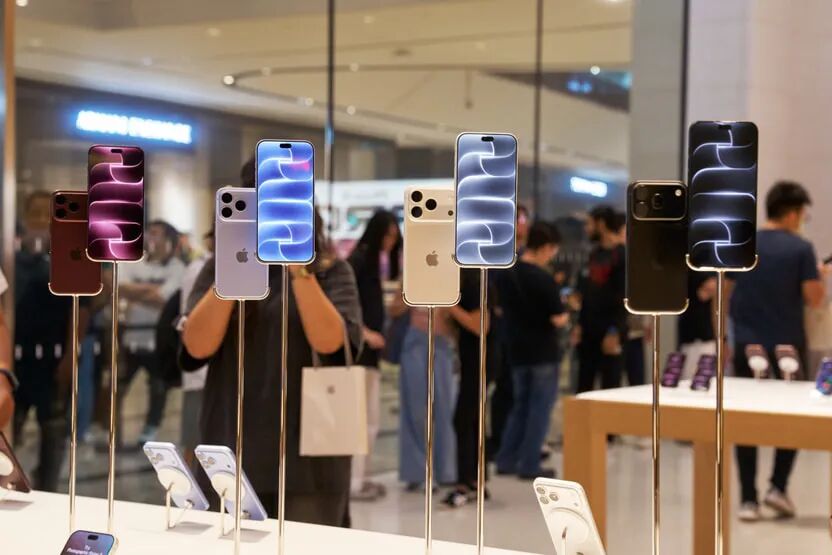
Last but not least, it is inseparable from the strong brand momentum of iPhone in the high-end market.
As we all know, iPhone has always been the absolute benchmark and dominator in the high-end smartphone market. The latest data shows that in the high-end smartphone market segment with a price tag above 6000 yuan, iPhone's market share exceeds 60%, and high-end consumer groups themselves are relatively less sensitive to price. Therefore, the strong brand recognition, coupled with the stronger spending power of target users, makes the impact of the price hike on iPhone relatively limited.
Therefore, taking into account factors such as the improved product power of the iPhone 18 Pro series, its pricing strategy and brand influence, the current result is actually not unexpected. #iPhone18Pro#iPhone18ProSeriesSales#iPhone18ProSeries#iPhone18ProMax
This article is from the WeChat official account "Lin Zhang" (ID: TMT317), author: Lin Zhang, published with authorization from 36Kr.