No sooner had Grok Bot and Muse gone viral than ChatGPT could no longer stay on the sidelines.
This year, there is a rather absurd phenomenon in the AI industry:
The evolution speed of AI products has already outpaced the speed at which users learn to operate them.
When OpenClaw went viral globally at the start of the year, people had just begun to explore Agent, Skill, and MCP, figuring out how to "raise a lobster" for themselves. When OpenClaw was officially named at the end of January, the project had already exceeded 100,000 GitHub Stars and attracted 2 million visits in a single week. Later, this "lobster-raising" trend quickly spread to China, and a number of desktop Agent products such as Tencent WorkBuddy exploded in popularity, for a time almost every internet user had their own "lobster" to raise.
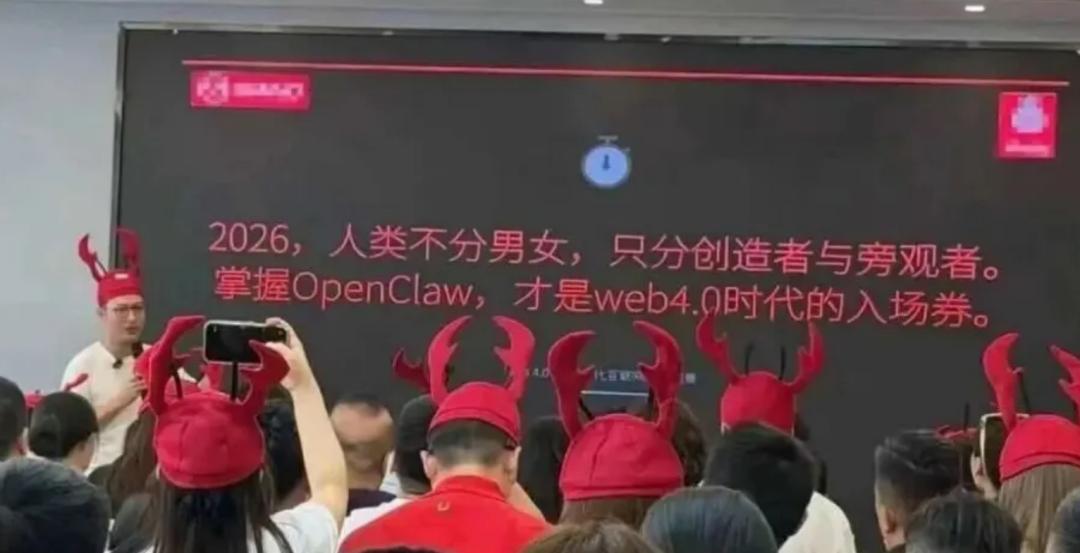
Many ordinary users probably haven't even figured out how to install their "lobster" yet, and the industry has already sprinted toward the next stage. Products like Hermes Agent continue to add long-term memory, Skills, and scheduled tasks to Agents, and now there is even a Bot Mode: you can raise a row of Bots with their own names, avatars, independent memories and skills, which can run fixed tasks, send messages to each other, and create group chats for discussions.
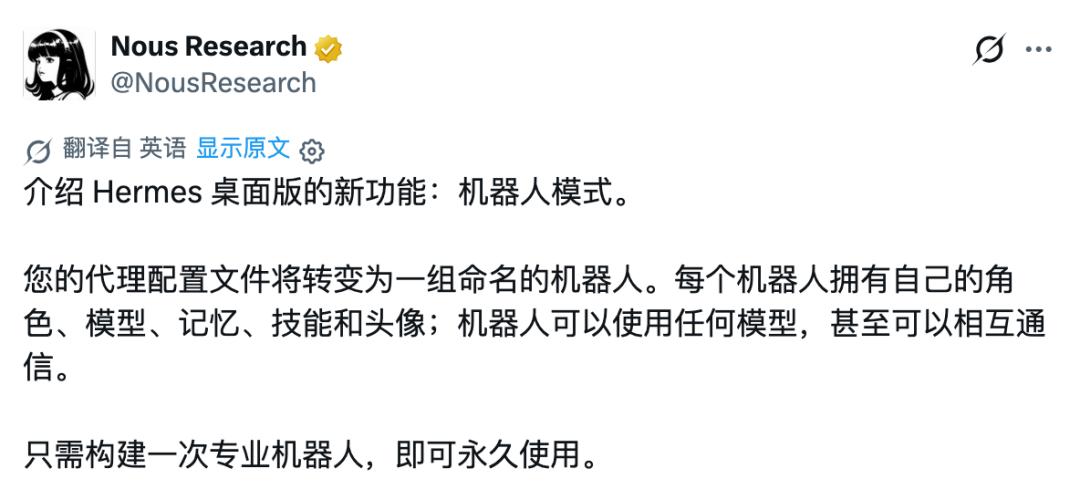
Users are still asking: "What on earth is the difference between an Agent and ChatGPT?"
Product managers have already started researching:
"One Agent is not enough, why not recruit several more Agents for it?"
01. AI not only learns to work, but also starts to equip itself with computers
There is another very obvious change this year: Agents have begun to have their own computers.
In the past, when we talked about Agents, in most cases they were models calling APIs, browsers, MCP and various tools. Later, people found that if you really want AI to complete a whole task from start to finish like a human, the simplest and most straightforward way is to give it a computer.
As a result, capabilities such as cloud computers, virtual desktops, and Computer Use have emerged intensively. AI can open web pages, operate software, process files, and fill in spreadsheets on its own, with a single task running for several hours or even longer. Users do not need to stay in front of the chat box all the time, and some products can even throw tasks directly to the cloud, so the tasks continue to run even if the local computer is turned off.
This step is actually quite critical. In the past, we said to AI: "Help me look this up." Then it became: "Help me finish this matter." Now it is more and more like:
"This matter will be under your charge from now on."
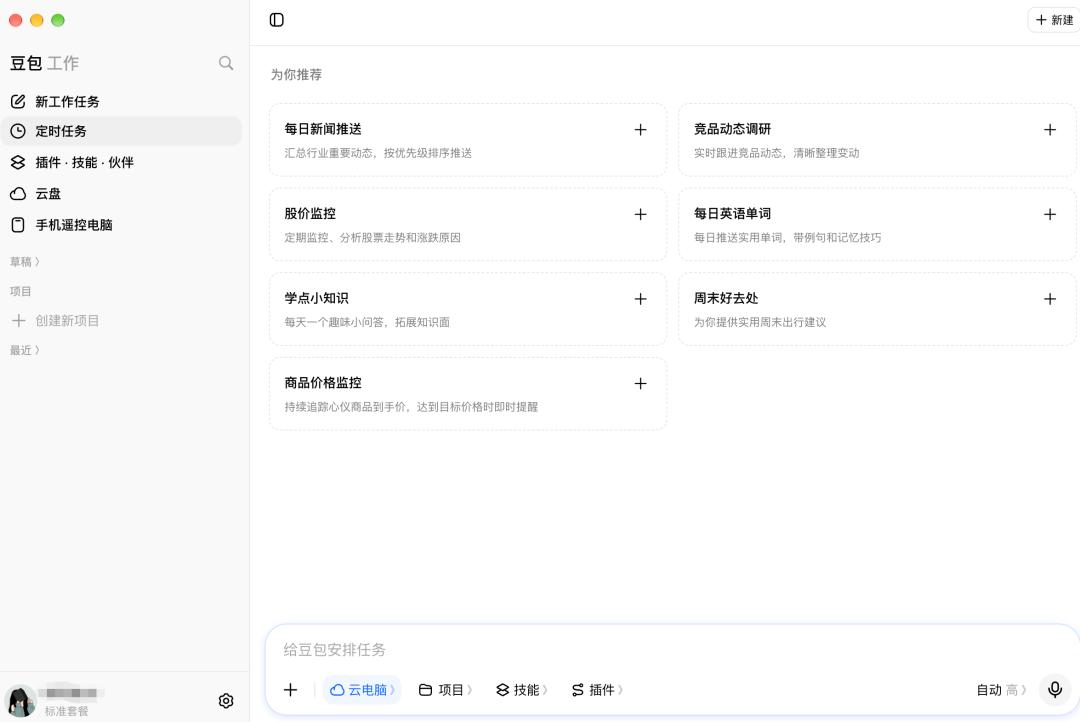
China has also been vigorously developing this field in the past six months. Doubao Work has integrated capabilities such as multi-Agent parallelism, computer operation, and cloud computers, and in September it added a "plan mode" that is more suitable for long-horizon tasks; Qianwen Office can now run scheduled tasks directly in the cloud, and the tasks continue to execute even if you close the browser or even log out; WorkBuddy also has automation capabilities, which can process repetitive tasks such as daily reports and data sorting according to the set time.
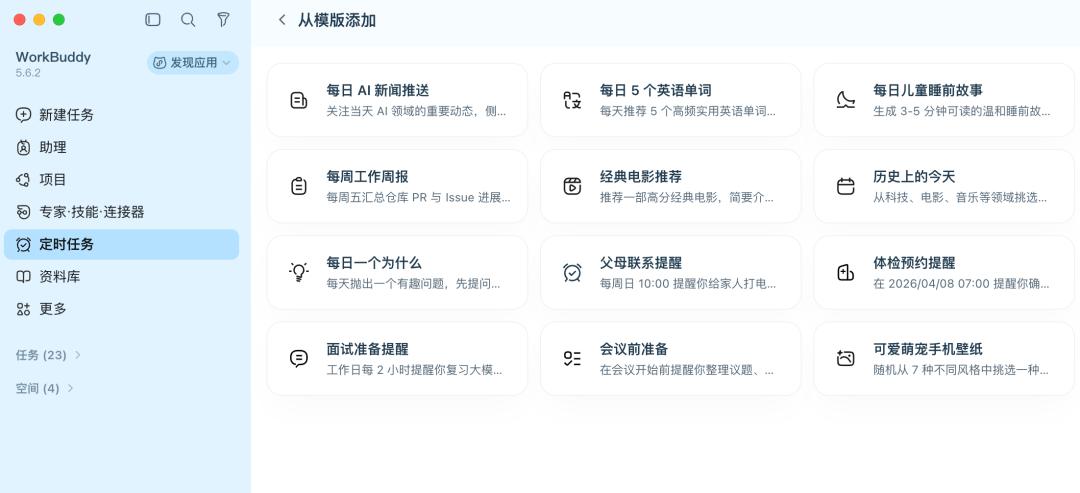
AI is becoming more and more like an intern in a company.
The only difference for this intern is that it does not require weekends off, nor does it ask what time to get off work.
02. After going around in circles, major tech companies start to tear down walls again
As more and more Agents are developed, major tech companies soon encounter a new problem:
There are too many products.
Chat is for chatting, Code is for writing code, Work is for office work, Deep Research is for research, and Agent is another separate entry. Let alone ordinary users, even I, who keep a close eye on AI products every day, sometimes have to pause for a few seconds after opening a major tech company's client: where on earth should I enter to complete the task I need to do today?
Therefore, a very obvious trend emerged in the middle of this year: major tech companies began to re-integrate the previously separated capabilities together.
OpenAI launched ChatGPT Work in July, bringing long-duration, multi-step tasks directly into ChatGPT. The official product structure is now very clear: Chat is responsible for daily conversations, Work is responsible for complex tasks and final deliverables, and Codex continues to undertake development work. The three are not completely merged, but they have been rearranged around the general entry of ChatGPT, and Work can also execute via Scheduled Tasks according to time and trigger conditions, and even continuously monitor changes.
Anthropic's recent moves are more typical. On September 16, it directly merged Claude Chat and Claude Cowork into one single Claude. In the past, you had to judge "am I here to chat or to get work done", but now you don't need to, just throw your requirements into the same conversation, and Claude will decide how to handle it itself. Capabilities that used to belong more to Cowork, such as research, reports, spreadsheets, and PPTs, can all be called directly from ordinary conversations. Claude Code currently retains its independent coding agent form, but within Claude's main product, the boundary between Chat and Work has been basically erased.
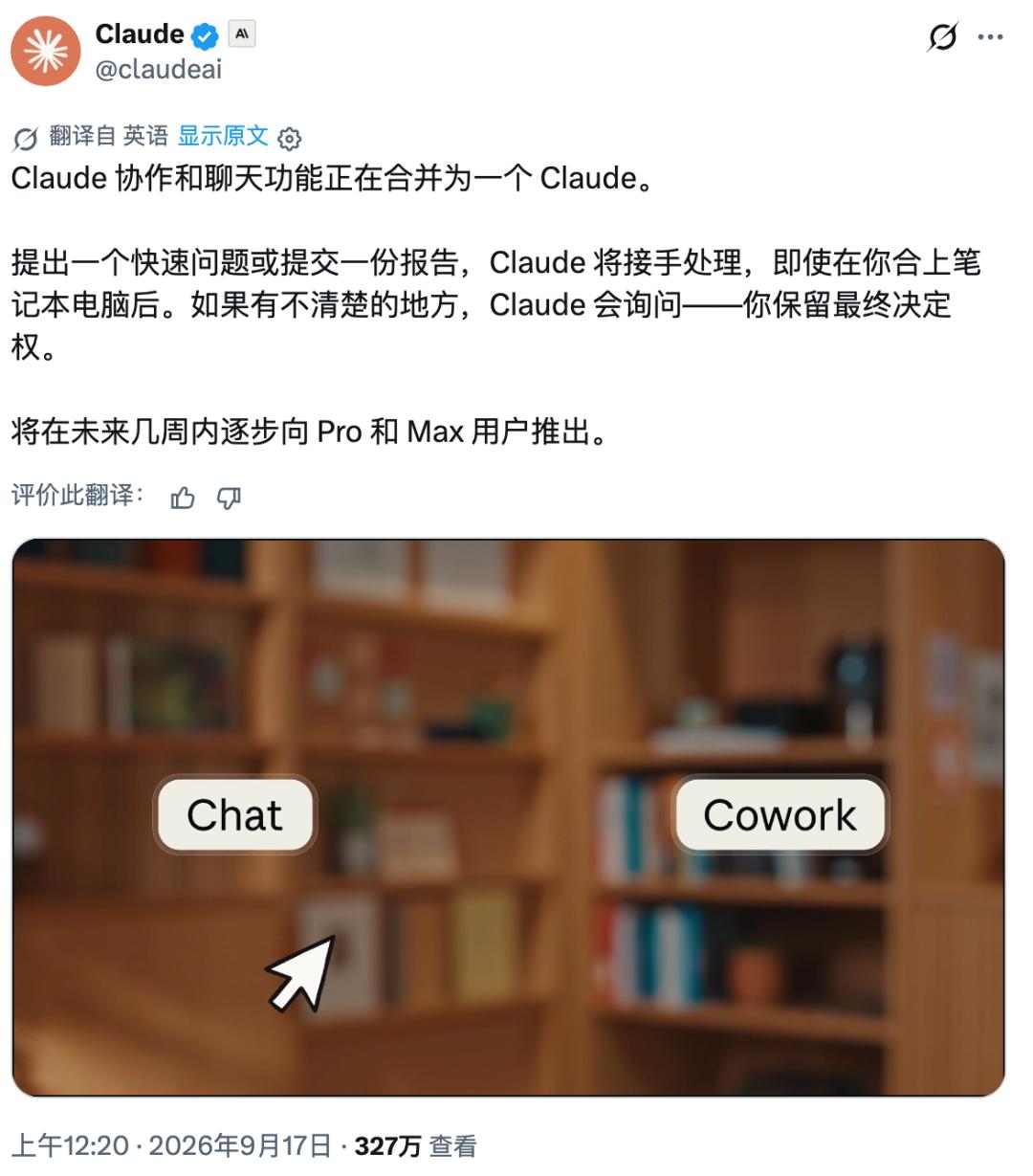
For a period of time this year, AI products were particularly similar to the real estate industry.
At first, people frantically built buildings: one building for Chat, one for Code, one for Work, and another building for Agent. After building for a while, people suddenly found that:
Users can't find the elevator anymore.
So recently, people have started to tear down walls, connect different sections, and merge entries.
Users finally feel that they have understood: "Oh, in the future there will be a super AI that can do everything including chatting, office work, and code writing."
Then Grok Bot and Muse came along.
03. Just when you finally understand Agents, Personal AI Agent comes along
In August, SpaceXAI released Grok Bot.
The official definition for it is very straightforward: "your team of always-on agents" — a group of AI colleagues that are always online.
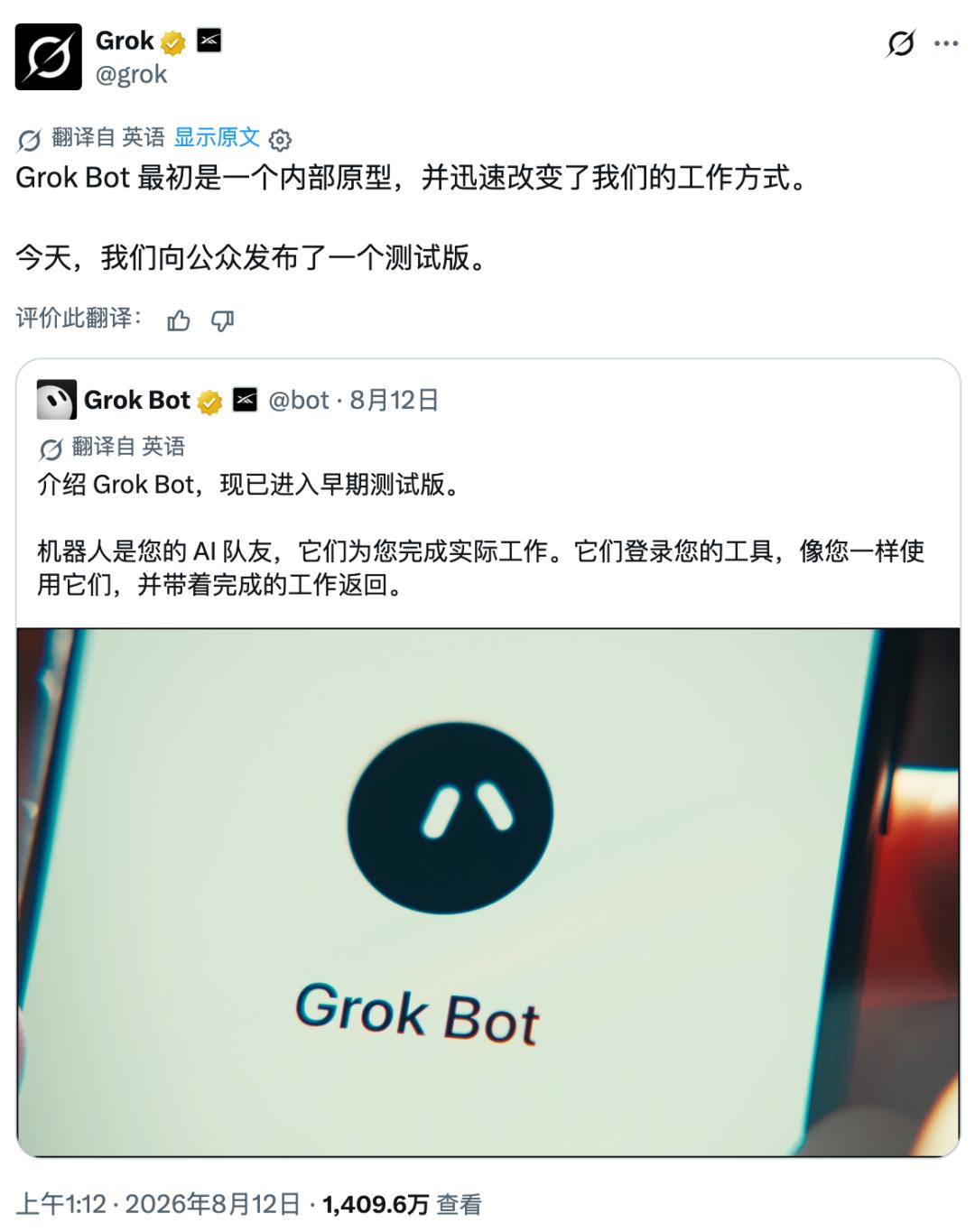
Each Bot has its own computer, can log in to the software you usually use, work across apps, email and various tools, and stay online 24 hours a day. You can have a sales Bot, a marketing Bot, an operation Bot, or even a Bot dedicated to fixing bugs. After you assign the task to it, you don't need to supervise it step by step, it will proceed on its own and come back to you only when your confirmation is truly needed.
This is no longer the old scenario of "using AI only when I have something to do", it feels more like:
The company has really hired several new employees.
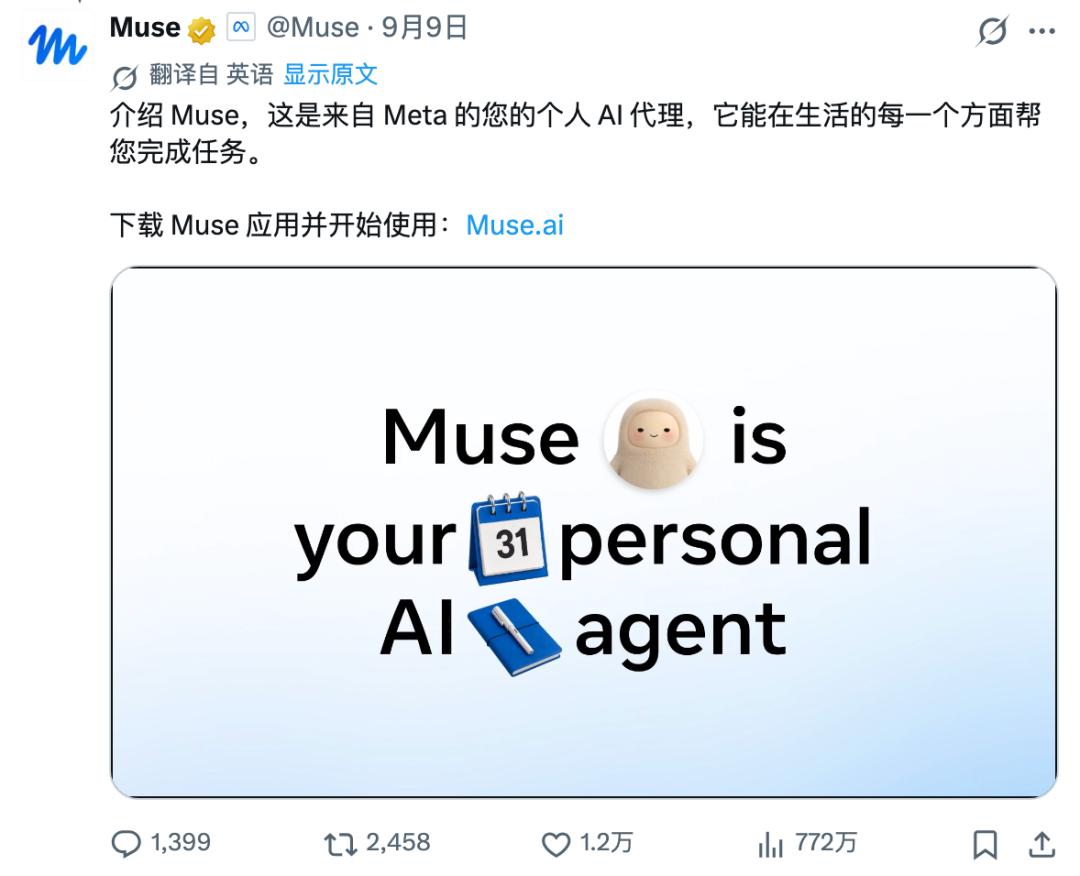
Shortly after that, on September 8, Meta launched Muse, and directly named this new product category:
Personal AI Agent.
Muse has a long-existing Muse Secure VM, which is equivalent to Meta equipping users with an AI-exclusive computer in the cloud. It can browse web pages, process emails, book itineraries, go shopping, remember your long-term goals, and even take the initiative to give suggestions based on past information.
The feeling Grok Bot gives you is:
"I have several AI colleagues working for me."
Muse is more like:
"There is an AI butler following me all the time."
At the start of the year, people were still enthusiastically researching how to raise lobsters, and more than half a year later, AI is ready to follow you 24 hours a day.
This evolution speed is somewhat unreasonable.
04. OpenAI sees it: why did the track change again?
Then there were the breaking news in the past two days.
Some developers dug out a previously unseen name from ChatGPT's related pages and configurations:
「o」
There is also a very critical introduction next to it:
"o, your always-on assistant."
Your resident AI assistant.
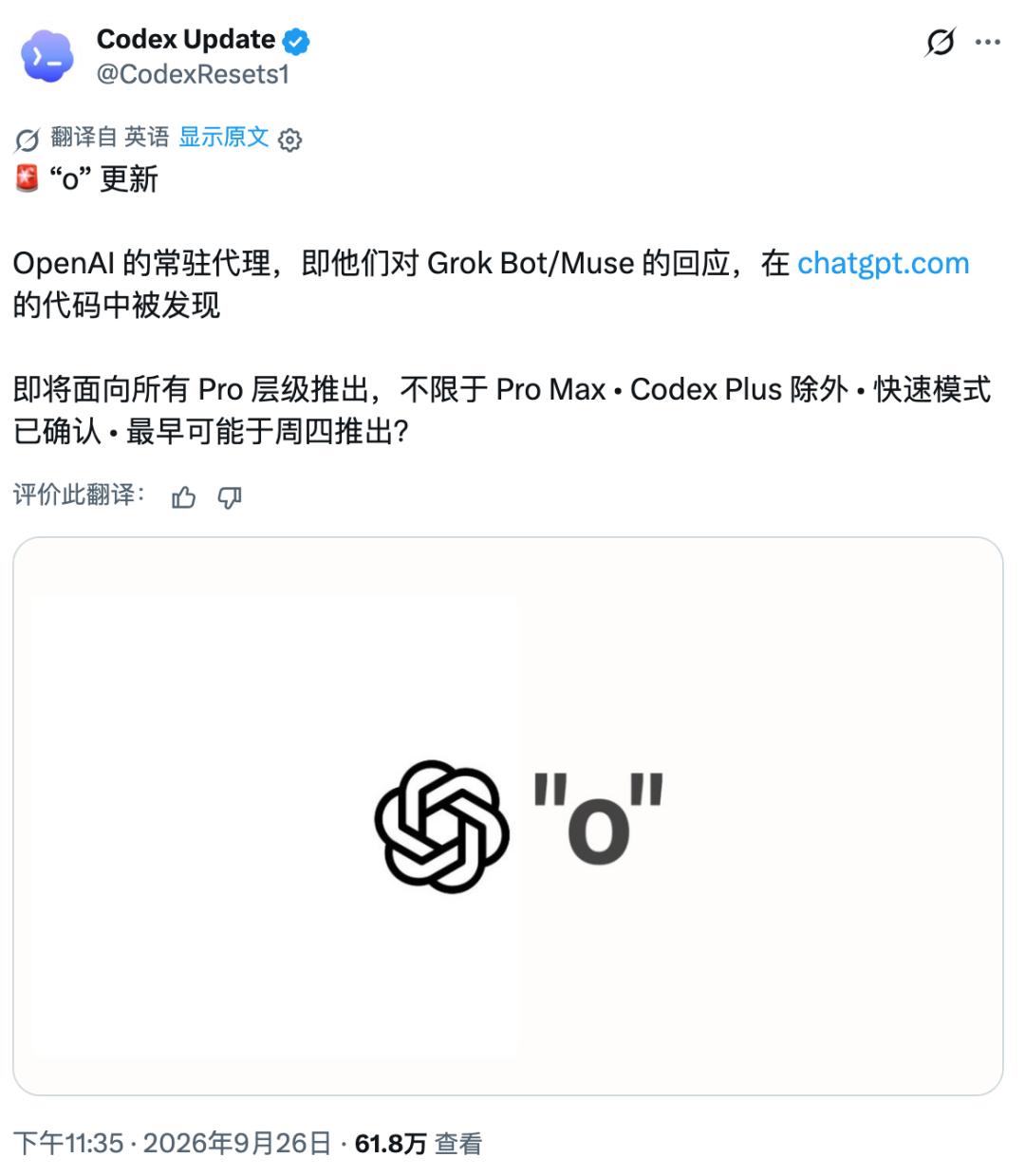
OpenAI has not yet officially announced it, so we cannot be certain about the final name of 「o」 and what specific capabilities it will have. What is relatively certain for now is that screenshots show it appearing in ChatGPT Pro subscription information, and this name also appears in related configurations.
But combined with the whole product roadmap this year, I now tend to think that: It is most likely not a new model, nor will it necessarily become an independent App at the same level as ChatGPT, but an Always-on Agent capability that OpenAI is preparing to add to ChatGPT.
This is actually very reasonable.
OpenAI already has ChatGPT as its super entry, so there is no need to develop a new App and ask users to download it again. ChatGPT has your historical conversations, Memory, files and various plugins; Work can already continuously handle complex tasks, and Scheduled Tasks can even run or monitor changes according to plans and triggers. What is missing now is to push these components one step further, so that an AI can truly stay resident.
In the future, you may not need to open ChatGPT every morning and ask:
"What happened in the AI industry last night?"
You can tell it a few months in advance:
"Please keep an eye on important updates in the AI industry for me, and come to me only when there is content suitable for writing articles."
Then one morning, ChatGPT will come to you on its own:
"Last night a company launched a new Agent, and I think you will be interested in it."
Thinking of this, I am even a little worried.
In the future, even the little break time I spend browsing news to find topics in the morning may be taken over by AI.
The timing is also very coincidental, OpenAI DevDay 2026 is scheduled for September 29. We will know in two days whether this 「o」 will make its debut there.
05. Major domestic tech companies have also reached the threshold
China has not been idle on this path. Alibaba's Qianwen Office can already let tasks hang in the cloud for a long time and execute according to plans; Doubao Work is continuously adding capabilities to cloud computers, multi-Agent, computer operation, and long-horizon tasks; Tencent WorkBuddy is also developing automation and periodic tasks. Most of these domestic products currently focus on "automatically working at the specified time", and there is still one step to go before achieving the truly long-term residence, continuous environmental observation, and autonomous action decision-making capabilities of Muse and Grok Bot, but obviously all players are moving in the same direction.
Therefore, what OpenAI is catching up with this time is not just the two products Grok Bot and Muse.
Major tech companies at home and abroad are all trying to move AI from the "you tell it to work" stage to the "this matter is under its long-term charge" stage.
06. Users: Wait a minute, I haven't even learned to use OpenClaw yet
Looking back at the past six months of this year, it is really surreal.
At the start of the year, OpenClaw became a hit, and everyone started "raising lobsters"; before you even figured out how to raise your lobster, products like Hermes let you raise a whole group of Bots. Then Agents began to have long-term memory, Skills, and scheduled tasks, and later they were even equipped with their own computers. Just when you finally accepted that "AI can work on its own", major tech companies thought Chat, Work, and Code were too scattered, and started to tear down walls and merge them again.
Just when users thought they roughly understood, Grok Bot and Muse came out and talked about Always-on Agent, Personal AI Agent.
Now OpenAI is also preparing to follow up.
The biggest bug of AI products this year may no longer be that AI is not smart enough.
Instead: product managers are running too fast.
Users just learned to use Chatbot, and the industry started talking about Copilot; just when they figured out Copilot, Agents came along; before they thoroughly researched Agents, they started raising lobsters; just after installing the lobster, they were told that AI needs to have its own computer; when you finally learned how to assign tasks to Agents, Personal AI Agent came along:
You don't need to assign tasks every day, it will always be there from now on.
Sometimes I even wonder if major AI tech