Amodei secretly learned professional skills from Yao Shunyu, and Altman did the same from Liang Wenfeng.
As the saying goes, all writings in the world are derivative, and the key lies in whether you can draw on others' achievements properly instead of copying mechanically.
At first glance at the newly released Opus 5.5 and GPT-6 Luna, you can clearly see the distinct imprints of Yao Shunyu and Liang Wenfeng on both models.
Perhaps because both companies have pushed pre-training to its extreme, the two new models have chosen to open up new battlefields to improve model intelligence and reduce computing power costs.
Opus 5.5 makes breakthroughs on the context side, while GPT-6 Luna makes breakthroughs on the cache side.
I am very familiar with this path! One corresponds to Hunyuan, the other corresponds to DeepSeek!
But it has to be said that Amodei and Altman have replicated these ideas quite well.
Amodei learned from Yao Shunyu in secret
Let's look at a set of figures first. In the Artificial Analysis Intelligence Index, there is a statistic that counts "the average number of tokens output to complete one question".
On this list, Claude Opus 5.5 in the max mode outputs an average of 119,000 tokens per question, of which 84,000 are for "thinking" and 35,000 are for the final answer. By comparison, OpenAI's GPT-6 Astra only uses 27,000 tokens in the same mode.
The traditional path for large models to improve intelligence level is to pile up data and computing power in the pre-training stage, embed intelligence into the model weights, and achieve one-time training for repeated use.
Models developed along this path hardly do extra thinking during inference. The higher the value of training data, the higher the intelligence level of the model.
But the traditional path cannot handle unseen question types, as the generalization of traditional models is interpolation. It performs well near the distribution covered by training data. Once it encounters an unseen question type or a problem that requires multi-step reasoning, it starts to make up random contents. Since its "intelligence" is entirely stored in the weights, it cannot generate the patterns that the weights have never learned during inference.
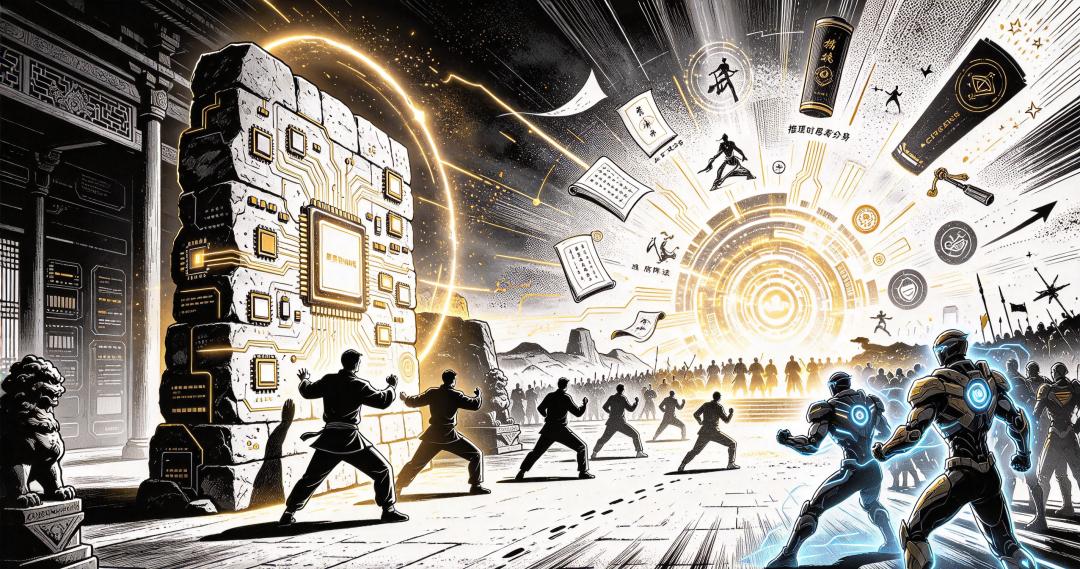
It is just like you have practiced boxing against a wooden stake for a long time, only to find that on the real battlefield, the opponent will not stand still, and they will use weapons.
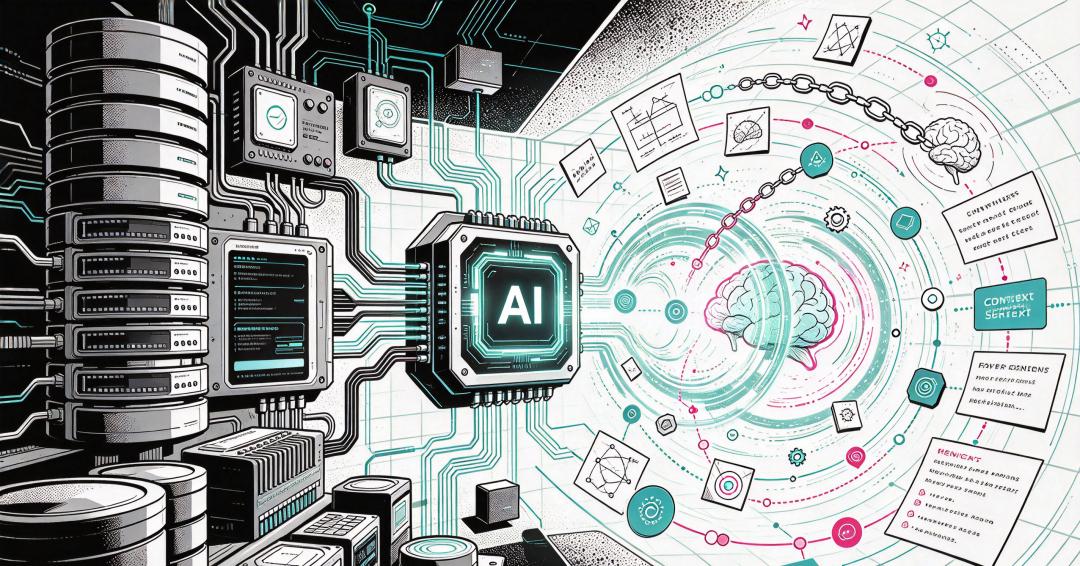
The other path is the test-time path. The model after training is only a semi-finished product. When it actually answers questions, you can let it generate a large section of reasoning process first, and the longer it thinks, the better the answer will be. Intelligence no longer only comes from the weights, but also from the real-time reasoning during each call.
In other words, intelligence is moved into the context.
Opus 5.5 is exactly following this test-time path.
The official has released a statement that unless otherwise specified, all performance results are obtained under the mode of "adaptive thinking at max effort".
Starting from this generation, Opus 5.5 no longer provides the option to turn off the thinking mode, which implicitly indicates that the reasoning process is an integral part of the model.
The trade-off is that the thinking process will consume more tokens, and the cost will surge with the increase of task difficulty. The core logic of Opus 5.5 is that all trainable data has been fully processed, and the marginal return of pre-training has peaked, so the increment of intelligence can only be obtained from the reasoning stage.
Yao Shunyu put forward this logic of extracting intelligence from context very early.
In 2023, Yao Shunyu proposed the concept of Tree of Thoughts, whose essence is a typical test-time mechanism.
During reasoning, the model expands multiple lines of thought, and searches for the optimal solution while thinking.
In the same year, he also proposed the ReAct architecture, which enables the model to perform "reasoning" and "action" alternately.
In April 2025, Yao Shunyu published the blog post *The Second Half*.
The core judgment of the article is that in the first half of AI development, the competition focuses on "training methods and models", such as larger parameters, more data, and stronger computing power. In the second half, the competition turns to "how to use and evaluate models", and the increment is shifting from "training" to "reasoning and action".
He wrote in the article that "only after we integrate reasoning into the action space, can we obtain the ability to flexibly allocate test-time compute for different decision-making tasks".
Yao Shunyu calls "thinking" a kind of "strange action".
In reinforcement learning, actions are used to change the environment. For example, if you open a box, the state of the box will change. The meaning of action is to "change the world in exchange for rewards".
But thinking does not work this way. Even if you think ten thousand times, the box will not open by itself.
Yao Shunyu gave an example in the article: there are two boxes, one contains 1 million dollars and the other is empty. In this case, the expected return is 500 thousand dollars.
If you add countless empty boxes into the scene, the expected return will get lower and lower, because you need to pick the box with 1 million dollars from an infinite number of boxes.
However, after adding the "reasoning" action, the model becomes more powerful and can pick the 1 million dollar box more easily.
Yao Shunyu's explanation is that you have encountered those "empty boxes" in your daily life and various games. The process of selecting these empty boxes is itself preparation for picking the box with money inside.
Opus 5.5 is the engineering implementation of Yao Shunyu's idea.
Altman learned from Liang Wenfeng in secret
If the core focus of Opus 5.5 is "how to think", then the core focus of GPT-6 Luna is "how to think at low cost".
The pricing of GPT-6 Luna is $0.1 per million input tokens and $0.5 per million output tokens, which is directly 50% lower than that of the previous generation GPT-5.6 Luna.
If the cache hits, the price for reading from the cache is only $0.01 per million tokens, which is 90% cheaper than the standard input price.
Every time the model is called, it needs to "read through" all the context you provide, including system prompts, long documents, and historical dialogues, without missing any single part.
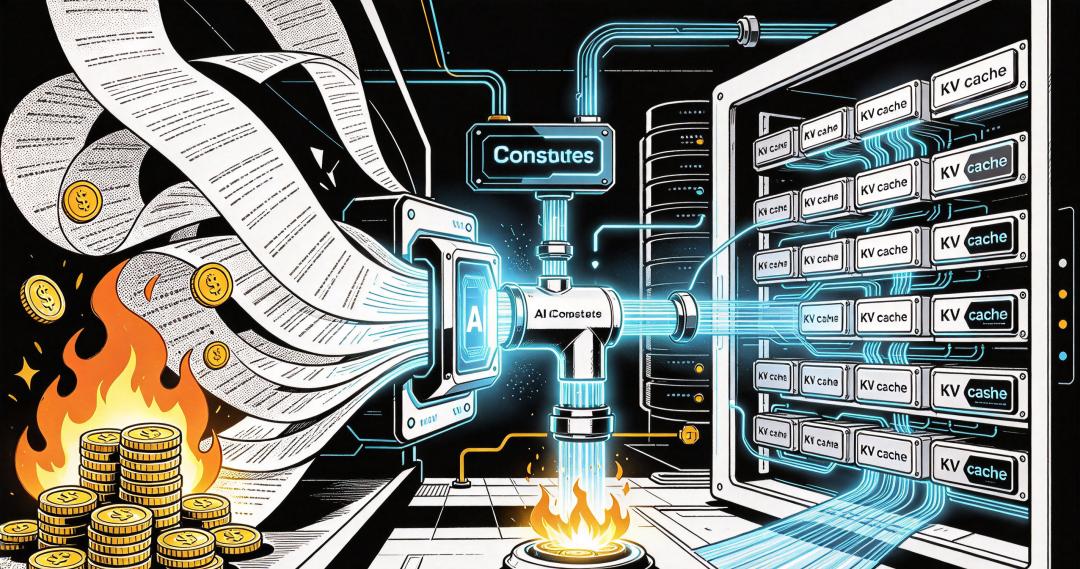
But this context has extremely high repetition rate. For each additional step the Agent takes, all the previous content needs to be re-read, which makes long context a money-burning black hole.
The cache reuse mechanism (prompt caching / KV cache reuse) adopted by GPT-6 Luna is designed to solve exactly this problem. The same section of context is stored after being calculated once, and you can directly "read from the cache" without recalculation next time. In this way, the repeated part changes from the most expensive part to the cheapest part.
But DeepSeek has already implemented this mechanism long ago.
On August 2, 2026, DeepSeek launched "Context Caching on Disk", which caches repeated content on the disk array, and directly retrieves the content to skip recalculation when cache hits.
The official announcement at that time stated that the cache hit price was reduced to 0.1 yuan per million tokens, which is exactly 90% cheaper than the cache miss price, the same as GPT-6 Luna.
For the V4 Flash model, the price is 0.02 yuan per million tokens for cache hits and 1 yuan per million tokens for cache misses, a gap of 50 times.
GPU video memory is very expensive, so the capacity of KV cache that can be stored is limited. But hard disks are very cheap and have large capacity, so storing KV cache on hard disks can greatly reduce the cost.
The prompt caching mechanism implemented by OpenAI now shares almost the same principle as DeepSeek's solution: the same prefix is stored after being calculated once, and can be directly read next time.
Not only the pricing, but also the architecture is similar.
The context window of GPT-6 Luna is 1.05 million tokens, and that of DeepSeek V4 is 1 million tokens, which are almost aligned.
However, for the KV cache of 1 million context tokens, most models cannot support it if calculated with the standard attention mechanism.
To solve this problem, DeepSeek adopted the MLA architecture, which jointly compresses Key and Value into a low-dimensional latent space, caches the latent vector, and restores it through upsampling when in use.
The technical report of DeepSeek-V2 mentions that MLA reduces the KV cache by 93.3% and increases the generation throughput by 5.76 times. For V4, DeepSeek further integrates compressed sparse attention and heavily compressed attention, so under the 1 million token context, the KV cache of V4-Pro is only 10% of that of the previous generation V3.2.
In addition, OpenAI has also "learned" another trick: speculative decoding.
OpenAI stated in its official blog that it runs a smaller draft model, which "guesses" the next few tokens in parallel with the main model, and then the main model verifies these tokens in batches.
If the guess is correct, the model can output multiple tokens in one forward propagation. According to OpenAI's official statement, this improvement increases the token generation efficiency by more than 15%.
This idea was already implemented in DeepSeek V3 in 2024, and DeepSeek adopted MTP (Multi-Token Prediction) technology.
The implementation is to directly mount an MTP head behind the backbone model, which is trained together with the backbone during the training process and shares the hidden state of the backbone. During inference, this head knows the internal state of the main model clearly, so it can make accurate guesses with high verification pass rate.
This head can be directly removed without affecting the backbone, or it can be retained as a draft generator.
OpenAI actually mounts an independent small model externally to generate drafts. The two models run separately, and the draft model does not know the internal state of the main model, and the main model only verifies the guesses after they are generated.
Although the methods are slightly different, the core idea is the same: the small model guesses first, and the large model verifies in batches, so as to convert serial decoding into parallel decoding.
All writings in the world are derivative
In the past, Silicon Valley defined the development path of models. Due to limited computing power, domestic AI companies would convert these definitions into lower-cost solutions.
This time, the situation is reversed. Both the academic paradigm and engineering paradigm are created by Chinese companies.
The US tech giants are only responsible for the final step: turning these ideas into products and selling them to the whole world.
In the past few years, large tech companies have invested all their resources, talents and attention in the main battlefield of pre-training.
Everyone piles up data and computing power and ranks on various leaderboards according to the Scaling Law. However, leading companies have fallen into the dilemma that Anthropic is facing now: high-quality data has been almost fully trained, and the marginal return of model pre-training is decreasing.
At this time, the industry increment will naturally appear in the second battlefield, such as how to think during inference (test-time compute), how to use context (context learning), and how to reduce the cost of long context (caching/MLA/sparse attention).
This is just like the martial arts world: major sects have spent decades practicing one set of martial arts, but after a certain point, they find that their skill level can no longer be improved. Instead, those previously unnoticeable "unorthodox methods" can bring better improvement to their skill.
There is also a counter-intuitive point here: the advantage obtained in the main battlefield will become a "burden" in the second battlefield.
The party that holds the most computing power and data is exactly the one that has the least motivation to optimize cost and efficiency. Leading companies have formed the mindset that "since I can solve the problem by piling up GPUs, why bother to think of smarter solutions". As a result, saving video memory and saving cost has never been their priority, and even regarded as something "not decent enough".
Only the party that faces tight computing power supply will spend every penny in the most effective way.
DeepSeek's MLA, disk caching and sparse attention are essentially driven by the idea that "poverty forces people to seek change".
In the past, these were only "alternative solutions due to insufficient funds", the last resort. But when the whole industry starts to compete for efficiency, these "unrefined local methods" suddenly become the most valuable core competitiveness.
That is why the current situation that overseas companies learn from domestic companies in secret appears.
This article is from the WeChat Official Account "Letter AI", author: Miao Zheng, published with authorization from 36Kr.