The 1.6 billion-yuan exoskeleton market is red-hot: hospitals are making huge profits, yet the best-selling product is the thousand-yuan "hiking pants"
IDC's "China Exoskeleton Robot Market Share, 2025" released in August 2026 shows that in 2025, the sales revenue of China's exoskeleton robot market exceeded 1.6 billion yuan, with a shipment volume of about 26,000 units; among them, medical rehabilitation accounted for about 1.42 billion yuan / 3,200 units, taking up 88.3% of sales revenue and 12.5% of shipment volume; consumer assistance accounted for about 110 million yuan / 19,000 units, taking up 6.8% of sales revenue and 72.8% of shipment volume; industrial applications accounted for about 78 million yuan / 3,800 units, taking up 4.9% of sales revenue and 14.8% of shipment volume.
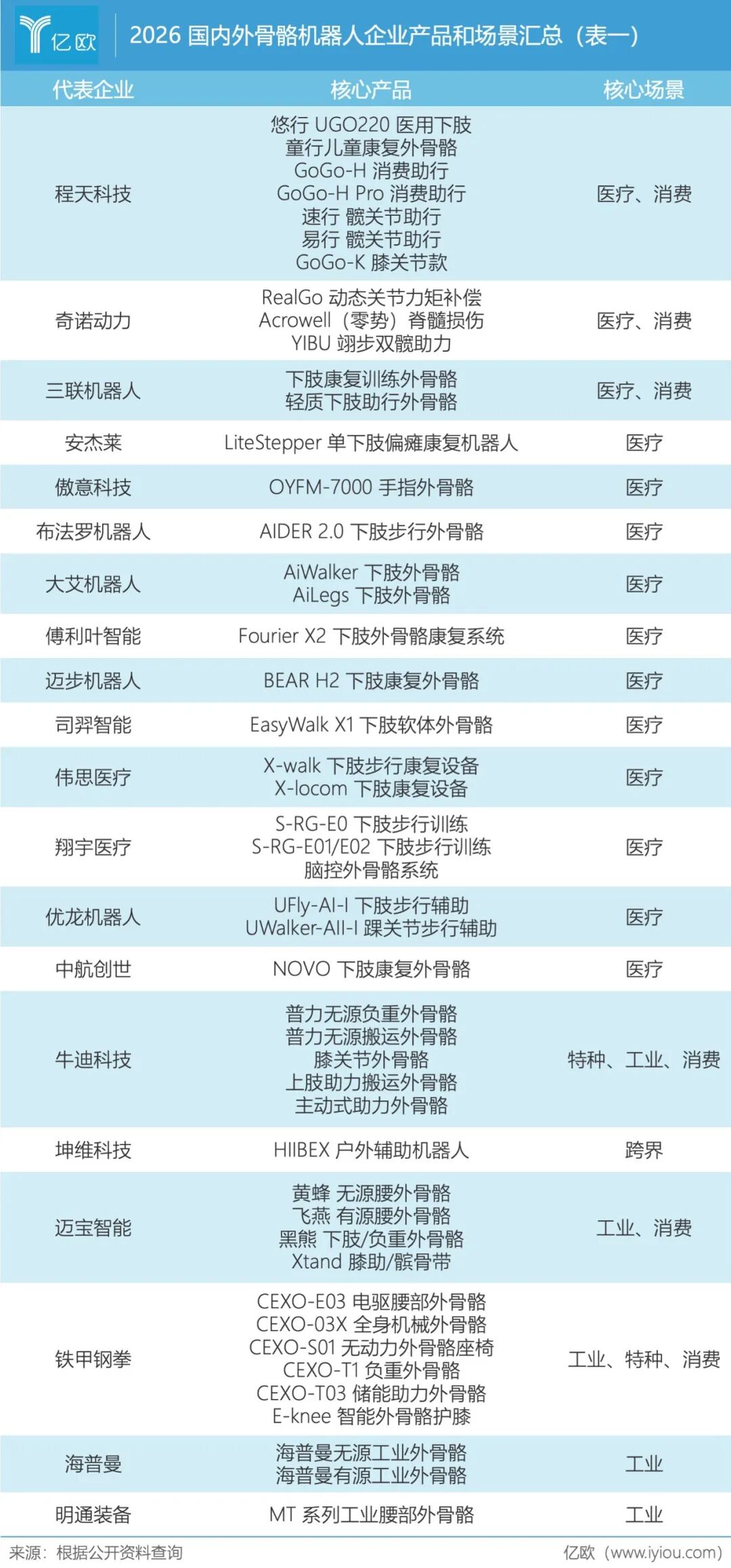
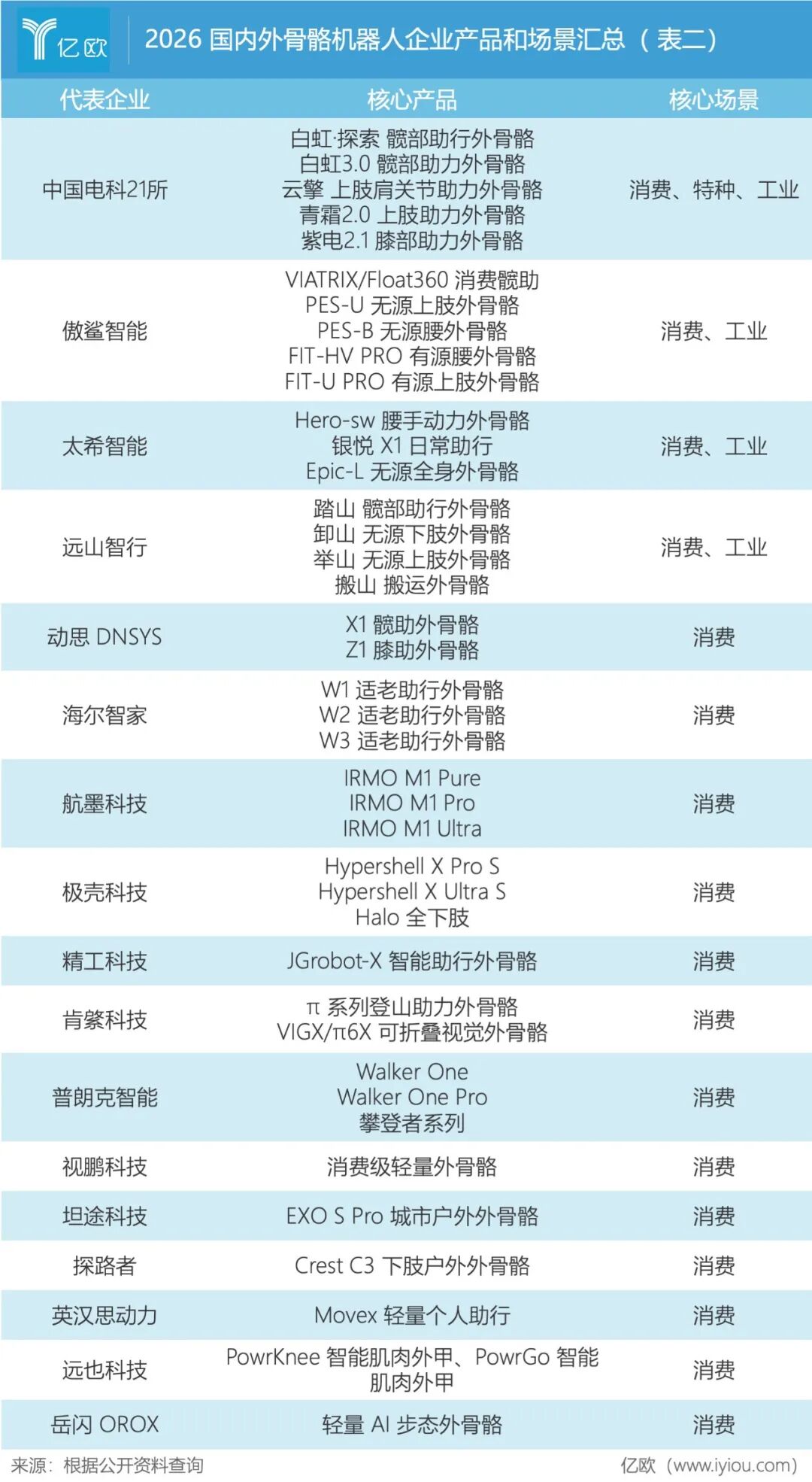
Industrial applications cover logistics and warehousing, automotive manufacturing, electric power and energy, construction, emergency rescue, etc. In 2026, a number of companies whose main business is not exoskeletons independently developed complete machines to enter the market, and the supply side began to stratify by scenarios.
This is not a story of valuation based on general narratives like humanoid robots.
The commercialization of exoskeletons is more like a hardware industry that "collects revenue by separate scenarios": hospitals pay for clinical effectiveness and registration certificates, families pay for light weight and affordable prices, factories pay for reduced work injuries and improved work efficiency, and scenic spots and outdoor scenarios pay for experience and repurchase.
Medical treatment is still the revenue foundation, but the business is very "asset-heavy"
In 2025, the sales revenue of medical rehabilitation exoskeletons was about 1.42 billion yuan, accounting for 88.3% of the total, but the shipment volume was only about 3,200 units, accounting for 12.5%. High unit price, low output, and strict supervision are the essence of this track.
A relatively stable hospital channel pattern has been formed among leading players.
Fourier Intelligence deploys lower-limb, upper-limb rehabilitation and exoskeletons, force feedback and assessment systems, and delivers solutions based on intelligent hospital rehabilitation programs. Aiderobot's lower-limb exoskeleton is used for gait training of lower limb movement disorders, and has obtained relevant Class II medical device registration and been applied in hospital rehabilitation scenarios. CTek Medical's medical lower-limb exoskeletons such as UGO and children's rehabilitation products such as Tongxing are being advanced according to the available models, while its consumer mobility assistance products are launched under models such as GoGo-H.
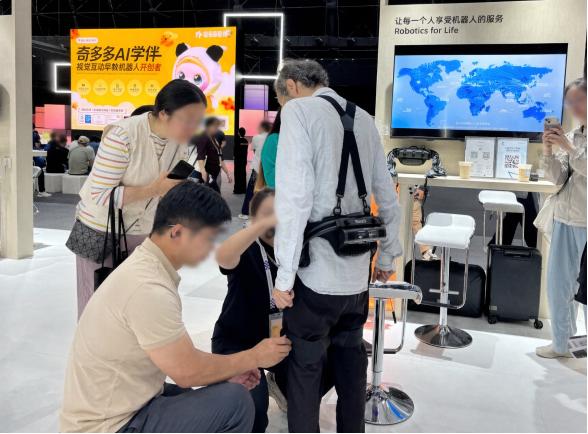
Weisi Medical deploys lower-limb walking and neurorehabilitation equipment; Xiangyu Medical deploys the brain-computer rehabilitation direction of EEG acquisition - decoding - exoskeleton execution, has disclosed Class II equipment such as electroencephalographs and exhibited new brain-controlled exoskeleton products; Miracle Robotics uses self-developed flexible actuators for lower-limb rehabilitation, covering hospital - community - home rehabilitation and brain-computer interface integration; Youlong Robotics' UFly-AI-I lower-limb walking assistance and UWalker-AII-I ankle walking assistance have both obtained Class II registration, adopting flexible tendon drive, covering in-hospital gait and ankle rehabilitation.
Kino Dynamics conducts independent R&D by scenario lines: ReGait is for fine gait training and assessment, RealGo provides dynamic joint torque compensation and gait phase recognition for unilateral movement disorders, and Acrowell is for spinal cord injury. Buffalo Robotics' AIDER lower-limb walking exoskeleton has obtained NMPA Class II innovative certification, supports EEG, EMG and hybrid triggering, is used for walking training for spinal cord injury, stroke and other conditions, and its Class III registration clinical trial is in progress, focusing on severe walking disorders. Angel Robotics' LiteStepper and other products focus on single lower-limb hemiplegia rehabilitation, AVIC Chuangshi, Ruihan Medical are advancing projects in regional markets and segmented indications.
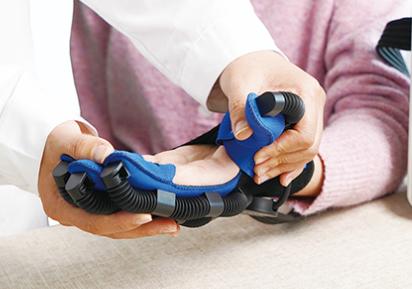
Siyi Intelligence's hand function rehabilitation robots such as SY-HR08 use power gloves and data gloves, with flexible pneumatic lines covering finger and wrist joint training.
The barriers on the medical end lie in registration certificates, clinical endpoints and reimbursement paths. Some regions have included service items such as "exoskeleton rehabilitation training" in medical insurance or long-term care insurance pilots, which usually reimburse in-hospital treatment service fees, and equipment purchase reimbursement is implemented according to the local catalogue. Medical exoskeletons are still a "high value, low penetration" business in the short term, and volume growth depends on the addition of rehabilitation departments and the extension of long-term care insurance payment.
This also explains why medical exoskeleton companies generally have no difficulty in financing but face challenges in making profits: the average cycle of registration certificates is 3-5 years, and the entry of a single device into the hospital needs to go through bidding and price coding, with slow payment collection but strong customer stickiness. Once a province includes exoskeleton rehabilitation in medical insurance payment or long-term care insurance catalogue, the sales volume in this region will see a pulsed growth within 6-12 months. In contrast, the consumer end does not require registration certificates, but there is no medical insurance as a backup, and it relies entirely on C-end consumers to pay, so there is a temperature difference of "hot leasing in scenic spots, cold household self-purchase".
The consumer end has the fastest shipment volume, but price wars have already emerged
Consumer assistance recorded a shipment of about 19,000 units in 2025, accounting for 72.8%; but the sales revenue was only about 110 million yuan, accounting for 6.8%. Low average unit price and rapid growth are typical characteristics of the stage of "trading scale for public awareness".
Shell Technology is a sample of consumerization: its Hypershell product line adopts a lightweight modular design, achieved initial volume through overseas crowdfunding, led in consumer-grade sales in 2025, and in 2026, its Series B+ round of investment was joined by investors including Ant Group and Meituan Dragon Ball, with products covering outdoor and commuting scenarios ranging from 5,000 yuan to more than 10,000 yuan.
Kenqing Technology's π series mountaineering assistance products are deployed in Taishan, Huangshan, Huashan and other scenic spots for experience-based placement, and the 80 yuan / 3 hours leasing model undertakes market education, but the company itself also sells consumer complete machines, not just acting as a lessor.
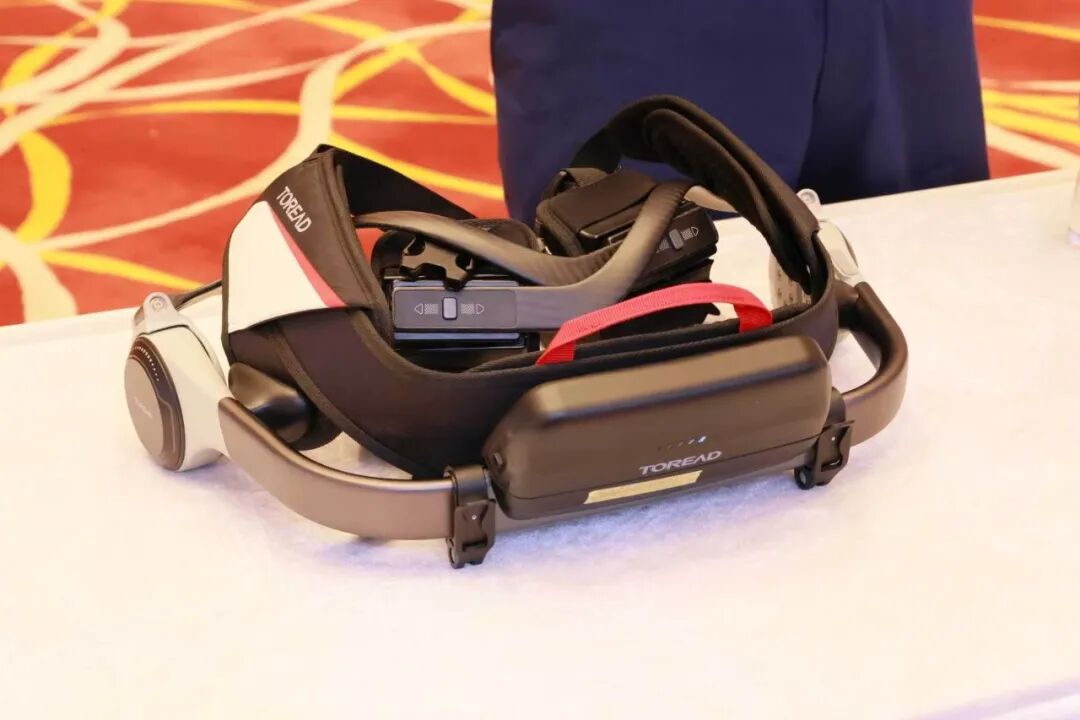
Toread, as an outdoor brand, develops lower-limb exoskeletons such as Crest C3, which weighs 1.8kg, supports end-side gait and multiple modes for mountaineering and hiking, and transforms its outdoor channel advantages into hardware advantages.
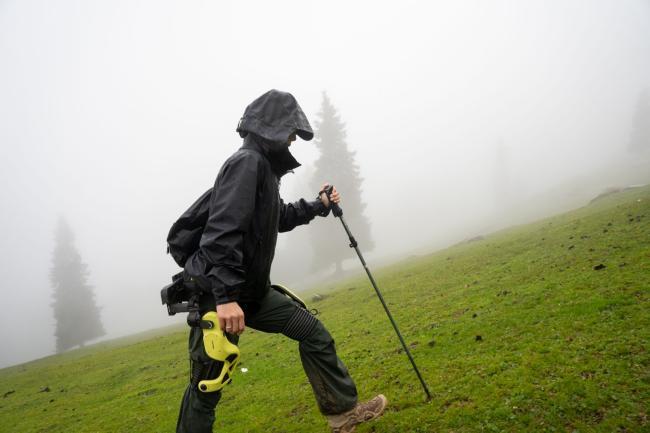
Ossur extends from industrial exoskeletons to the VIATRIX consumer line, with Float360 floating hip, active motor, priced at 6,000 to 8,000 yuan; CTek's Suxing and Yixing products extend the medical brand to hip mobility assistance, priced at 1,000 to several thousand yuan; Haier's W3 adopts carbon fiber + titanium alloy main body, which is trialed through experience stores and cultural tourism channels in some cities; NAVEE cuts into the exoskeleton track from the intelligent mobility category, with 1.8kg weight, end-side algorithm, focusing on urban and outdoor scenarios. Shipeng, Yue Shan OROX and other new consumer brands have entered the market one after another.
Hybridkin independently develops lightweight mobility assistance and gait algorithms, and its Movex devices were initially positioned for home rehabilitation and mobility assistance for the elderly.
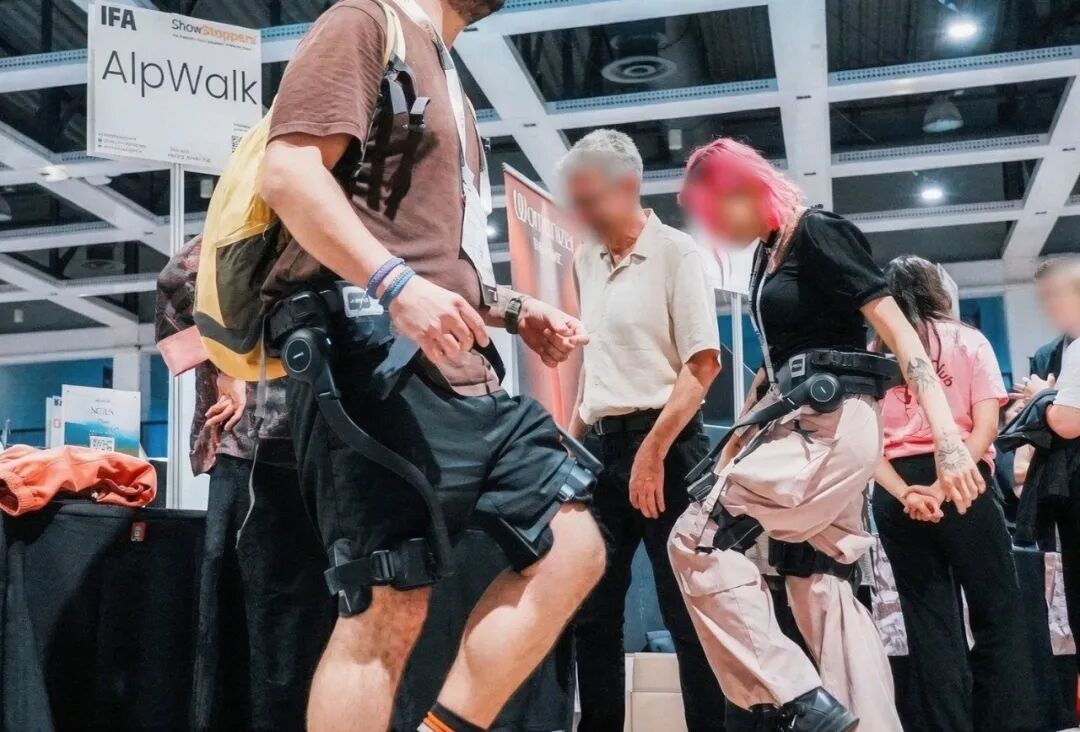
Yuanshan Zhixing's "Tashan" hip mobility assistance exoskeleton (2.4kg, 8 modes, home interconnection) has been deployed in more than 50 cities across the country, taking into account elderly care and scenic spot experience; Planck Intelligence's Walker series focuses on scenic spot mountaineering and elderly mobility assistance, with self-developed AI dynamic gait; Taixi Intelligence covers home, fire protection and logistics scenarios with EPIC passive and HERO power products, cooperating with SF Express, BYD and other enterprises. In addition, Yuan Technology takes the "smart muscle exosuit" route, focusing on flexible mobility assistance for hip, knee and ankle, focusing on daily mobility assistance and elderly scenarios.
Hangmo Technology's IRMO M1 is a visual perception intelligent knee exoskeleton, equipped with camera and LiDAR, integrating 9-axis IMU and EPA embodied motion model, with self-developed Flexmo flexible joint. DNSYS independently develops X1 hip assistance and Z1 knee assistance, with self-developed DNA-1 motor, equipped with DNNAS gait algorithm, supporting the combination of hip and knee modules. Kino Dynamics' YIBU product line adopts dual-hip intelligent assistance, focusing on daily activities, outdoor mountaineering and health care.
The parameters on the consumer end are converging: around 1.8kg, end-side AI, 0.3-second level intention recognition, multiple motion modes.
The real buyers of consumer exoskeletons are dividing into three categories: the first group is the elderly and post-operative rehabilitation people, who buy the ability to "walk by themselves", are not sensitive to weight but extremely sensitive to safety and donning/doffing time; the second group is outdoor enthusiasts, who buy the experience of "not being tired when climbing mountains", are willing to pay a premium for 12kg of weight reduction, but are sensitive to price and battery life; the third group is scenic spots and experience halls, who buy the effect of "letting tourists climb 200 meters more", which is essentially leasing operation equipment rather than personal consumer goods. The price bands and functional priorities of the three groups are completely different, which is why the same company's products have two versions priced at 8,000 yuan and 15,000 yuan at the same time - it is not chaotic pricing, but a bet on which scenario will be implemented first.
What really widens the gap is force control calibration, sensor fusion and after-sales service. On the cost side, actuators and sensors account for about 60% of the whole machine, and upstream components account for about 45% in total; the localization rates of frameless torque motors, harmonic/planetary reducers, IMU/torque sensors vary greatly, among which the localization rate of torque and torque perception is only 35%-55%, which is the short board of high-quality somatosensory experience.
Therefore, the price reduction of consumer exoskeletons depends on two things: localized production of structural parts, motors and reducers, and algorithms replacing part of high-cost sensors.
Without achieving these two points, companies will only fall into the parameter war of "not enough force when light, too expensive when powerful".
The industrial end is the most stable but the slowest, and cross-border independent R&D is a new variable
Industrial applications recorded a sales revenue of about 78 million yuan in 2025, with a shipment of about 3,800 units, accounting for 14.8% of the total shipment. Scenarios are concentrated in logistics handling, automotive manufacturing, electric power and energy, emergency fire protection, with selling points of reducing waist load, reducing work injuries and improving work efficiency.
Aurora Robotics' PES-U is an energy storage passive upper-limb exoskeleton for lifting operations; active waist and full-body models are being advanced simultaneously. Mibao Intelligence's industrial product line includes Wasp passive waist exoskeleton, Flying Swallow active waist exoskeleton, etc., and jointly develops outdoor consumer product lines with Toread. Iron Armor Fist focuses on active waist handling exoskeletons for warehousing and vehicle manufacturing. Mingtong Equipment independently develops MT series industrial waist exoskeletons, focusing on squat support and variable stiffness. Zhenjiang Co., Ltd. deploys industrial exoskeletons through its subsidiary Hepburn, and conducts pilot cooperation with Dongfeng Liuzhou Motor and other enterprises. Taixi, Yuanshan Zhixing and other enterprises are also promoting tests and pilots of passive lower-limb, upper-limb and handling exoskeletons in logistics and automobile factories.
The core of industrial customers' decision-making lies in the reduction of work injuries, the improvement of working hours and the payback period. Before there is no cross-job ROI benchmark, most projects are still in the pilot stage.
The slowness of industrial exoskeletons essentially lies in the fact that the "money saved from reduced work injuries" and the "money spent on purchasing equipment" have not yet been balanced. An active waist exoskeleton is priced at 30,000 to 80,000 yuan. Calculated according to the average compensation of 20,000 to 30,