Tencent has started mass production of "Buddy".
Today I noticed that Tencent's MusicBuddy official website has just gone online, and a thought popped into my mind:
How obsessed is Tencent with the name "Buddy" exactly?
Let's count them on our fingers.
The one for office work is called WorkBuddy.
The one for programming is called CodeBuddy.
The one for data processing is called DataBuddy.
Now for the music scenario, there comes another new one, MusicBuddy.
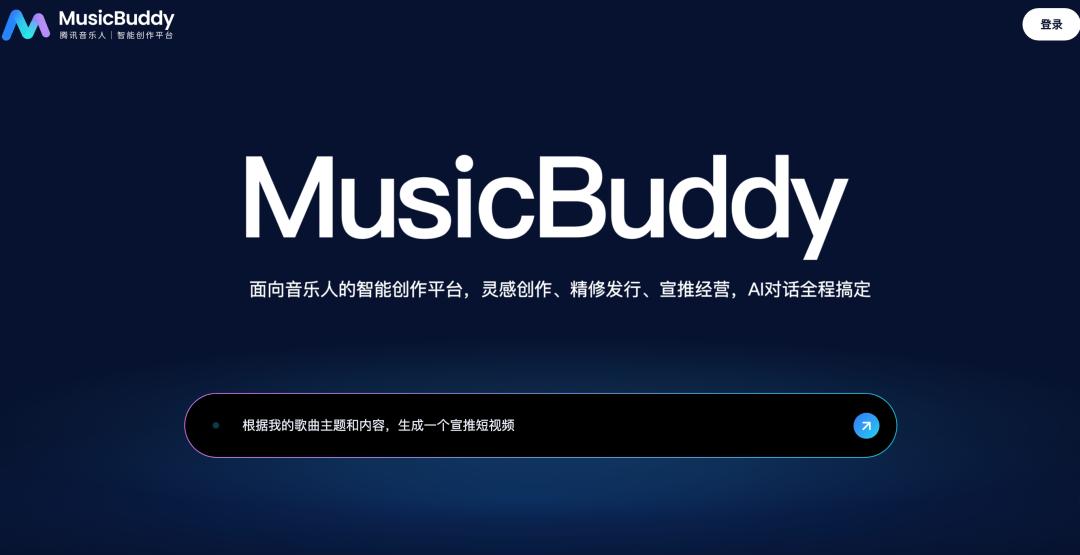
If this trend continues, Tencent might not even need to hold naming meetings for its AI products internally in the future.
It can simply follow the rule:
Business Scenario Name + Buddy
That's it, done.
01
This "Tencent Buddy Universe" is not entirely made up by netizens.
Tencent itself has already started to use this naming system officially.
On the official pricing page of WorkBuddy, a specific term has clearly appeared:
Buddy AI
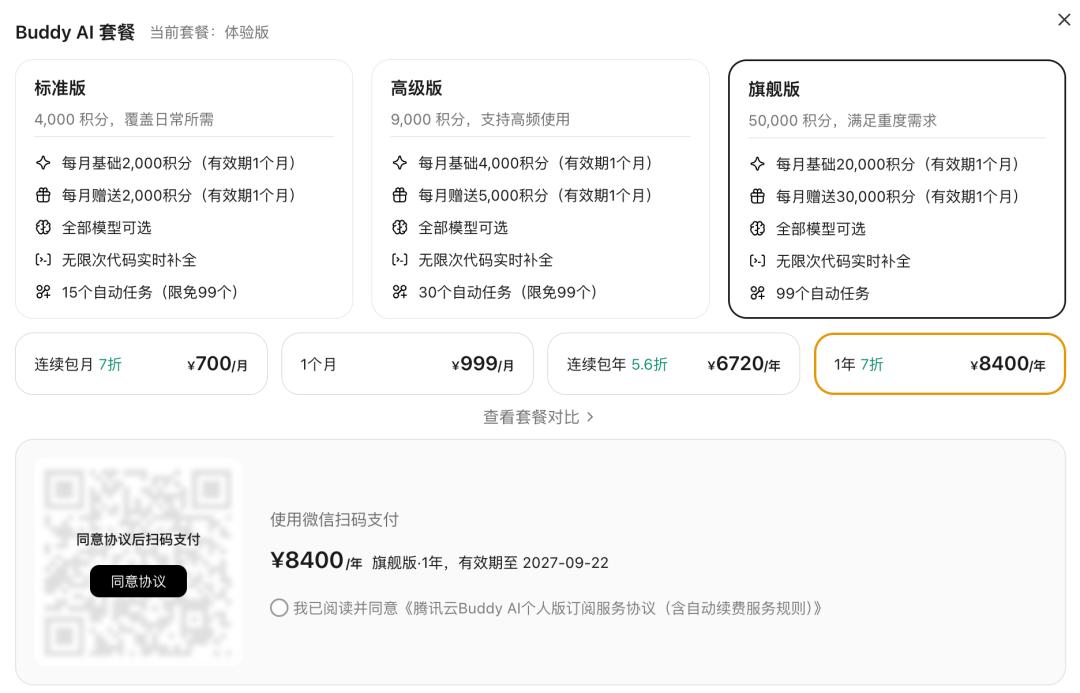
The official explanation states that Buddy AI is the general term for a series of products including WorkBuddy, CodeBuddy and others. In addition, WorkBuddy and CodeBuddy have already realized interconnection of their account and point systems.
This statement is actually quite significant.
It indicates that inside Tencent, "Buddy" is no longer just a suffix in a single product name, but is gradually evolving into a serial brand.
And this process is developing extremely fast.
According to the official update log of WorkBuddy, it was officially released on March 4, 2026; by July, Tencent had begun to use "Buddy AI" as the unified name for this whole product line.
Now MusicBuddy has been added to the lineup.
Coincidentally, I checked the trademark records.
The application for the MUSICBUDDY trademark was submitted on August 28 this year, and the applicant is exactly Tencent Music Entertainment Technology (Shenzhen) Co., Ltd.
In other words, even Tencent Music has joined the Buddy camp this time.
02
Why is Tencent suddenly so obsessed with the name Buddy?
This word really fits the current wave of AI products quite well.
The translation of "Buddy" means partner, or companion.
A few years ago, when people developed AI products, they were extremely fond of naming them "assistant".
AI assistant.
Intelligent assistant.
Copilot.
The usage was very straightforward: you ask a question, it gives an answer, and at most it helps you generate some text, images or code.
After Agent became popular in the past two years, products have started to take on more tasks.
They can break down tasks on their own, call tools, process files, and finally deliver the results to you.
WorkBuddy follows exactly this idea. Tencent officially positions it as "a full-scenario workplace AI agent desktop workstation", which can plan tasks independently, call tools, process local files, and finally output the final results.
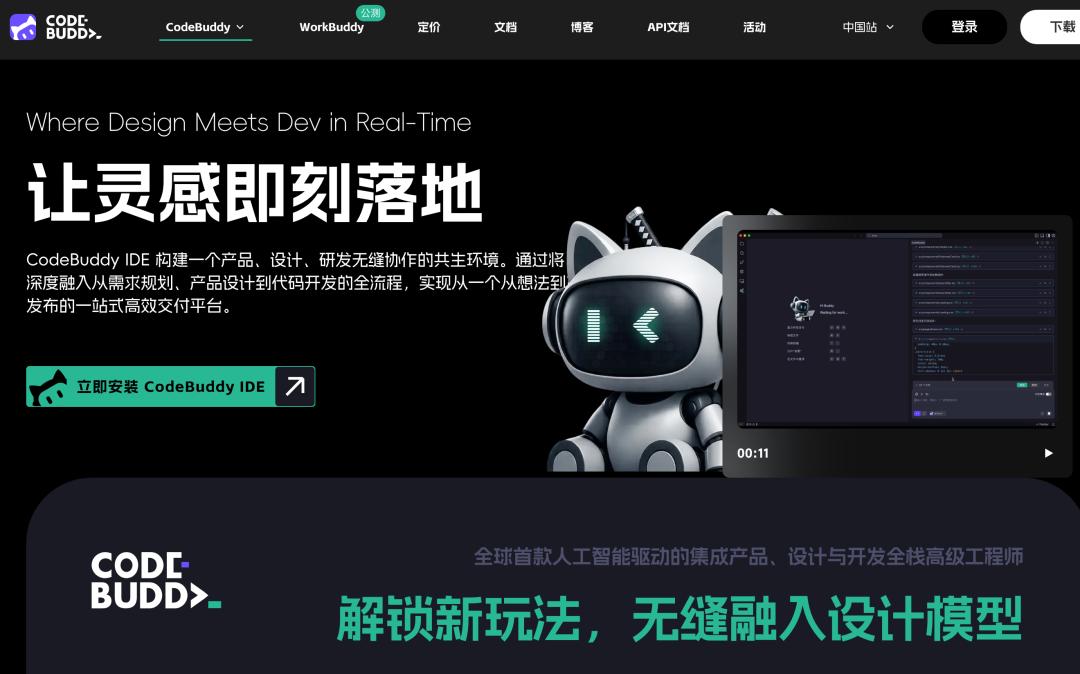
CodeBuddy is targeted at developers, covering development scenarios such as code completion, code review, project understanding and Agent capabilities.
DataBuddy focuses on data work, aiming to further hand over data analysis and processing work to AI.
From this perspective, the name "Buddy" makes perfect sense.
You have WorkBuddy for work at the office.
You have CodeBuddy for writing code.
You have DataBuddy for data processing.
Now for music creation and related scenarios, there comes MusicBuddy.
Tencent is preparing to assign a "buddy" for every type of work.
03
However, I think there is another underlying reason.
WorkBuddy might have made the name "Buddy" a hit.
This is my personal judgment, and Tencent has not made such a statement publicly.
But from the perspective of product branding, this logic is very easy to understand.
There are too many AI products on the market right now.
Each company is running more than a dozen or even dozens of AI projects at the same time internally.
If every new product gets a completely different brand new name, users will never be able to remember them all.
Tencent itself has launched a large number of AI products in the past two years, including Yuanbao, ima, WorkBuddy, CodeBuddy, QClaw and many others.
There are so many of them that even Tencent's own users may not be able to tell them apart clearly in the end.
The Buddy naming system is surprisingly simple instead.
WorkBuddy, you can tell at a glance it is for work scenarios.
CodeBuddy, you can tell immediately it is for coding.
DataBuddy, no extra explanation needed, it is for data related work.
MusicBuddy is even more straightforward.
Music buddy for music scenarios.
For subsequent products, Tencent does not even need to re-educate users.
When users see the name with Buddy, they can roughly guess:
Tencent has launched an AI buddy for a certain scenario.
To some extent, this can also leverage the existing brand momentum that WorkBuddy has already accumulated.
If WorkBuddy continues to grow larger, the "Buddy" suffix itself will become more and more valuable.
New products launched later will naturally be able to benefit from this accumulated brand awareness.
04
So what exactly is the newly launched MusicBuddy for?
Its purpose is already very easy to guess from its name.
This is another step for Tencent to further integrate AI into music scenarios, and the entity that applied for the MUSICBUDDY trademark is exactly Tencent Music Entertainment.
Its official website has just gone online, and there is not a lot of public information available yet, so it is not appropriate to overhype its capabilities for now.
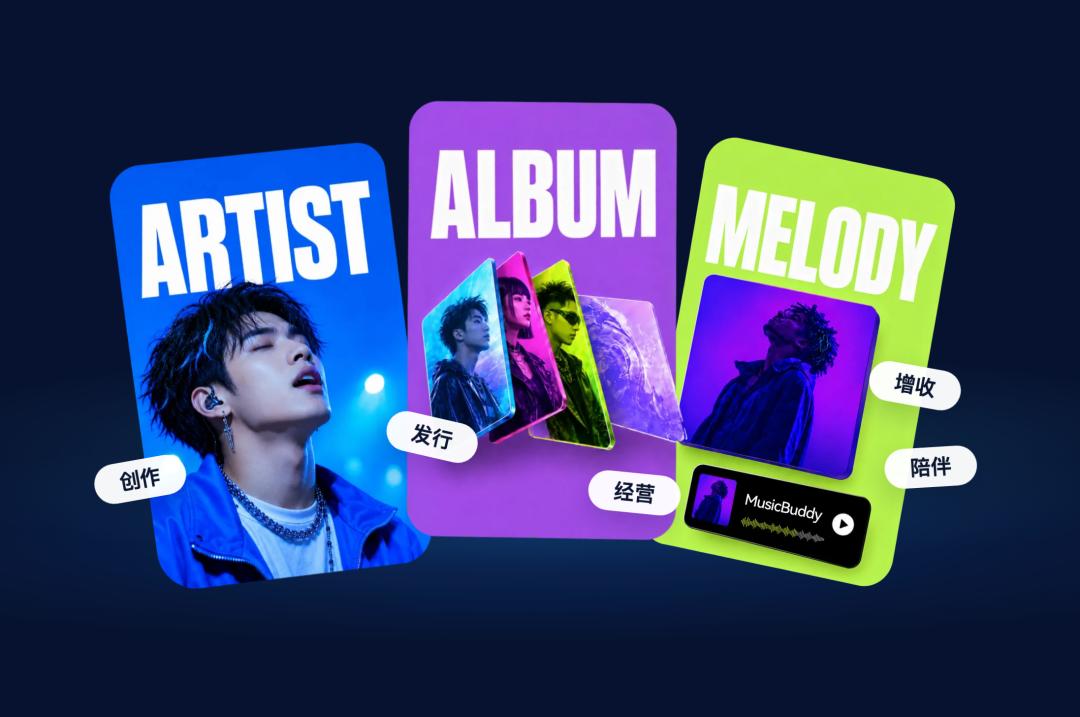
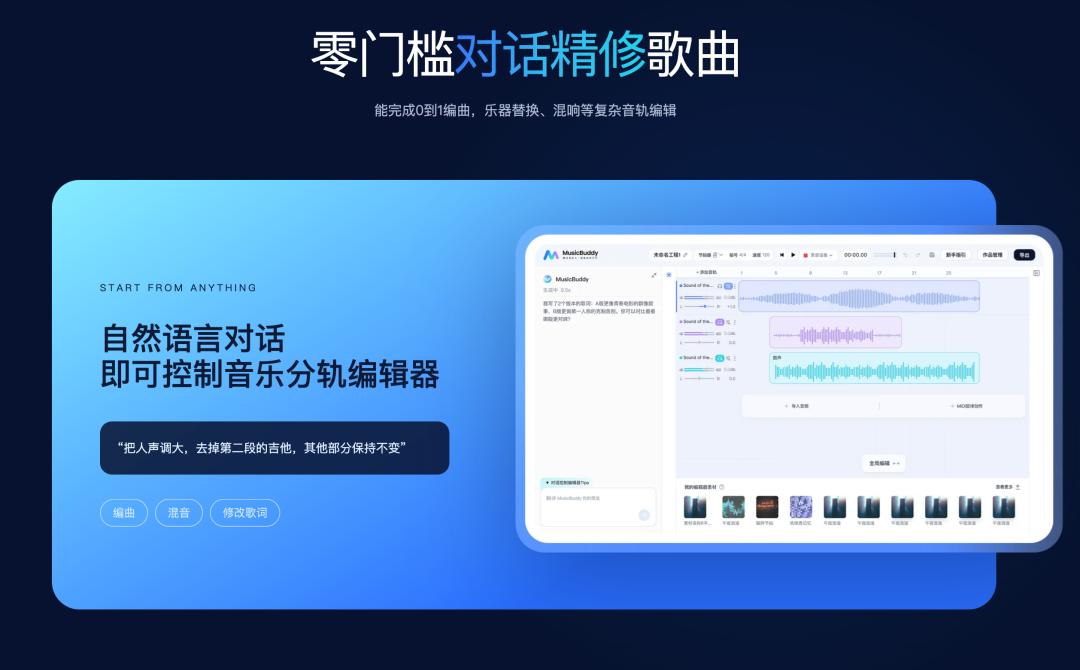
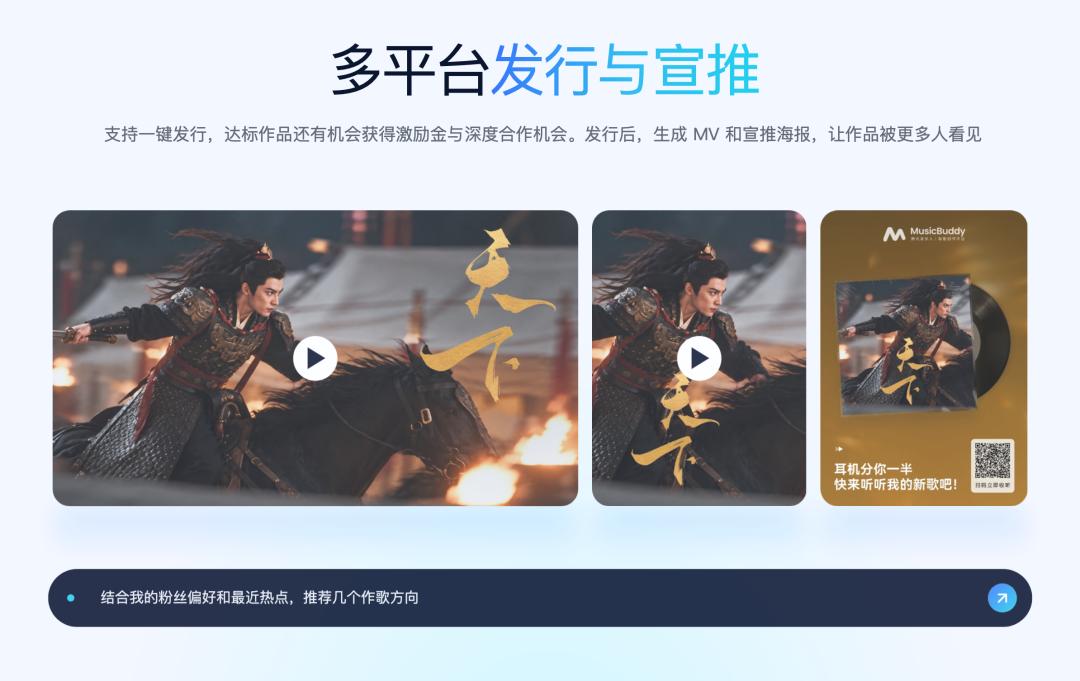
But Tencent Music has actually accumulated a lot of experience in AI music over the past few years.
QQ Music, which is owned by Tencent Music, has already integrated AI Agent. Users can directly search for songs using natural language, and even give instructions such as "play songs of a certain singer for 30 minutes at 8 a.m. tomorrow".
In its own business introduction, Tencent Music has also mentioned a series of capabilities including the Qinyun and Qinyue large music models, AI song creation, AI voice synthesis, intelligent audio tuning, and AI players.
The Tencent ecosystem also has mature music AI technologies such as intelligent composition, sound source separation, music style conversion, intelligent soundtracking, and vocal transcription.
So the launch of MusicBuddy is not unexpected at all.
Tencent Music already has a large number of AI music capabilities in reserve, and now what it needs is a new product entry to integrate all these capabilities.
As for what MusicBuddy will eventually focus more on:
AI music creation,
AI music listening experience,
AI music assistant,
or even being built directly into a full-fledged music Agent,
we still need to wait and see for its subsequent product updates.
But its name has already revealed half of its positioning:
Tencent wants to provide you with a dedicated music buddy.
05
There is another interesting point about MusicBuddy.
The previous products WorkBuddy, CodeBuddy and DataBuddy are all more or less centered on productivity scenarios such as office work, development and data processing.
This time, Buddy has stepped into the music field.
The boundary of the entire system has been expanded instantly.
If other Tencent business lines continue to follow this naming idea in the future:
DesignBuddy.
GameBuddy.
VideoBuddy.
MarketingBuddy.
Even QQBuddy...
None of these names sound out of place at all.
At that point, Buddy will very likely become Tencent's official product naming system in the AI era.
In the past, what Tencent was best at was launching one App for one specific business.
Now it seems that it has developed a new gameplay:
One scenario, one dedicated Buddy.
If it continues to develop at this speed, the next time people see a new "XXXBuddy" go online, their first reaction will probably not be to ask what it does.
They will most likely ask first:
Which Tencent department developed this one?
This article is from the WeChat Official Account "Everyone is a Product Manager" (ID: woshipm), written by Guai Ge, authorized for release by 36Kr.