Dormitory Household Appliance Ledger: Are Operation and Maintenance Costs More Expensive Than the Devices Themselves?
As more and more universities purchase residential properties to use as student dormitories, a highly frequent issue has emerged: when the properties are transferred from property owners to universities, household appliances are no longer "durable consumer goods" but "production tools". The logistics departments have found that buying a washing machine is easy, but the hard part is calculating the water, electricity, maintenance and depreciation costs it will incur over the next three to five years.
The pricing of an apartment bed depends on the thickness of the steel; the pricing of a household appliance depends on its energy consumption curve and failure rate.
01
Cost Accounting Logic: The "Hard Energy Consumption Constraint" After Property Fee Exemption
In commercial residential communities, if a household appliance breaks down, the property owner will arrange for repairs themselves, and electricity bills are paid to the power grid. But in student dormitories, the logistics department acts as both the "property owner" and the "property management party". The subsidy of 2000 yuan per bed per year is the upper limit, so every kilowatt-hour of electricity and every drop of water must be carefully calculated.
Southwest University once disclosed that the number of maintenance requests for student dormitories in 2019 exceeded 30,000, with water and electricity related issues accounting for a very high proportion, which points to huge pressure on energy consumption. For the renovated dormitories in the Yangluo Campus of Hubei University, the annual accommodation fee for a shared double room for postgraduate students is 1320 yuan. This price covers accommodation and internet fees, and also implies subsidies for water and electricity. The logistics department is clearly aware that the real cost does not lie in the purchase price, but in the "operation and maintenance account".
How much does it cost to run an air conditioner overnight? How much electricity does a water heater consume for heat preservation? How much water does a washing machine use for a high-speed wash? These figures are clearly recorded in the logistics department's account books, which has forced a new logic: household appliances must not only be easy to use, but also "easy to calculate costs for".
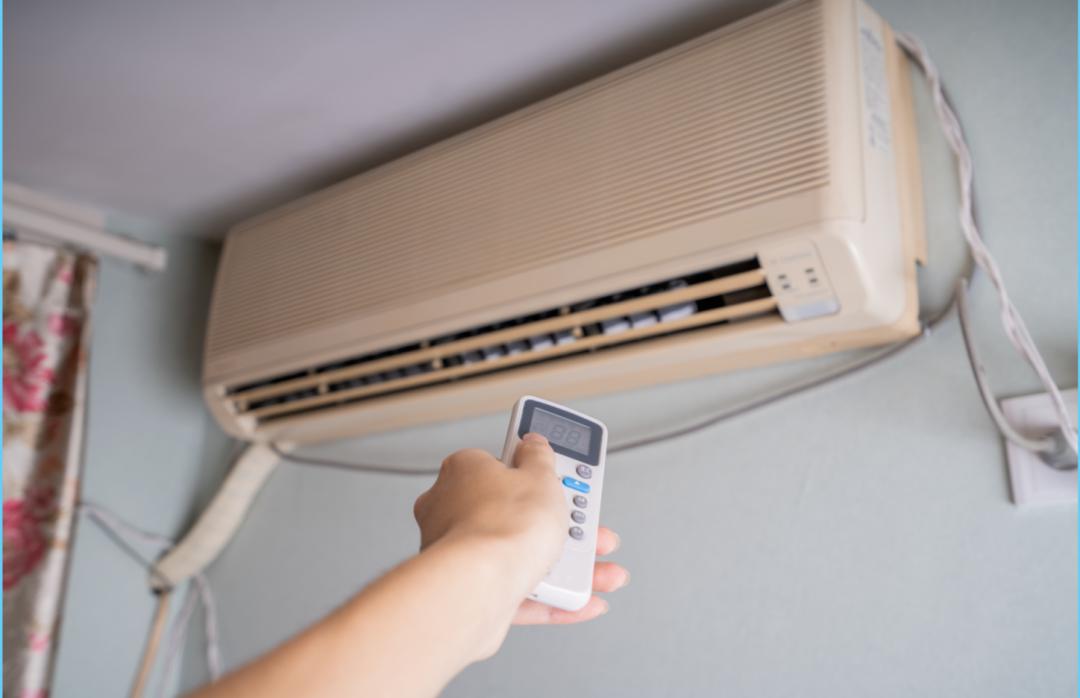
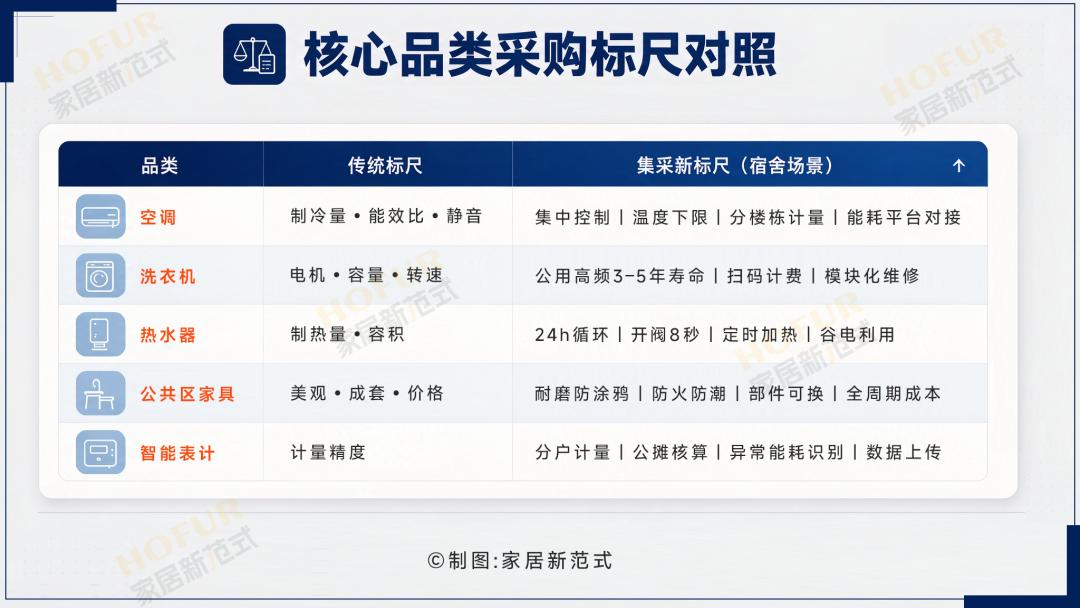
In the past, when purchasing air conditioners, people focused on cooling capacity and energy efficiency ratio; now the first consideration is whether the air conditioner can have a centrally set upper temperature limit to prevent students from running it at 16 degrees Celsius all night. In the past, when purchasing washing machines, people focused on the motor and capacity; now the priority is whether the washing machine can calculate fees accurately based on water consumption and rotation speed to avoid waste. This pursuit of "controllability" is the most real pain point after property fees are eliminated.
02
Centralized Control: From "Standalone Parameter" to "Platform Management and Control"
When household appliances are placed in student dormitories, the procurement criteria shift from the "product manual" to the "system control protocol".
Air conditioners are standard equipment in the Yangluo Campus of Hubei University, but according to the bidding parameters of the logistics department, the air conditioners must be capable of connecting to the campus energy consumption management platform. The system should be able to set a lower temperature limit, automatically turn on and off according to the work and rest schedule, and measure energy consumption by building, floor and room. This "centralized control" is not meant to restrict freedom, but to keep energy consumption within the budget while ensuring comfort.
The public laundry room is another measurement standard. "New Home Paradigm" found that the apartment beds at the Yongchuan Campus of Chongqing College of Electronic Technology require "20,000 times of durability". Similarly, the measurement standard for washing machines is also the "service life in times of use". However, the washing machines in dormitories are "public high-frequency machines" whose physical service life is usually only 3 to 5 years. The logistics department pays more attention to "100,000 times of failure-free operation" and "the accuracy of code-scanning billing". Chengdu University requires "1-hour response and 8-hour maintenance", which puts forward very high requirements for the modular design of washing machines.
The water heater is the balance point between energy consumption and user experience. Xi'an Academy of Fine Arts requires hot water to "circulate 24 hours a day, and produce hot water within 8 seconds after the valve is opened". This is not only related to student experience, but also to energy consumption. Repeated heating and heat loss in pipelines are invisible costs. Therefore, the heating capacity of air-source heat pumps, the heat preservation performance of water tanks, and the timing heating function have become more important indicators than the appearance of the products.
The measurement standards for public area furniture are also changing. In the second part of the "New Home Paradigm" Stock Renovation Series, we talked about beds in bedrooms, and the third part focuses on the wet area renovation in dormitories. The desks and chairs in self-study areas should be wear-resistant and anti-graffiti; the sofas in reception areas should be stain-resistant and not easy to collapse; the desks and chairs in shared kitchens should be fire-proof and moisture-proof. The procurement of these furniture is no longer based on "how much a set costs", but on "how many years a set can be used, and how much it costs to replace a part if it breaks".
Smart electricity meters, water meters and charging piles are the "eyes" of all these systems. They need to upload data in real time, identify abnormal energy consumption, and even detect illegal electrical appliances. For example, under the subsidy scheme for university dormitories in Jiangsu, these meters are no longer simple measurement tools, but the cornerstone of "fine operation".
03
Neighborhood Boundaries: Noise, Circulation Lines and Energy Consumption Allocation
When dormitories are moved to off-campus residential communities, the variables of household appliances and public area furniture become more complicated. The off-campus student apartments of Hubei University Yangluo Campus (Wuhan Construction · Shui'an) are only separated from the teaching area by one road, and the Hanyuan Mingyuan apartments rented by Shenzhen University are also located off campus. This kind of "community-style dormitory" breaks the closed nature of traditional campuses, and also brings new "neighborhood boundary" problems.
Noise is the first boundary
The low-frequency vibration of air conditioner outdoor units, the roaring of washing machines during dehydration, and the noise of students making loud noises on public area furniture late at night may all lead to complaints from property owners. Therefore, the "silent performance" of air conditioners and the "shock absorption design" of washing machines have changed from "bonus points" to "must-have items". The layout of public area furniture should also consider sound insulation and circulation lines to avoid disturbing residents.
Energy consumption allocation is the second boundary
Off-campus residential communities have shared electricity bills and public water consumption. When a building houses both students and property owners, how to allocate the energy consumption? This requires smart electricity meters and water meters to have the capabilities of "household-based metering" and "shared cost accounting". The logistics department needs to accurately know which kilowatt-hour of electricity is used by student dormitories and which is used in public areas. This level of precision far exceeds the property management requirements of ordinary residential communities.
Circulation lines and management are the third boundary
Students need to go downstairs to work out, do the laundry and pick up takeout. How to separate these circulation lines from the circulation lines of property owners? The placement of public area facilities (such as parcel lockers, takeout lockers and fitness equipment) needs to be re-planned. Smart access control and monitoring systems need to be connected with these facilities to ensure safety and order.
04
Delivery Window: Summer Vacation Rush and the Big Exam at the Start of the Semester
The time window for centralized procurement by universities is always the "summer vacation". The delivery of household appliances and public area furniture is more challenging than that of apartment beds.
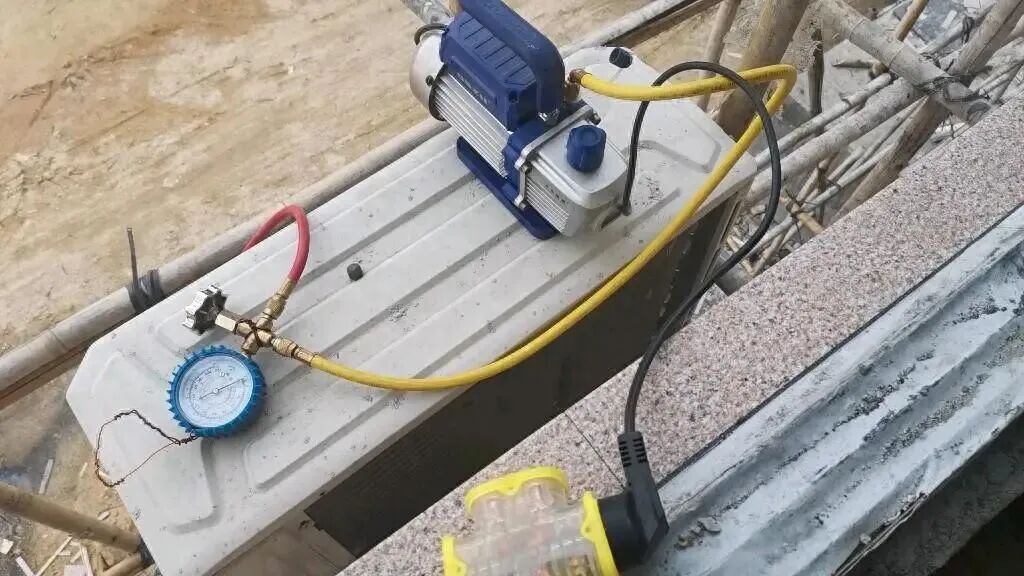
The installation of air conditioners requires high-altitude operation, copper pipe connection and vacuum pumping. For hundreds of air conditioners in one building, the installation cycle is long and the requirements for the construction team are high. The installation of water heaters involves the transformation of water and electricity circuits, and drilling holes in load-bearing walls, which also takes a lot of time. Although the installation of washing machines is simple, it needs to match the water and electricity points and the flatness of the ground.
The bigger challenge lies in "joint debugging". The centralized control system of air conditioners, the timing heating system of water heaters, the code-scanning billing system of washing machines, and the energy consumption platform of smart electricity meters, all these systems need to complete joint debugging before the start of the semester. The access control project of the Tongzhou Campus of Renmin University of China requires completion within 90 days. Similarly, the intelligent systems of household appliances and public area furniture also need to complete the whole process from installation to debugging within the two short months of summer vacation.
The first day of the new semester is the "big exam". Thousands of students move in at the same time, turn on air conditioners, do the laundry and use hot water simultaneously. Any system lag or control failure will be infinitely amplified. Therefore, suppliers should not only provide products, but also provide "opening guarantee", which includes on-site engineers, spare parts warehouses and emergency plans.
The certainty of operation and maintenance is the final measurement standard. Cases of Sichuan University of Science & Engineering and Taiyuan Institute of Technology show that when the logistics department selects suppliers, it does not value the lowest price, but "qualified parameters, guaranteed delivery and complete operation and maintenance system". If a manufacturer can provide a five-year warranty, regular inspections and rapid response for an air conditioner, the logistics department is willing to pay for it even if the purchase price is slightly higher. Because the operation and maintenance cost over three to five years is far greater than the one-time purchase price difference.
05
Conclusion: From "Selling Single Products" to "Selling Solutions"
Converting commercial residential properties into dormitories is an inevitable trend in the stock era. "New Home Paradigm" sorts out public samples such as Hubei University and Renmin University of China, and the results show that the roles of household appliances and public area furniture have undergone fundamental changes.
They are no longer isolated "single products", but part of the "campus energy management solution". Air conditioners are temperature control nodes, washing machines are billing nodes, water heaters are energy consumption nodes, public area furniture is space management nodes, and smart meters are data nodes. These nodes are connected together to form the "operation and maintenance brain" of the logistics department.
For home appliance enterprises, this specific market means the transformation from "selling single products" to "selling solutions". Pure product performance is no longer sufficient, and they also need to have system integration capabilities, data platform capabilities and operation and maintenance service capabilities. For furniture enterprises, public area furniture is a new incremental market with higher requirements -- the products should not only be beautiful and comfortable, but also durable, easy to maintain, and in line with management logic.
In the stock era, there is no absolute good or bad for products, only whether they are suitable for the scenario. Being able to stand the cost calculation, being durable enough, and being worthy of trust -- this is not only the threshold of the engineering decoration industry, but also the return of the home decoration industry.
This article is from the WeChat official account "New Home Paradigm", the author is Fan Shijun, and it is released with authorization from 36Kr.