50% Charge in 15 Minutes, iPhone 18 Pro Delivers the Answer for Next-Generation Fast Charging
Just now, ifanr has published the full review of Apple's new iPhone lineup for this year.
In the review, we noted that the iPhone 18 Pro and Pro Max deliver exceptional charging performance this time, and we did not elaborate fully on this point due to space constraints — in fact, we carried out extremely detailed charging tests and observations of charging behaviors.
So in this article, we will break this topic down and talk about it in depth.
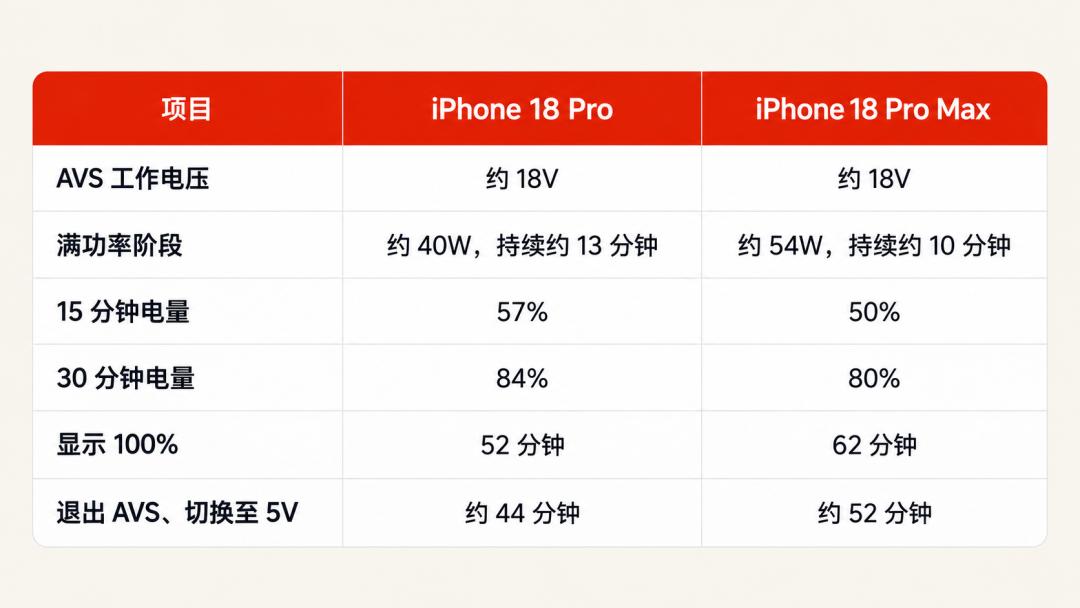
After getting the new devices, ifanr conducted tests lasting around 8 hours. The actual measurement shows that the iPhone 18 Pro can maintain an average power of 40W for as long as 13 minutes: it charges from 0 to 57% (about 9.7 Wh) in the first 15 minutes, and reaches 84% in half an hour.
The iPhone 18 Pro Max with a significantly larger battery performs even better. It can even maintain a stable peak power of 54W in a straight line within the first 10 minutes, charges 50% (about 12.1 Wh) in the first 15 minutes, and can also charge from 0 to 80% in half an hour.
It is no exaggeration to say that the two Pro models this year are the iPhones with the best charging and battery life performance we have ever recorded in history, and Apple's fast charging has truly become "fast".
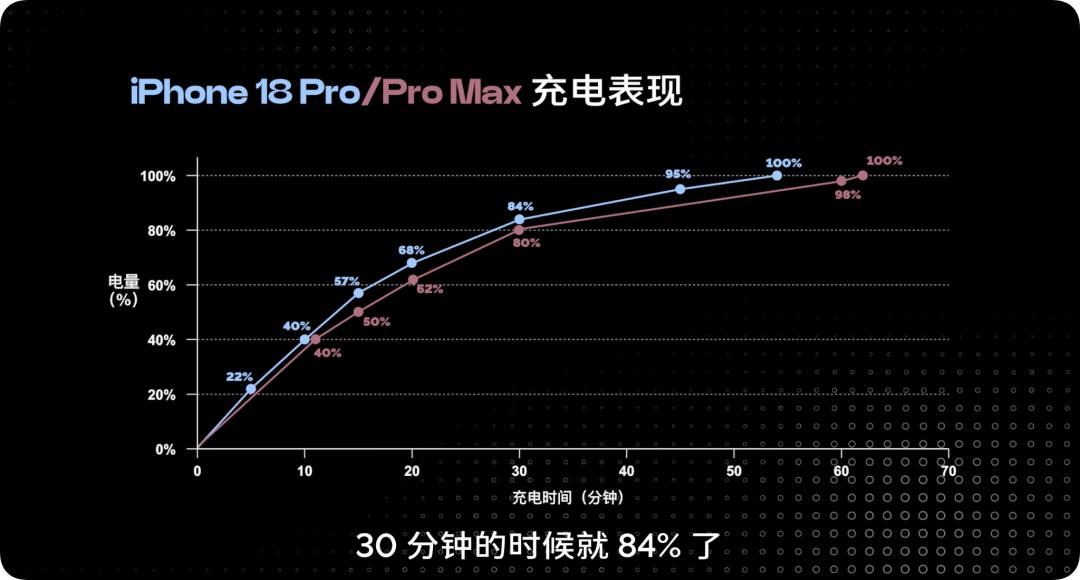
In the official release, Apple marks the fast charging speed of the iPhone 18 Pro series as: charge to 50% in about 15 minutes, which is 5 minutes faster than the 20 minutes of the iPhone 17 Pro.
However, there are two conditions following this sentence on the specification page: the charger power must reach 60W, and it must support "Adjustable Voltage Supply" (AVS).
60W is easy to understand, the higher the power, the faster the charging, which is familiar to everyone long ago. The real value lies in the AVS wording behind it. To be precise, it refers to the SPR AVS charging protocol in USB PD 3.2 (note that it is not the EPR AVS marked on many high-power power banks).
When the iPhone 17 was released last year, Apple launched a "40W Dynamic Power Adapter (max 60W)" that supports SPR AVS (hereinafter referred to as Dynamic 60W Power Supply). However, third-party actual tests found that the iPhone 17 itself did not use SPR AVS, and it still used the fixed 15V gear during charging.
People got familiar with the term AVS through Apple's Dynamic 60W Power Supply, but this protocol sat idle on iPhones for a whole year, and it was not until the iPhone 18 Pro series that it was finally put into real use.
After getting the iPhone 18 Pro and Pro Max, we used the IonFlow software from CANDYSIGN to fully record the charging process of the iPhone 18 Pro and Pro Max (complete actual test data is attached later). After reviewing the data, we are more certain of one thing:
SPR AVS is not just Apple's choice, it is the universal solution for the next generation of USB-C fast charging.
I. First, a brief explanation of what SPR AVS actually is
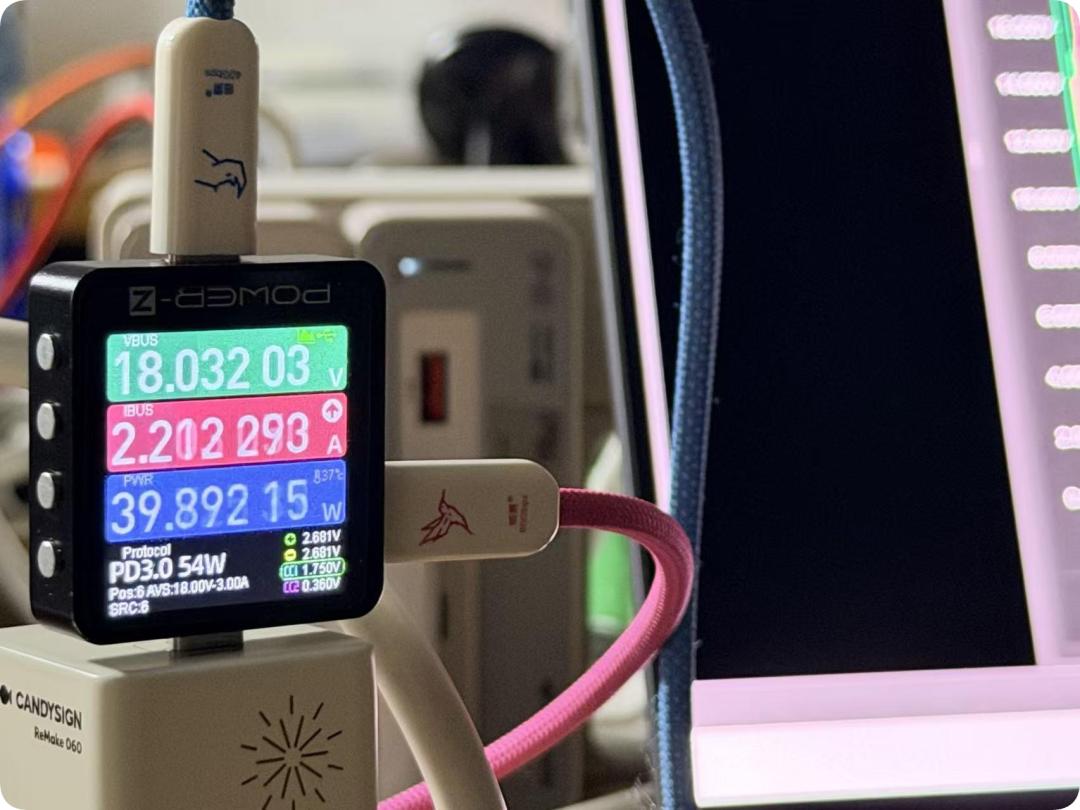
A typical USB-C charger works in the most traditional way by "matching" with fixed gears, which is the "protocol" process —
After the charger is connected to the phone, they will "negotiate" first. The charger reports several voltage levels it can provide, usually 5V, 9V, 15V, 20V, and the phone will pick one of them.
This is like the steps of a staircase. If the voltage the phone wants happens to fall between two steps, it can only choose a close one, and the remaining gap will be converted by the internal circuit of the phone. Each conversion will consume part of the energy, and all this energy will eventually turn into heat.
You can understand that AVS replaces the large steps of this staircase with more and finer steps — so much so that it is more like a ramp. A charger that supports SPR AVS can match the voltage the phone wants between 9V and 20V in 100mV increments. If the phone needs 12.3V, it provides 12.3V; if it needs 18V, it provides 18V.
AVS first appeared in the Extended Power Range (EPR) of USB PD 3.1, serving high-power devices such as laptops above 100W. USB PD 3.2, released in October 2024, extended this capability to the Standard Power Range under 100W, which is where the name SPR AVS comes from.
Moreover, SPR AVS is not an optional feature: according to the certification requirements of PD 3.2, all chargers with power exceeding 27W need to support SPR AVS. In other words, almost all new compliant fast chargers released in the future will come with this feature.
Speaking of adjustable voltage, readers familiar with Android fast charging will definitely think of PPS (Programmable Power Supply). PPS can also adjust voltage, with an even finer step of only 20mV. Then why didn't Apple directly use the existing PPS?
II. Why SPR AVS instead of PPS
Last year, we discussed this issue in detail in the article "Why Apple Rejects PPS? In-depth Analysis of Why iPhone 17 Dynamic Fast Charging is Stronger". To briefly recap, we believe PPS has two inherent shortcomings.
First, the precision is excessive. 20mV sounds very fine, but the voltage drop of an ordinary USB-C cable, the contact resistance of the interface, and the ripple of the charger itself — any of these factors may cause the error to exceed 20mV. That means no matter how fine the precision is, it cannot be used in real scenarios. SPR AVS chooses 100mV, which has sufficient precision and can withstand these real-world errors.
Second, the current upper limit reported by PPS is not "practical enough". The PPS gear will tell the phone "maximum voltage, maximum current", but when power is the real bottleneck, this current upper limit cannot reflect how much power the charger can actually output at a certain voltage. In our previous article, we cited a real example: a 45W PPS charger advertises 21V/2.15A, if the phone works at 10.8V, the current is still locked at 2.15A, and the actual power can only reach about 23W, which is almost halved.
The approach of SPR AVS is more straightforward: it tells the phone the current upper limit by voltage range, what the value is below 15V, and what the value is between 15V and 20V. The phone can immediately know how much current it can get at the voltage it wants.
There is another little-known difference between the two: SPR AVS does not have the current limiting mode that PPS has. The charger is only responsible for stabilizing the voltage, and the current is controlled by the phone itself, which cannot exceed the upper limit agreed by both parties. It is more like a "fixed gear with finely adjustable voltage", suitable for long-term stable operation after selecting a certain voltage.
This is a working method of closer collaboration between the charger and the power management system on the phone side, and it is exactly the method chosen by the iPhone 18 Pro series.
Apple almost never publicly explains the design trade-offs of such non-core features.
But judging from the fact that iPhone has not adopted PPS so far, we believe Apple's judgment on PPS is consistent with ours — since PPS is not used, and fixed gears cannot meet the requirements, SPR AVS has become the only way out.
III. Reveal: How the iPhone 18 Pro series uses SPR AVS
ifanr has fully measured the charging curve of the iPhone 18 Pro series, as follows:
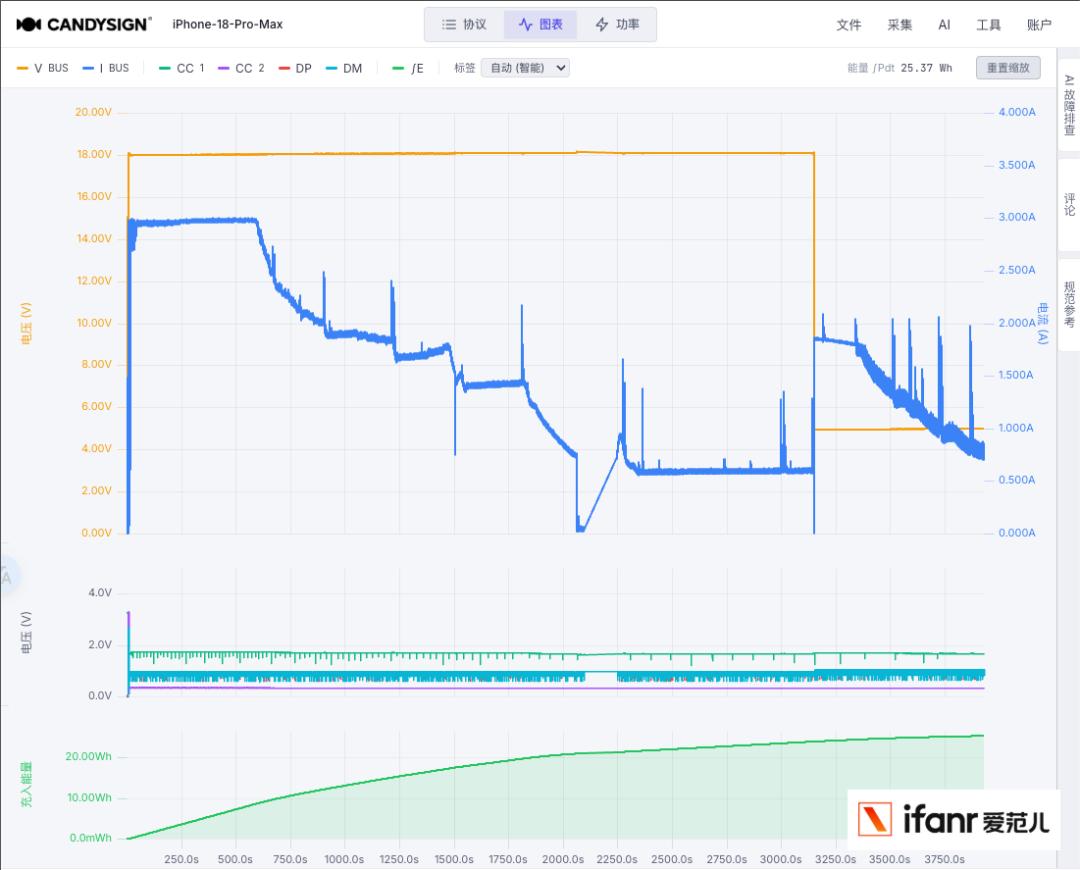
Figure | iPhone 18 Pro Max charging curve, the full PDF report can be accessed at: power-analyzer.ifanrx.com/app#r/aWlXjbuffZC01Faowv08Tm/session
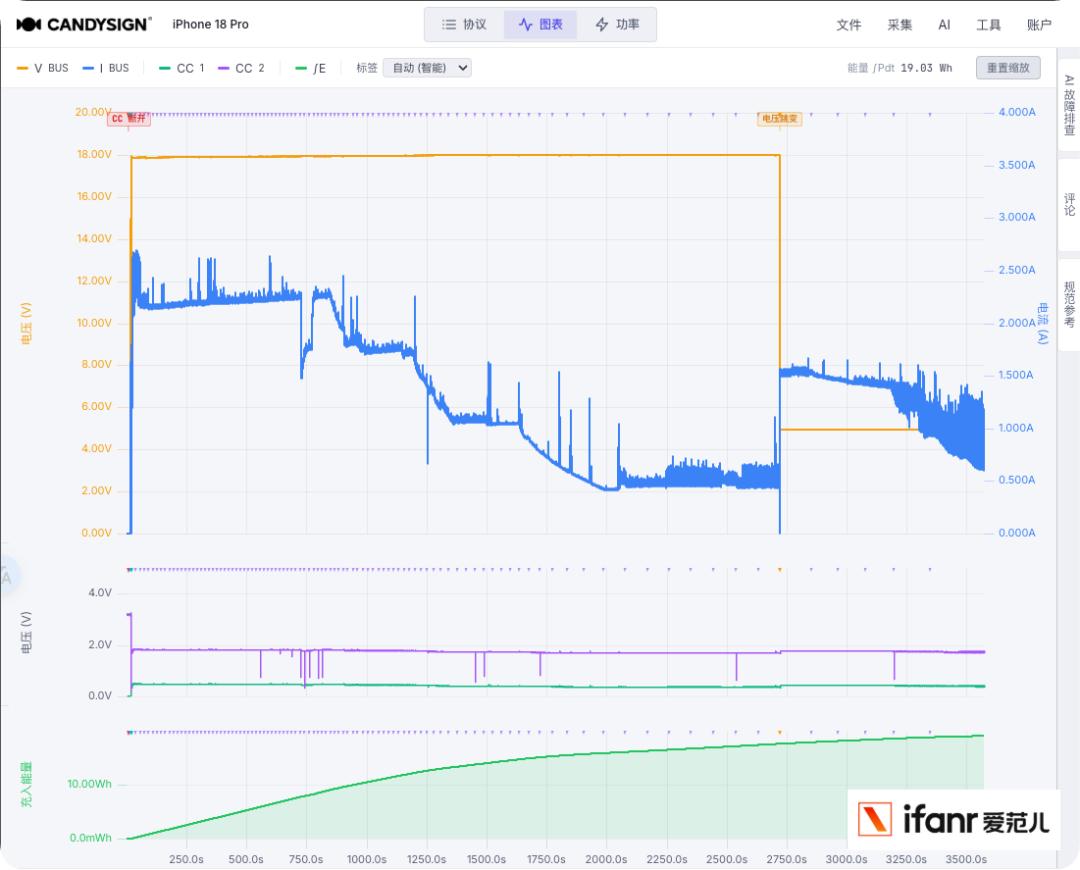
Figure | iPhone 18 Pro charging curve, the full PDF report can be accessed at: power-analyzer.ifanrx.com/app#r/JkCZT91ikiv462B3f2AUlS/session
Let's first look at the "unique handshake" between the charger and the iPhone 18 phone — not all chargers work like this:
The process for the iPhone 18 Pro to establish an AVS connection with the charger is roughly as follows: the charger first reports a list of common gears without AVS, then asks the phone "Do you recognize AVS?"; the phone answers "Yes"; the charger then shows the AVS gears, and the phone immediately requests 18V.
Ask first then provide, this is to take care of old devices that do not recognize the new protocol, to avoid connection failures caused by them failing to understand the new gears.
After the AVS handshake is successful, we found that the charging process of the iPhone 18 Pro series has a very distinct feature: the voltage is almost locked at 18V from start to finish.
Take the iPhone 18 Pro Max as an example. For the first 10 minutes or so, the charger stably outputs 18V, 3A, with a power of about 54W. After that, the voltage remains completely unchanged, the current decreases level by level, and the power decreases accordingly: it is about 36W near the 15th minute, and about 26W near the 30th minute.
The iPhone 18 Pro performs the same, only with lower power (which is understandable, as its battery capacity is much smaller than that of the Pro Max). It briefly charges to about 48W at the beginning, then stabilizes at around 40W, which lasts until around the 13th minute, before gradually decreasing.
Both phones exit AVS when the battery level is about 95%, the voltage switches directly from 18V to 5V, and completes the final stage with a small current. This happens around the 52nd minute for the iPhone 18 Pro Max, and around the 44th minute for the 18 Pro.
This step is mainly determined by the lithium battery itself.
All lithium-ion battery charging is divided into two stages: first charge quickly with a large current, and when it is nearly full, you must use a small current to slowly top it up. The power required at this stage is very small, the high-power 18V channel is no longer useful, and switching back to 5V is more appropriate. The lower voltage limit of SPR AVS is 9V, so to get 5V, you have to exit AVS and switch to the fixed 5V gear.
*Test Platform: CANDYSIGN IonFlow Analysis Platform
The performance of both phones matches Apple's statement of "charge to 50% in about 15 minutes".
After talking about the speed, let's look at the temperature, which is also very important for the actual user experience.
In SPR AVS mode, the maximum body temperature of the iPhone 18 Pro in the first 30 minutes is only 38.7°C. It is worth noting that the phone has charged more than 80% of the battery in these 30 minutes, and the temperature control can be said to be very excellent.
On the one hand, this benefits from the high conversion efficiency brought by 18V (detailed below), and on the other hand, it is inseparable from the new iPhone's heat dissipation design: under the premise that the body is almost unchanged from the previous generation, the iPhone 18 Pro series is equipped with a VC vapor chamber whose area is about three times that of the previous generation.
IV. Why 18V exactly, a speculation
18V is not among the several standard fixed gears of 5V, 9V, 15V, 20V. On the premise that Apple does not use PPS, the only way to get stable 18V is through SPR AVS.
This exactly illustrates the value of SPR AVS: fixed gears make the phone adapt to the charger, while SPR AVS makes the charger adapt to the phone.
——This makes perfect sense, after all, you don't want a phone that costs thousands or tens of thousands of dollars to adapt to an accessory that costs only tens or a few hundred dollars.
So why do the iPhone 18 Pro and Pro Max want 18V?
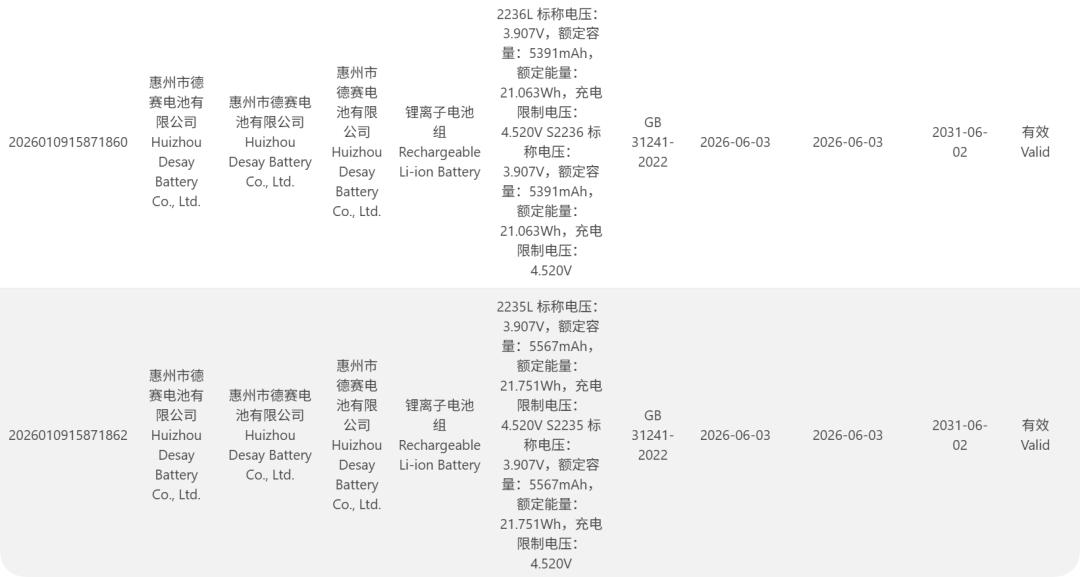
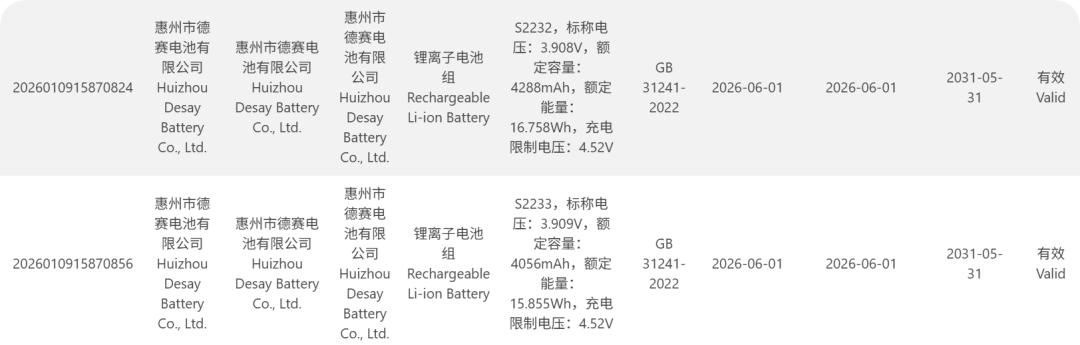
The EU energy efficiency label shows that the rated battery capacities of the iPhone 18 Pro and Pro Max are 4056mAh and 5391mAh respectively. According to the 3C certification information, it is speculated that the version that only supports eSIM will have an even larger battery. More critically, the 3C information shows that the charging limit voltage of this batch of batteries is 4.52V.
4 × 4.