How has copper, which has been used for thousands of years, suddenly become the new favorite of the AI era?
Thousands of years ago, humans began to process copper into tools, weapons and ornaments; by the 19th century, copper had become a critical material for wires and cables.
Copper, this ancient raw material, has witnessed the entire history of humanity from the Stone Age to the Electrical Age.

1900, on-site cable laying | Western Power Electricity Historical Society UK
Today, even the most "intangible" AI industry is increasingly inseparable from it. The problem is, AI is an extremely voracious consumer of copper.
Why does AI "consume" copper?
The answer is straightforward: AI requires massive amounts of electricity.
AI models themselves do not "consume" copper, but the servers, data centers and supporting facilities that host them all need electricity.
The International Energy Agency estimates [1] that global data centers consumed 415 billion kWh of electricity in 2024, accounting for about 1.5% of global electricity consumption; by 2030, the power consumption of data centers may reach 945 billion kWh, slightly higher than Japan's total annual electricity consumption at present.
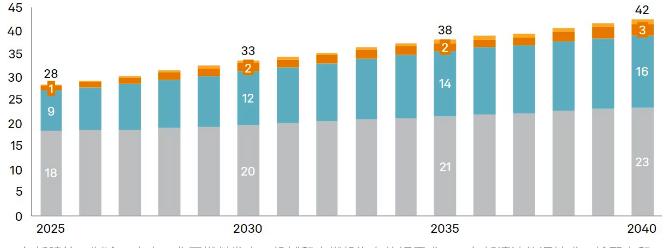
Copper consumption across sectors worldwide: The grey section covers copper demand from construction, refrigeration, household appliances, fossil fuel power generation, machinery and internal combustion engine vehicles, the blue section covers clean energy technologies, power transmission and distribution, and electric vehicles, the orange section represents AI and data centers, and the light orange section represents national defense | Reference [4]
Copper, which boasts excellent electrical conductivity, is easy to draw into thin wires and has relatively strong corrosion resistance, is one of the most widely used materials in power systems, and is heavily used in equipment such as wires, cables and transformers.
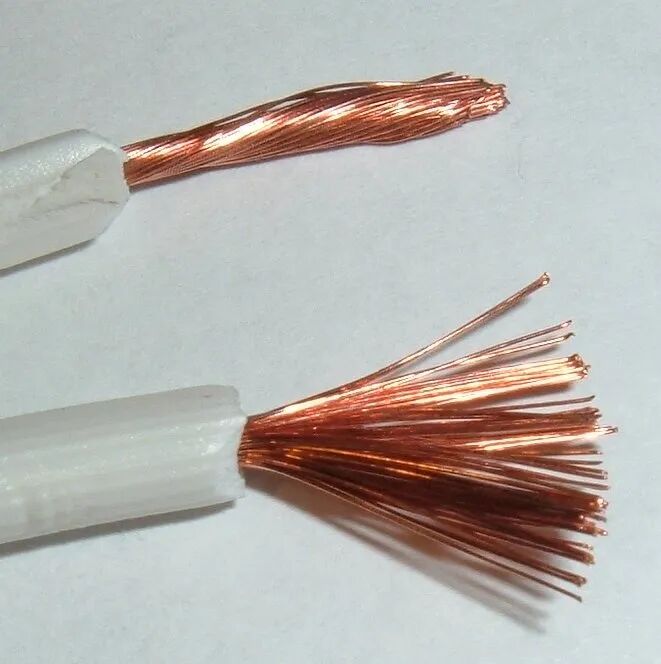
Copper in electrical wires | wikimedia commons/Scott Ehardt
A study released this year further confirms this point [3]. Researchers built a model to estimate the demand for 20 minerals from AI data centers by 2035. Among these 20 minerals, copper accounts for about 83% of the total estimated mass in the model; of the modeled copper demand, transmission and distribution infrastructure accounts for about 64%.
How much copper will AI "consume"?
So exactly how much copper can AI use up?
Let's start with a single data center. Copper in data centers is not only found in the cables and power distribution equipment that bring electricity in, but also used in links such as server power supply, cooling systems, and internal electrical connections of data centers.
According to a report released by S&P Global this year [4], taking a large 230 MW AI training data center as an example for measurement, it consumes about 10,000 tons of copper; scaling up to the whole world, global copper consumption by data centers is estimated to reach 1.1 million tons in 2025, accounting for about 4% of the world's total copper consumption in that year.
This figure continues to rise, it is expected that by 2040, the annual copper consumption of global data centers will reach about 2.5 million tons, accounting for around 6% of global copper demand at that time. Even considering different development scenarios, the annual copper consumption of data centers in 2040 may range from 1.7 million tons to 2.7 million tons [4].
Behind this is the rapid expansion of data center scale. S&P Global predicts that the installed capacity of global data centers will grow from about 100 million kW in 2022 to about 550 million kW in 2040 [4].
The AI industry is rapidly creating a growing source of copper demand.
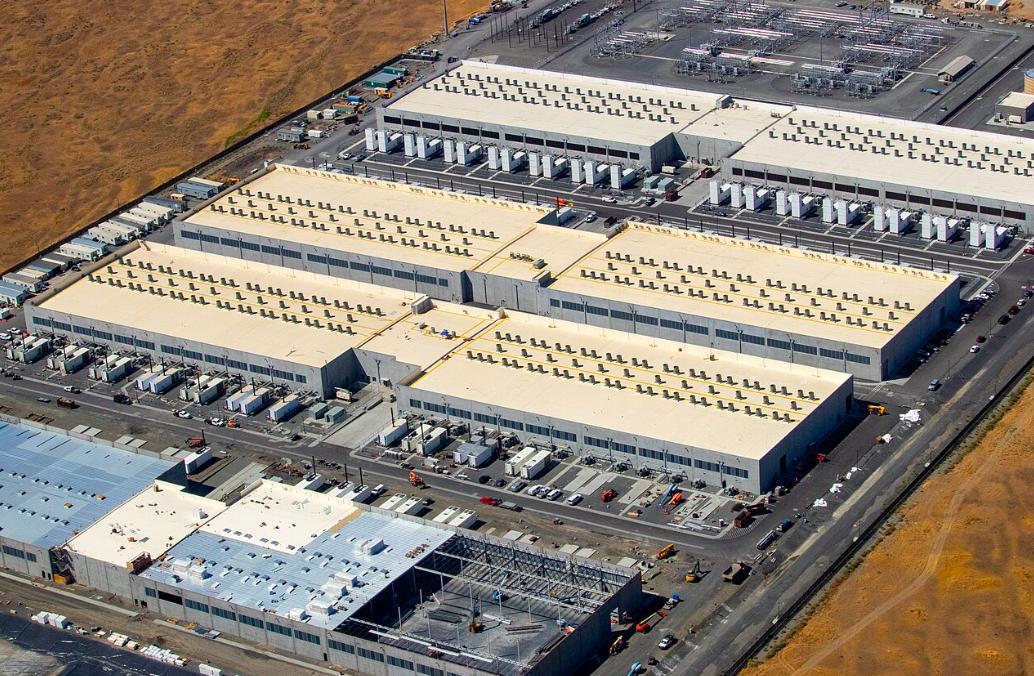
An Amazon data center located in the United States | wikimedia commons/Tedder
Is there enough copper?
A practical question arises: is there enough copper?
To increase copper supply, people first need to discover new deposits, then carry out exploration, evaluation, and construction of mining facilities before finally producing copper, a process that often takes more than a decade.
What is more troublesome is that today's copper deposits are not as easy to mine as before.
The International Energy Agency points out that the average ore grade of global copper deposits has dropped by about 40% since 1991. This means that to obtain the same amount of copper, people often need to mine and process more ore. At the same time, the number of newly discovered copper deposits is also decreasing: of the copper deposits discovered in the past 35 years, only about 5% were discovered in the last 10 years [5].
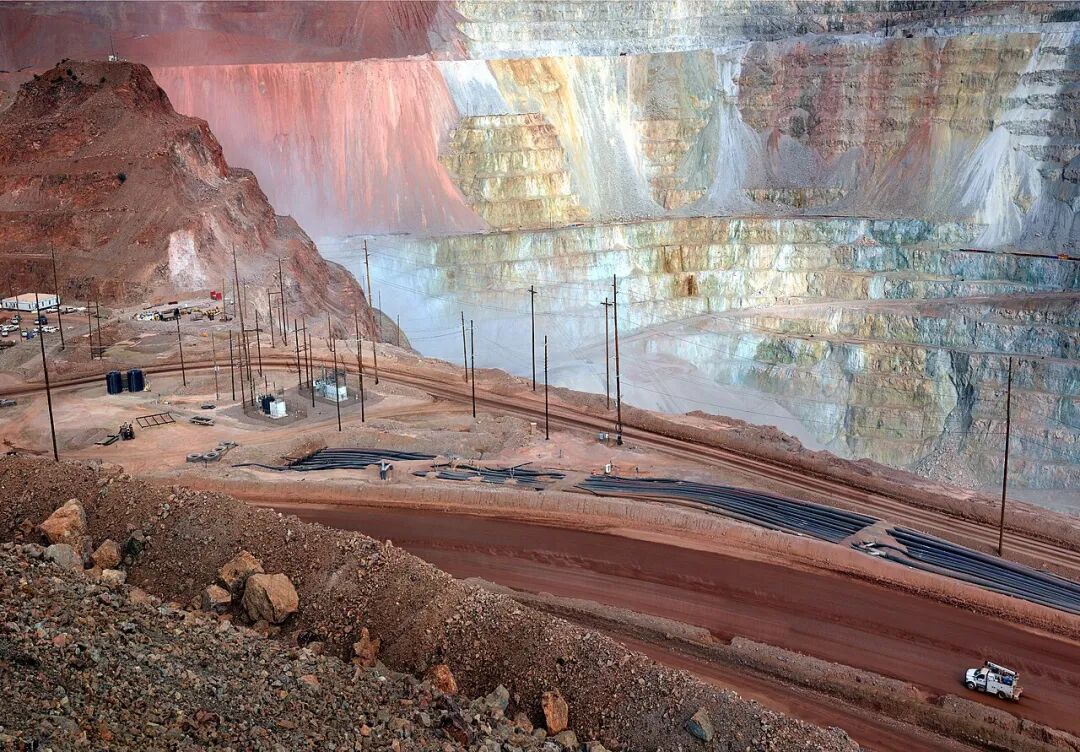
A copper mine in Arizona, USA | wikimedia commons/Philcomanforterie
Data centers are far from the only major consumer of copper. The rapid development of industries such as electric vehicles, power grid construction, and energy transition has also increased the demand for copper.
To answer the previous question: future copper supply may fail to keep up with demand. In 2025, the global refined copper market will see supply slightly higher than demand, but the International Energy Agency predicts that based on the currently announced mine projects, global copper supply may be about 25% less than demand by 2035.
What to do when copper is in shortage?
Facing the possible supply gap in the future, discovering and developing new mines is the most direct solution, but fortunately it is not the only one.
Can we make the copper that has already been mined be reused for more times?
Copper is highly suitable for recycling.
On the one hand, unlike coal and oil, copper will not be directly consumed during use; as long as it is not lost, the copper in products such as wires and cables can still be recycled after the products are scrapped. Theoretically, the more copper humans use, the more "ready-to-use copper" that can be recycled in the future.
On the other hand, polymer materials may experience performance changes after repeated processing, but copper atoms remain copper atoms. The copper extracted from waste cables can still have excellent electrical conductivity after proper refining.
However, scrap copper cannot be used directly after being "picked up", and recycling also incurs costs, so not all scrap copper is worth recycling.
At present, copper recycling is already an important part of global copper supply. In 2015, copper from secondary sources such as scrap copper accounted for about 37% of global copper demand, and this figure became 33% in 2023 — this is not because recycling has decreased, but because copper consumption has grown so fast that the growth of secondary supply cannot keep up.
If copper supply really becomes increasingly tight in the future, re-mining the old copper that already exists in cities will become more and more important.
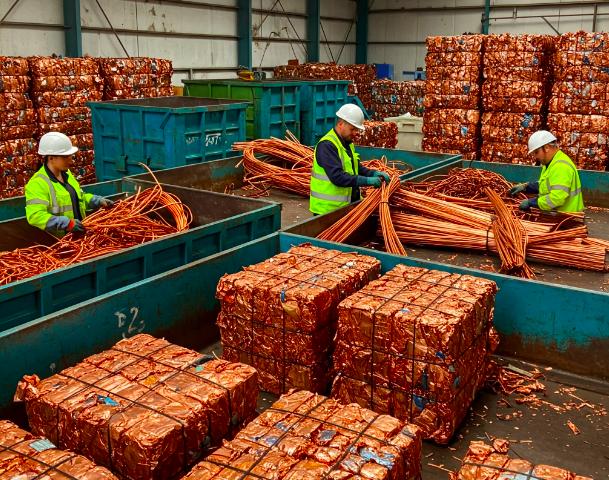
A copper recycling plant in Australia | zerowasteservices.au
Besides expanding supply, we may also reduce unnecessary consumption.
In some scenarios where high electrical conductivity is not strictly required, aluminum can be an alternative material for copper; in a few scenarios such as electrical contacts and switches that require extremely high electrical conductivity, silver with higher conductivity is also used, but silver is much more expensive, so it is difficult to replace copper on a large scale.
In addition, using chips with lower power consumption, transformers with higher efficiency, and adopting DC distribution networks to reduce line capacity can also reduce copper usage.
Copper once again catches up with the technological revolution
This is not the first time copper has gained new importance due to new technologies.
After electrification in the 19th century, wires, cables and power grids were rapidly popularized, turning copper from an ancient metal into a key material for modern industry. The subsequent development of telephones, household appliances, automobiles and the Internet has continuously added new demand for it.
Now it is AI's turn.
Technologies are changing, application scenarios are changing, but as long as humans still need to transmit massive amounts of power and information, copper will hardly completely exit the stage.
The really interesting part of "AI consuming copper" may not lie in how much copper AI will use up, but in every round of technological revolution will eventually redefine some seemingly ordinary basic materials.
References
[1]https://www.iea.org/reports/energy-and-ai/?utm_source=chatgpt.com
[2]https://www.usgs.gov/centers/national-minerals-information-center/copper-statistics-and-information?utm_source=chatgpt.com
[3]Macdonald Amoah, Maxwell Brown, Adam Simon, Morgan Bazilian, Jahara Matisek,
Mineral demand from AI data centers: Infrastructure intensity, processing bottlenecks, and supply competition,Resources Policy,Volume 119,2026
[4]https://www.spglobal.com/en/research-insights/special-reports/copper-in-the-age-of-ai?utm_.com
[5]https://www.iea.org/commentaries/copper-prices-have-hit-record-highs-but-smelters-face-mounting-strategic-pressures/?utm_source=chatgpt.com
This article is from the WeChat official account "Guokr" (ID: Guokr42), written by LI Xiaokui, published with authorization from 36Kr.