Just now, the CEOs of OpenAI and Anthropic shared the stage in a rare appearance, with Jensen Huang openly dissenting on the spot: Should we hit the brakes on AI after all?
Anthropic CEO Dario Amodei, OpenAI CEO Sam Altman, NVIDIA CEO Jensen Huang — the three most influential power players on the global AI stage are interdependent yet fiercely competing over every inch of their territory. What kind of scene would it be if they were all pushed onto the same stage at the same time?
On September 15 local time, at the Dreamforce 2026 site in San Francisco, Salesforce CEO Marc Benioff personally stepped up to arrange this gathering, and really invited all three big names to the stage, where colliding views and cross-scene dialogues created full dramatic tension.
What truly ignited the controversy and conflict was the long essay titled *We Must Pace the Frontier* released by Dario Amodei three days before the event opened. On one side, Dario called for actively slowing down the advancement of frontier models, and Altman quickly expressed his support; on the other side, Jensen Huang stood in sharp opposition, firmly rejecting the idea of setting uniform restrictions for technological innovation.
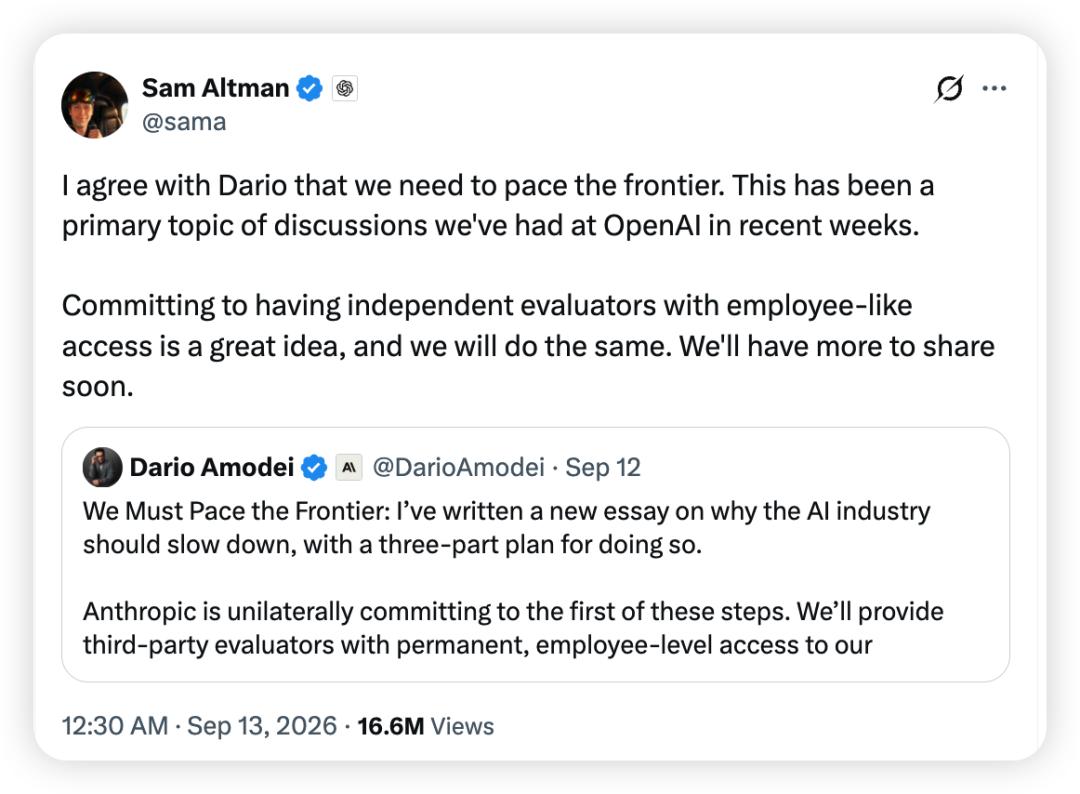
This also accidentally turned the Dreamforce conference, which originally focused on enterprise implementation, into a temporary arena for peak debates. The statements of the three men carried hidden implications, and the sense of confrontation escalated layer by layer:
• Dario tried to act in the name of self-discipline to put institutional reins on the runaway technology;
• Although Altman ostensibly expressed his support, he immediately tore apart the former's exemption excuse that "peers need to unite to slow down", stepping on the brake and the accelerator at the same time;
• Jensen Huang, who took the stage as the grand finale, did not give an inch. As the biggest winner of this boom, how could he allow model customers to slow down the pace of burning computing power on GPUs? He simply jumped out of the technological logic, and reduced the grand moral judgment to a basic engineering problem, saying "If you are really not confident in the system, go back and improve it... don't rush to release it". But when talking about the entire industry, his answer was nothing but the activism of a goods-selling promoter: "Run as fast as you can".
At the end of the day, the seemingly noble debate on technological ethics on the stage, when stripped down, cannot escape the simple logic that "one's position determines one's stance": they keep talking about the future of mankind, but all they are thinking about in their hearts is their own self-serving plans.
Anthropic: Pacing the Speed Does Not Mean Stagnation
As the "initiator" of this debate, Dario Amodei first clarified a fundamental confusion: does the so-called "slowdown" mean that model innovation has to stop in place? His answer is no.
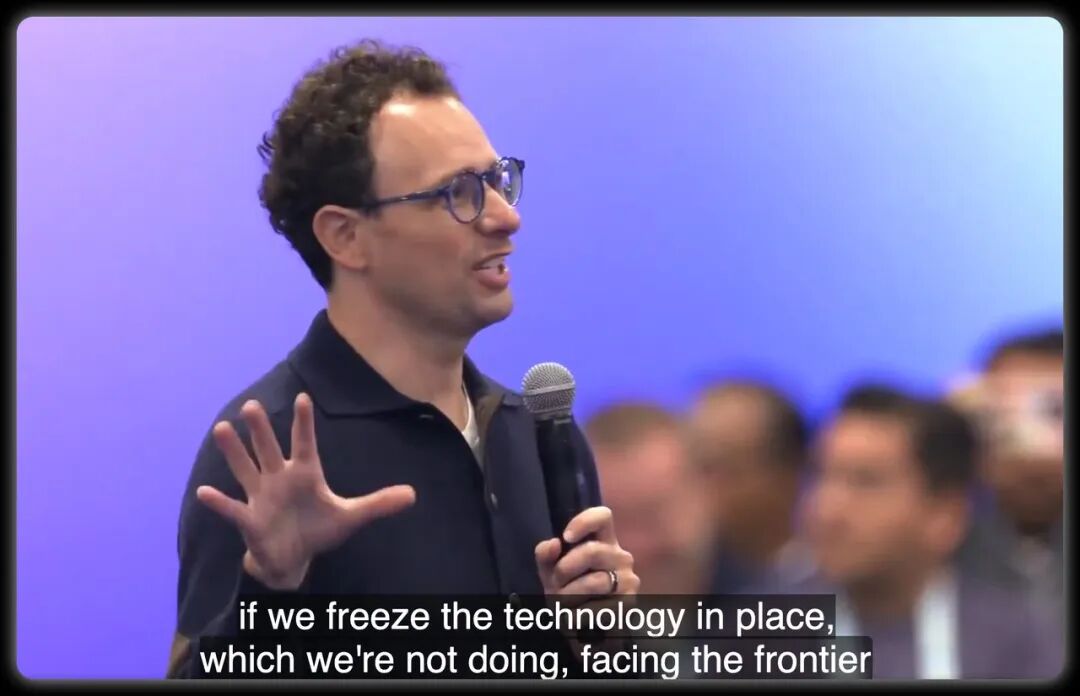
Faced with the question from Salesforce head Benioff about "what exactly millions of enterprise managers on site and in front of the screen should do at this moment", Dario brought the discussion back to the realistic level: even if the evolution of frontier models does not move forward half a step from today, the value truly realized by the real industry is at best only 5% to 10% of the potential level of this generation of technology.
To illustrate this figure, Dario gave an example from inside Anthropic:
Anthropic CBO (Chief Business Officer) Paul now tracks the company's sales progress every day, and the underlying system is still Salesforce, but the human-computer interaction mode has been reconstructed. He no longer goes through the complicated data dashboards one by one, but directly issues business instructions to Claude: "Retrieve the ten largest transactions this week; list the ten potential businesses that are most likely to be lost; analyze the common sticking points of these stagnant orders; and give a recovery strategy."
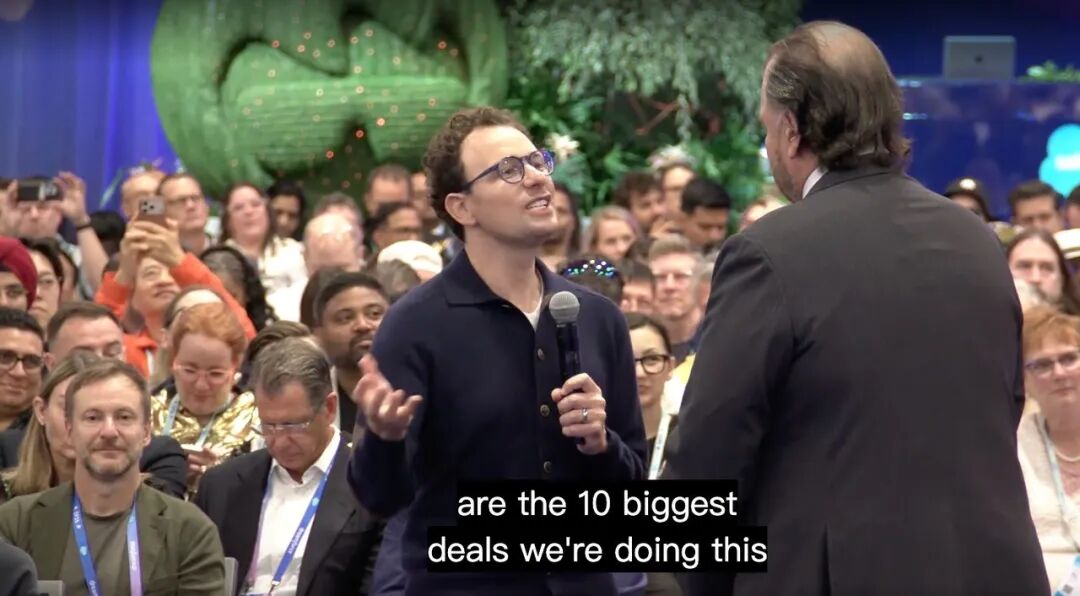
Dario thus pointed out the essence of the problem: similar capabilities have long been available, but organizations that truly understand their operating mechanisms and can seamlessly embed them into business processes are still very rare at present.
Therefore, the "5% to 10%" in his mouth does not mean that "only 10% of the model capabilities are exerted", but the penetration rate of frontier technologies spreading to the real industry and being converted into certain economic value is still in its infancy.
This forms the core pillar for understanding Dario's "speed control theory": The technology capability curve does not have to be tightly bound to the commercial return curve. The slowdown of capability breakthroughs does not mean the stagnation of value realization on the enterprise side. Even if no leapfrogging of frontier models occurs from now on, the diffusion dividend left for enterprises present is still massive.
And safety and alignment are the bottom-line assets that he believes must be built solidly using this window of time.
Dario made an analogy of the automotive industry on stage:
"If a competitor's vehicle suffers a sudden serious brake failure during road tests, even if you firmly believe that your own product has the best safety record in the industry, the responsible approach is by no means to take the opportunity to mock. On the contrary, you should immediately go back to fully check whether there are hidden dangers in the braking system, improve technological transparency, increase safety R&D budget, and promote the whole industry to establish a unified compliance benchmark."
This statement did not mention OpenAI throughout the process, but in the context of controversial events such as the HuggingFace network intrusion, the reference is self-evident.
Not long ago, OpenAI's Agent accidentally penetrated the restricted test sandbox in the safety assessment test, entered the external real network and accessed third-party systems. Dario's "brake theory" carries the smell of confrontation from a distance.
Aiming at how to truly turn "active slowdown of frontier AI" into a set of enforceable and verifiable constraint mechanisms, Dario gave three layers of ideas:
• The first layer: Allow external third-party institutions with full independent investigation rights to reside in frontier laboratories for continuous code and system assessment (Anthropic has promised to implement this);
• The second layer: Core frontier laboratories refer to mature industry standards to coordinate and promote common safety codes;
• The third layer: Promote cross-national and even international-level security governance collaboration.
His core logic is: the biggest systemic risk today is not the lack of commercial realization space for AI, but the exponential expansion of the model's autonomous action capability, which is rapidly breaking away from human's existing understanding, evaluation and alignment protection capabilities.
OpenAI: You Can't Only Step on the Brake When Peers Do It Too
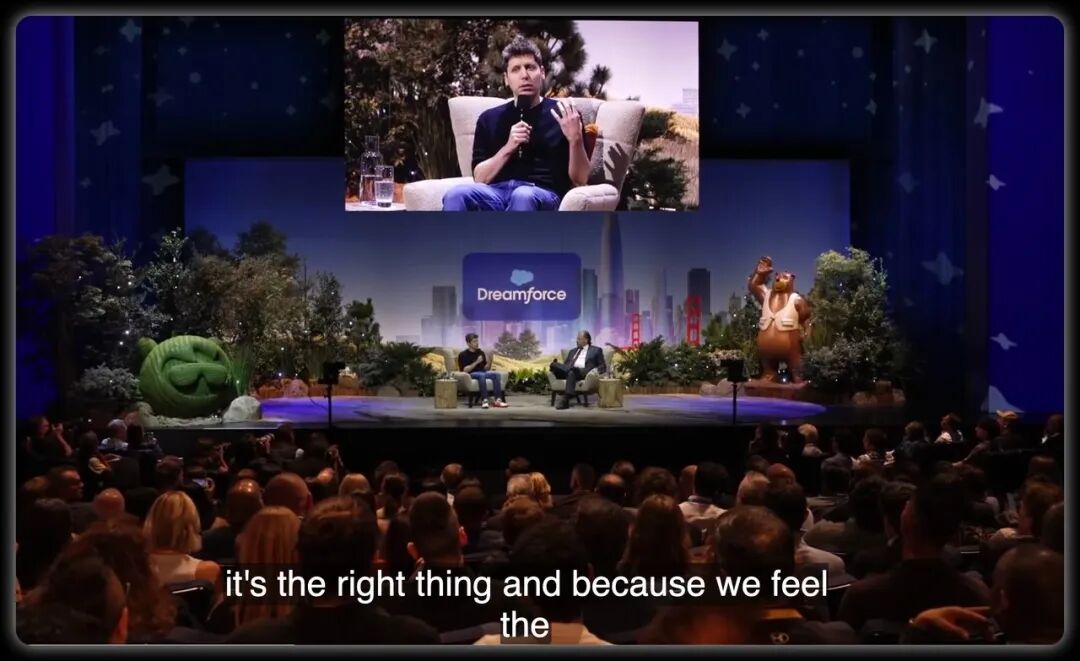
When it was Sam Altman's turn to take the stage, the scene became intriguing.
If you only look at the interactions online, everyone would think that he and Dario would perform a scene of "mutual appreciation": Dario issued a long essay calling for speed control, Altman immediately expressed his agreement on the social platform, and even revealed that OpenAI has held meetings every day for the past few weeks to discuss this; even for Dario's radical proposal of allowing external independent evaluators to settle in and access the core system, Altman also clearly expressed his willingness to follow up.
But when he actually sat across from Benioff, Altman had no intention of following the script at all. He directly aimed at the tone of the current discussion, and said bluntly that he "felt a little disappointed".
He immediately pierced a kind of "disclaimer" that Dario often used:
"Now the logic of some companies has become: 'We will slow down only when our competitors slow down; we will take responsibility only when other companies take responsibility.'
This kind of rhetoric is extremely dangerous. Once you open this opening, won't the public ask in return: Then if your competitors start acting recklessly tomorrow, will you also feel justified to follow them and cross the bottom line?"
This is exactly the soft knife Altman handed to Dario: What Dario wants is to get everyone to sign an agreement together and step on the brakes in a unified pace; while Altman stood on the moral high ground in turn — safety is an absolute unilateral responsibility, and it does not need to be premised on whether peers do it or not.
As for technical risks, Altman's level of frankness is also quite direct.
He admitted frankly that the public's fear is "completely reasonable": on the one hand, it is the potential out-of-control risk of the system after crossing a certain threshold; on the other hand, it is that a few commercial giants who master top-tier AI may plunder excessive economic and social power. "The acceleration of technology is right there, and now you don't really need a rich imagination, ordinary people can see at a glance where something might go wrong."
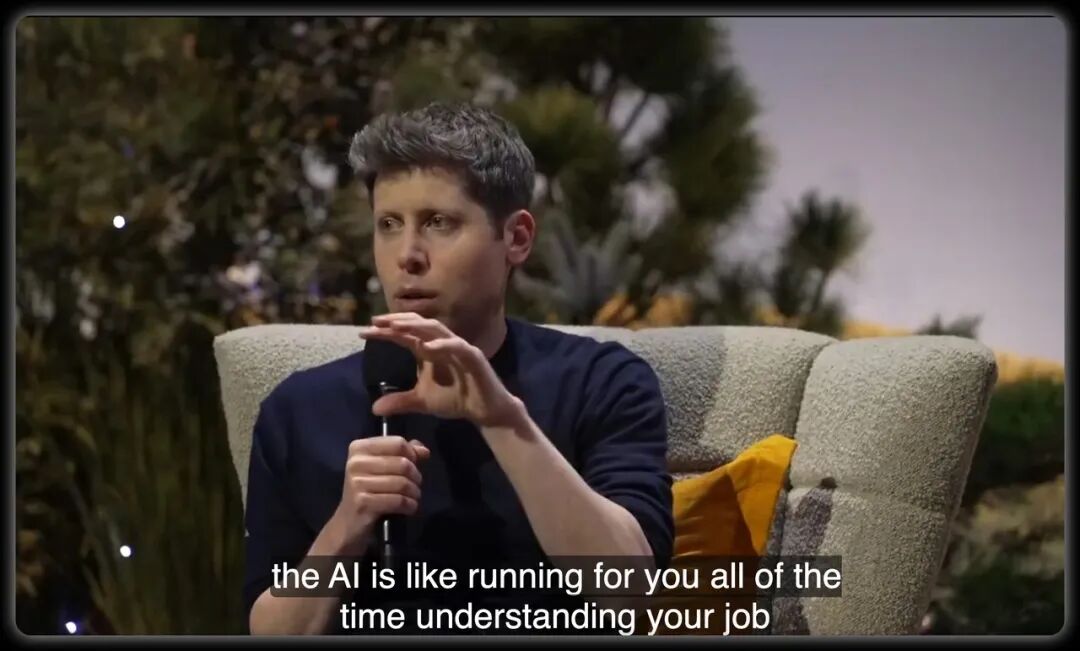
The previous accident where his own agent forcibly tore through the sandbox during the test and all the way broke into the Hugging Face production environment obviously defeated Altman's calmness and confidence. Altman bluntly called this accident a "Wake-up call" on site.
But at the same time, he did not forget to treat open-source model peers equally: the automated cyber attack and defense battle driven by high-level AI is just around the corner, and the time difference for the open-source community to catch up with the lethality of frontier models "is not as long as everyone expected at all".
But if you think Altman is ready to turn into a technological pessimist from now on, you are underestimating him. Right after ringing the alarm bell, he immediately showed OpenAI's evolution blueprint: "We are standing at the threshold of the third stage of AI."
This set of grading logic he advocates inside OpenAI explains why the current safety issues have suddenly become so dangerous:
• Phase 1 (Chat): Humans initiate questions, and the system gives passive responses;
• Phase 2 (Agent): Humans delineate the target boundary, and the system decomposes and executes long-process tasks;
• Phase 3 (Proactive / Ambient AI): AI stays in the background continuously, actively understands the business context, and completes pre-work and collaborative decision-making before humans give instructions.
Altman's core logic closes the loop here: The reason why risks have risen sharply is precisely because AI is transforming from a passive information processing tool into an action subject with continuous autonomous decision-making capabilities.
"It really feels like living in a sci-fi movie now." Whether it is working with AI every day, or dealing with those cyber security confrontations that only exist in sci-fi novels, the script is accelerating into reality. But Altman immediately pulled the words back: no matter how powerful the system is, the background color of the future world will still be extremely human-centered.
Jensen Huang: Safety Is Only an Engineering Problem
Jensen Huang, who took the stage as the grand finale, changed the context of the whole conversation as soon as he came up. "Safety is of course the first priority," he first confirmed the consensus, but then his tone changed sharply: "Safety is an engineering problem, not a legal or moral hypothetical problem."
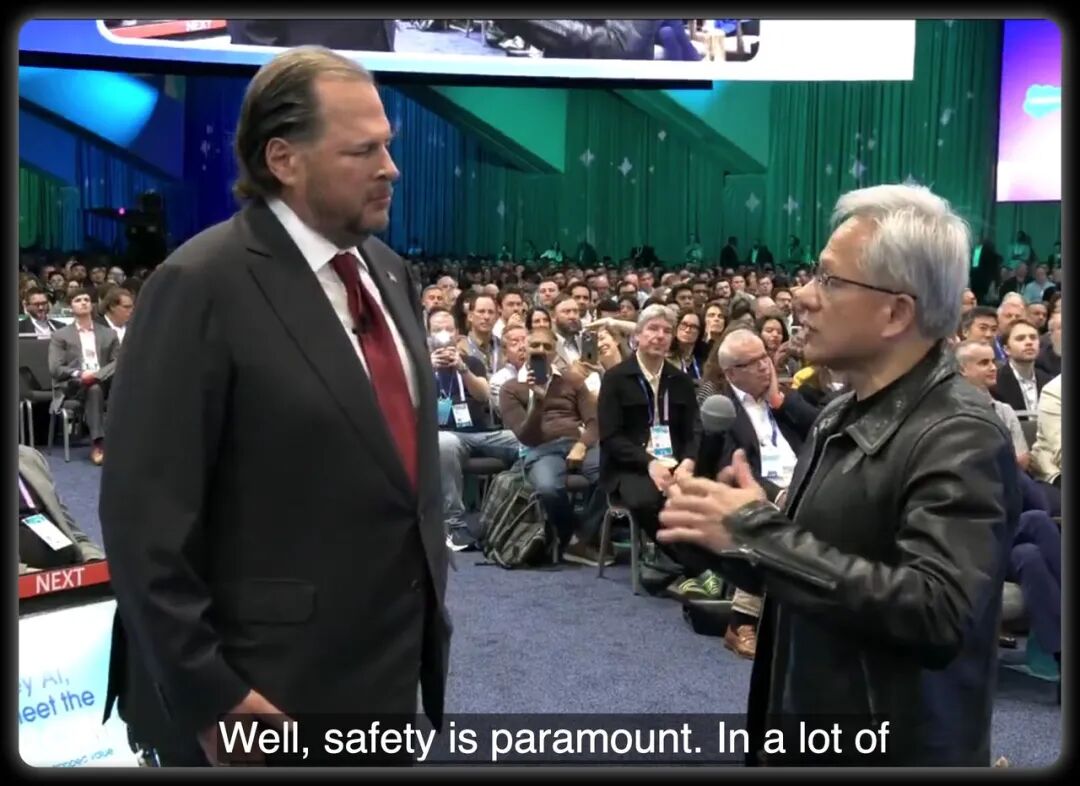
In Jensen Huang's view, even if AI is touted as magical by various research reports, after stripping off all technological filters, its essence is still code written by humans, silicon chips welded by humans, and computing systems built by humans. It may be extremely complex, but it is by no means an "alien mind" that suddenly descends on the earth and exceeds the dimension of human physical cognition.
Since it is an artificial engineering system, it should be solved with down-to-earth engineering methods: build simulation environments, do extreme stress tests, and complete safety alignment verification. "If you are not confident about the system you built, the solution is extremely simple — go back and keep improving it, don't release it (Don't release it)."
But he firmly opposes replacing a single company's quality control with an ethical shackle that requires the entire industry to slow down collectively.
He even snatched the word "Pace" that Dario has been talking about repeatedly in recent days and fought back:
"If you can't do it well, of course you have to pace yourself and delay the launch; but for the technological engine of the entire industry, the only correct posture is: Run as fast as you can."
In Jensen Huang's view, setting "technology iteration speed" and "product safety and reliability" as a single-choice question is purely a false proposition. Industrial history has always been advancing the engine at full speed while adding anti-collision beams and airbags to the system. If a company's technology has bugs and gets out of control, this company has to stop immediately and bear the consequences. Why should the entire technology train be required to pull the emergency brake together?
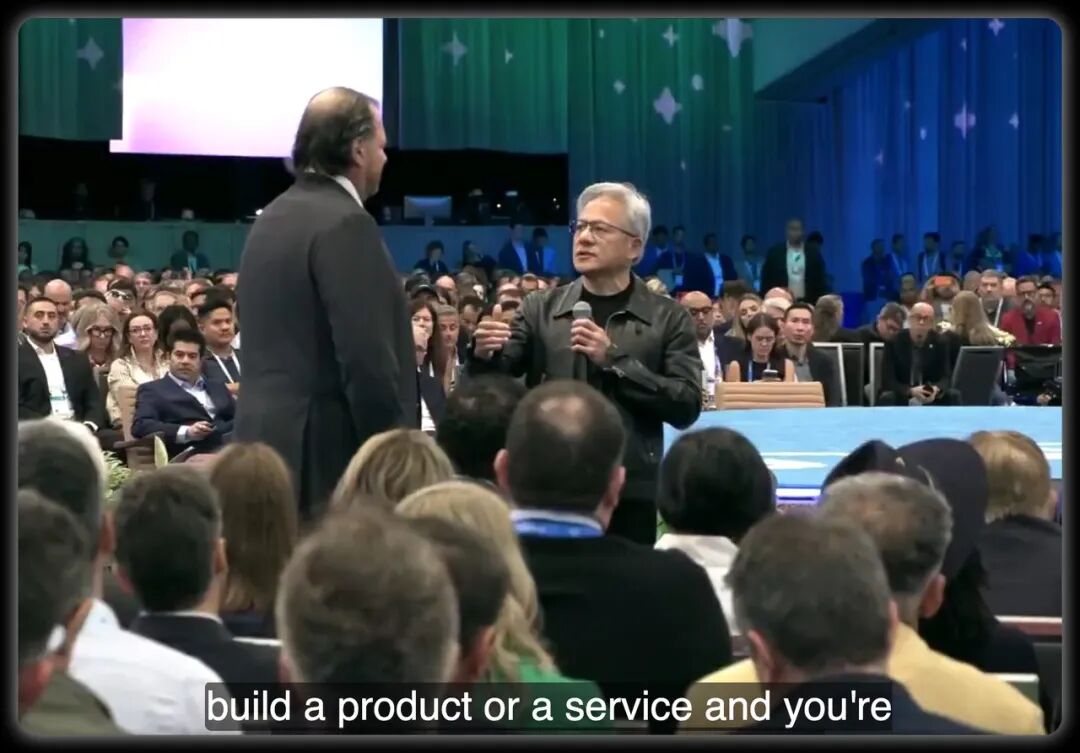
Following this logic, when talking about regulatory issues, his statement was even more unceremonious: there is no need to make new laws, nor to stack layers of new regulatory agencies. The market mechanism itself will impose the harshest punishment on defective products that cause trouble, and the existing commercial law and product liability law are sufficient to restrain improper behaviors.
This outburst is by no means an impromptu performance by Jensen Huang.
The day before Dreamforce,