Exclusive from 36Kr: This physics AI enterprise has secured tens of millions of yuan in financing from Dachen Cai Zhi and Yuanhe Puhua, and independently developed the WMM world mechanism model.
Source / Enterprise
This article is about 2900 words, with an estimated reading time of 7 minutes
Author | Ou Xue
Editor | Yuan Silai
36Kr Hard Krypton learned that Primordium Intelligence Technology (Nantong) Co., Ltd. (referred to as "Primordium Intelligence") has completed tens of millions of yuan in Series Pre-A and Series Pre-A+ financing, invested by Dachen Caizhi and Yuanhe Puhua respectively. The funds will be mainly used for the expansion of the product R&D team and the construction of a standardized product matrix.
Founded in July 2022, this company is a physical AI enterprise oriented to industrial scenarios. Its long-term goal is to enable AI to understand the state and rules of the physical world and act stably in the real environment. Implemented in current products, it is a hardware-software integrated solution centered on the self-developed WMM (World Mechanism Model): overlay edge-side intelligent processors and process packages on mature existing industrial equipment, so as to push equipment from "automation" to "autonomy".
Primordium Intelligence is led by Dr. Jin Junyang, CEO, and Dr. Dong Yunlong, CTO. Its core members have academic backgrounds from universities including the University of Cambridge, Tsinghua University, and Huazhong University of Science and Technology, as well as industrial experience in technology enterprises such as Huawei. The company's core technology is mainly based on the nearly 18 years of research accumulation in the fields of system identification, complex dynamics and mechanism modeling by the team of Professor Yuan Ye from Huazhong University of Science and Technology. In the early stage, these researches were mainly carried out under the CPS system modeling and control framework, which now provides a methodological foundation for the company's physical AI work. In the company's product system, this accumulation is being transformed into deliverable mechanism models, toolchains and process packages.
After its establishment, the company continued to focus on the physical AI direction at the technical level, and clearly focused on industrial implementation at the application level.
This choice is based on two judgments: first, industrial equipment such as machine tools, robotic arms and special equipment have been in operation for many years, with mature hardware systems, clear control boundaries, and verifiable process objectives; second, the company's team has completed a large number of technical verifications around scenarios such as aerospace, ship and rail transit since the university stage, and has undertaken a number of national major special projects, possessing the industrial foundation to precipitate mechanism modeling capabilities into industrial products.
"Physical AI is the next innovation wave of artificial intelligence," Primordium Intelligence judges, "In the past, AI mainly processed data and realized one-way information flow, collection, analysis and display. Now the industry hopes that AI can truly intervene in the physical world and interact dynamically with equipment."
To achieve this leap, Primordium Intelligence believes that AI needs to understand the current state, predict the consequences of actions, and act reliably under physical constraints. This is also the main design line of the company's product architecture — models, toolchains and edge hardware work collaboratively around the same set of physical constraints.
36Kr Hard Krypton understands that the core technology of Primordium Intelligence is the self-developed WMM (World Mechanism Model), which is also the technical base of the company's full-stack product package. Its core idea is to introduce dynamic structures and physical constraints into model learning, so that data can be used to identify rules and reduce the dependence on full-working-condition data coverage.
This also reflects Primordium Intelligence's understanding of the technical route: "WMM still uses data, but it does not leave all knowledge to data for memorization. What the model needs to learn is not only how to complete a task once, but also how actions change the physical world." The company hopes to improve the controllability and interpretability of the model when working conditions change through the combination of mechanism constraints and data learning.
The two technical priorities of WMM are both aimed at the pain points of industrial implementation:
First, improve the stability of continuous processes. Through the Koopman latent space dynamic constraint, the model not only predicts "the next action", but also learns the evolution of the system over time, with the goal of reducing error accumulation in multi-step prediction and control.
Second, explore the reuse of rules across tasks. The team tries to precipitate basic operations such as Grasp, Twist, and Insert into reusable physical modules, and then combine and adapt them according to new tasks. This route hopes to reduce the cost of learning from scratch for each task, and the actual degree of reuse still needs to be tested in specific equipment and working conditions.
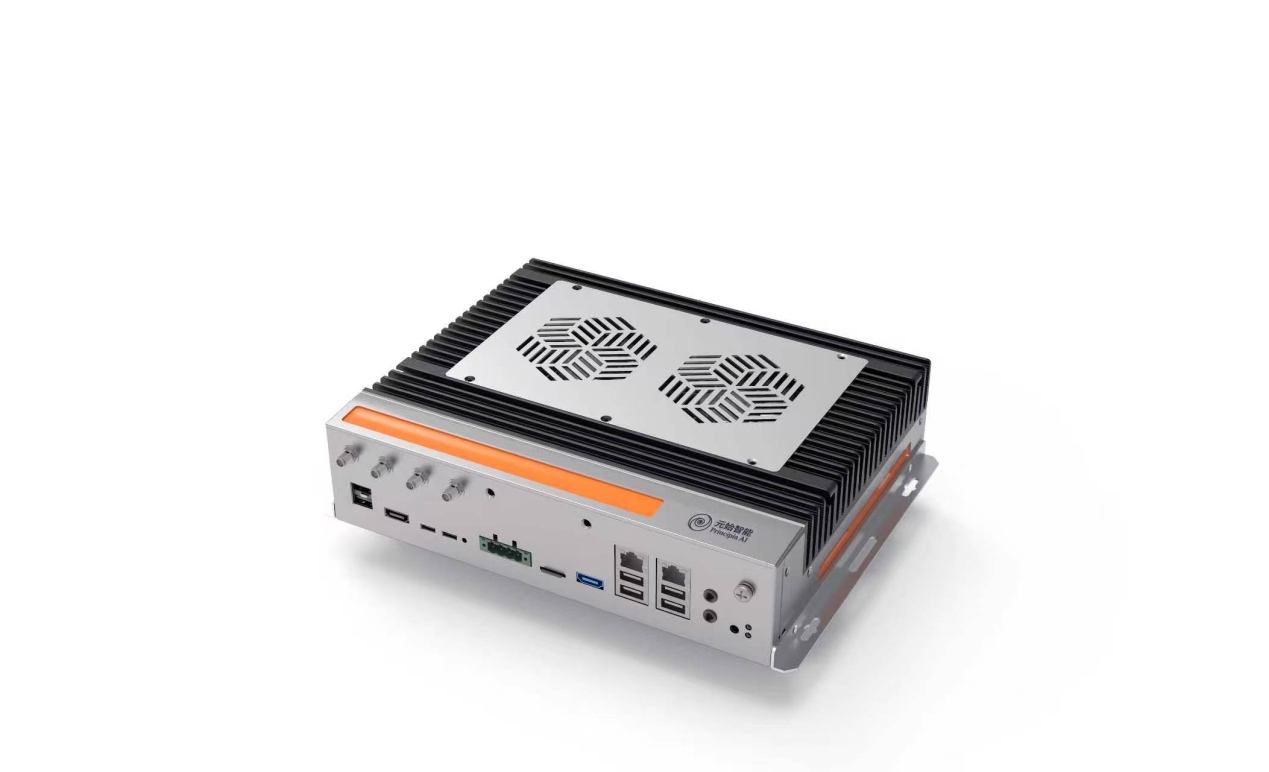
At present, the product form of Primordium Intelligence is a hardware-software integrated solution, which aims to gradually add the capabilities of perception, judgment and autonomous adjustment to existing equipment: at the hardware level, it is the PRIMACT R100 Real-time Physical Intelligence Platform, which carries core model algorithms and industrial interaction interfaces, supporting local deployment and local inference; at the software level, it includes toolchains and process packages — the toolchain is used to develop and adapt industrial AI models, while the process package targets specific equipment and process scenarios, precipitating physical rules and control logic into reusable industry modules.
"We are not a pure software company," Primordium Intelligence emphasizes, "In the industrial field, the objects to interact with are physical equipment. Software alone is not enough, and hardware interfaces must be used to control the equipment. This is why the company adheres to the hardware-software integrated product route."

PRIMACT R100 Real-time Physical Intelligence Platform (Source / Enterprise)
Based on this set of hardware-software integrated products, the company hopes to carry out intelligent upgrading for existing industrial equipment on the premise of retaining the original control system and production process as much as possible. Industrial customers put reliability first, which means that the product not only needs to be accessible, but also must prove its value under constraints such as latency, disturbance and long-term operation.
According to the company, Primordium Intelligence has carried out cooperation and verification with more than ten industry customers including AVIC, CNNC, CSIC, CRRC and ZTT, providing a variety of intelligent solutions such as digital modeling, predictive maintenance and precision control.
The following is an excerpt of the interview between 36Kr Hard Krypton and Primordium Intelligence (edited):
36Kr Hard Krypton: Why did you choose to enter the industry from the industrial embodied intelligence scenario?
Primordium Intelligence: The long-term issue we focus on is to enable machines to understand the real world and act stably in it. But general capabilities need to be gradually established in specific scenarios. Primordium Intelligence chooses to start with scenarios that can be delivered and accepted, instead of pursuing a model applicable to all equipment from the very beginning.
The industrial field is different. Industrial equipment is already mature, machine tools, robotic arms and special equipment have been used for many years, and the process objectives and control boundaries are relatively clear. Our products add capabilities of perception, judgment and autonomous adjustment to them, so that the equipment can gradually move from "automation" to "autonomy". We first solve one process problem, stabilize one piece of equipment, and then reuse the verified rules for the next piece of equipment. This is the path we choose.
36Kr Hard Krypton: Compared with other physical AI companies, what is your biggest difference?
Primordium Intelligence: In terms of technical route, we emphasize more on introducing dynamic structures and physical constraints into model learning. Industrial data is often limited, and the cost of trial and error is very high, so we cannot rely on exhausting all working conditions to train the model. Our idea is to let limited data be used to identify rules, and test whether these rules can continue to hold when working conditions change. This is the core difference.
From the perspective of commercialization, we not only focus on whether a single task can be completed, but also whether the equipment can remain stable under disturbance, how much re-debugging is required after changing the working condition, and whether engineers can understand the judgment of the system. The cooperation and verification carried out by the team with industry customers is to test the technology on these specific issues, rather than just showing a one-time demonstration effect.
36Kr Hard Krypton: What is the key direction of product iteration in the next step?
Primordium Intelligence: The core is to realize end-side lightweight and improve inference efficiency, so that more complex models can run stably under the constraints of limited computing power and strict latency.
Why do we need to develop the end-side? Data in some industrial scenarios cannot leave the factory, and some scenarios also have network access restrictions, so the model must support local deployment and local inference. This is a hard constraint for physical AI to be implemented in these scenarios.
We will also continue to deepen the "toolchain + process package" system to continuously reduce the adaptation cost in the same industry. Original industrial data can remain on the customer's site, and what the team needs to precipitate is the transferable dynamic structure, algorithm modules and deployment methods. For each new device connected, how much verified knowledge can be reused and how much the adaptation time can be shortened are more direct indicators to measure the level of productization.
In the longer term, we do not limit ourselves to a certain type of industrial equipment. Machine tools, robotic arms and mobile manipulators have different forms, but they all need to deal with the same set of problems: perceive the current state, understand how the system evolves, predict the consequences of actions, and act reliably under constraints. Today's edge processors, toolchains and process packages are the product carriers of these capabilities; WMM points to the basic capabilities that can be reused across equipment and tasks.
Taking a big view and starting from small things is similar to the strategy of "encircling cities from rural areas": first stabilize one process, then replicate the capabilities on one type of equipment, and finally precipitate the rules into a platform. We hope that WMM can gradually move from local certainty to broader generality along this path, and become a basic capability of Artificial General Intelligence (AGI) that can understand and act on the physical world.
Views of Investors:
Yuanhe Puhua, the investor of the Series Pre-A+ round, said: "The next stop of AI is to truly intervene and control the physical world. Primordium Intelligence is a rare target we have seen in this direction: the team has precipitated years of accumulation in the fields of dynamics and mechanism modeling into standard products, and verified product strength with military-grade reliability requirements. By injecting physical rules into AI, Primordium enables the model to work stably and transferably in industrial scenarios where data is scarce and reliability is the top priority, which has huge industrial value."