WeChat is conducting internal beta testing of its AI social function, where the AI can chat on behalf of users in advance to meet demands including making dinner appointments.
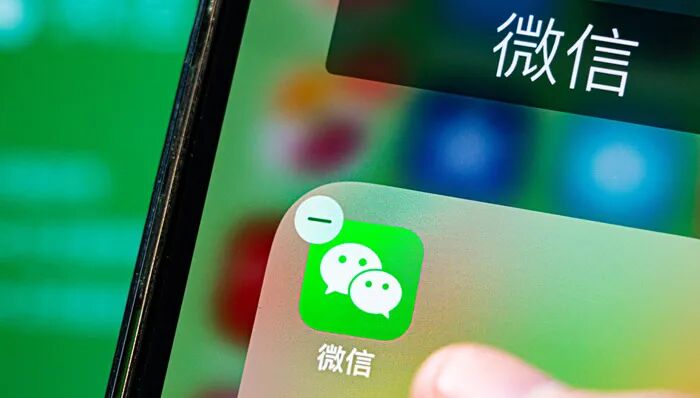
Image source: Jiemian Gallery
News on September 7, according to a report by National Business Daily, WeChat is conducting internal beta testing of the "Micro AI Social" feature. Users' Micro AI can directly find their friends' "Micro AI" to initiate conversations. Users only need to inform their own "Micro AI" of their demands, and it will go to communicate with the other party's "Micro AI". After the other party confirms, the two "Micro AIs" will communicate first and then bring back the results, and will remind users to confirm when a decision from them is needed.
Different from "sending WeChat messages on behalf of users", this feature allows two AIs to communicate first, and users only intervene during the authorization and decision-making stages. Reporters found in actual tests that the content of "Micro AI Social" will not appear in personal chat dialogues, and will only be conducted within the "Micro AI" section.
In response, Jiemian News consulted Tencent customer service and learned that the "Micro AI Social" feature in WeChat corresponds to the "Micro" intelligent assistant. It is a native AI assistant that the WeChat team launched for small-scale internal beta testing in mid-June 2026, accessible via the two green dots in the upper left corner of the main interface. "It is only in small-scale testing at present. Users who do not get access can pay attention to subsequent version updates."
Tencent customer service also told Jiemian News that its main functions include operating native WeChat features through conversations, such as sending messages, making audio and video calls, and searching Moments; invoking mini-programs to complete services such as medical appointment registration and coffee purchase; searching for videos and articles, and generating images and notes.
WeChat's native AI assistant "Micro" launched small-scale internal beta testing on June 20. Eligible users can update WeChat to the latest version (8.0.75) and click the "Micro" icon in the upper left corner of WeChat's main interface to use the AI feature. Users can also swipe right on the main interface with one tap to start interacting with "Micro".
Reporters from Jiemian News experienced the beta version of "Micro" as soon as it was launched, and found that whether in terms of interaction experience or functional richness, this can be regarded as the biggest update in WeChat's history.
After entering "Micro", users can operate some basic functions through text or voice conversations, including daily chat, file reading, setting reminders, sending messages, transferring money, and managing Moments. For example, "send happy birthday message to mom", "transfer money to XXX", "capture noteworthy key content from Moments in the past two days", "remind me to drink water in 5 minutes" and so on.
Apart from basic operations, a major highlight of "Micro" is that it can invoke mini-programs to complete services. For example, if a user wants to order a cup of Heytea and specifies requirements such as sugar and ice levels, it will automatically invoke the Heytea mini-program or Meituan Waimai mini-program (users can choose the specific mini-program) to place an order, and users only need to manually confirm the payment. Booking hotels, hailing rides and other services follow the same logic.
It is understood that the main model used by "Micro" is WeLM, a large language model developed by Tencent's WeChat team, and DeepSeek is invoked to process some responses. According to official introduction, WeLM supports a context window of up to 128k tokens (90,000 to 100,000 words), and is good at logical reasoning and mathematical problem solving. Compared with general models, its most unique feature is the deep integration with the WeChat ecosystem.
On August 12, at Tencent's 2026 Q2 earnings call, Martin Lau, President of Tencent, talked about the feedback of the gray test of WeChat AI "Micro" in the second quarter. He said that AI can make WeChat more intelligent, helping users conduct transactions, explore content and manage daily life. In the PC era, QQ was mainly a communication and social tool. In the mobile Internet era, WeChat amplified the value of QQ by more than 10 times. In the AI era, over time, WeChat will become an AI-first ecosystem. When a user gives an instruction, the system will execute it on its own.
He said that if Tencent can provide this experience while controlling costs, and meet user privacy needs and cost-effectiveness, it can endow WeChat with powerful capabilities. "In the future, WeChat's ecosystem will expand and convert into huge value based on the current profit mechanism. That's the future we see. With the launch of prototypes, we are increasingly confident about this."
He also mentioned that in the past, users in the WeChat ecosystem mainly interacted with content and mini-programs. But in the future, users can directly send complex instructions to the Agent, who will assist in executing various tasks. In the longer term, mini-programs, merchants and every user will have exclusive Agents that can communicate with each other and complete transactions. Tencent is gradually building the underlying architecture behind this.
As a national-level application with over 1.4 billion monthly active users, every minor function change and upgrade of WeChat has attracted widespread attention. On September 3, the topic "WeChat allows users to check who deleted them from friends list with one tap" sparked heated discussions on social platforms. Some bloggers posted that this feature is not open to all users, but is an auxiliary cleaning mechanism that is only triggered when users have added 10,000 friends.
In response, WeChat's Director of Public Relations responded on social media that many friends are concerned about the feature that "users with over 10,000 friends can check who deleted them from friends list". This feature is not designed for "checking who deleted me", but just provides an exit for people who are really too busy to add more friends to sort out their social connections.
Regarding many users asking why WeChat does not directly launch a one-tap feature for all users to check who deleted them from friends list, WeChat's Director of Public Relations said that this is a deliberate design to "counter social anxiety", avoiding turning the prying anxiety of "whether I was deleted" into a Pandora's box that everyone can check at any time. It's not that users are not allowed to know, but that we don't want making such information known to become a new burden.
At the same time, WeChat's Director of Public Relations reminded users not to trust paid services that claim to help add 10,000 friends with one tap, which are all third-party plug-ins that will trigger WeChat's security policies and even lead to account bans. Clear out some relationships to make space for important people. Some relationships fade away, and it's okay to know that without caring too much.
This article is from the WeChat Official Account "Jiemian News", written by Chen Xiaotong, and published by 36Kr with authorization.