Meta has released a patch for its AI glasses: the device will stop recording immediately once the indicator light is covered.
Walking down the street, a person wearing Ray-Ban smart glasses walks towards you from the opposite side.
Suddenly you are not sure, was he filming me just now?
This question has plagued everyone who has encountered Meta AI glasses in public over the past two years.
Recently, Meta has finally rolled out an update: if the LED recording indicator light on the front of the glasses is covered, the camera will stop working immediately, even if the recording has already started.
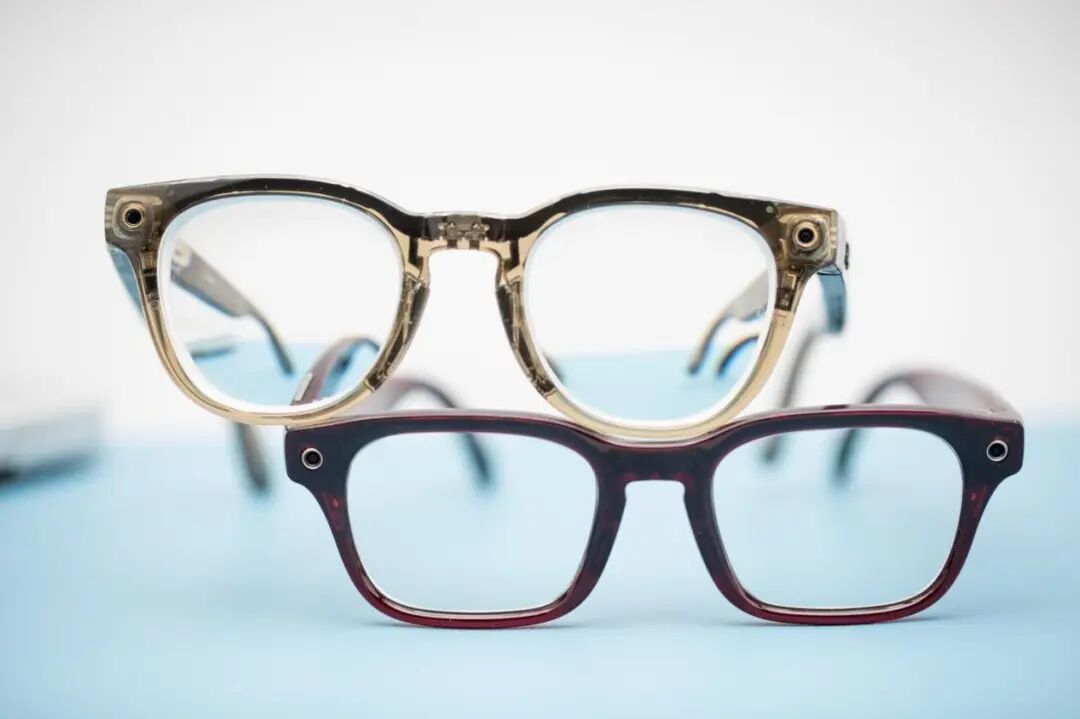
Sounds like a minor update? No, this is probably the most critical puzzle piece in the process of AI glasses evolving from a "geek toy" to a "mass consumer product".
Speaking of which, this single indicator light has almost troubled Meta for two years.
Meta glasses have been equipped with an LED indicator light since the first generation, which flashes when taking photos or recording videos to remind people around that "I am filming you".
But soon some people found that they could press the record button first, then cover the indicator light with their finger or tape after the recording starts, the camera will continue to work, while others are completely unaware.
The existence of this loophole earned Meta glasses an unflattering nickname on foreign social platforms: "creep glasses".
Alex Himel, Vice President of Meta's Augmented Reality Business, posted a thread on Threads saying that after this update, "if the indicator light is covered during recording, the camera will stop working".
He added: "Only a very small number of people will try to bypass these protection measures, and the fact that they have to go to such great lengths to do it itself proves that our measures are effective."
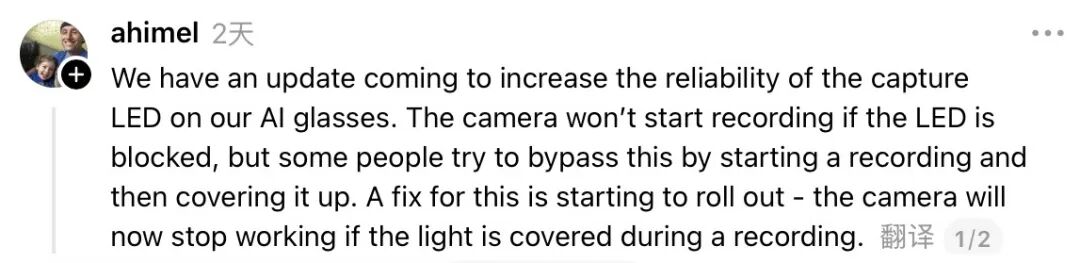
This statement sounds a bit like self-consolation, but we have to admit that Meta is indeed gradually tightening the rules on this issue.
In July this year, Meta had already launched an update that automatically disables the camera when the indicator light is blocked on the second-generation glasses.
The August update extended the protection scope to "after the recording has started". Logically, this should be the last bypassable loophole.
To be honest, the privacy issues of Meta glasses have been exaggerated. It is a hundred times easier to take secret photos with a mobile phone than with glasses.
Mobile phone cameras are more hidden, with more flexible shooting angles, and now everyone has a smartphone, so no one pays attention to it at all.
But glasses are different. They are worn on the head, only tens of centimeters away from other people's faces, and we can't tell at all whether this person is listening to music, making a call, or recording a video.

This "uncertainty anxiety" is the core of the problem.
It's not that Meta glasses have really caused many privacy violations, but that it makes everyone feel insecure that "I might be being filmed".
Meta's coping strategy is very smart. In addition to technical patches, they have also put up huge billboards in communities with "high glasses sales" such as Los Angeles, which read: "The camera lets you capture the moment, and the indicator light will tell everyone around you when you are shooting."
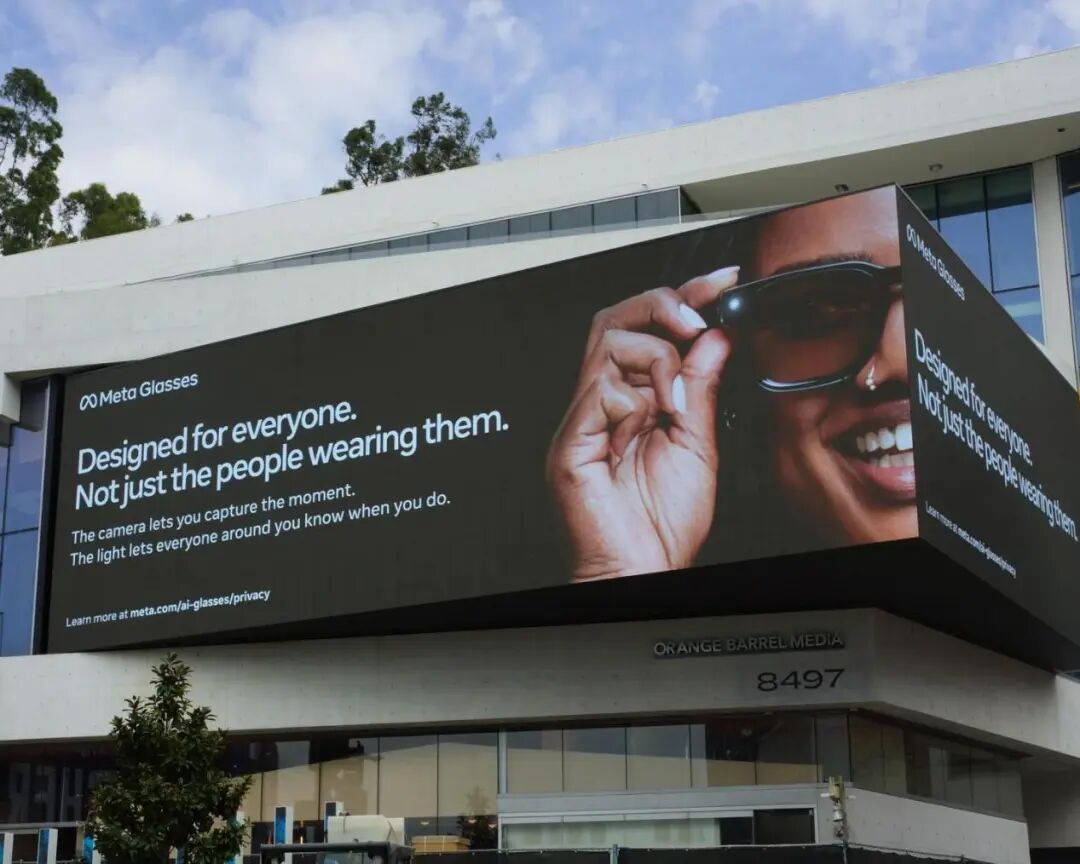
This is not just public relations, it is Meta trying to build a social consensus: AI glasses can exist, but the premise is that everyone knows when it is working.
If this consensus cannot be established, AI glasses will always only be toys for a small number of people.
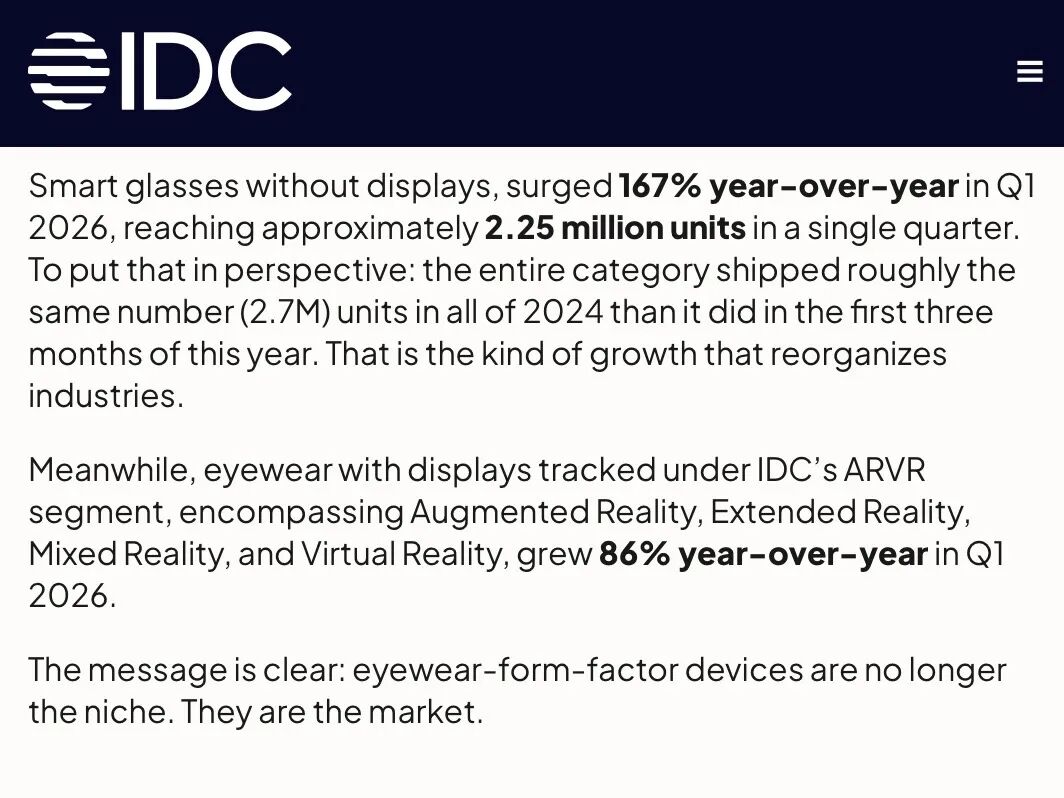
Data released by IDC shows that in the first quarter of 2026, the global shipment of display-free smart glasses reached 2.25 million units, a year-on-year increase of 167%. This figure almost caught up with the total shipment of the whole year of 2024.
IDC predicts that the shipment of display-free smart glasses for the whole year of 2026 will reach 13.6 million units, with a revenue of 5.1 billion US dollars. By 2030, this figure will grow to 27.3 million units, with a compound annual growth rate of 18.9%.
Counterpoint Research's data is even more staggering: in the second half of 2025, Meta's share in the smart glasses market was as high as 82%.
The total global shipment of AI and smart glasses in 2025 was about 8.7 million units, of which Meta alone accounted for 7.4 million units. Meta's smart glasses revenue reached 2.15 billion US dollars in 2025, surpassing the 660 million US dollars of Quest headsets for the first time.
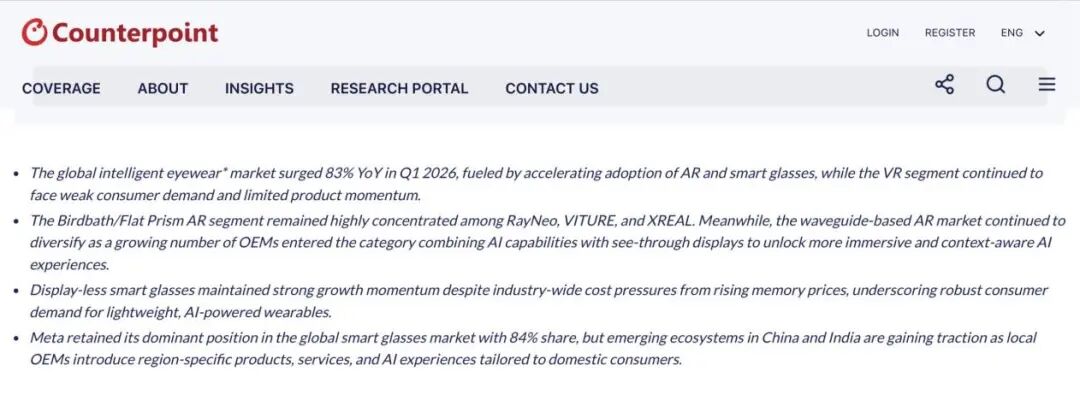
Ray-Ban Meta Gen 2 sold about 6.5 million units in the single year of 2025. For comparison, how many units has Apple Vision Pro sold in total since its release? Less than 500,000 units.
What does this mean? It means that AI glasses have crossed the "early adopter" stage and are entering the mainstream consumer market. It is not the next VR, it is the next AirPods.
In the second half of 2026, the biggest variable in the AI glasses market is Google.
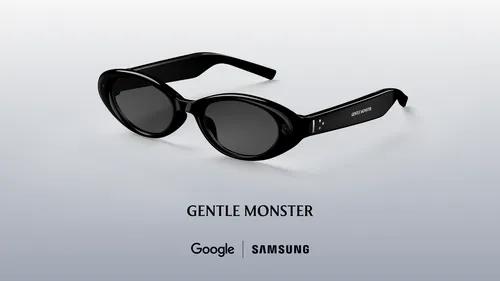
Google, together with Samsung, Warby Parker and Gentle Monster, is preparing to launch Gemini-powered "Intelligent Eyewear", which is expected to be released in the fall.
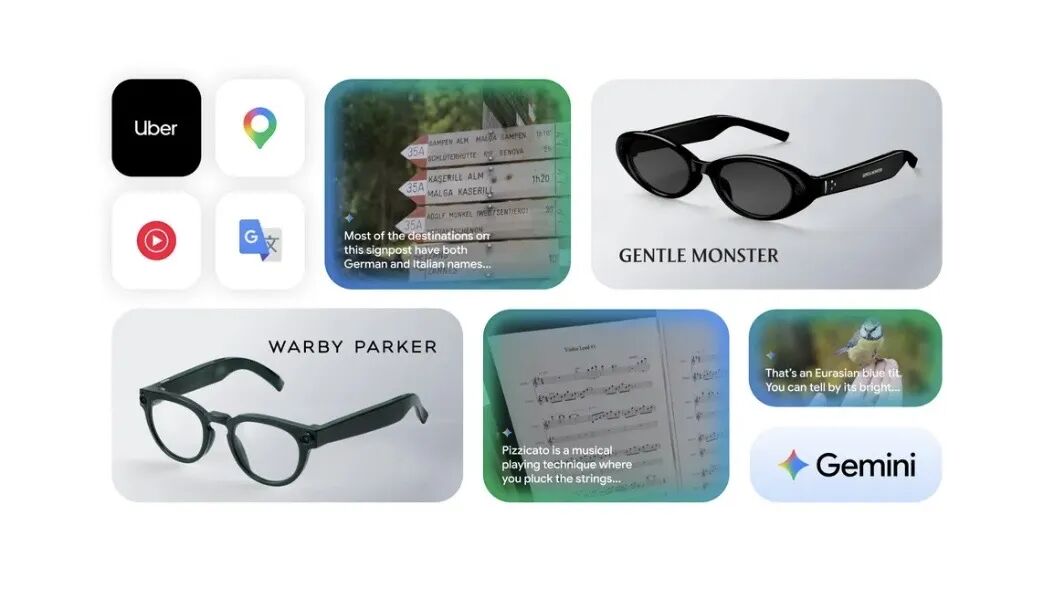
In terms of hardware parameters, Google's entry will indeed put pressure on Meta. Samsung's hardware engineering capabilities, the fashion genes of Warby Parker and Gentle Monster, plus Gemini's AI capabilities, this combination looks very competitive.
But the problem is that Meta has been running for two years. The 6.5 million shipments of Ray-Ban Meta Gen 2 are not a numbers game, but the result of real users voting with real money.
The data, feedback and usage habits generated by these users during use are continuously feeding back to Meta AI's model training.
The core competitiveness of AI products has never been hardware parameters, but the data flywheel.
What Google has to catch up with is not only hardware, but also the ecosystem. No matter how strong Google's Gemini is, it needs to rebuild a set of user habits.
And don't forget that Meta Connect 2026 is scheduled for September 23-24. Quest 4, Orion Developer Edition, Malibu Watch, Meta is obviously preparing to grab a wave of attention before Google's release.

Every time we talk about AI glasses, many people think: this thing is just the next Google Glass, it will be popular for a while and then cool down.
But why did Google Glass fail back then? Three reasons: too expensive ($1,500), too ugly (everyone knows you are wearing smart glasses), and too useless (no killer application).
Meta glasses have solved the first two and a half problems.
Ray-Ban Meta Gen 2 sells for $299 to $379, three quarters cheaper than Google Glass back then.
It looks almost exactly the same as the ordinary Ray-Ban Wayfarer. Wearing it into the office, restaurant, or gym, almost no one will cast a strange look at you.

As for whether it is useful?
AI gives it a clear answer. Real-time translation, object recognition, navigation prompts, voice assistant, first-person shooting, these functions may still be gimmicks in 2024, but have become daily necessities in 2026.
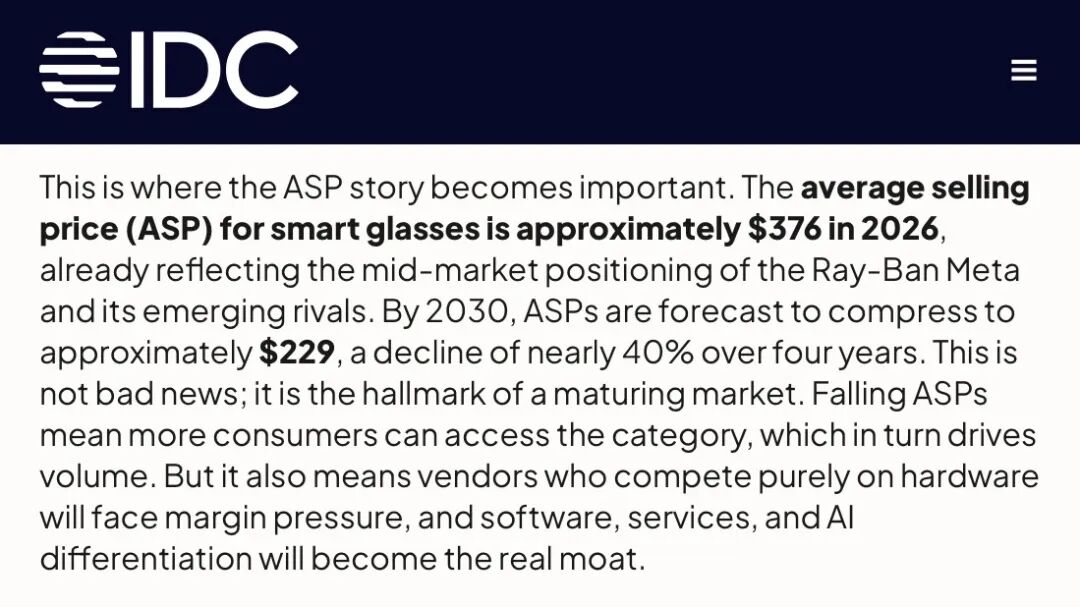
IDC predicts that by 2030, the average selling price of display-free smart glasses will drop from about $376 in 2026 to about $229.
The price drops by 40%, and the shipment doubles.
This is not a market that is about to go out, it is a market that has just been ignited.
On the surface, this update from Meta fixes an indicator light bug, but in essence, it answers a more fundamental question: can AI glasses become a device that everyone is willing to wear out while respecting privacy?
The answer to this question determines whether AI glasses will be the next AirPods or the next Google Glass.
Judging from the data, Meta has taken the right first step.
2.25 million quarterly shipments, 82% market share, 6.5 million annual sales. These figures show that consumers are willing to pay for it.
But paying is just the beginning. Being able to retain users, build trust, and build a sufficiently deep moat before Google and Apple enter the market is the key in the next two years.
Alex Himel from Meta said that they will continue to launch similar updates to ensure that the LED indicator can "reliably remind people around".
The subtext of this sentence is: Meta knows that privacy is not an optional accessory for AI glasses, but its admission ticket.
Without this admission ticket, no matter how powerful the AI, how cool the design, or how low the price, can't save this product.
With this admission ticket, AI glasses have the potential to evolve from "creep glasses" to "the next generation computing platform".
In this war, Meta has just got the ticket. The real competition starts at Meta Connect in September.
This article is from the WeChat official account "Tech Fox" (ID: kejihutv), written by Guozi, authorized for release by 36Kr.