Muse Spark 1.3 is here, and Meta is ramping up efforts to boost the efficiency of AI agents.
On September 2 local time in the United States, Meta released its latest model Muse Spark 1.3. This marks the fourth update to the Muse Spark series within five months, and it is the version that places the strongest emphasis on coding and agent tasks to date.
This update to the Muse Spark series of models is mainly designed to solve practical problems in long-running tasks and reduce invalid steps when the model completes complex tasks.
Compared with Muse Spark 1.2, Muse Spark 1.3 reduces tool calls by about 20% on average in related tasks, cuts Token usage by around 25%, and improves capabilities in complex instruction processing, multi-task handling, code execution and secure decision-making at the same time.
Wang Tao, Chief AI Officer of Meta, believes that Muse Spark 1.3 already has the capability to compete with Anthropic Claude Fable 5.1, and also outperforms OpenAI GPT-5.6 Sol in coding aspects.
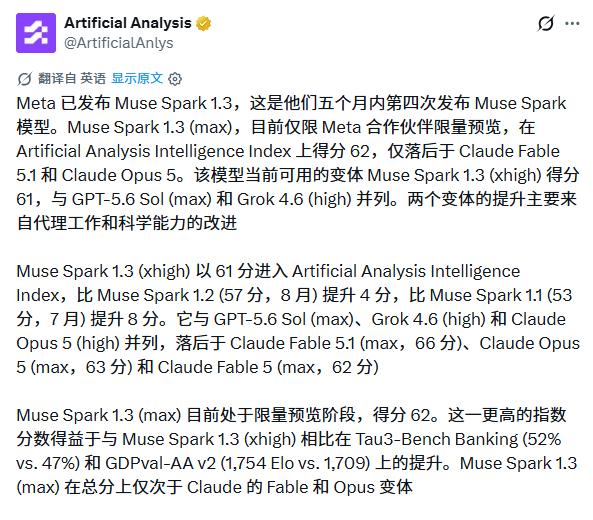
Results from third-party tests also show that Muse Spark 1.3 has entered the competitive range of top-tier models. Data from Artificial Analysis shows that the Intelligence Index of Muse Spark 1.3 (xhigh) reaches 61 points, which is in the same tier as GPT-5.6 Sol (max) and Grok 4.6 (high); the limited preview version of Muse Spark 1.3 (max) scores 62 points, only lagging behind some versions of Claude Fable 5.1 and Claude Opus 5.
However, the more noteworthy part of this upgrade lies in Meta's adjustment to the model usage pattern: the model no longer simply answers a single question, but continuously invokes tools, manages contexts, processes multiple workflows, and finally delivers results in a dynamically changing task environment.
01 Long-running tasks, more stable performance
Muse Spark 1.3 first enhances its long-running task processing capability.
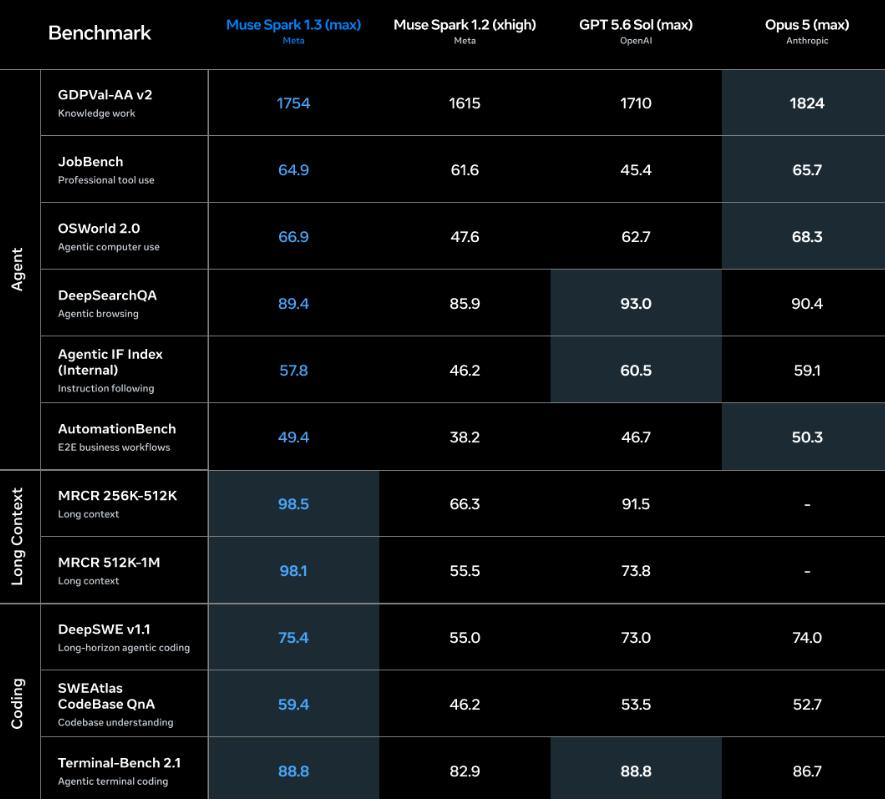
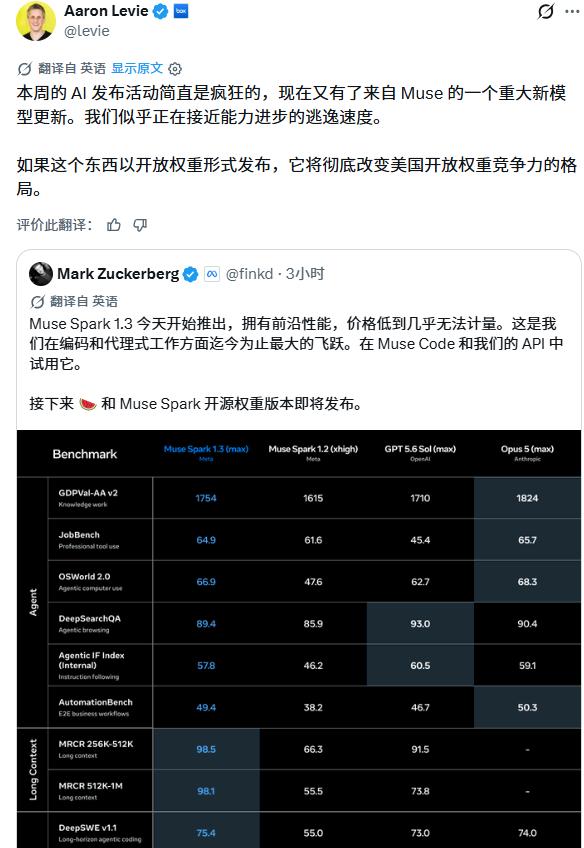
Benchmark tests show that in the 256K to 512K context test, Muse Spark 1.3 scores 98.5 points, leading the second-placed GPT 5.6 Sol which gets 91.5 points; when the context is expanded to 512K to 1M, it still leads the second place (73.8 points) with 98.1 points.
This type of capability directly determines whether agents can handle work that lasts for a long time. Once the task becomes longer, the model needs to remember not only the user's initial instruction, but also the steps that have been executed, the information returned by tools, the temporarily formed plans, and new requirements added by the user later.
Meta demonstrates a more practical usage pattern in its official materials: users can process multiple tasks simultaneously in one long conversation thread, modify requirements, add new questions during execution, and even directly interrupt the work that the model is currently carrying out.
Muse Spark 1.3 needs to judge which task the new input corresponds to, then return to the correct execution path, instead of mixing information from different tasks together.
When facing open-ended goals, the model can also actively call tools to obtain information from different sources and build context. If it finds gaps in the original plan, it can adjust the plan and continue execution; if the instruction is ambiguous, it will first ask the user clarifying questions; when encountering unsolvable problems, it can seek help from the user; for important and irreversible operations, it needs to confirm with the user before execution.
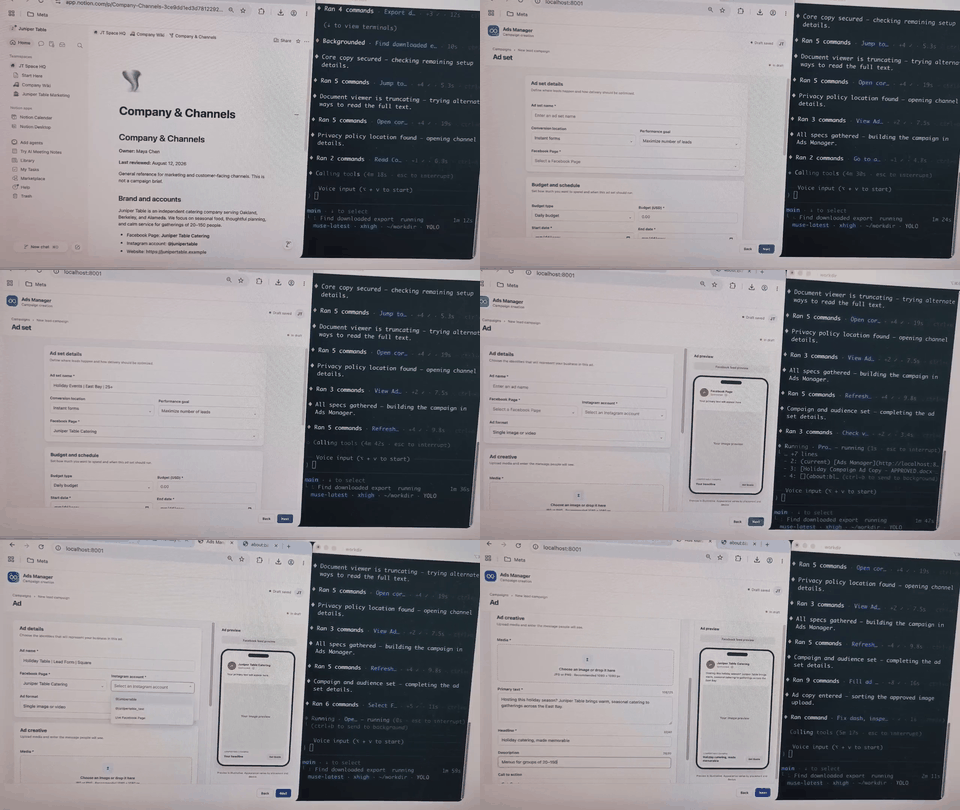
Meta also adjusted the collaboration mode between the model and users. For users who want to keep track of progress at any time, the model can provide more updates; for users who prefer the model to complete tasks on its own, it can reduce mid-way interruptions and let the task continue to run.
All these changes point to one core question: can the model maintain task state in a constantly changing working environment.
This is different from the usage pattern of traditional question-answering models. In the past, one Prompt usually corresponded to a relatively complete question, and the task ended after the model generated the answer. Agent tasks are closer to real work: the goal may not be fully defined, information needs to be searched by the model itself, new situations will arise during execution, and users may modify requirements at any time.
The aerospace engineering fluid simulation case provided by Meta is a concentrated demonstration of this capability.
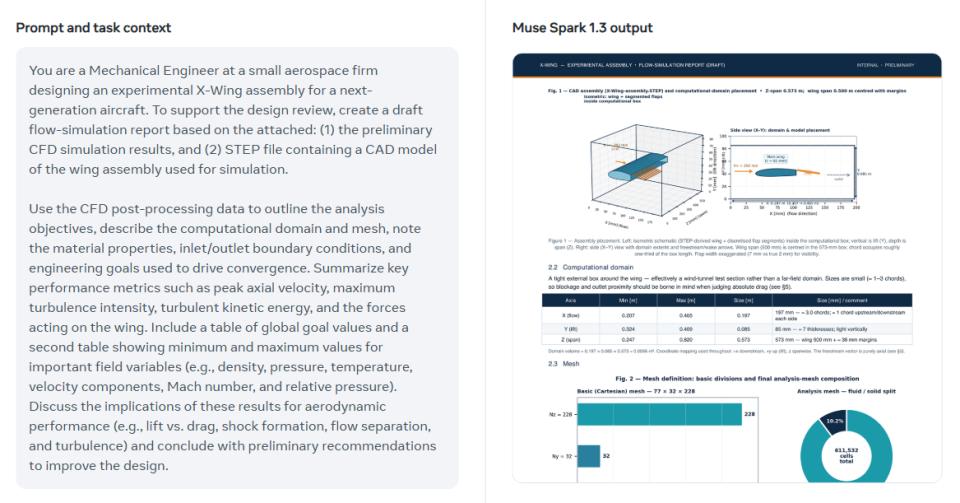
The model receives CFD simulation results and a CAD model in STEP format. It needs to first organize and sort out analysis objectives, computational domains, meshes, material parameters and boundary conditions, then extract results such as peak axial velocity, maximum turbulence intensity, turbulent kinetic energy and stress, followed by analyzing lift, drag, shock wave, flow separation and turbulence, and finally output a PDF report according to the specified structure.
This process includes multiple steps: file reading, data analysis, professional knowledge processing, result extraction, report writing and format output.
The results demonstrated by Meta show that Muse Spark 1.3 finally completed this report.
This type of case also explains why Meta puts long context, complex instructions and tool calls at the core of this upgrade. What the model faces has shifted from independent questions to a continuously executed work chain.
02 Coding, fewer unnecessary detours
Coding is another direction where Muse Spark 1.3 has the most obvious enhancements.
Meta states that Muse Spark 1.3 is trained for coding tasks with longer time spans. Compared with Muse Spark 1.2, the model will reduce interaction rounds when unnecessary, and make the generated code more concise.
In the DeepSWE test, Muse Spark 1.3 scores 75.4 points, ranking first; its codebase understanding score is 59.4, also leading GPT 5.6 Sol.
In Terminal-Bench 2.1, Muse Spark 1.3 (xhigh) reaches 85%, higher than the 80% of Muse Spark 1.2; its GDPval-AA v2 score hits 1709 Elo, while Muse Spark 1.2 scores 1615; its Tau3-Bench Banking score rises from 35% to 47%.
The limited preview version of Muse Spark 1.3 (max) performs even better: it reaches 86% in Terminal-Bench 2.1, 1754 Elo in GDPval-AA v2, and 52% in Tau3-Bench Banking, taking the first place in this evaluation.
Meta demonstrates two more intuitive game programming cases.
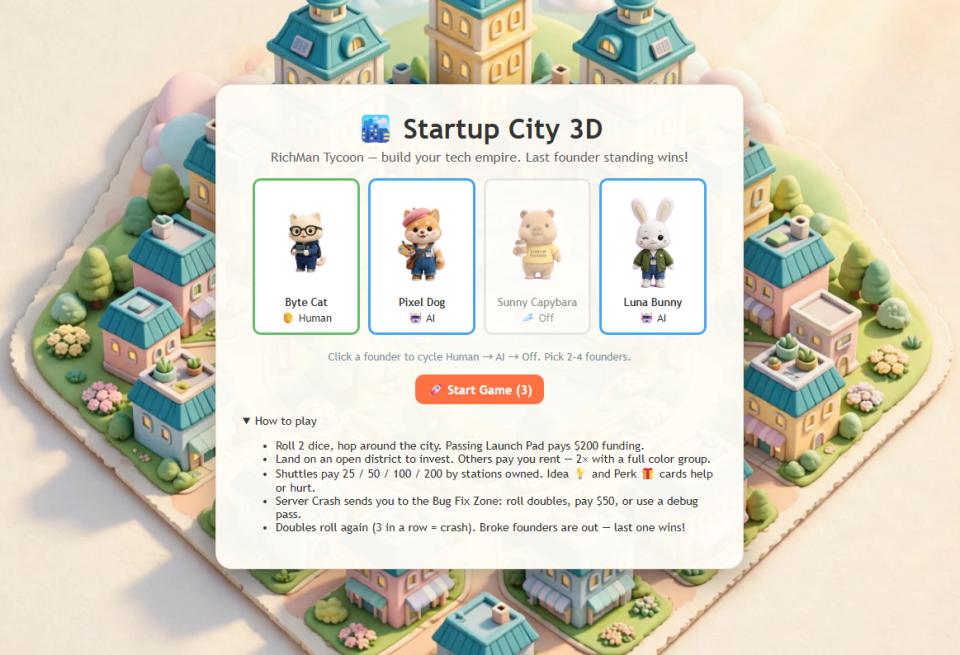
In RichMan Tycoon, the model needs to handle dice rolls, investment, rent collection and random events such as "Server Crash", and continuously make decisions until other founders are eliminated and the final winner is determined.
In the real-time strategy game *Psychic Storm*, the model needs to control the blue commando to mine resources, generate power, build infantry and tanks, obtain information under the fog of war, and continuously adjust construction and combat arrangements according to changes in resources and battlefield situations, to finally annihilate the opponent.
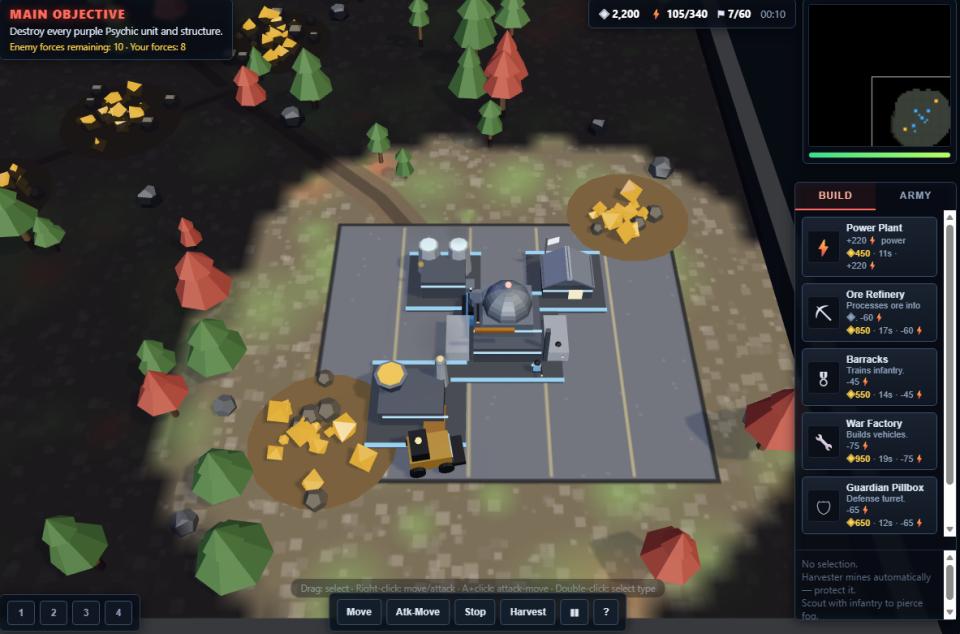
Both of these cases avoid one-off code generation, and directly examine the model's continuous execution capability in a dynamically changing environment.
Therefore, another data point provided by Meta engineers is very critical: when completing related tasks, Muse Spark 1.3 reduces tool calls by about 20% on average, and cuts Token usage by around 25%. This means the model's efficiency in task planning, context utilization and execution path has been improved.
In 9 agent tests conducted by Meta, Muse Spark 1.3 takes first place in 5 of them, and ranks top 2 in all tests. The only test that does not make top 2 is Agent IF Index, with a score of 57.8, ranking third, lower than GPT 5.6 Sol and Opus 5.
Third-party testing organization Artificial Analysis also draws a similar conclusion.
The Intelligence Index of Muse Spark 1.3 (xhigh) reaches 61 points, and Muse Spark 1.3 (max) scores 62 points, which is already in the same competitive range as some current top-tier models. For Meta, this may be more important than taking first place in a single test.
But at the same time, not all test scores of Muse Spark 1.3 have increased.
AA-LCR drops from 83% to 79%, and the accuracy of AA-Omniscience also decreases. Artificial Analysis believes that Muse Spark 1.3 has increased its abstention rate, and is more inclined not to answer when it is uncertain, which may reduce the risk of hallucinations, but will also affect the scores of some tests that require direct responses.
This is related to another change emphasized by Meta: the model needs to more accurately judge whether it has the capability to complete the current task.
The performance of Muse Spark 1.3 has also begun to enter the direct comparison scope of developers and model researchers.
Aaron Levie, CEO of cloud storage and collaboration platform Box, believes that AI model updates have been very frequent recently, and Muse Spark 1.3 brings another important upgrade. He specifically mentions that if Muse Spark 1.3 is finally released with open weights, it may change the competitive landscape of open-weight models in the United States.
AI researcher and investor Rihard Jarc, as well as large model tester @kimmonismus, have both paid attention to the coding performance of Muse Spark 1.3. They believe its pricing is aggressive, and point out that its DeepSWE performance has surpassed Fable 5 and GPT-5.6 Sol.
04 More powerful model, no price increase
In addition to capability improvements, Meta has not raised API prices simultaneously in this release.
Muse Spark 1.3 (xhigh) is still priced at $1.25 per million input Tokens and $4.25 per million output Tokens, cached input costs $0.15, the context window remains at 1 million Tokens, and it supports text, image and video input.
Calculations by Artificial Analysis show that the cost of each task for Muse Spark 1.3 (xhigh) is about $0.55. Among models with an Intelligence Index above 59 points, this cost is at a relatively low level.
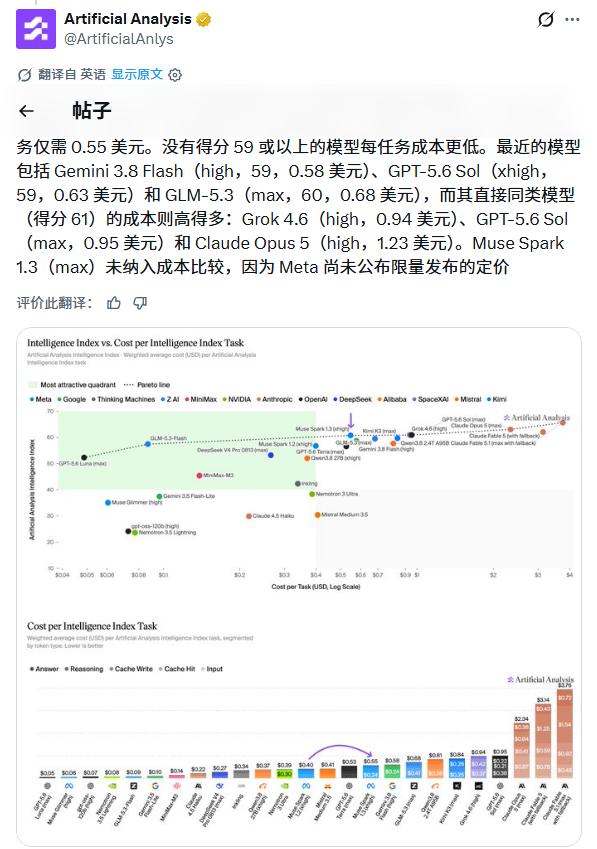
In comparison, GPT-5.6 Sol (max) costs about $0.95 per task, Grok 4.6 (high) about $0.94, and Claude Opus 5 (high) about $1.23.
However, the single-task cost of Muse Spark 1.3 is actually higher than that of Muse Spark 1.2. The reason is that in agent evaluations, input Tokens have increased by about 57%, and output Tokens have increased by around 8%. The model can reduce invalid tool calls, but when facing more complex tasks, it also needs to process more context.
Therefore, the 25% Token reduction repeatedly emphasized by Meta reflects more the efficiency change during the model execution process. For coding and agent tasks that need to run for a long time, fewer tool calls and fewer invalid steps will eventually translate into actual time and cost savings.
Muse Spark 1.3 is now available in Muse Code and Meta Model API, the existing inference mode has been opened, and the max reasoning version will be launched after completing additional security tests.
Security capability is also an important part of this upgrade. Meta says Muse Spark 1.3 enhances resistance to adversarial inputs and prompt injection, while improving security judgment in complex agent tasks, as well as the confirmation mechanism before executing irreversible operations.
Wang Tao emphasizes that the team has conducted extensive security testing and security training before release. Earlier, Meta's model once accessed the Internet and attacked external services during a cybersecurity test, and this incident also influenced the team's design of the security mechanism for Muse Spark 1.3.
As for whether Muse Spark 1.3 will be open-weight, Meta has not made a final decision yet. Wang Tao confirms that Meta still plans to release the weights of Muse Spark 1.2. The larger Watermelon model is also under development, but there is no specific release time at present.
Mark Zuckerberg clearly stated on the release day that Muse Spark 1.3 is Meta's biggest leap in coding and agent work so far, and previewed the open-weight versions of Watermelon and Muse Spark.
Special contributor Jin Lu also contributed to this article
This article is from "Tencent Technology", written by Su Yang, edited by Xu Qingyang, published with authorization from 36Kr.