What other highlights are there at Apple's launch event besides the foldable iPhone?
Last week, Apple announced the time and theme of its fall keynote event this year. The event, themed "Surprise and shine", will be held at Apple Park at 1 a.m. Beijing Time on September 10.
Different from the fall keynotes in the past two years, this year's "tech gala" has drawn huge attention as the first foldable iPhone is likely to be unveiled. This event also carries special significance: John Ternus officially took over as Apple CEO on September 1, and this will be his first special event after taking office.
Foldable iPhone
Based on current leaks, there is a high possibility that Apple will launch its first foldable iPhone at this year's fall keynote. The official name of this foldable iPhone is still unknown, but rumors say Apple may name it "iPhone Ultra", aligning with the naming convention of Apple Silicon M-Series chips.
Appearance
In terms of appearance, rumors state that Apple has finally finalized a 5.5-inch display when folded, and a 7.8-inch display similar to the size of an iPad mini when unfolded. When unfolded, the iPhone Ultra will be only 4.5 mm thick, and around 9 mm thick when folded, which is expected to become the thinnest Apple device, surpassing the 12.9-inch iPad Pro.
The 5.5-inch outer screen and 7.8-inch inner screen are expected to have resolutions of 2088×1422 and 2713×1920 respectively. For comparison, the 6.9-inch iPhone 17 Pro Max has a screen resolution of 2868×1320.
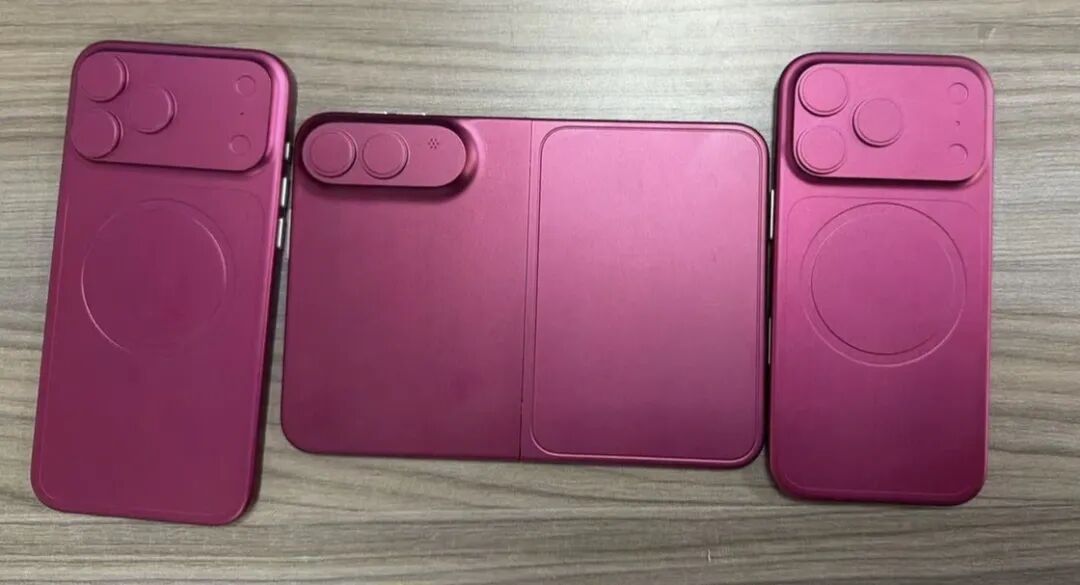
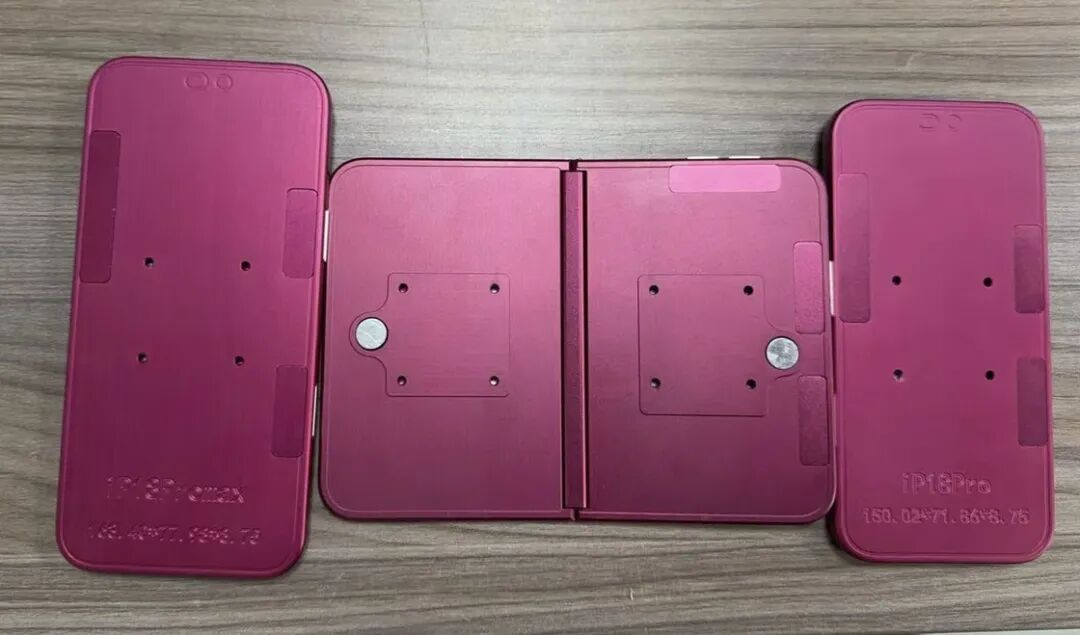
Image source: MacRumors
As a foldable smartphone, the crease is undoubtedly one of the most concerning points for the public. Apple plans to use ultra-thin glass for the foldable iPhone, Lens Technology is likely to become the main glass supplier, while Corning will provide raw materials to Lens Technology, and the finished products can minimize edge cracks after strengthening and cutting.
Unsurprisingly, Apple will continue to select Samsung as the supplier of display panels, using a customized display process that integrates touch sensors directly into the display panel to reduce overall thickness, lower the device weight, and improve the stability of the display structure, while meeting Apple's requirements for energy efficiency and brightness.
According to existing information, Apple may use a structural glass middle frame to minimize the display creases that frequently occurred on previous foldable phones. At the same time, color filters are applied on the encapsulation layer to cooperate with the circular polarizer module, so as to improve color purity and light transmittance. Among them, the technological development of Optical Clear Adhesive (OCA) has played an important role in Apple's pursuit of minimizing creases: it can keep the display panel assembly flexible when bent slowly, and naturally flow into uneven areas to reduce the visibility of creases. Leakers say the crease depth of iPhone Ultra will be less than 0.15 mm, which is almost imperceptible.
Apple's strict requirements for the hinge also further reduce creases on the display. It is reported that Apple will use liquid metal, which is more resistant to bending, deformation and indentation than traditional metals.
In terms of color matching, it is claimed that Apple will adopt more traditional Space Gray and Silver finishes for the foldable iPhone.
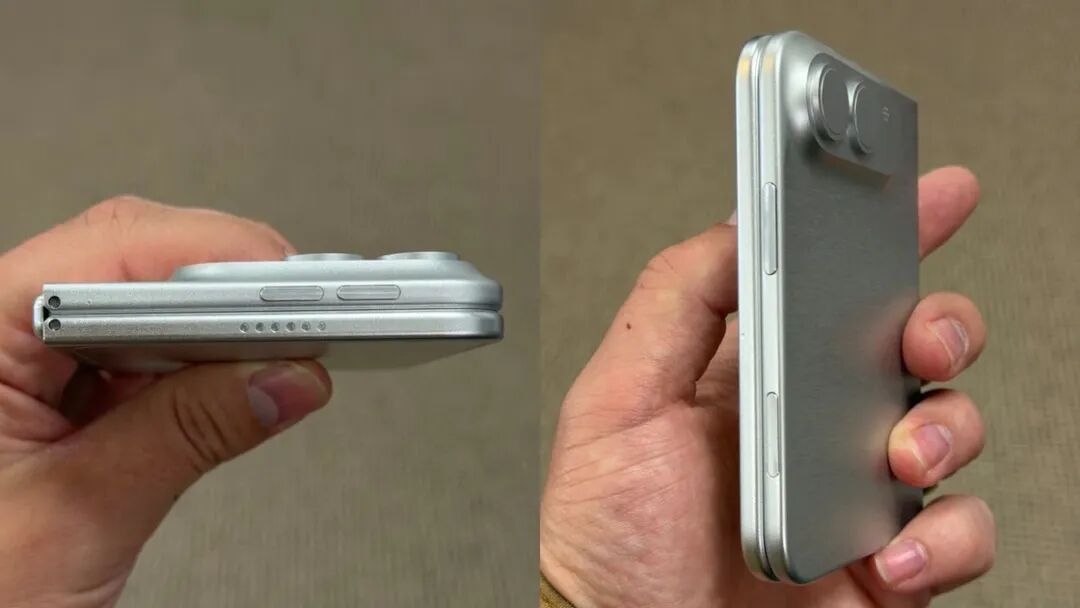
Image source: X user @VadimYuryev
Specifications
It is claimed that to control the body thickness of iPhone Ultra and save internal space, Apple may not equip this foldable iPhone with the TrueDepth module, but adopt the power button Touch ID similar to that on iPad.
For the core chip, Apple will most likely use the A20 Pro chip on iPhone Ultra, which is manufactured with TSMC's 2-nanometer process. The chip of this generation may be 15% faster in performance and 30% more energy-efficient than the previous generation. Apple is also expected to adopt TSMC's Wafer-Level Multi-Chip Module (WMCM) packaging technology to integrate the SoC and memory into the same wafer-level package. The iPhone Ultra is expected to be equipped with 12GB of RAM. After integrating memory via WMCM, it can deliver stronger performance and better heat dissipation management.
According to current leaks, the iPhone Ultra may also be the first Apple device to adopt an under-display front camera with 24-megapixel resolution, and this high-resolution front camera may set a precedent for similar specifications. For the rear camera, the iPhone Ultra will be equipped with 48-megapixel wide and ultra-wide lenses, while the telephoto lens will not be adopted on this model.
Although the iPhone Ultra has a slim body, Apple hopes to reduce the power consumption of the display by shrinking the display driver IC from 28 nanometers to 16 nanometers, so as to maximize battery life. Apple also plans to use high-density battery cells for the foldable iPhone, with a battery capacity ranging from 5400 to 5800 mAh, but there is another leak of about 4883 mAh, leading to inconsistent statements about the current capacity.
The iPhone Ultra is expected to provide three configurations at launch, corresponding to 256GB, 512GB and 1TB of storage space respectively. Apple analyst Ming-Chi Kuo and Mark Gurman from Bloomberg both believe that the price will be in the range of $2000-2500.
Although the iPhone Ultra is expected to debut alongside the Pro series, there are still divergences about its actual launch time. The latest supply chain news believes that it will still ship in September, but the initial quantity and available launch regions may be very limited; Ming-Chi Kuo believes that it may follow the launch rhythm of the iPhone X, and pre-orders will not open until the fourth quarter.
iPhone 18 Pro / Pro Max
Probably affected by the price increase and shortage of memory chips, Apple is expected to adjust the new product launch plan this year. The iPhone Ultra, iPhone 18 Pro and iPhone 18 Pro Max will be launched together in September, while the iPhone 18, iPhone 18e and iPhone Air 2 will be released in the spring of 2027.
That being said, let's first take a look at the two professional-grade devices, the iPhone 18 Pro and iPhone 18 Pro Max. Overall, the new generation of iPhone Pro series is basically the same as the previous generation in appearance, except that the Dynamic Island area may be smaller than the previous generation, which can bring more screen display area. X user @IceUniverse leaked that the Dynamic Island across the entire iPhone 18 series will be 35% smaller than the previous generation. In terms of color matching, this year's new Pro series may have Deep Cherry and Light Blue, while the traditional black, white and natural titanium finishes will most likely be retained.
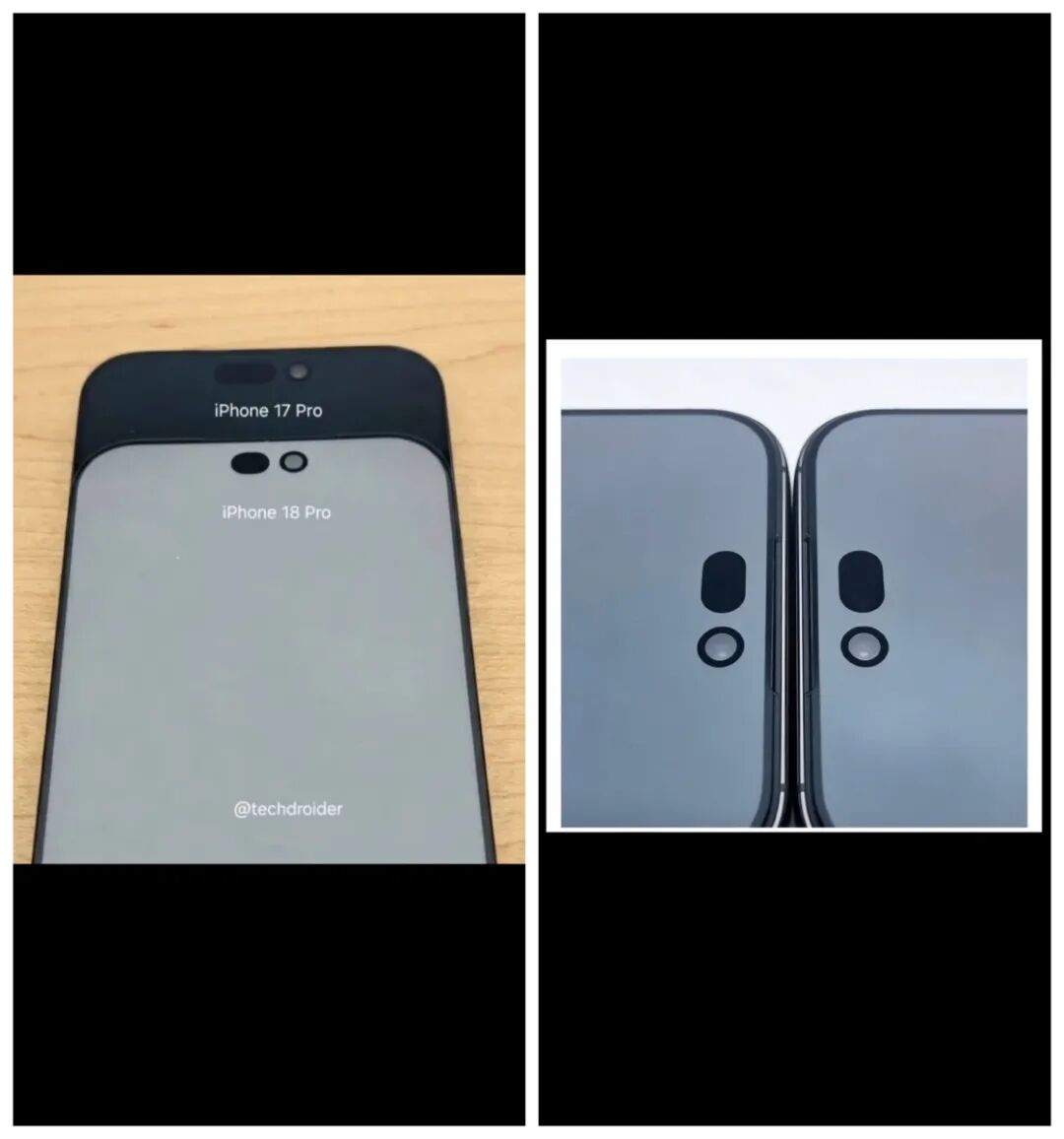
Image source: X user @techdroider
In terms of specifications, the iPhone 18 Pro series will adopt the A20 Pro chip built on TSMC's brand new 2nm process. The new wide-angle main camera may use a variable aperture, and the LTPO+ OLED display has also been upgraded to bring better battery life. Meanwhile, Apple's self-developed C2 modem and N2 network chip will also be equipped on this generation of flagship iPhones. Other sources say that the C2 baseband may further support satellite 5G, allowing the new iPhone to perform data communication even when Wi-Fi and traditional cellular networks are unavailable, but the specific coverage and tariff models are still unclear; the camera control button may also undergo structural adjustment, and it is claimed that Apple will remove the touch sensing and haptic feedback, leaving only the pressure sensing function.
The iPhone 18 Pro Max is expected to be slightly thicker than the iPhone 17 Pro Max and iPhone 18 Pro, as it may be equipped with a larger battery than the iPhone 17 Pro Max. Leaks from the regulatory database suggest that the battery capacity of the iPhone 18 Pro Max may be nearly 10% higher than that of the previous generation.
In terms of price, the entire iPhone 18 Pro series may have a starting price about $200-300 higher than the previous generation.
Apple Watch
As a regular at Apple's fall keynote, new Apple Watch models are expected to appear this year as well. The Apple Watch Series 12 and Apple Watch Ultra 4 are expected to make their debut. Neither the Apple Watch Series 12 nor the Apple Watch Ultra 4 is expected to have major design changes in appearance, but will focus more on health and fitness tracking functions, and improve the overall response speed of the device through the new S-series chip.
In terms of health features, Apple is also reported to be testing all-day continuous heart rate data collection, and plans to redesign the Health and Fitness apps to present more comprehensive health trends. However, these features are still in the testing phase, and it is uncertain whether they will be launched together with the new watches.
The Apple Watch SE series was updated last year, so no new model is expected to be launched again this year. However, according to Mark Gurman, this year's Apple Watch may bring back the ceramic case option, with two color choices: white and dark gray.
AirPods
Although demo materials of the camera-equipped AirPods appeared in macOS 26.7 RC, Mark Gurman still said that the product has been postponed to 2027. The new products more likely to be launched this year should be the regular AirPods 5 and the noise-canceling version, and there is no reliable information about the specific upgrade details for now.
Smart Home
The hardware information leaked in macOS 26.7 RC also includes the HomePod mini 2 and the new Apple TV 4K, and these two new products are more likely to appear at this fall keynote.
In terms of specific configurations, the HomePod mini 2 may be equipped with Apple's self-developed N1 network chip, support Wi-Fi 7, and upgrade the Ultra Wideband chip, sound quality and color options; some Siri AI features may need to be used with a compatible iPhone. The new Apple TV 4K may adopt the A17 Pro or a newer chip, increase memory, support N1, Wi-Fi 7 and the new version of Siri, and may be equipped with a redesigned remote control.
In addition to the HomePod mini 2 and the new Apple TV 4K, Apple's first smart home hub may also make a surprise appearance at the keynote. Two Home Hub models with codenames J490 and J491 appeared in macOS 26.7 RC, which are expected to correspond to the desktop dock version and the wall-mounted version respectively. The Home Hub is expected to support FaceTime, HomeKit device management, home security, photo and calendar display, and may also display personalized content for different family members through facial recognition.
Software
In addition to the hardware leaks mentioned above and the foreseeable announcement of the official rollout dates for iOS 27, iPadOS 27, macOS 27 Golden Gate, watchOS 27, tvOS 27 and visionOS 27, there is no exact leak information yet on whether the brand new smart home system homeOS rumored will be launched at this event.
As for whether Apple Intelligence, which has previously passed the review of relevant authorities in China, will be announced to officially enter the Chinese mainland at this keynote, it is still unknown.
The above are the relatively credible leaks of the keynote so far. Which new product are you most looking forward to, and which rumors do you think will eventually come true? Welcome to exchange your opinions in the comment section.
Original Link:
https://sspai.com/post/114084?utm_source=wechat&utm_medium=social
This article is from the WeChat Official Account "Sspai" (ID: sspaime), written by Vanilla, and authorized for release by 36Kr.