The world's first general-purpose large decision-making model, unveiling the technology behind AI's deduction of the real world
Generating answers has become a fundamental capability of AI, while simulating the real world is the far more challenging proposition for the next stage.
Real-world decision-making is not a static question-and-answer task. It takes place in a constantly changing world with multiple actors acting simultaneously, incomplete information, and full of uncertainties.
For example, when a new open-source model suddenly drives down costs, will leading model companies follow suit to cut prices, and how will cloud vendors, developers, and application companies re-align their positions? In this type of decision-making, the action of one party will change the conditions that other parties face in the next step, and new reactions will continue to reshape the situation. It is like a chess game where all players place their pieces at the same time, and every move changes the entire game board.
It is against this background that after the Zhongke Wenge Decision Engine Decitron (referred to as Decision Engine) was released, it was called "the world's first general-purpose decision-making large model" by many mainstream technology media. What this title emphasizes is not the first appearance of a single technology such as world model, multi-agent, or game solving, but that the Decision Engine unifies these capabilities into an open-world-oriented decision-making framework for the first time, forming a complete closed loop of continuous modeling, simulation, solving, and calibration.
The so-called "general-purpose" means that it tries to abstract complex decision-making problems in different fields into a common structure — world state, participating entities, action space, constraint relationships, multi-round interaction, and uncertain outcomes, and conducts continuous simulation and solving within the same framework.
Technical report link: https://chinaxiv.org/abs/202608.00064
On August 3, the full technical report of Decision Engine Decitron was officially released, publicly disclosing its three core technical contributions for the first time:
The first is to propose the explicit world model MetaWorld, which organizes multi-source information into structured, persistent, and computable world states and their causal modeling. The second is to adopt the State–Action–Outcome (SAO) formal representation, transforming complex decision-making into computable expression and reasoning forms. The third is to build a hybrid reasoning architecture AutoABM that integrates multi-agent simulation, game reasoning, and formal optimization, and solves complex decision-making problems such as game equilibrium, strategy planning, and constraint satisfaction based on the multi-agent decision simulation system. The three together form the technical foundation of the Decision Engine, with the goal of turning the one-time judgment of AI systems into a continuous calculation and simulation process that updates along with world changes.
What kind of architecture is required for AI to participate in real-world decision-making?
At present, around "decision simulation", several key capabilities required by AI (such as world model, multi-agent, game reasoning, probabilistic prediction) have actually emerged one after another. The real difficulty lies in: when AI moves from closed tasks to the open real world, these capabilities must work collaboratively around the same continuously updated world state, instead of only providing independent analyses in a single Prompt.
Let's start with the world model. When people mention the World Model, they easily think of physical world models such as Sora, World Labs, and V-JEPA, which are mainly oriented to visual, spatial, physical, or robotic environments. The MetaWorld proposed by the Decision Engine focuses on more complex decision scenarios: open systems such as economy, policy, enterprise competition, and geopolitics, where the entities, variables, relationships, and constraints involved in system modeling are more complicated.
MetaWorld can be regarded as an extension of the world model to social systems, which needs to handle three tricky problems: rule differences, reflexivity (two-way interaction and circular influence between causes and effects), and uncertainties that cannot be completely eliminated. This also brings a direct problem: if there is a deviation in the judgment of the current world, will the subsequent simulation go off track accordingly?
Once entering the social system, maintaining only the environmental state is not enough. AI also needs to judge how other participants will act. CICERO from Meta, Richelieu proposed by teams including Peking University, have demonstrated the ability of multiple Agents to interact and play games under limited information. For real-world decision-making in the open world, after simulating the actions of all parties, it is also necessary to further judge whether the strategy is feasible, which equilibriums the game may fall into, as well as the possibility and conditions of different future outcomes.
This is exactly where the significance of the Decision Engine lies: its hybrid reasoning architecture AutoABM unifies LLM's semantic understanding, SAO structured representation, multi-agent modeling and simulation, strategy reasoning and optimization in the same implementation link, connecting the four steps of "understanding the world — simulating and deducing — solving decisions — evaluating the future".
How does the Decision Engine complete a complex simulation from facts to the future?
The Decision Engine consists of six layers: input and tasks, data and knowledge, modeling and formalization, simulation and reasoning, prediction and calibration, and reporting and explanation, forming a complete link from real information to decision output.
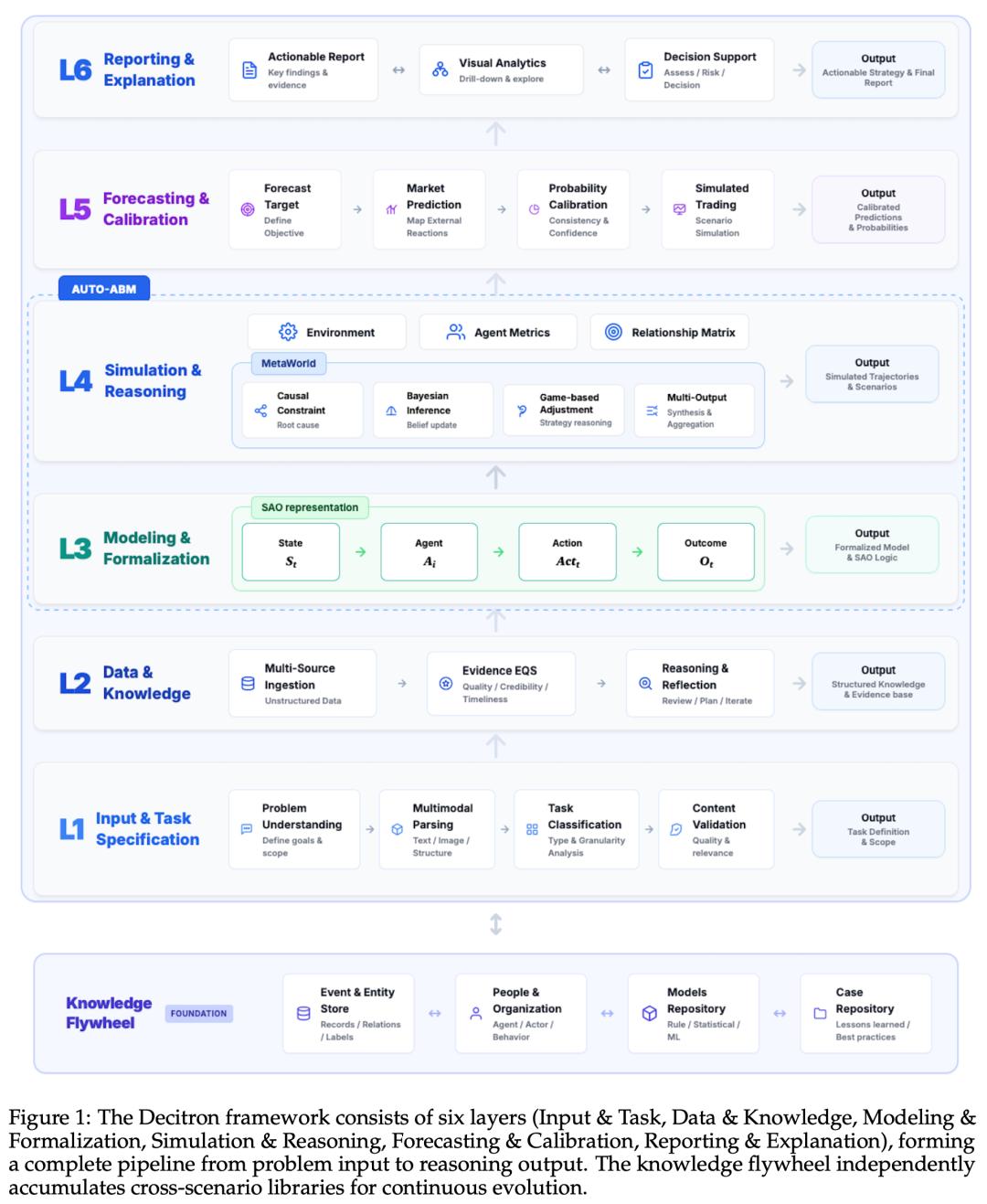
Next, we will take "How might a complex trade conflict evolve in the next six months?" as a case to see how the Decision Engine starts from real information, step by step establishes the current world state, simulates the actions of all parties, deduces different possible future paths, and the conditions under which these paths will occur.
Step 1: Do not rush to simulate the future first, but clarify "what is happening now" and which facts are credible.
The information in the real world is very fragmented, which may be duplicated, conflicting, or outdated. The Decision Engine first converts the user's question into a structured task, clarifying what needs to be answered, which entities are involved, how long the observation period is, and what constraints there are. Taking the case as an example, the system will first lock in the main participants, time range, and current focus of disputes involved in this conflict, sort out conditions that may affect the situation changes such as tariffs, supply chains, industrial policies, and corporate behaviors, then collect information from different sources such as news reports, social media, and research reports around these elements.
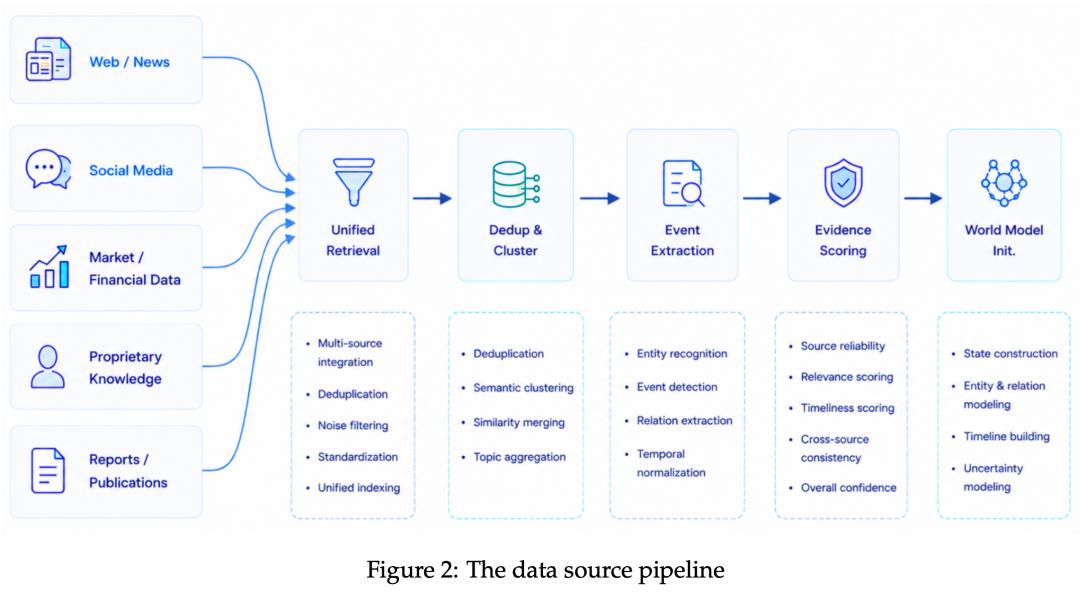
Figure 2: Data processing flow chart
The collected information will first go through deduplication, clustering, and event extraction, and be organized into an event timeline and a set of more detailed evidence units. Then the system judges the quality of each piece of information through the Evidence Quality Score (EQS), including its relevance to the current problem, source credibility, timeliness and completeness of the content, and consistency between different information sources. At the same time, it determines the direction of the evidence according to different confidence levels, and those with high confidence directly enter the subsequent simulation.
If the existing evidence is insufficient or there are conflicts from different sources, the system continues to execute alternate reasoning and retrieval based on ReAct, adjusts the next round of search according to the missing information, and supplements the newly found information into the existing timeline.
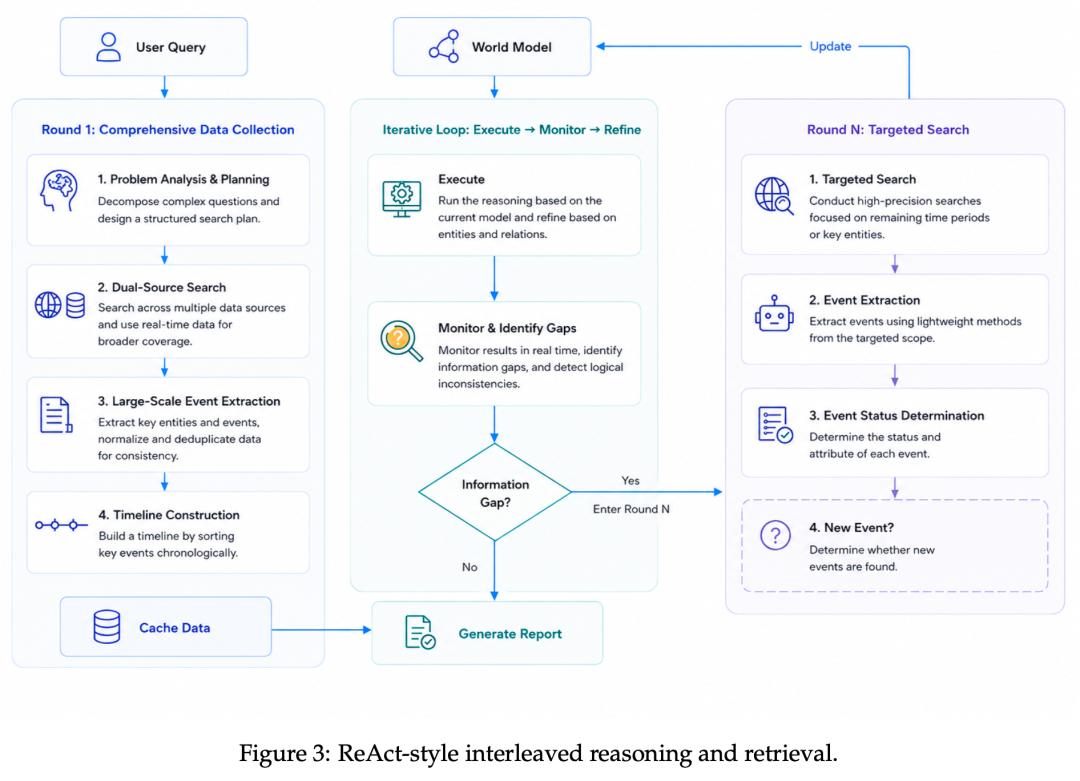
Figure 3: Adopting the ReAct-based alternate reasoning and retrieval mechanism
Step 2: Convert the filtered facts into a continuously updated "world state". Facts tell the system what has happened, and further judgments need to be made next: with all these changes superimposed, what state the world is in right now.
The Decision Engine formalizes this process using the State–Action–Outcome (SAO) representation, where State describes the current world state, Action records the actions taken by each Agent under the current state, and Outcome records the results brought by the actions such as benefits, losses, costs, and risks. It is worth noting that State distinguishes between macro state and more detailed quantifiable state. In the case, escalation of frictions can be the macro state, while tariff levels, commodity prices, and the affected degree of supply chains can be recorded in more detailed states.
In addition, the system separately considers external shocks, such as sudden policy changes, environmental changes, or other events that are not controlled by Agents. After an action and an external event occur, the world state is updated accordingly. The updated state then becomes the starting point for the next round of actions. This cycle goes on and on, forming a continuous SAO trajectory.
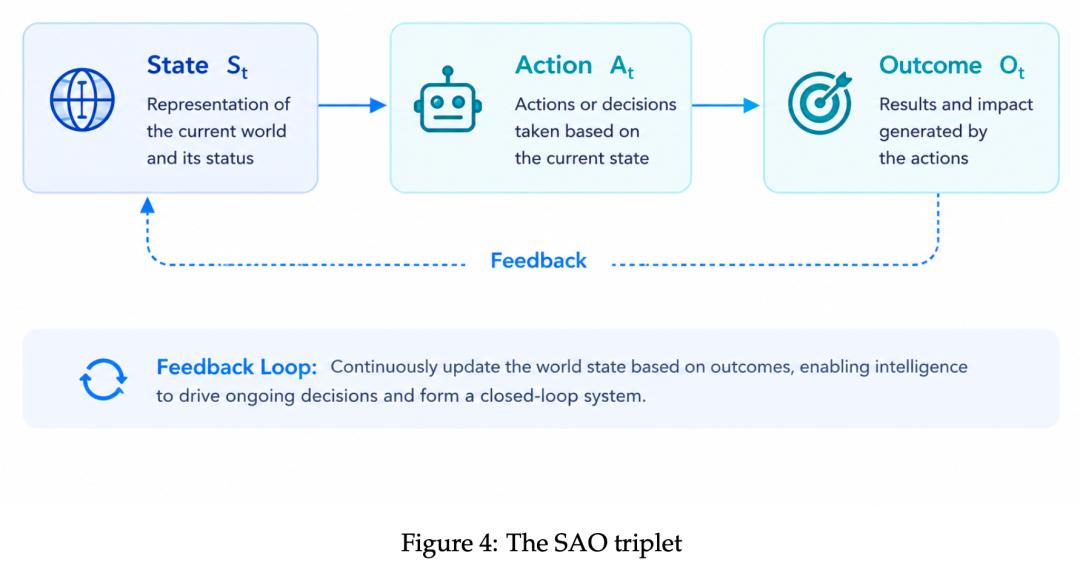
Figure 4: SAO operation process
MetaWorld is responsible for actually maintaining these states, and it outputs a set of structured world states that can be calculated and updated. The state can be further divided into three levels: the Environment Layer records the overall environment shared by all participants, such as the situation stage and resource prices; the Agent Metrics Layer records the resources, capabilities, and goal progress of each Agent; the Relationship Matrix Layer records the relationship changes between different Agents.
MetaWorld also uses the Causal DAG (Causal Directed Acyclic Graph) to constrain how states change: the possible influences between variables are organized into a causal relationship diagram at the modeling stage. During the simulation process, the system updates the node states and the weights of causal edges, but will not regenerate a new causal diagram every round.
This is very important for long-range simulation. The previous round of tariff changes affects prices, and prices in turn change corporate choices and responses of other participants. All these changes need to be retained to continue subsequent calculations. MetaWorld undertakes this role as a continuously updated "world ledger".
Step 3: With the world state in place, each Agent starts to act. Traditional Agent-Based Modeling (ABM) usually requires experts to pre-define participants, behavior rules, environmental variables, and interaction mechanisms. When changing to another problem, many contents need to be re-modeled. The AutoABM proposed by the Decision Engine automates this step: facing natural language problems, the system will combine external evidence, extract participants, goals and constraints, action space, environmental variables, and causal relationships, and then build a multi-agent simulation environment accordingly.
In a trade conflict, there may be different Agents such as governments, enterprises, industry organizations, and consumers, each with its own goals, resources, risk preferences, and non-breakable red lines. These Agents do not have a god's-eye view, and can only act based on the local information they master.
Specific to one round of action, the Agent first calls up previous interactions and historical trajectories, then judges the opportunities, risks, and constraints in the current situation, generates several optional strategies and makes a choice. Moreover, each round does not only simulate in one direction: the system expands several different world states at the same time, including relatively stable equilibrium paths, relatively optimistic or pessimistic evolution directions, and low-probability high-impact branches that will significantly change the situation once they occur. Then these paths are screened and verified, the world state is updated, and the next round begins. As all parties continue to act, some paths lose their prerequisites, while others become more likely.
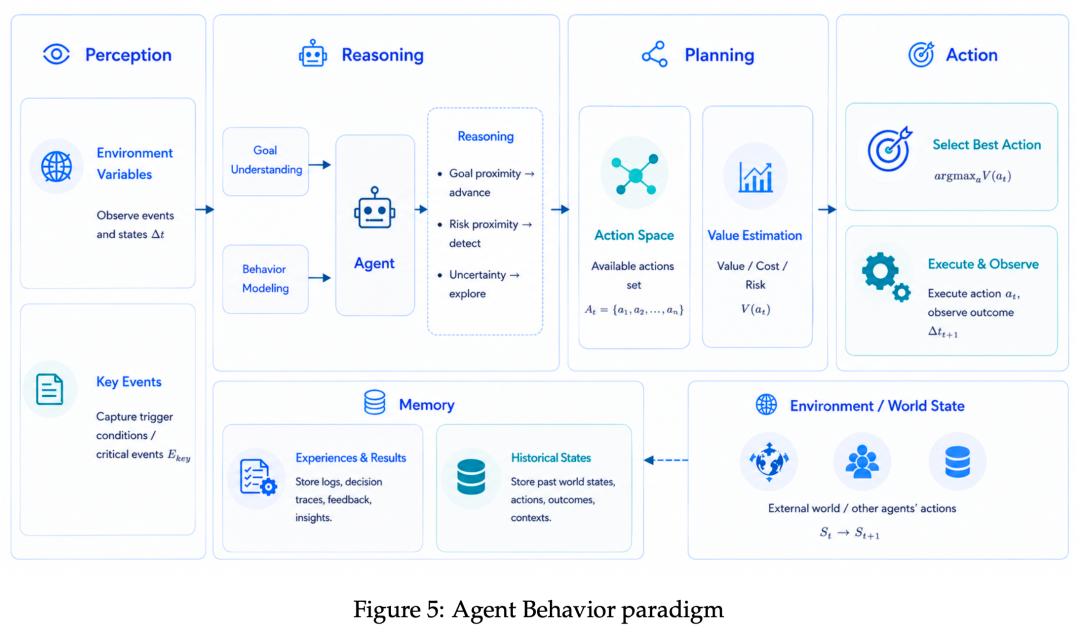
Figure 5: Agent behavior paradigm
Apart from multi-agent simulation, complex decision-making also requires a "mathematical referee". Multi-agent can expand many seemingly reasonable future paths, but being conceivable does not mean being feasible. Real-world decision-making is also subject to hard constraints such as budget, resources, time, policy red lines, and the equilibrium relationship of all parties.
The Decision Engine is connected to a set of formal solving (Solver) capabilities, covering five types of problems: classic games, resource allocation and optimization, path planning and scheduling, probabilistic inference under uncertain conditions, and constraint satisfaction. For example, how to allocate resources when the budget is limited, what equilibrium a multi-party game may form, and whether a strategy breaks through the established red lines can all enter this layer for calculation. On game problems, the system also has 9 types of classic atomic games built in, including Prisoner's Dilemma, Stag Hunt, Chicken Game, and Zero-Sum Game, covering 144 Robinson–Goforth 2×2 game topologies to identify and solve different game structures.
The focus of this layer is that it puts the candidate strategies generated by multi-agent back into the computable framework of games, constraints, and optimization, so that "semantically reasonable" is further turned into "formally verifiable".
On the TMGBench benchmark for testing multi-agent game capabilities, the Decision Engine achieves an equilibrium accuracy of 99.4%, a topology recognition accuracy of 100%, an average solving time of 0.8 seconds, and an interpretability score of 4.3/5.0.
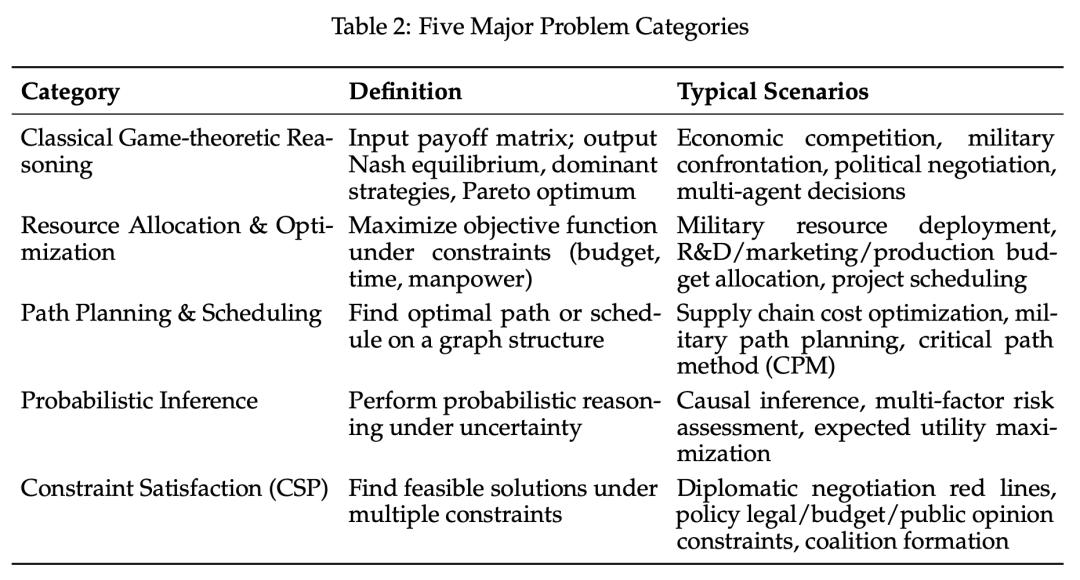
Table 2: Five main types of solving problems
The division of labor between multi-agent simulation and formal solving is very clear: the former is responsible for expanding the paths that may happen; the latter is responsible for checking whether these paths are tenable under constraints and game structures.
At the last step of simulation, there is still a key problem left: among the multiple future paths expanded earlier, what is the probability of each one happening? To this end, the Decision Engine sets up the Forecasting & Calibration module.
Based on the candidate paths obtained earlier, this layer continues to deal with the uncertainties in them: the system combines the model reasoning results and external calibration signals to assign probabilities to different outcomes, and then uses prediction market information, historical prediction performance, and probability scoring rules to calibrate these probabilities. What the Decision Engine outputs is no longer just a series of scenario descriptions of "what may happen", different paths will also carry corresponding probability judgments, and will continue to be updated with new evidence and simulation results.
We can understand it as a dynamically changing "future map": continued escalation of trade frictions, temporary detente between the two sides, or new unexpected variables may all become different branches. The system judges the possibility of each path and what changes will make a certain path more likely.