An AI drama sees its value rise by 10 billion yuan in just two days.
After the "Year of the Ox", the "Monkey" has arrived.
A TV series with no real actors and no on-location shooting premiered in the prime time slot of Hunan TV. This is an AI-produced long drama titled *Journey to the West: The Sequel*, with visuals generated by ByteDance's Seedance series of models, and production scheduled by the Mango Lingchuang platform independently developed by Mango TV.
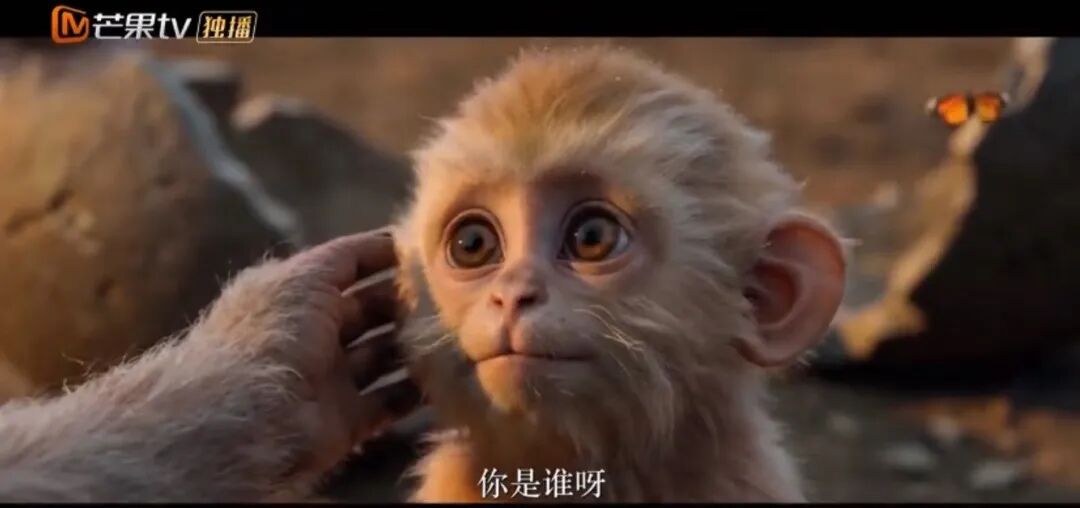
Upon its release, Mango Super Media, the producer, hit the 20% daily limit for two consecutive days, a rare occurrence, with its market value surging by more than 10 billion yuan, driving a collective rally of media stocks including Huace Film & TV, Chinese Online, and Hua Rui Century.
"AI can now produce TV dramas" — the capital market is buying into this compelling story.
The arrival of AI TV dramas sparks a wave of daily limit gains
It is necessary to pour a little cold water first: *Journey to the West: The Sequel* had very few readers before it became an AI TV drama.
This work is adapted from the myth novel of the same name written between the late Ming and early Qing dynasties, and is known as one of the "three major sequels to *Journey to the West*" alongside *The Later Biography of Journey to the West* and *The Continuation of Journey to the West*. The story is set more than a thousand years after Sun Wukong attained Buddhahood: the true scriptures have been misinterpreted by the world, leading to widespread chaos. The immortal stone on Mount Huaguo splits open again, so the second-generation disciples of the Journey to the West, namely Sun Xiaosheng, Tang Banji, Zhu Yijie, and Sha Mi, embark on a second westward pilgrimage.
On the evening of August 31, the episodes of *Journey to the West: The Sequel* premiered simultaneously in the prime time slot of Hunan TV and on Mango TV. Even before the broadcast, the market reacted immediately — just over ten minutes after the market opened that day, Mango Super Media quickly hit the daily limit, media stocks such as Huace Film & TV, Rongxin Culture, and Chinese Online rose by more than 15%, while multiple stocks including Huace Century, Bona Pictures, Longwen Media, and Zhongguang Tianze hit the daily limit, and staged two consecutive daily limit gains on September 1.
Why is the market so excited about an AI drama?
It should be noted that *Journey to the West: The Sequel* is not the first AI drama to be broadcast in the prime time slot of a satellite TV. Earlier, AI dramas such as *When the Sun Falls*, *Chinese Legends: The White Snake*, and *The Story of Taohua Tan* have already been broadcast on satellite TV channels.
What makes *Journey to the West: The Sequel* different is that it is the first full-process AIGC-produced horizontal-screen long drama broadcast in the prime time slot of a satellite TV.
As we can see, *Journey to the West: The Sequel* has 30 episodes each lasting 40 minutes, which is the standard length of a long TV drama. The choice to broadcast it via satellite at 20:00 prime time (covering the whole country through satellite signals) to some extent indicates that the radio and television system has officially recognized the broadcast qualification of AI-produced long dramas, and AI-generated content has entered the mainstream content system for the first time.
In terms of production cycle, the production of a traditional long TV drama usually takes 1 to 2 years, while *Journey to the West: The Sequel* was completed in just 4 months. Thanks to its fast production speed, the innovative model of "simultaneous review and broadcast" can be implemented.
Coincidentally, the *Administrative Measures for the Development of Micro Dramas* came into effect on September 1, which mandates mandatory labeling of AI-generated content, three-level classification review, and prohibits the launch of unregistered content.
As the saying goes, "the first to be compliant gets a seat at the table" — perfectly, *Journey to the West: The Sequel* became the sample of "compliant AI long-form content" before the regulatory deadline.
The Era of AI Film and Television
AI is reshaping many industries, which is no longer just a slogan.
*Journey to the West: The Sequel* seems to herald the "moon landing moment" of AI film and television industrialization: from the script to the finished episode, the entire production chain runs on AI, and the content production mode and even production materials of film and television companies are completely different from the past. Looking back at March this year, the viral movie-level Chinese-style AI short film *Huo Qubing* was also completed on an AI creation platform, with a computing cost of 3,000 yuan bringing 500 million views.
Against this general trend, the impact of technology on the film and television industry will not stop.
In the past July and August, leading text-to-video models completed a series of major upgrades intensively. For example, ByteDance's Seedance 2.5 supports 30-second single generation and multi-modal reference of 50 pieces of materials, while MiniMax H3 adopts an open-source route to reduce the calling cost to about one-fifth of that of mainstream models.
The heat can also be felt from the financing density of companies in the video model track —
On the last day of August, Kuaishou announced that the National Artificial Intelligence Industry Investment Fund and Zhengda Robot will invest 1.4 billion yuan and 131 million yuan respectively as additional investors in Keling AI. In July, Keling AI also completed a financing of nearly 3 billion US dollars, Shengshu Technology received 500 million US dollars in new financing, Aishi Technology completed a total of 2.98 billion yuan in Series C financing, and Zhixiang Weilai completed 1.5 billion yuan in Series C financing;
Looking further back, Yanyu Technology completed a nearly 300 million US dollars Series B+ financing in June; Jingying Technology successively obtained Series A and Series A+ financing. Multiple 10 million-level financings have also emerged in the fields of AI comic dramas, AI animations, AI games and AI interactive narratives.
Behind AIGC, hot money is surging.
Of course, a side that deserves calm consideration is also emerging — the test for AIGC-produced long dramas is not only whether the first episode is attractive, but also whether the audience is still there by the 30th episode. Characters and stories are always the soul of a drama. This means that the traditional capabilities of film and television companies in script development, IP operation and aesthetic judgment are becoming increasingly valuable in the AI era.
After *Journey to the West: The Sequel*, the journey of AI film and television to pursue its own "true scripture" has only just begun.
This article is from the WeChat Official Account "Pedaily" (ID: pedaily2012), author: Feng Yuchen, published with authorization from 36Kr.