A series of measures have been launched on the eve of the $2 trillion IPO, and Anthropic Fable 5.1 is released: it sweeps all the benchmark test leaderboards, reduces the overall cost by up to 45%, and the anti-distillation mechanism is officially put into practice.
On the eve of IPO: Revenue expansion has become the key to underpinning valuation.
As its IPO window draws near, Anthropic sends a clear signal to the market through a full-scale product refresh.
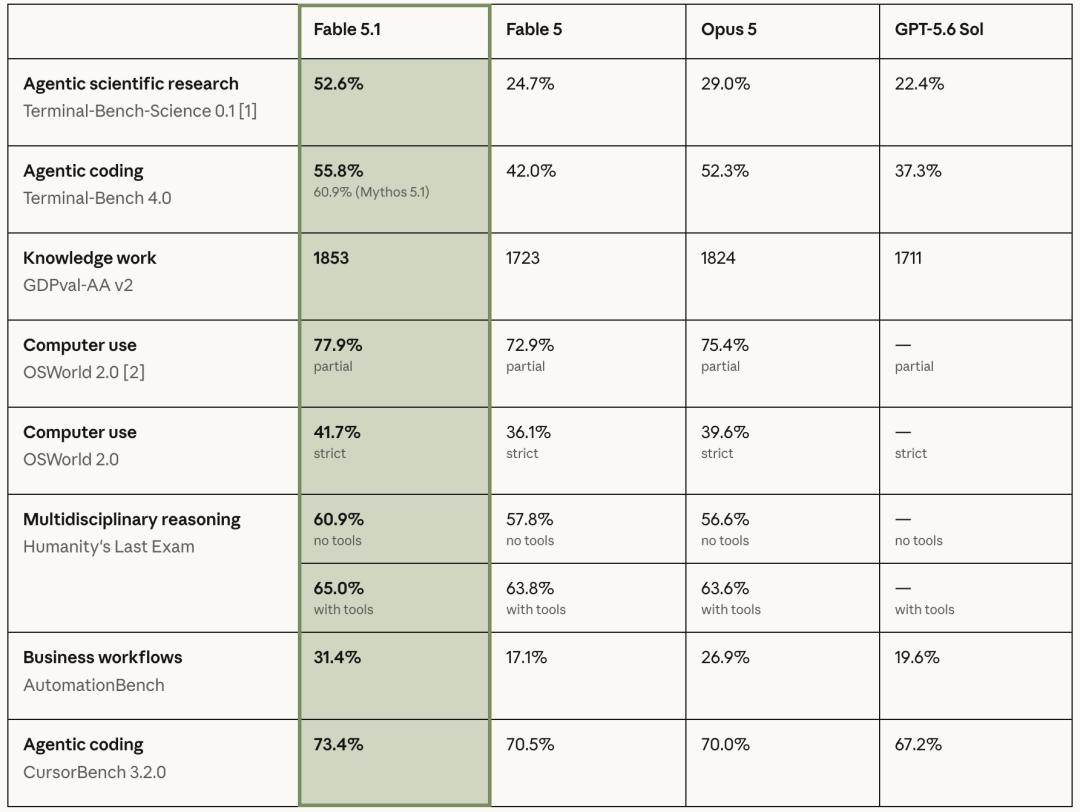
On Tuesday (September 1), this AI company released Fable 5.1, the new version of its flagship model, which took the first place in all 8 public benchmark tests. It also drastically cut enterprise usage costs at the same time, and launched a new security mechanism targeting model distillation attacks, forming its most significant iterative upgrade so far.
On the performance front, Fable 5.1 has a clear edge over the previous flagship Fable 5 and OpenAI's competing product GPT-5.6 Sol in the two core scenarios of programming and scientific research. Fable 5.1 running at a medium-to-low reasoning level delivers performance roughly on par with the previous Mythos 5 running at an extremely high reasoning level.
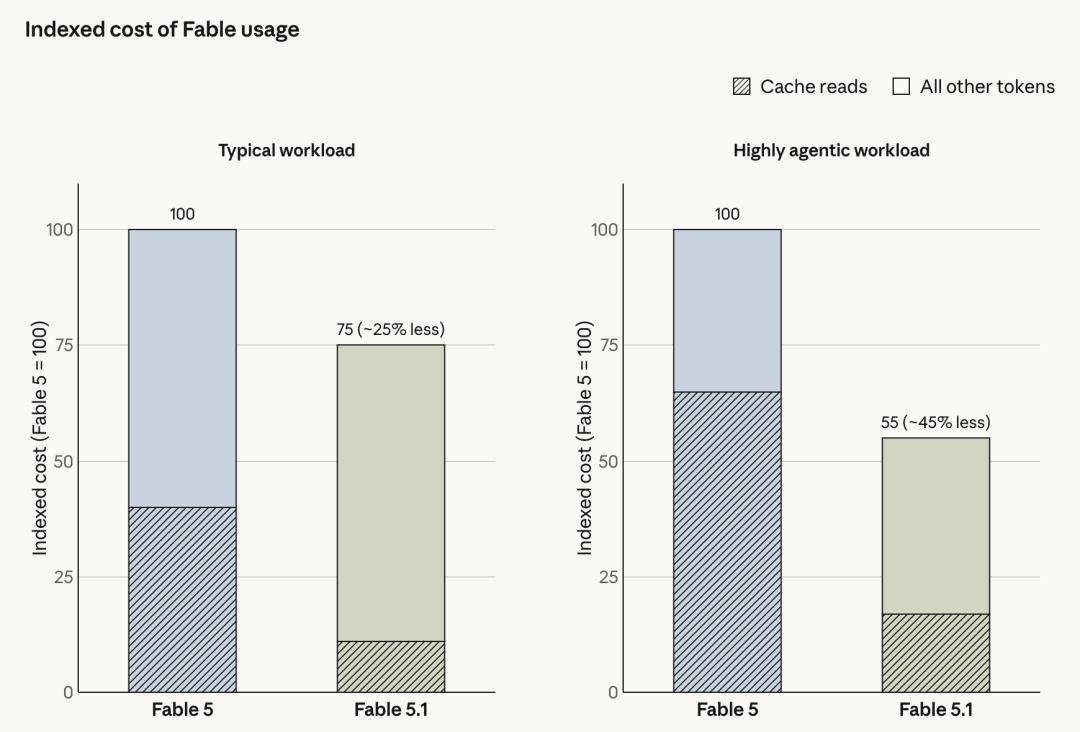
On the cost front, the cache reading price is cut by 75%, and for workloads with high agentization degree, the overall usage cost can be reduced by up to 45%.
Meanwhile, Anthropic announced that it allows enterprise clients to keep their data on their own cloud infrastructure, and added a new anti-distillation protection mechanism for chain-of-thought signature verification. The invite-only high-tier model Mythos 5.1 was also opened to some pre-selected users on the same day.
As the above adjustments take effect, Anthropic is reportedly planning to publish its prospectus next week after the US Labor Day, with the earliest possible listing on the US stock market at the end of September and a target valuation of $2 trillion or higher. Analysts point out that the combination of "extreme performance + sharp cost reduction + looser data policy" is interpreted by the market as a key move for the company to accelerate the acquisition of enterprise clients on the eve of listing and provide revenue support for its high valuation.
Data released by Anthropic shows that Fable 5.1 ranks first in all 8 public benchmark tests, with the most significant gaps from Fable 5 and GPT-5.6 Sol particularly in programming and scientific research.
In terms of scientific research capability, Fable 5.1 scores 52.6% on Terminal-Bench-Science, while the previous generation Fable 5 only scores 24.7%, representing a more than 100% increase. In terms of programming, the new model is better at handling long-link tasks that span the entire codebase, covering scenarios such as large-scale software project development and systematic code review.
Anthropic attributes this leap to the improved stability of the model on multi-step tasks: In such tasks, tiny errors at the early stage often accumulate and amplify along the steps, leading to the crash of the final output; Fable 5.1 is designed to maintain stable output throughout the process, and will proactively inform users of the paths it has tried and the stuck point when encountering unsolvable problems.
In terms of writing, researcher Flix Rieseberg pointed out that Fable 5.1 reduces the use of bold text, headings, lists and quotes, and has a higher degree of adherence to style prompts. In addition, the new model itself is optimized to complete the same task with fewer tokens consumed.
02 Logic Behind Price Cut: 75% Off on Cache Reading, Targeting the Enterprise Agent Market
Pricing adjustment is the change with the most direct commercial significance in this update. The input and output prices of Fable 5.1 remain the same as the previous generation, at $10 and $50 per million tokens respectively; the adjustment is focused on the "cache hit" link, that is, the billing when the model re-reads previously processed content, with a 75% reduction to $0.25 per million tokens.
Anthropic stated that for typical workloads, the expected usage cost of Fable 5.1 will be about 25% lower than that of Fable 5; for highly agentized tasks, the maximum cost saving can reach 45%.
Dianne Penn, head of product management at the company, explained the background of this adjustment: In tasks such as software development and code review that require the model to traverse the entire application codebase, cache reading often consumes more than half of the token usage, which is one of the most concentrated pain points fed back by clients.
"This is an area we want to improve, and it is also a response to client feedback."
The background of this adjustment is clear: model competition is becoming increasingly fierce, enterprise buyers are more and more prudent in AI spending, and they need a more predictable cost structure.
03 Shift in Data Policy: Response to Enterprise Data Sovereignty Demands
The data retention policy adjustment announced by Anthropic is perhaps one of the most attractive changes for enterprise clients in this update.
The new policy allows enterprise users to keep their data on their own cloud computing infrastructure when using Anthropic's most capable models, instead of being forced to store data on Anthropic's servers — at the same time, Anthropic will still perform security checks on relevant data.
The original intention of the previous policy design was to reduce cybersecurity risks, but it also deterred some enterprise clients with strict data sovereignty requirements. The new policy marks a major shift in the company's previous data retention regulations.
On the security mechanism front, the cybersecurity false positive rate of Fable 5.1 is 60% lower than that of Fable 5. It is now allowed to be used to discover software vulnerabilities, but the development of exploit programs is still prohibited; the false positive rate for basic biology and medical issues is reduced by 85%.
This means users engaged in cybersecurity and biology-related work will face fewer cases of being mistakenly blocked by the system.
It is worth noting that the US government previously imposed access restrictions on the Fable and Mythos models due to security concerns. The restrictions on Fable 5 were lifted after relevant classifiers were added, and the permissions of Mythos 5 were later partially restored.
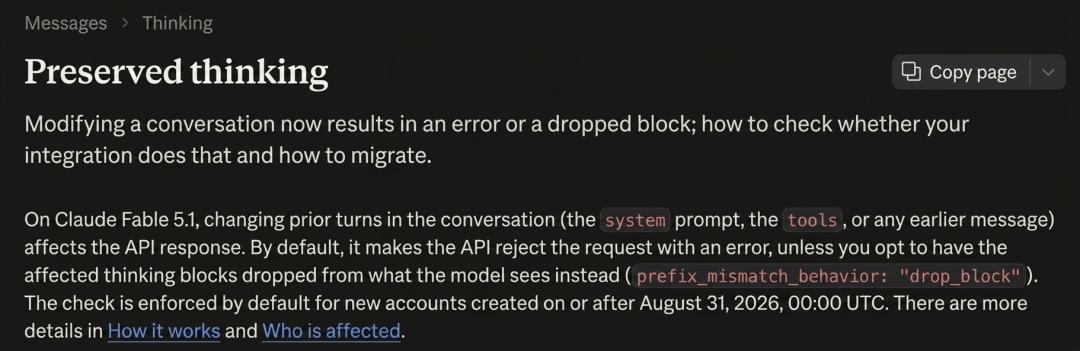
One important addition in this update is the anti-distillation mechanism. From now on, newly registered API accounts cannot manually edit the Claude context in multi-turn conversations while retaining the chain-of-thought records — this blocks a previously publicly recorded attack method: tampering with historical context in multi-turn conversations while retaining the chain of thought, to replay the model's previous reasoning process under adversarial instructions.
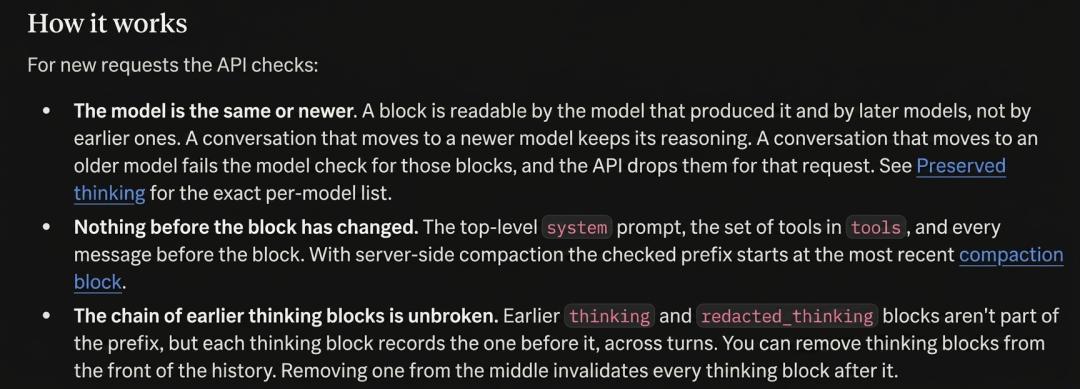
The specific implementation method is to add signature verification to each chain-of-thought block, to verify whether the current model has the right to read the block, and whether the complete dialogue context at the time of generation remains consistent. If any content in the conversation is modified, the signature verification will fail.
The handling method after failure is controlled by developers through the parameter prefix_mismatch_behavior: the default value "error" directly returns a 400 status code; "drop_block" silently discards the relevant block and continues to execute the request, and the discarded part is not billed.
Operations that will trigger verification failure include: editing, reordering or deleting any historical messages, modifying the top-level system prompt, adding, deleting or renaming the tool list, and pulling out the chain-of-thought block from the middle of the conversation. Operations such as appending new messages, modifying request parameters, and adding or removing cache control tags are not affected.
Anthropic provides a series of alternative solutions for developers who directly call the Messages API, and recommends that the messages array be strictly used as an append-only structure. Users of official products such as Claude Code and claude.ai do not need to make any adjustments.
05 Scientific Research Practice: Protein Design, Venus Map and GPU Acceleration
In addition to benchmark tests, Anthropic also demonstrated the practical application results of Fable 5.1 and Mythos 5.1 in scientific research scenarios.
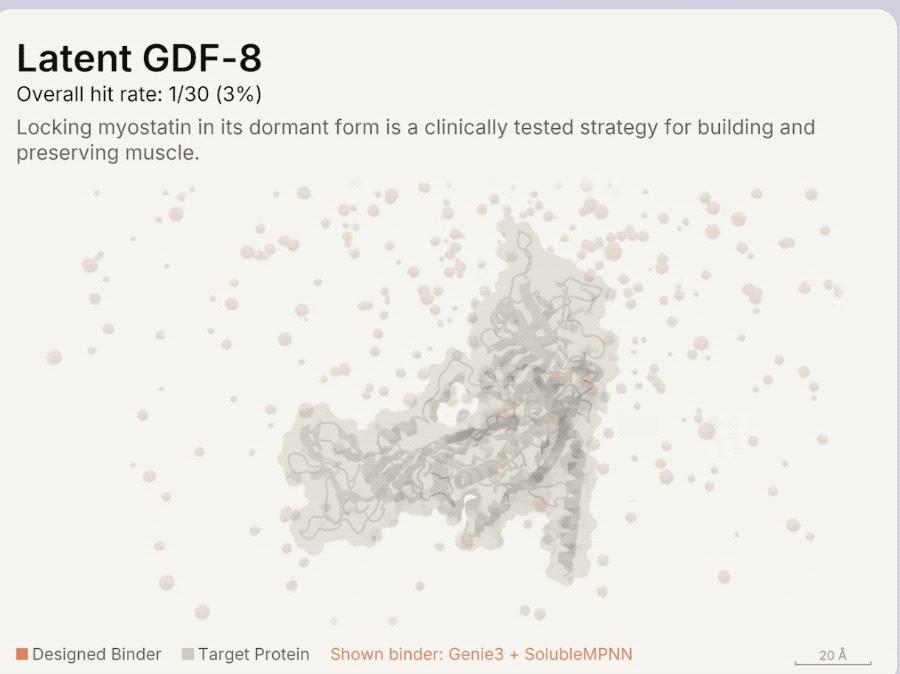
In terms of protein design, Anthropic let Mythos 5.1 use open-source tools to design high-affinity binding proteins, and sent them to two external institutions for experimental verification. On three targets, the binding affinity designed by Mythos 5.1 is 10 times that of the best solution in the Adaptyv Bio protein design competition; on all 12 targets, the hit rate is close to 50%, while the typical hit rate in this field currently ranges from 10% to 15%. High-affinity binding protein is the first step in the development process of many common drugs, which directly affects the effective dose required by the drug.
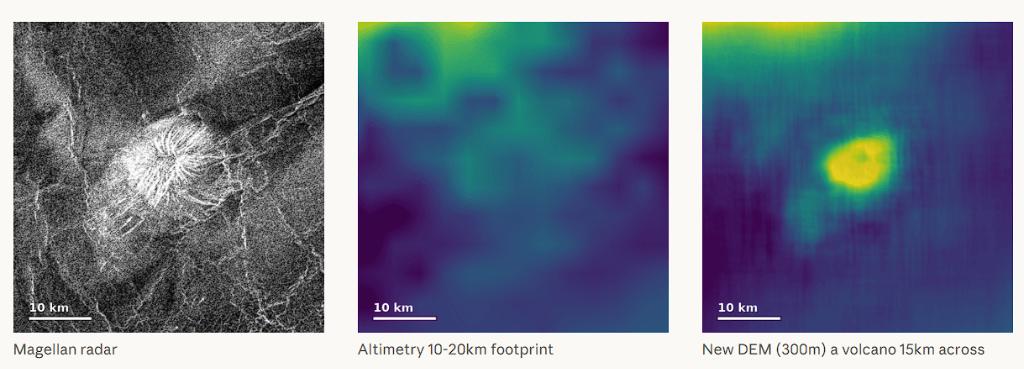
In terms of astronomy, based on the radar images taken by NASA's Magellan more than 30 years ago, Fable 5.1 trained a neural network to generate a new high-resolution topographic map for one-third of Venus's surface, raising the resolution from the previous 10-20 km to 2-3 km, and the height accuracy is improved by 25%. This map has been released as open source under CC license, for reference for the upcoming NASA VERITAS and ESA EnVision missions.
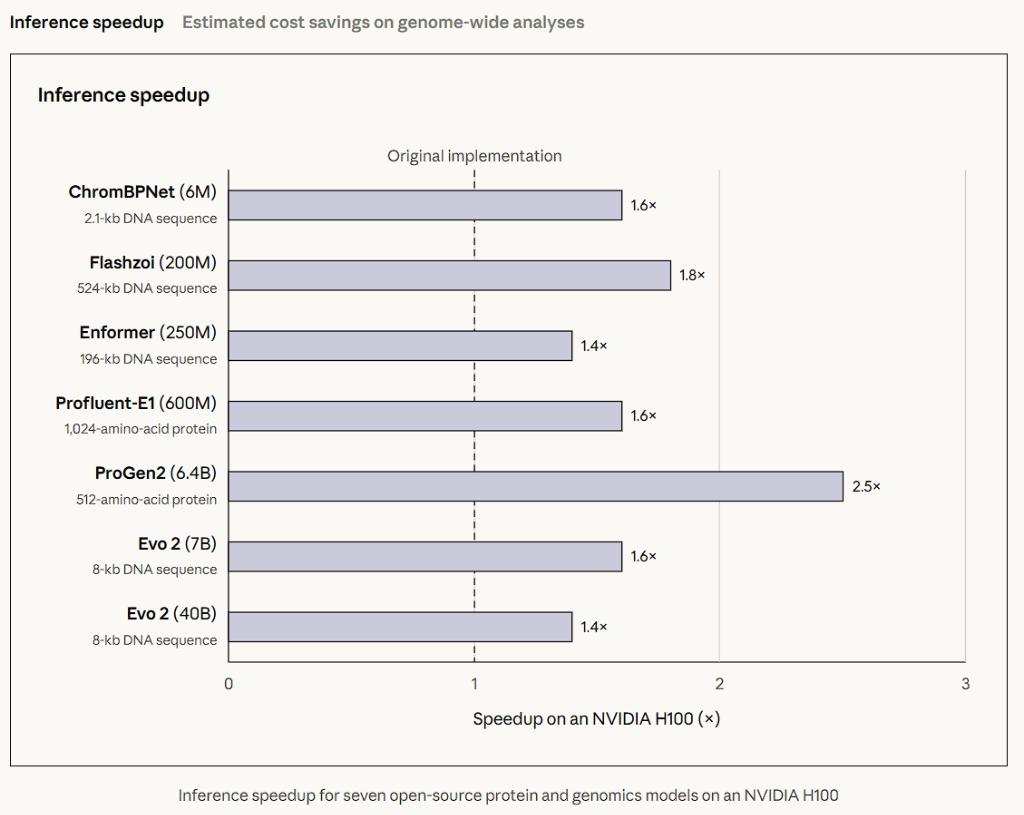
In terms of computational biology, Mythos 5.1 wrote custom GPU kernels and cached intermediate results, increasing the running speed of 7 open-source deep learning models by up to 2.5 times, which can reduce GPU costs by 30% to 60%.
This kind of optimization usually takes a performance engineering team several weeks to complete, which many academic laboratories cannot afford, while Mythos 5.1 completed it in only a few days, relying solely on open source code. Anthropic plans to open source the relevant optimizations in the near future.
06 On the Eve of IPO: Revenue Expansion Becomes the Key to Valuation Support
The release of Fable 5.1 is the epitome of a series of moves made by Anthropic as its IPO window draws near. According to reports, both Anthropic and OpenAI have submitted confidential listing application documents. Anthropic plans to publish its prospectus after Labor Day, and is expected to list on the US stock market as early as the end of September, with a target valuation of $2 trillion or higher.
Anthropic expects its annualized revenue to exceed $650 billion, representing a more than sevenfold increase from the operational pace at the end of 2025. As the listing window approaches, it is crucial for the company to continuously expand its enterprise market share and translate high valuation into visible revenue growth.
The release of Fable 5.1 is part of Anthropic's broader strategy to compete for enterprise clients in professional scenarios such as programming, cybersecurity, financial services, science and healthcare. At this point, OpenAI's new model Astra, its competitor, is not yet ready and has only been previewed.
This article is from the WeChat official account "Wall Street CN", authors: Yang Chen, Dong Jing, published with authorization from 36Kr.