After Changxin, Hefei bets on nuclear fusion
Where is China's largest "gambling city"?
Many people would say Hefei. BOE, NIO, ChangXin Memory Technologies, these companies that Hefei's state-owned capital bet on were almost not favored at the time, but facts later proved that Hefei indeed has extraordinary vision and courage.
ChangXin Memory Technologies was recently listed on the A-share market, with a market value exceeding 3 trillion yuan. The entities related to Hefei's state-owned capital hold a total of about 36.79% of the shares, with a book return exceeding 1 trillion yuan. The local debt accumulated by Hefei in the previous real estate boom cycle was about 300 billion yuan, which was easily recouped in one go.
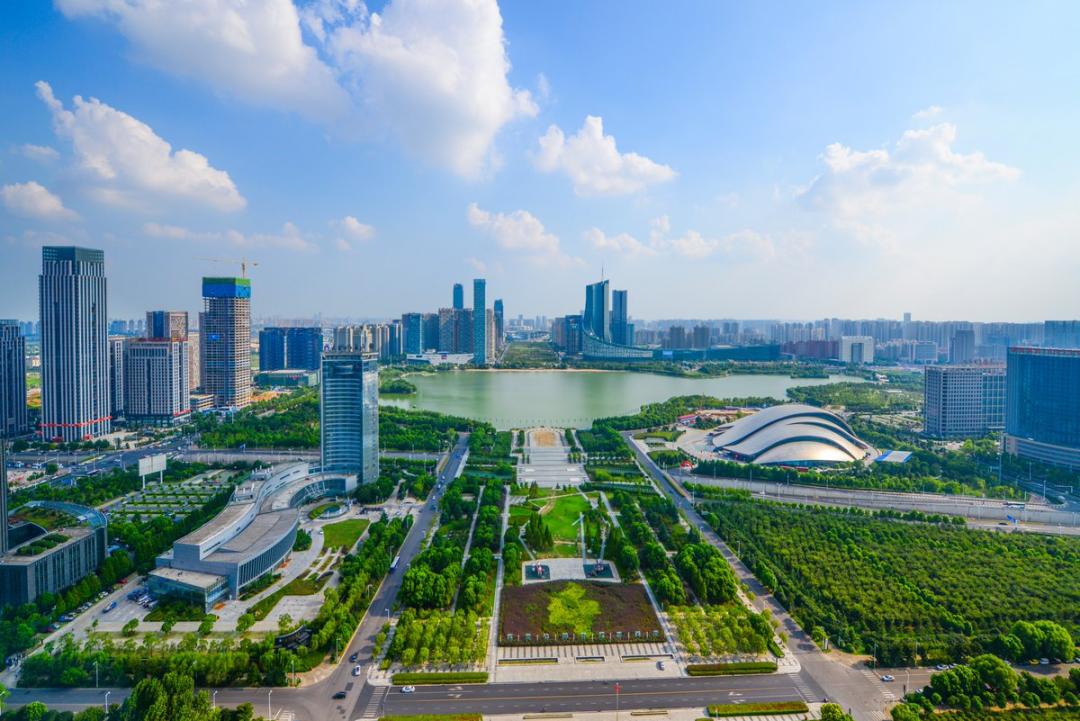
Rather than calling Hefei a "gambling city", it is better to call it the "most powerful venture capital firm". Because its investment logic is never to bet on a single point, but to make layouts with the thinking of the entire industrial chain: invest in a leading enterprise first, and then bring in upstream and downstream supporting enterprises. For example, a single display screen gives birth to a whole display industrial chain, a complete vehicle brings in a full set of new energy supply chains, and a single memory chip spawns a semiconductor ecosystem.
However, one of Hefei's investments is different from its previous projects — controllable nuclear fusion.
Display panels, memory chips, new energy vehicles, these tracks all have mature products and markets at the very least. Nuclear fusion has none of these. Up to now, there is not a single commercial fusion reactor in the world, and no one can tell for sure whether the generated electricity can cover the cost or when grid connection will be realized.
Some people say Hefei is taking an excessively big gamble this time, what kind of overall plan is it laying out after all? Where does its confidence come from?
01: Why did Hefei bet on nuclear fusion, and how did it make its layout?
Many people think Hefei started its nuclear fusion research as a trend-follower in recent years, but in fact its starting point is much earlier than most people expected.
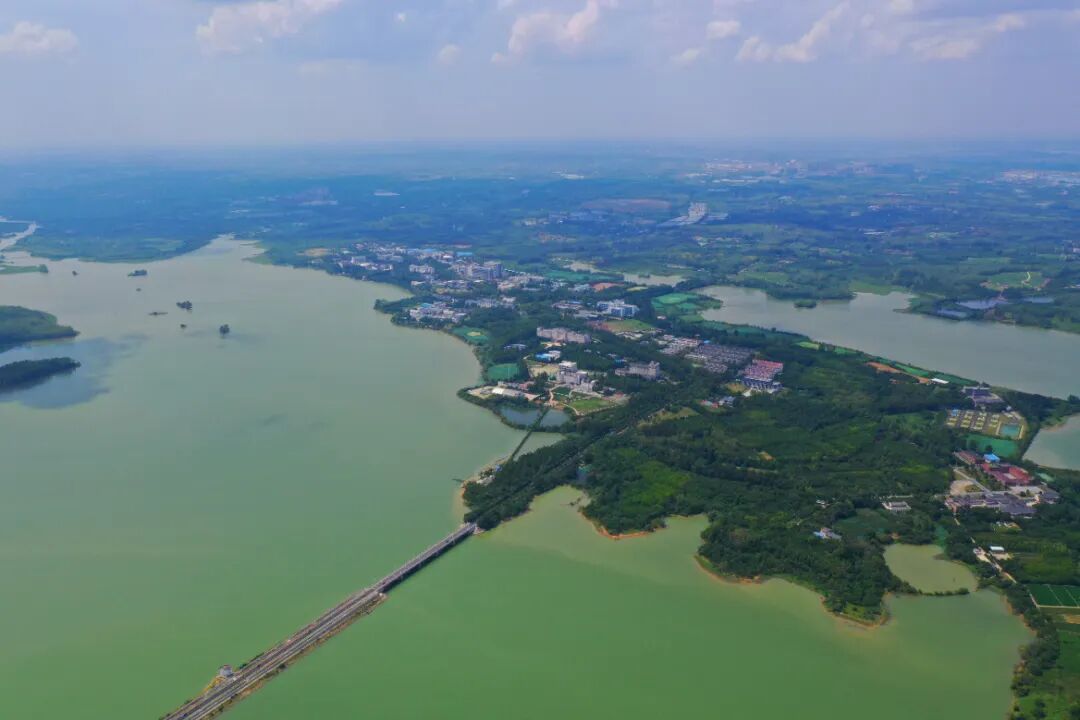
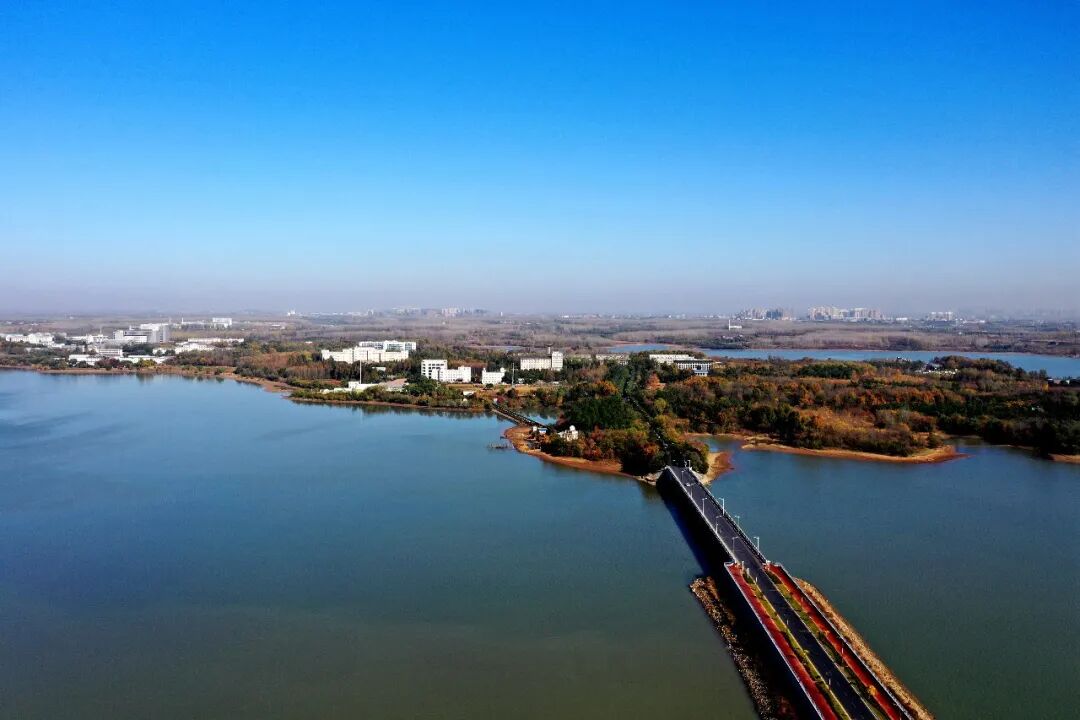
There is a Dongpu Reservoir in the northwest of Hefei, and a peninsula called Science Island in the middle of the reservoir. The Institute of Plasma Physics on the island was built in 1978, and it has been nearly 50 years up to now. The so-called plasma is the form of matter that exists in nuclear fusion reactions. Hefei's nuclear fusion cause started right on this island.
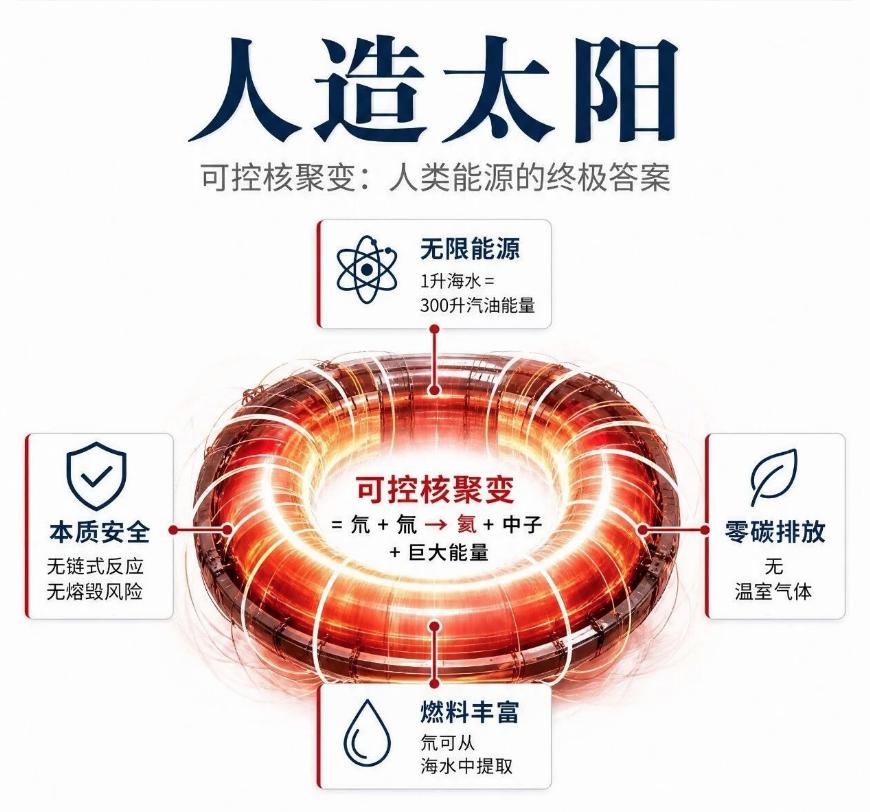
Let's first talk about what nuclear fusion actually is. The principle is not complicated: two light atomic nuclei, such as deuterium and tritium, collide at high speed at extremely high temperature, fuse into a helium nucleus, and release huge amounts of energy at the same time. This is how the sun emits light and heat, and human beings want to create a "little sun" on the earth.
Deuterium is everywhere in seawater. If all deuterium in one liter of seawater undergoes fusion, the energy released is equivalent to that of 300 liters of gasoline. If this technology is successfully realized, the energy problem will be basically solved.
The difficulty lies in how to make atomic nuclei collide with each other.
Atomic nuclei are all positively charged and repel each other. They need to be heated to hundreds of millions of degrees to move fast enough to overcome the repulsive force and collide. But at such an extremely high temperature of hundreds of millions of degrees, matter is no longer solid, liquid or gas, but turns into plasma, the fourth state of matter. At this time, no container made of any material can withstand it, and it will vaporize the moment it touches the plasma.
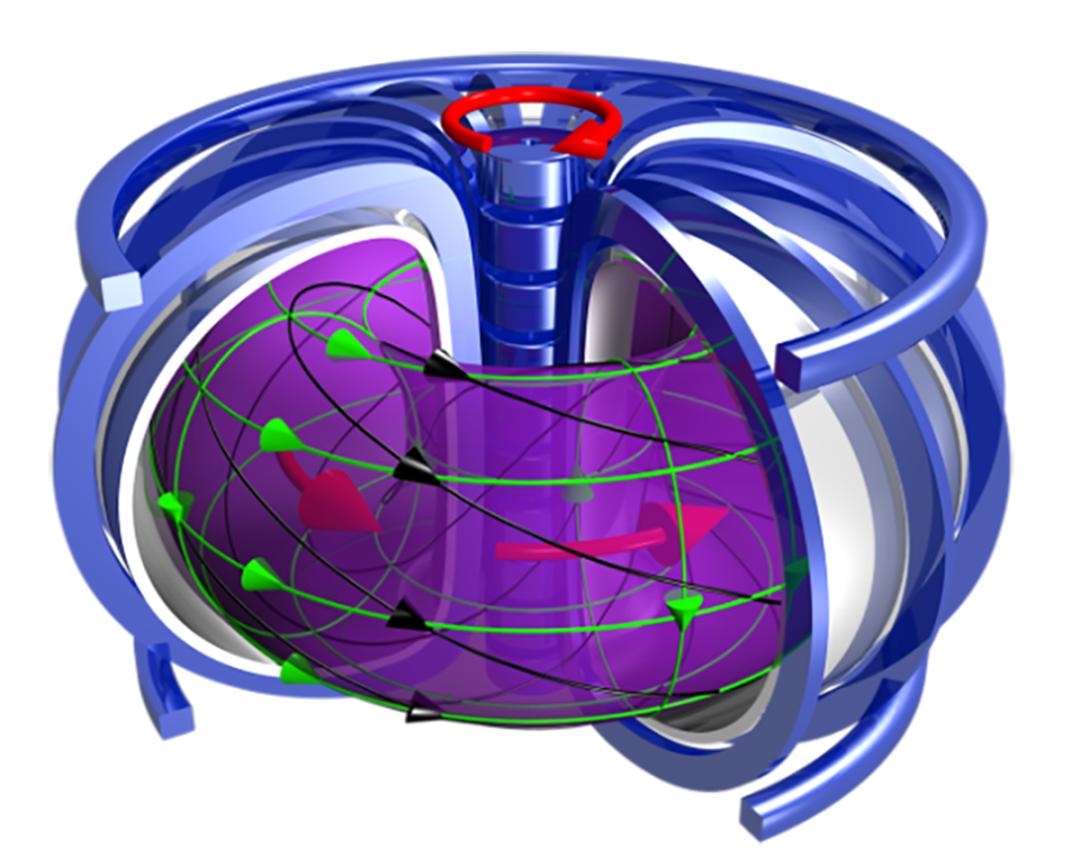
Scientists came up with a solution: use a strong magnetic field to create an invisible cage, suspend the plasma in a vacuum, and prevent it from touching anything. This device that uses a magnetic field to confine plasma is called a Tokamak.
Hefei started Tokamak research very early. The first batch of researchers who came to the island almost started from scratch. At that time, there were no decent roads, and it took hours of bumpy rides on a walking tractor to go to a meeting in the city, with feet covered in mud every time it rained.
Under such conditions, relying on the most primitive computing tools and simple machine tools, they successively built two devices: HT-6B in 1983 and HT-6M in 1985. These two machines are very rough by today's standards, but they were the first batch of Tokamaks in China that actually operated.
They allowed Chinese scientists to get their first hands-on experience of high-temperature plasma at millions of degrees, and also made them clearly realize a physical bottleneck: the copper coil generates too much heat when energized, and the experiment can only last for a few seconds. To achieve fusion power generation, we must switch to the "superconducting" route — superconducting materials have zero resistance, and no matter how large the current is, they will not generate heat.
The one that really opened up the situation was HT-7, China's first superconducting Tokamak that was actually put into operation.
The turning point occurred in the early 1990s. The T-7 device of the Kurchatov Institute of the former Soviet Union was forced to shut down due to funding problems. Academician Katomtsev, the director of the institute, wrote to Huo Yuping, the director of the Institute of Plasma Physics, proposing to donate the device to China. But at that time, China's foreign exchange was extremely tight, and even the freight and disassembly costs could not be afforded. Huo Yuping made an unconventional decision: to exchange for the device with daily supplies.
At that time, the Soviet economy was on the verge of collapse, the ruble depreciated sharply, and daily supplies such as down jackets and jeans were more valuable than rubles.
As a result, supplies such as down jackets, jeans, and porcelain were transported to the former Soviet Union, and the T-7 device worth 18 million rubles was exchanged back. Some people half-jokingly said that China used several truckloads of down jackets to exchange for a "superconducting armor" for its fusion science cause.
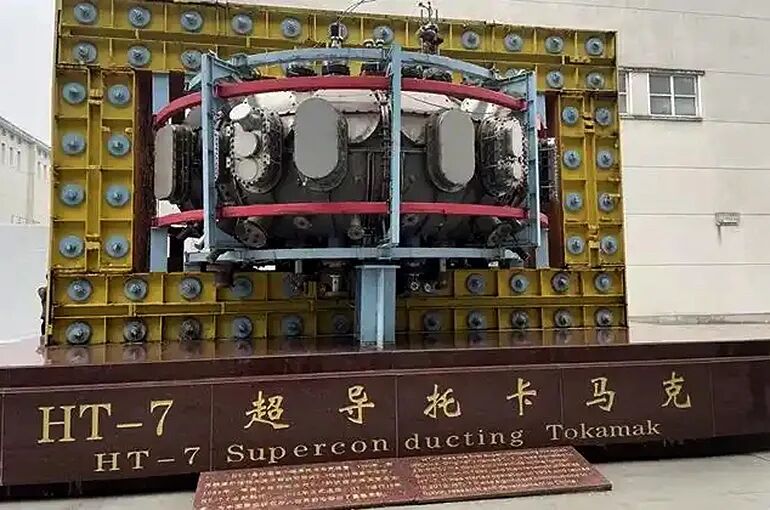
When the device arrived in Hefei, its condition was far worse than expected, with aging parts, lost drawings, and incomplete control systems. Some people abroad even asserted that this pile of scrap iron could never be restarted. But the team of the Institute of Plasma Physics did not give up, and carried out a comprehensive transformation of the low-temperature system, power supply system, vacuum chamber and other components.
In 1994, the modified HT-7 successfully discharged, and it was later called "Hefei Superconducting Tokamak". China became the fourth country in the world to own a superconducting Tokamak after Russia, France and Japan. HT-7 used superconducting magnets to verify that the "zero resistance, no heat generation" route is feasible, and achieved plasma discharge lasting up to 60 seconds at its maximum.
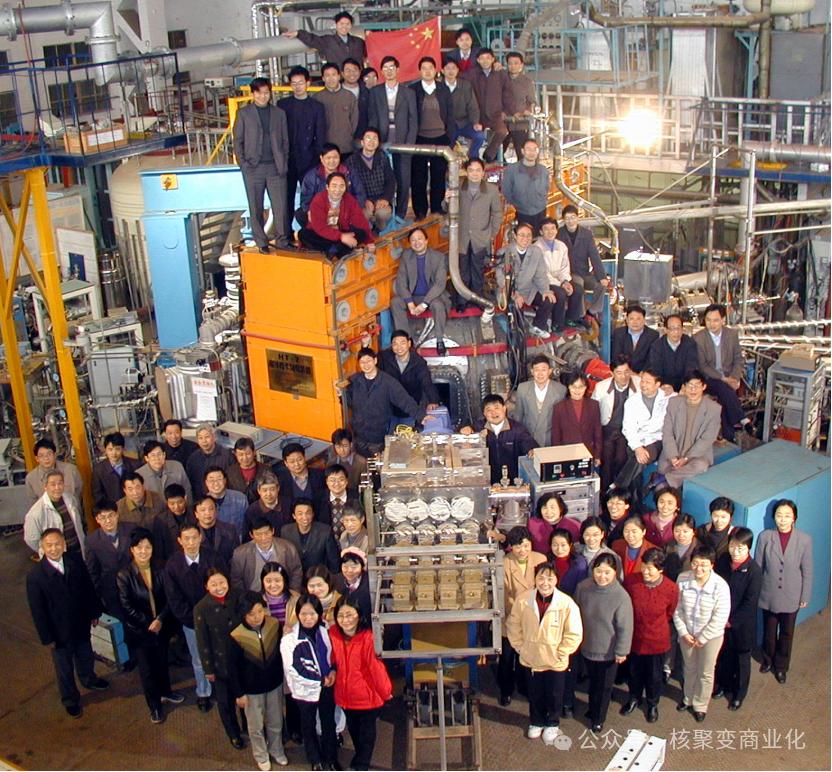
(HT-7 scientific research team)
By the end of the 1990s, the success of HT-7 gave China a voice in the international fusion community. But scientists are very clear: HT-7 adopts a circular cross-section design, while ITER (International Thermonuclear Experimental Reactor, the world's largest international fusion cooperation project at that time), which was about to be launched, adopted a more advanced D-shaped cross-section. To keep up with the international frontier, China must build a new generation of device on its own. So the HT-7U project was officially approved, and later it got a more resounding name:
EAST, which is called "Experimental Advanced Superconducting Tokamak" in English.
The chief person in charge of EAST at that time was Wan Yuanxi, a postgraduate graduate of the Department of Physics of Peking University, who later became an academician of the Chinese Academy of Engineering. At that time, the island was still very desolate, with grass as tall as a person. It took him more than an hour to ride a bicycle to the laboratory every day, and he kept doing this for three years.
What was more difficult than the living conditions were technical problems. The superconducting magnet of EAST required the superconducting material to be drawn into extremely thin wires and then wound into coils. It was an internationally recognized manufacturing problem at that time that a 0.8 mm strand of wire had to be drawn for thousands of meters without breaking. The Chinese team independently tackled key problems and broke through this process bottleneck.
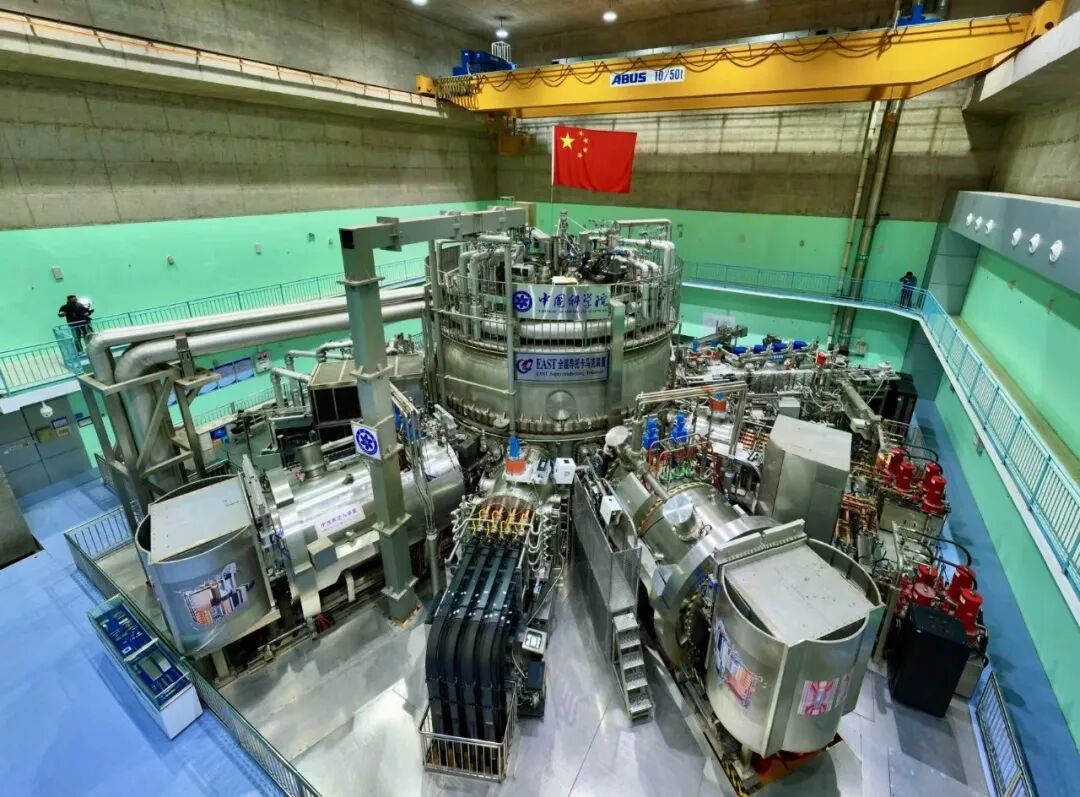
Compared with HT-7, the biggest difference of EAST is that all the magnets are made of superconducting materials, while only part of the magnets of HT-7 are superconducting. In 2006, EAST was built on the island and successfully discharged, becoming the world's first fully superconducting non-circular cross-section Tokamak. The non-circular cross-section means the cross-section is D-shaped, and this design is more stable and more suitable for long-term operation.
With devices and talents, an industry is also needed. Hefei has made layouts in the fusion industrial chain from upstream materials to downstream complete machines, but its operation mode is different from that of ordinary regions. Many regions attract investment by providing land and subsidies, and the work is done as long as the enterprise settles down. Hefei drives the development of the industry through large scientific devices.
The device itself is actually the largest demander. Every upgrade and transformation of EAST requires a large number of components and special materials to be purchased. Some of these things are not available on the market and no one in China has ever made them, so local enterprises can only take orders, or work with researchers on the island to test them while making them. At the beginning, they may only make a small part, and gradually their technology and orders will grow.
Having orders alone is not enough. The components of fusion devices have extremely high reliability requirements. After they are manufactured, they must be tested in an environment close to the real fusion reactor to see if they can withstand high temperatures, strong radiation and large magnetic fields.
The cost of such testing facilities is extremely high, and enterprises cannot afford to invest in them on their own. A large testing platform often costs hundreds of millions of yuan. Hefei built CRAFT on its own, that is, the Comprehensive Research Facility for Fusion Reactor Host Key Systems, which people on the island call "Kuafu". It is specially used to verify the key technologies and components of fusion reactors, and is also open to enterprises for testing. With real test data, enterprises will have greater confidence to move forward with the next step of R&D.
In addition to EAST and CRAFT, Hefei is also building a compact fusion experimental device called BEST, aiming to verify the engineering feasibility of fusion power generation.
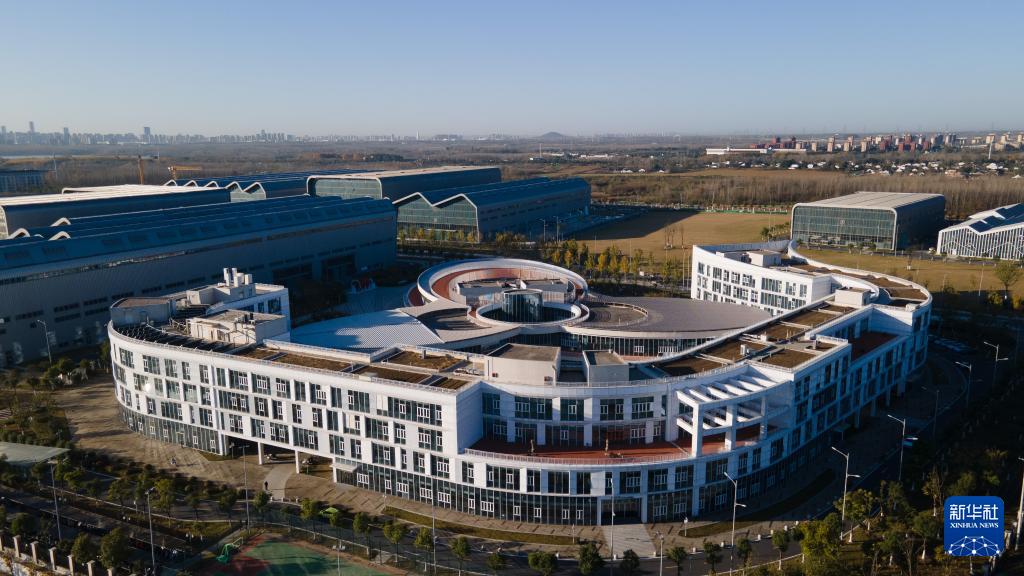
The essence of Hefei's operation mode is to use large scientific devices and public investment to complete the zero-to-one process of the industrial chain in advance. When nuclear fusion really enters the commercialization stage and other people start to exert their efforts, Hefei has been working for more than ten years and has obvious first-mover advantages.
Moreover, this model is difficult to replicate. Large scientific devices, teams accumulated over decades, and the patience of long-term investment are all indispensable.
02: What progress has Hefei's nuclear fusion made?
The current state of Hefei's nuclear fusion has entered a critical stage of industrial implementation. This change has only occurred in recent years, and many people have not yet reacted.
Let's first look at the most hardcore device, EAST.
Although it has been in operation for nearly 20 years, its records are constantly being refreshed. In January 2025, EAST realized the operation of 100 million degrees Celsius plasma for 1066 seconds. This temperature is nearly 7 times hotter than the core of the sun. Only a few devices in the world can stably operate hundreds of millions of degrees of plasma for such a long time.
