From a few hundred yuan to ten thousand yuan, baby cribs are being repriced by "embodied intelligence".
GeekPark recently found that the crib category is being repriced by AI, or more precisely, by "embodied intelligence". The price has directly jumped from a few hundred yuan to ten thousand yuan.
Crib is one of the few home furnishing categories that have been "ignored" by technology. For 100 years, its shape has barely changed: four columns, a circle of railings, and a mattress.
The key change took place in the past five years.
Sensors, algorithms and motors have been installed in a bed for the first time, and the price has jumped accordingly: the American smart crib SNOO is priced at 1695 US dollars (about 12,000 yuan), and Cradlewise is priced at 1999 US dollars; at this year's CES at the beginning of the year, the AI sleep cabin demonstrated by Chinese company Qinbaobao has an official price of 8999 yuan.
At present, as long as products are labeled as "smart" and only equipped with temperature control and video recording functions, there are plenty of options sold on e-commerce platforms starting from 4000 yuan.
Overseas, emerging brands such as SNOO and Cradlewise have proven with their products that cribs can be sold for more than 10,000 yuan, and such products are well received by consumers.
Industry giants are accelerating their entry into the market. German industrial giant Bosch has also launched the AI crib Revol, and traditional maternal and infant giants HALO and Graco are also following up across the board.
Keeping babies sleeping safely and freeing parents from nighttime sleep loss and care anxiety — this niche category has moved from the edge to the center of the stage. Moreover, it is now being labeled as "embodied intelligence", becoming an early entrepreneurial track with an increasing number of participants.
The key question is: is this just a marketing gimmick, or a brand-new category opportunity? And who has the chance to gain a foothold in this track?
01. What extra features does a 10,000-yuan crib have?
When discussing smart cribs, SNOO and Cradlewise, the earliest entrants in the sector, are unavoidable names, and they can be regarded as the pioneers of this category.
SNOO was founded by pediatrician Harvey Karp, who has published the bestseller *The Happiest Baby on the Block*.
The core of SNOO lies in three components: rocking, white noise, and the built-in swaddle — the sleeping bag is buckled on the buckles on both sides of the bed body, ensuring that the baby can only sleep on their back.
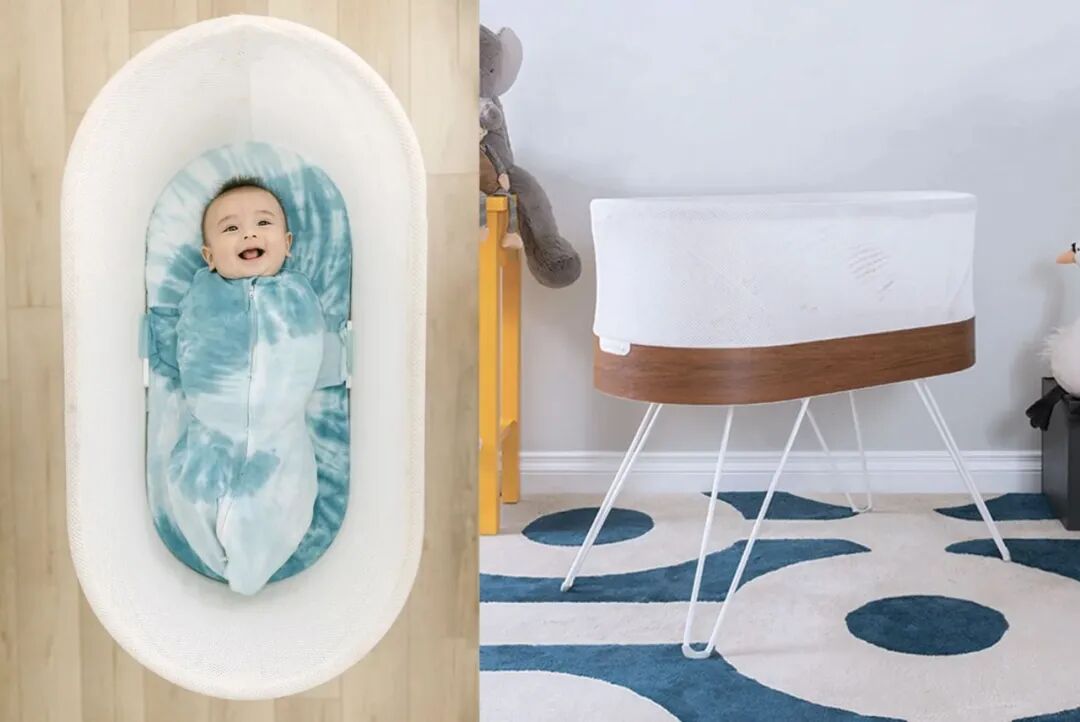
To simulate the uterine environment, Snoo allows parents to wrap the baby tightly with the attached sleeping bag. The bed body will gently rock the baby and play continuous white noise to lull them to sleep | Image source: insidebook
Once the baby cries, the sensor will identify the intensity of the cry, and the bed will automatically rock to soothe the baby with four levels of increasing intensity. The official claims that in most cases, the crying can be calmed in less than a minute, allowing the baby to sleep 1-2 hours more on average every night.
However, it is only suitable for infants aged 0-6 months, priced at 1695 US dollars, and can also be rented on a monthly basis (159-499 US dollars/month). It is also equipped with 7-day 24-hour online sleep consultants. SNOO is still the only crib approved by the FDA to keep infants sleeping on their backs — this is its biggest advantage that distinguishes it from all competitors, and also makes it the fastest-circulating crib in the second-hand market.
Cradlewise takes a different approach. Priced at 1999 US dollars, it has a built-in camera and microphone, and a motor for bouncing is installed under the bed.
The algorithm monitors the baby's subtle movements and identifies them — turning over, opening eyes, making sounds — and starts to gently bounce to lull the baby to sleep before the baby actually wakes up. It calls this concept "prediction over reaction".
The founders of Cradlewise are a couple with a background in chip companies. Their development path is to accumulate sleep data of each baby on the cloud through algorithms, and continuously iterate the ability to "understand infants".
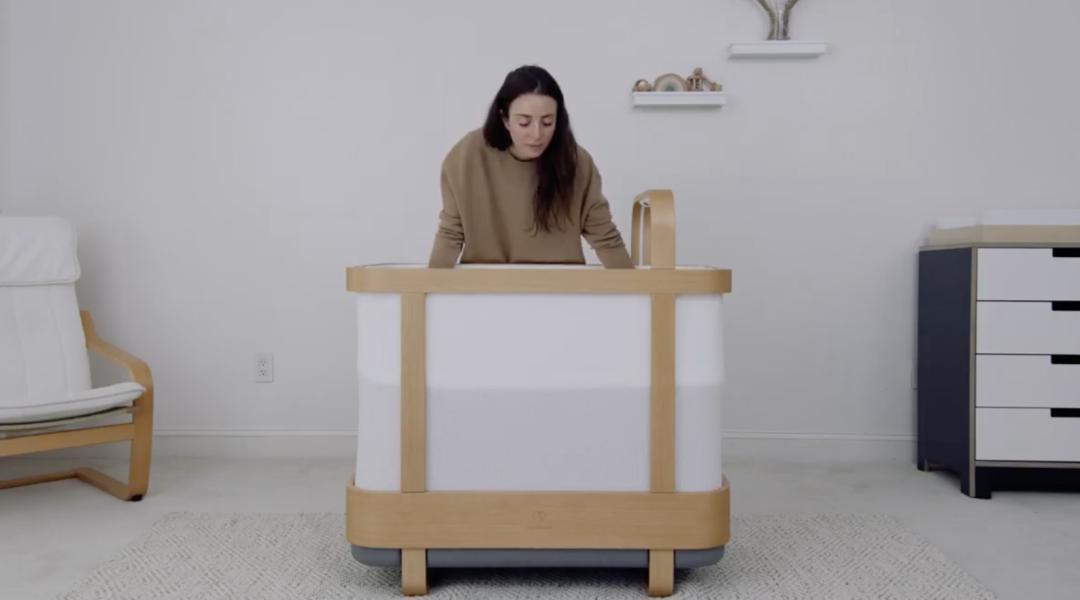
The Cradlewise crib can bounce up and down. It simulates the way parents soothe babies in their arms through gentle bouncing movements | Image source: Cradlewise
The bed can be converted from a cradle mode to a toddler bed mode to adapt to infants of different ages, and can be used until the baby is 24 months old, with functions updated via OTA. In April 2025, Sam Altman, founder of OpenAI, recommended it on social media, attracting a wave of widespread attention.
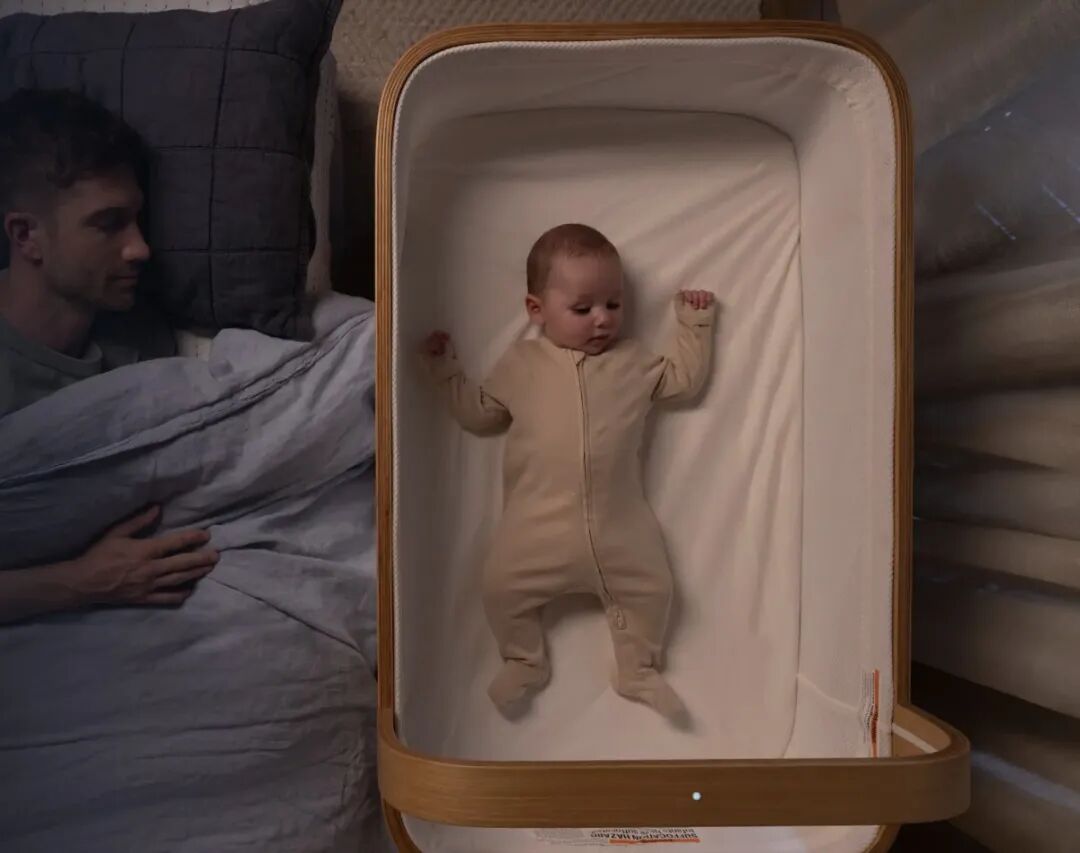
In the first few months, Cradlewise can be used as a baby cradle; when the baby grows older, the mattress height can be lowered to convert it into a crib | Image source: Cradlewise
Chinese company "Qinbaobao" launched its first crib product this year, emphasizing its "embodied intelligence" concept in promotion.
The relevant person in charge of Qinbaobao explained its "embodied intelligence" concept as follows: from sensor-based infant status recognition, to risk grading, to reminders and automatic soothing (playing sounds), and then to actionable action suggestions for parents provided by the AI assistant, the whole process forms a closed loop of AI embodied intelligence.
However, compared with Cradlewise and SNOO, Qinbaobao does not have the movement ability to rock and lull babies to sleep.
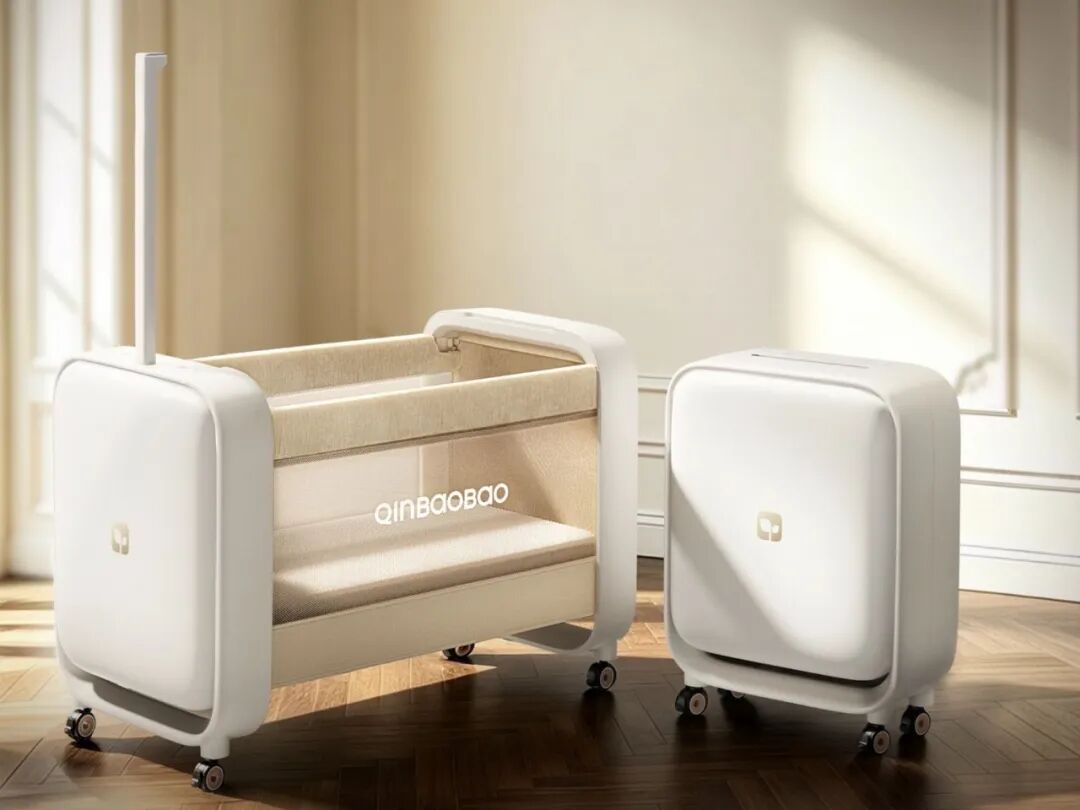
Qinbaobao AI sleep cabin can be folded into the size of a suitcase | Image source: Qinbaobao E-commerce
Therefore, what is "embodied intelligence"? Different industry players may have their own different interpretations.
To break it down in detail, the Qinbaobao AI sleep cabin has a built-in millimeter-wave radar inside the bed body, which reads the baby's breathing and heart rate through the mattress; infrared temperature measurement continuously reads body temperature, and automatically gives early warning for abnormal signals such as high fever.
At the same time, according to the promotion, it can identify multiple states such as face covering, climbing over, kicking off the quilt, crying, and murmuring through algorithms, and give graded reminders according to the urgency level.
When the AI sleep cabin detects crying, it will automatically play soothing music, stories or white noise suitable for the baby's age. In addition, it realizes non-inductive height and weight recording through the four-axis suspension weight measurement built in the bed body.
In general, after domestic and foreign manufacturers use AI to help babies sleep better, they also free parents from sleep loss and parenting anxiety.
The concept of "embodied intelligence" is becoming the marketing and technical direction of such products.
But the question is, who can really make the so-called "embodied intelligence" work well?
02. Giants are pouring in, three critical questions for this business
In terms of capital, Snoo completed a 10 million US dollar Series A round of financing in 2015. After completing the 45 million US dollar Series C round of financing in 2021, its annual revenue is between 45 million and 52 million US dollars according to public information.
Startups have verified the market demand, and giants immediately entered the track.
The AI crib Revol launched by German Bosch: equipped with sensors and cameras to monitor heart rate and breathing, recognize crying, analyze sleep, and can also rock automatically; traditional manufacturers such as HALO, Graco and Fisher-Price have also launched smart cradles with automatic soothing functions.
The fact that a company engaged in automotive electronics began to make cribs shows that this track has grown large enough to be taken seriously.

AI crib Revol launched by Bosch | Image source: Bosch
However, the larger the track, the more failures may occur.
In March 2026, about 45,000 pieces of Magic Sleepsuits under HALO were recalled due to safety hazards; earlier, the inclined sleeping chair of Fisher-Price caused a large-scale safety controversy. Safety supervision is also tightening — in December 2025, the U.S. Consumer Product Safety Commission updated the mandatory safety standards for cribs, bringing electrical components and matching mattresses into supervision.
These companies jointly support a real market whose demand is far from being met. But to truly release the potential of this business, three core problems need to be overcome:
- Technical verification of the sleep model is the core
The infant sleep model is still in a very early stage globally — there is a complete set of theories for adult sleep research, but infants cannot speak, and there is still a lack of mature and available algorithms for infant sleep rhythm, soothing frequency and state judgment.
SNOO is backed by medical parenting theories, while new products such as Cradlewise need to rely on data iteration, but more family data is still needed to verify their "effectiveness".
Whoever can truly develop a sleep model for infants may have the opportunity to define this market. At present, this market is still too early, or even relatively blank.
- Lifecycle of cribs
The actual usage period of a crib ranges from 6 months to 2 years. It is worth noting that both SNOO and Cradlewise provide official refurbished machines and rental services — this category is inherently short-cycle and high-circulation, and the second-hand market has existed since the very first day.
Rental, subscription, and multi-purpose design of the bed are all business models to counter the short product lifecycle.
Although the data from multiple research institutions varies, the order of magnitude is consistent: The global smart crib market reached a scale of around 1 billion US dollars in 2025, with an annual growth rate close to double digits. However, considering the global birth rate, this track that does not grow naturally may lack sufficient momentum in the later stage.
- Safety and trust
AI will not eliminate people's concerns: does the sensor have radiation? Will rocking hurt the baby? Is the algorithm accurate?
SNOO has solved the trust problem with FDA authorization, but for other products that focus on the "embodied intelligence" concept, how to prove the effectiveness and safety of their "AI sleep model"?
Startups need to find their own answers. The psychological threshold of parents also needs time and word-of-mouth to be lowered.
03. Starting from cribs is just the beginning
If we take a broader perspective, there is even greater potential behind embodied intelligence cribs.
For example, the bionic deep cabin, temperature, humidity, noise and brightness adjustment, and sleep rhythm analysis of embodied intelligence cribs — are actually moving towards the direction of "sleep environment management".
This direction already has references in the adult market: Some custom sleep cabins for corporate executives are priced at 30,000 to 100,000 yuan, creating a small environment in the office for a one-hour lunch break. In the past few years, some companies have also tried to productize this set of "environment-assisted sleep" logic.

Some custom sleep cabin products on e-commerce platforms | Image source: Taobao
If the embodied intelligence crib can verify the technical capability of "perception — soothing", once the technical logic is proved feasible, in theory it can be applied to any sleep scenario.
Therefore, the category of "AI sleep cabin" or "embodied intelligence sleep bed" has the potential to give birth to a sleep technology company that covers both the adult market and the infant market.
This is also the greater market potential of this category.
Who can stand out does not depend on who releases the product first, but on who is the first to overcome the three hurdles of sleep model technical verification, trust building and lifecycle optimization.
This competition has only just begun.
This article is from the WeChat official account "GeekPark", Author: Su Zihua, published with authorization from 36Kr.