The World Robot Conference delivers a key signal: Is Physical AI transitioning from the "demonstration-only" phase to the stage of "actually doing real practical work"?
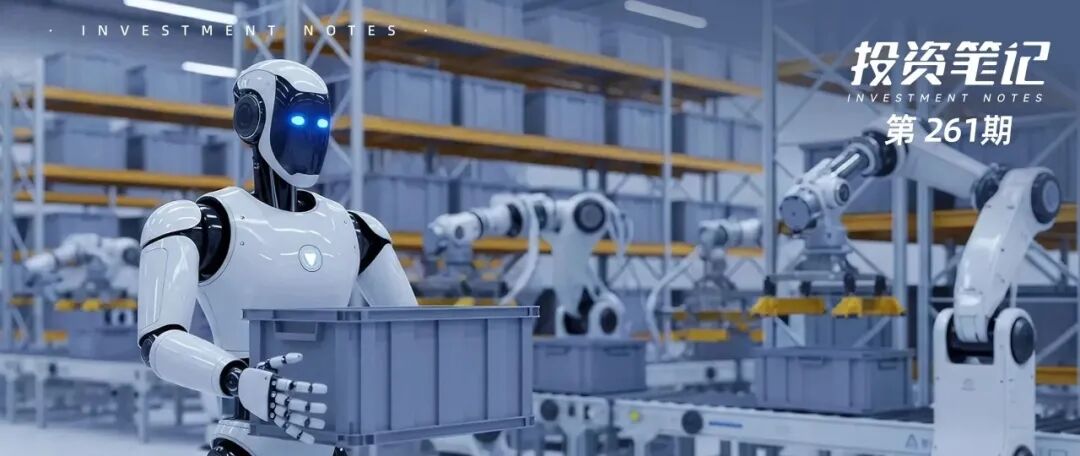

In August, the 2026 World Robot Conference was held in Beijing. WRC has long gone beyond the category of exclusive exhibitions for robotics enterprises, gathering players from the chip, simulation, data, model and component sectors, as well as scenario providers and purchasers. Embodied intelligence is also evolving from a technical concept to a fully mature industrial chain.
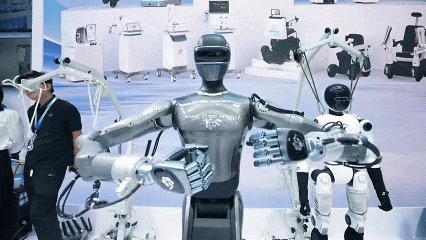
This summer, Granite Asia brought together entrepreneurs, business operators and outstanding talents, and launched a candid and pragmatic exchange around how AI is reshaping the real world.
Professor Yinbei Li from the Singapore Institute of Technology first introduced the latest progress of Physical AI, and shared how the local region relies on its unique advantages to become an ideal test site for real-scenario testing and implementation of related technologies.
In the roundtable discussion, Yinghui Kuang, Partner of Granite Asia, George Yan from Clobotics, and Alvin Foo from PSA International set aside concepts and overhyped buzzwords, and combined frontline practices to conduct in-depth discussions on the application and implementation of AI in real scenarios:
1. Real-world environment validation is the prerequisite for large-scale implementation. Only by continuously proving the reliability and replicability of its performance can robotics solutions achieve real large-scale application.
2. People-oriented design is the foundation of creating long-term value. Compared with robots that replace human labor, robots aimed at enhancing human capabilities are more easily accepted and more likely to continuously create value.
3. Focusing on high-value industries is the key to accumulating core capabilities. Deep engagement in fields such as medical devices and professional manufacturing helps to form transferable and reusable core capabilities.

Today's Physical AI
What kind of performance does it deliver in specific application scenarios?
Alvin Foo: Since the end of 2023, PSA International (hereafter referred to as PSA) has been operating a port transport fleet composed of more than 30 autonomous trucks around the clock, and the overall operation is quite stable. AI robots have become more adaptive in environment perception and understanding, which has greatly improved the capabilities of the entire system. However, there is still a gap between the operation level of AI-controlled trucks and the actual performance of human drivers: drivers can handle about 2.5 containers per hour on average, while the autonomous system currently reaches roughly 80% of this level.
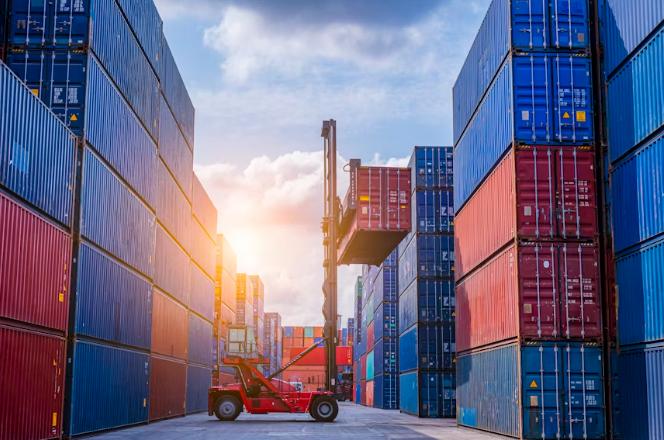
The technical capabilities at the two levels of fleet system management and human-like perception simulation are continuing to develop. It is expected that in the next two to three years, the system will reach about 90% of the performance of real human drivers, thus getting closer to human operation efficiency. As far as the current state is concerned, this technology already has deployment value, can realize practical use, and bring net labor savings.
In port operations, there is another extremely arduous and dangerous task: the disassembly and assembly of twist locks. Containers need to be fixed with twist locks on cargo ships, otherwise they are unsafe during navigation. Four twist locks need to be removed for each container during loading and unloading. A ship carries tens of thousands of containers, and a port handles millions of containers every year, so the workload of disassembling and assembling twist locks is inevitably extremely huge. Based on past experience, workers will face the risk of injury at any time due to fatigue during long-term operations of this kind. Physical AI will enable robots to take over these difficult and dangerous tasks.
In this process, we may need both breakthroughs and inheritance of existing systems.
For example, in the choice of robot form, we can completely break through the design of bipedal humanoid robots with two hands and two feet. The human form determines the upper limit of our own operation capabilities, and we should not be constrained by this. Instead, we need to find the most efficient form for each robot to perform its tasks.
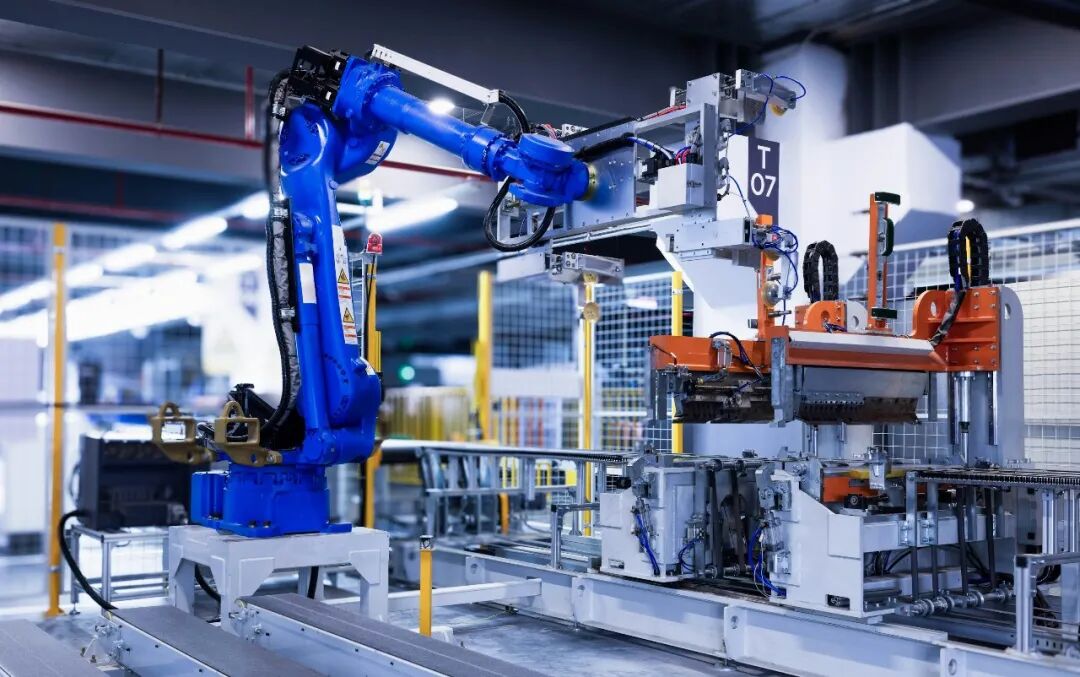
On the other hand, we also realize that it is impossible to rebuild the entire operation system from scratch at one time. PSA once conducted research on whether it is possible to use a unified twist lock or even a unified type of container in the robot operation system for the more than 40 different types of twist locks used in traditional port operations. But we soon realized that the form of containers has hardly changed since the 1950s, and the entire industry has formed a mature supplier ecosystem. It is impossible to create a brand new system with a high degree of unification out of thin air. Therefore, a more realistic development path is to proceed step by step and gradually verify the value brought by robotic operations.
Yinghui Kuang: Today's industrial AI robots can often at most reach a performance level comparable to that of humans, and cannot surpass humans in terms of flexibility and understanding of the surrounding environment. Its current advantages are mainly in two aspects: the first is extreme precision, such as performing high-precision operations in surgical medical scenarios; the second is extreme strength, such as continuously and stably carrying heavy objects weighing more than 100 kilograms.
Taking truck loading and unloading as an example, this task is still quite difficult today — it is necessary to load boxes of different sizes into the truck, and fully consider multiple factors such as the placement order, the texture and function of the boxes. In the past, robots could not understand the various physical properties related to it, so they could only stack square boxes of fixed sizes. But now, thanks to the introduction of the world model, robots have a deeper understanding of physical rules. Researchers are trying to make robots complete more complex and flexible mixed loading tasks, so as to further give full play to the advantages of robots in precision and strength.

In the short term, which fields
Will see the fastest advancement of Physical AI applications?
George Yan: Opportunities are concentrated in the jobs that people do not want to do. When some traditional jobs are too dangerous and arduous, the new generation of people are increasingly unwilling to engage in them, and these fields are excellent entry points for Physical AI.
Taking wind power generation as an example, it is very difficult to find young people who are willing to climb wind turbines to repair blades nowadays. At the same time, as the geopolitical situation becomes more complex, people's demand for renewable energy continues to rise. As a result, the cost of sending manpower to remote wind farms for maintenance is rising by 30%-40% every year. Wind turbines are aging continuously and failures are occurring constantly, but fewer and fewer young people are willing to go to the equipment site. This creates enough opportunities for new models where robots complete such maintenance work. No one walks around randomly in the wind farm, and this relatively controllable operating environment also creates conditions for Physical AI to enter real scenarios.
Alvin Foo: From the perspective of port operation, the areas where Physical AI should be prioritized are links with large labor saving space, high current dependence on manual work, and weak employment stability. For example, during the epidemic, cross-border workers could not arrive at their posts, and port production capacity was restricted as a result — the loss of business volume was not because there were no cargo ships arriving at the port, but because there were not enough workers to complete the operations. This situation can be largely avoided if robotic operations are adopted.
Of course, the application of robot technology faces end-to-end overall problems. The supply chain is ready for robots in some aspects, but not every link is mature enough. Some robots on the market have strong mobility, can jump and walk like humans with natural gaits. But the tasks to be performed in the port require both dexterity and extremely strong gripping force — the robot hand needs to handle twist locks weighing 8 to 9 kilograms. There are good dexterous hands on the market, but they can only hold light items such as fruits, and many cannot meet the requirements of port application scenarios.
Therefore, the key problem is how to decompose tasks and how to combine the capability advantages of different robots. The field that can realize the re-coordination and arrangement of different embodied capabilities will enable Physical AI to radiate greater energy.
Yinghui Kuang: From an investment perspective, the value difference behind technical capabilities is extremely critical. We can compare two extreme cases. One is surgical robots. In invasive surgery, doctors need to undergo long-term training to be able to hold instruments stably during surgery while performing operations such as inspection, cutting, and suturing.
A single surgery may last for several hours, which is a great test for the physical function of the surgeon. With the support of surgical robots, not only can the pressure on doctors be greatly reduced, but the operation time can also be shortened from three hours to one hour. Such robots can easily sell for one million US dollars per unit, with huge value space. In the future, robots may even perform surgeries autonomously to further improve medical efficiency.
The other extreme is that robots help pick up goods and place products in convenience stores. There is a clear upper limit to the value of this scenario — the value it creates is basically equal to the salary of a human shop assistant. The two scenarios are both under the robot concept, but their value propositions are very different. Humanoid robots are often imagined as home assistants, but in fact that is an extremely difficult usage scenario to realize — users have high expectations, but their willingness to pay is very low, because people compare robots with real human helpers.
From this, we can also derive a philosophical thought: The goal of Physical AI is not to replace humans, but to empower humans to do more things, to do things that individual humans could not do in the past. Still in the medical field, taking drug research and development as an example, researchers need to synthesize the required molecules according to the molecular formula — starting from a certain compound, adding a catalyst, going through thermal or photochemical reactions, shaking, centrifuging, extracting, and then testing whether molecular bonds are formed or broken with different methods.
This process has to be repeated hundreds of times to obtain sufficient data and experience to design and manufacture a molecule. If there is an automated system to streamline this set of operations, increase throughput and shorten the time, the speed at which each researcher develops drugs may be ten times faster, or even a hundred times faster.
This logic also applies to materials science and other scientific research fields. In this direction, value can be realized to a greater extent. Scientists get positive feedback with the help of robots, thus accelerating research. Robotics companies also get positive feedback through the specific applications of scientists, thus improving their technology. Value can form a two-way positive cycle in this process.

Thoughts on the establishment of the Physical AI ecosystem
Yinghui Kuang: Taking Singapore as an example, we should focus on high-value usage scenarios. Singapore is very strong in the medical field. Some local manufacturers are producing medical consumables, such as ventilation and ventilator components, tubes, cups, masks, etc. Moreover, different from the consumer electronics manufacturing industry with extremely fast rhythm changes, once the high-end medical consumables field passes the certification, the product specifications will not change for three to five years, requiring higher quality and more stable production. Such companies can deliver a large number of products and generate considerable revenue even if they only have hundreds of people in Singapore. This is also reflected in fields such as high-end semiconductor manufacturing. Therefore, the key is to choose products and usage scenarios with higher added value.
