The Great Leap Forward of AI-driven Star-making
What is the speed of the AI era? Back in early July when Hard Candy published the article "How Far Are Humans From Chasing AI Celebrities", people were generally dismissive, skeptical, and could not even tell AI-generated faces apart from real ones. Less than a month later, news about AI short drama leads gaining followers, landing commercial endorsements, and even getting their "digital IDs" has emerged earlier than the solutions to AI face-melting plagiarism.
Just like chasing celebrities in China's domestic entertainment industry, the group of people who question AI celebrities and those who are obsessed with them are completely different. As a result, the issues that skeptics talk about are not problems at all for their fans.
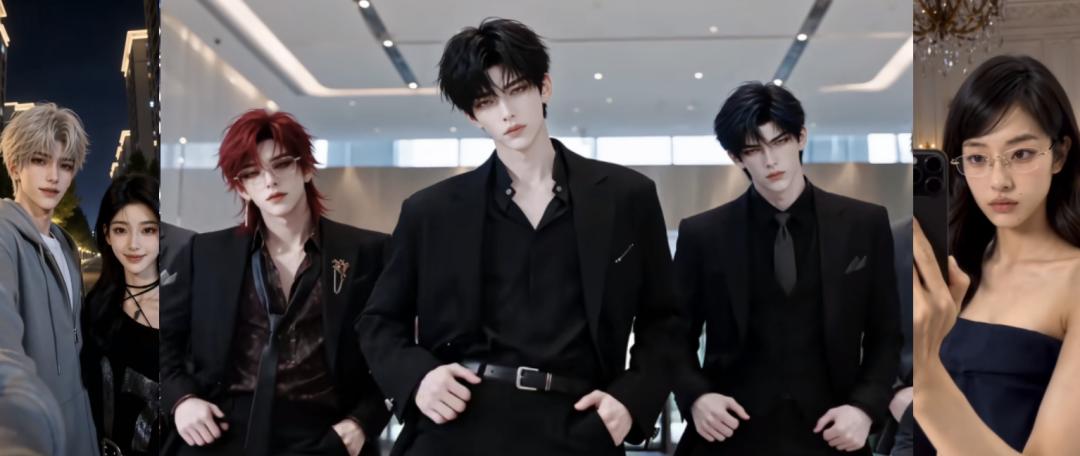
What's more, the concept of virtual idols that are forever young and never have public scandals was already hyped up a round 5 to 6 years ago. Although it faded out later, it is making a comeback now, supported by new productivity and new cases in the AI era. Those previously drafted plans and unfulfilled blueprints are worth bringing back and re-implementing.
Compared with the real-person short drama star-making that was widely discussed before, AI star-making is clearly industrialized from the very start. The real-person short drama industry used to "take one step at a time": first audiences fell in love with the actors after following the dramas, then the drama teams pushed the trend, which is a typical bottom-up star-making model.
AI celebrities, from the day they are born, have strong consciousness and planning from the upper reaches of the industry. No matter it is star-making through dramas or star-making through talent shows, it is driven top-down, and C-end users only need to choose YES OR NO when being presented with content.
Drama-based Star-making: Top Male and Female Idols
In the first half of 2026, the output of AI short dramas has skyrocketed, with many hit works emerging. In just a few months, they are no longer universally rejected in public opinion, but have gained their own loyal fans. Now, there are a large number of people on social media saying that "they can only enjoy AI dramas".
Thanks to this, the most representative star-making progress of AI that has achieved real breakout results right now is AI short drama star-making. That is, to make the AI model gain fans through the character design of popular dramas, and then convert the characters in the drama into reusable AI artists with the character names through co-appearance in new dramas, opening social media accounts and other methods, for long-term operation.
This logic of transformation from content to "idol" successfully launched the top AI male and female idols that can publicly take commercial endorsements this summer — Fang Taozi and Duan Yan. Reviewing their path to popularity, you can see star-making tricks that start from drama promotion but go far beyond it everywhere.
Fang Taozi comes from the AI hyper-realistic drama *The Laid-off Girl* exclusively broadcast on Douyin. With differentiated themes and excellent aesthetic standards of the creative team, the drama has exceeded 200 million views one month after its launch, Fang Taozi gained 400,000 followers, and her advertising quotation exceeded that of real-life internet influencers with millions or even tens of millions of followers, which attracted widespread media attention.
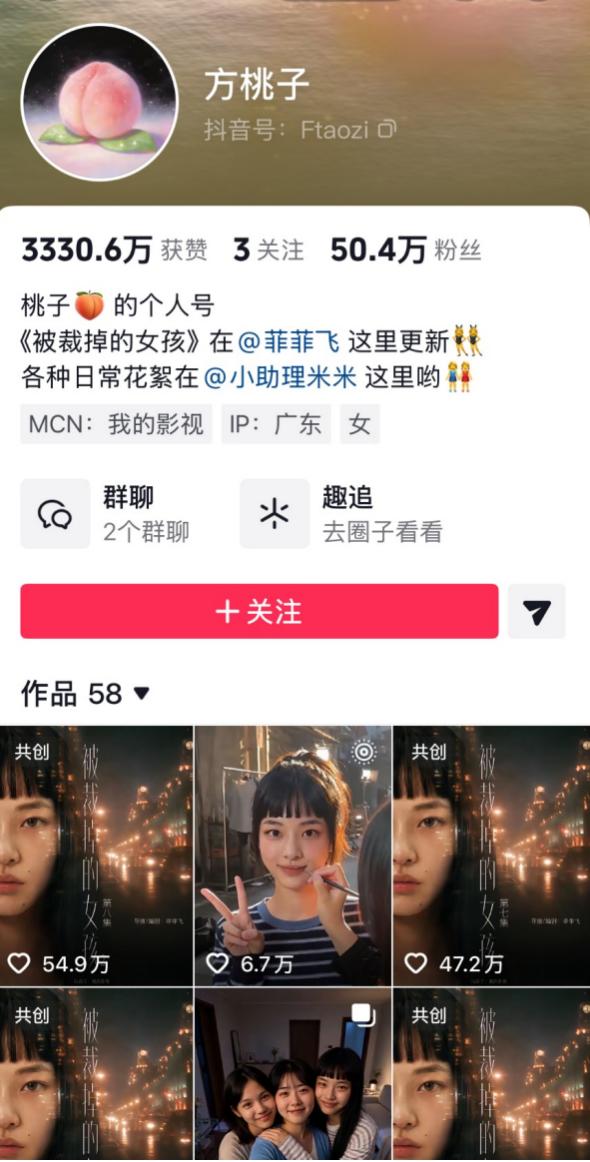
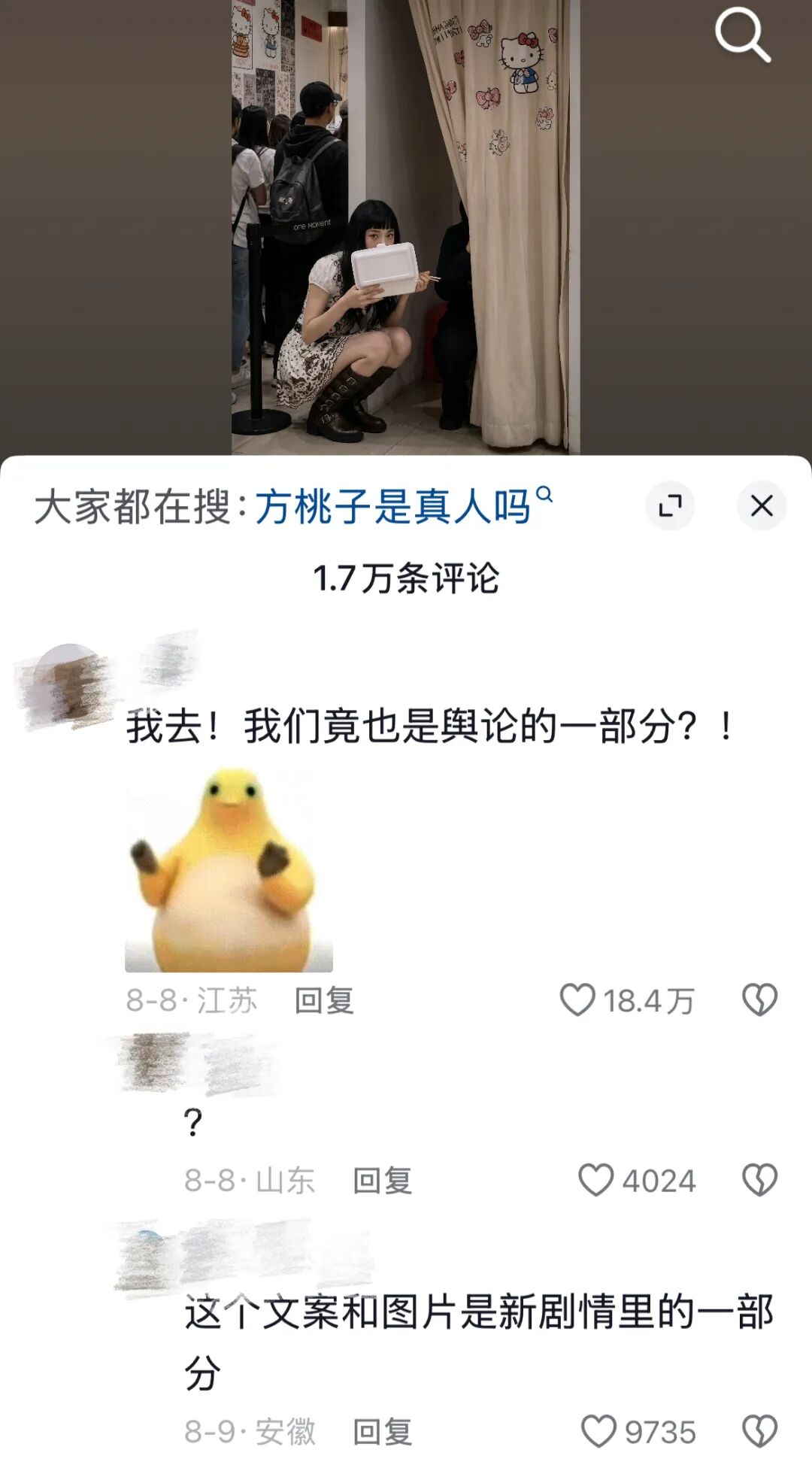
A hit drama is the foundation of star-making, which applies to both real people and AI. But the secret of Fang Taozi's follower growth is that from the very beginning, compared to an actor's account, her account is more like a character account that enriches the world view of the drama. She answers questions for the audience when the drama is on air, and updates her daily life of working out, hanging out with friends, and working as a model (her identity in the drama) when there is no new episode.
In other words, this account brings drama fans an experience of dimension blending, and an opportunity to peek into and participate in the life of the character in the drama, and get the reverse companionship and growth experience. In the second season of the drama, when Fang Taozi was smeared by competitors, her comment sections were full of audience playing the role of onlookers eating melons. The idea of "taking commercial endorsements" had already appeared in the teasing comments long before it became a reality.
The rise of a female celebrity requires the right time, place and public appeal, while the rise of a male celebrity is always more straightforward. The top AI male idol Duan Yan is the product of hit drama, good looks, attractive character design and CP (couple pairing) effect, a typical idol drama star-making case that wins over both CP fans and female fans who project their romantic fantasies on him.
The popular topic "The world owes me a Duan Yan" and the millions of yuan in sales of the 129-yuan same-style bracelet are mostly contributed by these female fantasy fans. However, the company behind him, Fang Weiming Culture, is after all a drama production company that pays more attention to the drainage effect of popular CP, so its operation focus is still on hyping the CP, and the couple's shared account is far more active than the individual accounts of the two characters.
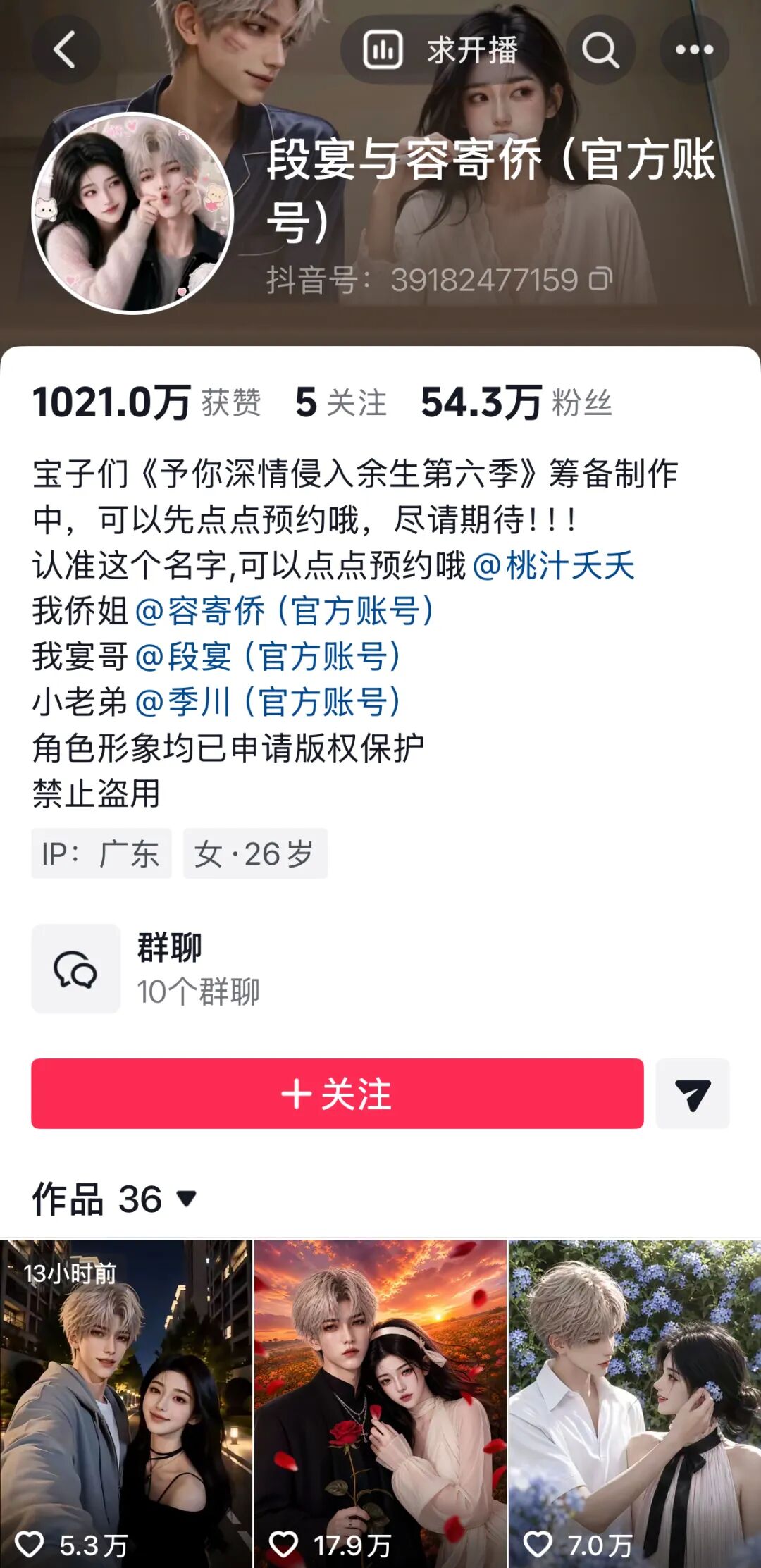
Currently, the series *Deep Love Invades the Rest of My Life* that made this CP popular has not finished yet, and their third co-appearance has been put on the schedule. Although many CP fans are complaining that the company is "cutting leeks (exploiting fans for profit)", if the two characters really cooperate with other AI models in the future, it will probably become a major event in the AI short drama industry.
In addition, this drainage-oriented idea also determines that the company only opens actor accounts for these AI models, and more than the *Deep Love Invades* series gets this kind of treatment. These actor accounts often make guest appearances in different dramas and create content together outside of dramas, the group portrait of the character family keeps expanding, which is also a form of promotion for the studio brand.
On one hand, there is the industrialized step-by-step star-making, on the other hand, China's domestic entertainment industry is stagnant and brands are thirsty for traffic, so Fang Taozi and Duan Yan, as the breakout AI top idols this summer, quickly got commercial endorsements. However, the commercialization is moving too fast, with regulations and technologies not catching up, so the first batch of commercial orders of AI celebrities all encountered public opinion backlash.
Fang Taozi's contact lens ad violated the Advertising Law. An AI character claiming that the contact lenses "are very comfortable to wear all day" is as absurd as a male celebrity endorsing sanitary napkins.
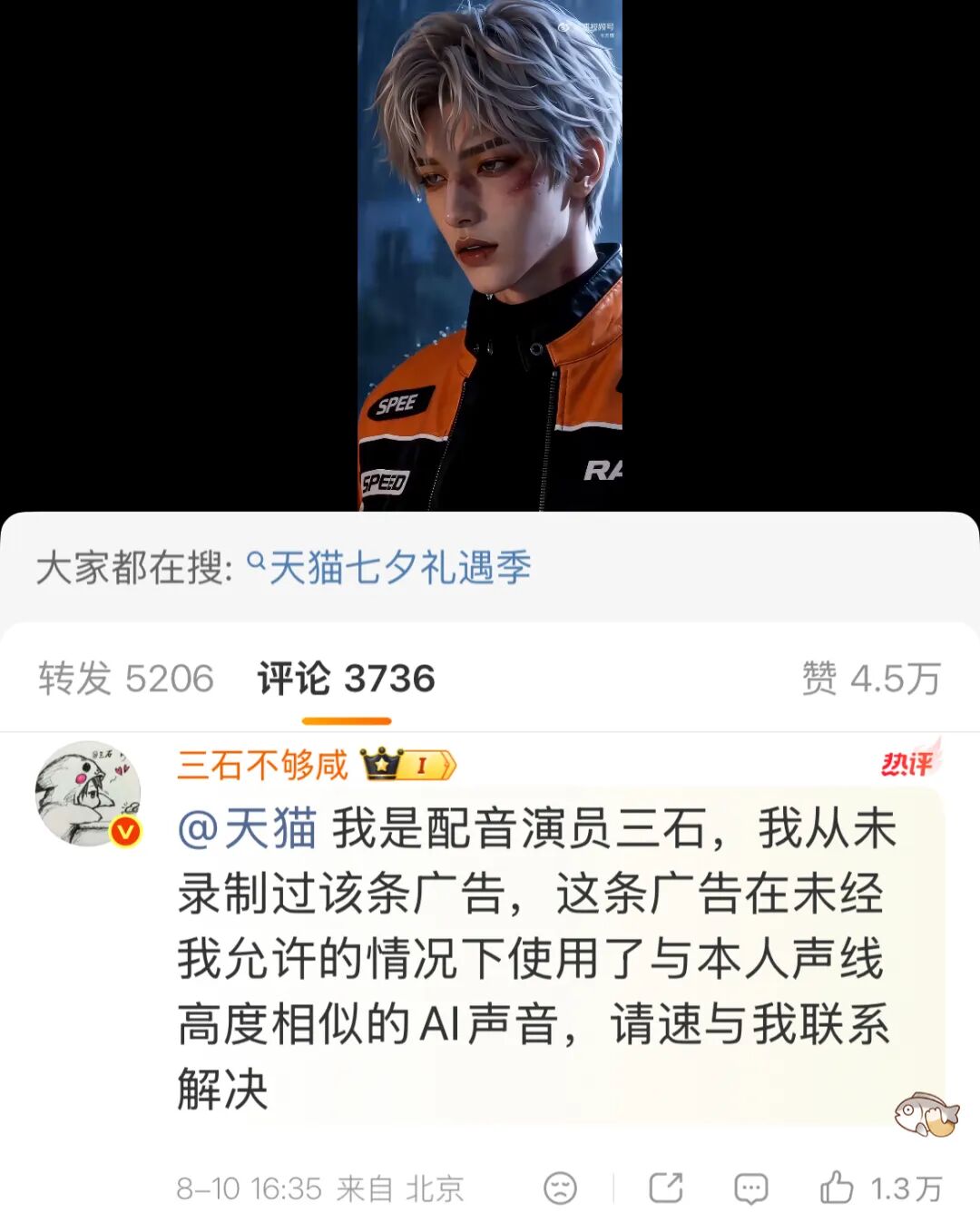
Duan Yan and three other leading actors of AI short dramas received the title of "Tmall Qixi Ideal AI Best Friend" on the Qixi Festival, with customized Qixi advertisements, which was publicly denounced by voice actor San Shi. In addition, Duan Yan has long been controversial for using face-melting plagiarism of characters from otome games, so the entire comment and repost section had almost no Qixi Festival atmosphere, and instead looked like the atmosphere of Zhongyuan Festival (Ghost Festival) in advance.
Talent Show Star-making: Polarization of Development
Just like China's domestic entertainment industry, apart from film and television dramas, there are various other ways to launch AI characters and enrich the "AI entertainment" industry, such as AI internet influencers, AI singers, and even AI stand-up comedians. Of course, when it comes to the industrialization of star-making, nothing can compare with talent shows. This year, as AI talent shows have grown from scratch to a small boom, the media has named this year "the first year of AI talent shows".
How do AI talent shows work? In fact, like many new concepts in the AI era, the "newness" means that they have not been finalized yet. Under the same name, there are various ideas and different practices. The AI talent shows on Douyin and Bilibili are two extremes.
The AI talent shows on Douyin are essentially about creating new accounts and attracting attention with playful gimmicks. To be precise, these programs are not "Douyin's official AI talent shows", but "AI talent shows on Douyin", initiated not by the Douyin platform but by various MCN agencies.
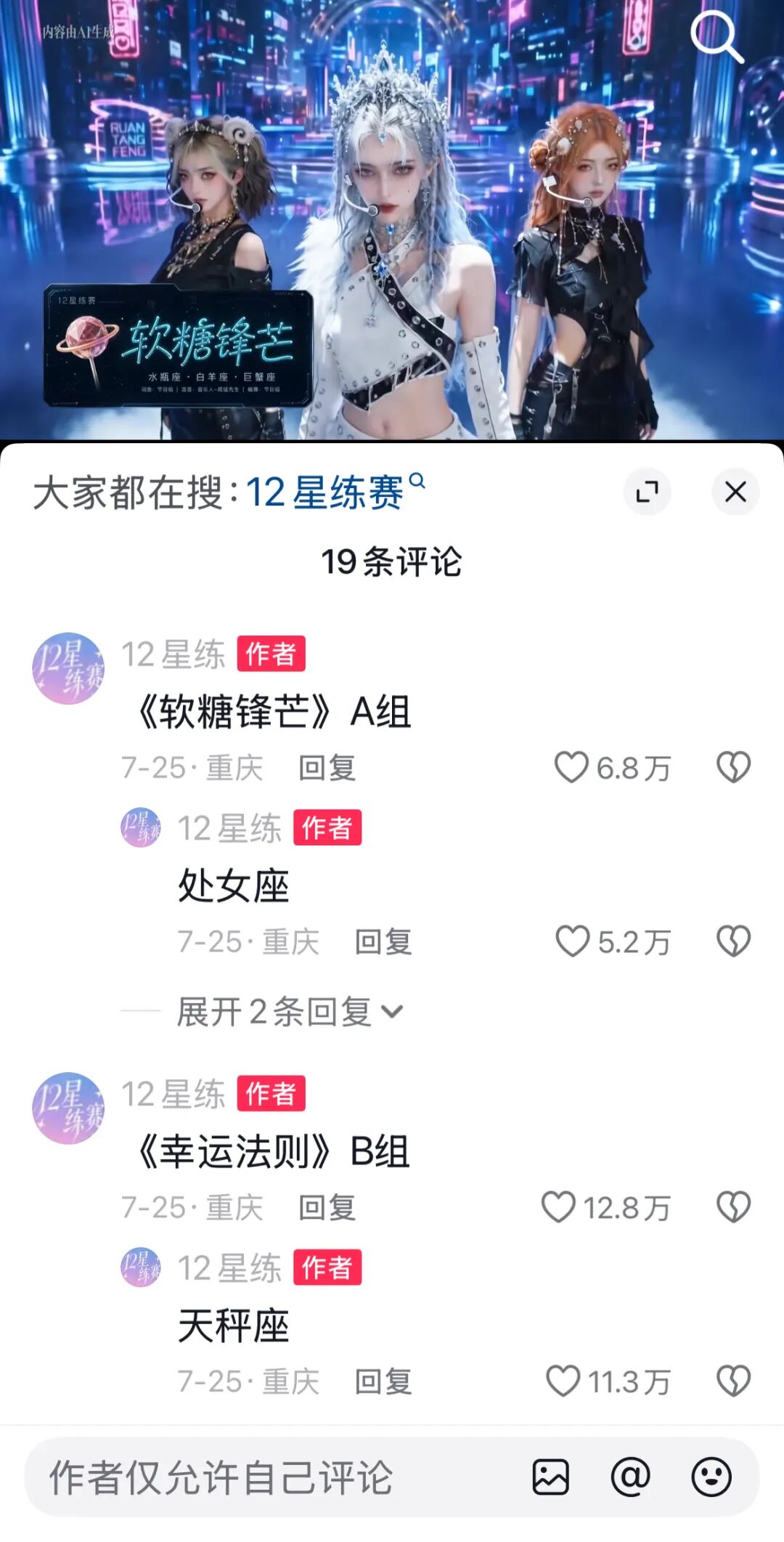
The representative of this type of program, *12 Star Trainee Competition*, which gained over 400,000 followers in half a month, was produced by Maitia Media. The program content is updated on its official Douyin account, and it is essentially a serialized short drama with talent show variety show as its content. There is no public performance live stream, and neither the stage content nor the reality show content can be called a real talent show, they can only be called "talent show dramas".
Then here comes the question: the fun of following a talent show is to watch the contestants transform, and see the chemical reaction between contestants with different personalities and backgrounds. What fun is left in a talent show without real people, and what makes it attractive to the audience?
To put it harshly, it is fast-paced and efficient, to put it nicely, it is highly condensed. Traditional real-person talent shows have long been gone, and these short-video AI talent shows give talent show fans a low-threshold chance to relive their old dreams.
What does low threshold mean? A traditional talent show updates for several hours at a time, while an AI talent show episode is at most more than ten minutes long. To pick a favorite contestant in a traditional talent show, you need to judge by first impression, strength, and do full background research, while the appearance and performance of AI contestants are almost at the same level, with no personal stories at all. The audience can directly choose their camp according to constellation, MBTI, saving decision-making costs.
More importantly, voting for your favorite contestant in traditional talent shows requires real money, while voting in AI talent shows only needs to like the comment. This also makes AI talent shows look more fair and transparent in the eyes of the audience, with real interactivity and the atmosphere of "people electing their idols". The *Starlight 108* that once went viral on hot searches was strongly resisted by talent show fans because it set a pre-written main female character story line for one contestant, which was accused of having a hidden script and a privileged contestant.
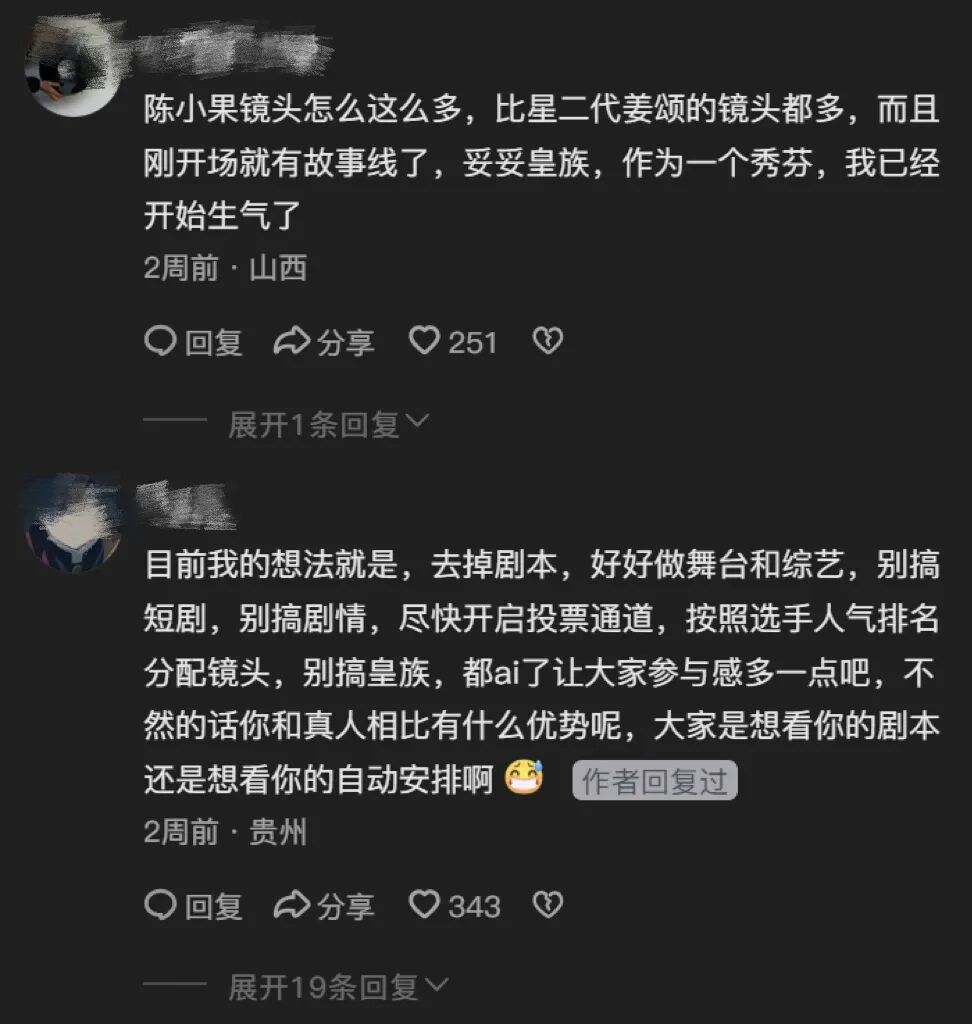
But the other side of the fast-paced AI talent show is that the process matters more than the result. The talent show fans have fun, the program accounts temporarily get commercial orders, but without real money investment, enough time and emotional input, how many of the audience can settle down to become real dedicated fans?
It is easier to quit following the idols, which is one of the reasons why people choose to follow AI talent shows. However, from the perspective of incubating AI idols, this is not good news. These AI contestants are often more likely to reach their peak right after debuting, or even right after the talent show ends, than real-life contestants.
Bilibili's "AI Idol Debut Season" is a completely different approach. First of all, it is a platform-level project of Bilibili, with Bilibili as its stage. UP creators participate by submitting videos with the event tag, and other users become part of the talent show as long as they click in to watch.
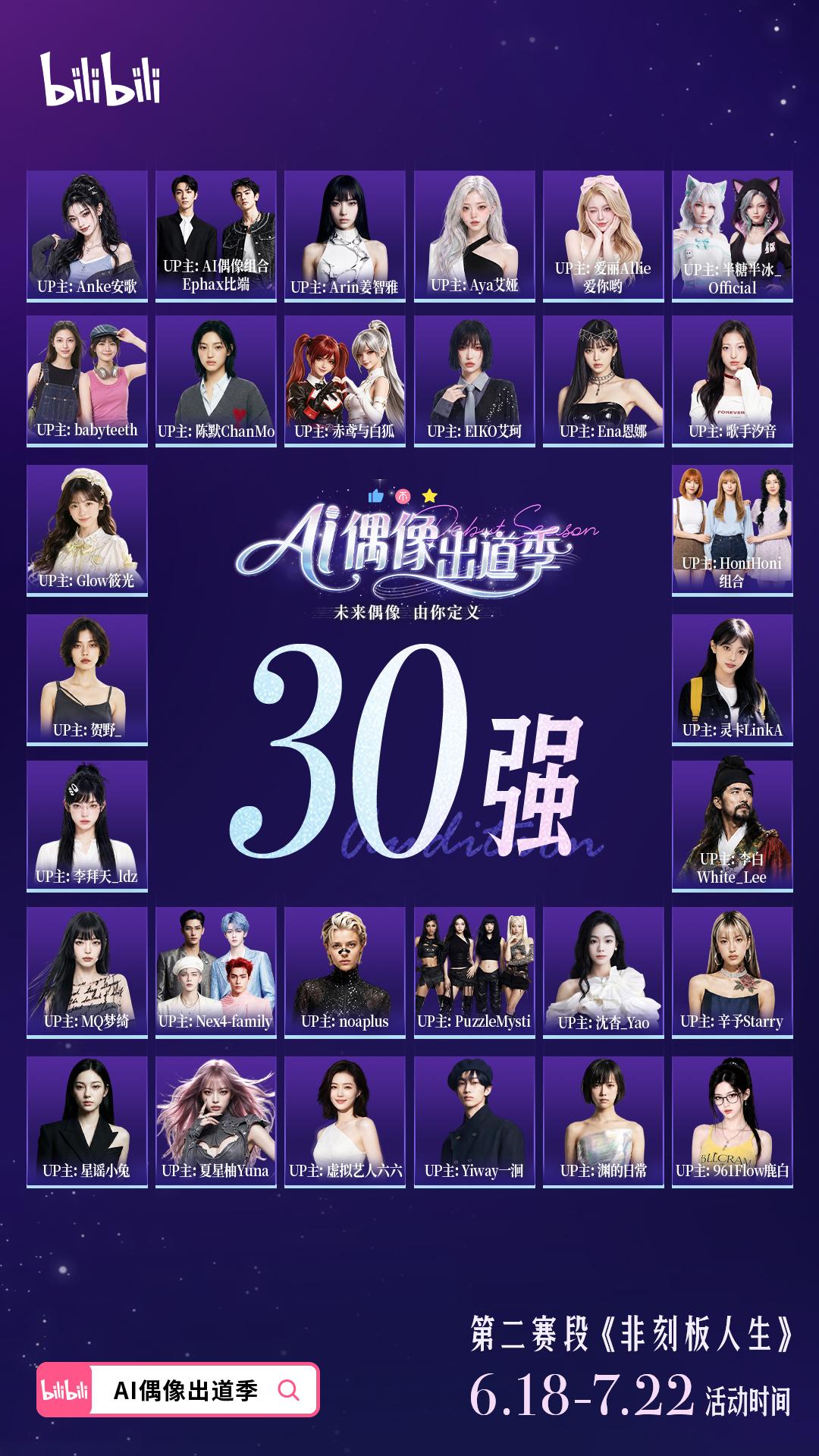
Secondly, this project is more professional, with clear support directions. The "AI Idol Debut Season" cooperates with CCTV.com and Wajijiwa Entertainment, and has a cross-border expert judging panel including Long Danni from Wajijiwa, musician A Kun, well-known director Yu Baimei, and the person in charge of the China Film Artificial Intelligence Research Institute, as well as a 2 million yuan debut support package.
According to official materials, the support resources include commercial cooperation, cultural and tourism linkage, industry resources, and entertainment industry access channels. Obviously, the ambition of this project is far more than just cultivating top AI UP creators on the platform.
It is a pity that the AI talent shows on Douyin are just playful but have successfully become popular, while this submission-based project on Bilibili is not as good as variety shows in gathering traffic and topics. Among the 7 debut contestants, the one with the most fans only has 77,000 followers, and the playback volume of the debut award ceremony is 1.33 million. It can only be said that this is a successful solicitation activity, but it is still far from realizing real star-making.
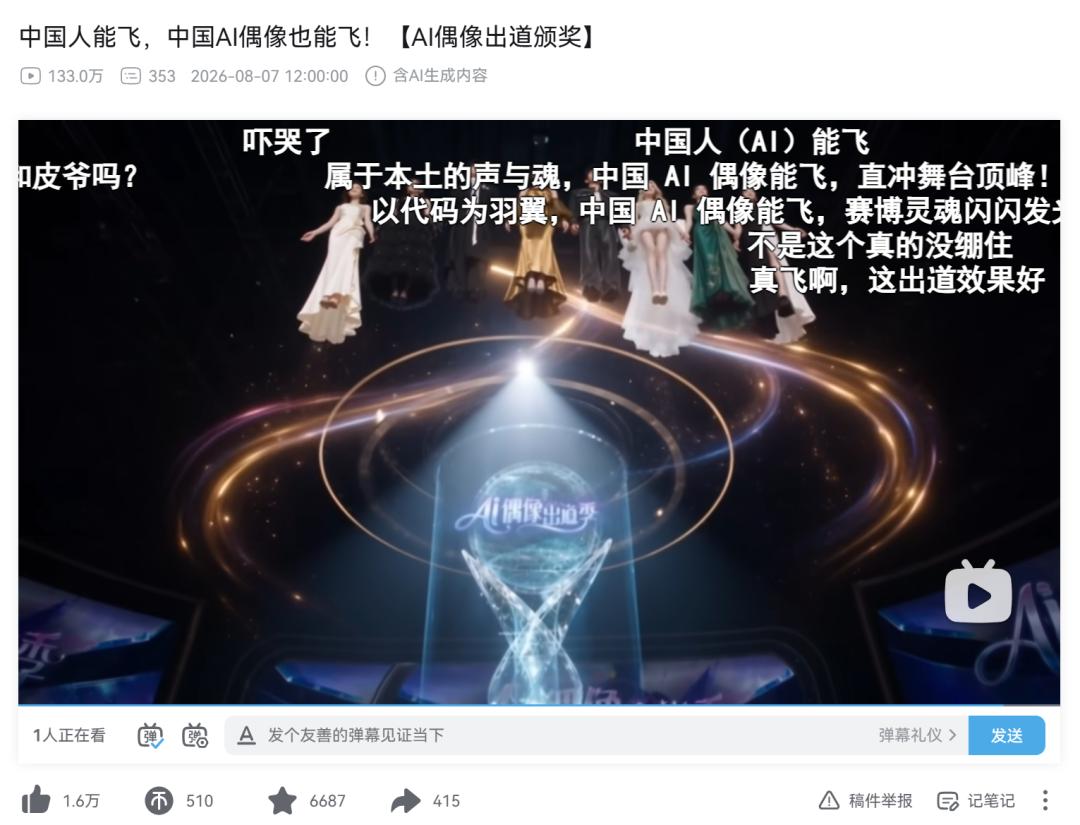
Perhaps this is also a trial run for Bilibili, and the platform-level AI talent show of Bilibili is still on the way. After all, this is the hub of the last round of virtual idol boom, and the users are already fully prepared.
What Else Can AI Celebrities Do
Forever young, never have public scandals. This is the cliché left by the virtual idol boom in the early years, and now it is completely moved to AI celebrities. But as new species in the AI era, AI celebrities should