How difficult is it to make a car spin in circles like a roller coaster?
The hottest topic in the automotive circle recently is no other than the "AI test" controversy surrounding the Voyah Light S.
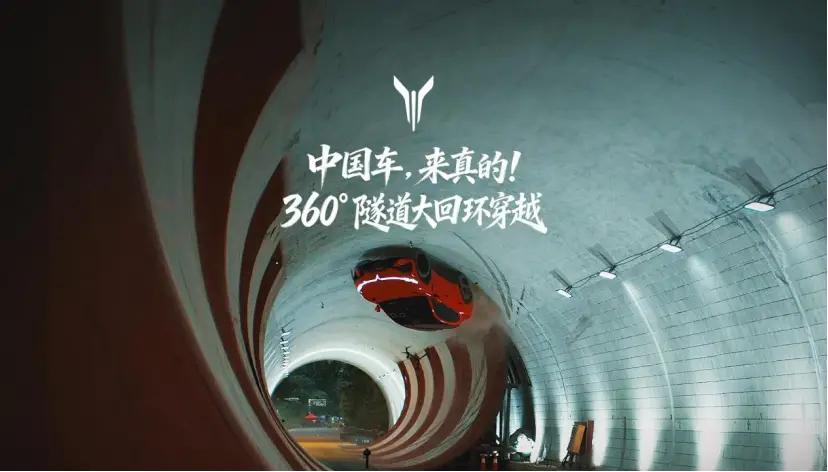
Two days ago, Voyah Light S released a CG advertisement paying tribute to Schumacher's SLS AMG, which featured a 360° tunnel traversal test.
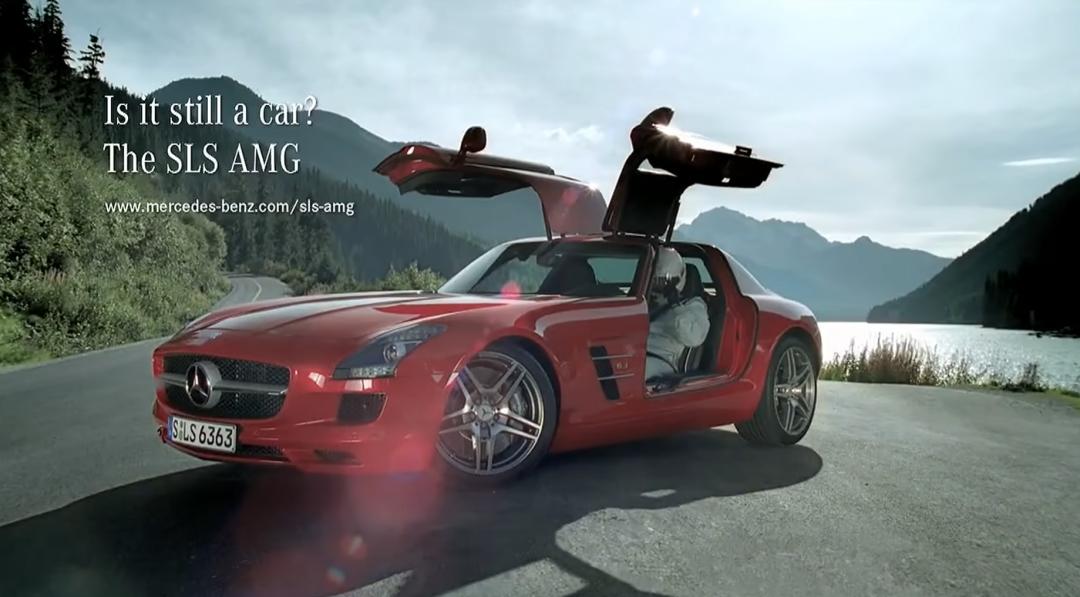
Due to obvious stitching traces on the footage, a large number of netizens questioned that the whole video was generated by AI.
Therefore, at the official launch event on August 15, Voyah released a one-shot uncut footage of the test, which immediately reversed public opinion. The rapid shift in public sentiment was quite amusing.
However, even though the Light S did successfully complete the challenge, the actual process was far from perfect.
Sport SUVs inherently have a small approach angle, and with the suspension compressed to its limit, the front bumper was completely damaged in the test.
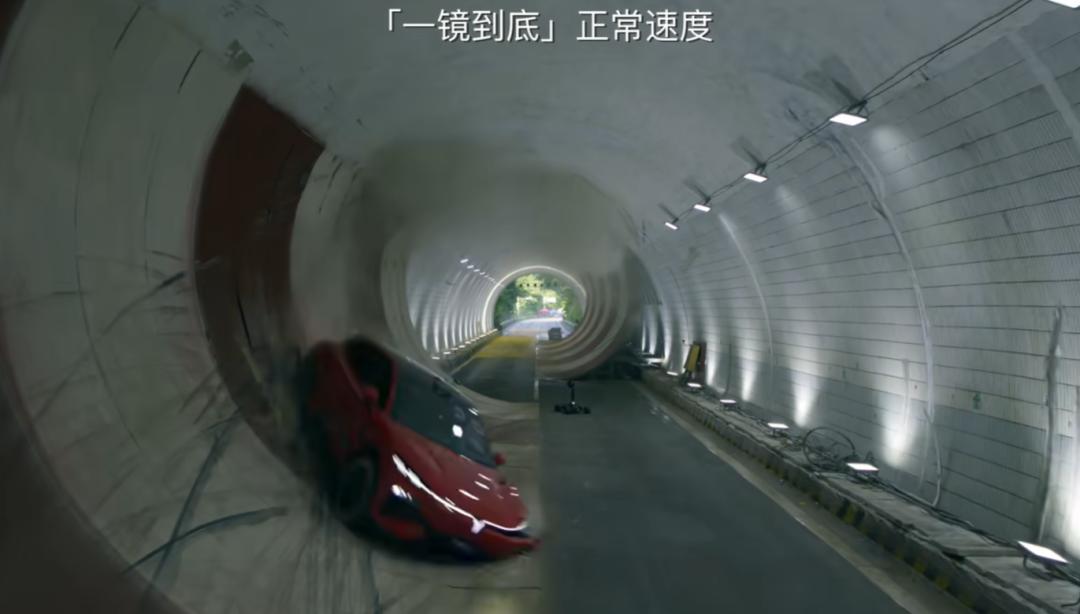
Is this test really that difficult?
Even Mercedes-Benz could only use CG special effects to complete similar content, and Arcfox tried the same test two years ago but never gave a positive response to the CG doubts. Only Voyah released the full one-shot footage this time, and the result can only be described as passable.
Coincidentally, Voyah presented their calculated formula in the promotional video this time, and the curious blogger "Neck Guy" did the calculation himself.
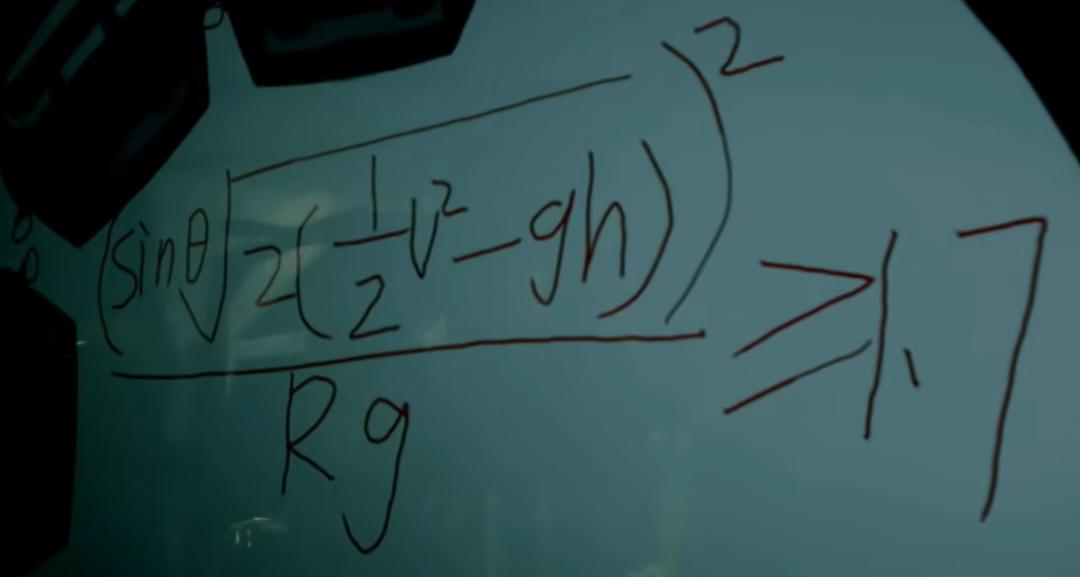
It turns out that theoretically, the test is absolutely achievable.
It might feel too abrupt to explain directly, so let's take an example. When a car drives in circles in a tunnel, the principle is roughly the same as when we ride a roller coaster.
I believe everyone has seen this kind of flat "big loop": the car accelerates sharply and rushes down, then drops at full speed after reaching the highest point.
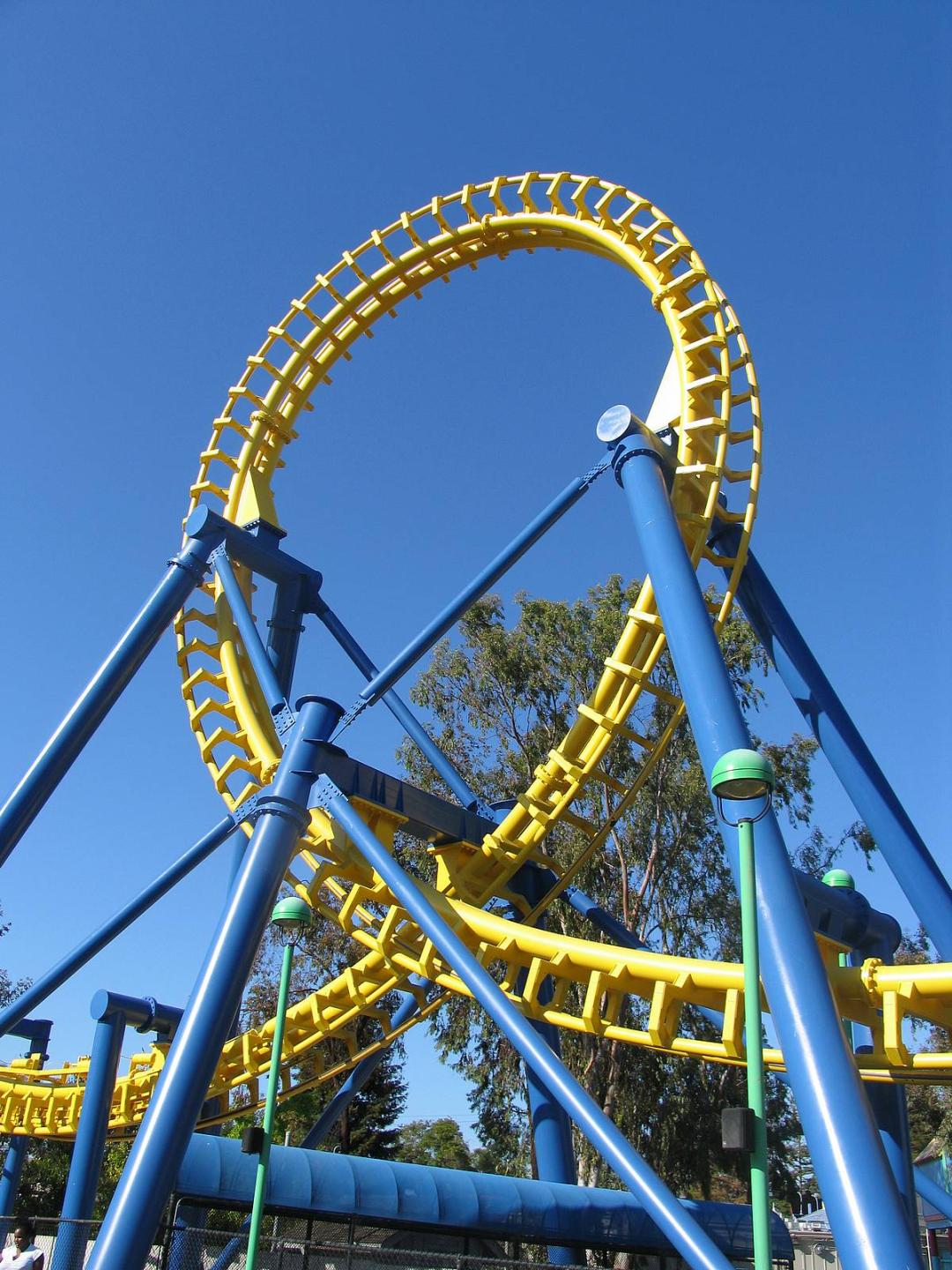
The most thrilling part is that at the highest point, the car must have enough speed to generate centripetal force, otherwise it will fall down immediately.
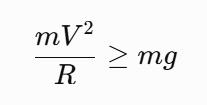
Formula: Centripetal force ≥ Gravity
Plug in the data for calculation: the diameter of a regular tunnel is generally 10.2m, and you can get V=25.5km/h with primary school math knowledge.
Wait, that's such a low speed?
I was also very surprised when I first got this number, but those motorcycles in the circus perform exactly this way and can pull it off easily.
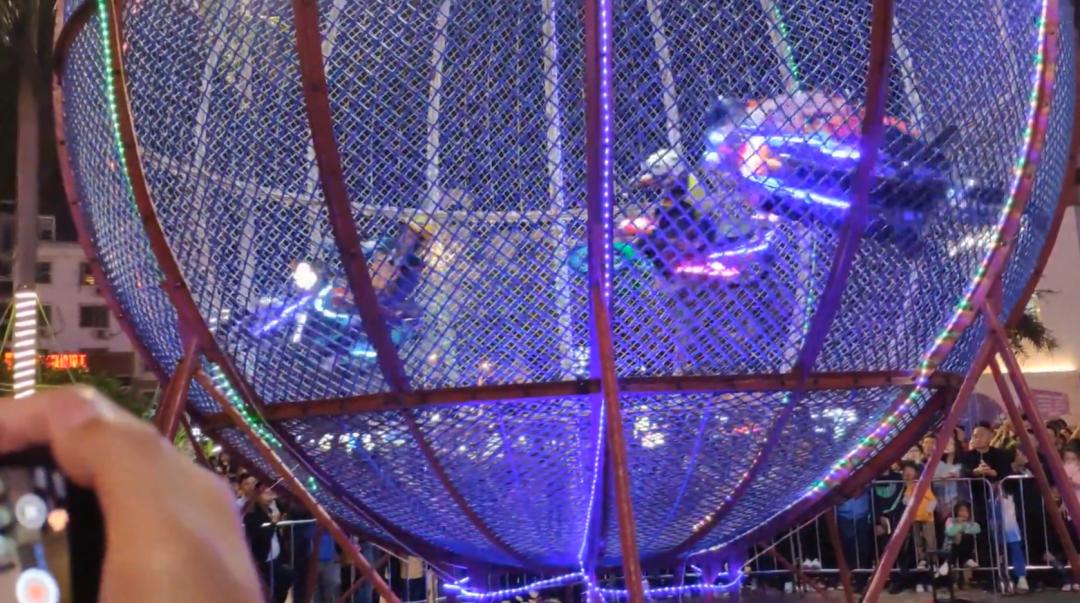
But this is only the principle of flat circular motion. The 360° car tunnel challenge is actually three-dimensional, so there is an additional variable of steering angle.
To make it easier to understand, it is more like the "spiral" loop in a roller coaster.
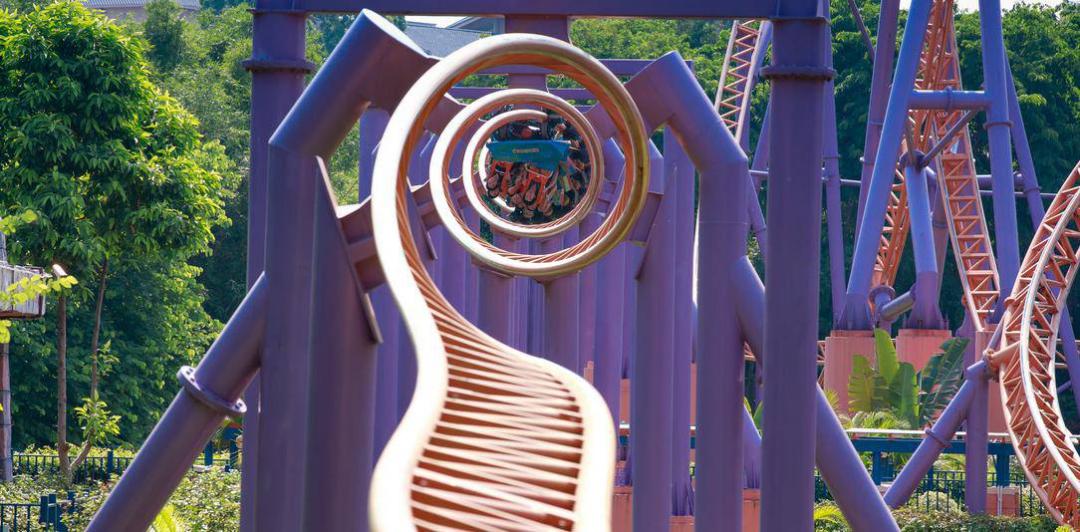
There is a shot in Voyah's own promotional video that uses computer simulation to show the path of the vehicle in the tunnel.
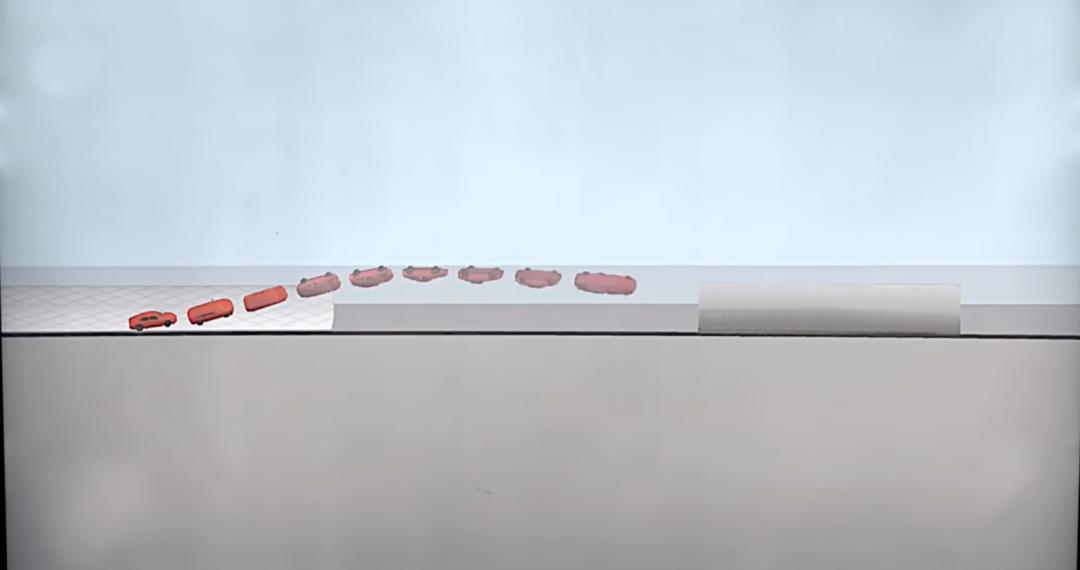
If we unroll the cylindrical tunnel, the path the car travels is exactly a force analysis diagram.
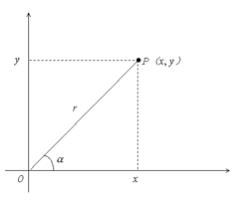
A rough schematic diagram
As we learned in middle school physics, the X axis represents the forward driving force, the Y axis represents the centripetal force that resists gravity, the path the car travels is the resultant force of the two, and the steering angle is θ.
At this point, looking back at the formula mentioned at the beginning, we need to find a proper angle for the car to drive up the wall and a sufficient driving speed to meet the condition "centripetal force ≥ gravity".

Now that the formula is confirmed, the rest is to test different steering angles and speeds one by one.

But soon, car manufacturers found something wrong with the practice.
Formula is just theory, practice is real-world operation, and this is the hardest part of the test.
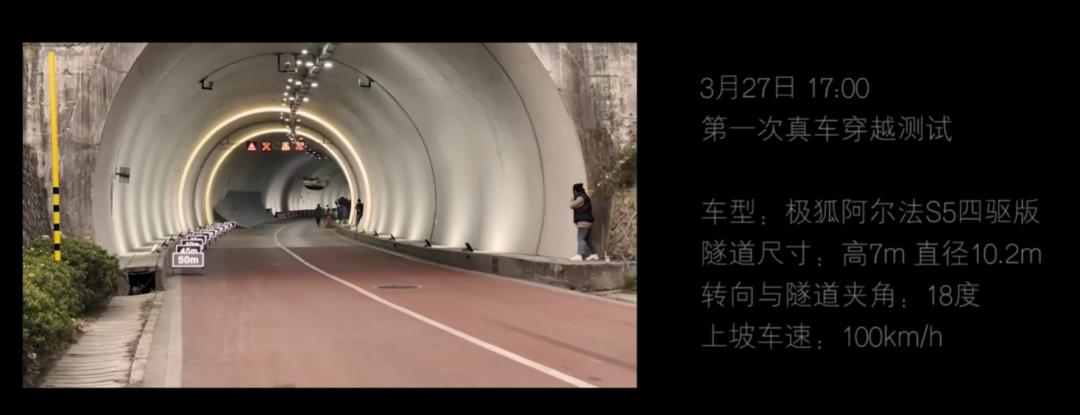
In the Arcfox Alpha S5 test, the steering angle was 18 degrees and the speed was 100km/h, the ratio of centripetal force to gravity was about 1.1:1, but the car fell halfway through the loop.
First of all, when the car drives upside down to the highest point, the condition "centripetal force = gravity" makes the whole vehicle almost float in the air, and the tires have no grip at all.
That means no matter how you turn the steering wheel, it won't work, and the wheels will just spin idly even if you step on the accelerator.
During the subsequent downhill process, the car regains grip very slowly while the power keeps losing, so it is very difficult to tell whether it can maintain sufficient centripetal force.
To solve this problem, Voyah set the centripetal force to 1.7 times the gravity, so that the tires still have 70% of the normal ground grip even at the highest point.
Even so, the wheels of the Light S still almost lost contact with the "ground", which was extremely thrilling.
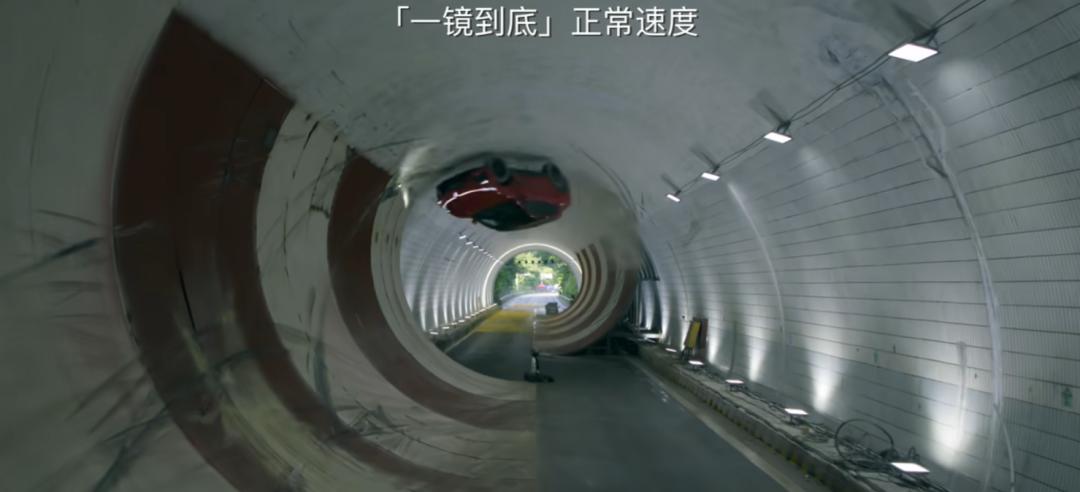
The fundamental reason is that the Light S, as a 5-meter-long and 2-meter-wide vehicle, cannot be simulated as an absolutely rigid small ball as the paper calculation assumes.
When the car rushes up the ramp with 1.7g acceleration, the suspension has to bear a force of about 43000N instantly (vehicle weight × acceleration).
At this moment, the tires get grip, but the front suspension will be compressed to the extreme limit.
The air spring is still a spring after all, and its rebound will naturally lead to loss of grip. In the video, the rebound moment exactly coincides with the moment the body detaches from the ramp and flips over 90 degrees.
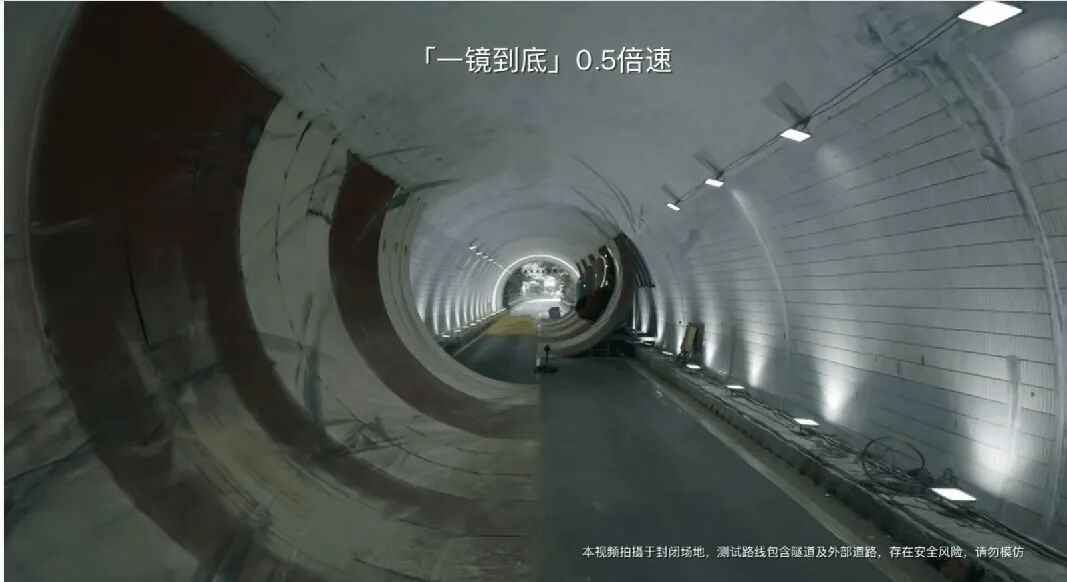
So the car was basically thrown over at that moment.
Apart from these uncontrollable mechanical factors, human factors are also uncontrollable.
Multiple tire marks can be seen on the wall in the video, which clearly shows Voyah made many attempts.
Some marks are left by cars that flew too far, some are left by greater impact with different depths, which are most likely caused by steering deviations.

The calculated steering angle is 16°, how can the driver make sure every turn is exactly the same angle?
Especially when the car is in mid-air, the driver's sense of orientation is completely confused, so it is really hard to say whether the driver can adjust the steering correctly to land safely.
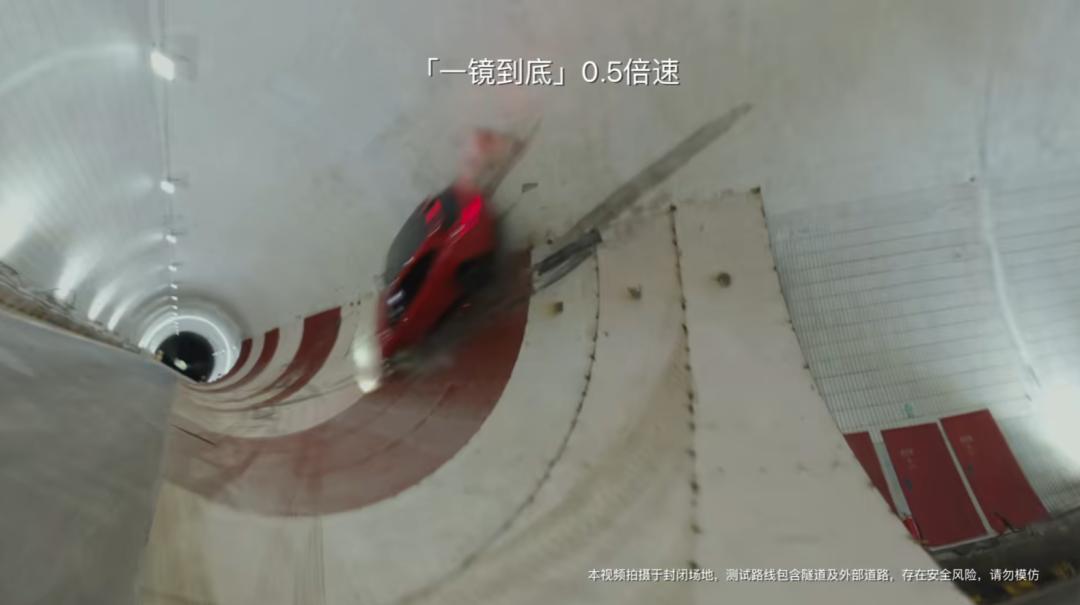
Voyah did not show the full landing footage at the end. It is obvious that the brake was pressed here, and it is unknown whether the final speed would make the car hit the wall.
Therefore, some bloggers found the partner of this shooting, and found that the test car of Voyah was remotely controlled, no driver was arranged to sit in it.
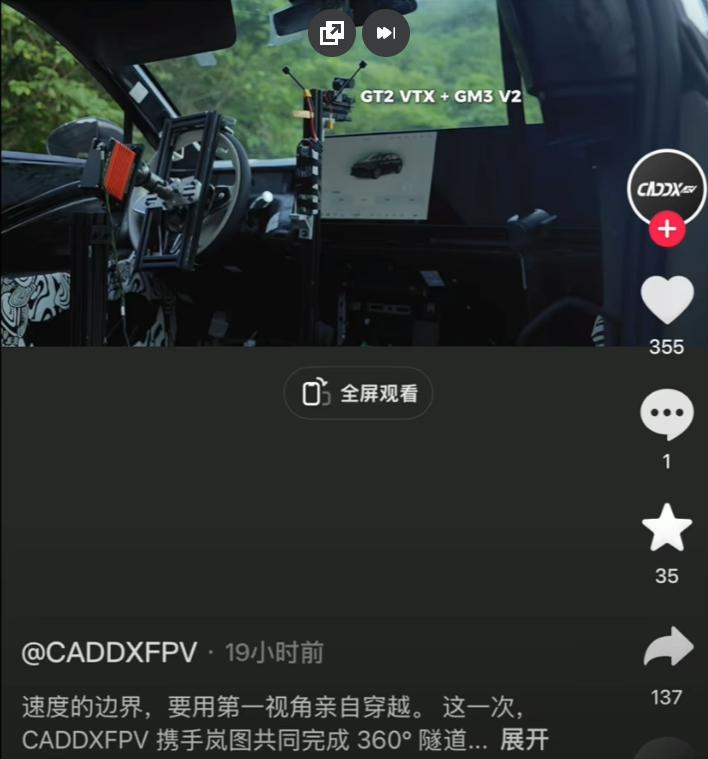
It is unknown whether there is a driver in the red car used for the final official shooting, but it is reasonable that there is no driver, after all, no one can be as reckless as the crew of Top Gear, a real accident would cause huge public outcry in China.
The incident comes to an end here. First of all, I think Voyah did show some real capability by completing this test. After all, to pull off such a test, they must have crashed many cars, which does reflect the solid chassis performance of the model from the side.
And the full footage also openly shows their mistakes, which is very authentic.
However, compared with the marketing success of this incident, have you noticed a problem?
Our doubts about AI seem to have affected our daily discussion environment.
In the past two years,