Claude has started to independently design new proteins, and its efficiency is dozens of times higher than that of human experts.
Anthropic Let Claude Design Proteins on Its Own, 14 Out of 15 Targets Hit —— This Result Surprised Experienced Researchers in the Field.
On August 18, Anthropic Released the Results of an Experiment: Claude (Mythos Preview and Opus 4.8) Independently Completed a Full Set of Protein Design Workflows.
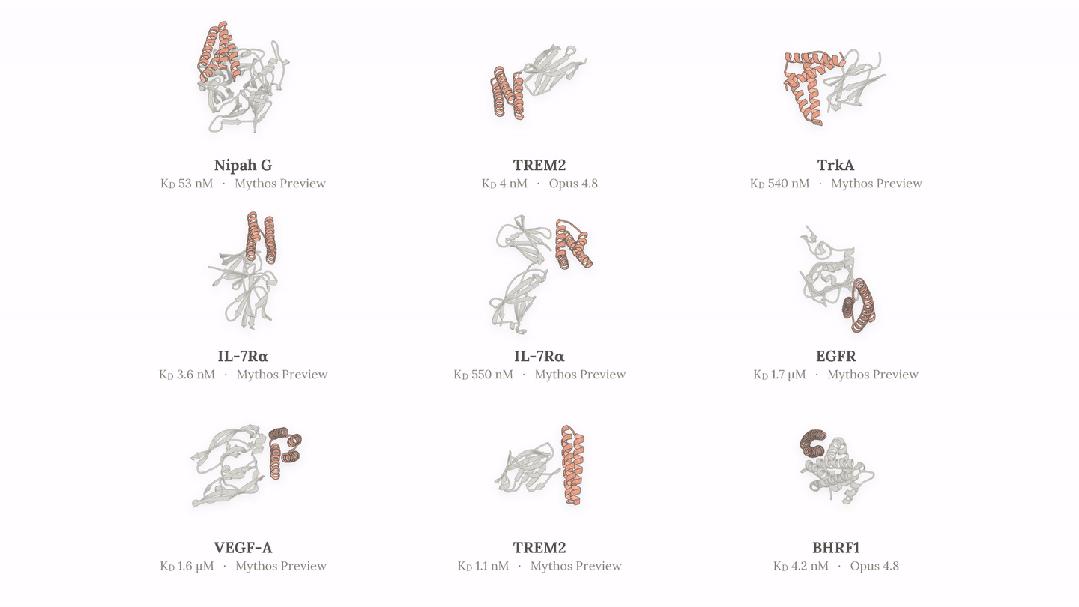
It was given 15 protein targets and tasked to design new proteins that can bind to them independently, and 14 of the targets were successfully hit.
354 out of 1320 designs were verified to be effective by two independent laboratories, with an overall success rate of 26.8%.
The industry average in this field is 10%–15%.
Protein binders are the foundation for many drugs to take effect: only after a molecule that can grasp the target protein is designed, is it possible to develop it into a drug later.
This design process usually requires protein engineers weeks of calculation, optimization and screening.
From AlphaFold to Claude: Predicting Proteins and Designing Proteins Are Two Different Things
What AlphaFold did in 2020: Given a segment of protein sequence, predict what shape it will fold into.
The input is known, and the output is a prediction.
It is a specially trained protein model that excels at one single task to the extreme.
What Claude did this time is different.
All it received was the name of the target protein, and the task was to design a brand new protein from scratch to bind to it.
The input is the name, and the output is a new protein.
One is "describing what you see in a picture", the other is "writing an essay on a given topic".
All the tools Claude used are off-the-shelf — RFdiffusion, ProteinMPNN, ESMFold2, these open-source models for protein design and structure prediction have long existed, and any laboratory can download them.
Claude did not invent new tools, what it did was orchestration: the research team wrote a prompt of about 16,000 words, which incorporated the working knowledge of protein engineers, including all stages of the experiment, available tools at each stage and screening criteria.
This prompt does not specify which surface of the protein to start with, which generation method to use, nor does it preset any sequence.
Hand it over to Claude, give it a cloud server account, and let it run.
In multi-target mode, one Session processes 14 targets simultaneously in 48 hours, and in single-target mode, each target takes 24 hours.
Human operators only did three things: approve network access, monitor the infrastructure, and send the sorted designs from Claude to two independent laboratories (Adaptyv Bio and Twist Bioscience) for synthesis and testing — no one intervened in any design decision.
Claude selected targets by itself, selected epitopes, deployed tools, ran models, screened and optimized, sorted and delivered, and finally called 10 structure generation methods to combine 24 tool combinations.
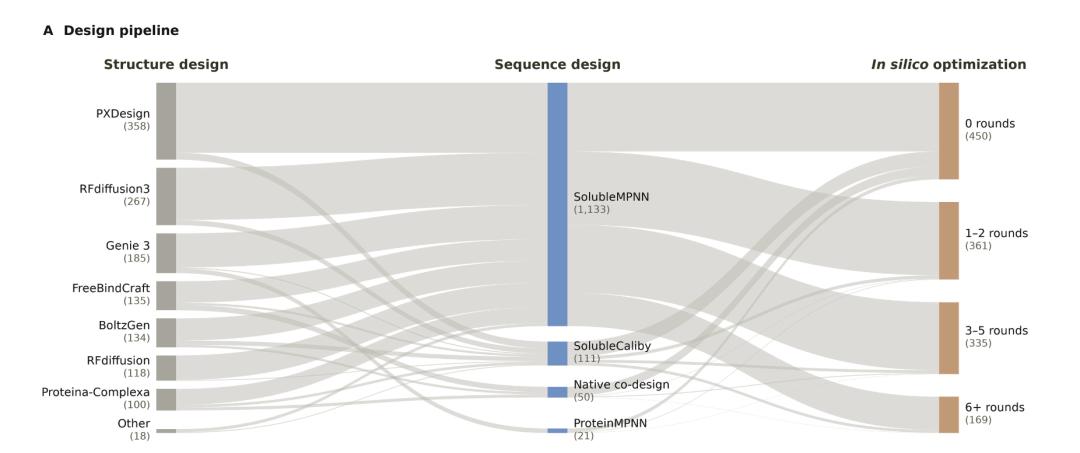
Results
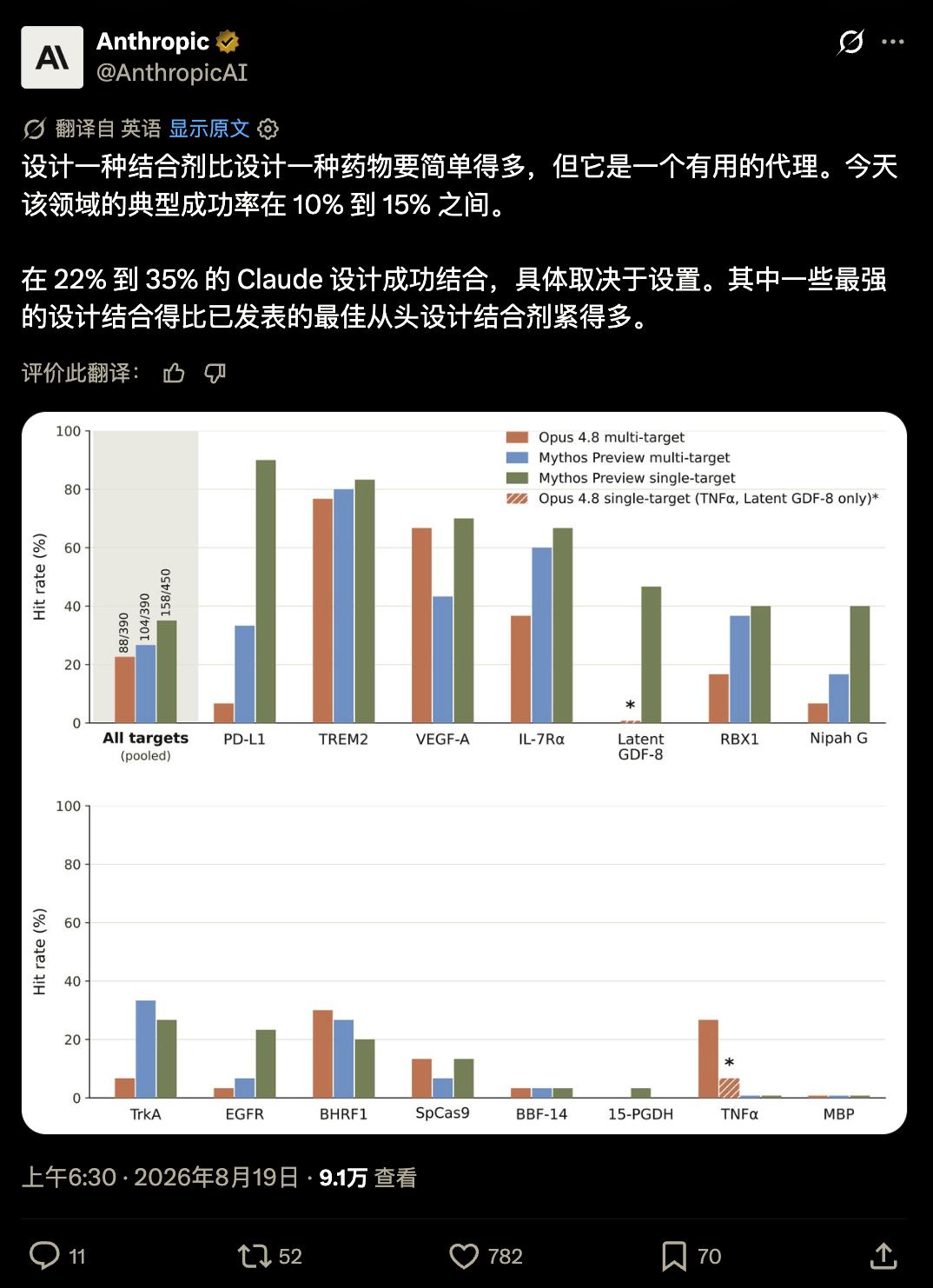
The current average success rate in the field of protein design is 10%–15%.
Claude achieved 22%–35% in different modes, which is two to three times the industry average.
https://x.com/AnthropicAI/status/2089842389682954621
If you only look at the top-ranked design from Claude itself, the hit rate is 49%: for every two targets, the top-ranked design is directly usable.
The results of several targets are worth mentioning separately.
Adaptyv Bio previously held a public design competition for a protein called RBX1, where participants from all over the world submitted 245 designs, and only 9 of them succeeded.
Claude submitted 90 designs on the same target, 28 of which succeeded, and the best design binds to the target 10 times tighter than the winning entry of the competition.
TNFα is an even more difficult target — Humira, one of the best-selling drugs in the world, works by binding to this protein, but many expert teams that previously tried to design binders from scratch all failed.
Opus 4.8 produced 12 valid designs, some of which can simultaneously bind TNFα of humans, monkeys and mice across species.
There were also failures: for a protein called MBP, all 90 designs were ineffective.
Similar signals also appeared in the analytical chemistry field.
Give Claude Opus 5 the raw data of a nuclear magnetic resonance instrument and a one-sentence instruction, it outputs the result in 23 minutes, which is consistent with the manual analysis conclusion of laboratory chemists that takes half an hour to an hour.
The two experiments are in different directions but show consistent signals: Claude, this general-purpose model, independently obtained expert-level results verified by laboratories within 24 to 48 hours (48 hours in multi-target mode, 24 hours in single-target mode) for scientific research tasks that require experts weeks to complete.
Only Six Years, Earth-shaking Changes
Binders are still far from being turned into drugs, with toxicology, clinical trials and other links in between, each of which takes several years.
All structures are computationally predicted and not verified by experimental structures.
Claude only used open-source tools, and Anthropic has open-sourced the prompts, data and all 1440 design models on HuggingFace, which can be reproduced by any laboratory.
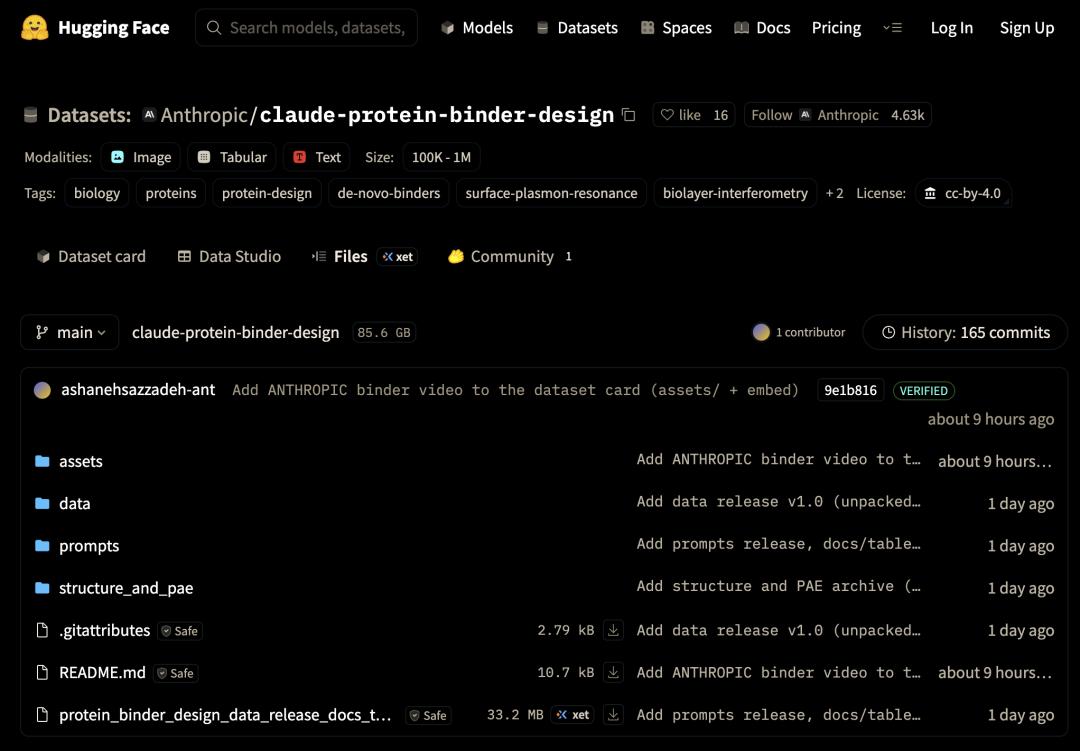
https://huggingface.co/datasets/Anthropic/claude-protein-binder-design/tree/main
This kind of autonomous scientific research capability carries the risk of dual use at the same time, so Anthropic has blocked biological capabilities such as protein design in the public version of Claude.
It has only been six years from AlphaFold predicting protein structures to Claude independently designing proteins.
References:
https://www.anthropic.com/research/Claude-accelerates-protein-design
https://www-cdn.anthropic.com/30bf50e22a01388bb29bf077ee3f244531594b7a.pdf
This article is from the WeChat official account "AI Era", written by ASI Revelation, and released with authorization from 36Kr.