Wi-Fi 7 breaks into the MCU field
In recent years, Wi-Fi 7 has gained extremely strong momentum, with MediaTek, Qualcomm, Realtek, Intel, Broadcom and HiSilicon all launching corresponding products. Progress has also been made in the spectrum aspect: for example, on July 20, the UK's Ofcom officially unlocked the entire 6GHz band. Some manufacturers have even begun to look ahead to Wi-Fi 8.
The embedded sector generally lags behind the consumer sector to some extent. If you look back at past news, you will find that many MCU manufacturers previously set 2026 as the first year of Wi-Fi 7, and the large-scale outbreak of Wi-Fi 7 adoption may not come until 2028. However, some MCU manufacturers have already taken action.
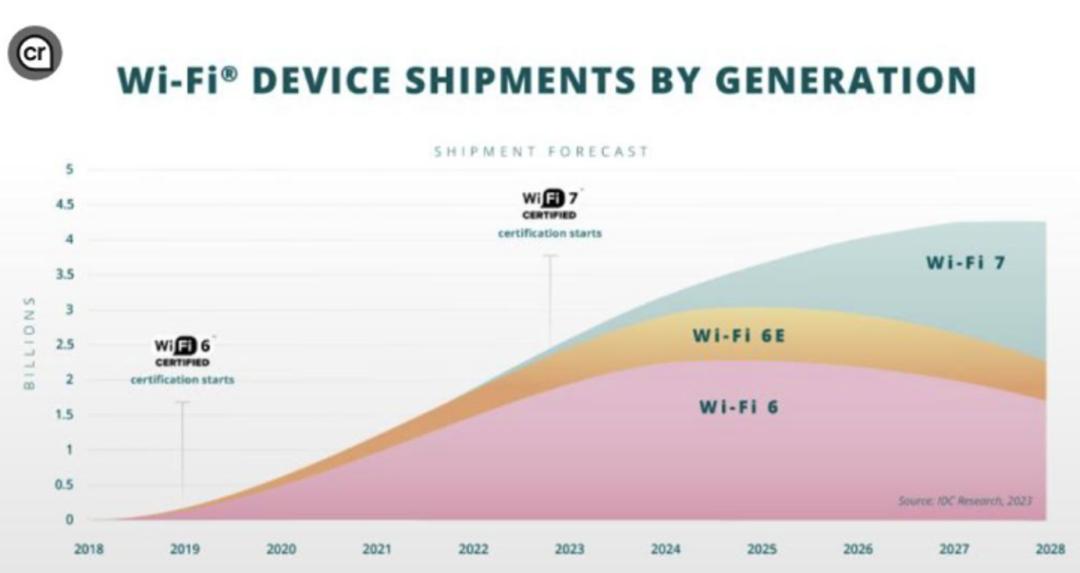
Wi-Fi 7 Comes to the MCU Field
Infineon holds the most positive attitude towards Wi-Fi 7, and is also very active in the BLE and Matter fields.
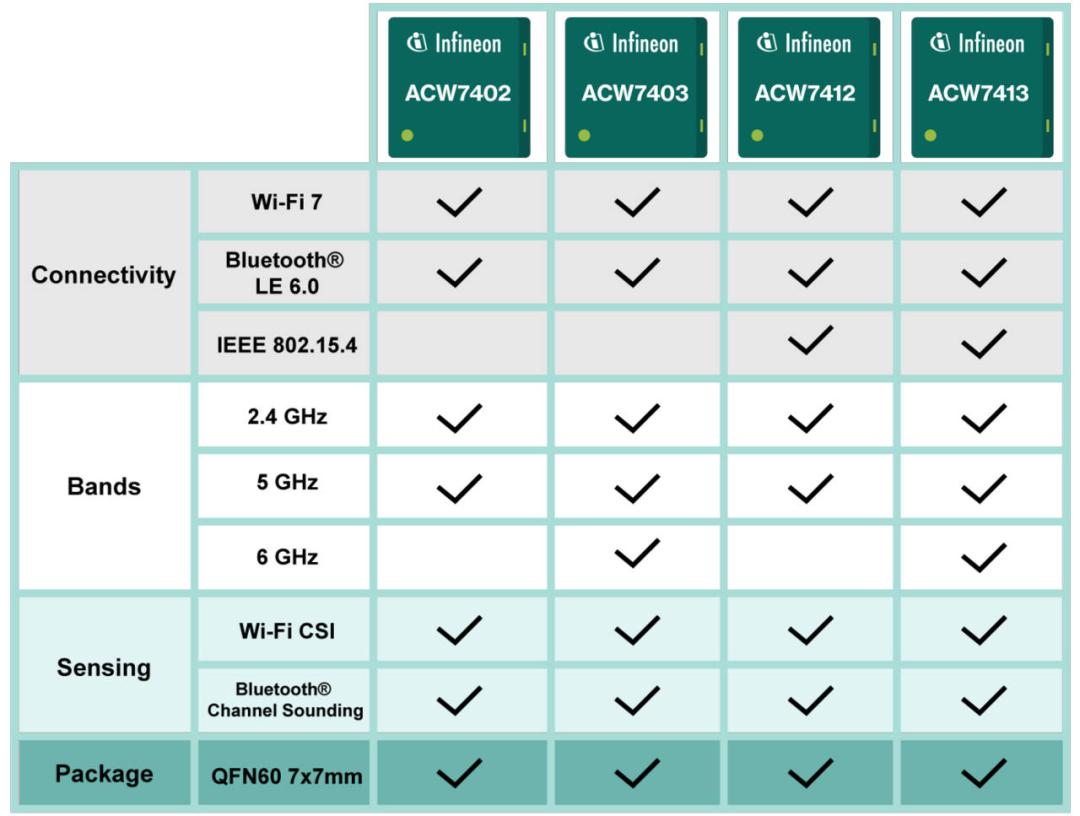
In January this year, Infineon launched the brand-new AIROC ACW741x product series of Connected MCUs, which provides tri-band wireless technology, integrating Wi-Fi 7, BLE 6.0 supporting channel sounding and IEEE 802.15.4 Thread into one device, while supporting the Matter ecosystem. This product series is the industry's first 20 MHz Wi-Fi 7 device oriented to the Internet of Things. By providing Wi-Fi 7 Multi-Link function suitable for IoT scenarios, it improves the stability in network congestion environments, and features the industry's lowest standby power consumption for Wi-Fi connections.
The target use cases and advantages of AIROC ACW741x include:
Smart home devices can use intelligent band selection and Wi-Fi 7 MLO to realize one-time association and dynamic link steering, improving reliability and responsiveness in crowded environments. Typical applications include video doorbells, IP cameras and door locks, which require smooth interaction between the cloud and mobile terminals even when multiple devices are connected;
Battery-powered IoT sensors adopt industry-leading Wi-Fi standby power optimization with a measured power consumption of 70 μW, realizing multi-year battery life while maintaining a secure and regular connection for telemetry and updates, which is very suitable for thermostats, alarm systems and low-duty-cycle environmental sensors;
Access control and asset tracking can rely on Bluetooth® channel sounding to achieve fine-grained ranging, and are designed to support Wi-Fi sensing (IEEE 802.11bf, including CSI exchange between STA devices) to realize online detection and location-aware experiences. Related applications include POS terminals, smart locks and asset tracking beacons.
From the perspective of specific product models, Infineon also has a complete product line for full coverage, including tri-mode and dual-mode Wi-Fi 7 options, as well as 802.15.4 options, with extremely precise product positioning.
Synaptics also makes very active layout for Wi-Fi 7, and the company is currently in the process of being acquired by onsemi.
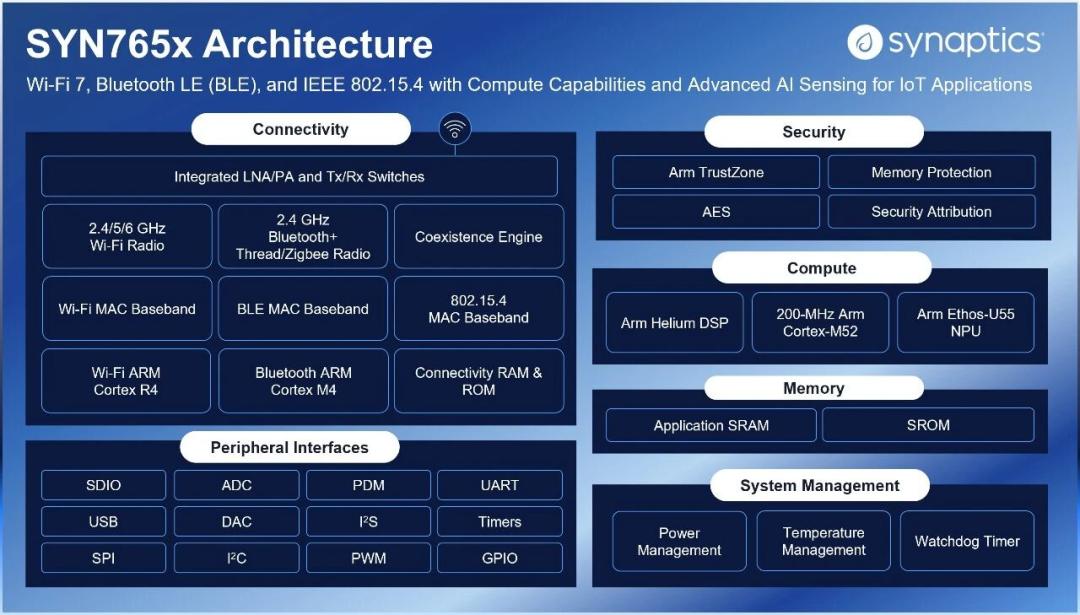
In March this year, at Embedded World 2026, Synaptics released the industry's first AI-native MCU SYN765x series supporting Wi-Fi 7. In terms of wireless functions, it follows the same design idea as Infineon, providing Wi-Fi 7, Bluetooth 6.0, IEEE 802.15.4 (Thread and Zigbee), and supporting the Matter standard to realize cross-platform interconnection. In terms of core configuration, it adopts the Arm Cortex-M52 processor (formerly Arm China STAR-MC2), integrates Helium DSP and Arm U55 NPU, and can provide up to 50 GOPS of computing power at 200 MHz.
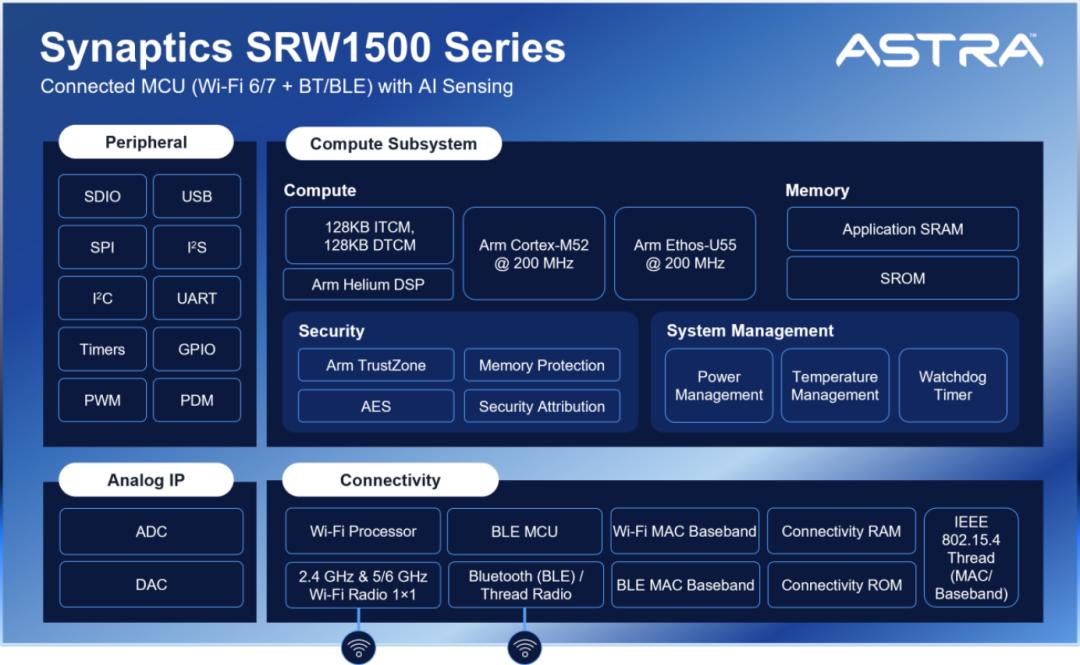
At Computex in June this year, Synaptics released the industry's first batch of single-chip AI MCU SRW1500 series Connected MCUs with integrated Wi-Fi 7 connectivity. It also provides Wi-Fi 7, Bluetooth 6.0, IEEE 802.15.4 (Thread and Zigbee), and supports the Matter standard to realize cross-platform interconnection. In terms of core configuration, it also integrates the Arm Cortex-M52 processor, 1 MB on-chip SRAM and Arm Ethos-U55 NPU, delivering 50 GOPS of computing power.
At present, Synaptics is merging the SYN765x series into the SRW1500 series to leverage the Astra brand MCUs and complement the Astra brand with wireless connectivity (Wi-Fi, Bluetooth, Matter and Thread).
All Parties Are Still Promoting Wi-Fi 6/6E
Although Infineon and Synaptics have taken a step forward into the Wi-Fi 7 field, Wi-Fi 6 and 6E are still the main development goals for most chip manufacturers at the current stage.
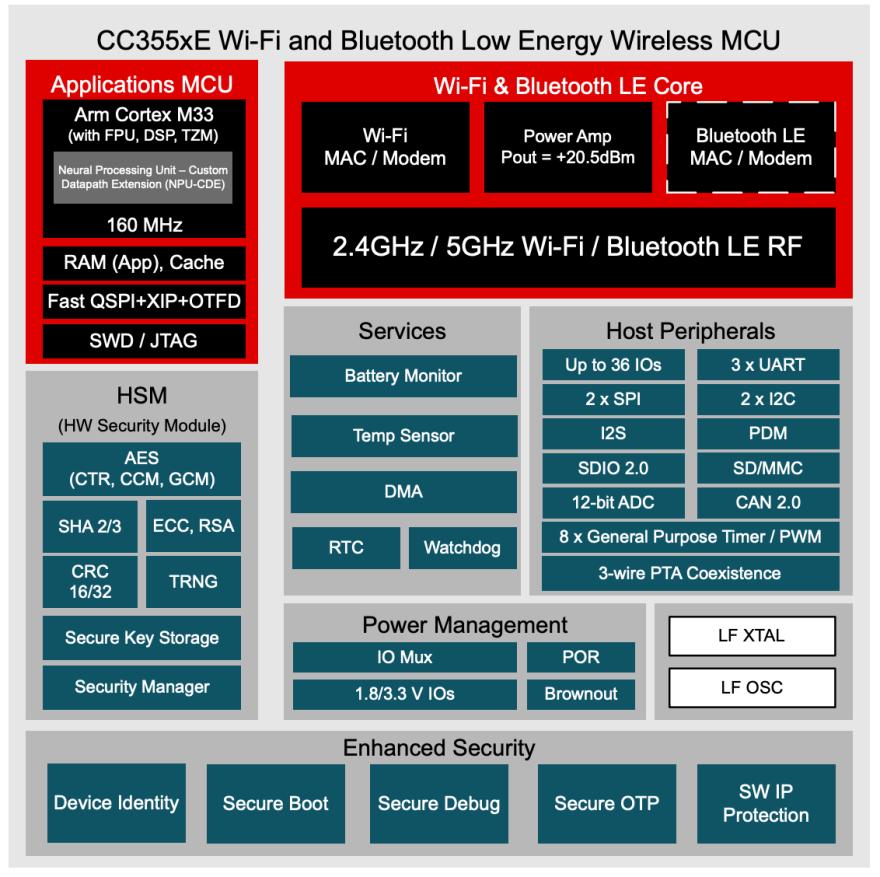
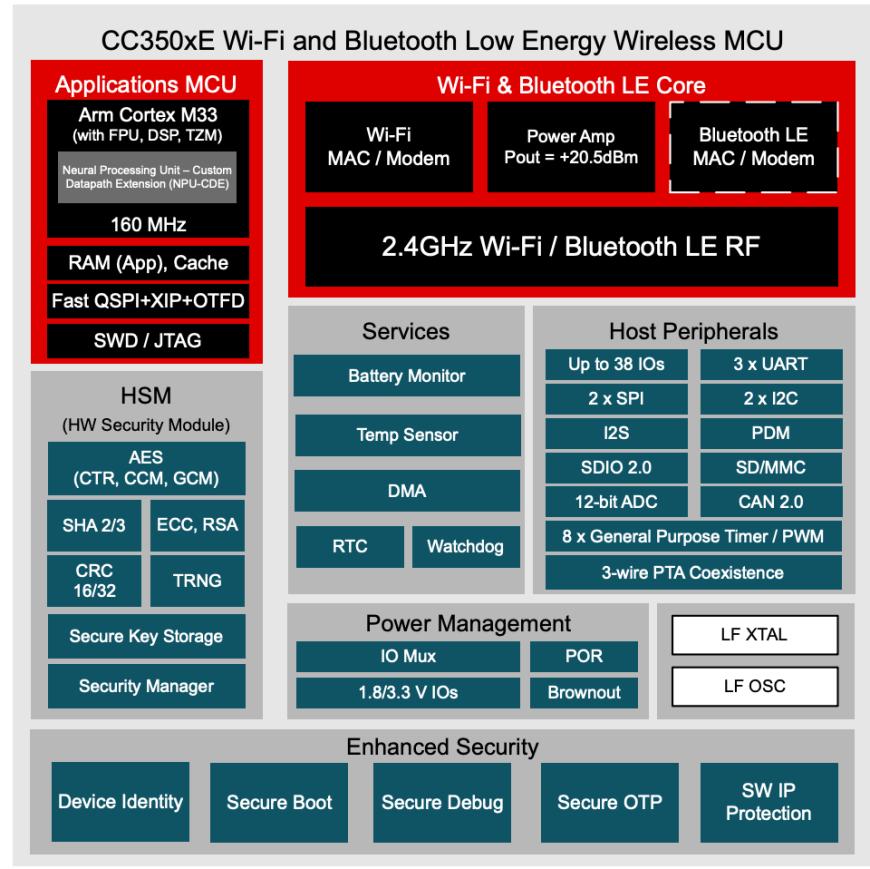
TI is currently promoting Wi-Fi 6 MCUs on its official website, and has also launched new products recently. One is the CC355xE series with 2.4GHz and 5GHz Wi-Fi 6, among which CC3551E also supports BLE 5.4. As Texas Instruments' 10th-generation wireless connectivity combo chip, CC355xE adopts a proven technology platform, which is suitable for cost-sensitive embedded applications running RTOS. This series also provides package versions with built-in PSRAM to further increase runtime storage space. The other is the CC350xE series with 2.4GHz Wi-Fi 6, among which CC3501E supports BLE 5.4, and the overall performance is similar to CC355xE.
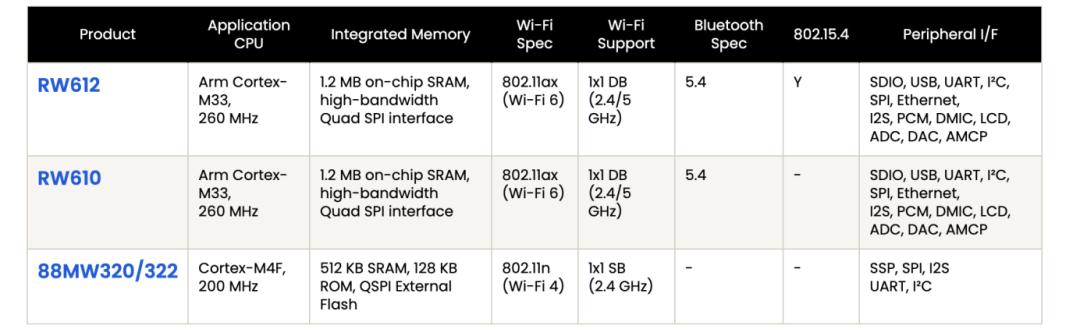
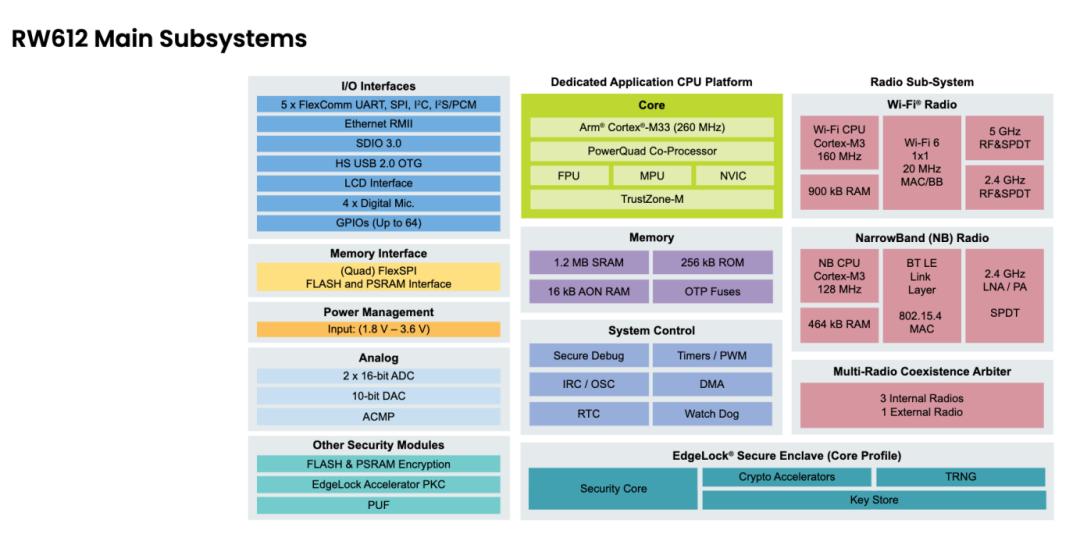
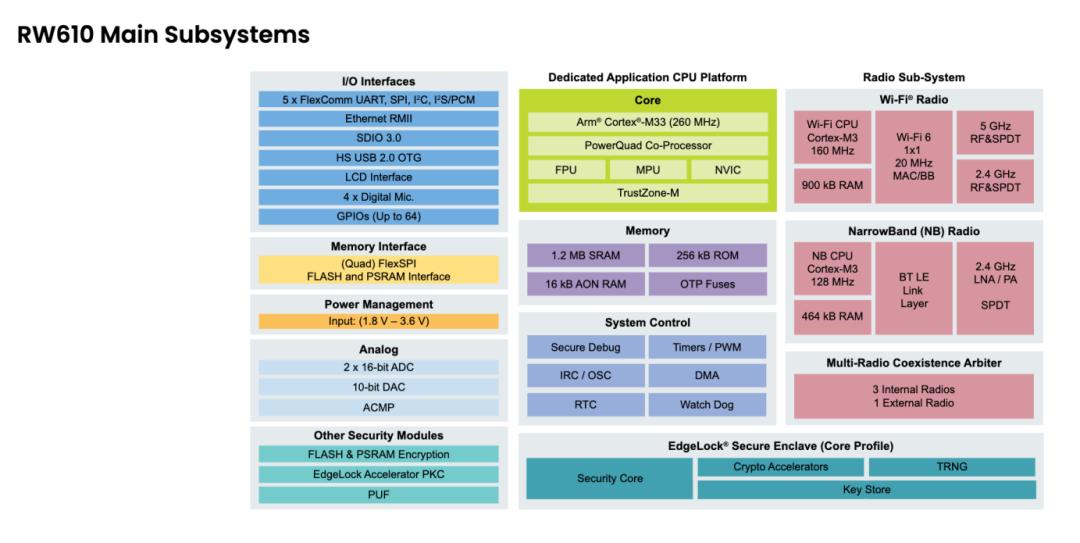
NXP is also focusing on promoting Wi-Fi 6 MCUs. RW612 is a highly integrated low-power triple-radio wireless microcontroller with Wi-Fi 6 + BLE 5.4 + 802.15.4, designed for a wide range of applications including connected smart home devices, enterprise and industrial automation, smart accessories and smart energy. RW610 is a dual-radio MCU with Wi-Fi 6 + BLE 5.4.
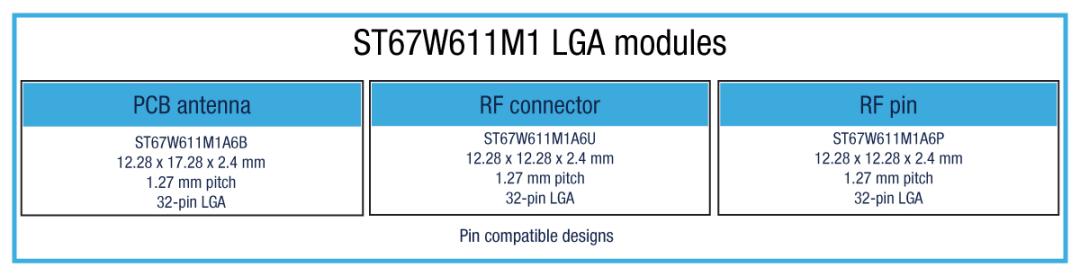
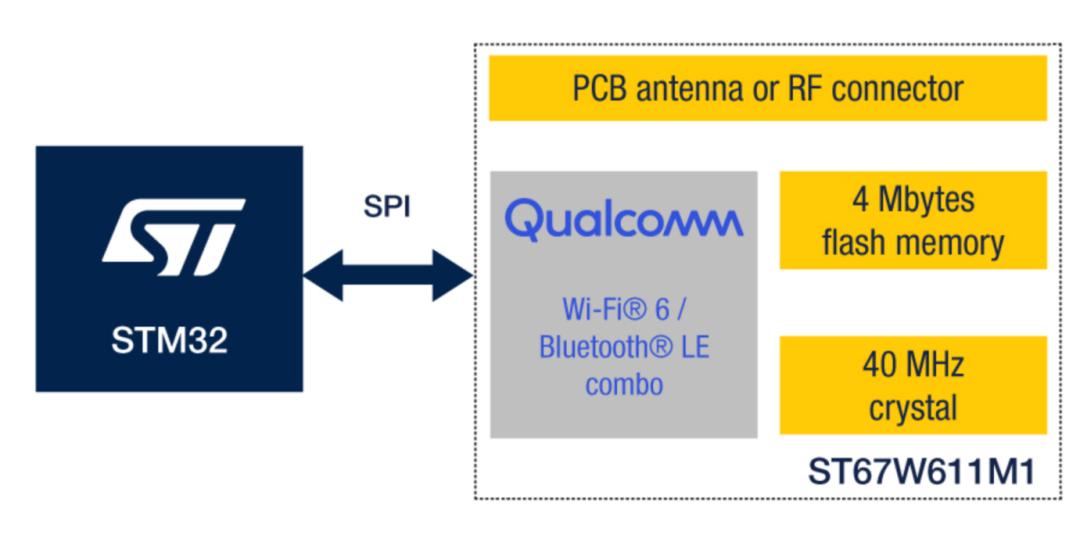
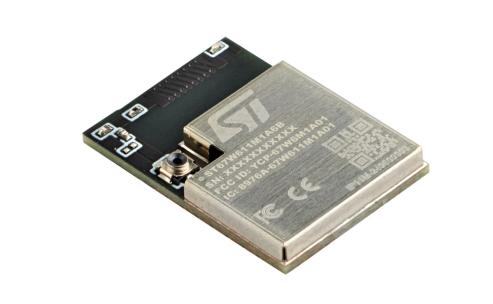
ST is also paying attention to Wi-Fi 6. In November last year, ST launched its first Wi-Fi co-processor series ST67W611M module, which can be seamlessly integrated into STM32 MCUs or MPUs to add wireless capabilities to devices. The product is future-oriented, and now supports Wi-Fi-based Matter implementation via software updates, while Thread-based Matter will be launched in Q3 2026 to ensure compatibility with the latest IoT standards.
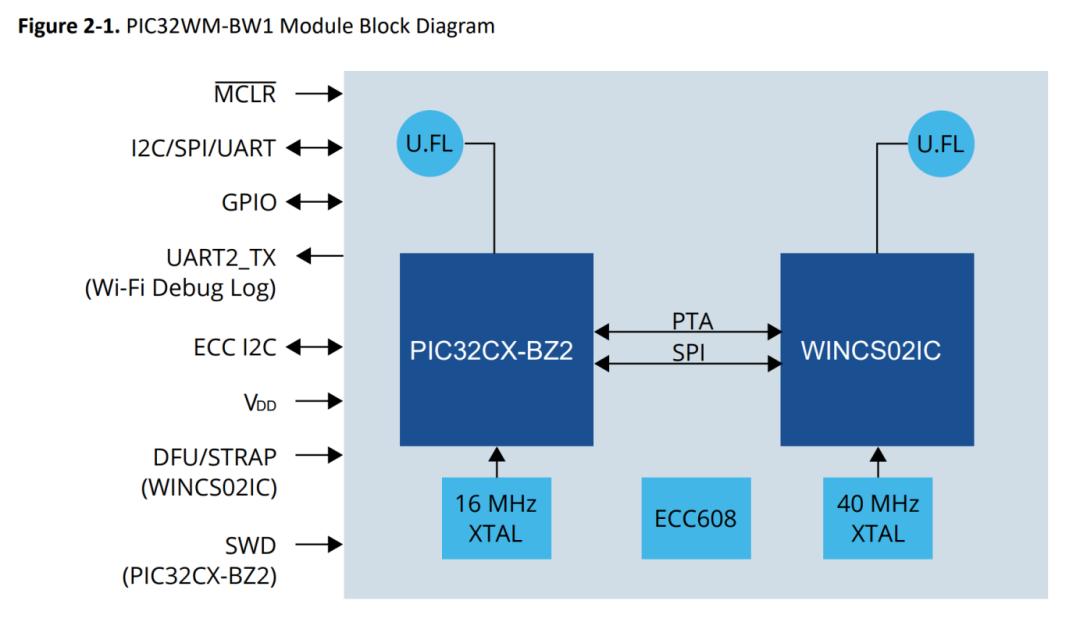
Microchip's PIC32WM-BW1 is a Wi-Fi and BCOMbo MCU, which integrates WINCS02IC Wi-Fi network controller + PIC32CX1012BZ25048 MCU. The Wi-Fi part clearly follows the IEEE 802.11b/g/n standard with 1×1 configuration and 20 MHz bandwidth. The interesting point of this chip is that although it is not a Wi-Fi 6/7 chip, it can access Wi-Fi 6/7 networks.
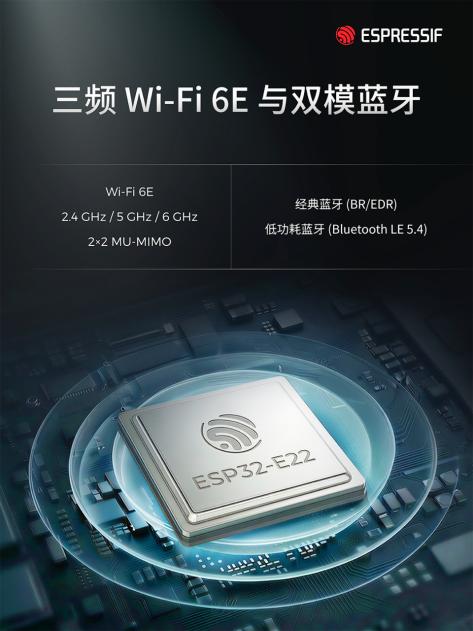
Espressif attaches great importance to Wi-Fi 7, and has stated on many occasions that it is actively carrying out R&D work for the next-generation Wi-Fi 7 chips. However, at present, Espressif is still focusing on promoting Wi-Fi 6E. For example, Espressif launched its first high-performance RISC-V co-processor ESP32-E22 with 2.4 GHz, 5 GHz and 6 GHz tri-band Wi-Fi 6E + dual-mode Bluetooth in January this year.
What Are the Advantages of Wi-Fi 7 Exactly
Looking back at the entire evolution history of Wi-Fi, the focus of each generation is different: in the early stage, from 802.11 to 802.11b/a/g, the concept of high throughput was emphasized; Wi-Fi 4 (802.11n) introduced MIMO technology to improve throughput (High Throughput, HT); Wi-Fi 5 (802.11ac) focused on higher throughput (Very High Throughput, VHT); the focus of Wi-Fi 6 (802.11ax) shifted to high efficiency (High Efficiency, HE); Wi-Fi 7 (802.11be) pursues extreme throughput (Extreme High Throughput, EHT); and Wi-Fi 8 (802.11bn) begins to emphasize the improvement of stability (Ultra High Reliability, UHR).
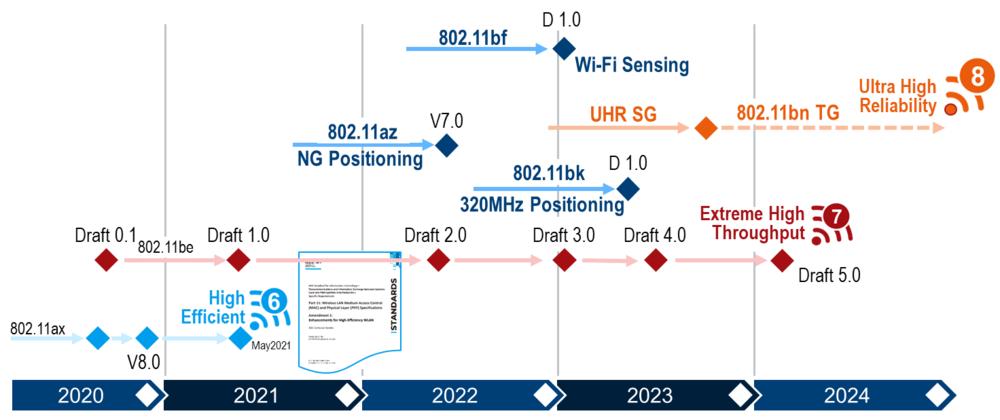
Wi-Fi 7 was launched in 2024, adding a large number of high-performance network-oriented enhancements at the PHY and MAC layers, including 320 MHz channels, 4096-QAM modulation, and up to 8 spatial streams (8×8 MIMO). The theoretical maximum throughput can reach 36Gbps, which is nearly 4 times of Wi-Fi 6's 9.6Gbps, and it also features lower latency, higher capacity density and higher energy efficiency.
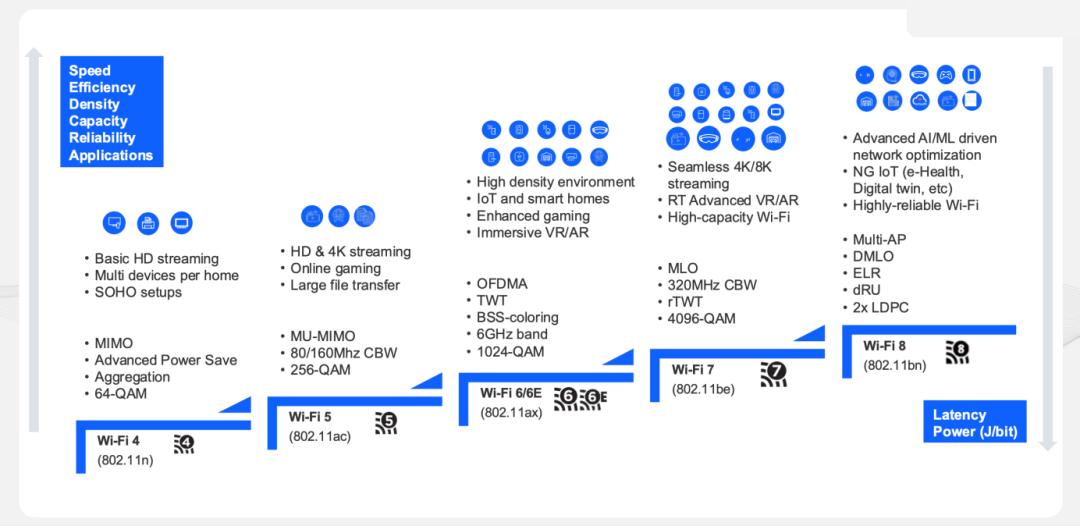
From the perspective of technological evolution, Wi-Fi 7 is likely to be the most important upgrade for