The price of Musang King durian has plunged from 148 to 14, and the entire Southeast Asian durian market has crashed.
Durian, known as the "King of Fruits", not only has extremely high nutritional value and unique flavor, but also carries a price far exceeding that of ordinary fruits.
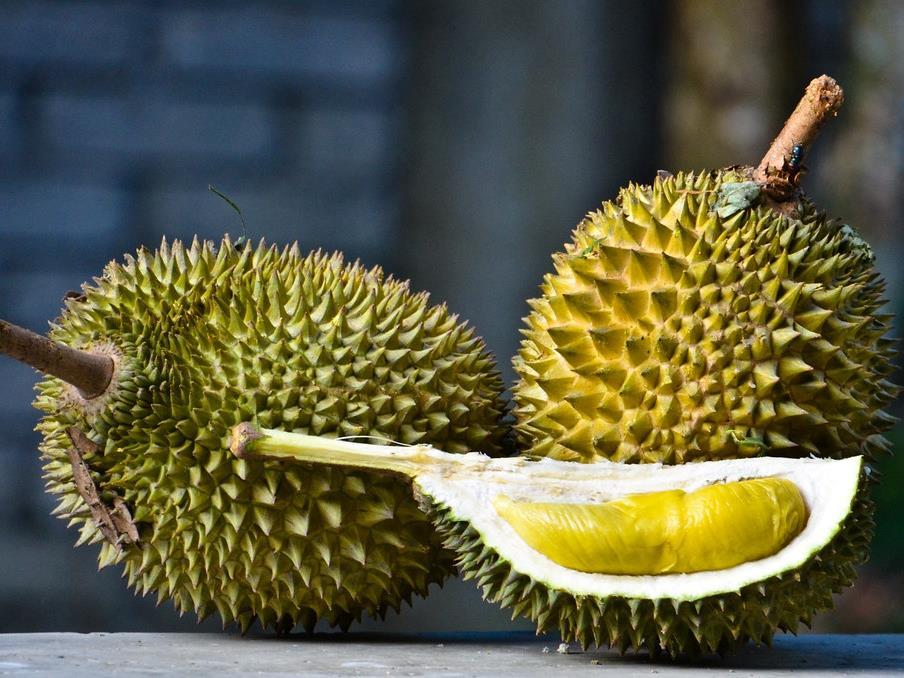
But this year, the "crown" of durian has fallen from its pedestal.
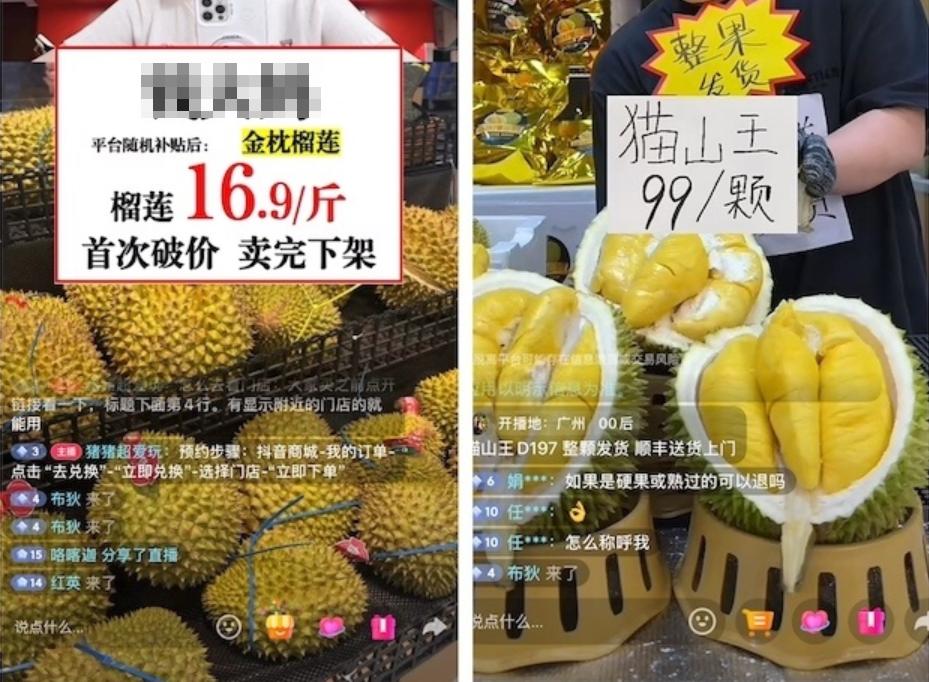
The wholesale price of Monthong durian has dropped to as low as 30-40 yuan per kilogram, nearly 30% lower than the same period last year. Musang King durian, which previously generally sold for 200 yuan per kilogram, has fallen to around 120 yuan per kilogram, and many discounted units with substandard appearance are only priced at roughly 60 yuan per kilogram. For Chinese people who love durian, cheap and sufficient supply is absolutely a good thing, but for Southeast Asian durian growers, this year is nothing short of a disaster.
I. The Durian Tsunami
A fruit store in Tampines, Singapore, has started distributing 800 kilograms to 1 ton of Kampung durian to citizens for free every day since June 19, and the distribution will last until the end of August. All the supplies come from neighboring Malaysia.
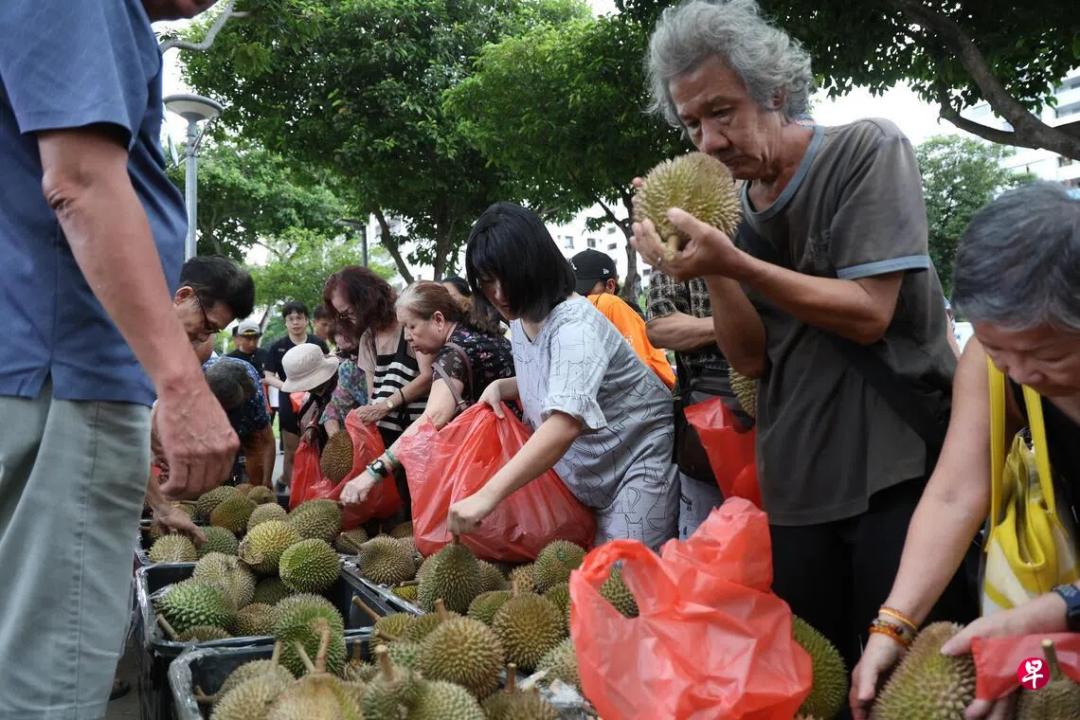
(Lianhe Zaobao)
This year, Malaysia has a severe backlog of unsold durians, with price collapses occurring for all varieties. The price drop at the wholesale origin end is far more drastic than the drop at the retail end in China.
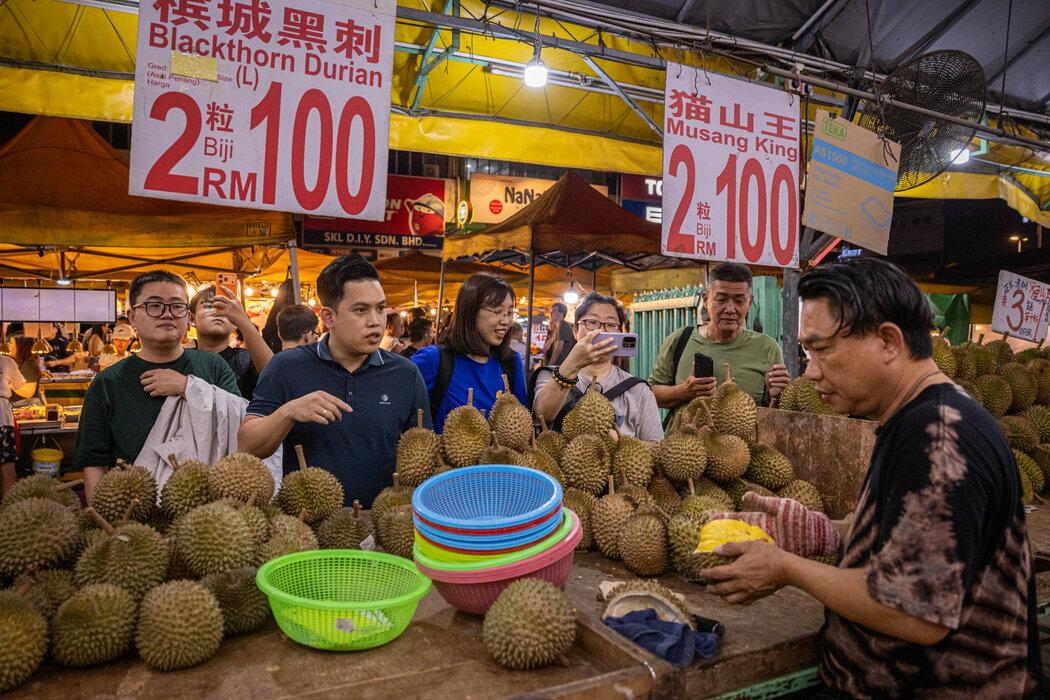
For the premium variety Musang King, the wholesale price once reached 90 Ringgit per kilogram at its peak in 2025, but now it is only 9 Ringgit per kilogram, equivalent to a drop from 148 RMB to 14.8 RMB, which is almost a complete price collapse.
The even more premium Black Thorn durian also failed to escape the price crash. It used to cost at least 170 yuan per kilogram, known as the "gold on the tree", but this year its price has plummeted to 21.6 yuan per kilogram, and it can no longer claim the premium reputation of being as valuable as gold.
If even the premium varieties are in such a situation, the fate of other ordinary varieties can be easily imagined.
In some producing areas, the price of common varieties has even dropped to 1.6 to 3.3 yuan per kilogram, and for the Kampung durian at the bottom of the quality hierarchy, the unit price per kilogram is even less than 1 yuan.
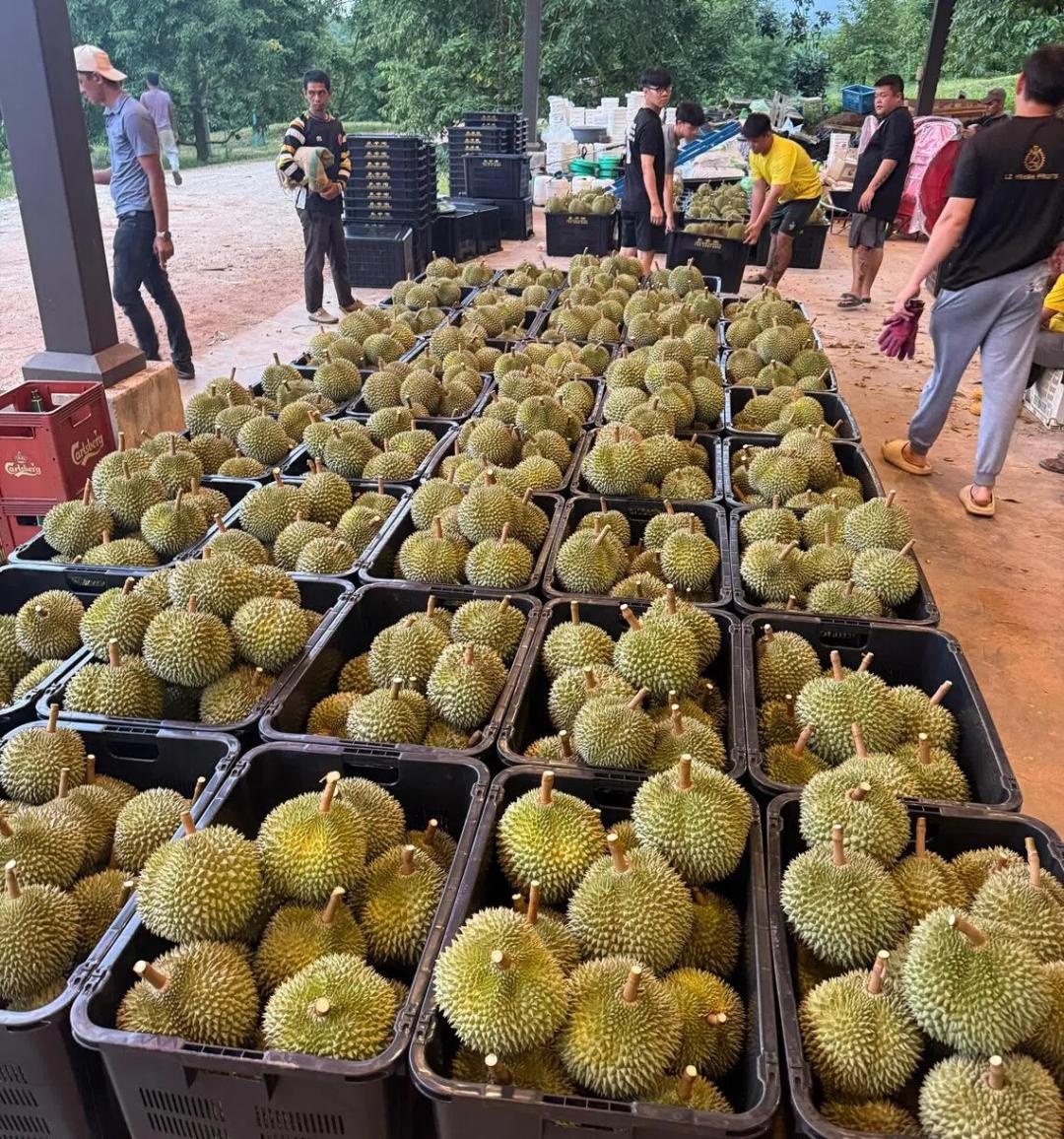
At such low prices, it is almost equivalent to giving them away for free. It is better to use them to win public praise than to throw them away, so some merchants simply choose free distribution. If they cannot give out all the durians locally, they will take them to neighboring Singapore for distribution.
All Malaysian durian farmers interviewed by the media look utterly distraught. A farm owner who owns thousands of durian trees said that due to the unsold ripe durians, about 200 to 300 kilograms of durians rot on his farm every week. By the beginning of July, he had thrown away about 1 ton of durians in total, which is a huge waste. Now he can only give the unsold durians to visiting guests for free, with his heart bleeding from the loss.
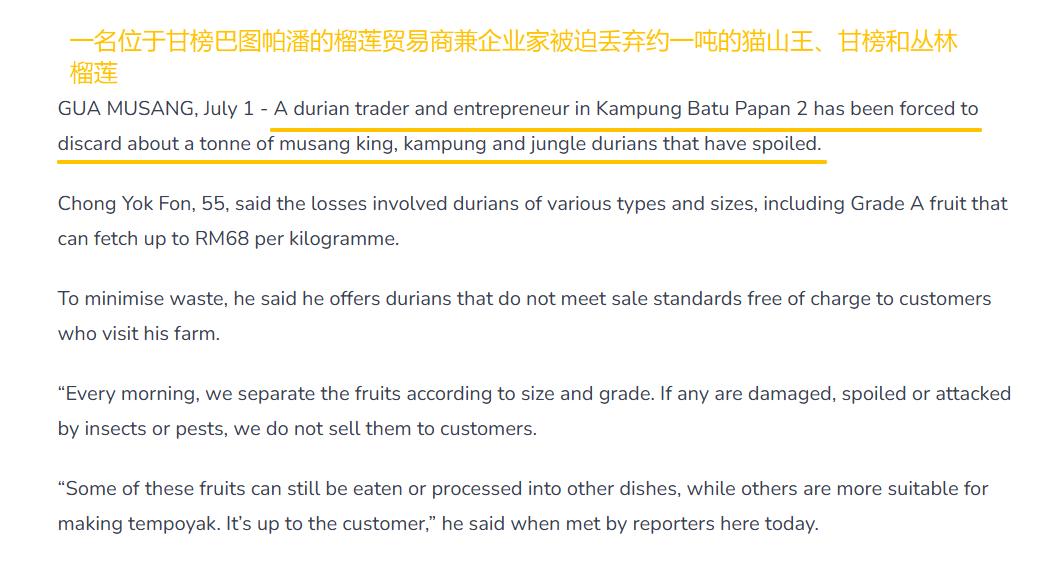
(newswav)
Some people even said bluntly that the market pressure is too great. All farmers are offloading their durians, leaving no room for negotiation. The price is so low that it is a pure take it or leave it situation.
If you dare to bargain, the buyer will just let your durians rot directly in the warehouse.
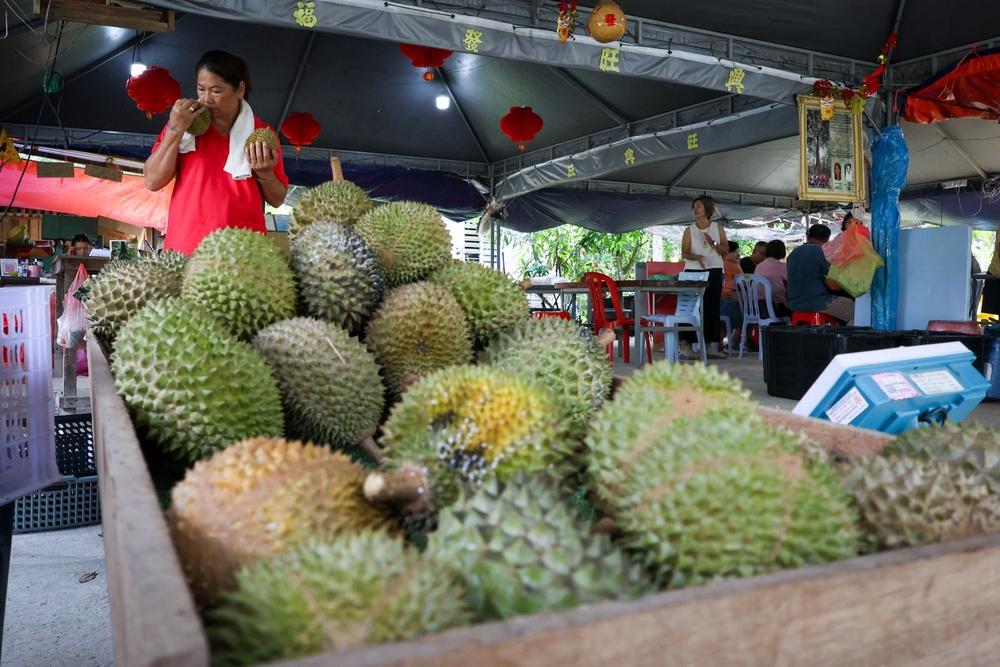
At present, the Federal Agricultural Marketing Authority of Malaysia has launched a rescue plan, which purchases unsold Kampung durians at a unified price of 4.46 yuan per kilogram for frozen storage. But so far, it has only directly purchased a total of 142.7 tons, and the annual direct procurement target is only 1000 tons. In comparison, the annual durian output of Penang state alone has exceeded 18,000 tons, and the total output of the whole Malaysia is close to 570,000 tons. The rescue effort is far from enough to solve the problem.
This unprecedented durian overstock crisis has been called the "Durian Tsunami" by foreign media.
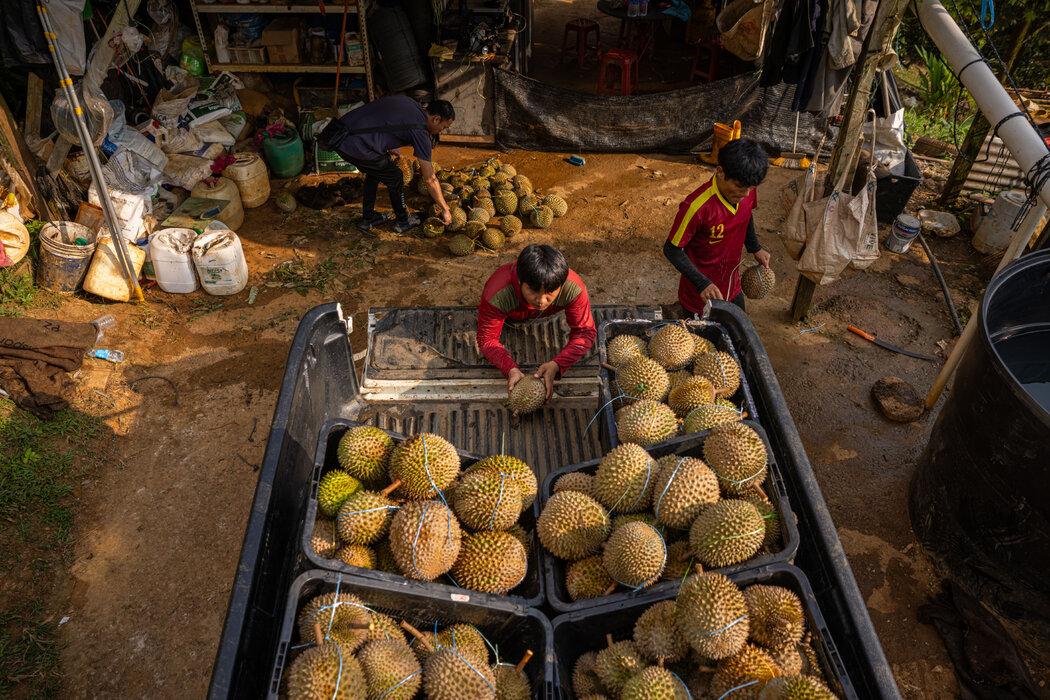
The tsunami has not only swept across Malaysia, but also severely impacted other Southeast Asian countries.
Thailand's estimated durian output this year is 2 million tons, a year-on-year surge of 33%, but exports have not kept up. There are 300,000 tons of unsold durians in southern Thailand alone. To stimulate domestic consumption, the Thai Ministry of Commerce personally stepped in and cooperated with the famous live-streaming influencer Pimrypie to promote sales. Monthong durians are sold individually at only 100 Thai Baht, which is roughly 20 yuan per piece, in an attempt to dispose of the inventory at low prices before the durians rot.
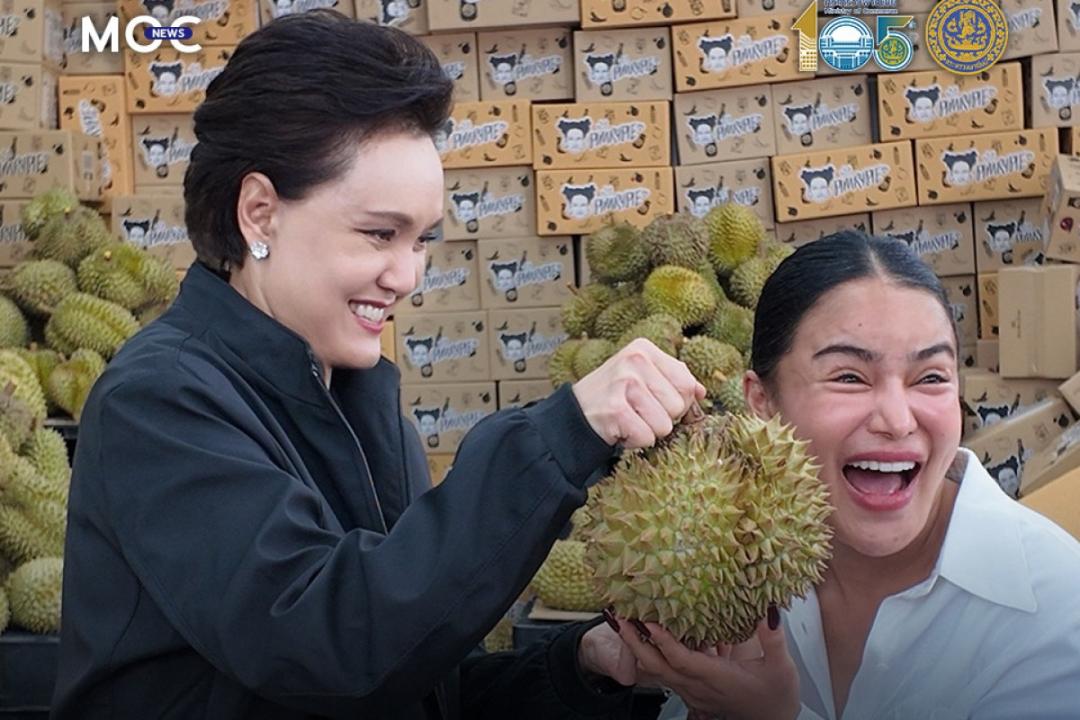
A total of 1 million durians were sold through the live stream, but it still could not digest all the inventory. Instead, farmers who failed to become suppliers got anxious and directly protested that the promotion conveyed "unreasonable price signals", which seriously lowered the floor price of physical retail and made their business more difficult, putting the Thai government in an awkward position.
Vietnam is also suffering. As a major competitor of Thailand, its durian output this year has also reached about 2 million tons. As output rises, prices fall. During the peak season from April to June, the purchase price of Vietnam's best Grade A Monthong durian plummeted from 73 RMB per kilogram to 26 RMB per kilogram, a drop of more than 60%. For the lower-tier Kanyao durian, the purchase price of Grade A fruits is 9 yuan per kilogram, and the price of lower-quality Grade B fruits is 5 yuan per kilogram.
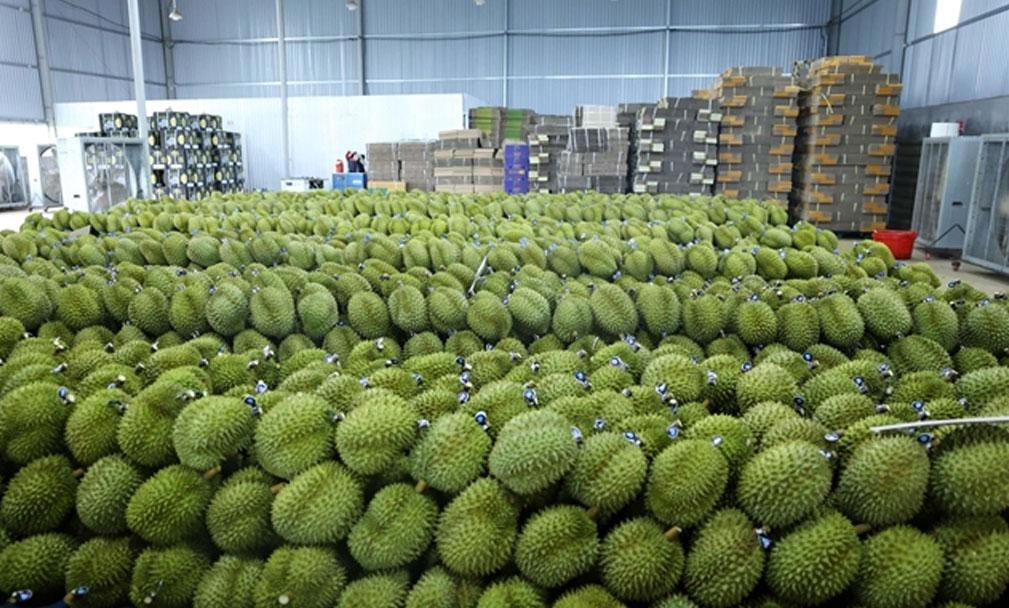
But experts estimate that such price cuts can only increase Vietnam's durian exports to 1 million tons. For the remaining half of the output, every Vietnamese person would need to eat 9.8 kilograms of durian on average to clear the inventory.
The most absurd thing is that the durian overstock has even triggered collapsing corruption in Vietnam... In Dak Lak Province of Vietnam, 500,000 tons of durians are waiting for export this year, but about 350,000 tons of them do not have the qualification to export to China. The farmers are extremely anxious, but the officials in charge of the Vietnamese authorities seized this "business opportunity" and sold one export quota to multiple companies and farms at the same time. A part of the authorization fee is turned over to the state, and the rest goes into their own pockets. After being reported, the Vietnamese public security arrested more than 20 relevant officials, the highest-ranked of whom is HUANG Zhong, Vice Minister of the Ministry of Agriculture and Environment.

(vnexpress)
II. High-Ping Players
The root cause of this durian tsunami is actually the high latency of agricultural production plus Hayek's unpredictable invisible hand.
Since 2019, the durian market in China has continued to boom. A gift box of premium Musang King durian costs hundreds of yuan, and ordinary Monthong durian is even in short supply. Driven by the strong consumption of this single major importing country, the global average market price of durian has risen from $1.40 per kilogram in the past to $4.37 per kilogram in 2024, nearly tripling.
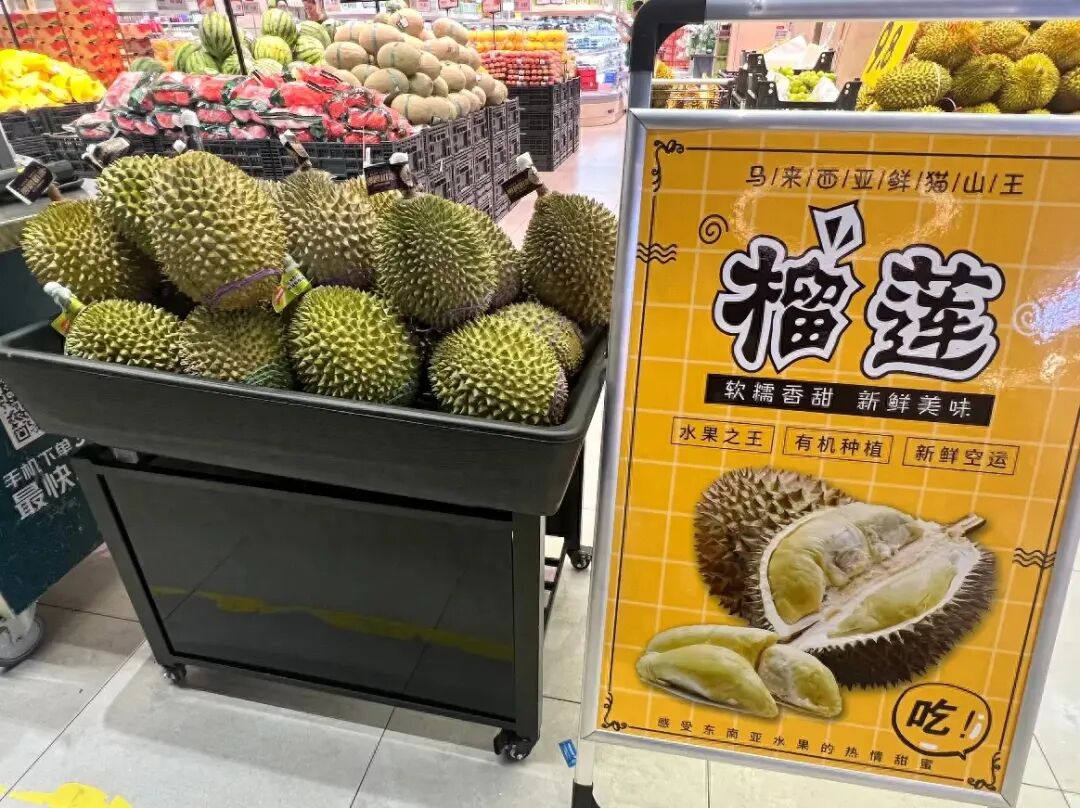
On the same hectare of land, the income from growing durian can reach more than five times that of traditional food crops. Farmers all feel that they have missed a huge fortune!
Thus, the "planting expansion craze" across Southeast Asian countries was ignited instantly.
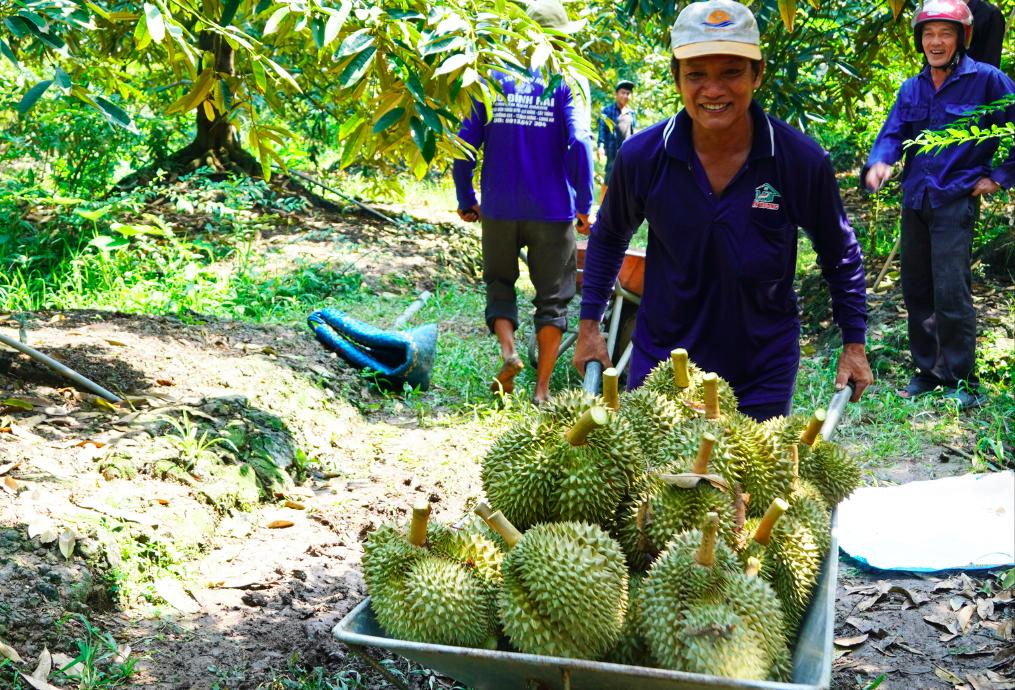
How crazy is it? Vietnam's durian planting area was just over 30,000 hectares in 2015, but now it has reached 200,000 hectares, a 6-fold increase in ten years. A large number of farmers in the Mekong Delta region actively buried high-yield rice fields and replanted durian. These fertile and humid lands were piled into mounds to meet the waterlogging-averse nature of durian trees. Vietnam's important cash crop rubber was also cleared away. In just three months, 200 hectares of rubber forests were cut down in Song Hinh District, Phu Yen Province, to make way for durian planting. The rubber factory, which used to be the pillar of local employment, directly lost 3/4 of its production capacity due to lack of raw materials.
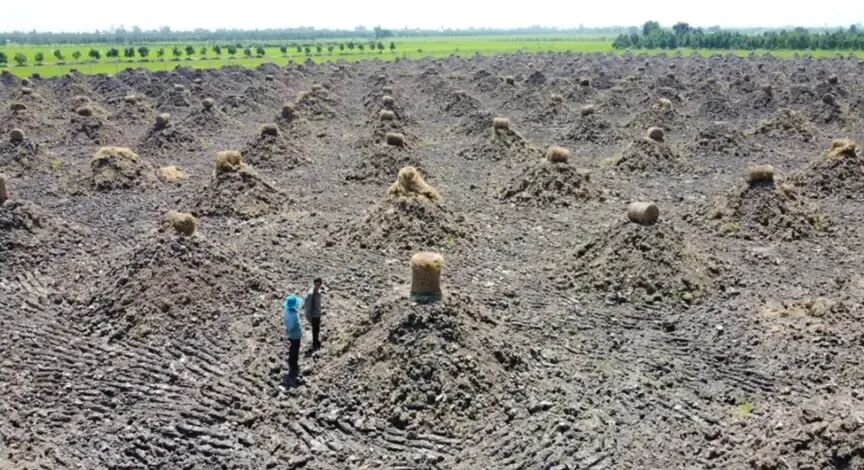
This scene reminds people of a past era. If the people of the Ming Dynasty had such enthusiasm, the Yan Party would not have faced such a dilemma.

The same situation applies to Thailand and Malaysia. In the eastern region of