ALO is going to be added to the three must-haves of the middle class.
Thanks to lululemon's overall boost to the yoga and sports lifestyle market, more and more fashionable young women are turning to sportswear brands.
In China, lululemon has evolved into one of the "three status symbols of the middle class", while in its home market of North America, the brand, established for more than 25 years, is already showing signs of being outdated.
Alo Yoga, a rising star in the yoga apparel sector, has replaced it as the most popular sportswear brand on the streets of Los Angeles, USA. Born in the hub of Hollywood and Silicon Valley, with its headquarters located in the wealthy Beverly Hills neighborhood, it is priced even slightly higher than lululemon, and only took three years to drive its sales from 200 million USD to 1 billion USD.
Even Forbes magazine stated that Alo Yoga "has swept the fitness industry and cast a shadow over lululemon, the pioneer of yoga and athleisure".
On August 12, ALO officially launched its dual e-commerce channels in China on Tmall Flagship Store and WeChat Mini Program, taking the first step to expand into the Chinese market. At a time when lululemon's growth in China is shifting to a lower gear, can the long-overdue ALO successfully win over China's middle and high-income groups?
1
ALO, a brand that is more like a light luxury label
In its report on ALO, The Wall Street Journal described the following scene: 27-year-old Kayla Harrell, who works as a financial assistant in Los Angeles, went on a date with her partner at the ALO flagship store in Beverly Hills, where he spent about 600 USD buying her several ALO products.
"I used to wear lululemon, but they were just yoga pants and tops, and they were not very stylish", Harrell likes to wear ALO's tennis skirts and sports bras when going out, even on dates and at events.
The reason why ALO can replace lululemon and become the new synonym for fashionable beauties lies in its clear brand positioning.
People who wear lululemon basically choose the brand for its fabric, cut and sports comfort, while the crowd that wears ALO is mostly on their way to the gym — yes, they are "on the way".
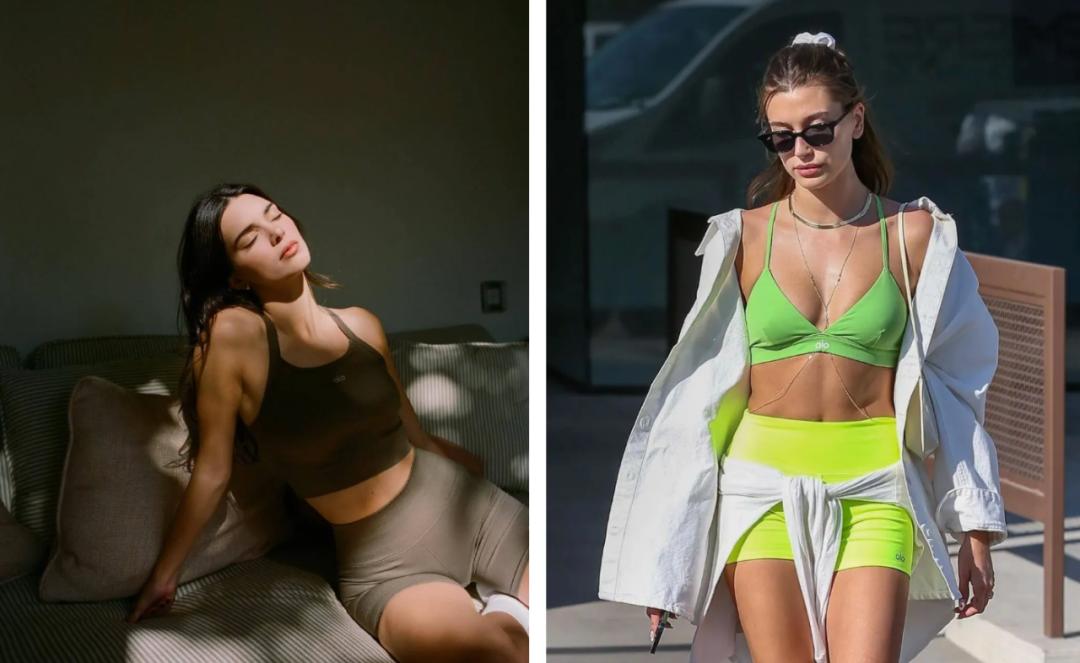
Alo Yoga was founded in Los Angeles, USA in 2007, the same year lululemon was successfully listed on NASDAQ, proving that the entire yoga market has unlimited potential.
ALO also started its business with yoga apparel. Different from lululemon's focus on professional sports performance, ALO is more of a sports-loving lifestyle brand. The name Alo Yoga stands for Air, Land and Ocean, aiming to spread yoga across the globe, inspire healthy mindfulness and build lifestyle communities.
In terms of design, ALO follows a minimalist, high-end athleisure style. Compared with lululemon, ALO has a richer color palette and more diverse product styles, with its sharp sensitivity to fashion trends and persistent pursuit of sports aesthetics being its core competitive advantages.
In terms of consumer groups, similar to lululemon, ALO has also found a group of new "Super girls" and renamed them "It Girls".
This group of people are fashion icons of Generation Z and influential figures on social media. They are young, beautiful, sexy, individual and wealthy, and are the objects that young people are eager to imitate. Internet celebrity Kendall Jenner and supermodel Bella Hadid are typical representatives of the It Girl group.
ALO sends its products to these influencers, lets them wear the clothes on the street, and asks them to post photos on social networks. The outfits are quickly replicated by rich girls in the Upper East Side of New York, and the trend is thus created.
Cleverly taking advantage of people's desire for status, ALO has positioned itself as the standard choice for supermodels and top internet celebrities, seizing the discourse power of aesthetics, while creating an illusion for ordinary consumers: as long as you put on my yoga apparel, you get the ticket to the upper class.
Therefore, in terms of pricing, most of ALO's products are at a higher price point than lululemon. For example, most of ALO's leggings are priced above 128 USD, while lululemon's similar products can be purchased for less than 100 USD.
"Comfortable, stylish and more distinctive, ALO can not only be worn for sports, but also for taking good-looking photos, which is perfect for sweet and cool girls!" It is like a show-off version of lululemon and a lower-priced alternative to MIUMIU, extending the application scenarios of yoga apparel from the gym to the streets.
With the support of strong marketing capabilities, ALO, like a dark horse, has strongly risen to become the new favorite of celebrities and public figures.
In 2022, ALO's revenue exceeded 1 billion USD, a 5-fold increase in 3 years. In 2024, ALO signed Jisoo, a member of BLACKPINK. After the opening of its Seoul flagship store in 2025, it announced Ning Yizhuo as its brand ambassador to further expand the global market.
2
Surpassing lululemon by leveraging its existing market foundation
As a genius brand in the yoga apparel industry, lululemon was founded 49 years later than Adidas and 26 years later than Nike. It relied on one pair of yoga pants to achieve a market value of over 40 billion USD in 22 years; for the same goal, Adidas spent 68 years and Nike spent 46 years.
In the post-pandemic era, lululemon, with its sharp insight into niche sports trends, achieved outstanding performance against the headwinds, winning over a large number of middle-class consumers, and was called "the Hermès in yoga apparel".
But when a brand becomes popular among the general public, it often loses its consumption value for the fashionable group.
Some people stated directly on social media that when they saw out-of-shape "middle-aged aunties" also wearing lululemon, they no longer wanted to wear the brand.
lululemon's peak period seems to have frozen at this stage.
In lululemon's home market of North America, in fiscal year 2021, its regional revenue reached about 5.3 billion USD, with a year-on-year growth rate of 40.3%. In the following three fiscal years, the growth rate narrowed year by year to 28.6%, 11.9% and 3.9% respectively. In fiscal year 2025, the revenue in North America even dropped by 1%.
Consumers have turned to competing brands such as ALO and Vuori. lululemon's proud fabric has also been caught in the controversy of "possibly containing PFAS (perfluoroalkyl and polyfluoroalkyl substances)", forcing the brand to abandon its original premium positioning, and frequent discounts and promotions have become a short-term solution during its downward period.
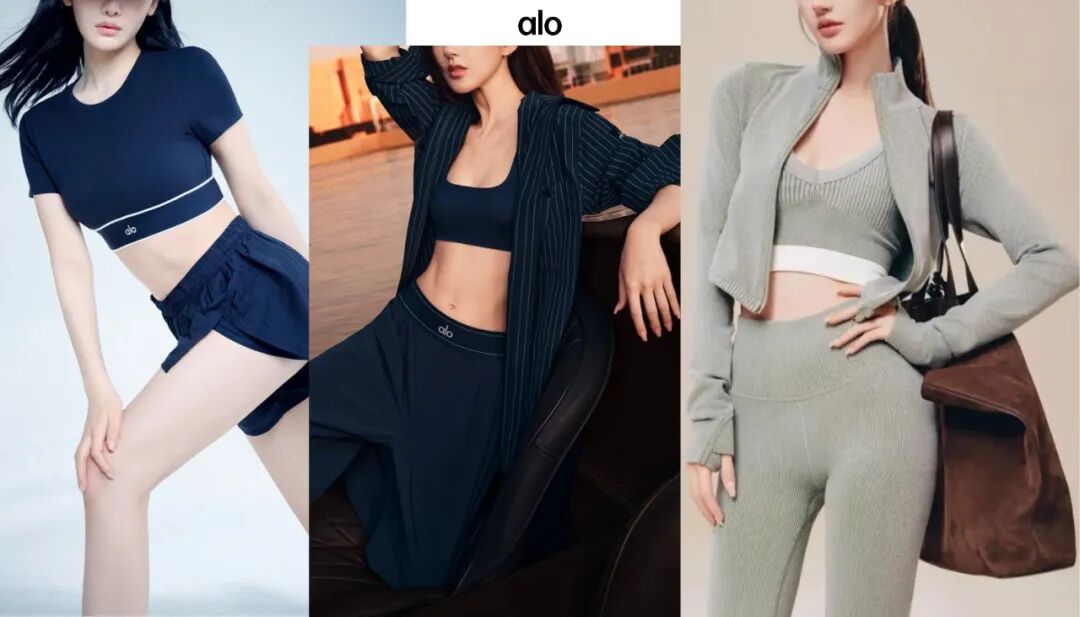
The Chinese market is an exception. From 2021 to 2025, lululemon's net revenue in Chinese Mainland was 434 million USD, 576 million USD, 963 million USD, 1.361 billion USD and 1.755 billion USD respectively, achieving growth for five consecutive years, which proves that the market demand remains strong.
It is worth noting that lululemon's performance growth in China is also slowing down. The "Japanese taiko drum" incident at the Huanghuacheng Water Great Wall in Beijing in May, and the outdoor yoga event with thousands of participants on the slippery ground in North Bund, Shanghai in June, have led to two consecutive public opinion crises, which can be described as bad luck.
The day after lululemon released its apology statement, ALO officially announced its entry into China. It is hard not to see this timing as a deliberate attempt to strike a blow to its old rival.
According to a report from data analytics firm Earnest, ALO Yoga's share among young consumers has increased significantly, and its user overlap rate with lululemon is as high as 63%; more data shows that about 84% of ALO stores are located within 0.5 miles from lululemon stores.
Just like the ALO store on Fifth Avenue in New York, which is opened directly opposite a lululemon store, its ambition is obvious to all.
3
Expanding the Chinese market with Zhao Lusi as brand ambassador
The "ALO craze" has spread to China, and related content such as #how to buy ALO in China, #ALO product reviews, and #ALO celebrity style outfits have been gaining increasing popularity among young people in the past two years.
However, before the official launch of ALO's official stores, there are hundreds of online stores with names similar to "alo" on platforms such as Taobao, JD, Douyin and Pinduoduo, as well as countless counterfeit products and parallel import goods.
On the one hand, these unofficial products have educated the market for ALO, but on the other hand, they have also eroded ALO's reputation and scarcity.
On the morning of August 10, 2026, the official ALO arrived, with its Tmall official flagship store launched and pre-sales started, and the brand ambassador selected is the highly popular young actress and singer Zhao Lusi.
At 00:30 on the 12th, ALO opened the payment for pre-sale orders. The transaction volume exceeded 10 million RMB in only 1 minute, setting a new record for the transaction volume of new sportswear brands on Tmall, which is likely to become a phenomenal case for the sportswear industry this year.
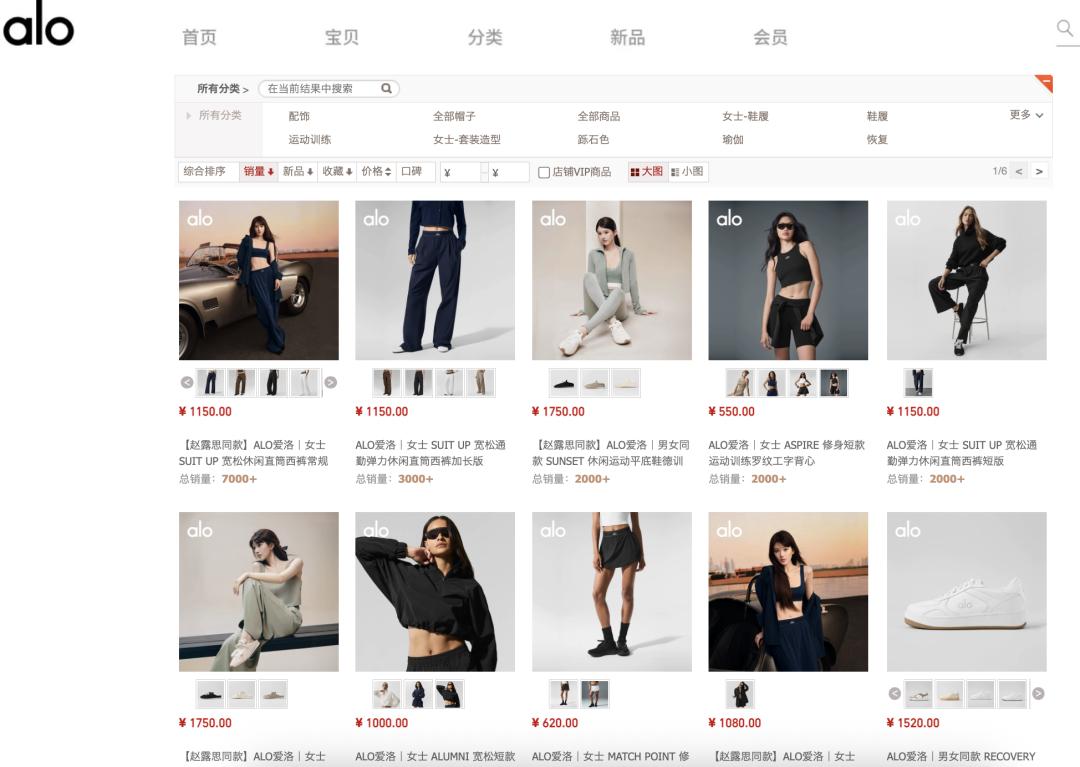
With the opening of its Chinese stores, the shipping address option for "China" has been removed from the ALO US official website.
In fact, before officially launching its e-commerce layout, ALO has completed the warm-up for the Chinese market through a series of actions.
In June, it released its first Chinese market content "Hello, China" on its official Xiaohongshu account, sending out the signal of entering China. In July, it further launched the "ALO Community", and held 8 weeks of free offline activities in Shanghai, covering lifestyle scenarios such as running, city walking and outdoor yoga.
From building momentum on social platforms, to offline community operation, to the first launch on Tmall, ALO is trying to replicate its "product + community + lifestyle" model that it has established in overseas markets.
But exploring the Chinese market is not easy. ALO has to face a fiercely competitive sportswear market, where players including lululemon, MAIA ACTIVE, JU ACTIVE, Vuori, and the yoga product lines of Adidas and Nike are all waiting in full readiness. More critically, consumers who have bought ALO products have widely reported that the product quality is uneven, even worse than that of lululemon which has already seen a decline in quality, so ALO still needs to improve its product capabilities.
The popularity at launch does not equal long-term competitiveness. Freshness and public attention are only the first step. Sustained repurchase in physical stores is the real test standard, and ALO still needs time to prove itself.
In addition, it is inappropriate to simply regard ALO as the next lululemon. The two brands seem to be in the same track, but from a longer-term strategic perspective, ALO does not seem to take lululemon as its target to catch up with.
Danny Harris, co-founder and CEO of ALO, once stated: "We see ourselves more as a digital brand, not a clothing brand or physical retailer", he said, "ALO is more like Tesla, while our competitors are more like Ford, General Motors and Chrysler."
ALO has actually been making frantic cross-sector attempts, with no clearer boundaries than lululemon.
It has expanded to vegan restaurants, skincare products, shoes, health supplements, online courses, offline training, and even NFT projects. It has also invited former executives from Dior and Miu Miu to serve as its international CEO, and launched handbags priced at 1200-3600 USD to compete with traditional luxury brands.
But a smart move it has made is that it wraps all its cross-category expansion under the concept of "mindfulness". The so-called mindfulness is nothing more than a delicate lifestyle with wealth, leisure and good taste, which no one will reject.
Here is a line of poem cited from ALO's Instagram post for you: "Soft, but fierce. Sensual, yet spiritual. Simple, and extraordinary. Grounded, and free to fly."
This is ALO, and it is also the portrayal of every one of us.
This article is from the WeChat official account "Benyuan Finance", written by Zhang Yexing, and authorized for release by 36Kr.