Flova, Seko, LibTV "War Escalation": Large Platforms Begin to Seize the Next "Infrastructure Entrance"?
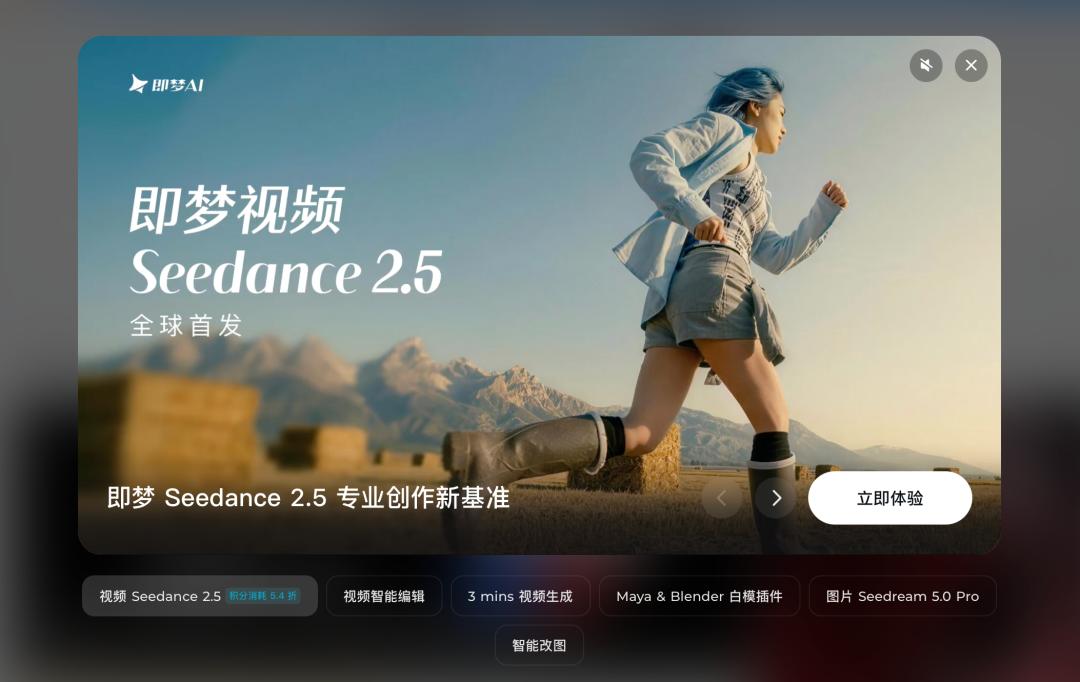
Since the beginning of this year, competition among various AI tools in the short drama industry has gradually intensified. Especially after the recent release of Seedance 2.5, capabilities including 30-second video generation, native 4K output, and multi-reference material input have quickly sparked extensive discussions in creator circles.
Platforms including Flova, SenseTime Seko, LibTV, and Hogee AI Production Studio have started to present the full "from idea to finished work" workflow in an increasingly complete manner. Haishan and OiiOii have targeted the overseas style transfer track, while Paoman Order Square puts projects, guaranteed payment, revenue sharing and overseas orders into one single access point.
These seemingly scattered products all point to the same core fact: AI short drama tools are transforming from technical novelties into new infrastructure within the short drama industrial chain.
In the early stage of AI short drama tools, the most frequently discussed topics were whether the footage had a realistic human feel, whether the character design would collapse, and whether the camera could move smoothly. However, with continuous iterations of models including Jimeng, Keling, Vidu, Hailuo, PixVerse and Seedance, single-point generation capabilities are becoming increasingly popular. Whether a team can use AI to generate videos is no longer enough to form a competitive barrier. What truly determines whether a team can survive is its ability to deliver content stably, receive projects continuously, and generate revenue from the content.
Therefore, the essence of this round of involution in AI short drama tools is not "who has more functions", but "who can replace part of the capabilities of short drama companies".
The core capabilities of short drama companies used to be very clear: script sourcing, team assembly, shooting, post-production, distribution, promotion and payment collection. Now these capabilities are being split apart by different AI tools. Models are responsible for generating footage, workbenches are responsible for organizing production, vertical tools are responsible for adapting to specific themes, style transfer tools are responsible for overseas reuse, and order-receiving platforms are responsible for connecting projects and revenue.
The deeper the tools penetrate, the blurrier the boundaries of short drama companies become. When tools start to undertake production management, collaboration, delivery and order-receiving functions, the competition in the AI short drama industry has shifted from technical demonstration to production capacity organization.
After the popularization of generation capabilities,
the truly scarce resource is delivery capability
No matter how technology evolves, the underlying generation tools remain the first entry point for AI short dramas.
The newly released Seedance 2.5 is a further productivity upgrade for short drama creators. Longer video duration, higher image quality and more reference material input all correspond to real pain points in creation. Short dramas are neither static posters nor single concept artworks. They require continuous narrative: the character cannot appear to be in a completely different space between consecutive seconds, and the character's face cannot change into that of another person between two adjacent shots.
Tools such as Jimeng, Keling, Vidu, Hailuo, PixVerse and Seedance solve the most basic problems of AI short dramas: whether the footage can be generated, whether the character can stay consistent, and whether the image quality can reach the usable standard.
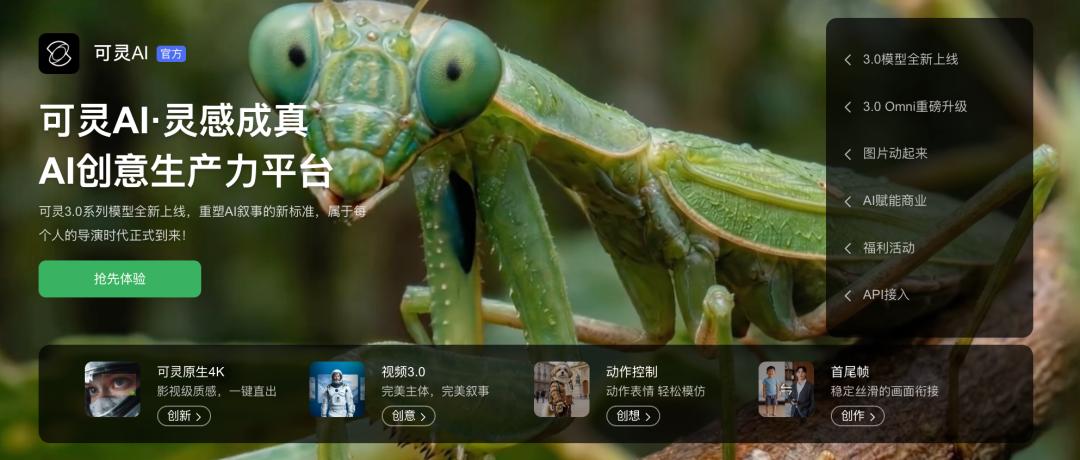
But the real watershed of the industry no longer lies in generation capabilities.
Over the past year, a large number of creators and small teams have been attracted by AI video tools. Because generation capabilities seem to lower the threshold, a single person can complete character design, shot production and video editing, making short dramas seem to be a much lighter business. However, after actually entering the production process, many teams find that AI only reduces part of the shooting cost, but does not automatically cut down the production management cost.
Inconsistent character performance, ununified style, chaotic prompt versions, mismatched storyboards and finished videos, and the situation that modifying one part affects a whole series of content will all become new rework costs. Live-action short dramas at least have stable actors and fixed scenes, while AI short dramas constantly need to prove that they show the same character and the same space.
This is why the short drama production workbench has become an indispensable tool.
Tools including LibTV, Baidu Intelligent Cloud Hogee AI Production Studio, Kemeng AI, Jifeng AI, Chenmengrue, Huiying Wang, Kunyun AI Short Drama, Flova and SenseTime Seko target the complete workflow from script to finished work. What they need to solve is not generating a beautiful video clip, but helping the team complete the production of an entire drama stably.
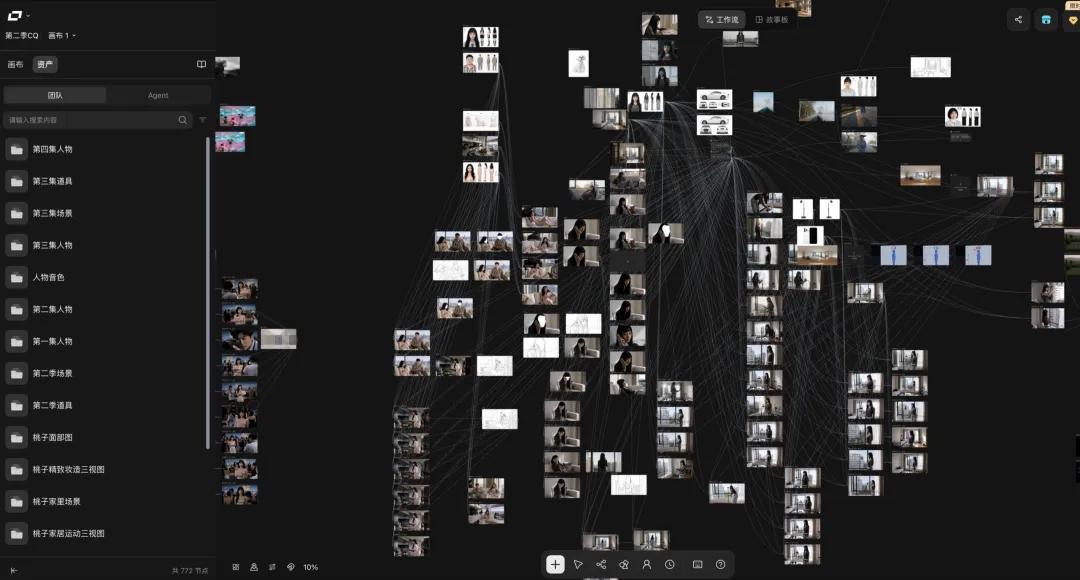
LibTV focuses on portrait management, 3D director console and team asset management, which essentially solves the problem of continuous performance of AI characters. Hogee AI Production Studio connects novels, scripts to finished short dramas and comic dramas, improving content conversion efficiency. Flova positions itself as an AI video creation Agent, which aims to handle creativity, storyboarding, material generation and editing through a conversational workflow. SenseTime Seko emphasizes the integration of creation and production, trying to put scripts, art design, dubbing and storyboard images into one single system.
The industry logic behind these tools is that if AI short dramas want to develop from individual experiments to team-based production, someone must manage the workflow, assets, versions and delivery.
This is also the reason why AI short drama tools are shifting from model capabilities to process capabilities. The model determines the ceiling of image quality, while the process determines whether the content can be delivered stably. What the short drama industry pays for in the end is not a one-time generation effect, but a replicable delivery capability.
For production teams, the real value of tools is not to make them look more skilled at using AI, but to reduce their daily rework, ineffective operations, and avoid profit loss caused by repetitive labor.
Tools are becoming increasingly vertical,
overcapacity has already emerged in the AI short drama industry
The second change of AI short drama tools is that their positioning is getting more and more specific.
The reason behind this is not only the maturity of products, but also related to industry supply and demand. As the underlying generation capabilities become easier to obtain, more and more people will enter the AI short drama track. With more creators, more production teams and more tools, the industry will soon evolve from the stage of "few people know how to make short dramas" to "almost everyone knows how to make them".
Once everyone can make AI short dramas, competition will no longer focus on "whether you know how to use AI", but return to the inherent problems of the short drama industry: who has a better understanding of themes, who has a better understanding of users, who has project resources, who has distribution channels, and who can make profits.
Therefore, AI short drama tools have started to develop towards vertical tracks. Comic dramas, live-action AI short dramas, male-oriented content, female-oriented content, ancient-style themes, realistic themes, IP adaptation and overseas versions all have different requirements for tools.
Live-action AI short dramas pay more attention to portrait stability, action performance and realistic texture; comic dramas rely more on unified art style, character setting, storyboard rhythm and dynamic effect. Male-oriented content requires high-density pleasure points, female-oriented content requires emotional progression and relationship tension, ancient-style content requires exquisite costume, prop and scene aesthetics, and IP adaptation also needs to consider the original readers' cognition of the work.
General models can provide basic capabilities, but it is difficult for them to truly understand the production logic of each type of content. A platform that "can generate everything" can hardly solve the relationship progression of sweet pet content for female audiences, the disassembly of pleasure points for male counterattack content, the art style management of comic dramas, and the localization of overseas versions at the same time.
This is also the reason why directions including Baidu AI Comic Drama, China Literature AI Short Drama layout and Comic Drama Workshop are worth paying attention to. They do not simply apply AI video technology to short dramas, but dig into specific content forms. The more vertical the content is, the easier it is for tools to meet real demands.
Overseas-oriented tools follow the same logic. Products such as Haishan and OiiOii serve the content reuse demand in the process of short drama going global.
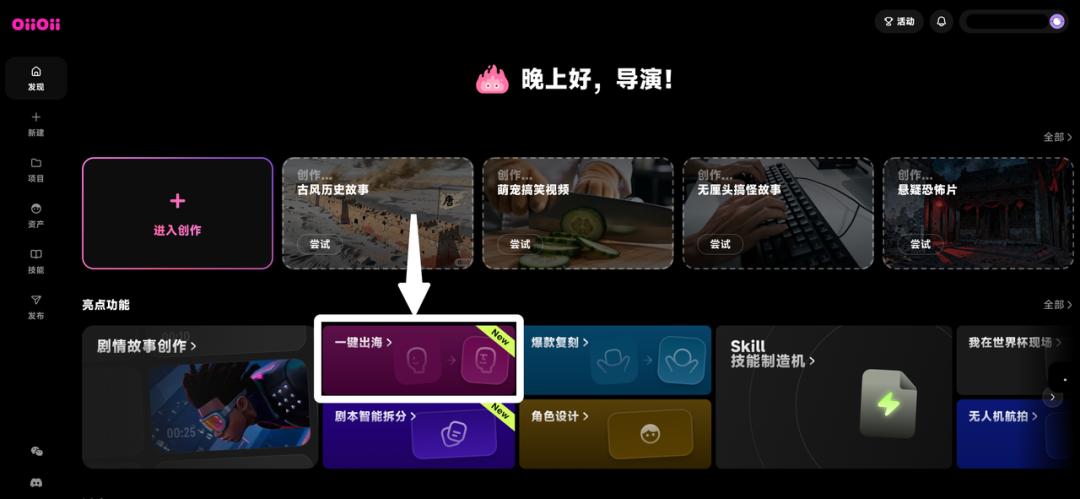
In the past, the overseas distribution of domestic short dramas mainly relied on subtitling & dubbing or reshooting overseas. Subtitling and dubbing is low-cost, but there is still a gap in characters, scenes and cultural context; overseas reshooting is more localized, but it has high cost and long cycle. The value of AI style transfer lies in retaining the proven plot, rhythm and storyboards, and then reshaping character images, language expression and visual style through AI.
It does not generate a brand new video, but enables one piece of existing content to be sold multiple times.
For short drama companies, if a domestic project has already verified its plot and conversion effect, entering the English, Spanish and Southeast Asian language markets through style transfer means the assets can be redeveloped. The role played by tools here is more like a localized service provider, rather than a simple video generator.
The order-receiving platform further indicates that mismatch between production capacity and projects has already appeared in the AI short drama industry.
Paoman Order Square targets AI short drama production teams and production practitioners, providing guaranteed projects, revenue-sharing projects and overseas projects. Production teams can enter the project pool through draft evaluation, and get access to more standardized order opportunities. The emergence of this model shows that the industry is not only short of tools, but also short of high-quality projects, stable orders and sound revenue mechanisms.
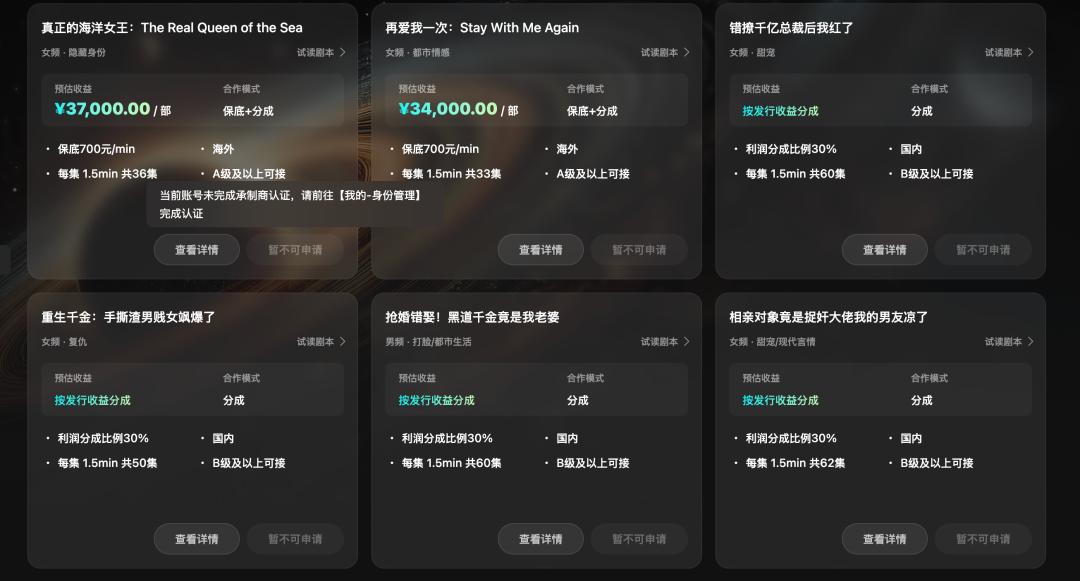
As more and more creators and production teams emerge, the simple ability to make AI short dramas will quickly depreciate. The teams that have real bargaining power are those that can access high-quality scripts, platform projects, overseas opportunities and subsequent revenue sharing.
From this perspective, the fact that AI short drama tools are becoming more and more vertical essentially reflects that the industry is looking for a new division of labor order. Tools no longer develop around what technology can do, but around who is willing to pay.
Platforms compete for entry points,
the final competition is about who is closer to real revenue
Major platforms are competing to develop AI tools, which on the surface is to seize creators, but in essence is to seize the production entry point of AI short dramas.
Tool revenue is of course important, as membership fees, point fees and enterprise service fees can all bring cash flow. But for large platforms, what is more valuable is the production data, creator relationships, project assets and commercial links behind the entry point.
ByteDance's advantage lies in its complete business chain: Seedance provides underlying video capabilities, Jimeng, Jianying and Doubao support creation and editing, and Douyin is responsible for distribution and consumption. Creators can complete the whole process from generation to release in the same ecosystem, which makes ByteDance naturally close to both the production end and the traffic end of AI short dramas.
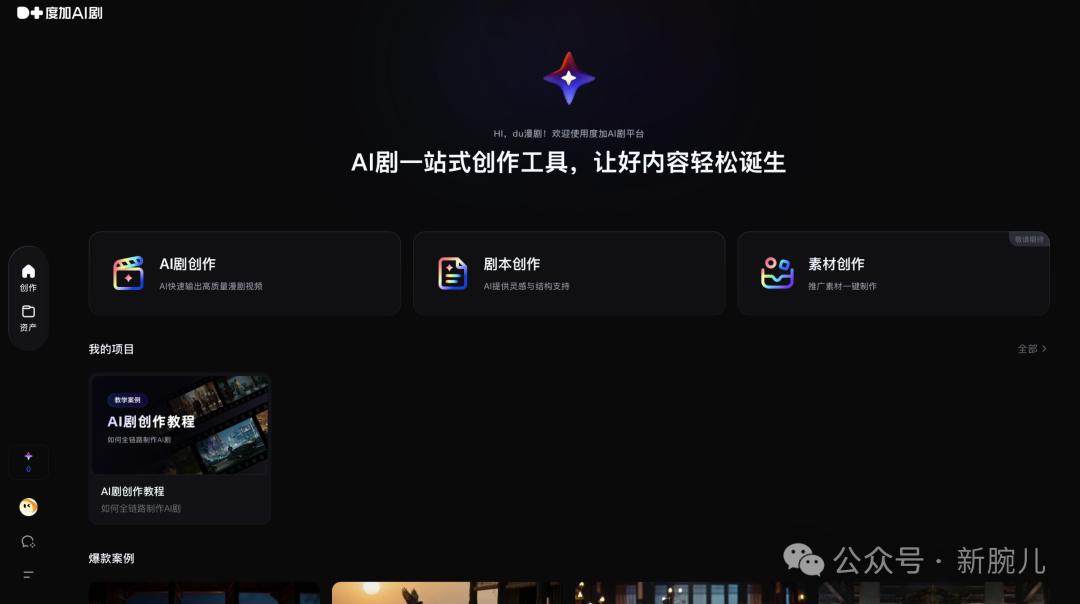
Platforms such as SenseTime and Baidu Intelligent Cloud are more focused on the B-end market. They may not directly produce hit short dramas, but they can package AI video, digital human, production tools and enterprise services to content institutions, brand owners and production teams. What they are competing for is the team production process and industry solutions.
Agent platforms such as Flova hope to become the project entry point for creators. Creators do not need to open multiple models and editing software separately, but can advance the project in one conversational workflow. If this entry point is smooth enough, it will have the opportunity to become the default workbench.
The relationship between platforms will thus become delicate: the underlying model hopes to keep users in its own ecosystem, the workbench hopes to schedule multiple models and control the project process, the content platform hopes to combine AI production capabilities with IP, scripts and distribution, and the order-receiving platform hopes to keep production teams and orders on its own platform.
The final outcome of AI short drama tools is unlikely to be that one universal tool defeats all other products, but that different platforms occupy their own positions in the industrial chain. Whether a platform can hold its position depends on how close it is to real revenue.
If a tool only brings short-term novelty, it will soon be replaced by the next model. Today this model has more stable character performance, tomorrow another model has better action effect, and the switching cost for creators is not high. Only those tools that can be embedded into the real production process are likely to become infrastructure.
What is the real production process? It is not the cool effects in demonstration videos, but the problems encountered in projects every day: can it deliver stably? Can it reduce rework? Can it adapt to platform rules? Can it produce content that meets promotion standards? Can it access the overseas distribution chain? Can it help the team get the next order?
This is also why AI short drama tools will eventually overlap with the business of short drama companies.
In the past, short drama companies mastered scripts, teams, shooting, post-production and distribution. Now, models can generate footage, workbenches can organize production, style transfer tools can support overseas business, order-receiving platforms can connect projects, and content platforms can combine IP with AI production capabilities. Part of the capabilities of short drama companies are being split apart by tools and becoming modules that can be called externally.
This will have two impacts on the industry.
On the one hand, the upper limit of small teams and individual creators will be raised. In the past, making short dramas required a complete team, but now a small team can also complete script writing, character design, storyboarding, generation, editing and release with the help of tools. AI tools make content production lighter, and allow more people to have the opportunity to participate in the competition.
On the other hand, pure production capabilities will become cheaper. After everyone can use tools, the truly scarce resources will be projects, aesthetic capabilities, operation capabilities, distribution capabilities and capital efficiency. If a production team only knows how to generate videos, it will soon be caught in a price war; only teams that can deliver stably, understand themes, participate in revenue sharing and access the overseas chain can retain more profits.
Therefore, the AI short drama tool war seems to be a technical competition, but it will eventually fall into commercial stratification.
Models will continue to iterate, tools will continue to update, but the industry will not automatically produce hit works just because there are more tools. Story judgment, aesthetic level,